
This lesson explores the critical safety protocols for navigating construction zones and roadworks while operating heavy goods vehicles. You will learn how to interpret temporary signage, manage reduced speed limits, and safely share space with workers to ensure compliance with Turkish traffic regulations.
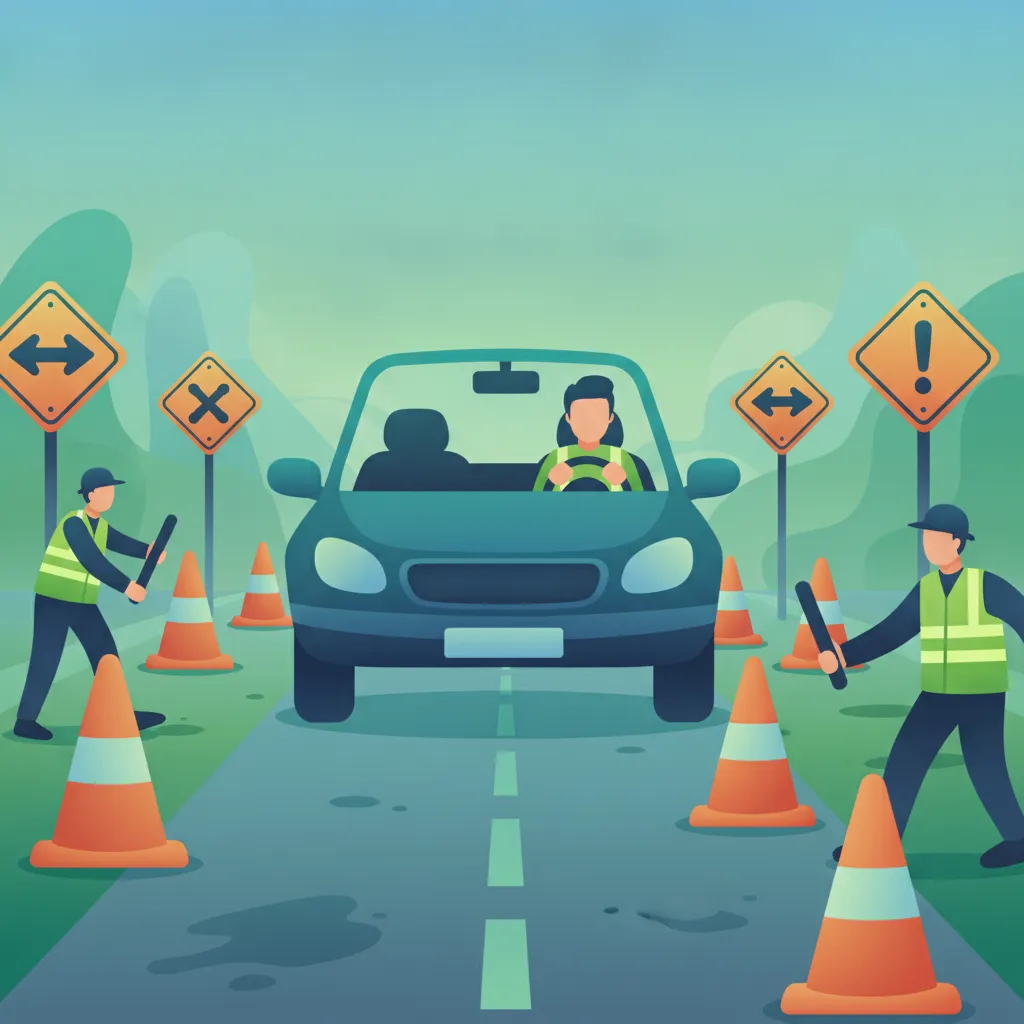
Lesson content overview
Navigating temporary roadworks and construction zones requires professional goods vehicle drivers to operate with heightened situational awareness and adapted driving techniques. For drivers seeking C1, C, C1E, or CE licenses under the Turkish Highway Traffic Regulation (Karayolları Trafik Yönetmeliği), these zones present a unique set of challenges.
Atypical hazards such as narrowed lanes, sudden detours, uneven road surfaces, active machinery, and vulnerable workers alter the driving environment. Because of the sheer size, weight, and limited maneuverability of commercial goods vehicles, the margin for error is significantly reduced. This lesson outlines the critical safety principles, legal rules, and physical realities of driving heavy vehicles through these high-risk areas.
Temporary Traffic Control (TTC) zones are established to maintain safety while road maintenance or construction is carried out. They modify the standard layout of the road, meaning normal driving patterns must adapt instantly.
Under Turkish traffic law, temporary traffic signs and markings placed in construction zones take legal precedence over permanent signs, road markings, and standard speed limits. These signs are easily recognizable by their distinctive background colors—often high-visibility yellow or orange—which signal to drivers that the road layout has been altered.
Disregarding these signs is a major traffic violation and a leading cause of heavy vehicle collisions. Drivers must never assume that because a permanent sign indicates a certain limit or lane configuration, the temporary sign can be ignored. When a temporary sign is present, it is the sole legal authority for that stretch of road.
The main objectives of establishing strict protocols in construction zones are:
Speed management is the single most critical factor in safely navigating a construction zone. High speed combined with heavy vehicle dynamics is a recipe for catastrophic accidents.
In Turkish construction zones, speed limits are lowered to accommodate the altered road surface and physical hazards. Standard limits are typically reduced to between 30 km/h and 50 km/h, depending on the complexity and danger level of the work zone.
These limits are not suggestions; they are legally binding. Slower speeds provide drivers with the necessary reaction time to respond to sudden changes, such as a worker stepping into the lane or a vehicle ahead braking abruptly.
The physical laws of motion dictate that a vehicle's stopping distance increases with the square of its speed. For a fully loaded heavy goods vehicle, this relationship is amplified by its massive weight:
When a construction zone introduces loose gravel, mud, or wet asphalt, the coefficient of friction decreases dramatically.
Weight and Stopping Distance: A fully loaded 40-tonne articulated truck (CE Category) travelling at 80 km/h requires up to twice the stopping distance of a standard passenger car. If speed is not reduced to the posted temporary limit of 40 km/h or lower, stopping safely before an unexpected obstacle in a work zone becomes mathematically impossible.
Professional drivers must increase their following distance when entering a work zone. While a 2-second rule may suffice on open, dry highways under perfect conditions, a minimum of 4 to 6 seconds of following distance is required in construction zones. This extra space acts as a safety buffer against the erratic stopping behavior of preceding vehicles.
Handling the physical dimensions of a heavy goods vehicle in restricted spaces requires precise steering, visual tracking, and defensive lane positioning.
When a lane is closed ahead, traffic must merge into the remaining lanes. Many drivers make the mistake of merging miles before the bottleneck, which causes unnecessary congestion. Under modern traffic flow principles, the "Zipper Merge" (Fermuar Sistemi) is the most efficient method:
Anticipate the Merge: Observe warning signs early and identify which lane is ending.
Maintain Steady Speed: Avoid abrupt braking. Keep a uniform speed matching the flow of traffic in both lanes.
Use the Entire Lane: Continue driving in your lane until you reach the designated merge point indicated by cones or arrows.
Signal Early and Clearly: Use your turn signal to communicate your intent to merge.
Merge Alternately: Merge smoothly in a "one-car-per-lane" alternating pattern, ensuring you do not force your way or cut off other road users.
Temporary lanes in work zones are often narrowed to the absolute physical limits of a standard vehicle. A typical heavy truck can be up to 2.55 metres wide (or 2.60 metres for refrigerated bodies), leaving mere centimetres of clearance on either side when lanes are restricted to 2.75 or 3.0 metres.
Additionally, drivers of long vehicles and vehicle combinations (C and CE categories) must account for off-tracking (the rear wheels taking a shorter path than the front wheels during a turn).
To prevent the trailer or rear wheels from striking temporary concrete barriers (jersey barriers) or traffic cones:
Construction sites are dynamic workspaces where people are frequently on foot in close proximity to moving traffic. Professional drivers bear the highest burden of care to prevent accidents involving these vulnerable individuals.
Construction workers are often focused on their physical tasks and may not hear an approaching truck over the noise of heavy machinery. Drivers must yield to all construction personnel and strictly follow the hand signals of flaggers or traffic controllers (işaretçi).
A trained construction worker authorized to direct traffic flow using hand signals, flags, or stop/slow paddles within a temporary traffic control zone.
If a flagger signals you to stop, you must bring your vehicle to a complete stop before their position and wait for explicit instruction to proceed. Passing too close to a worker or ignoring a flagger's signal is treated as a major safety violation under Turkish traffic code.
In urban construction zones, standard sidewalks and cycle paths are often closed, forcing pedestrians and cyclists into shared temporary pathways.
The physical conditions inside a construction zone place unique physical stresses on a goods vehicle’s cargo.
Sudden lane shifts, uneven pavement joints, and abrupt stops can cause loose or poorly secured cargo to shift. A shift in cargo weight instantly alters the vehicle's center of gravity, risking cargo damage or, in extreme cases, a vehicle rollover.
Miscommunication in a work zone can quickly result in a multi-vehicle pileup. Drivers must use their vehicle's signaling equipment correctly and legally.
A common, dangerous mistake among drivers is activating their hazard warning lights (four-way flashers) while driving slowly through a construction zone.
The Correct Use of Lights: Hazard warning lights must only be used when your vehicle is stationary and represents a hazard, or when there is an immediate, catastrophic emergency ahead that requires traffic behind you to stop.
Using hazard lights while your vehicle is in motion creates severe safety issues:
Instead of hazard lights, simply use your regular headlights (dipped beams) to improve visibility, and use your turn signals early and clearly for any lane merges or shifts.
The risks of construction zones are heavily influenced by external factors such as the time of day, weather conditions, and regional geography.
Rain, snow, fog, and mud can turn a construction zone into a highly hazardous environment. Heavy trucks carrying dirt and gravel out of excavation sites often leave a layer of mud on the road surface. When mixed with rain, this creates a slick slurry that severely reduces tire traction.
In low-visibility conditions:
Many highway construction projects in Turkey are conducted at night to minimize daytime traffic congestion. While this reduces traffic density, it introduces other serious risks:
Under the Turkish Highway Traffic Law (Karayolları Trafik Kanunu), violations committed within construction zones carry severe legal and financial consequences, especially for professional C and CE license holders.
Common violations include:
Beyond administrative fines, any commercial driver involved in an accident within a construction zone where they are found to have ignored temporary signage or speed limits face serious criminal liability for professional negligence.
Explore all units and lessons included in this driving theory course.
Lesson content overview
Explore all units and lessons included in this driving theory course.
Explore search topics learners often look for when studying Safe Practices Around Roadworks and Construction Zones. These topics reflect common questions about road rules, driving situations, safety guidance, and lesson level theory preparation for learners in Turkey.
Browse additional driving theory lessons that cover connected traffic rules, road signs, and common driving situations related to this topic. Improve your understanding of how different rules interact across everyday traffic scenarios.
Learn the legal requirements for lane usage, turning strategies, and reversing safely for heavy vehicles. Understand how to manage off-tracking and lane positioning to ensure safe navigation on highways and urban roads while complying with Turkish traffic regulations for professional drivers.

This lesson focuses on the critical importance of lane discipline and proper lane usage for large goods vehicles. Learners will understand the challenges posed by wider vehicle dimensions, the necessity of maintaining adequate lane occupancy, and the need for precise lane keeping. Emphasis is placed on selecting appropriate lanes, adhering to traffic flow, and ensuring general highway safety.

This lesson focuses on the challenges and techniques required when maneuvering goods vehicles in confined spaces such as loading docks, narrow streets, and urban environments. It addresses the importance of spatial awareness, precision driving, and understanding vehicle dimensions to avoid collisions. Learners will explore strategies for effective parking, reversing, and handling blind spots safely.

Learners will explore the fundamentals of maintaining correct lane discipline, focusing on appropriate lane positioning, understanding lane markings, and executing lane changes safely. Emphasis is placed on the unique considerations for large passenger vehicles within the lane, such as width and maneuverability. The lesson also addresses the impact of proper lane discipline on overall traffic flow and safety.

This lesson explores effective turning strategies for goods vehicles, focusing on managing the larger turn radius required due to vehicle size and load. Learners will understand how to approach corners safely, adjust speed, use signals appropriately, and compensate for off-tracking. The lesson also highlights how load distribution impacts turning dynamics and the importance of vehicle control.
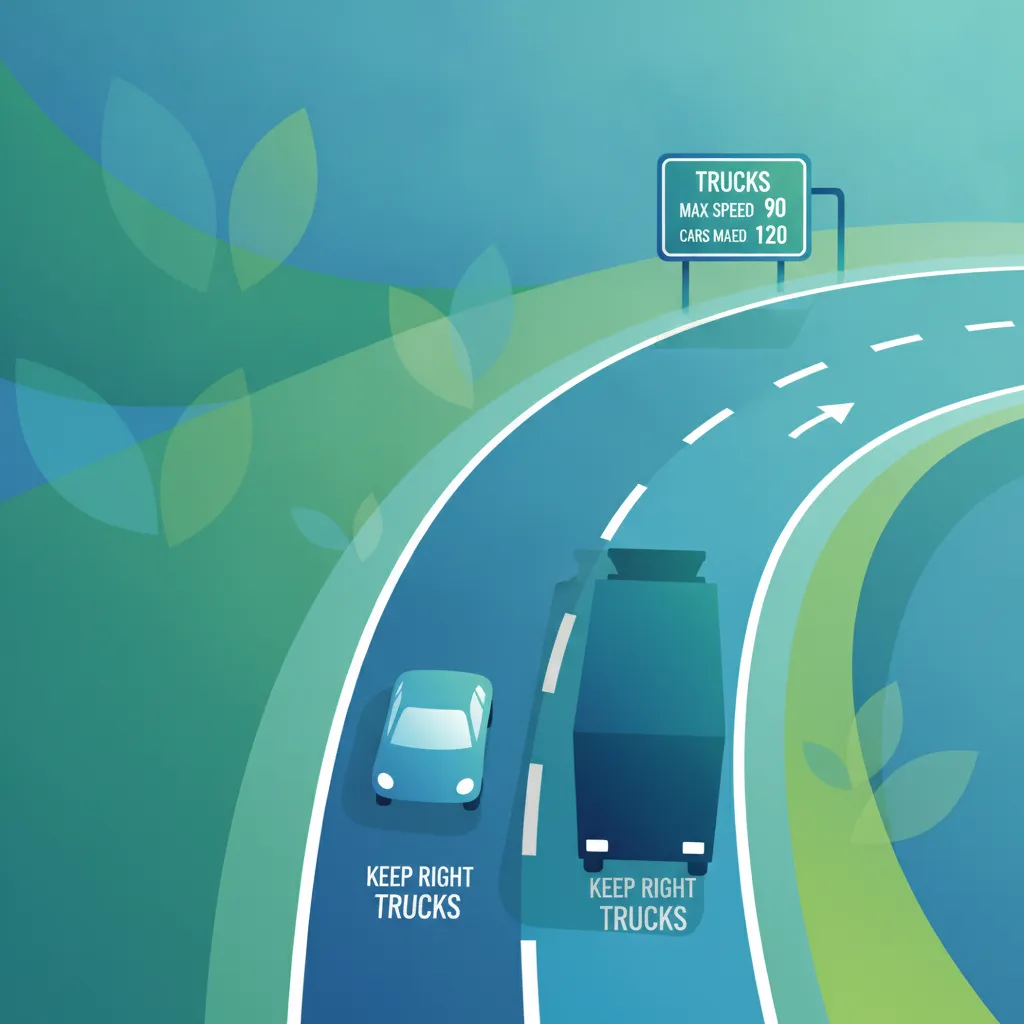
This lesson addresses the specific considerations for goods vehicle operation on highways and expressways, covering speed limits, lane discipline, safe merging, and overtaking. Learners will learn how to adapt to traffic flow, manage heavy vehicle dynamics at higher speeds, and ensure safe operation. The lesson emphasizes the importance of vigilance and proper lane usage to prevent accidents.
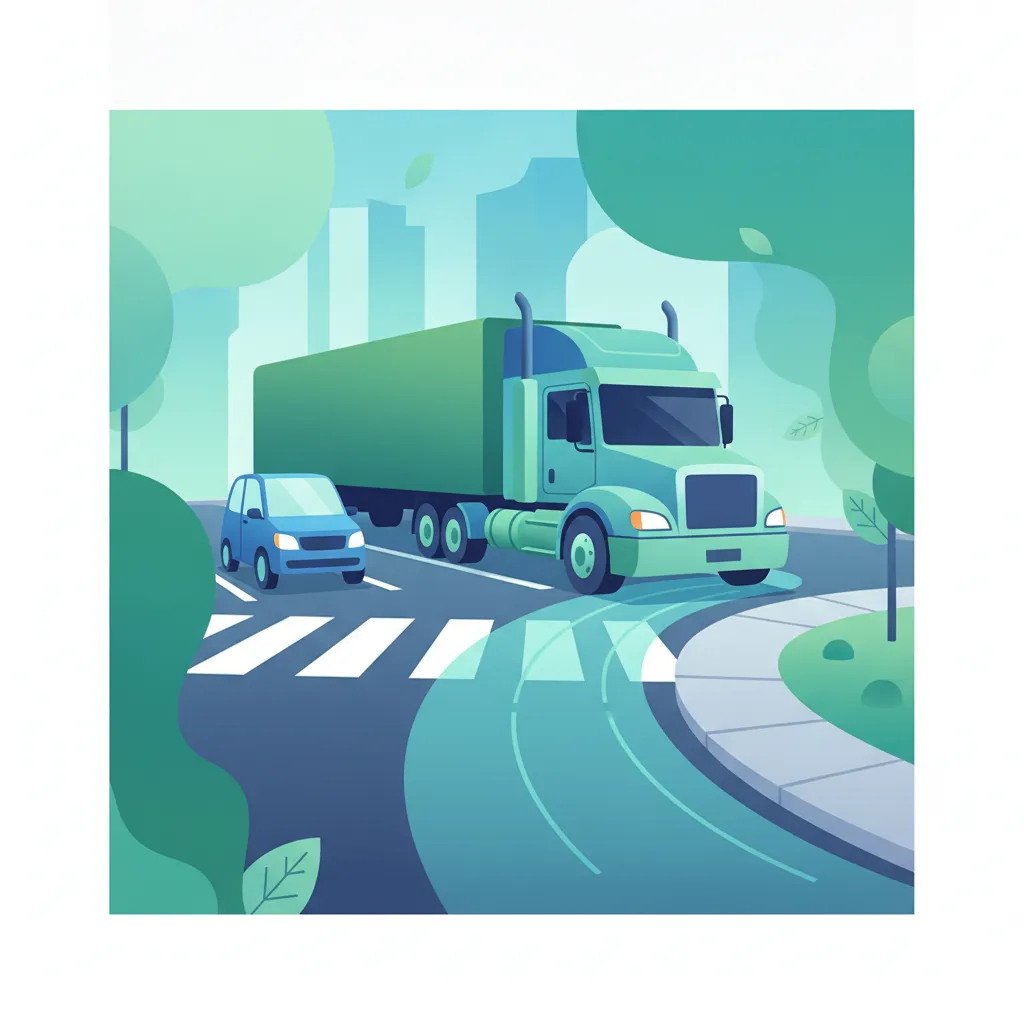
This lesson examines the specific road space requirements necessary for large goods vehicles to operate safely and efficiently. Topics include the need for adequate lane width, lateral clearance, and turning lanes to accommodate wider and longer vehicles. Learners will explore the proper use of shoulders, overtaking procedures, and the impact of large vehicles on overall road capacity in traffic.

This lesson delves into specific manoeuvring strategies required when navigating both tight urban environments and open rural roads with large passenger vehicles. Learners will explore techniques for handling narrow streets, tight turns, and intersections, while maintaining safety and efficiency. The content emphasizes planning and execution of manoeuvres based on road conditions and vehicle dimensions.
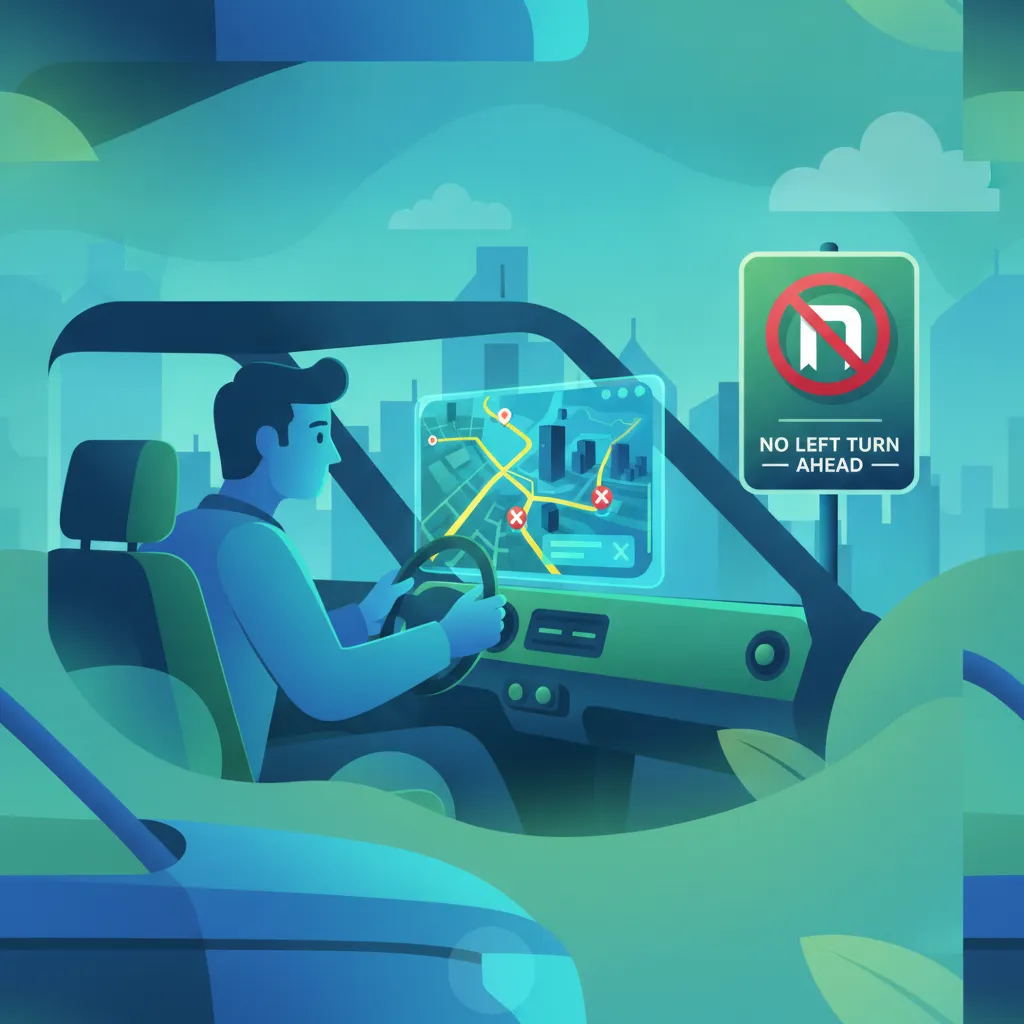
This lesson explores the legal and practical aspects of route planning for goods vehicles, emphasizing the importance of selecting suitable routes that adhere to road restrictions. Learners will learn how to identify roads with weight limits, height clearance, and prohibited zones for heavy vehicles. They will also discover how to use navigation systems and truck-specific GPS effectively.
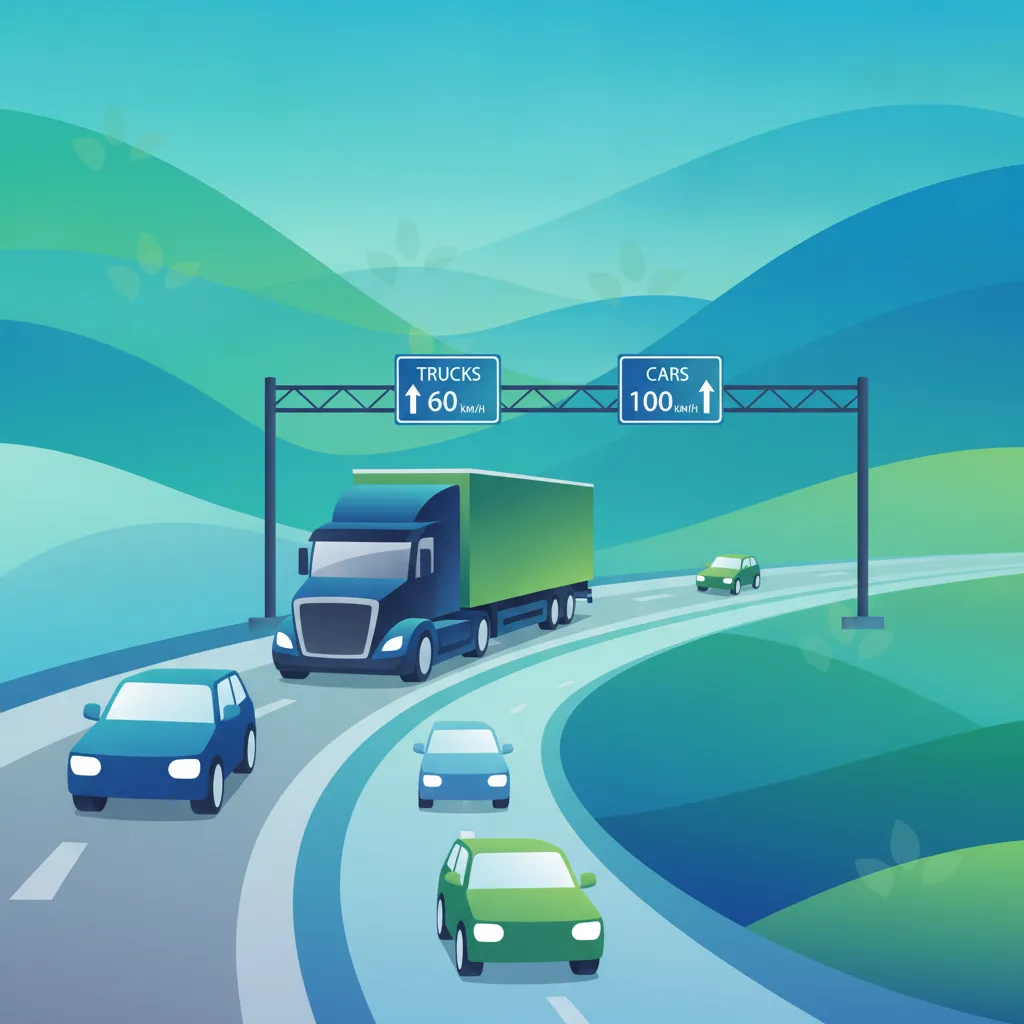
This lesson focuses on speed regulation for goods vehicles, highlighting how vehicle weight, load, and road conditions influence safe operating speeds. Learners will understand legal speed limits for various road types and the necessity of adapting speed to traffic flow and environmental conditions. The lesson also emphasizes the importance of maintaining appropriate speed to ensure vehicle control.

This lesson focuses on the importance of maintaining safe following distances for goods vehicles, taking into account longer braking distances and increased load. Learners will learn how to calculate appropriate gaps based on speed, road conditions, and vehicle dynamics. The lesson emphasizes safe following practices to prevent rear-end collisions and improve overall traffic safety in Turkey.
Understand the defensive driving techniques required to share the road safely with pedestrians, cyclists, and motorcyclists. This guide covers blind spot awareness and communication strategies to protect vulnerable road users when operating heavy goods vehicles in dense urban environments and active traffic zones.

This lesson focuses on protecting vulnerable road users, such as pedestrians, cyclists, and motorcyclists, in mixed traffic environments. Learners will examine specific strategies for increased vigilance, anticipatory driving, and properly yielding to these users. The lesson also covers high-risk zones, such as school areas and public transport stops, emphasizing the need for heightened safety.

This lesson examines the critical interactions between goods vehicles and vulnerable road users such as pedestrians, cyclists, and motorcyclists, particularly in urban environments. Learners will explore right-of-way rules, maintaining safe distances, and strategies for anticipating the actions of these road users. The lesson emphasizes the importance of clear communication and protective driving.
Find clear answers to common questions learners have about Safe Practices Around Roadworks and Construction Zones. Learn how the lesson is structured, which driving theory objectives it supports, and how it fits into the overall learning path of units and curriculum progression in Turkey. These explanations help you understand key concepts, lesson flow, and exam focused study goals.
The priority is to reduce your speed well in advance and strictly follow all temporary traffic signs. You must account for your increased vehicle dimensions, as lanes are often narrowed, leaving little room for error.
Not always. While they often have specific tasks, you must follow the temporary signals and flaggers on-site. If there is no specific instruction, standard traffic priority rules apply unless superseded by official temporary signage.
Position your vehicle centrally in your lane to avoid clipping barriers or equipment. Maintain a safe following distance, be aware of your side mirrors, and be prepared for sudden stops due to heavy machinery movement.
Yes, the Turkish professional theory exam frequently includes visual scenarios asking you to identify temporary warning signs and determine the correct course of action when you encounter them on highways or urban roads.
Use our comprehensive practice search to find exactly the Turkish driving theory questions you need to master. Whether reviewing specific road signs, traffic rules, or first aid scenarios, select your perfect practice set and boost your confidence for the official ehliyet sınavı.