
This lesson explores the essential responsibilities of Class D drivers when assisting passengers with special needs. You will learn how to ensure a safe, dignified, and accessible travel experience for children, elderly individuals, and those with reduced mobility.

Lesson content overview
Transporting passengers with special needs is one of the most critical responsibilities of a professional Class D passenger vehicle driver. Under Turkish highway laws (Karayolları Trafik Kanunu), drivers are legally and ethically obligated to ensure the physical safety, comfort, and dignity of all passengers. This obligation is amplified when transporting vulnerable groups, including young children, elderly individuals, and passengers with reduced mobility or physical disabilities.
This lesson covers the essential protocols, legal frameworks, and practical techniques required to safely manage these passenger groups. By understanding the physics of vehicle motion, the mechanics of restraint systems, and the principles of respectful communication, you will be prepared to prevent injuries and deliver an inclusive, high-quality transit service.
According to the Turkish Highway Traffic Regulation (Karayolları Trafik Yönetmeliği), passenger safety priorities dictate strict rules for child occupants. Children cannot rely on standard adult seat belts if their physical stature does not support them. Incorrect restraint usage is a leading cause of severe injury during sudden deceleration or collisions.
In Turkey, children who are under 150 cm in height and under 36 kg in weight must be secured using a child safety seat (CSS) or an approved child restraint system appropriate for their weight and height.
Drivers of M2 and M3 category commercial vehicles (minibusses and buses) must understand the classification of child restraint systems to guide passengers or install equipment correctly:
A safety seat designed for infants (typically up to 13 kg or 15 months of age) that faces the rear of the vehicle. This position supports the child's head, neck, and spine, absorbing the force of a frontal impact across the shell of the seat.
A seat designed for toddlers who have outgrown their rear-facing seats. It uses an internal five-point harness to distribute crash forces across the strong bones of the child's shoulders and pelvis.
A cushion that raises the child so that the vehicle's adult lap-and-shoulder belt fits safely over the strongest parts of the child's body (shoulder and hips, rather than throat and stomach).
When installing or verifying a child safety seat, drivers must follow a strict safety sequence:
Select the correct seat based on the child's weight, height, and age.
Locate the ISOFIX anchor points (standardized rigid attachment points built into the vehicle chassis) or prepare the vehicle's three-point seat belt.
Secure the seat tightly. If using ISOFIX, push the connectors until you hear an audible click and see the green visual indicators. If using a seat belt, pull the belt fully to engage the automatic locking retractor (ALR) mode.
Perform the "one-inch test": Grab the seat at the base and try to move it side-to-side and front-to-back. It should not move more than 2.5 centimetres (1 inch) in any direction.
Adjust the harness straps. In rear-facing seats, straps should be at or below shoulder level. In forward-facing seats, they must be at or above shoulder level. Ensure the chest clip is positioned at armpit level.
The Adult Seat Belt Danger: Never secure a child under 150 cm using only an adult seat belt. In a collision, the lap portion of the belt can slip up into the soft abdomen (causing internal organ damage), and the shoulder belt can slice across the neck, leading to catastrophic injuries.
As a Class D professional driver operating a minibus or public transit bus, you will frequently assist elderly passengers. Aging brings physical changes, such as reduced bone density (osteoporosis), slower reaction times, impaired balance, and fragile blood vessels. What might feel like a minor bump or quick deceleration to a young adult can cause a severe skeletal injury or fall for an older individual.
The process of boarding and alighting is the highest-risk phase of travel for elderly passengers. Drivers must adhere to the following operational rules:
Transporting passengers who remain in their wheelchairs during transit requires specialized equipment, physical effort, and strict adherence to mechanical securing protocols. In Turkey, public transit accessibility regulations mandate that modern Class D commercial vehicles must be accessible to individuals with reduced mobility.
Drivers must be fully trained in the manual and electronic controls of their specific vehicle model.
Position the vehicle on flat, level ground, engage the parking brake, and put the transmission in neutral (or park).
Deploy the ramp or lift. Assist the wheelchair passenger inside, ensuring they back into the dedicated wheelchair securement area so they face the rear of the vehicle (the safest orientation during front-end deceleration) or follow the vehicle's specific layout design.
Turn off the power on electric wheelchairs. Engage the manual wheel locks/brakes on both sides of the wheelchair.
Attach the four-point tie-down system (WTORS). Secure the front straps to the vehicle floor anchors at a 45-degree angle pointing forward, then attach the rear straps pointing backward. Tighten the straps to eliminate any slack.
Apply the occupant restraint system (lap and shoulder belt). The lap belt must cross the passenger's pelvis (not the abdomen or thighs) and the shoulder belt must run across the collarbone and chest, anchoring to the vehicle wall structure.
Driving dynamics change drastically depending on external conditions. When transporting special needs passengers, these variations require immediate tactical adjustments.
As a professional driver, your physical inputs at the steering wheel and pedals directly impact the forces acting inside the vehicle passenger cabin.
| Driver Action / Input | Physical Effect in Cabin | Impact on Special Needs Passengers |
|---|---|---|
| Rapid, jerky acceleration | Heavy rearward inertial force | Can cause elderly passengers walking in the aisle to fall backward, leading to hip or wrist fractures. |
| Abrupt, hard braking | Violent forward kinetic energy throw | Can cause unsecured wheelchairs to tip forward or slide, and can cause infants in improperly installed CSS to suffer severe neck strain. |
| Speeding through curves / turns | High lateral centrifugal force | Shifts wheelchair centers of gravity, potentially tipping the chair or sliding elderly passengers off bench seats. |
| Gentle, progressive braking | Balanced deceleration, predictable weight shift | Allows passengers to brace themselves naturally using handrails and keeps securement systems within safe tension limits. |
Explore all units and lessons included in this driving theory course.
Lesson content overview
Explore all units and lessons included in this driving theory course.
Explore search topics learners often look for when studying Handling Special Needs Passengers. These topics reflect common questions about road rules, driving situations, safety guidance, and lesson level theory preparation for learners in Turkey.
Browse additional driving theory lessons that cover connected traffic rules, road signs, and common driving situations related to this topic. Improve your understanding of how different rules interact across everyday traffic scenarios.
Learn how to manage passenger boarding and alighting in complex urban environments while maintaining safety. This guide covers legal procedures for bus stops, terminal approaches, and coordinating with pedestrians to ensure a smooth, professional transit service within Turkish urban traffic regulations.

Learners will explore best practices for ensuring passenger safety during the boarding and alighting process, focusing on proper vehicle positioning, door operation, and passenger assistance. The lesson covers the use of handrails, steps, and ramps, as well as strategies for managing standing passengers and luggage. Emphasis is placed on clear communication and maintaining situational awareness to prevent accidents.

This lesson addresses the particular challenges posed by standing passengers and the handling of luggage within passenger vehicles. Learners will explore best practices for securing items, guiding passenger movement, and maintaining vehicle stability. Understanding these aspects helps prevent accidents caused by shifting loads or passenger instability, especially during sudden stops or turns.
This lesson focuses on the proper approach to bus stops and terminals within city traffic, emphasizing safe positioning, adherence to traffic signals, and maintaining smooth traffic flow. Learners will understand the importance of signaling intentions, checking blind spots, and ensuring the safety of boarding and alighting passengers. Effective stop management reduces the risk of accidents and traffic disruption.

This lesson focuses on creating a comfortable and accessible environment for all passengers, addressing climate control, lighting, and ergonomic seating arrangements. It also discusses provisions for wheelchair users, the use of boarding ramps, and the importance of priority seating for those with special needs. Drivers will learn how to assist passengers effectively while maintaining comfort standards throughout the journey.
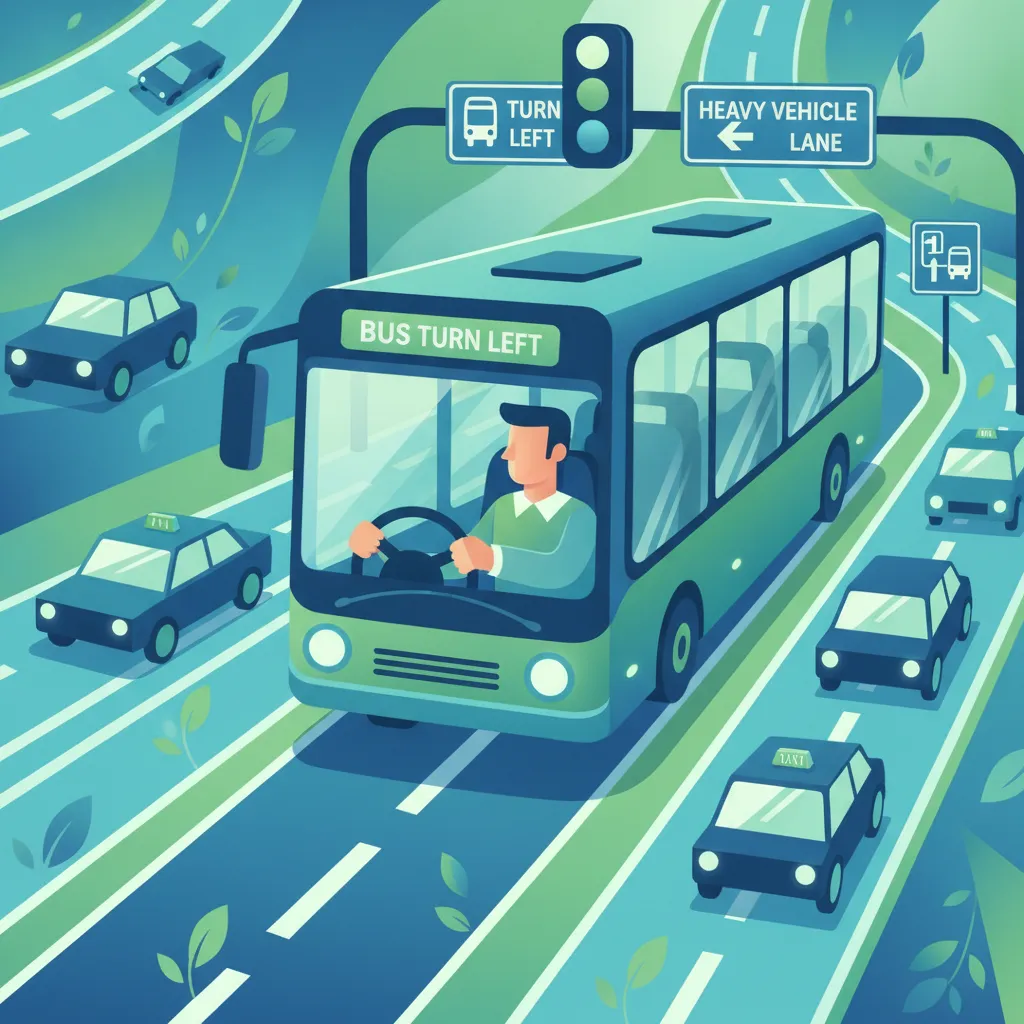
Learners will explore strategies for navigating congested urban traffic environments while operating large passenger vehicles. The lesson covers lane selection, adherence to traffic signals, and the use of bus lanes where applicable. Understanding how to maintain smooth traffic flow while ensuring passenger safety is crucial for efficient urban transportation.

This lesson details the procedures for safely evacuating passengers from a bus in the event of a fire or other critical emergency. Topics include the location and use of emergency exits, fire extinguishers, and lighting, as well as the importance of clear communication and orderly movement of passengers. Practical steps for assisting vulnerable passengers during evacuation are emphasized.
This lesson details the processes involved in terminal operations and the planning of rest stops for passenger vehicles. Learners will learn about safe and efficient procedures for passenger boarding and alighting at terminals, coordinating schedules, and performing safety checks. The importance of selecting appropriate rest areas and managing breaks for both drivers and passengers is emphasized.

Learners will explore the core safety priorities for passenger transport, including the correct use of seat belts, securing luggage, and maintaining passenger stability during vehicle motion. The lesson highlights the importance of clear safety briefings, the location and operation of emergency exits, and conducting risk assessments before departure. By mastering these practices, drivers can significantly reduce the likelihood of accidents and injuries.

This lesson equips drivers with techniques to manage passenger behavior and foster effective in-vehicle communication. Topics include handling disruptive passengers, making clear announcements, and using non-verbal signals to maintain order. By promoting respectful conduct and clear communication, drivers can ensure a smoother, safer journey for everyone on board.

This lesson covers the proper handling of bus stops and designated passenger boarding zones, emphasizing safety, efficiency, and compliance with regulations. Topics include the correct positioning of the vehicle, safe boarding and alighting procedures, and managing passenger flow during stops. Effective management of these zones reduces the risk of accidents and ensures a smooth passenger experience.
Understand the legal and professional requirements for responding to vehicle emergencies and managing driver fatigue. This module provides guidance on maintaining focus during long-distance travel and implementing passenger evacuation protocols to ensure safety in line with official Turkish traffic and professional conduct standards.

Learners will examine common vehicle emergencies that may occur while transporting passengers, such as fires, tire blowouts, or brake failures. The lesson emphasizes quick recognition of warning signs and outlines step-by-step emergency protocols to ensure the safety of passengers and other road users. Strategies for effective incident response and communication are also covered.
This lesson focuses on recognizing the signs of driver fatigue and implementing effective strategies to manage it while operating a goods vehicle. Learners will understand the health risks associated with prolonged driving periods, the importance of regular rest breaks, and techniques to maintain alertness. Emphasis is placed on fatigue mitigation measures to ensure safe driving and prevent accidents.

Learners will explore the risks associated with driver fatigue, distraction, and stress, particularly during long trips with passengers. The lesson provides strategies for recognizing fatigue, scheduling appropriate rest breaks, and employing techniques to maintain focus and reduce stress. Emphasis is placed on the impact of these factors on safety and passenger comfort.

Learners will understand the importance of ergonomic adjustments for both driver and passenger welfare, covering seat positioning, steering wheel adjustments, mirror settings, and control accessibility. The lesson emphasizes how proper ergonomics can reduce driver fatigue, improve reaction times, and enhance overall safety. Drivers will learn to customize their vehicle setup to suit their own needs and those of their passengers.
Learners will explore best practices for ensuring passenger safety during the boarding and alighting process, focusing on proper vehicle positioning, door operation, and passenger assistance. The lesson covers the use of handrails, steps, and ramps, as well as strategies for managing standing passengers and luggage. Emphasis is placed on clear communication and maintaining situational awareness to prevent accidents.
This lesson details the procedures for safely evacuating passengers from a bus in the event of a fire or other critical emergency. Topics include the location and use of emergency exits, fire extinguishers, and lighting, as well as the importance of clear communication and orderly movement of passengers. Practical steps for assisting vulnerable passengers during evacuation are emphasized.
Learners will examine strategies for planning and executing long-distance and intercity routes with passenger vehicles. The lesson covers effective route planning, managing driver fatigue, scheduling rest stops, and addressing passenger comfort and informational needs during extended journeys. Understanding these aspects ensures safe, efficient, and passenger-friendly long-distance service.

This lesson focuses on the health and fitness criteria required for passenger vehicle drivers, outlining the medical examinations and certifications needed to maintain a valid licence. Additionally, it emphasizes the importance of continuing education and professional development to keep drivers updated on new regulations, technologies, and best practices. By prioritizing driver health and lifelong learning, the overall safety and quality of passenger transport are enhanced.
Learners will explore the core safety priorities for passenger transport, including the correct use of seat belts, securing luggage, and maintaining passenger stability during vehicle motion. The lesson highlights the importance of clear safety briefings, the location and operation of emergency exits, and conducting risk assessments before departure. By mastering these practices, drivers can significantly reduce the likelihood of accidents and injuries.

This lesson focuses on the extreme dangers of driver fatigue, micro-sleep episodes, and the signs of physical exhaustion. It details how sleep deprivation compromises driving safety in a manner comparable to moderate alcohol intoxication. Drivers will learn proactive fatigue management strategies, including scheduling regular rest stops.
Find clear answers to common questions learners have about Handling Special Needs Passengers. Learn how the lesson is structured, which driving theory objectives it supports, and how it fits into the overall learning path of units and curriculum progression in Turkey. These explanations help you understand key concepts, lesson flow, and exam focused study goals.
The priority is always safety and dignity. Drivers must position the vehicle as close to the curb as possible, deploy necessary ramps or steps correctly, and ensure the vehicle is stationary and secured before any passenger attempts to board or alight.
Yes, drivers must ensure that children are seated safely and, where required by the vehicle type and regulation, properly secured in certified child safety seats. Always ensure children are supervised and clear of doors during operation.
Drivers must use the designated wheelchair ramp or lift, ensure the chair is correctly locked into the safety system provided in the vehicle, and verify that the passenger is comfortable and secured before moving the vehicle.
Yes, the MTSK e-sınav often includes situational questions regarding the duty of care for vulnerable passengers, including legal obligations for boarding, alighting, and providing reasonable assistance to those with special needs.
Use our comprehensive practice search to find exactly the Turkish driving theory questions you need to master. Whether reviewing specific road signs, traffic rules, or first aid scenarios, select your perfect practice set and boost your confidence for the official ehliyet sınavı.