
This lesson guides you through the critical regulations and safety protocols for managing bus stops and passenger boarding zones in Turkey. As a Class D licence holder, you must master these procedures to ensure passenger safety and maintain traffic flow during your daily routes.

Lesson content overview
Managing bus stops and passenger boarding zones is one of the most critical daily responsibilities for a professional bus driver. For candidates preparing for the Turkish Class D Passenger Vehicle Driving Licence (D Sınıfı Sürücü Belgesi), mastering these procedures is not only essential for passing the theoretical and practical exams but also for ensuring the safety, accessibility, and comfort of passengers in real-world urban and rural transport operations.
Bus stops and boarding zones represent the primary interfaces between the heavy transport vehicle and vulnerable road users—pedestrians. Poorly managed stops can lead to severe accidents, traffic congestion, and legal penalties under the Turkish Highway Traffic Law (Karayolları Trafik Kanunu). This lesson covers the regulatory requirements, safety protocols, and professional techniques required to execute flawless passenger stops.
Under Turkish traffic regulations, passenger transport is strictly governed to protect public safety and maintain municipal traffic flow. The highway code defines designated areas where passenger boarding and alighting must take place.
According to Article 61 of the Turkish Highway Traffic Law (Karayolları Trafik Kanunu), parking is prohibited within a specified distance of designated bus stops. This law ensures that large passenger vehicles have sufficient clearance to pull parallel to the curb and align safely with the boarding platform.
Class D drivers encounter various types of bus stop configurations across Turkey’s diverse road network, ranging from highly congested metropolitan avenues in Istanbul and Ankara to open rural highways. Each layout requires a tailored approach.
These are the most common stops, marked by a painted yellow zig-zag pattern on the tarmac and a signpost.
Bus bays (otobüs cepleri) are physical indentations cut into the pavement, designed to allow buses to pull completely out of the active traffic flow.
Common in Bus Rapid Transit (BRT) systems like Istanbul’s Metrobus, these zones feature elevated boarding platforms level with the bus floor.
Proper alignment at a bus stop is a skill that directly impacts passenger safety and accessibility. Misjudging the distance to the curb can cause passengers to trip, slip, or fail to board altogether.
To achieve safe passenger boarding, the bus must be positioned parallel to the curb, ideally at a distance of 10 to 15 centimetres.
The "Scissor" Danger: Avoid stopping the bus at an angle where the front is close to the curb but the rear is sticking out into the road. This blocking position forces passengers at the rear doors to step onto the street and prevents subsequent buses from pulling in behind you safely.
Executing a passenger stop safely requires a systematic, repeatable sequence of actions. Class D candidates are evaluated on this specific sequence during practical driving tests.
Preparation and Signaling: Identify the upcoming bus stop. Check your interior passenger mirror, rear-view mirrors, and right-side mirror for cyclist or pedestrian hazards. Activate your right turn signal at least 50 metres in advance.
Smooth Deceleration: Gently apply the service brake. Avoid abrupt braking, which can cause standing or moving passengers inside the bus to lose their balance and sustain injuries.
Alignment and Halt: Steer smoothly into the bus stop area, aligning the bus parallel to the curb. Bring the vehicle to a complete stop within the marked lines of the bus stop zone.
Securing the Vehicle: Fully engage the parking brake (el freni) or activate the station brake (durak freni) to ensure the vehicle cannot roll or creep forward while passengers are moving. Shift the transmission to neutral if stationary for an extended period.
Safe Door Opening: Perform a final sweep of your right-side mirror to ensure no cyclists or pedestrians are squeezing between the bus and the curb. Press the door control switches to open the front and rear doors fully.
Monitoring and Flow Control: Watch the passenger entry and exit points. Ensure passengers alighting (exiting) are completely clear of the steps before passengers boarding (entering) begin to climb up.
Closing and Departure Prep: Once all movement has ceased, visually verify that all passengers are clear of the door sensor zones. Close the doors completely. Check the interior and exterior mirrors, activate the left turn signal, check your blind spots, and merge smoothly back into traffic.
Dwell time—the total time a transit vehicle spends stationary at a stop—is a key metric in public transportation efficiency. Minimizing dwell time keeps services running on schedule, but it must never come at the expense of safety.
The period of time from when a transit vehicle doors open to discharge and receive passengers, until the doors close and the vehicle begins to accelerate back into the traffic lane.
Providing equal access to transport is a legal mandate under Turkish accessibility laws and a core competency of the Class D licence. Professional drivers must treat passengers with reduced mobility with the utmost care and respect.
Many modern urban transit buses in Turkey are equipped with manual or automatic fold-out ramps (engelli rampası) at the middle doors.
Bus stops are high-risk zones for secondary collisions. Pedestrians often make unpredictable moves, such as running behind or in front of a stopped bus to cross the street.
The massive size of a Class D passenger vehicle creates extensive blind spots, especially immediately in front of the high windshield and directly behind the rear panel.
Under standard driving rules, when a public transit bus signals its intention to pull out from a designated stop, drivers in the adjacent lane should yield to allow the bus to re-enter traffic safely. However, a professional Class D driver must practice defensive driving. Never force your way into traffic assuming other road users will automatically yield.
Operating conditions change constantly, requiring adjustments to how you approach and manage passenger boarding zones.
| Environmental Factor | Hazard at Bus Stop | Driver Action / Mitigation |
|---|---|---|
| Rain or Wet Weather | Slick pavement, puddles near the curb hiding deep potholes, passengers slipping on metal bus steps. | Reduce approach speed significantly. Avoid splashing pedestrians on the sidewalk. Apply anti-slip heaters on steps if equipped. |
| Snow and Ice | Severe sliding hazard when braking at stops; passengers slipping on icy curbside platforms. | Begin braking much earlier. Avoid sudden steering inputs. Inspect the stop area for ice patches before pulling fully parallel to the curb. |
| Night and Low Visibility | Pedestrians waiting at dark stops are hard to see; passenger blind spots become larger. | Turn on interior passenger step lights. Use the vehicle’s exterior side lights to illuminate the boarding door path. |
| Rural Stops | No designated curbs, high speeds of passing traffic on national highways, unpaved shoulders. | Pull completely off the highway onto a solid shoulder if possible. Activate hazard warning lights to alert fast-moving traffic. |
Failing to manage passenger stops properly can result in administrative fines, license point deductions, and in severe cases, criminal prosecution if negligence leads to injury.
As a Class D professional, your priority is to transport passengers safely and comfortably from origin to destination. Every bus stop represents a critical transition phase where risks are heightened. By adhering strictly to the Karayolları Trafik Kanunu, maintaining a disciplined stopping routine, ensuring precise vehicle alignment, and prioritizing vulnerable and disabled road users, you uphold the highest standards of the professional transport industry in Turkey.
This lesson covers the complete regulatory and practical framework for managing bus stops as a Turkish Class D driver, including legal obligations under Article 61 of the Karayolları Trafik Kanunu, vehicle positioning within 10 to 15 centimetres of the curb, and a systematic 7-step stopping procedure. Key safety requirements include keeping doors closed until full stop, managing passenger flow with front-entry rear-exit protocols, and mandatory accessibility ramp deployment. The content also addresses environmental variations for rain, snow, night, and rural conditions, plus common violations such as blocking crossings and opening doors while moving. This knowledge is essential for both the MTSK e-sınav and safe professional passenger transport operations in Turkey.
A short set of high-value points that capture the most important learning from this lesson.
Only stop at officially marked bus stops; picking up or dropping passengers at red lights or active lanes is a traffic violation under Article 61 of the Turkish Highway Traffic Law
Bus doors must remain fully closed until the vehicle has come to a complete stop; opening doors while the vehicle is coasting is a severe safety breach
Proper alignment positions the bus 10 to 15 centimetres from the curb to allow safe passenger boarding without stepping onto the roadway
Always deploy accessibility ramps for disabled passengers when equipped; refusing is a violation of municipal public service contracts and human rights regulations
Use defensive driving when departing a stop; never assume other drivers will yield even when you have priority to re-enter traffic
Explore all units and lessons included in this driving theory course.
The standard stop procedure follows a 7-step sequence: signal 50m ahead, decelerate smoothly, align parallel, engage parking brake, check mirrors before opening doors, monitor passenger flow, then close doors and signal before merging
Off-street bus bays (otobüs cepleri) require pulling to the very front of the bay to allow space for subsequent buses
Rain, snow, ice, and night driving each require specific adjustments: reduce speed in wet conditions, brake earlier on ice, and activate step lights at night
The front-entry, rear-exit (biniş/iniş) unidirectional flow rule prevents bottlenecks during passenger boarding and alighting
Parking is prohibited within a specified distance of designated bus stops to ensure buses have clearance to align safely with the boarding platform
Opening bus doors while the vehicle is still moving, even coasting at low speed, which can cause passengers to fall under the wheels
Stopping the bus at an angle where the rear extends into the active lane, forcing passengers at the rear doors to step onto the street
Blocking pedestrian crossings (yaya geçidi) or intersections while stopped, forcing pedestrians to walk around the bus into traffic
Using hazard lights as a general licence to stop anywhere, rather than only in genuine emergencies or authorized rural stopping points
Failing to check mirrors before opening doors, risking trapping cyclists or pedestrians between the bus and the curb
Lesson content overview
A short set of high-value points that capture the most important learning from this lesson.
Only stop at officially marked bus stops; picking up or dropping passengers at red lights or active lanes is a traffic violation under Article 61 of the Turkish Highway Traffic Law
Bus doors must remain fully closed until the vehicle has come to a complete stop; opening doors while the vehicle is coasting is a severe safety breach
Proper alignment positions the bus 10 to 15 centimetres from the curb to allow safe passenger boarding without stepping onto the roadway
Always deploy accessibility ramps for disabled passengers when equipped; refusing is a violation of municipal public service contracts and human rights regulations
Use defensive driving when departing a stop; never assume other drivers will yield even when you have priority to re-enter traffic
Explore all units and lessons included in this driving theory course.
The standard stop procedure follows a 7-step sequence: signal 50m ahead, decelerate smoothly, align parallel, engage parking brake, check mirrors before opening doors, monitor passenger flow, then close doors and signal before merging
Off-street bus bays (otobüs cepleri) require pulling to the very front of the bay to allow space for subsequent buses
Rain, snow, ice, and night driving each require specific adjustments: reduce speed in wet conditions, brake earlier on ice, and activate step lights at night
The front-entry, rear-exit (biniş/iniş) unidirectional flow rule prevents bottlenecks during passenger boarding and alighting
Parking is prohibited within a specified distance of designated bus stops to ensure buses have clearance to align safely with the boarding platform
Opening bus doors while the vehicle is still moving, even coasting at low speed, which can cause passengers to fall under the wheels
Stopping the bus at an angle where the rear extends into the active lane, forcing passengers at the rear doors to step onto the street
Blocking pedestrian crossings (yaya geçidi) or intersections while stopped, forcing pedestrians to walk around the bus into traffic
Using hazard lights as a general licence to stop anywhere, rather than only in genuine emergencies or authorized rural stopping points
Failing to check mirrors before opening doors, risking trapping cyclists or pedestrians between the bus and the curb
Explore search topics learners often look for when studying Understanding and Managing Bus Stops and Passenger Boarding Zones. These topics reflect common questions about road rules, driving situations, safety guidance, and lesson level theory preparation for learners in Turkey.
Browse additional driving theory lessons that cover connected traffic rules, road signs, and common driving situations related to this topic. Improve your understanding of how different rules interact across everyday traffic scenarios.
Learn the specific driving theory rules for operating large passenger vehicles in busy city environments. This guide explains how to manage complex intersections, narrow streets, and high-density traffic while ensuring passenger comfort and complying with Turkish traffic regulations for public transport drivers.
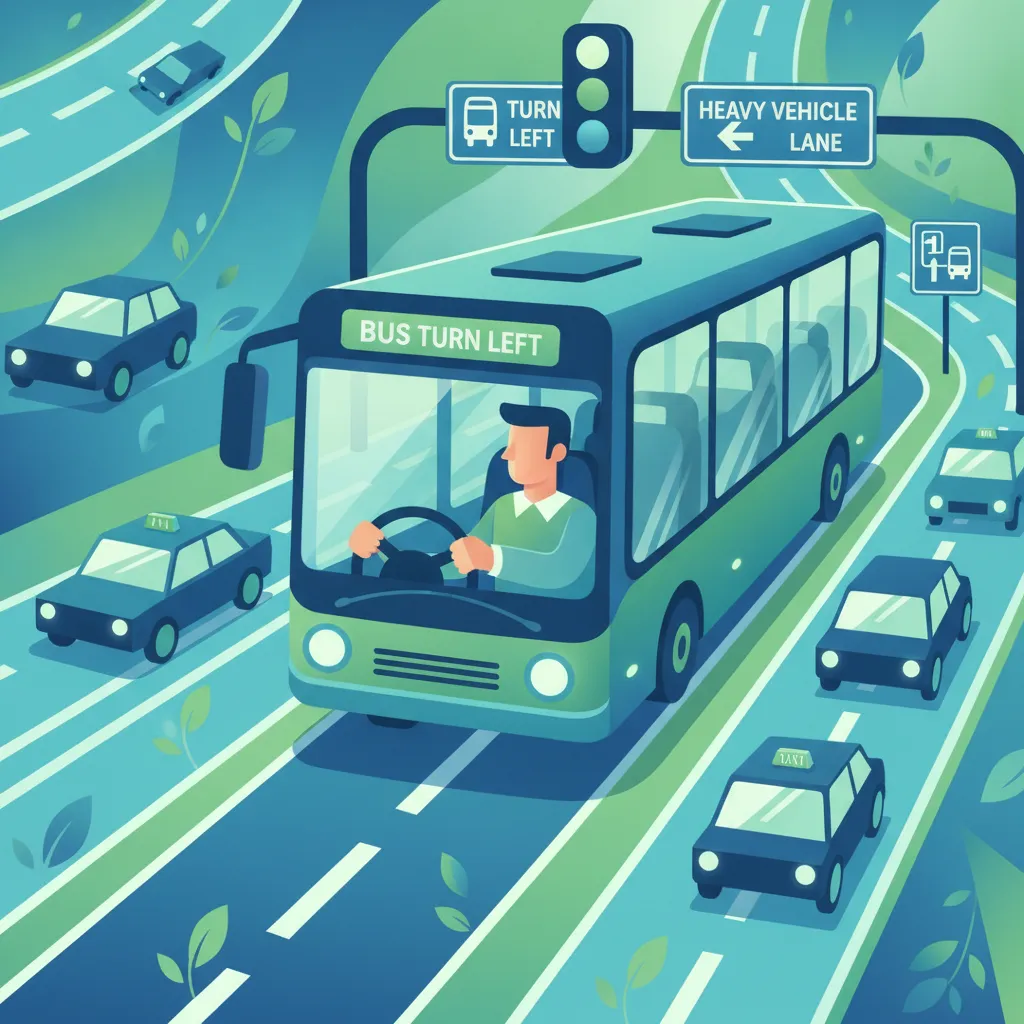
Learners will explore strategies for navigating congested urban traffic environments while operating large passenger vehicles. The lesson covers lane selection, adherence to traffic signals, and the use of bus lanes where applicable. Understanding how to maintain smooth traffic flow while ensuring passenger safety is crucial for efficient urban transportation.
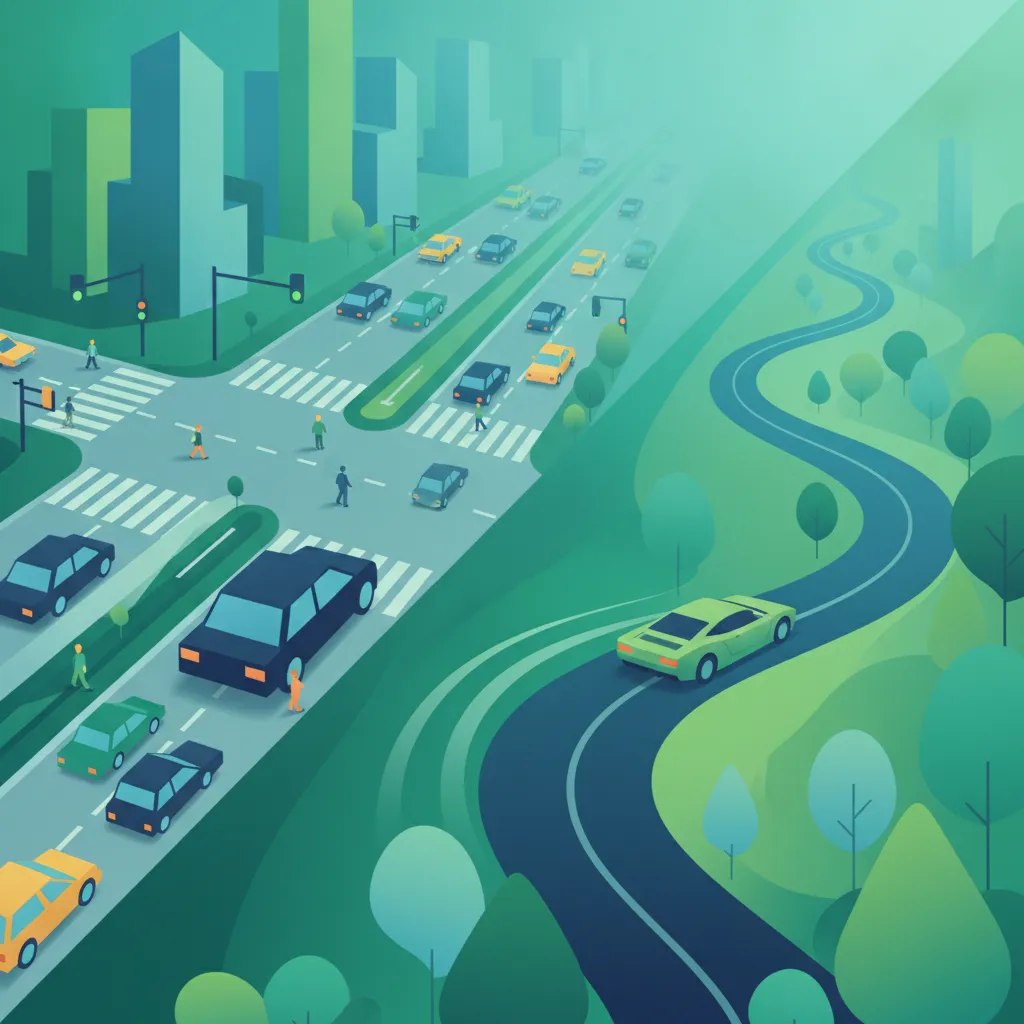
This lesson delves into specific manoeuvring strategies required when navigating both tight urban environments and open rural roads with large passenger vehicles. Learners will explore techniques for handling narrow streets, tight turns, and intersections, while maintaining safety and efficiency. The content emphasizes planning and execution of manoeuvres based on road conditions and vehicle dimensions.
Learners will explore the fundamentals of maintaining correct lane discipline, focusing on appropriate lane positioning, understanding lane markings, and executing lane changes safely. Emphasis is placed on the unique considerations for large passenger vehicles within the lane, such as width and maneuverability. The lesson also addresses the impact of proper lane discipline on overall traffic flow and safety.
Learners will learn how to calculate and maintain safe following distances, accounting for the longer braking distances and reaction times inherent to larger passenger vehicles. The lesson emphasizes the importance of a sufficient time gap to allow for safe stopping and to prevent rear-end collisions, particularly in varying traffic conditions.
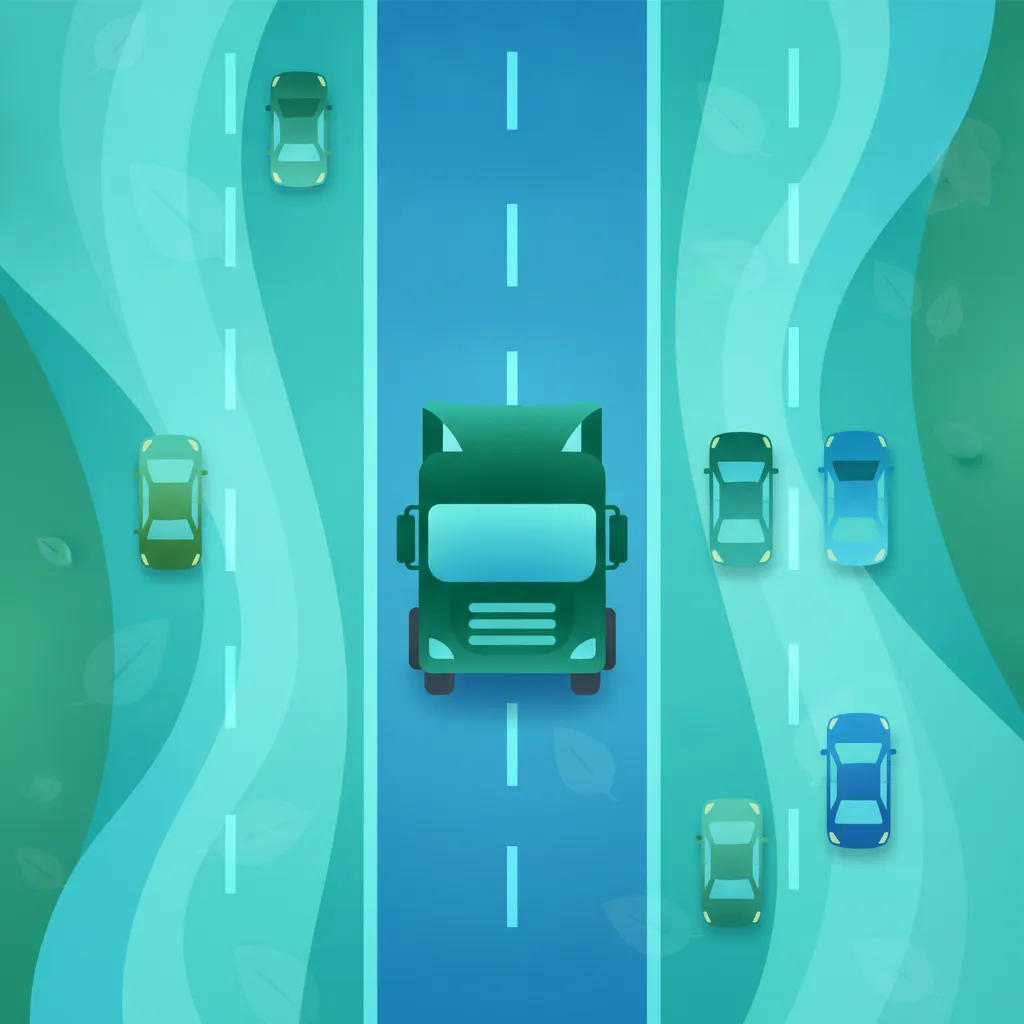
This lesson focuses on the critical importance of lane discipline and proper lane usage for large goods vehicles. Learners will understand the challenges posed by wider vehicle dimensions, the necessity of maintaining adequate lane occupancy, and the need for precise lane keeping. Emphasis is placed on selecting appropriate lanes, adhering to traffic flow, and ensuring general highway safety.
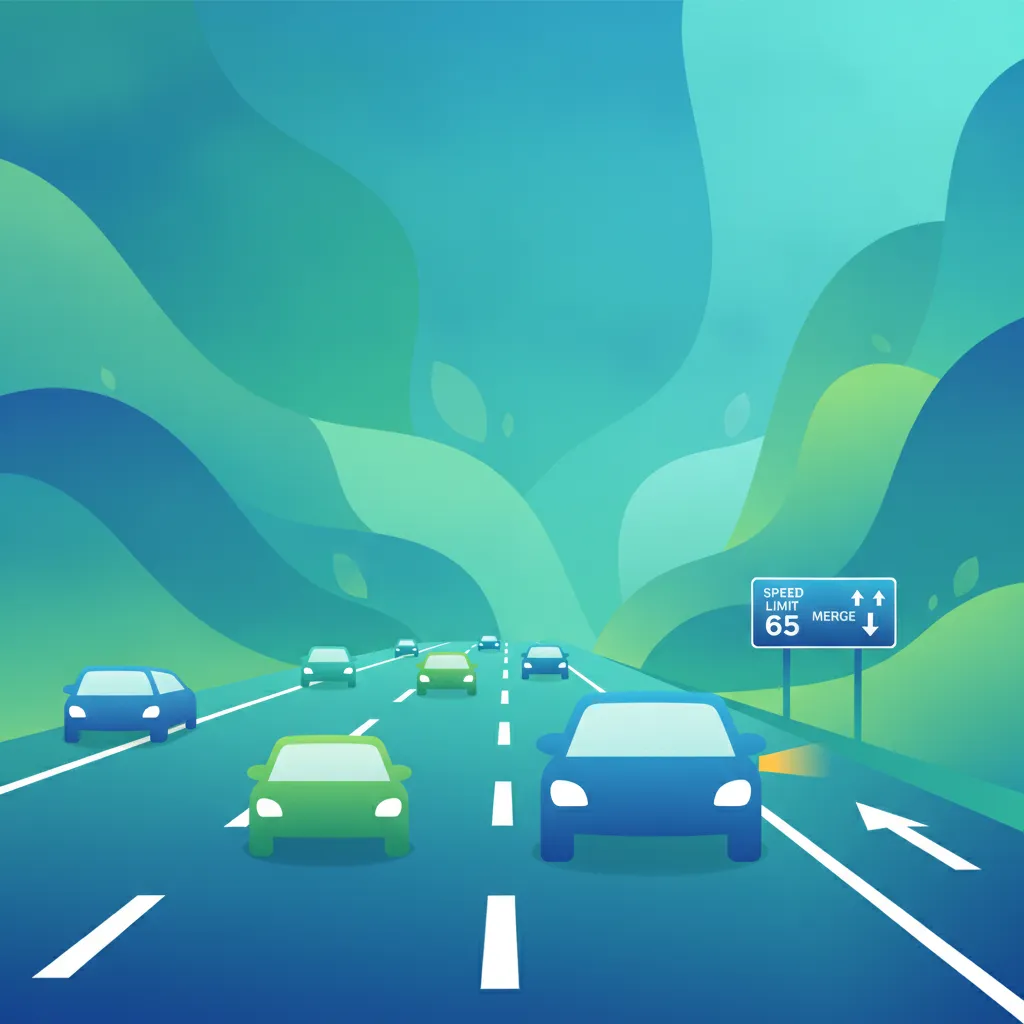
This lesson focuses on the unique requirements and best practices for operating passenger vehicles on highways and expressways. Topics include maintaining appropriate speed, adhering to lane discipline, executing safe overtaking maneuvers, and managing merges and exits. Emphasis is placed on ensuring a smooth ride for passengers while integrating safely with faster-moving traffic.
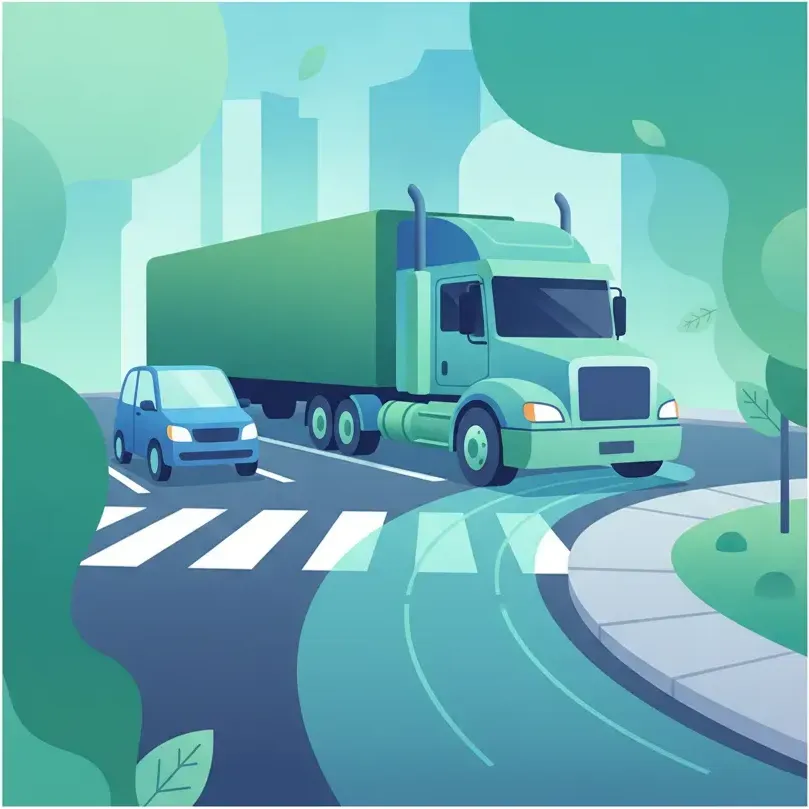
This lesson examines the specific road space requirements necessary for large goods vehicles to operate safely and efficiently. Topics include the need for adequate lane width, lateral clearance, and turning lanes to accommodate wider and longer vehicles. Learners will explore the proper use of shoulders, overtaking procedures, and the impact of large vehicles on overall road capacity in traffic.
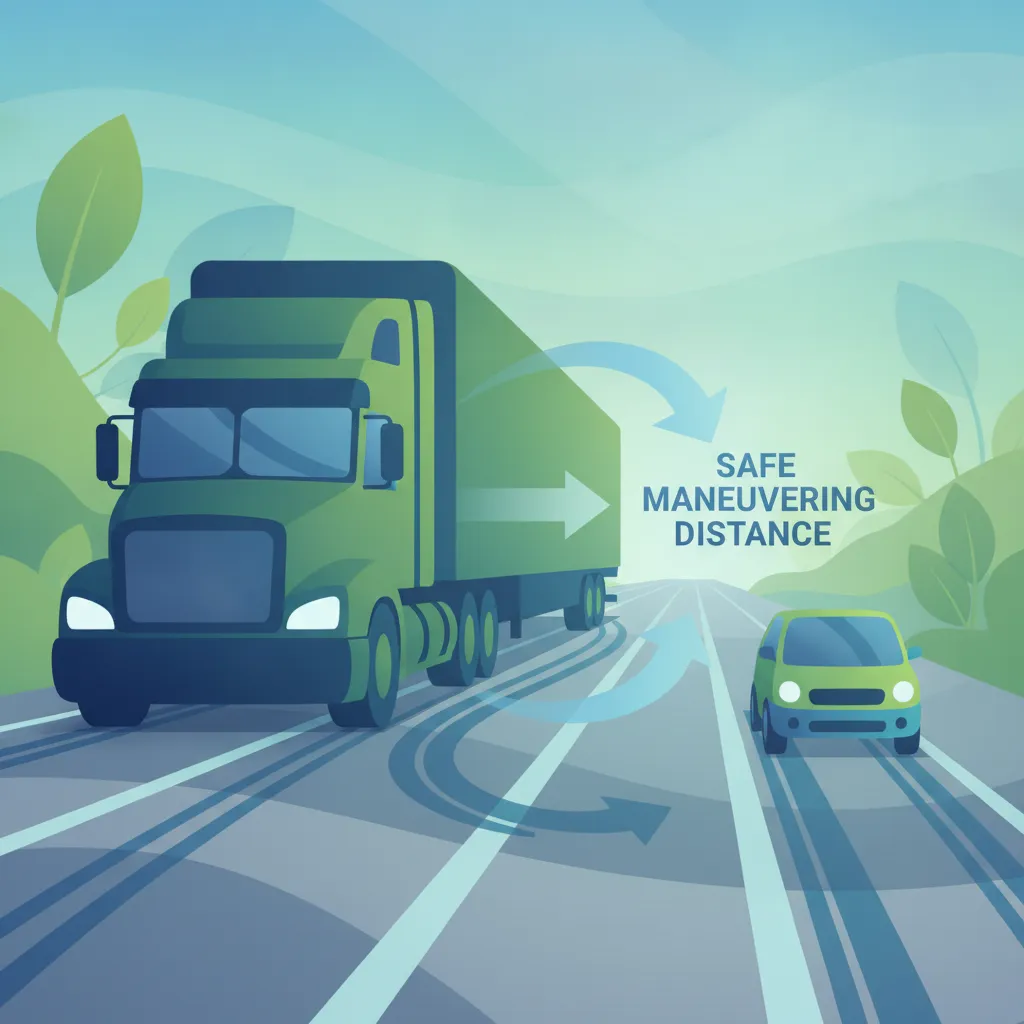
This lesson focuses on how the size and dimensions of goods vehicles influence their interaction with road infrastructure and overall traffic flow. It discusses the increased road space occupancy, especially in urban settings, and the implications for lane usage, bridge clearances, and tunnel dimensions. Learners will gain insight into the infrastructure challenges posed by large vehicles, including wear on road surfaces.

The lesson examines how the physical dimensions of passenger vehicles influence their handling, maneuverability, and blind spot areas. Learners will understand the effects of length, width, height, and wheelbase on turning radius, lane changes, and overall vehicle stability. Grasping these concepts is essential for safe operation in varied traffic environments and tight spaces.
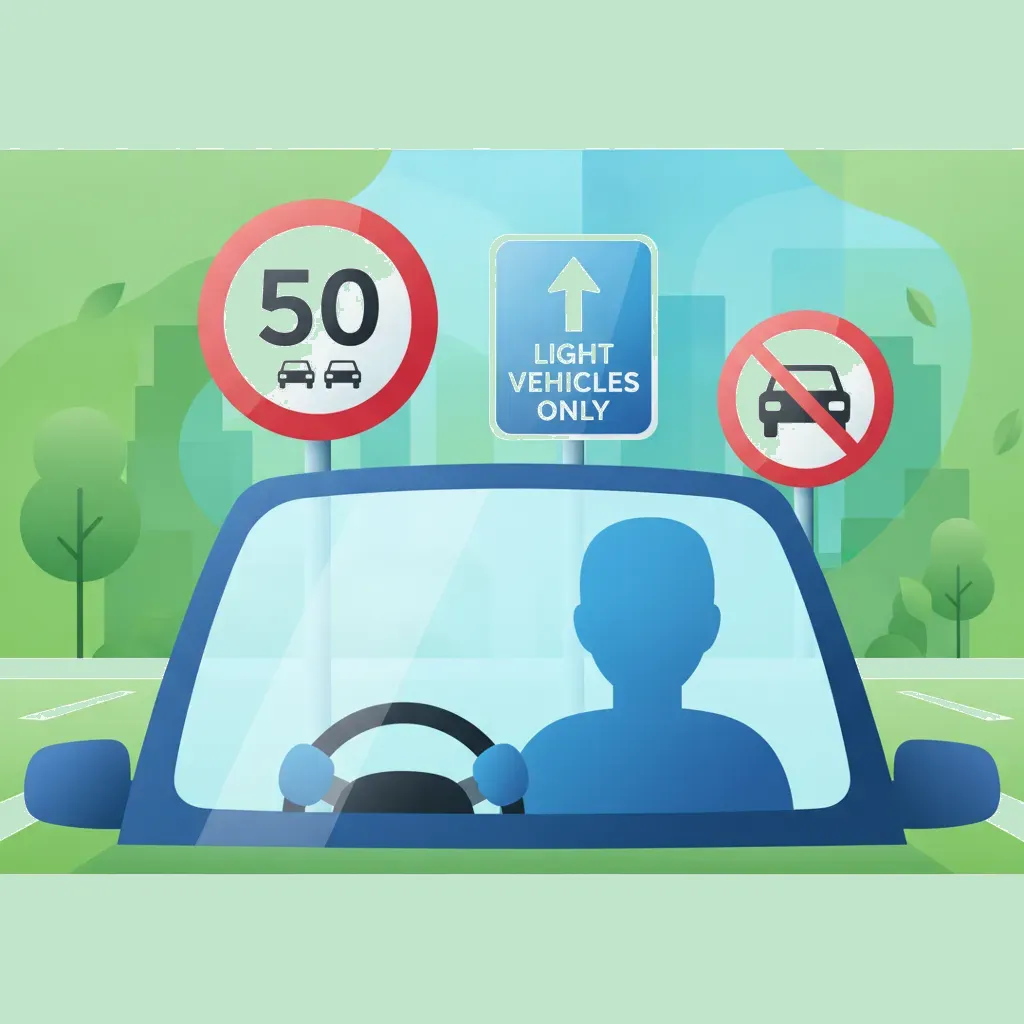
This lesson focuses on the identification and interpretation of traffic signs and road markings that are particularly relevant to passenger vehicle drivers, such as bus lane indications, priority road signs, and specific speed limits. Learners will explore how these signs affect route planning, compliance, and the overall flow of traffic. Mastery of sign interpretation ensures safe and lawful operation in various traffic conditions.
Understand the critical theory behind interacting with pedestrians, cyclists, and school children near bus stops. This lesson covers defensive driving strategies, blind spot awareness, and the legal obligations for Class D drivers to prevent accidents involving vulnerable road users in the Turkish traffic system.
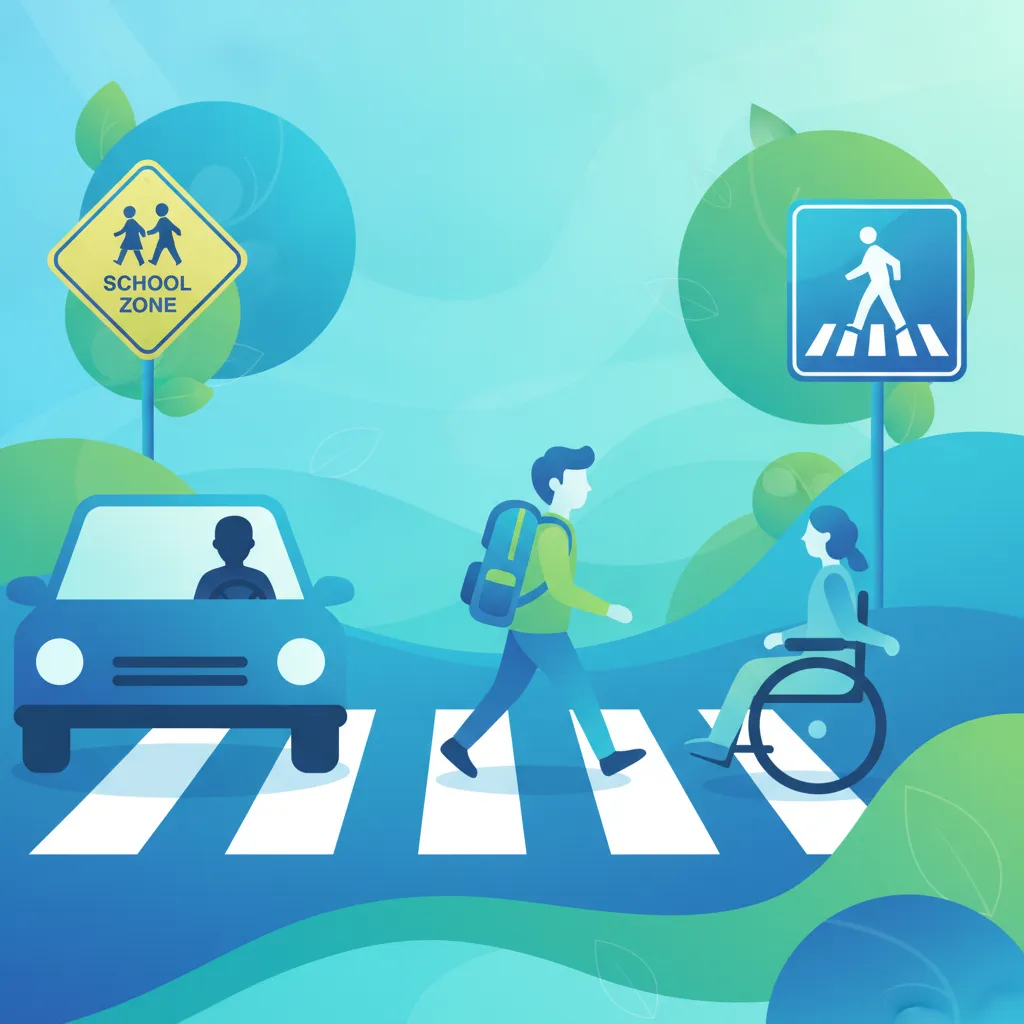
Learners will identify the different categories of vulnerable road users and understand the heightened risks they face. The lesson emphasizes the importance of recognizing these users, anticipating their actions, and taking proactive measures to ensure their safety while operating passenger vehicles. Strategies for mitigating danger and fostering a protective driving environment are explored.
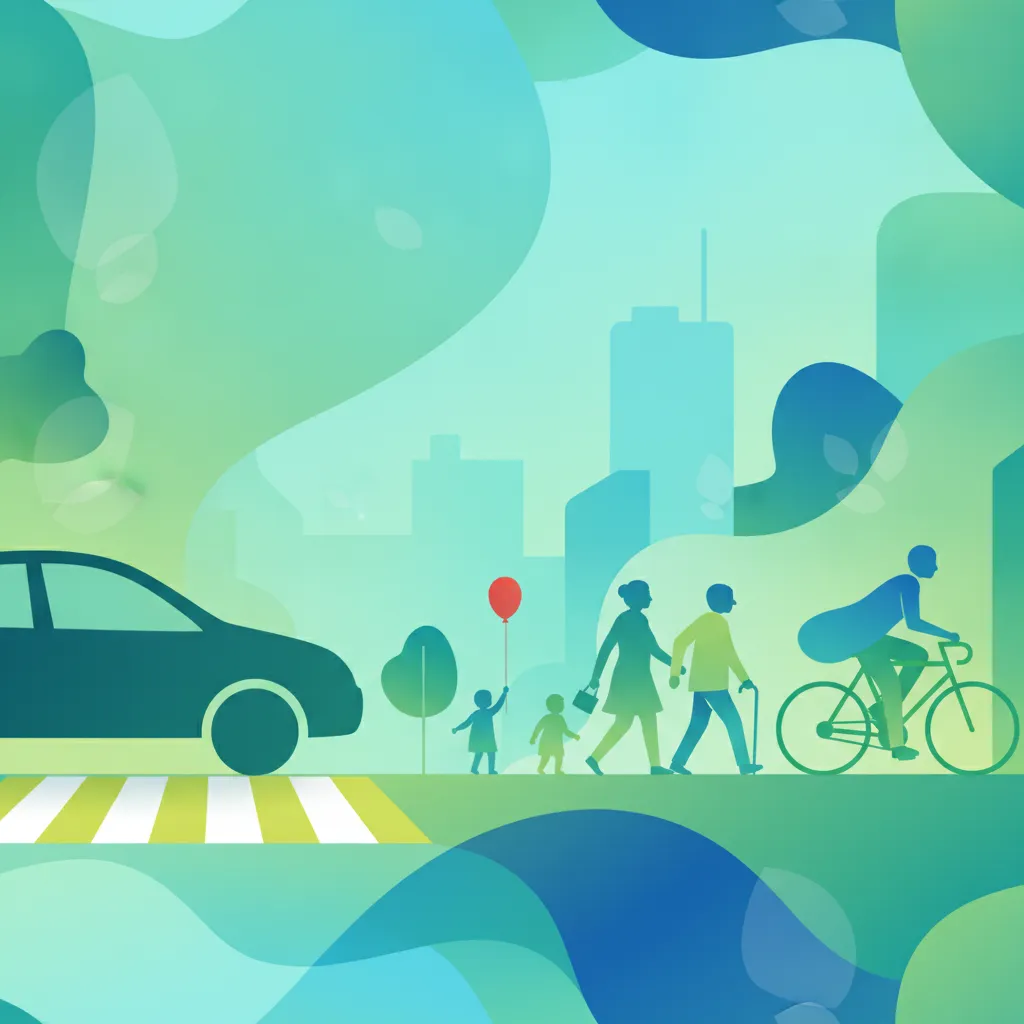
This lesson focuses on protecting vulnerable road users, such as pedestrians, cyclists, and motorcyclists, in mixed traffic environments. Learners will examine specific strategies for increased vigilance, anticipatory driving, and properly yielding to these users. The lesson also covers high-risk zones, such as school areas and public transport stops, emphasizing the need for heightened safety.
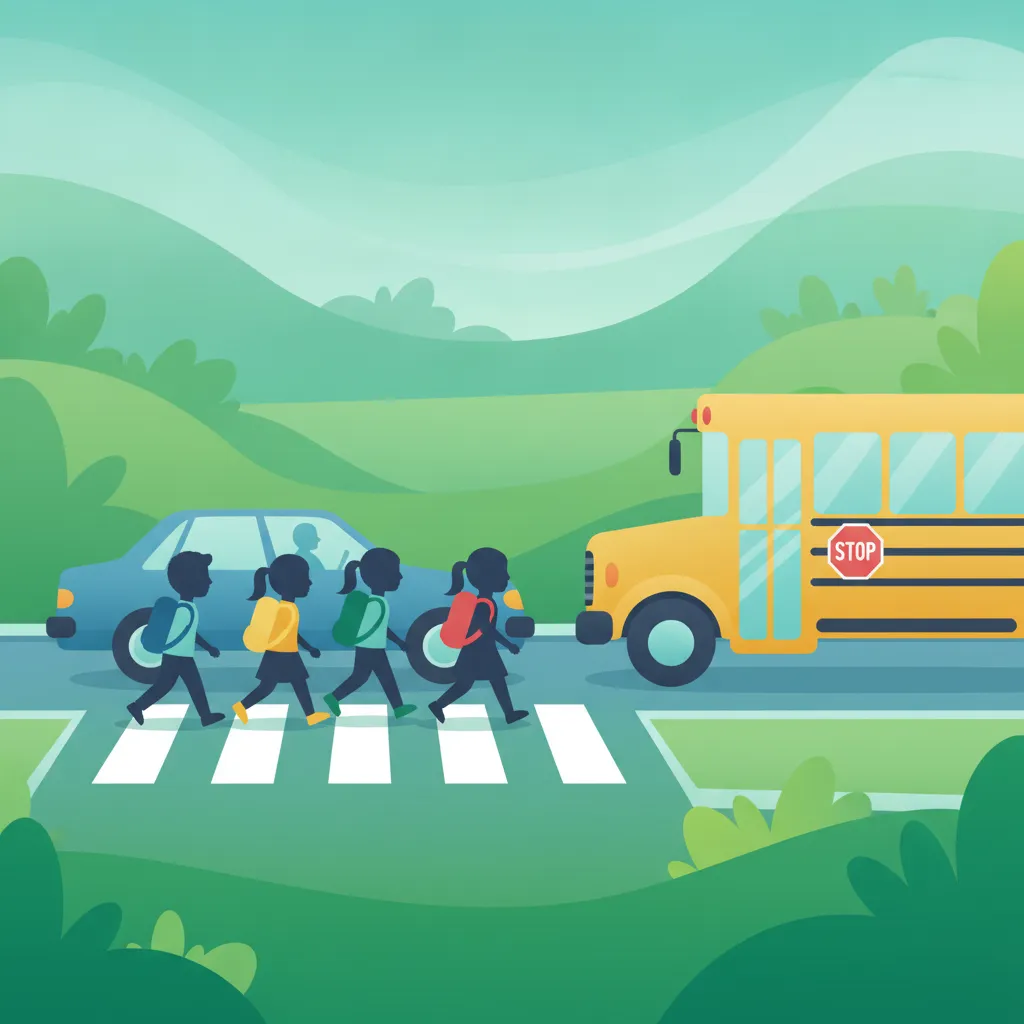
This lesson focuses on the specific considerations for ensuring the safety of pedestrians and schoolchildren around bus stops and terminals. Learners will explore strategies for slowing down, stopping at appropriate distances, and maintaining heightened vigilance. The lesson also covers effective communication with children and the importance of secure boarding and alighting processes to prevent accidents.
Learners will explore best practices for ensuring passenger safety during the boarding and alighting process, focusing on proper vehicle positioning, door operation, and passenger assistance. The lesson covers the use of handrails, steps, and ramps, as well as strategies for managing standing passengers and luggage. Emphasis is placed on clear communication and maintaining situational awareness to prevent accidents.
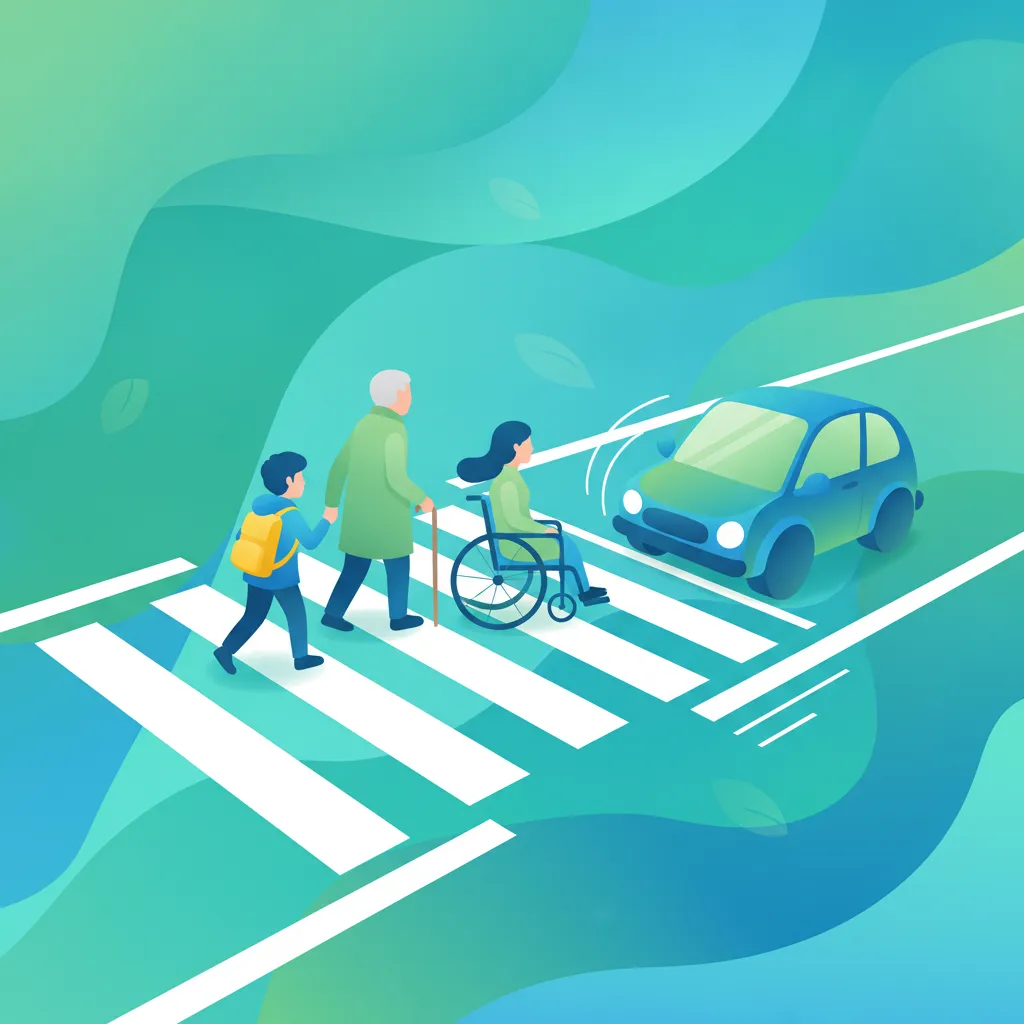
This lesson focuses on the specific needs and challenges faced by children, elderly, and disabled pedestrians. Topics include recognizing vulnerable road users, understanding their behavior, and providing additional safety measures. The lesson also discusses school zones, pedestrian crossing assistance, and strategies to mitigate risks. Real-world examples demonstrate how drivers can anticipate dangers.
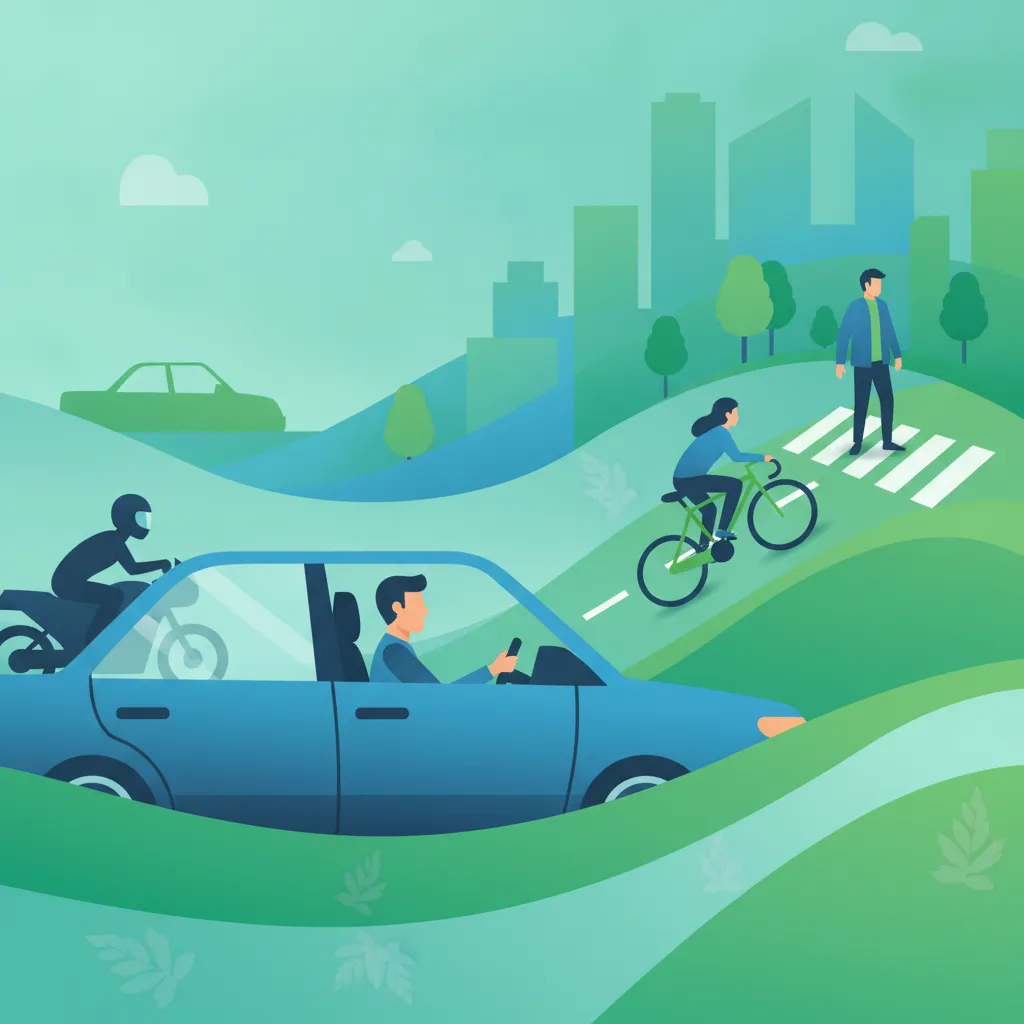
Learners will examine the complexities of operating in environments where various road users, including pedestrians, cyclists, and motorcyclists, coexist. The lesson emphasizes the need for heightened situational awareness, defensive driving techniques, and proactive hazard anticipation. Strategies for navigating mixed traffic safely, especially in congested urban areas, are highlighted.
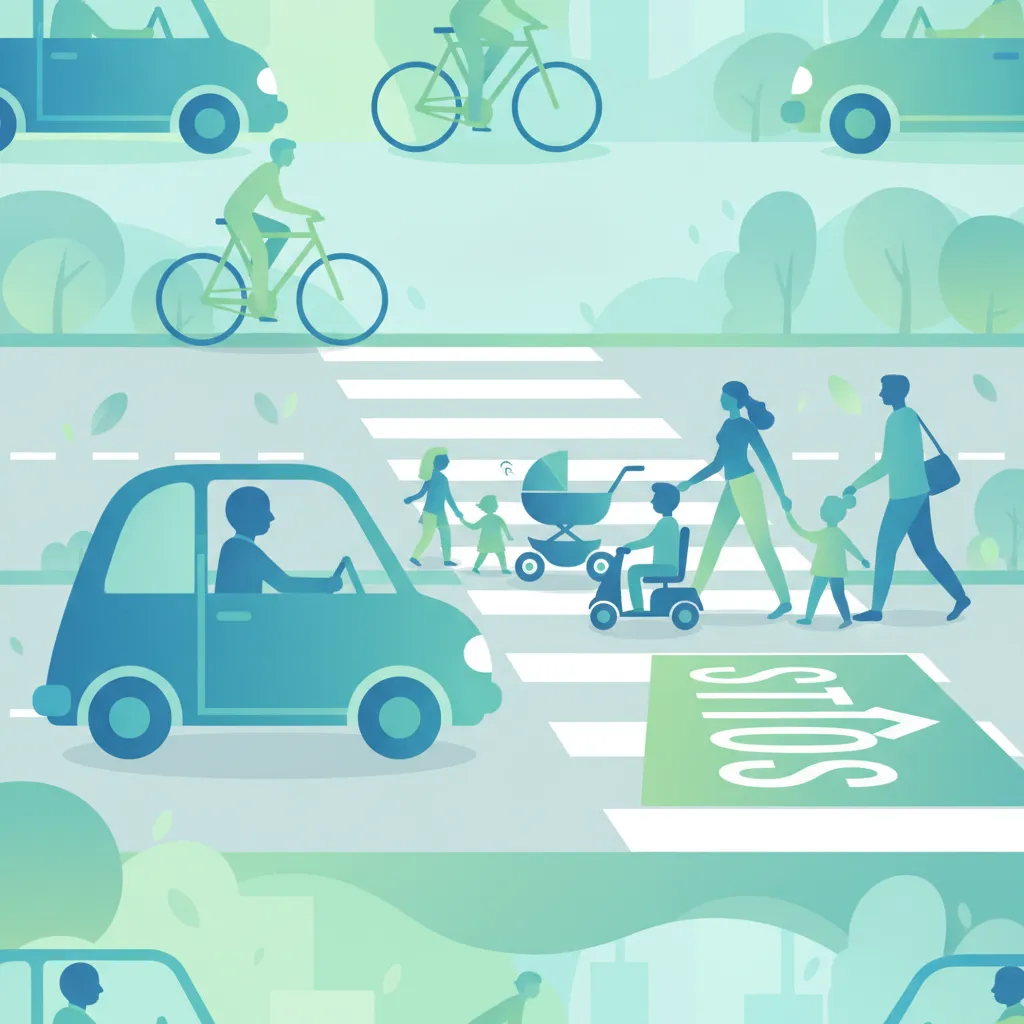
Learners will examine effective strategies for safely coordinating with pedestrians and other road users when approaching and departing bus stops. The lesson highlights right-of-way rules, the importance of yielding at crosswalks, and clear communication with both passengers and other drivers. These practices are vital for preventing accidents and ensuring a harmonious flow of traffic in busy urban areas.

This lesson examines the critical interactions between goods vehicles and vulnerable road users such as pedestrians, cyclists, and motorcyclists, particularly in urban environments. Learners will explore right-of-way rules, maintaining safe distances, and strategies for anticipating the actions of these road users. The lesson emphasizes the importance of clear communication and protective driving.
This lesson emphasizes the importance of yielding to pedestrians and cyclists at intersections, crosswalks, and designated lanes. Learners will understand the legal obligations to provide safe passage to vulnerable road users and the correct procedures for stopping and allowing them to cross. Real-world examples illustrate scenarios where failing to yield can lead to accidents.

This lesson focuses on pedestrian rights and safety measures to ensure their protection on Turkish roads. Topics include proper use of crosswalks, pedestrian signals, and yielding to pedestrians at intersections. The lesson also addresses specific considerations for vulnerable pedestrians such as children, the elderly, and the visually impaired. Real-world scenarios illustrate safe crossing practices.
Find clear answers to common questions learners have about Understanding and Managing Bus Stops and Passenger Boarding Zones. Learn how the lesson is structured, which driving theory objectives it supports, and how it fits into the overall learning path of units and curriculum progression in Turkey. These explanations help you understand key concepts, lesson flow, and exam focused study goals.
In Turkey, you must signal your intention and check your mirrors and blind spots carefully. However, you do not have automatic priority over other traffic simply by signaling, so you must ensure the road is clear before merging back into the traffic flow safely.
Yes, you should aim to align your vehicle as close to the curb as possible to minimize the gap, making it safe and easy for passengers—especially those with reduced mobility—to board and alight without stepping into the road traffic.
You must ensure the vehicle remains stationary until all passengers have safely boarded or alighted. Always supervise the movement, especially if the boarding zone is crowded, to prevent accidents.
Bus stop zones are clearly marked with traffic signs and often yellow zig-zag lines on the road. Parking or stopping in these zones by private vehicles is strictly prohibited to ensure safe access for passenger vehicles.
Use our comprehensive practice search to find exactly the Turkish driving theory questions you need to master. Whether reviewing specific road signs, traffic rules, or first aid scenarios, select your perfect practice set and boost your confidence for the official ehliyet sınavı.