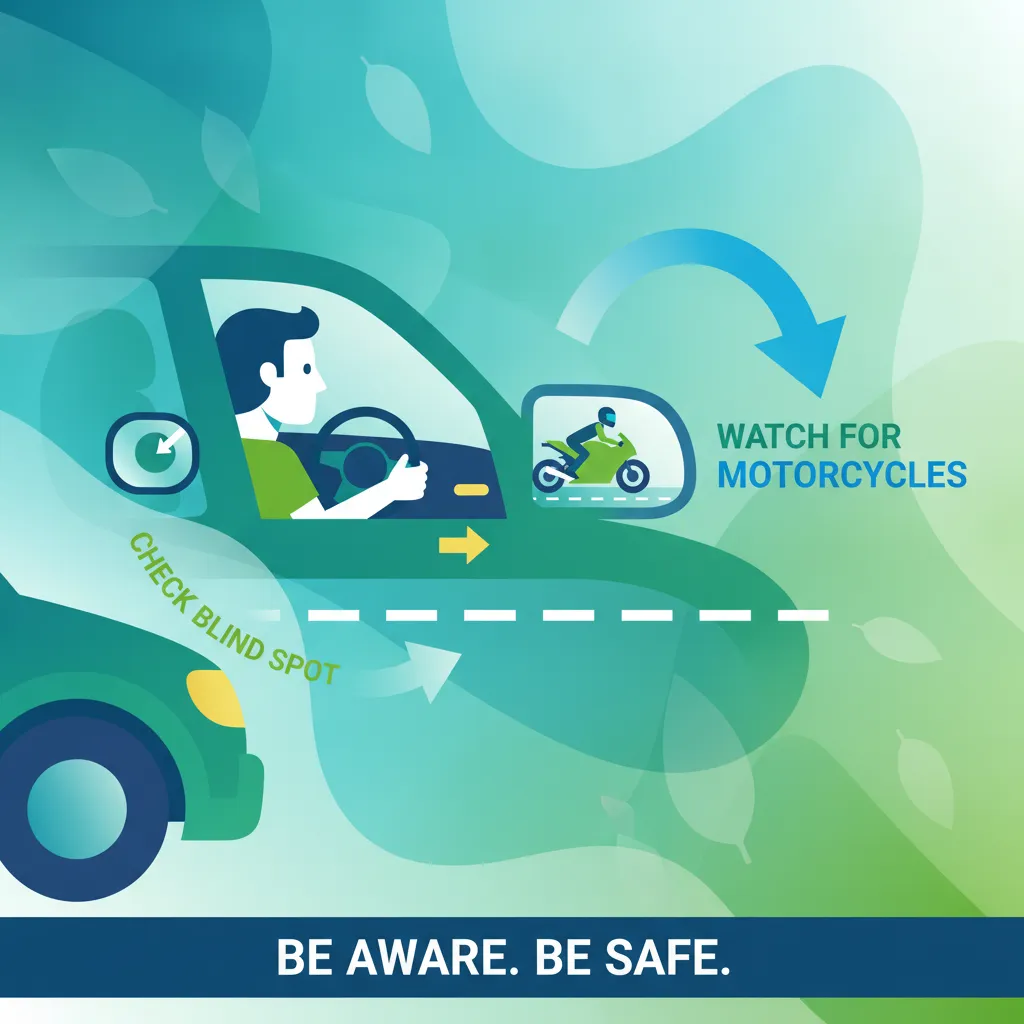
This lesson explores the critical safety measures required when sharing the road with motorcycles and scooters as a professional passenger vehicle driver. You will learn to anticipate their rapid movements and navigate high-risk zones effectively as part of your comprehensive Class D training.
Lesson content overview
Operating a heavy passenger transport vehicle under a Turkish Class D driving licence (Sınıf D Sürücü Belgesi) demands a high level of spatial awareness, patience, and technical precision. Among the most critical challenges a professional bus or coach driver faces is sharing the road with two-wheeled vehicles, such as motorcycles and scooters. These vehicles are agile, fast, and highly vulnerable.
Because of the massive physical disparity between a multi-tonne passenger vehicle and a lightweight two-wheeler, any collision is highly likely to result in severe injury or fatality for the motorcyclist. This lesson covers the essential strategies, physical dynamics, and legal regulations under the Turkish Highway Code (Karayolları Trafik Yönetmeliği) necessary to ensure safe coexistence and prevent accidents.
To safely share the road, you must first understand the operational differences between large passenger vehicles and two-wheeled vehicles. These differences dictate how both types of vehicles accelerate, decelerate, and manoeuvre through traffic.
Motorcycles and scooters present a much smaller visual profile than passenger cars or commercial vehicles. This low visibility makes them exceptionally difficult to spot in peripheral vision, heavy traffic, or adverse weather conditions. For a Class D driver sitting high in a bus cabin, a scooter can easily disappear completely within the vehicle's structural blind spots.
Two-wheeled vehicles possess a very high power-to-weight ratio. They can accelerate from a standstill or increase speed mid-lane much faster than a heavy passenger bus. Conversely, their deceleration characteristics can be highly unpredictable:
The practice of slowing down a vehicle by releasing the accelerator and shifting into lower gears, rather than applying the service brakes. This does not illuminate the brake lights.
Motorcycles can change direction almost instantly to avoid road hazards, potholes, or debris that a bus would simply drive over. Furthermore, they are entitled to use the full width of their lane. However, many riders will position themselves on the left or right side of a lane to maximise their own line of sight or avoid oil patches in the centre of the road. As a professional driver, you must never assume a motorcycle will maintain a single, static track within a lane.
The blind spots of a Class D passenger transport vehicle are significantly larger and more dangerous than those of a standard passenger car. Understanding where these blind zones are and how to mitigate them is a core requirement for passing the Turkish Class D theory exam.
Relying solely on your side mirrors is one of the most common causes of collisions. Mirrors have inherent limitations and cannot capture vehicles travelling directly alongside your cabin or rear wheels.
Turkish Highway Code §c.24.3: Drivers must perform a direct head turn and visual check (shoulder check) before changing lanes or merging. Failing to clear your blind spots before a manoeuvre is a serious traffic violation and carries substantial liability in the event of an accident.
Scan Ahead: Monitor traffic patterns at least 15 to 20 seconds ahead to identify any approaching two-wheelers before they enter your blind zones.
Mirror Check: Check your left, right, and wide-angle mirrors every 5 to 8 seconds, particularly before altering your speed or lane position.
Signal Early: Activate your turn indicator at least 3 to 5 seconds before beginning any lateral movement to alert nearby motorcyclists of your intentions.
Perform the Shoulder Check: Turn your head quickly to look through the side windows to ensure no motorcycle is hiding in the A-pillar or immediate side zones.
Manoeuvre Smoothly: Initiate the turn or lane change slowly, allowing time for any unseen road users to sound their horn or move out of the way.
Because of the differences in braking efficiency and physical stability, maintaining a standard following distance is insufficient when trailing a two-wheeled vehicle.
Under normal driving conditions, the standard safe following distance is determined by the two-second rule. However, when a Class D vehicle is following a motorcycle or scooter, this distance must be extended.
An extended gap is necessary for several reasons:
Turkish Highway Code §c.34.2 (Best Practice): While the generic legal following distance is based on half the speed value in metres (e.g., 45 metres safe gap at 90 km/h), professional drivers are legally advised to increase this spacing when following vulnerable road users to compensate for their rapid stopping capabilities.
Overtaking a two-wheeled vehicle with a large passenger bus is a high-risk manoeuvre that requires strict adherence to legal clearances.
When passing a motorcycle or scooter, you must never squeeze past them within the same lane. You must treat them as a full-sized vehicle.
Regulation on Overtaking Maneuvers, Art. 4: When overtaking any two-wheeled vehicle, drivers must maintain a absolute minimum lateral clearance of 1 metre. For larger passenger vehicles like buses, a lateral safety margin of 1.5 metres or more is highly recommended, especially at higher speeds.
In major Turkish metropolitan areas such as Istanbul, Ankara, and Izmir, heavy traffic congestion is a daily reality. In these environments, motorcycles and scooters regularly engage in lane filtering.
The practice of motorcycles or scooters moving between slow-moving or stationary lanes of traffic heading in the same direction.
While lane filtering is a common traffic flow dynamic, it introduces specific hazards for Class D drivers:
Turkish Highway Code §c.18.5: Drivers are legally obligated to maintain continuous vigilance and scan the gaps between vehicles in congested, stop-and-go traffic to prevent collisions with filtering two-wheelers.
Environmental conditions heavily influence the stability and visibility of motorcycles, requiring Class D drivers to adjust their driving behavior accordingly.
At night, a motorcycle's single headlight can easily merge with the background noise of other vehicle lights, making it difficult to judge its speed and distance.
Rain, fog, snow, and strong winds affect two-wheeled vehicles far more severely than passenger buses:
To pass the Turkish Class D licensing exam and operate safely as a professional driver, you must understand the legal liabilities associated with unsafe driving around two-wheelers.
| Common Violation | Relevant Article / Regulation | Potential Consequences / Penalties |
|---|---|---|
| Failure to perform shoulder check before lane change | Turkish Highway Code §c.24.3 | Demerit points, fines, and primary liability in side-impact collisions. |
| Insufficient lateral clearance when overtaking | Regulation on Overtaking, Art. 4 | Traffic fine, demerit points, and suspension of professional driving certificate (SRC) in fatal cases. |
| Tailgating / Inadequate following distance | Turkish Highway Code §c.34.2 | Rear-end collision liability, administrative traffic fines. |
| Improper high beam usage causing glare | Turkish Highway Code §c.23.1-A | Monetary fine, temporary loss of night vision for other road users leading to accident liability. |
| Failure to yield right-of-way at intersections | Turkish Highway Code §c.19.4 | Intersection collision, heavy fines, and immediate driver fault determination. |
Explore all units and lessons included in this driving theory course.
Lesson content overview
Explore all units and lessons included in this driving theory course.
Explore search topics learners often look for when studying Strategies for Safe Coexistence with Motorcycles and Scooters. These topics reflect common questions about road rules, driving situations, safety guidance, and lesson level theory preparation for learners in Turkey.
Browse additional driving theory lessons that cover connected traffic rules, road signs, and common driving situations related to this topic. Improve your understanding of how different rules interact across everyday traffic scenarios.
Learn the essential techniques for navigating busy city streets as a Class D driver. This guide covers how to manage large vehicle dimensions, navigate narrow corridors, and safely handle turning manoeuvres while monitoring blind spots to ensure pedestrian and vehicle safety in accordance with Turkish traffic regulations.

This lesson focuses on identifying and managing blind spots specific to goods vehicles, which are larger and have more extensive blind zones compared to standard cars. Learners will explore techniques for blind spot detection using mirrors, rearview cameras, and sensor systems, ensuring safe lane changes and maneuvering. The lesson emphasizes the importance of continuous observation and modern safety technology.

This lesson addresses the challenges of safely reversing a goods vehicle, including the identification of blind spots and rear visibility limitations. It covers proper mirror and rearview camera usage, as well as strategies for maintaining awareness of obstacles and the trailer's path. The lesson also emphasizes the importance of reversing alarms and slow, controlled vehicle movements.
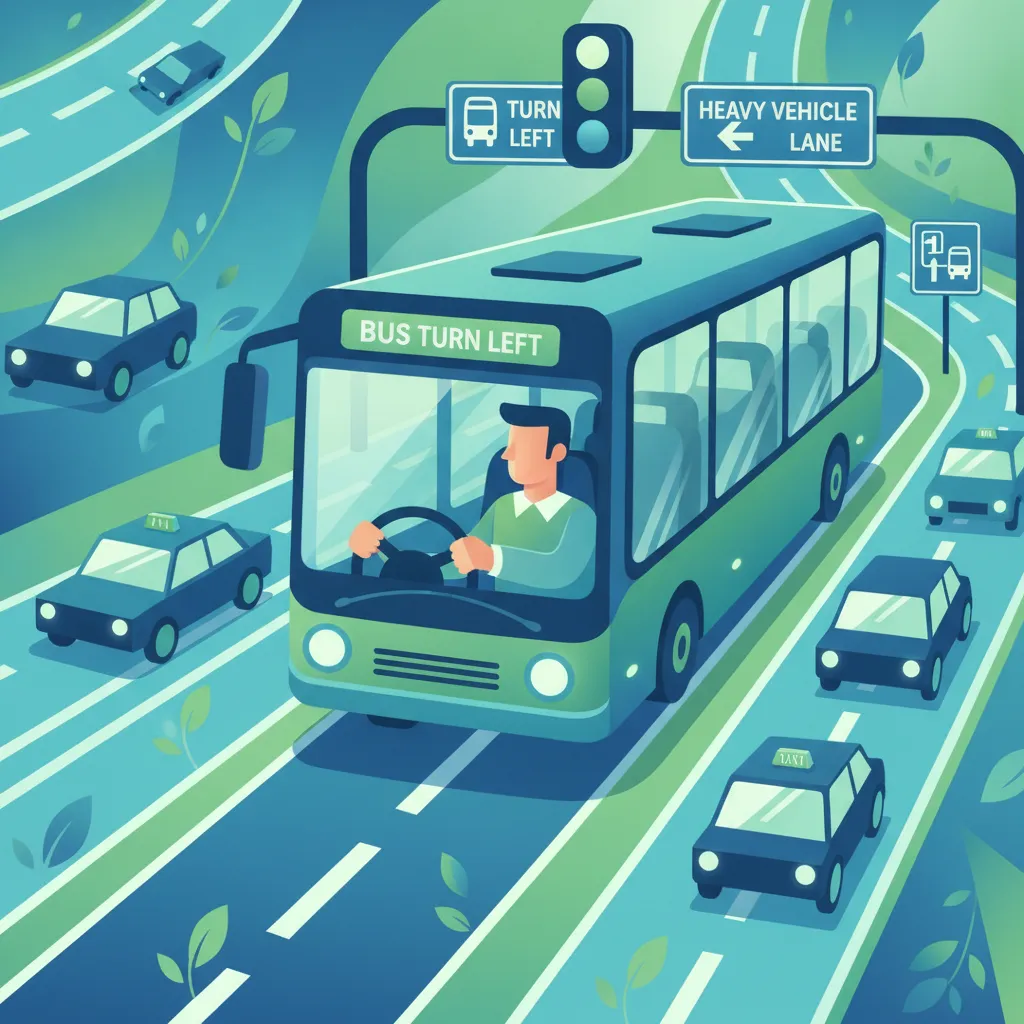
Learners will explore strategies for navigating congested urban traffic environments while operating large passenger vehicles. The lesson covers lane selection, adherence to traffic signals, and the use of bus lanes where applicable. Understanding how to maintain smooth traffic flow while ensuring passenger safety is crucial for efficient urban transportation.
This lesson focuses on the execution of safe right and left turns with large passenger vehicles, emphasizing the identification and management of blind spots. Learners will understand the correct use of turn signals, proper positioning within the turn, and the importance of thorough observation before and during turning. Strategies for minimizing blind spot exposure are also covered.
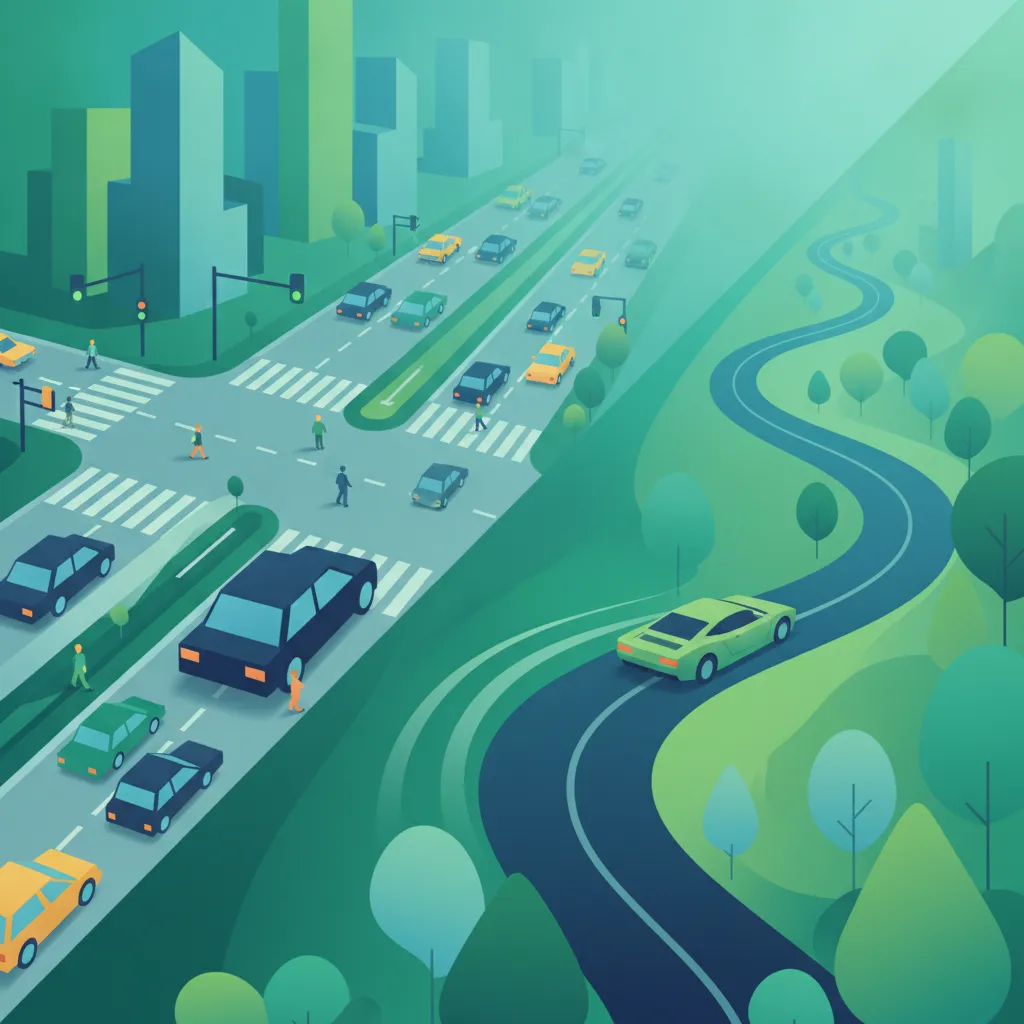
This lesson delves into specific manoeuvring strategies required when navigating both tight urban environments and open rural roads with large passenger vehicles. Learners will explore techniques for handling narrow streets, tight turns, and intersections, while maintaining safety and efficiency. The content emphasizes planning and execution of manoeuvres based on road conditions and vehicle dimensions.

This lesson introduces the proper utilization of mirrors, rearview cameras, and additional sensor systems to enhance situational awareness for goods vehicle drivers. Learners will understand the importance of correctly adjusting mirrors for optimal coverage, interpreting camera feeds, and relying on sensor alerts. The lesson emphasizes integrating modern safety technology into daily driving practices.
This lesson focuses on protecting vulnerable road users, such as pedestrians, cyclists, and motorcyclists, in mixed traffic environments. Learners will examine specific strategies for increased vigilance, anticipatory driving, and properly yielding to these users. The lesson also covers high-risk zones, such as school areas and public transport stops, emphasizing the need for heightened safety.
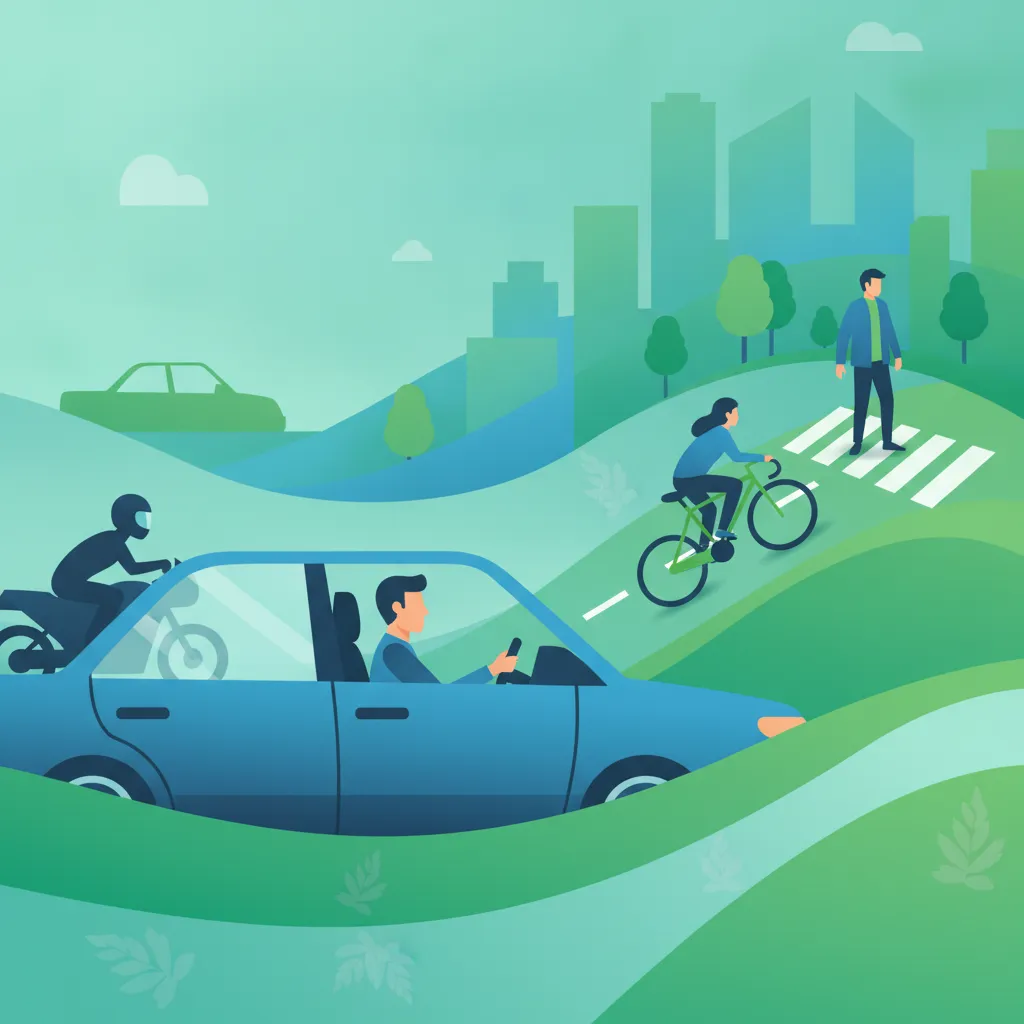
Learners will examine the complexities of operating in environments where various road users, including pedestrians, cyclists, and motorcyclists, coexist. The lesson emphasizes the need for heightened situational awareness, defensive driving techniques, and proactive hazard anticipation. Strategies for navigating mixed traffic safely, especially in congested urban areas, are highlighted.

This lesson focuses on the challenges and techniques required when maneuvering goods vehicles in confined spaces such as loading docks, narrow streets, and urban environments. It addresses the importance of spatial awareness, precision driving, and understanding vehicle dimensions to avoid collisions. Learners will explore strategies for effective parking, reversing, and handling blind spots safely.

Learners will explore the proper adjustment and utilization of mirrors, rear-view cameras, and blind spot sensors to maximize visibility while operating a passenger vehicle. The lesson covers the optimal positioning of mirrors for comprehensive coverage, interpreting camera and sensor alerts, and integrating these tools into safe driving practices. Proper use of these technologies reduces blind spots and enhances overall situational awareness.
Explore the legal and safety responsibilities of professional drivers when sharing the road with pedestrians, cyclists, and school children. This lesson explains how to identify high-risk areas like school zones and bus stops while maintaining safe distances to prevent accidents involving vulnerable participants in road traffic.
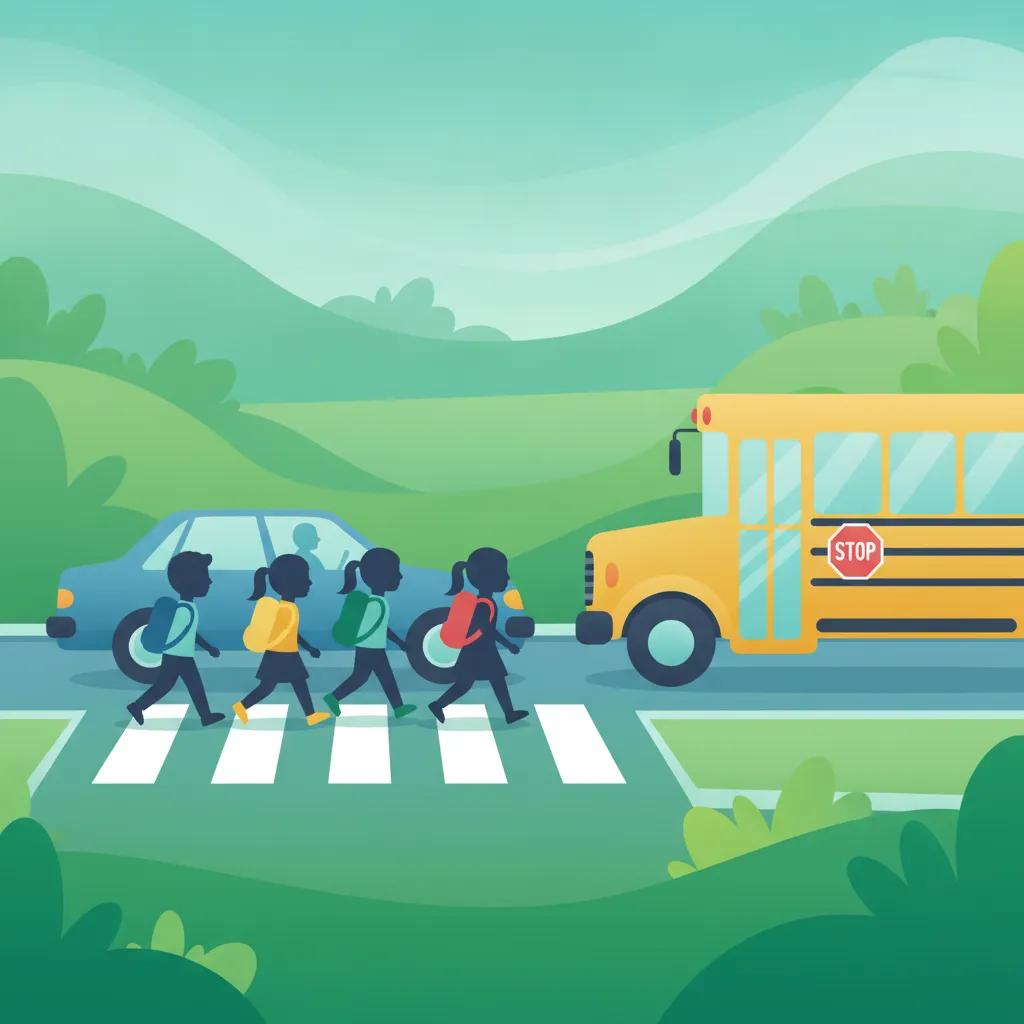
This lesson focuses on the specific considerations for ensuring the safety of pedestrians and schoolchildren around bus stops and terminals. Learners will explore strategies for slowing down, stopping at appropriate distances, and maintaining heightened vigilance. The lesson also covers effective communication with children and the importance of secure boarding and alighting processes to prevent accidents.

Learners will identify the different categories of vulnerable road users and understand the heightened risks they face. The lesson emphasizes the importance of recognizing these users, anticipating their actions, and taking proactive measures to ensure their safety while operating passenger vehicles. Strategies for mitigating danger and fostering a protective driving environment are explored.
This lesson focuses on the specific needs and challenges faced by children, elderly, and disabled pedestrians. Topics include recognizing vulnerable road users, understanding their behavior, and providing additional safety measures. The lesson also discusses school zones, pedestrian crossing assistance, and strategies to mitigate risks. Real-world examples demonstrate how drivers can anticipate dangers.
This lesson focuses on protecting vulnerable road users, such as pedestrians, cyclists, and motorcyclists, in mixed traffic environments. Learners will examine specific strategies for increased vigilance, anticipatory driving, and properly yielding to these users. The lesson also covers high-risk zones, such as school areas and public transport stops, emphasizing the need for heightened safety.

This lesson examines the critical interactions between goods vehicles and vulnerable road users such as pedestrians, cyclists, and motorcyclists, particularly in urban environments. Learners will explore right-of-way rules, maintaining safe distances, and strategies for anticipating the actions of these road users. The lesson emphasizes the importance of clear communication and protective driving.
This lesson emphasizes the importance of yielding to pedestrians and cyclists at intersections, crosswalks, and designated lanes. Learners will understand the legal obligations to provide safe passage to vulnerable road users and the correct procedures for stopping and allowing them to cross. Real-world examples illustrate scenarios where failing to yield can lead to accidents.
This lesson examines the interaction between drivers and cyclists, focusing on the safe sharing of road space. Topics include the proper use of bicycle lanes, yielding to cyclists at intersections, and safe passing distances. The lesson also addresses cyclist vulnerabilities and ways to minimize risks. Real-world examples illustrate common hazards when sharing the road.
This lesson explores the specific responsibilities and precautions required when operating passenger vehicles on routes that serve schools. Topics include adhering to reduced speed limits, coordinating with crossing guards, ensuring safe loading and unloading of students, and managing interactions with parents and school staff. Emphasis is placed on creating a secure and predictable environment for children.
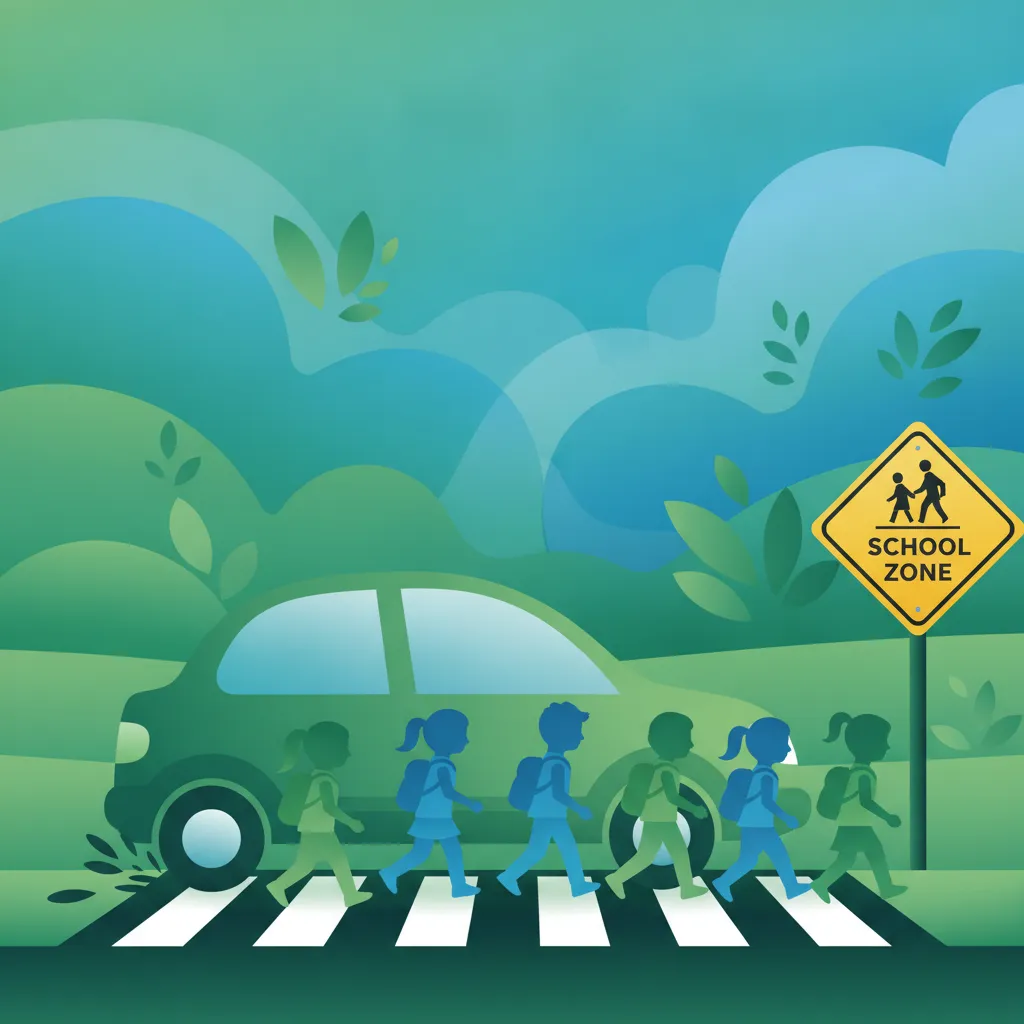
Protecting vulnerable road users is a core legal and ethical responsibility for all motorized vehicle operators in Turkey. This lesson covers the absolute requirement to yield to pedestrians at marked crosswalks, zebra crossings, and designated school zones. You will learn how to identify these zones early, reduce your speed proactively, and maintain heightened situational awareness for children or distracted pedestrians who may step onto the road unexpectedly.

Proper road positioning is your primary shield against being squeezed, sideswiped, or overlooked by larger motor vehicles in daily traffic. This lesson explains how to ride in the center or slightly off-center of your lane to prevent unsafe overtaking within the same lane. You will study how to identify the massive blind spots of buses and trucks, maintain appropriate following distances, and execute overtaking maneuvers with maximum safety margin and clear signal warning.
Find clear answers to common questions learners have about Strategies for Safe Coexistence with Motorcycles and Scooters. Learn how the lesson is structured, which driving theory objectives it supports, and how it fits into the overall learning path of units and curriculum progression in Turkey. These explanations help you understand key concepts, lesson flow, and exam focused study goals.
Motorcycles are smaller, harder to see in mirrors, and can accelerate or change lanes much faster than a large passenger vehicle. This makes them prone to disappearing into blind spots.
You must maintain a larger following distance than you would with a car, as motorcycles can stop much faster. Allow extra space to react if they brake suddenly.
No, traffic laws apply to everyone. However, their small size often leads them to filter through traffic. As a driver, you must check your blind spots constantly before any lane changes.
Questions often focus on hazard perception, such as images of a bus approaching a junction where a motorcycle is hidden by a blind spot. You must identify the safest reaction.
Use our comprehensive practice search to find exactly the Turkish driving theory questions you need to master. Whether reviewing specific road signs, traffic rules, or first aid scenarios, select your perfect practice set and boost your confidence for the official ehliyet sınavı.