This lesson details the critical responsibilities of a professional bus driver when encountering or being involved in an accident. You will learn the correct procedures to secure your vehicle and passengers, as well as the essential legal requirement to form an emergency corridor (Rettungsgasse) on Austrian roads.
Lesson content overview
As a professional driver holding an Austrian Bus & Coach Licence (Category D), you carry significant responsibility for your passengers and other road users. Accidents, breakdowns, or even severe traffic congestion can unexpectedly create hazardous situations. Knowing how to react calmly, correctly, and effectively is crucial to minimize risks, facilitate rapid emergency response, and fulfill your legal obligations under Austrian traffic law (StVO).
This lesson will guide you through the essential steps to manage an accident scene, from securing your vehicle and warning approaching traffic to making an emergency call and, critically, understanding your role in forming the Rettungsgasse (rescue lane) for emergency services. Prompt and correct actions not only reduce the likelihood of secondary accidents but can also save lives by ensuring emergency personnel reach the scene without delay.
When involved in a traffic accident, or when you are the first to arrive at a scene, your immediate priority is the safety of yourself, your passengers, and anyone else involved. Panic can lead to further hazards, so a systematic approach is essential.
Before anything else, assess the immediate danger. If your vehicle is still movable and it is safe to do so, move it to the side of the road, preferably onto the hard shoulder on motorways or a safe, out-of-traffic area on other roads. This prevents your vehicle from becoming an additional obstruction or hazard. Always ensure all occupants, especially your passengers, remain seated and secured with seat belts until you have assessed the situation and given clear instructions. As a bus or coach driver, ensuring the welfare of your passengers is paramount; instruct them to remain calm and follow your directions carefully.
Never exit your vehicle into moving traffic without checking it is safe to do so. On high-speed roads, the danger of being hit by passing vehicles is extremely high.
Immediately upon stopping, activate your hazard warning lights (all indicator lights flashing continuously). This is a legal requirement under Austrian StVO § 33 when your vehicle is immobilized or poses a significant hazard to traffic. These lights make your stationary vehicle much more visible to approaching drivers, giving them an early warning of an obstruction or danger ahead, especially in poor visibility conditions.
A system that flashes all of a vehicle's indicator lights simultaneously to warn other road users of a hazard or a stationary vehicle.
Once your vehicle is secured and hazard lights are active, your next crucial step is to further warn approaching traffic. This provides additional reaction time for other drivers and significantly reduces the risk of secondary collisions.
The warning triangle is a mandatory piece of safety equipment in Austria and must be placed at a specific distance behind your vehicle. This reflective triangle serves as an advance warning sign for oncoming traffic, giving drivers ample time to react to the obstruction.
Assess the environment: Consider speed limits, curves, hills, and visibility.
Maintain personal safety: Wear a high-visibility vest (also mandatory in Austria for drivers exiting a vehicle on the road) and approach the placement area facing oncoming traffic if possible.
Place at correct distance:
To estimate 150 metres on a motorway, look for distance markers (e.g., reflector posts along the road, often spaced 50 metres apart), or walk an estimated distance, keeping safety paramount.
While hazard lights and the warning triangle are primary, in certain situations, you may need to use additional methods to alert other drivers. This could include hand signals, especially if there are other people present who can safely assist in directing traffic. However, these are supplementary and do not replace the mandatory use of hazard lights and the warning triangle.
Once the scene is secured and other road users are warned, contacting emergency services is paramount. In Austria, the universal emergency number is 112. A clear, calm, and informative call ensures the right help arrives swiftly.
When you call 112, be prepared to provide the following details:
Exact Location: This is critical. Use motorway kilometre markers, street names, house numbers, or prominent landmarks. If using a mobile phone, many devices can provide GPS coordinates. For a bus, providing details of the route or planned destination can also help.
Nature of the Incident: Clearly state what has happened (e.g., "traffic accident," "vehicle breakdown," "fire").
Number of Persons Involved: Provide an estimate of how many people are involved and if there are any injuries. For a bus, state the approximate number of passengers.
Type of Injuries: If you can safely assess, describe the severity and type of injuries (e.g., "conscious," "unconscious," "trapped," "bleeding").
Potential Hazards: Mention anything that could worsen the situation, such as fire, fuel spills, hazardous cargo (if applicable to your vehicle or others involved), or downed power lines.
Your Contact Details: Provide your name and the phone number you are calling from, and remain on the line until the operator instructs you to hang up. They may need further information or provide instructions.
Under StVO § 69, using a handheld mobile phone while driving is prohibited due to distraction. When making an emergency call, pull over safely or use a hands-free system.
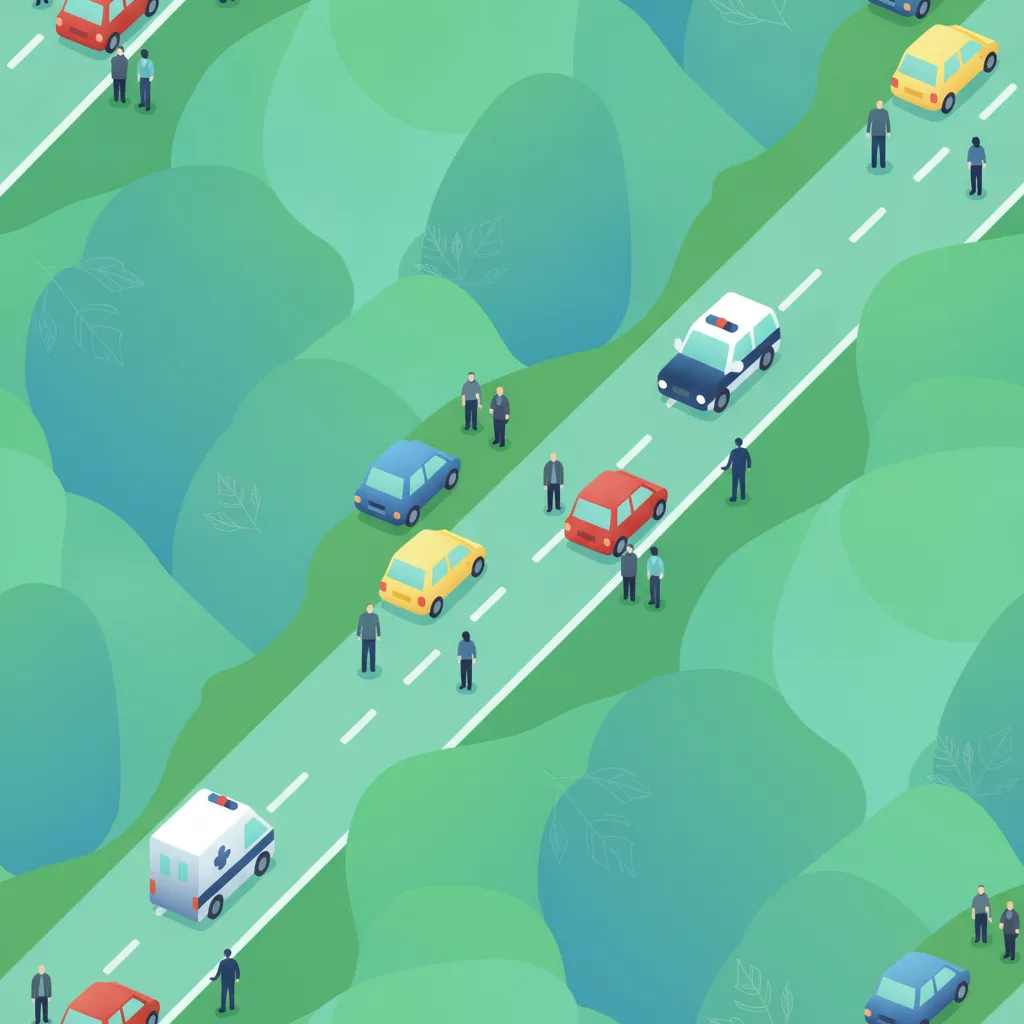
A fundamental aspect of accident scene management in Austria, especially on motorways and dual carriageways, is the mandatory formation of the Rettungsgasse (rescue lane). This dedicated clear path allows emergency vehicles to reach accident sites quickly and efficiently, bypassing stationary traffic.
The Rettungsgasse is a legal requirement under Austrian StVO § 26. It mandates that drivers create an unobstructed lane for emergency vehicles whenever traffic comes to a standstill for longer than 30 seconds on specific types of roads.
A clear path created by drivers in stationary traffic on motorways and dual carriageways, allowing emergency vehicles unobstructed passage to an incident scene.
The obligation applies on:
It is crucial to understand that you must form the Rettungsgasse even if you are far from the actual accident and simply caught in the resulting traffic jam. Its purpose is to ensure that the entire route to the incident is clear.
The method of forming the Rettungsgasse depends on the number of lanes:
On Roads with Two Lanes in One Direction:
On Roads with Three or More Lanes in One Direction:
Do not wait for emergency vehicles to appear before forming the Rettungsgasse. It must be formed proactively as soon as traffic comes to a standstill for over 30 seconds on the applicable roads.
The concept of the Rettungsgasse is rooted in the principle of collective responsibility. Every driver on the road shares a legal and moral duty to ensure emergency vehicles can perform their vital work without hindrance. This extends beyond merely forming the rescue lane.
Under Austrian StVO § 67, you are legally obliged to yield right-of-way to emergency vehicles that are using audible signals (sirens) and flashing blue lights. This means pulling over to the side of the road, stopping, or otherwise adjusting your position to allow them immediate and unimpeded passage. Failure to do so not only delays critical assistance but can also result in significant fines and legal consequences.
The legal and moral obligation of all drivers to cooperate in creating a safe and clear path for emergency services, regardless of direct involvement in an incident.
Understanding the specific legal framework is vital for professional drivers. Here are the most relevant sections of the Austrian Straßenverkehrsordnung (StVO):
Even with good intentions, drivers can make mistakes under stress. Being aware of common violations can help you act correctly.
Failure to Activate Hazard Lights Immediately:
Incorrect Warning Triangle Placement:
Not Forming the Rettungsgasse:
Improper Lane Usage When Forming Rettungsgasse:
Attempting an Emergency Call While Driving:
Not Yielding to Emergency Vehicles:
The optimal way to manage an accident scene can vary significantly based on environmental and situational factors. As a bus or coach driver, your decisions must account for these variations.
Every action, or inaction, at an accident scene has direct consequences. Understanding these cause-and-effect relationships reinforces the importance of correct procedures.
As a professional driver in the Austrian Driving Theory Course for Bus & Coach Licence (Category D), your ability to manage an accident scene and understand traffic flow for emergency response is paramount.
This lesson covers the critical responsibilities of Category D drivers in managing accident scenes on Austrian roads, with emphasis on the legal requirement to form a Rettungsgasse. Key procedures include securing your vehicle by activating hazard lights, deploying a warning triangle at prescribed distances, and calling emergency services via 112 with precise location and incident details. The Rettungsgasse must be formed as soon as traffic stops for more than 30 seconds on motorways and dual carriageways, with specific rules depending on the number of lanes. Understanding these procedures is essential for both passing the Category D theory exam and handling real-world emergency situations professionally while ensuring passenger safety.
A short set of high-value points that capture the most important learning from this lesson.
Activate hazard warning lights immediately when your vehicle is immobilized to increase visibility and prevent secondary collisions.
Place warning triangles at legally prescribed distances: 150 metres on motorways and 30 metres in built-up areas.
When calling 112, provide the exact location, nature of the incident, number of persons involved, and any potential hazards.
Form the Rettungsgasse proactively as soon as traffic comes to a standstill for more than 30 seconds on motorways and dual carriageways.
Your primary duty as a Category D driver is securing passenger safety before exiting the vehicle and managing the incident.
Explore all units and lessons included in this driving theory course.
Rettungsgasse: Vehicles in the leftmost lane move fully left; all other vehicles move fully right, creating a clear rescue lane.
On motorways, use distance markers or reflector posts (often spaced 50 metres apart) to estimate the 150-metre triangle placement.
Always wear a high-visibility vest before exiting your vehicle on the road in Austria.
Do not use a handheld mobile phone when making an emergency call; pull over safely or use hands-free.
Under StVO § 26, the Rettungsgasse must be formed even if you are far from the actual accident and simply caught in traffic.
Failing to activate hazard lights immediately upon stopping, which reduces vehicle visibility and increases rear-end collision risk.
Placing the warning triangle too close to the vehicle (less than 150m on motorways), giving approaching drivers insufficient reaction time.
Not forming the Rettungsgasse proactively and waiting until emergency vehicles are visible before attempting to create the rescue lane.
Attempting to make an emergency call while still driving, violating the handheld mobile phone prohibition under StVO § 69.
Not moving fully to the extreme left or right when forming the Rettungsgasse, which narrows the rescue lane and can obstruct wide emergency vehicles like fire trucks.
Lesson content overview
A short set of high-value points that capture the most important learning from this lesson.
Activate hazard warning lights immediately when your vehicle is immobilized to increase visibility and prevent secondary collisions.
Place warning triangles at legally prescribed distances: 150 metres on motorways and 30 metres in built-up areas.
When calling 112, provide the exact location, nature of the incident, number of persons involved, and any potential hazards.
Form the Rettungsgasse proactively as soon as traffic comes to a standstill for more than 30 seconds on motorways and dual carriageways.
Your primary duty as a Category D driver is securing passenger safety before exiting the vehicle and managing the incident.
Explore all units and lessons included in this driving theory course.
Rettungsgasse: Vehicles in the leftmost lane move fully left; all other vehicles move fully right, creating a clear rescue lane.
On motorways, use distance markers or reflector posts (often spaced 50 metres apart) to estimate the 150-metre triangle placement.
Always wear a high-visibility vest before exiting your vehicle on the road in Austria.
Do not use a handheld mobile phone when making an emergency call; pull over safely or use hands-free.
Under StVO § 26, the Rettungsgasse must be formed even if you are far from the actual accident and simply caught in traffic.
Failing to activate hazard lights immediately upon stopping, which reduces vehicle visibility and increases rear-end collision risk.
Placing the warning triangle too close to the vehicle (less than 150m on motorways), giving approaching drivers insufficient reaction time.
Not forming the Rettungsgasse proactively and waiting until emergency vehicles are visible before attempting to create the rescue lane.
Attempting to make an emergency call while still driving, violating the handheld mobile phone prohibition under StVO § 69.
Not moving fully to the extreme left or right when forming the Rettungsgasse, which narrows the rescue lane and can obstruct wide emergency vehicles like fire trucks.
Explore search topics learners often look for when studying Managing an Accident Scene and the Rettungsgasse. These topics reflect common questions about road rules, driving situations, safety guidance, and lesson level theory preparation for learners in Austria.
Browse additional driving theory lessons that cover connected traffic rules, road signs, and common driving situations related to this topic. Improve your understanding of how different rules interact across everyday traffic scenarios.
Deepen your understanding of managing accident scenes in Austria, focusing on the mandatory Rettungsgasse. Learn crucial steps for securing scenes, alerting traffic, and ensuring emergency services have clear access, as required by Category D theory.
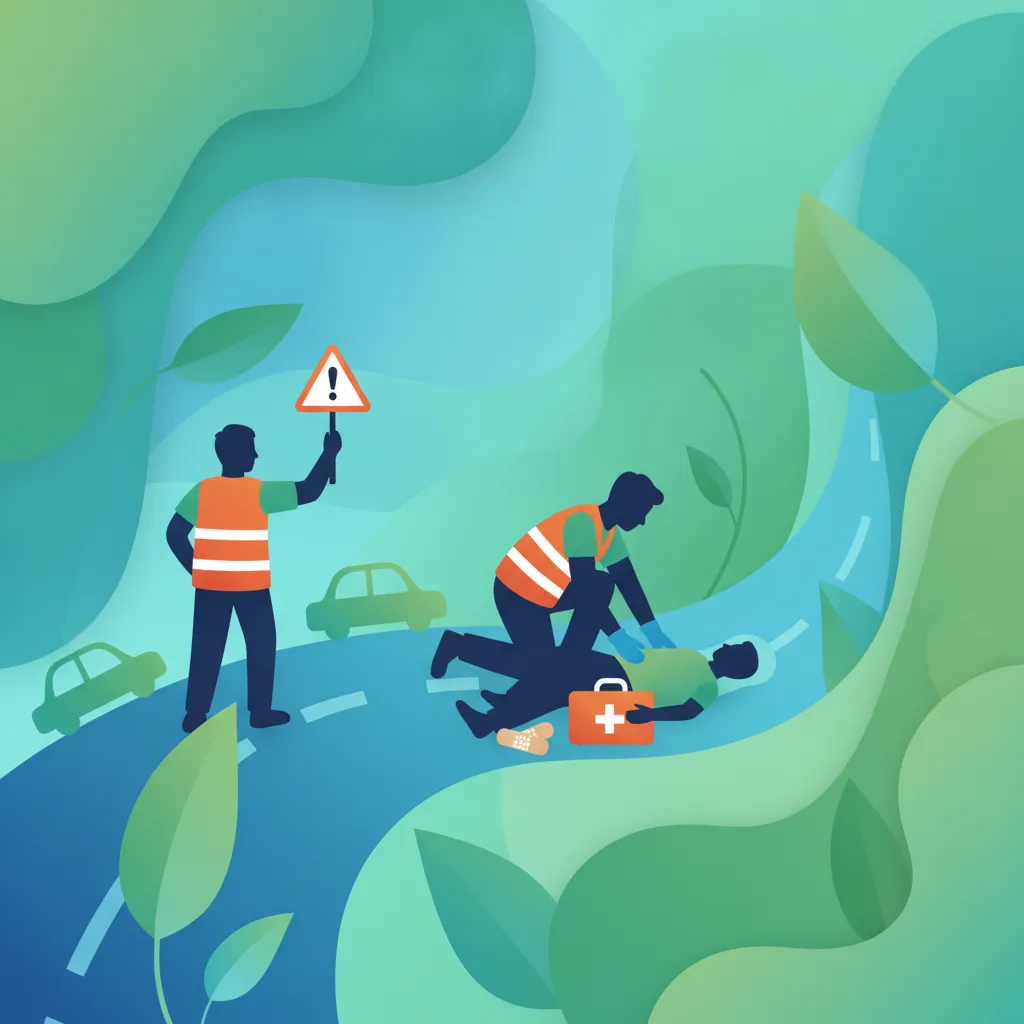
This lesson equips drivers with the essential knowledge for responding to a traffic accident. It outlines the critical first steps: securing the scene to prevent further incidents, assessing the situation, and contacting the correct emergency services (112). The content provides an overview of basic first aid principles applicable at an accident scene and explains the driver's legal obligations regarding incident reporting and cooperation with authorities.
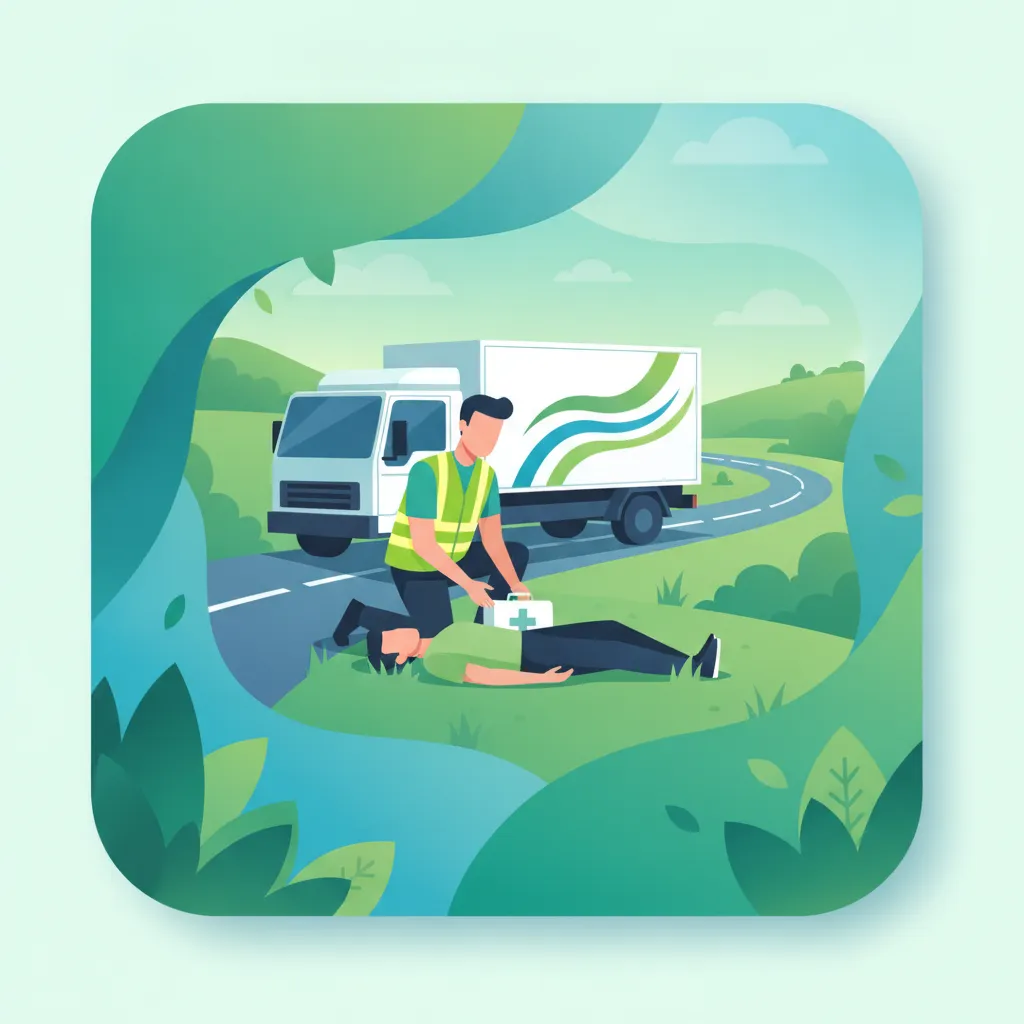
While not a substitute for a full first aid course, this lesson provides a critical overview of the immediate actions a driver can take to help an injured person. It covers assessing a casualty for danger, response, and breathing, and the basic principles of controlling severe bleeding and placing an unconscious person in the recovery position. The primary goal is to preserve life until professional help arrives.
Austria's mountainous terrain means drivers will frequently encounter long tunnels. This lesson details the specific regulations, such as turning on lights and maintaining distance, as well as how to react to tunnel-specific warning signs and signals. Crucially, it covers the correct emergency procedures to follow in the event of a fire, accident, or breakdown inside a tunnel.

This lesson outlines the standardized procedure for handling a vehicle breakdown safely. It covers pulling over to a safe location, activating hazard lights, deploying the warning triangle, and wearing a high-visibility vest. It also explains when and how to contact roadside assistance or emergency services.
This lesson provides critical knowledge for being the first responder at an accident. It covers securing the scene to prevent further incidents, making an effective emergency call, and forming the 'Rettungsgasse' for approaching rescue vehicles. Basic but potentially life-saving first aid steps are reviewed, with a strong emphasis on not endangering oneself while providing assistance.
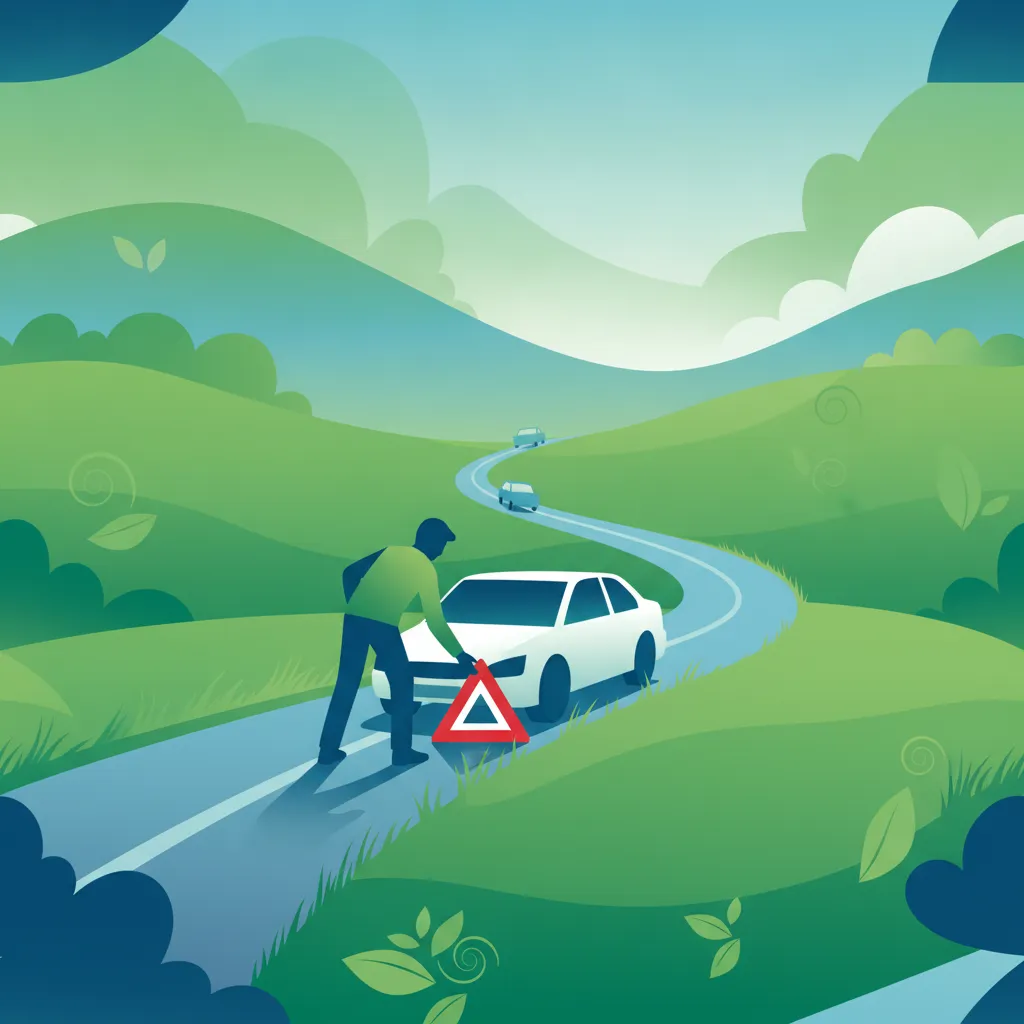
A breakdown requires a calm, systematic response to keep everyone safe. This lesson details the procedure: move to the safest possible location, activate hazard lights, secure the vehicle, and deploy warning triangles. It emphasizes the importance of moving passengers to a safe place away from the vehicle, especially on a motorway, before contacting your company or the breakdown services.

In a serious incident, a swift and orderly evacuation can save lives. This lesson teaches the principles of taking command, giving clear and simple instructions, and directing passengers to the nearest safe exit. It covers the importance of assisting those with mobility issues and guiding everyone to a safe assembly point away from the vehicle and any traffic.
This lesson provides a step-by-step guide for safely managing a vehicle breakdown on the road. It covers the correct procedure for pulling over to a safe location, activating hazard lights, and wearing a high-visibility vest. Learners will understand the legal requirement and correct placement of the warning triangle to alert oncoming traffic, as well as the necessary information to provide when contacting roadside assistance services.

When a passenger becomes ill, the driver's role is to facilitate professional medical help as quickly as possible. This lesson covers how to safely stop the vehicle, make an emergency call to 112 with clear location and patient information, and provide basic comfort and reassurance. It clarifies that the driver's role is not to diagnose but to manage the scene and get help.
In an emergency, knowing the location and status of safety equipment is critical. This lesson details how to locate and inspect fire extinguishers, first aid kits, emergency hammers, and all designated emergency exits, including doors and roof hatches. It emphasizes the importance of ensuring these items are unobstructed and included in the daily pre-trip inspection.
Explore the specific duties of professional drivers when encountering or being involved in accidents. This lesson covers critical actions from securing the vehicle and passengers to making emergency calls and understanding Austrian traffic law regarding emergency response.
While not a substitute for a full first aid course, this lesson provides a critical overview of the immediate actions a driver can take to help an injured person. It covers assessing a casualty for danger, response, and breathing, and the basic principles of controlling severe bleeding and placing an unconscious person in the recovery position. The primary goal is to preserve life until professional help arrives.
This lesson equips drivers with the essential knowledge for responding to a traffic accident. It outlines the critical first steps: securing the scene to prevent further incidents, assessing the situation, and contacting the correct emergency services (112). The content provides an overview of basic first aid principles applicable at an accident scene and explains the driver's legal obligations regarding incident reporting and cooperation with authorities.
When a passenger becomes ill, the driver's role is to facilitate professional medical help as quickly as possible. This lesson covers how to safely stop the vehicle, make an emergency call to 112 with clear location and patient information, and provide basic comfort and reassurance. It clarifies that the driver's role is not to diagnose but to manage the scene and get help.
This lesson explains the correct protocol when encountering emergency vehicles with active sirens and lights. It details the legal requirement to yield the right-of-way and provides practical guidance on how to pull over safely and efficiently. Understanding these procedures helps ensure emergency services can reach their destination without delay.
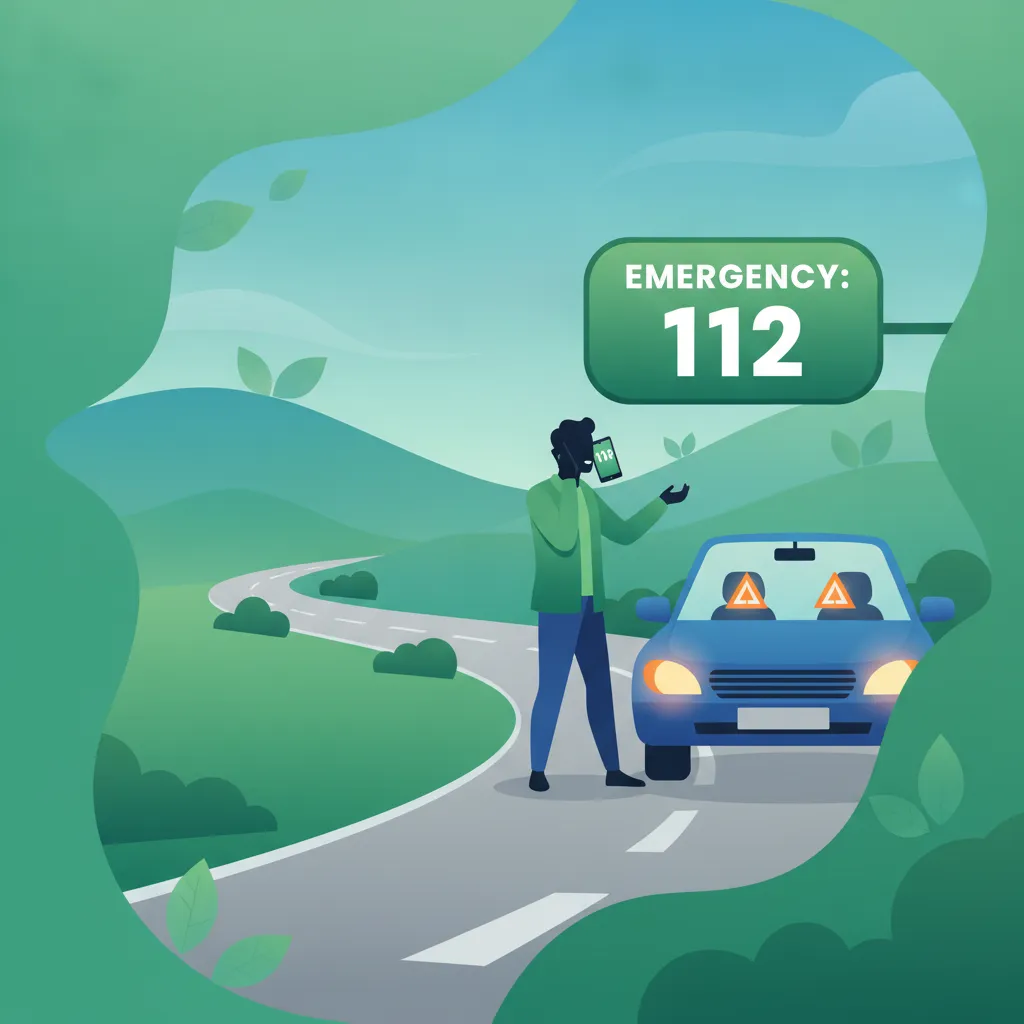
This final lesson summarizes the core principles of responding to any on-road emergency, from a breakdown to an accident. It reinforces the priorities of personal safety, securing the scene to protect others, and providing clear, concise information when calling the pan-European emergency number, 112. This knowledge is essential for managing any unforeseen incident effectively.
This lesson provides critical knowledge for being the first responder at an accident. It covers securing the scene to prevent further incidents, making an effective emergency call, and forming the 'Rettungsgasse' for approaching rescue vehicles. Basic but potentially life-saving first aid steps are reviewed, with a strong emphasis on not endangering oneself while providing assistance.

This lesson defines the role of a professional driver beyond simply operating a vehicle. It covers the expectations of public trust, professional image, and the responsibilities inherent in transporting people. Key topics include ethical conduct, communication with the public, and understanding your position as a representative of a transport service within the Austrian legal framework.
In a serious incident, a swift and orderly evacuation can save lives. This lesson teaches the principles of taking command, giving clear and simple instructions, and directing passengers to the nearest safe exit. It covers the importance of assisting those with mobility issues and guiding everyone to a safe assembly point away from the vehicle and any traffic.
This lesson outlines the standardized procedure for handling a vehicle breakdown safely. It covers pulling over to a safe location, activating hazard lights, deploying the warning triangle, and wearing a high-visibility vest. It also explains when and how to contact roadside assistance or emergency services.

This lesson prepares drivers for the emergency scenario of a shifting or lost load. It covers how to react to the sudden change in vehicle handling, safely pull over, and assess the situation. The lesson also explains the driver's responsibility for securing the scene and reporting the incident to prevent hazards for other road users.
Find clear answers to common questions learners have about Managing an Accident Scene and the Rettungsgasse. Learn how the lesson is structured, which driving theory objectives it supports, and how it fits into the overall learning path of units and curriculum progression in Austria. These explanations help you understand key concepts, lesson flow, and exam focused study goals.
Drivers in the left lane must steer to the left, while drivers in all other lanes must steer to the right. This creates a clear emergency corridor in the middle of the lanes, even before you see emergency vehicles.
Only if your vehicle is blocking traffic and it is safe to do so. In minor accidents, prioritize your and your passengers' safety first, then follow standard procedures for securing the scene.
As a bus driver, your vehicle size can easily obstruct the entire road. Knowing how to position your bus correctly is vital to ensure that ambulances and fire trucks can reach the scene without delay, potentially saving lives.
You must report the location, the nature of the accident, the number of people injured, and if there are any hazards such as fire or fuel leaks. Keep your communication clear and concise.
Refine your study plan by searching for specific Austrian driving theory practice sets. Pinpoint questions related to particular road rules, signs, or challenge levels, and begin practicing immediately to reinforce your knowledge and excel in your official exam with confidence. Get started with focused revision today.