
This lesson establishes the professional mindset required for all Category D bus and coach drivers in Austria. You will learn about the weight of public trust and the essential legal and ethical responsibilities that define your role as a professional transport operator.

Lesson content overview
Becoming a professional driver of a bus or coach in Austria, particularly for a Category D licence, entails far more than simply mastering vehicle operation. It signifies stepping into a role of profound responsibility, public trust, and ethical leadership. This lesson defines the multifaceted nature of this profession, highlighting the legal, moral, and practical obligations that shape a professional driver's daily duties and impact passenger safety, public confidence, and the reputation of transport services across Austria.
Your journey to obtaining an Austrian Bus & Coach Licence (Category D) is fundamentally about understanding and embracing this elevated standard of professionalism. It sets the foundation for every subsequent topic in your training, from vehicle mechanics to complex emergency procedures.
A professional driver, licensed for Category D vehicles, is an individual employed to transport passengers as part of a public or private transport service. This role extends beyond the technical skill of driving; it encompasses managing passengers, upholding safety standards, and representing a service provider. Whether you are a city bus driver navigating Vienna's streets, a school bus driver ensuring children's safety, or a coach driver on a long-distance journey through the Alps, your responsibilities are significant and constant.
The common misunderstanding is often that the role primarily involves operating the vehicle. In reality, you must simultaneously manage the dynamic environment of the road and the diverse needs and safety of your passengers. This dual responsibility requires continuous vigilance, sound judgment, and a proactive approach to safety. Maintaining a valid Category D licence, completing periodic health checks, and upholding a clean driving record are baseline requirements for this critical profession.
One of the most paramount obligations of a professional driver is the Duty of Care. This is a legal and ethical imperative to protect the safety and well-being of all passengers under your charge, from the moment they board until they safely alight. This principle is not merely a suggestion; it is a fundamental aspect of Austrian transport law.
The practical implications of duty of care are far-reaching. It means conducting thorough pre-trip safety checks, continuously monitoring passenger safety during the journey (e.g., ensuring they remain seated safely), and being prepared to respond effectively to any incident. Austrian legislation, such as § 12 L 4 of the Road Traffic Act (StVO) and § 77 of the Road Traffic Regulations (WRS), explicitly obligates drivers to ensure safe transport and verify passenger seat belt usage where required. Misunderstanding that passengers are solely responsible for their own safety without driver oversight is a dangerous misconception that can lead to severe consequences.
Public Trust is the confidence that passengers and the wider community place in your competence, professionalism, and unwavering commitment to safety. This trust is not automatically granted; it is earned through consistent, professional conduct and reliable service. For a bus or coach driver, every action, every decision, and every interaction contributes to or detracts from this essential trust.
Maintaining public trust means always operating safely, adhering strictly to traffic laws, and providing clear, timely information to passengers, especially during delays or unforeseen route changes. Reckless driving, poor communication, or any unprofessional behavior can quickly erode public confidence, impacting not only your reputation but also the perception of the entire transport service. A driver's actions directly influence societal acceptance of public transport and support its continued usage.
Ethical Conduct refers to the moral behavior standards expected of professional drivers. These include honesty, respect for all passengers, and fairness, regardless of their background, appearance, or specific needs. It reinforces a culture of safety and significantly reduces the likelihood of reckless or negligent behavior.
Practical ethical conduct involves treating every passenger with patience and courtesy, avoiding any form of prejudice or discrimination, and handling fares with absolute integrity. Austrian transport regulations, along with employer policies, often have strict guidelines against anti-discrimination and mandate fare integrity. Ignoring subtle biases or engaging in seemingly minor unethical practices, such as uneven ticket inspections, can have cumulative negative effects on public trust and service quality. Assisting vulnerable passengers, like those with disabilities or the elderly, and providing clear information are fundamental aspects of ethical driving.
As a professional driver, you are often the most visible point of contact between the public and your transport provider. This means you serve as a direct Representation of the company's brand, standards, and image. Your appearance, communication style, and adherence to company policies all contribute to this representation.
Maintaining a neat and professional appearance, using courteous and clear language, and consistently following service protocols are essential. This extends to wearing the prescribed uniform correctly and proudly, greeting passengers, and providing helpful travel assistance when needed. Employer regulations, often supported by Austrian labor law, define these standards. Assuming that personal behavior does not impact the organization’s perception is a mistake; your conduct directly influences public perception and the company's reputation and success.
Professional bus and coach drivers in Austria operate under a robust legal framework designed to ensure passenger safety and service reliability. Understanding these regulations is not just about compliance; it's about internalizing the critical responsibilities of your role.
Failing to uphold your professional responsibilities can lead to severe consequences, ranging from fines and licence points to jeopardizing passenger safety and your career. Awareness of common violations is the first step towards prevention.
Passenger Overcrowding:
Failure to Check Seat Belts:
Unprofessional Communication:
Neglecting Health Checks:
Prioritizing Timetable Over Safety:
Discriminatory Treatment:
Improper Representation:
Inadequate Emergency Preparedness:
A professional driver's responsibilities are not static; they adapt to various environmental and operational contexts. Your duty of care and ethical conduct must guide your decisions in varying situations.
The interconnectedness of a professional driver's actions with safety and operational success is undeniable. These cause-and-effect relationships underscore the importance of upholding high standards:
Adherence to legal statutes not only mitigates liability but also ensures the continuous and reliable operation of vital transport services. From a human factors perspective, clear communication reduces passenger anxiety and improves compliance with safety procedures. Psychologically, consistent professional behavior builds trust, leading to smoother operations, fewer conflicts, and a better overall experience for everyone. Proactive duty of care, such as diligently checking seat belt usage, statistically lowers injury rates in the event of an unavoidable collision.
These scenarios illustrate how the core principles and regulations apply in everyday situations for a professional bus or coach driver.
Scenario: Overloaded Coach on a Long Journey
Scenario: Assisting a Vulnerable Passenger in Bad Weather
Scenario: Communicating Delays Professionally
This lesson establishes that professional Category D drivers in Austria carry far greater responsibilities than simply operating a vehicle, encompassing legal obligations, ethical conduct, and public service duties. The Duty of Care is a cornerstone principle backed by specific Austrian legislation, requiring drivers to actively protect passengers through pre-trip checks, seat belt verification, and careful boarding procedures. Key legal references include StVO § 12 L 4 for safe passenger transport and WRS § 77 for seat belt verification, while VBG § 74 mandates regular health assessments. The lesson emphasises that professional conduct—including courteous communication, non-discrimination, and proper uniform—directly impacts public trust and the reputation of transport services, and that safety must always override timetable pressure.
A short set of high-value points that capture the most important learning from this lesson.
The Duty of Care is a legally binding obligation requiring drivers to actively ensure passenger safety from boarding until alighting, not just during vehicle operation.
Austrian law (StVO § 12 L 4) prohibits passenger overcrowding and mandates that drivers verify safety compliance, including seat belt usage under WRS § 77.
Professional drivers must prioritize safety over timetable adherence; when a conflict arises, passenger protection always takes precedence.
Drivers are legally required to attend periodic health checks under § 74 VBG to maintain their Category D licence and ensure they remain medically fit.
Ethical conduct, including non-discrimination and honest communication, is not merely voluntary but is enforced through Austrian transport regulations and employer policies.
Explore all units and lessons included in this driving theory course.
StVO § 12 L 4: Drivers must ensure safe vehicle operation and prevent overloading of passenger vehicles.
WRS § 77: Drivers must verify that passengers have fastened seat belts where fitted before departure.
BVG: Safety must never be compromised for timetable adherence; delays must be communicated transparently.
VBG § 74: Periodic medical examinations are mandatory for maintaining professional driving authorisation.
Public Trust is earned through consistent professional conduct; every interaction either builds or erodes passenger confidence in the transport service.
Assuming passengers are solely responsible for their own safety, neglecting the driver's duty to monitor and assist.
Allowing more passengers than the vehicle's certified capacity to avoid confrontation or maintain schedule.
Prioritising punctuality by speeding, rushing boarding procedures, or bypassing safety checks when running late.
Failing to communicate delays or route changes, leaving passengers uninformed and eroding public trust.
Neglecting periodic health screenings, believing they are optional or can be postponed indefinitely.
Lesson content overview
A short set of high-value points that capture the most important learning from this lesson.
The Duty of Care is a legally binding obligation requiring drivers to actively ensure passenger safety from boarding until alighting, not just during vehicle operation.
Austrian law (StVO § 12 L 4) prohibits passenger overcrowding and mandates that drivers verify safety compliance, including seat belt usage under WRS § 77.
Professional drivers must prioritize safety over timetable adherence; when a conflict arises, passenger protection always takes precedence.
Drivers are legally required to attend periodic health checks under § 74 VBG to maintain their Category D licence and ensure they remain medically fit.
Ethical conduct, including non-discrimination and honest communication, is not merely voluntary but is enforced through Austrian transport regulations and employer policies.
Explore all units and lessons included in this driving theory course.
StVO § 12 L 4: Drivers must ensure safe vehicle operation and prevent overloading of passenger vehicles.
WRS § 77: Drivers must verify that passengers have fastened seat belts where fitted before departure.
BVG: Safety must never be compromised for timetable adherence; delays must be communicated transparently.
VBG § 74: Periodic medical examinations are mandatory for maintaining professional driving authorisation.
Public Trust is earned through consistent professional conduct; every interaction either builds or erodes passenger confidence in the transport service.
Assuming passengers are solely responsible for their own safety, neglecting the driver's duty to monitor and assist.
Allowing more passengers than the vehicle's certified capacity to avoid confrontation or maintain schedule.
Prioritising punctuality by speeding, rushing boarding procedures, or bypassing safety checks when running late.
Failing to communicate delays or route changes, leaving passengers uninformed and eroding public trust.
Neglecting periodic health screenings, believing they are optional or can be postponed indefinitely.
Explore search topics learners often look for when studying The Professional Driver's Role and Responsibilities. These topics reflect common questions about road rules, driving situations, safety guidance, and lesson level theory preparation for learners in Austria.
Browse additional driving theory lessons that cover connected traffic rules, road signs, and common driving situations related to this topic. Improve your understanding of how different rules interact across everyday traffic scenarios.
Understand the core ethical duties, public trust, and professional image required for Category D drivers in Austria. Learn about legal obligations and how to represent your service provider responsibly.

This lesson delves into the specific Austrian laws and regulations that professional passenger drivers must adhere to. It provides an overview of rules concerning driving and rest times, the use of the digital tachograph, and the essential documents that must be carried at all times. Understanding these legal obligations is crucial for compliance and avoiding penalties during roadside checks.

This lesson focuses on the core concept of duty of care, a driver's primary legal and moral obligation to protect passengers from harm. It examines what this means in practical terms, from driving smoothly to prevent falls to ensuring a safe environment on the vehicle. The content also touches upon legal liability in cases of negligence and the importance of anticipating risks to all passengers, including the vulnerable.

This lesson outlines the significant legal responsibilities placed on heavy-vehicle drivers under Austrian law, emphasizing a strong duty of care and professional conduct. It covers the obligation to perform thorough pre-trip inspections, comply with all load and weight regulations, and uphold safety standards to protect all road users. Adherence to these principles is crucial for professional and safe operation.

Providing safe and respectful access for all passengers is a legal and professional duty. This lesson details the correct operation of accessibility features like ramps, lifts, and kneeling systems. It covers how to secure wheelchairs and mobility aids, and how to communicate effectively and respectfully with passengers who may require assistance with boarding or alighting.

The driver sets the tone for the entire journey. This lesson explores how a driver's calm demeanor and smooth driving style create a reassuring atmosphere for passengers. It also covers responsibilities for maintaining a comfortable onboard environment, such as appropriate heating or cooling, and the importance of a clean and well-presented vehicle in promoting passenger confidence and positive behaviour.

Transporting children carries the highest level of responsibility. This lesson covers the specific Austrian rules for school buses, including the use of warning signs and lights. It focuses on developing a mindset of extreme caution, anticipating that children may run into the road unexpectedly, and managing the chaotic traffic environment often found around schools during drop-off and pick-up times.

The driver is responsible for supervising the entire boarding process. This lesson covers techniques for encouraging orderly queues and ensuring passengers use handrails. It also details the driver's role in assisting passengers with mobility aids, prams, or heavy luggage, ensuring they are able to board without rushing and find a seat or safe standing position.

Long-distance coach operation involves more than just driving; it requires careful planning and passenger management. This lesson covers the importance of scheduling mandatory rest stops, planning routes, and ensuring passenger comfort over extended periods. It reinforces the critical need for strict adherence to driving hours regulations to manage fatigue on multi-day trips.

Effective communication is a key skill for any professional driver responsible for passengers. This lesson covers best practices for making clear announcements, assisting passengers with inquiries, and providing support to those with accessibility needs. It also introduces basic techniques for de-escalating tense situations and maintaining a calm, professional atmosphere on board the vehicle.
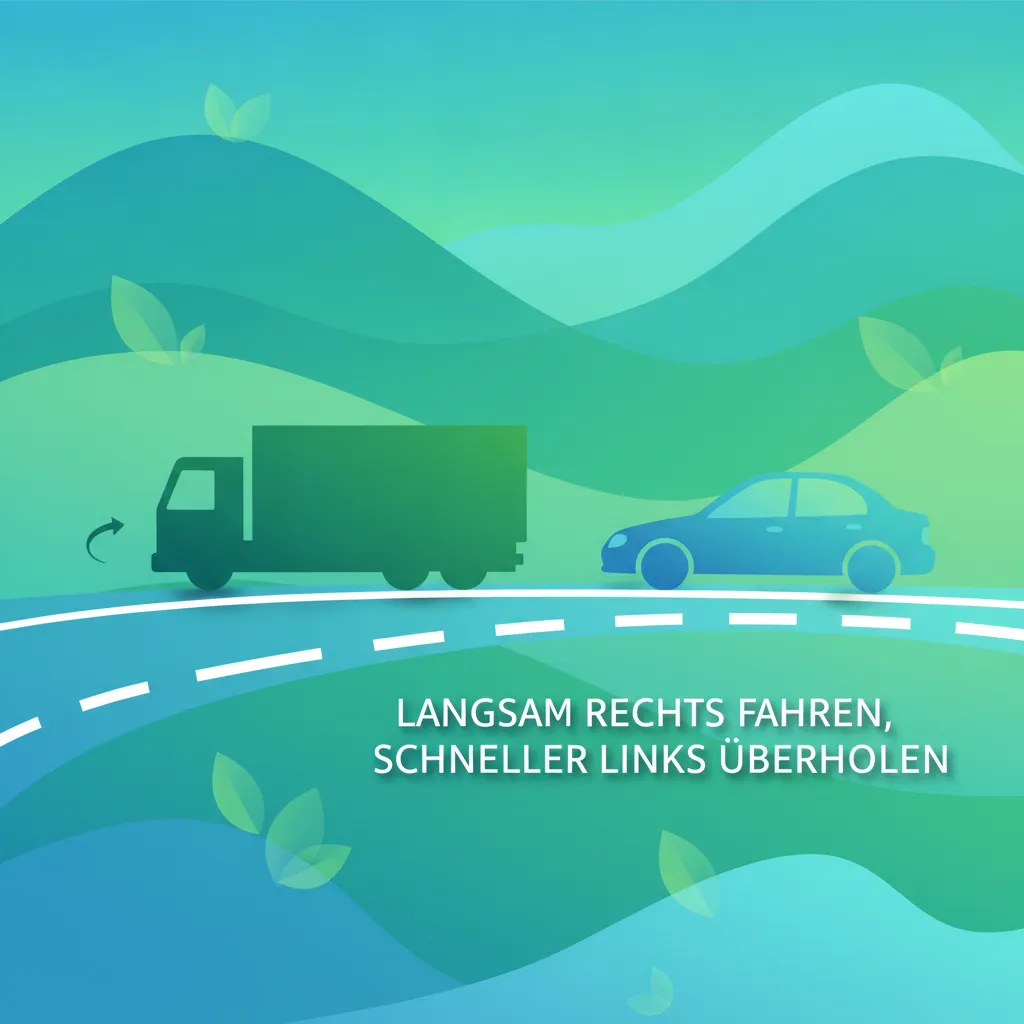
High-speed driving in a large vehicle requires excellent lane discipline and forward planning. This lesson covers Austrian speed limits for buses, rules for joining and leaving the motorway, safe overtaking procedures, and maintaining appropriate following distances. The critical importance of forming an emergency corridor ('Rettungsgasse') in traffic jams is also a key topic.
Explore the specific Austrian laws, including StVO § 12 L 4 and WRS § 77, that govern professional drivers. Understand your legal obligations regarding passenger safety, seat belts, and vehicle operation.

This lesson focuses on the driver's legal and ethical responsibility for the safety of all passengers. It details the mandatory use of seatbelts for all occupants and provides a thorough explanation of Austrian regulations concerning child restraints. Learners will understand how to choose and correctly install the appropriate child seat based on a child's age, weight, and height, ensuring maximum protection in the event of a collision.
This lesson delves into the specific Austrian laws and regulations that professional passenger drivers must adhere to. It provides an overview of rules concerning driving and rest times, the use of the digital tachograph, and the essential documents that must be carried at all times. Understanding these legal obligations is crucial for compliance and avoiding penalties during roadside checks.
This lesson outlines the significant legal responsibilities placed on heavy-vehicle drivers under Austrian law, emphasizing a strong duty of care and professional conduct. It covers the obligation to perform thorough pre-trip inspections, comply with all load and weight regulations, and uphold safety standards to protect all road users. Adherence to these principles is crucial for professional and safe operation.

This lesson provides a comprehensive overview of a driver's legal responsibilities and the potential consequences of failing to adhere to traffic laws. Learners will explore the concept of liability in the event of an accident and the structure of the official penalty catalogue. The material covers the impact of fines, demerit points, and potential driving bans (Fahrverbot) on one's license, as well as the effects on insurance premiums.

This lesson provides an overview of the legal framework governing heavy vehicle drivers in Austria. It details the potential penalties for violations, including fines, penalty points, and the risk of licence suspension. A clear understanding of these consequences reinforces the importance of compliant and responsible driving.

This lesson explores the strict regulations governing pedestrian crossings in Austria, particularly marked zebra crossings known as Schutzweg. It emphasizes the absolute priority of pedestrians on these crossings and the driver's legal obligation to stop and allow them to cross safely. The content covers how to approach these areas with caution, the importance of visibility, and the rules at crossings controlled by traffic lights.

This lesson provides a clear overview of the legal penalties for traffic violations in Austria. It details the system of fines, demerit points, and the conditions that can lead to license suspension or revocation. Understanding these consequences reinforces the importance of lawful and responsible riding.
Find clear answers to common questions learners have about The Professional Driver's Role and Responsibilities. Learn how the lesson is structured, which driving theory objectives it supports, and how it fits into the overall learning path of units and curriculum progression in Austria. These explanations help you understand key concepts, lesson flow, and exam focused study goals.
As a bus driver, you are legally responsible for the safety and well-being of your passengers. In Austria, this duty goes beyond basic traffic compliance, requiring you to anticipate risks to vulnerable passengers and maintain a safe environment at all times.
Professionalism influences how passengers trust you and respond to your instructions. A calm, authoritative, yet helpful demeanor helps de-escalate potential conflicts and ensures smoother boarding and alighting processes.
While the core duty of care remains the same, specific regulations can vary based on the vehicle size and the nature of the transport service. Always ensure you are familiar with the specific legal requirements for your licence category.
Yes, the Austrian Category D theory exam includes questions regarding your role, professional responsibilities, and the legal framework for passenger transport. Understanding these concepts is essential to passing the module.
Refine your study plan by searching for specific Austrian driving theory practice sets. Pinpoint questions related to particular road rules, signs, or challenge levels, and begin practicing immediately to reinforce your knowledge and excel in your official exam with confidence. Get started with focused revision today.