
This lesson concludes your theory training by teaching you how to handle critical on-road emergencies for heavy goods vehicles. You will learn the correct protocols for vehicle breakdowns, accidents, and load loss, including how to communicate effectively with emergency services.
Lesson content overview
This lesson provides a comprehensive guide for heavy goods vehicle (HGV) drivers on how to effectively respond to on-road emergencies within Austria, covering everything from breakdowns and accidents to load loss and vehicle fires. Understanding these procedures is critical for minimizing risks, ensuring personal safety, protecting other road users, and facilitating rapid assistance from emergency services. Mastery of these protocols is not just about passing your exam; it's about developing the professional mindset and skills necessary for safe heavy goods vehicle operation on Austrian roads and beyond.
The paramount concern in any emergency situation is the safety of the driver, passengers, and other road users. Before taking any other action, it is essential to assess personal risk and implement immediate safety measures to prevent further injury or danger. Given the mass and potential impact of heavy goods vehicles, this initial phase is particularly critical.
Upon encountering an emergency, your first priority is always personal safety. This means ensuring you and any passengers are out of immediate danger. If safe to do so, move to a secure location away from traffic. Always wear a high-visibility reflective vest if you need to exit the vehicle, especially on motorways or in low light conditions. The reflective vest makes you significantly more visible to other road users, reducing the risk of being struck.
Always keep a reflective vest easily accessible within the vehicle cabin, not in the boot or a trailer, so you can put it on before exiting in an emergency.
Once personal safety is addressed, the next critical step is to secure the incident scene. This involves making your stationary heavy goods vehicle visible to other road users and warning them of the hazard ahead. The goal is to prevent secondary accidents, which often occur when approaching drivers are unaware of an obstruction. This is especially crucial given the size, weight, and stopping distances required by HGVs. Proper scene security involves a combination of strategic vehicle positioning and the deployment of warning devices.
The way you position your vehicle after an emergency is vital for scene safety. Correct stop positioning reduces the risk of further collisions, ensures optimal visibility of your vehicle, and creates safe working space for you and arriving emergency services. A heavy goods vehicle stopped incorrectly can itself become a significant hazard.
Whenever possible, a heavy goods vehicle involved in an emergency should be moved completely off the main carriageway. On motorways (Autobahnen) in Austria, this means utilizing the designated hard shoulder (Pannenstreifen) or an emergency lane. Ensure the vehicle is as far to the right as possible, leaving maximum clearance for passing traffic and emergency vehicles. The hard shoulder is intended for emergencies only and must not be used for regular parking or unscheduled breaks.
There are rare situations where it is impossible to move a heavy goods vehicle entirely off the carriageway. Examples include a sudden and complete mechanical failure in a tunnel, a medical emergency requiring immediate stop, or an immovable obstruction directly ahead. In such instances, where stopping in a traffic lane is the only option, specific precautions must be taken immediately. Position the vehicle to minimize obstruction while maximizing its visibility to approaching traffic, and activate all warning devices without delay. This is always a last resort due to the inherent danger.
Effective warning devices are crucial for alerting other drivers to a stationary heavy goods vehicle, especially considering its mass and potential obstruction. These tools are legally mandated in Austria and are fundamental to scene safety, helping to compensate for reduced visibility and driver reaction times.
Hazard warning lights (Warnblinkanlage) are the vehicle's flashing amber lights that simultaneously activate all turn signals. They are designed to signal an emergency, a breakdown, or an unusual traffic situation, alerting other road users to exercise caution.
The vehicle’s flashing amber lights used to indicate a stationary vehicle or a vehicle moving at a significantly reduced speed due to an emergency or unusual traffic situation.
Immediately upon stopping on the carriageway or hard shoulder due to a breakdown, accident, or other emergency situation.
When moving at an unusually slow speed, posing a hazard to faster traffic (e.g., pulling a heavily damaged load or traversing an unusually steep gradient).
When approaching a traffic jam from the rear on a fast road, to provide an early warning to following drivers about the slowdown.
Never use hazard warning lights while moving at normal speed, as this can confuse other drivers about your intentions or the actual traffic situation. This usage is illegal and dangerous.
Reflective warning triangles are portable, retroreflective devices used to provide an additional visual warning beyond the vehicle's own lights. They are a mandatory item for all vehicles in Austria, including heavy goods vehicles, and must be carried at all times.
A portable, reflective device placed on the road at a prescribed distance behind a stationary vehicle or obstruction, designed to enhance visibility and warn approaching traffic.
General Rule: If your vehicle is stopped on the carriageway due to an emergency, place one triangle approximately 30 meters (m) behind the vehicle in the same lane of travel.
On Motorways (Autobahnen) or Fast Roads: If stopping on the hard shoulder, place one triangle on the carriageway 30 m behind the vehicle. If visibility is severely reduced (e.g., fog, heavy rain, snow) or if the situation is particularly hazardous (e.g., in a tunnel or on a blind curve), an additional triangle may be placed further back to provide an earlier warning.
On Sharp Turns or Blind Curves: Ensure the triangle is placed before the curve, at a distance that allows approaching drivers sufficient time to react after seeing it. This might mean placing it significantly further than 30 meters to achieve adequate warning distance.
In Urban Areas: While typically less critical due to lower speeds and better lighting, triangles should still be used if the vehicle is obstructing a traffic lane or poses a significant hazard.
Second Triangle (Recommendation): While not always legally mandated to carry two, it is a recommended best practice for heavy goods vehicles to carry and place a second triangle 30 m ahead of the vehicle on two-way roads. This provides an additional warning for oncoming traffic and further secures the scene.
Effective communication with emergency services is paramount for receiving appropriate and timely assistance. The 112 emergency number is the universal contact point across the European Union, including Austria, for reaching police, fire brigade, and ambulance services. Knowing when and how to use it correctly can significantly impact the outcome of an emergency.
It is crucial to understand when to dial 112. This number is for urgent situations that pose a direct threat to life, health, or significant property, or create a severe road hazard. Misuse can delay critical help for others.
The pan-European telephone number that connects callers to local emergency services (police, fire brigade, ambulance) in all EU member states, including Austria.
Accidents with Injury or Death: Any collision resulting in personal injury or fatalities, even minor ones.
Significant Property Damage: Accidents causing substantial damage to vehicles (especially if they are immovable) or public infrastructure (e.g., barriers, traffic lights), particularly if the road is blocked.
Vehicle Fire: Any fire involving your heavy goods vehicle, its engine, or its cargo.
Hazardous Material Spill: If your cargo, or another vehicle's cargo, consists of dangerous goods (Gefahrgut) and there's a spill, leakage, or fumes.
Serious Load Loss: If your load has spilled onto the road, creating a significant hazard for other road users or obstructing traffic flow.
Breakdowns Posing Extreme Danger: While not all breakdowns require 112, if your HGV is creating an unavoidable obstruction in a particularly dangerous location (e.g., a blind curve, a tunnel entrance, or on a motorway lane), or if it has broken down with hazardous cargo, a call is essential.
When calling 112, staying calm and providing clear, concise, and factual information is critical. Dispatchers need specific details to send the correct resources quickly and efficiently. Providing incomplete information can lead to delays or the deployment of inappropriate units.
Exact Location: Be as precise as possible. Mention the road name (e.g., "A1 Motorway"), kilometre marker, nearest exit number, direction of travel, or recognizable landmarks. If available, use GPS coordinates or refer to emergency call boxes if present.
Nature of the Emergency: Clearly state what has happened (e.g., "heavy goods vehicle accident with injured persons," "engine fire," "load of chemicals spilled").
Vehicle Details: Provide your vehicle type (e.g., "articulated lorry," "truck with trailer," "tanker"), your registration number, and any relevant cargo details, especially if dangerous goods (ADR) are involved.
Persons Involved: State the number of people involved, if there are any visible injuries, and if anyone is trapped in a vehicle. Mention if children or vulnerable persons are involved.
Hazardous Materials: If your cargo includes dangerous goods, explicitly state the type of material, its UN number, and any placards visible.
Stay on the Line: Do not hang up until the dispatcher tells you to. They may have further questions or provide specific instructions for your safety or for managing the scene until help arrives.
For heavy goods vehicle drivers, managing cargo-related emergencies is a significant responsibility. These incidents can quickly escalate, posing severe risks to other road users, the environment, and the driver. Proper load securing, or Ladungssicherung, is legally mandated in Austria to prevent such occurrences.
Load shift (Ladungsverschiebung) occurs when cargo moves from its intended position within or on the vehicle, potentially destabilizing the HGV or leading to cargo loss (Ladungsverlust) where parts of the load fall onto the road. Both can create severe hazards, including loss of vehicle control and secondary accidents.
The unintended movement of cargo from its intended position during transport, potentially destabilizing the vehicle or leading to cargo loss.
Recognize Symptoms: Be alert for signs such as the vehicle pulling unusually to one side, strange noises emanating from the cargo area, or visible movement of the load in your mirrors.
Safely Stop the Vehicle: As soon as it is safe, decelerate and pull over to the side of the road or onto the hard shoulder. Activate hazard lights and place warning triangles.
Assess the Situation: If safe, carefully inspect the load to determine the extent of the shift or loss. Prioritize your safety; do not approach an unstable load if there's a risk of it falling further.
Re-secure the Load: If possible and safe, use existing or additional load securing devices (straps, chains, chocks, anti-slip mats) to stabilize the shifted cargo. Ensure your own safety throughout this process.
Call 112: If the load cannot be re-secured safely, if it has spilled onto the road creating a significant hazard, or if it involves dangerous goods, contact 112 immediately.
Clear Road (If Safe): If only small, non-hazardous items have fallen onto the road and it is safe to do so without putting yourself at risk, carefully remove them to clear the carriageway. Otherwise, await emergency services.
Transporting dangerous goods (Gefahrgut) comes with stringent regulations and heightened emergency response protocols. A spill of hazardous materials requires immediate and precise action to protect human health, safety, and the environment.
Never attempt to clean up or contain a hazardous material spill without appropriate training, knowledge of the substance, and protective equipment. Your safety is paramount. The wrong action can exacerbate the danger.
Prioritize Safety: Keep yourself and others away from the immediate spill area. Move upwind if possible to avoid inhaling fumes.
Stop and Secure: Safely pull the vehicle over, activate hazard lights, and deploy warning triangles.
Identify the Material: Consult your transport documents (e.g., ADR documents, dangerous goods manifest) to identify the specific hazardous material, its UN number, and any associated risks. This information is critical for emergency responders.
Call 112 Immediately: Provide all details, including the exact location, the type of hazardous material, UN number, quantity spilled, and any visible effects (e.g., fire, fumes, environmental impact).
Provide Information to Responders: Be ready to give detailed information to emergency personnel upon their arrival, sharing all relevant documentation.
Vehicle fires, particularly in heavy goods vehicles, can be extremely dangerous due to the large quantities of fuel, lubricants, and potentially combustible cargo. Knowing how to react quickly and effectively can save lives, minimize damage, and prevent the spread of fire.
Heavy goods vehicles in Austria are legally required to carry a suitable fire extinguisher. These are typically ABCD extinguishers, designed to tackle a range of fire classes that commonly occur in vehicles. The extinguisher must be easily accessible and regularly maintained.
A multi-class portable fire extinguisher suitable for fires involving solid combustibles (Class A), flammable liquids (Class B), flammable gases (Class C), and electrical equipment (Class D).
Vehicles over 3.5 tonnes gross vehicle weight are legally required to carry an appropriate fire extinguisher in Austria, as per ASR § 47. Ensure it is regularly inspected, fully charged, and mounted in an easily accessible place within the vehicle cabin.
Quick thinking and action are essential when dealing with a vehicle fire. Your priority is to ensure the safety of all occupants, then to prevent the fire from spreading, and finally to attempt to extinguish it if safe to do so.
Pull Over Safely: As soon as you detect a fire, pull the vehicle over to a safe, clear location, away from buildings, fuel stations, or other vehicles, if possible.
Activate Warnings: Turn on hazard lights and deploy warning triangles.
Evacuate Immediately: Ensure all passengers evacuate the vehicle and move to a safe distance (at least 100 meters away, especially if cargo might be involved or if it contains dangerous goods).
Call 112: Report the fire immediately, providing your exact location, vehicle type, and any information about the cargo (especially if it involves dangerous goods).
Attempt Extinguishment (If Safe): Only attempt to extinguish a small, contained fire using your onboard extinguisher if it is safe to do so, you are properly trained, and you can maintain a safe distance. Never attempt to fight a fire in the engine compartment by opening the bonnet completely, as this can introduce oxygen and intensify the flames. Instead, aim the extinguisher through gaps or from underneath.
Await Emergency Services: Even if you manage to put out a small fire, always wait for the fire brigade to arrive, inspect the vehicle, and ensure there is no risk of re-ignition.
Austrian road traffic law (Strassenverkehrsordnung – StVO) and other specific regulations for heavy goods vehicles impose clear duties on drivers during emergencies. Adhering to these rules is not only crucial for safety but also a strict legal requirement, with non-compliance often leading to significant penalties.
Hazard Warning Lights (StVO § 81b): Must be activated immediately when a vehicle becomes stationary on the carriageway or hard shoulder due to a breakdown, accident, or other emergency. This improves visibility and reduces collision risk.
Reflective Warning Triangles (StVO § 81b): Must be placed at prescribed distances (e.g., 30m behind) for stationary vehicles on the carriageway or shoulder, particularly where visibility is reduced (e.g., at night, on curves, or in fog).
Reporting Accidents (StVO § 4): Drivers are legally obliged to report any accident resulting in personal injury, death, or significant property damage to the police or emergency services via 112. Failure to do so can have severe legal consequences.
Assistance Duty (StVO § 4): Drivers involved in or witnessing an accident causing personal injury have a legal duty to assist the injured to the best of their ability and to secure the accident scene.
Load Securing (ASR § 35): Heavy goods vehicles must always have their cargo secured according to the stringent regulations outlined in the Austrian Road Safety Ordinance (ASR). This prevents shifting or loss during transport. Failure to comply can result in heavy fines, vehicle immobilization, and potential loss of license points.
Fire Extinguisher (ASR § 47): Heavy goods vehicles (those with a permissible maximum mass over 3.5 tonnes) must be equipped with an appropriate fire extinguisher (typically an ABCD type). This extinguisher must be regularly maintained, easily accessible, and in full working order.
Even experienced drivers can make critical mistakes under the pressure of an emergency. Understanding common errors and adopting best practices, along with knowing how to adapt your response to varying conditions, can significantly improve emergency outcomes and minimize risks.
| Violation | Why it’s Wrong | Correct Behavior | Consequence (in Austria) |
|---|---|---|---|
| Leaving vehicle on the carriageway without hazard lights | Reduces the visibility of your stationary HGV to approaching traffic, drastically increasing the risk of a rear-end collision, especially in low light or adverse weather. | Activate hazard lights immediately upon stopping and, if possible, move the vehicle completely off the carriageway. | Fines, potential license points (if deemed dangerous), increased liability in any secondary accident. |
| Failing to place reflective triangles, especially on curves or in low visibility | Deprives approaching drivers of crucial early warning, drastically reducing their reaction time, particularly on fast roads or where sightlines are poor. | Always place triangles at appropriate distances (minimum 30m), ensuring they are visible well before the vehicle, particularly on bends, crests, or at night. | Higher risk of collisions, significant fines, and severe legal penalties if an accident occurs. |
| Continuing to drive with a shifted or unstable load | A shifted load drastically alters the vehicle's center of gravity, making it prone to overturning, or shedding cargo onto the road, creating immediate and severe hazards. | Safely stop the vehicle immediately, activate warning devices, assess the load, and re-secure it before proceeding. If unsafe, call 112. | Heavy fines, license points, cargo damage, severe accidents, environmental damage if hazardous materials are involved. |
| Attempting to fight a large or hazardous fire without proper equipment or training | Puts your life at severe risk from burns, smoke inhalation, or explosion, and can inadvertently exacerbate the fire by introducing more oxygen. | Evacuate immediately, ensure all occupants are safe and at a distance, call 112, and only attempt to extinguish small, contained fires with the correct extinguisher if you are trained and it is unequivocally safe to do so. | Personal injury, loss of life, complete vehicle and cargo loss, potential legal repercussions. |
| Providing incomplete or inaccurate information to 112 emergency services | Delays the arrival of appropriate emergency resources or leads to the deployment of the wrong type of assistance, potentially worsening the outcome of the situation. | Be prepared to give precise location, the exact nature of the emergency, detailed vehicle information, the number of people involved, and any hazardous material information. | Delayed response, potential worsening of casualties or damage, possible penalties for obstructing emergency services. |
| Parking on the hard shoulder for non-emergency reasons | Obstructs an essential emergency lane, blocking vital access for rescue vehicles and creating unnecessary traffic hazards for passing vehicles. | Use the hard shoulder only for genuine, unavoidable emergencies. If you need a rest break, use designated rest areas or parking bays. | Fines, obstruction of emergency routes, potential for secondary accidents due to unexpected presence. |
Effective emergency response is not a one-size-fits-all procedure. It must be adapted to the prevailing environmental conditions, light levels, and the specific type of road you are on. Professional drivers must constantly assess these variables.
Weather Conditions (Rain, Fog, Snow, Ice):
Light Conditions (Day vs. Night):
Road Type (Motorway, Rural, Urban):
Vehicle State (Heavy Load, Trailer, Mechanical Failure):
A structured approach to emergencies helps mitigate human factors like panic and adrenaline, ensuring a systematic, effective response even under stressful conditions. This integrated understanding is crucial for a professional heavy goods vehicle driver.
This systematic approach provides a clear, repeatable framework for managing any heavy vehicle emergency, making it easier to remember and execute under pressure:
This lesson builds upon several foundational topics covered elsewhere in your Austrian Heavy Goods Vehicle Driving License Theory Course. A holistic understanding of these interconnected concepts ensures a more competent and safer driver:
This lesson covers essential emergency response procedures for heavy goods vehicle drivers in Austria, emphasizing that personal safety comes before all other actions. Learners must master the correct use of hazard warning lights and reflective warning triangles, including specific placement distances of at least 30 meters that must be increased in poor visibility or on curves. The pan-European 112 emergency number requires precise information including exact location, vehicle type, cargo details, and the nature of the emergency, with dangerous goods requiring UN numbers. Austrian law mandates specific duties including hazard light activation (StVO § 81b), accident reporting (StVO § 4), and the carrying of ABCD fire extinguishers for vehicles over 3.5 tonnes (ASR § 47), with the 'Stop, Secure, Inform, Assist' framework providing a systematic approach for managing breakdowns, accidents, load shifts, and vehicle fires.
A short set of high-value points that capture the most important learning from this lesson.
Personal safety is always the first priority — wear a high-visibility vest before exiting and move to a secure location away from traffic
Activate hazard warning lights (Warnblinkanlage) immediately upon any emergency stop, whether on the carriageway or hard shoulder
Place reflective warning triangles at least 30 meters behind your vehicle, increasing distance on curves, in tunnels, or when visibility is reduced
Use the 'Stop, Secure, Inform, Assist' framework as a systematic approach to any on-road emergency
When calling 112, provide your exact location using road name or kilometer marker, vehicle type, cargo details including dangerous goods, and the number of persons involved
Explore all units and lessons included in this driving theory course.
Heavy vehicles over 3.5 tonnes must carry an ABCD fire extinguisher (ASR § 47) that is regularly maintained and easily accessible
Always attempt to move the vehicle completely off the carriageway onto the hard shoulder (Pannenstreifen) or emergency lane when possible
Keep reflective vests within the cabin, not in the trailer or boot, for immediate access when exiting the vehicle
For hazardous material spills, never attempt cleanup without proper training and equipment — provide UN numbers and cargo information to 112
Place warning triangles before curves, not after them, so approaching drivers have sufficient reaction time
Failing to activate hazard lights immediately upon stopping, which drastically reduces visibility to approaching traffic especially on motorways
Placing reflective triangles at incorrect distances, particularly failing to increase the 30m minimum on curves, in fog, or at night
Continuing to drive with a shifted or unstable load rather than stopping immediately to reassess and re-secure
Attempting to fight large or hazardous fires without proper equipment, training, or at an unsafe distance, which endangers lives
Providing incomplete location or vehicle information when calling 112, which delays appropriate emergency response
Lesson content overview
A short set of high-value points that capture the most important learning from this lesson.
Personal safety is always the first priority — wear a high-visibility vest before exiting and move to a secure location away from traffic
Activate hazard warning lights (Warnblinkanlage) immediately upon any emergency stop, whether on the carriageway or hard shoulder
Place reflective warning triangles at least 30 meters behind your vehicle, increasing distance on curves, in tunnels, or when visibility is reduced
Use the 'Stop, Secure, Inform, Assist' framework as a systematic approach to any on-road emergency
When calling 112, provide your exact location using road name or kilometer marker, vehicle type, cargo details including dangerous goods, and the number of persons involved
Explore all units and lessons included in this driving theory course.
Heavy vehicles over 3.5 tonnes must carry an ABCD fire extinguisher (ASR § 47) that is regularly maintained and easily accessible
Always attempt to move the vehicle completely off the carriageway onto the hard shoulder (Pannenstreifen) or emergency lane when possible
Keep reflective vests within the cabin, not in the trailer or boot, for immediate access when exiting the vehicle
For hazardous material spills, never attempt cleanup without proper training and equipment — provide UN numbers and cargo information to 112
Place warning triangles before curves, not after them, so approaching drivers have sufficient reaction time
Failing to activate hazard lights immediately upon stopping, which drastically reduces visibility to approaching traffic especially on motorways
Placing reflective triangles at incorrect distances, particularly failing to increase the 30m minimum on curves, in fog, or at night
Continuing to drive with a shifted or unstable load rather than stopping immediately to reassess and re-secure
Attempting to fight large or hazardous fires without proper equipment, training, or at an unsafe distance, which endangers lives
Providing incomplete location or vehicle information when calling 112, which delays appropriate emergency response
Explore search topics learners often look for when studying Emergency Response, Stop Positioning, and Use of 112. These topics reflect common questions about road rules, driving situations, safety guidance, and lesson level theory preparation for learners in Austria.
Browse additional driving theory lessons that cover connected traffic rules, road signs, and common driving situations related to this topic. Improve your understanding of how different rules interact across everyday traffic scenarios.
Learn the critical steps for contacting emergency services via 112 in Austria. Understand what information is needed for accidents, breakdowns, and hazardous situations involving heavy goods vehicles.
This lesson equips drivers with the essential knowledge for responding to a traffic accident. It outlines the critical first steps: securing the scene to prevent further incidents, assessing the situation, and contacting the correct emergency services (112). The content provides an overview of basic first aid principles applicable at an accident scene and explains the driver's legal obligations regarding incident reporting and cooperation with authorities.
This lesson outlines the standardized procedure for handling a vehicle breakdown safely. It covers pulling over to a safe location, activating hazard lights, deploying the warning triangle, and wearing a high-visibility vest. It also explains when and how to contact roadside assistance or emergency services.
When a passenger becomes ill, the driver's role is to facilitate professional medical help as quickly as possible. This lesson covers how to safely stop the vehicle, make an emergency call to 112 with clear location and patient information, and provide basic comfort and reassurance. It clarifies that the driver's role is not to diagnose but to manage the scene and get help.
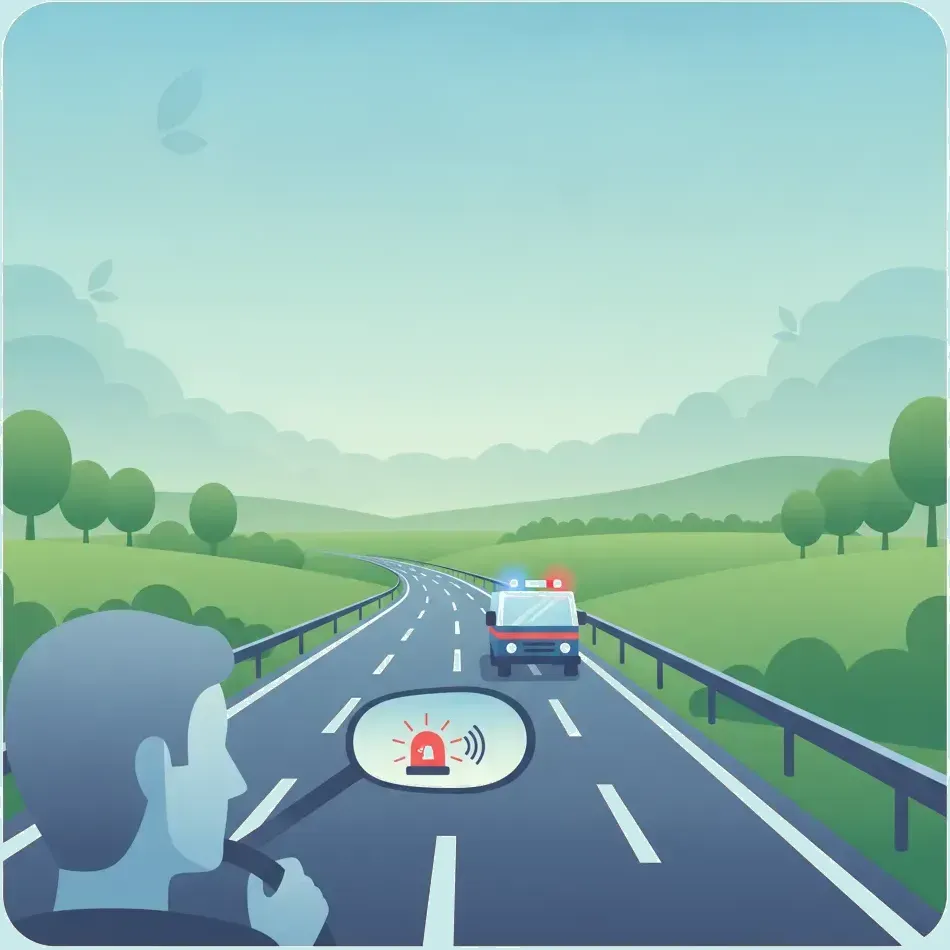
This lesson explains the correct protocol when encountering emergency vehicles with active sirens and lights. It details the legal requirement to yield the right-of-way and provides practical guidance on how to pull over safely and efficiently. Understanding these procedures helps ensure emergency services can reach their destination without delay.
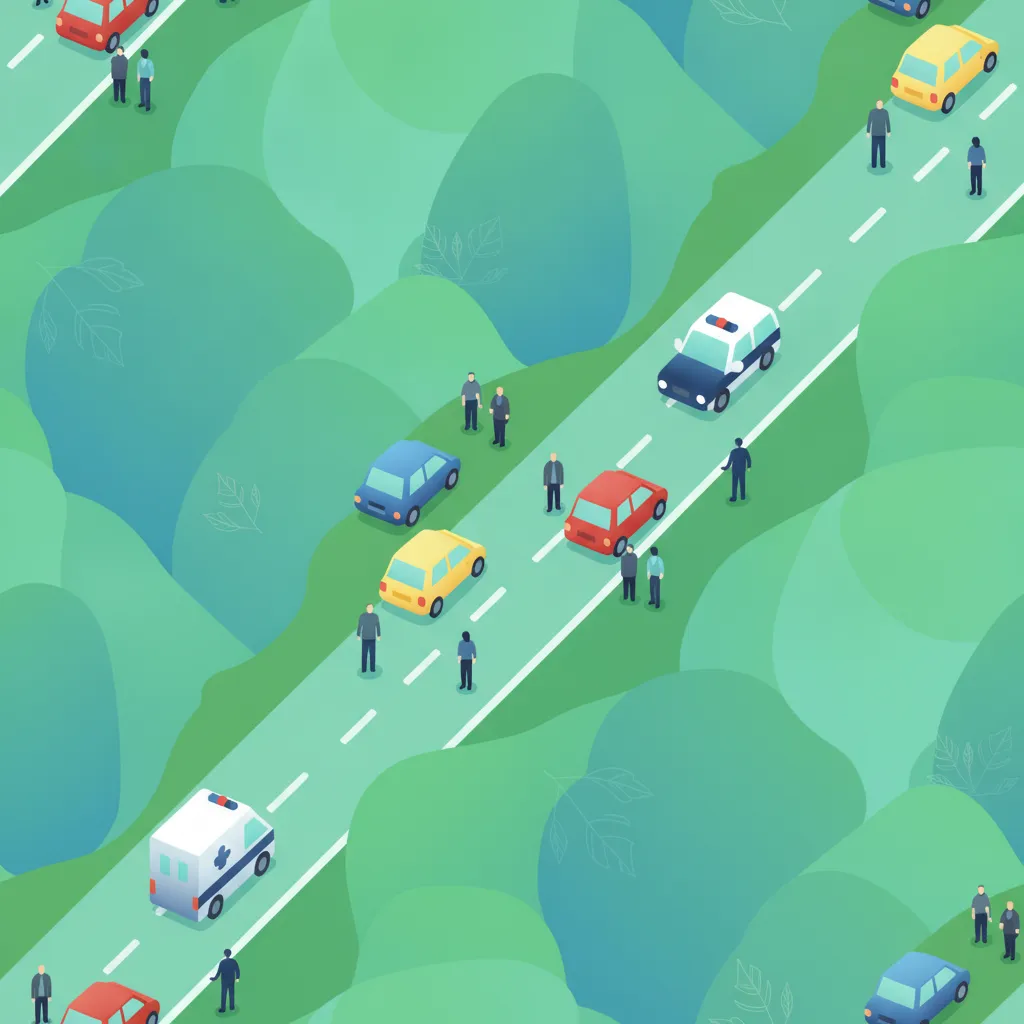
As the driver involved or first on the scene, you have specific duties. This lesson covers the initial steps: securing your own vehicle, warning approaching traffic, and making the emergency call. It reinforces the legal requirement in Austria for all drivers to form an emergency corridor ('Rettungsgasse') in standing traffic to allow clear access for emergency vehicles.
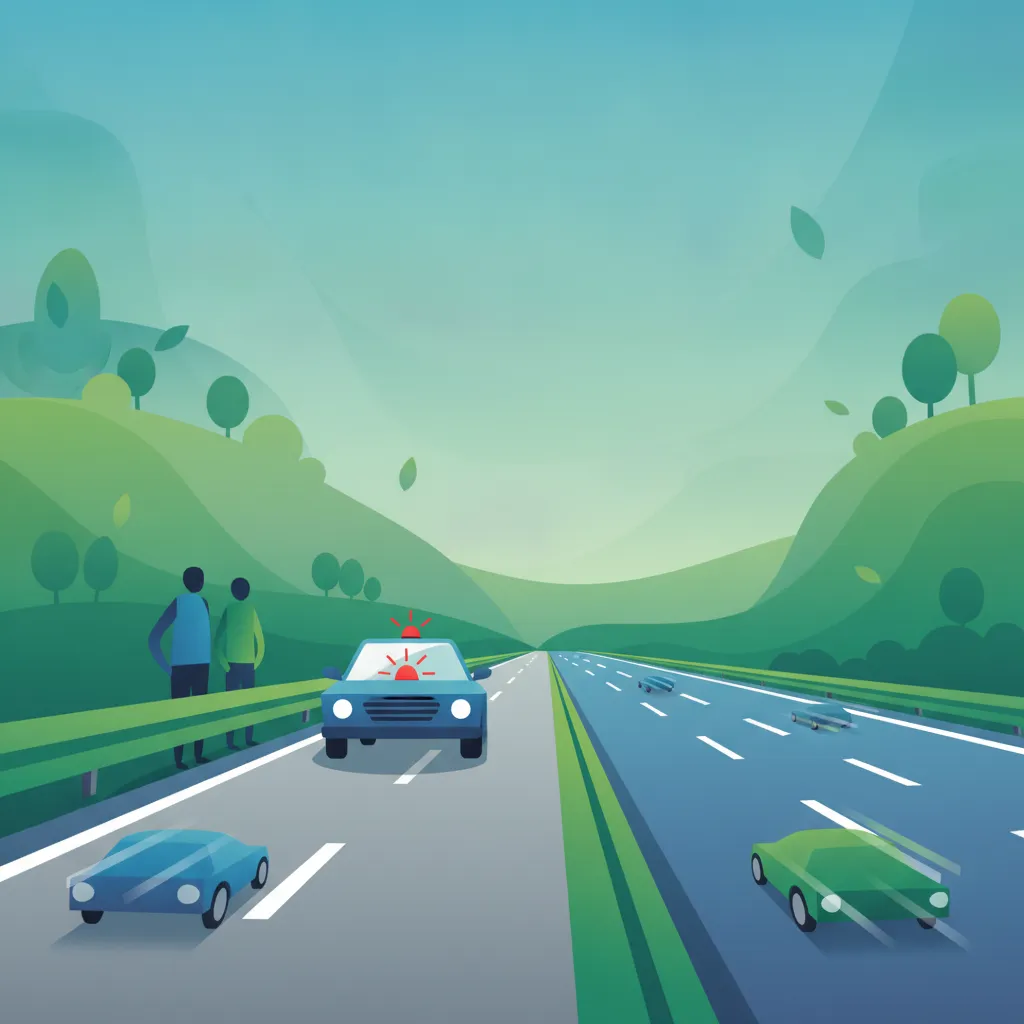
This lesson provides a step-by-step guide for safely managing a vehicle breakdown on the road. It covers the correct procedure for pulling over to a safe location, activating hazard lights, and wearing a high-visibility vest. Learners will understand the legal requirement and correct placement of the warning triangle to alert oncoming traffic, as well as the necessary information to provide when contacting roadside assistance services.
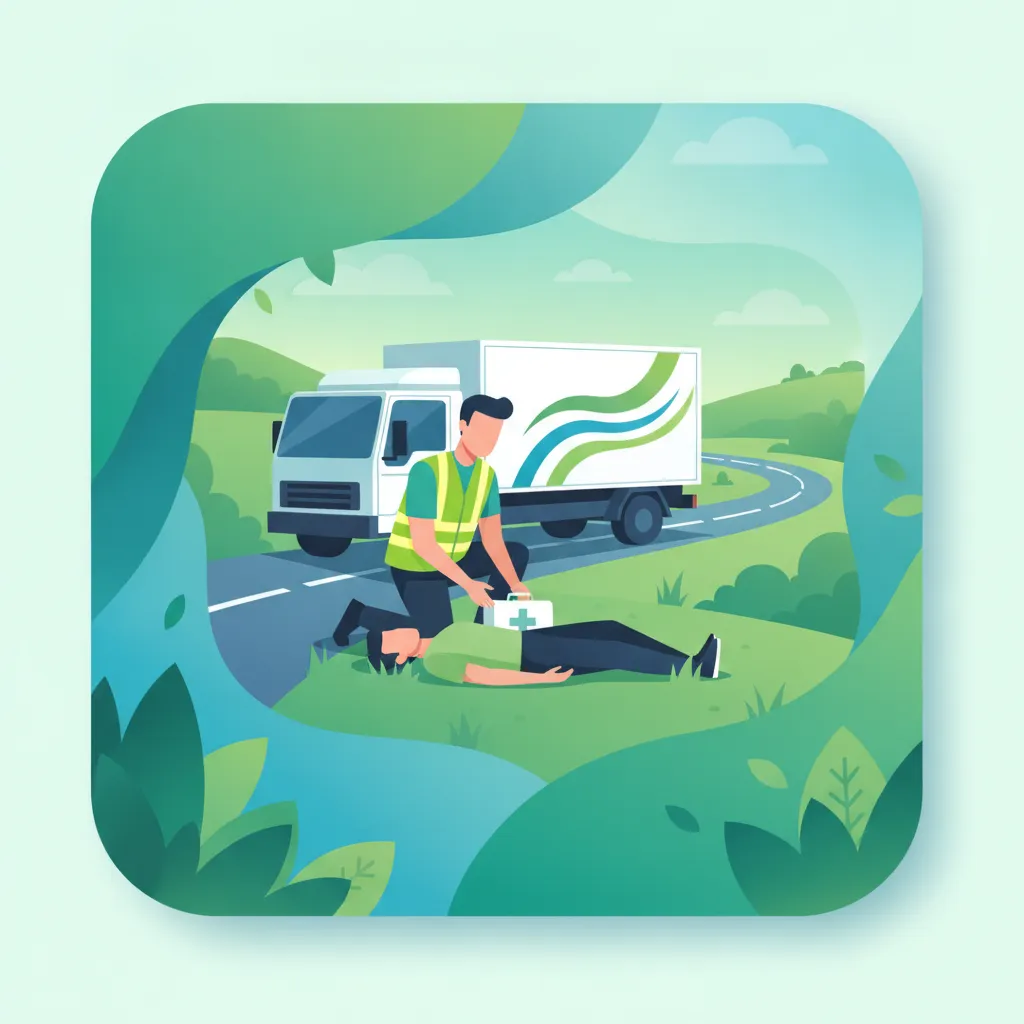
While not a substitute for a full first aid course, this lesson provides a critical overview of the immediate actions a driver can take to help an injured person. It covers assessing a casualty for danger, response, and breathing, and the basic principles of controlling severe bleeding and placing an unconscious person in the recovery position. The primary goal is to preserve life until professional help arrives.

This lesson prepares drivers for the emergency scenario of a shifting or lost load. It covers how to react to the sudden change in vehicle handling, safely pull over, and assess the situation. The lesson also explains the driver's responsibility for securing the scene and reporting the incident to prevent hazards for other road users.
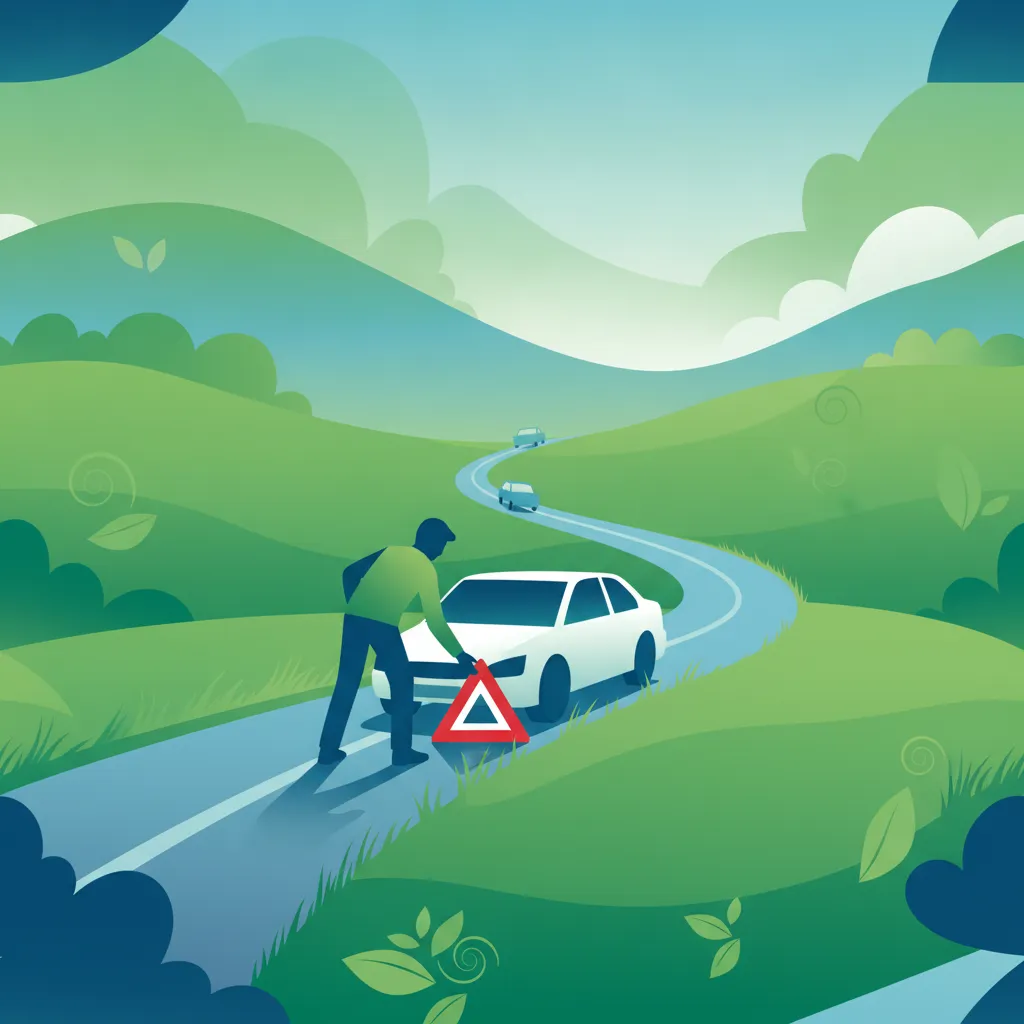
A breakdown requires a calm, systematic response to keep everyone safe. This lesson details the procedure: move to the safest possible location, activate hazard lights, secure the vehicle, and deploy warning triangles. It emphasizes the importance of moving passengers to a safe place away from the vehicle, especially on a motorway, before contacting your company or the breakdown services.
This lesson provides critical knowledge for being the first responder at an accident. It covers securing the scene to prevent further incidents, making an effective emergency call, and forming the 'Rettungsgasse' for approaching rescue vehicles. Basic but potentially life-saving first aid steps are reviewed, with a strong emphasis on not endangering oneself while providing assistance.
Master the correct procedures for securing an emergency scene with your heavy goods vehicle in Austria. Covers safe stop positioning, hazard lights, and reflective triangle placement to prevent secondary accidents.
This lesson outlines the standardized procedure for handling a vehicle breakdown safely. It covers pulling over to a safe location, activating hazard lights, deploying the warning triangle, and wearing a high-visibility vest. It also explains when and how to contact roadside assistance or emergency services.
This lesson provides a step-by-step guide for safely managing a vehicle breakdown on the road. It covers the correct procedure for pulling over to a safe location, activating hazard lights, and wearing a high-visibility vest. Learners will understand the legal requirement and correct placement of the warning triangle to alert oncoming traffic, as well as the necessary information to provide when contacting roadside assistance services.
A breakdown requires a calm, systematic response to keep everyone safe. This lesson details the procedure: move to the safest possible location, activate hazard lights, secure the vehicle, and deploy warning triangles. It emphasizes the importance of moving passengers to a safe place away from the vehicle, especially on a motorway, before contacting your company or the breakdown services.
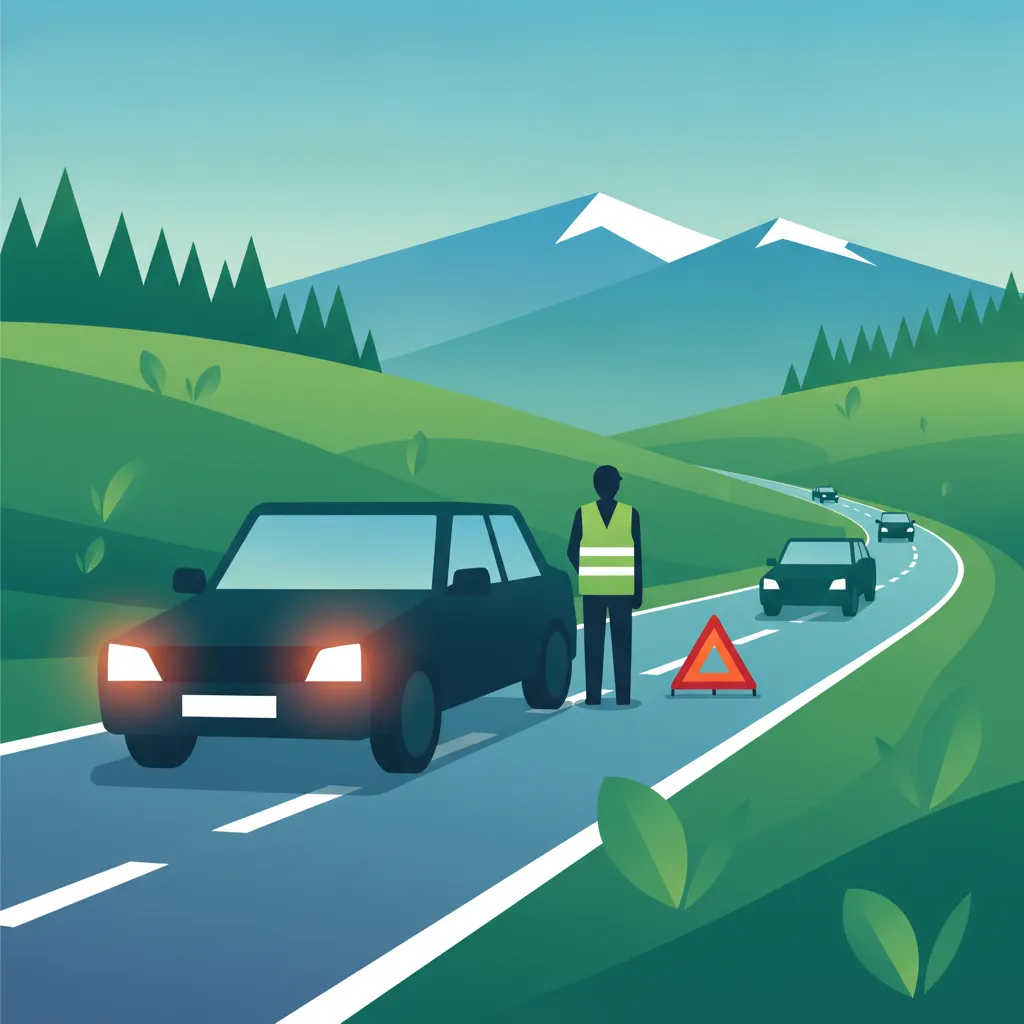
This lesson equips riders with the knowledge to manage an unexpected breakdown or accident. It outlines the steps for securing the vehicle and scene safely, including the use of hazard lights and a reflective vest. It also covers the procedure for contacting emergency services and providing essential information.
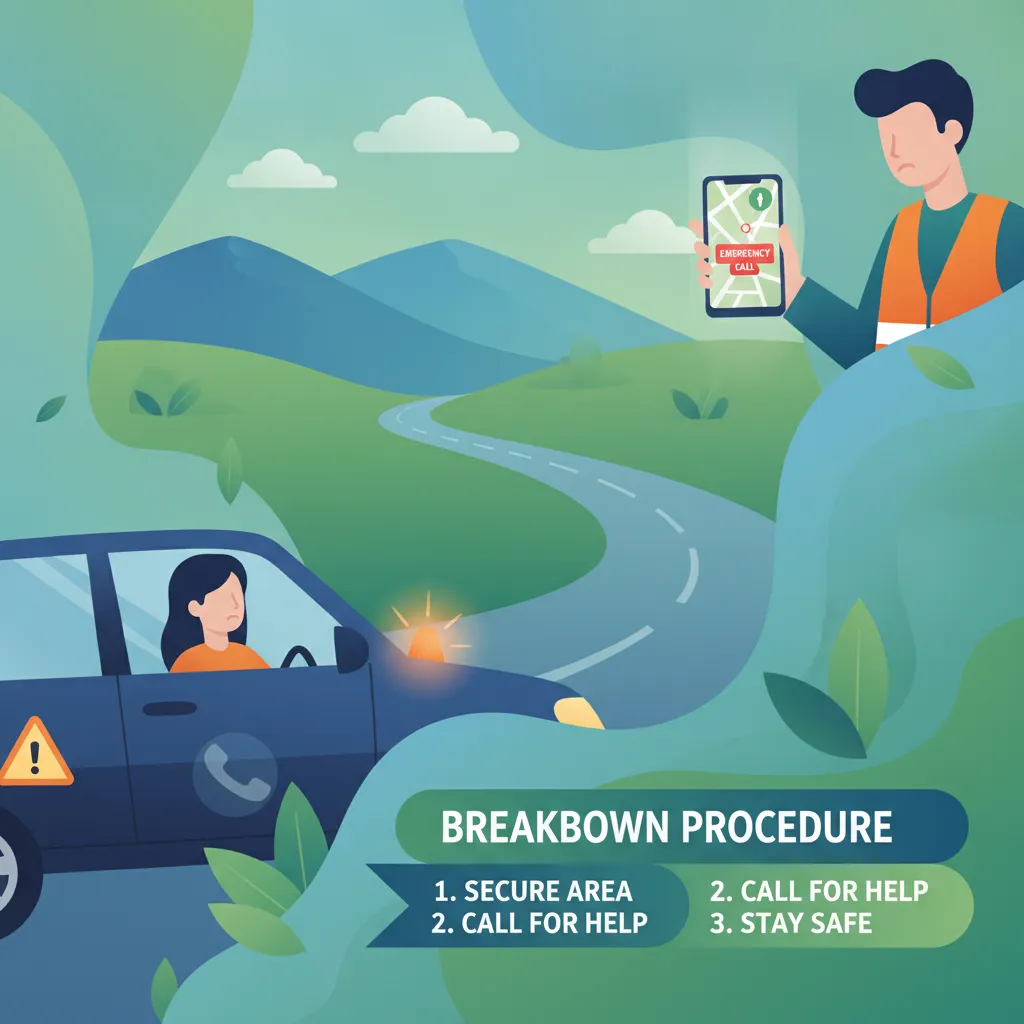
This lesson outlines the step-by-step safety protocol for a vehicle breakdown. It instructs the rider to move the motorcycle to the safest possible location, activate hazard lights, and put on a high-visibility vest. The proper placement of a warning triangle and the procedure for making an emergency call to 112 or a roadside assistance service are also detailed.
This lesson covers the various lighting and reflector systems required on heavy goods vehicles in Austria. It explains the function and legal requirements for headlights, taillights, brake lights, indicators, and reflective markings. Ensuring all lighting systems are operational is essential for visibility and communicating intentions to other road users.
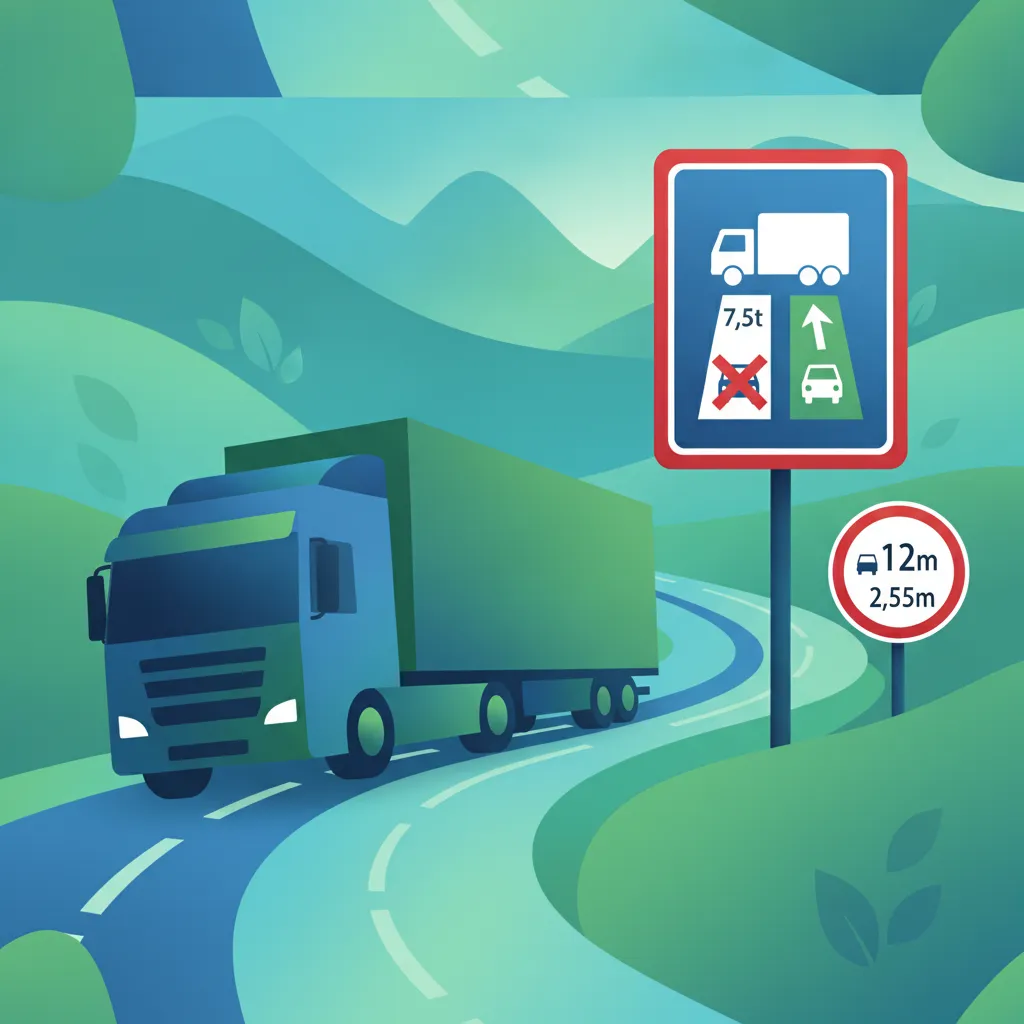
This lesson focuses on the specific Austrian road signs and supplemental plates that apply to heavy goods vehicles. It explains how to interpret signage indicating weight limits, height and width restrictions, lane usage rules, and other critical regulatory information. Correctly understanding these signs is essential for legal compliance and safe navigation on Austria's roads.
As the driver involved or first on the scene, you have specific duties. This lesson covers the initial steps: securing your own vehicle, warning approaching traffic, and making the emergency call. It reinforces the legal requirement in Austria for all drivers to form an emergency corridor ('Rettungsgasse') in standing traffic to allow clear access for emergency vehicles.

This lesson focuses on the critical role of mirrors, cameras, and other electronic aids in minimizing blind spots around a large vehicle. It provides guidance on how to properly adjust mirrors to maximize visibility. Effective use of these systems is vital for detecting smaller vehicles, cyclists, and pedestrians, especially during manoeuvres.
This lesson prepares drivers for the emergency scenario of a shifting or lost load. It covers how to react to the sudden change in vehicle handling, safely pull over, and assess the situation. The lesson also explains the driver's responsibility for securing the scene and reporting the incident to prevent hazards for other road users.
Find clear answers to common questions learners have about Emergency Response, Stop Positioning, and Use of 112. Learn how the lesson is structured, which driving theory objectives it supports, and how it fits into the overall learning path of units and curriculum progression in Austria. These explanations help you understand key concepts, lesson flow, and exam focused study goals.
When calling 112, you must provide your exact location, the nature of the emergency, the number of people involved, and specifically mention that you are driving a heavy vehicle if there is a risk of cargo fire or hazardous materials involved.
You must move the vehicle to the shoulder if possible, switch on hazard lights, wear your high-visibility vest before leaving the cab, and place the warning triangle at a sufficient distance behind the vehicle to warn oncoming traffic.
You must stop immediately in a safe location, secure the area with warning devices, notify the police or motorway operator, and ensure that no other traffic is endangered by the spilled load. Do not attempt to clear the road if it puts your safety at risk.
While the core 112 protocol is the same, you must be prepared to give specific technical details relevant to HGVs, such as vehicle weight, height, and whether your vehicle is carrying dangerous goods (ADR), as this changes the emergency response.
Refine your study plan by searching for specific Austrian driving theory practice sets. Pinpoint questions related to particular road rules, signs, or challenge levels, and begin practicing immediately to reinforce your knowledge and excel in your official exam with confidence. Get started with focused revision today.