
This lesson details the mechanics of front and rear brake interaction, a critical skill for passing your Austrian motorcycle theory test. You will learn how to balance your braking forces effectively to maintain control and stability, building on the safety principles from previous units in your A, A1, or A2 course.
Lesson content overview
Riding a motorcycle safely and effectively demands precise control over all vehicle dynamics, especially braking. The art of coordinating the front and rear brakes is not merely about slowing down; it's about achieving stable, efficient, and controlled deceleration under every conceivable condition. This comprehensive guide, tailored for aspiring riders pursuing their A, A1, or A2 licences in Austria, delves into the critical principles of front vs. rear brake balance, enhancing your control, shortening stopping distances, and providing a smoother, safer riding experience.
Proper brake balance is the coordinated application of your motorcycle's front and rear brakes to achieve optimal deceleration without compromising stability or exceeding tyre grip limits. Unlike cars, where brake bias is often fixed or electronically managed, motorcycle riders actively control the distribution of braking force with their right hand (front brake lever) and right foot (rear brake pedal). This dynamic control is essential because the ideal brake balance changes constantly due to factors like speed, road surface, and whether you are braking in a straight line or a curve.
Effective brake balance is paramount for several reasons: it significantly reduces stopping distances, helps prevent dangerous wheel lock-ups, maintains the motorcycle's directional stability, and is a fundamental skill for advanced emergency braking and cornering techniques. A deep understanding of these principles provides the bedrock for confident and competent riding on Austrian roads and beyond.
At the heart of motorcycle braking lies fundamental physics, particularly the concepts of weight transfer and tyre traction limits. Grasping these principles is crucial for mastering brake balance.
When you apply the brakes, the motorcycle's momentum doesn't simply disappear; it causes a significant shift in weight. This weight transfer moves mass from the rear wheel to the front wheel, increasing the load on the front tyre and simultaneously reducing the load on the rear tyre.
The practical implication for riders is profound: the front tyre gains grip potential, while the rear tyre loses it. Ignoring this can lead to the rear wheel lifting off the ground if excessive front brake is applied, especially at lower speeds, or a rear wheel lock-up due to reduced load. Riders must modulate brake pressure to avoid such scenarios, maintaining both wheels firmly on the ground for maximum control.
Every tyre has a finite amount of grip, known as its traction limit. This limit is determined by the tyre's design, condition, and, critically, the characteristics of the road surface. The grip coefficient (μ), a ratio of frictional force to normal force, quantifies this interaction. A higher grip coefficient (e.g., dry, clean asphalt) means more braking force can be applied, while a lower one (e.g., wet leaves, gravel, ice) drastically reduces it.
The brake bias is the distribution ratio of braking forces between the front and rear wheels. While motorcycles have a static brake bias in their design, the rider's active input creates a dynamic bias that must adapt to real-time conditions.
Unlike cars, which often have anti-lock braking systems (ABS) and electronic brake-force distribution, motorcyclists are primarily responsible for manually achieving the optimal brake bias.
Riders must learn to feel the limits of traction and adjust their brake bias instinctively. This "feel" develops with practice and a deep understanding of how the motorcycle reacts under different braking scenarios.
The friction circle, sometimes called the conical envelope, is a crucial concept when braking in a curve. It illustrates that a tyre has a finite amount of grip. This grip can be used for cornering (lateral force), braking (longitudinal force), or accelerating (longitudinal force). If you use a large portion of the available grip for cornering, there's less grip remaining for braking.
Proportional braking is the active, simultaneous adjustment of both front and rear brakes. It’s about more than just applying both brakes; it's about varying their intensity relative to each other based on immediate needs.
A skilled motorcycle rider in Austria understands that brake balance is not a fixed technique but a dynamic art. It must be constantly adapted to the prevailing conditions.
The coefficient of friction between your tyres and the road surface is paramount. It varies dramatically with:
Braking while leaning into a curve presents one of the most challenging scenarios for motorcycle riders.
The motorcycle's state also dictates how brake balance should be applied.
Austrian traffic law, specifically the Straßenverkehrsordnung (StVO), mandates safe and responsible driving practices, which inherently include proper braking. While the StVO may not specify exact brake balance ratios, it generally requires drivers to adapt their speed and driving style, including braking, to prevailing road, traffic, and weather conditions to maintain control and prevent accidents.
Key Legal and Advisory Principles for Austrian Motorcycle Riders:
Adhering to these principles is not just about passing your Austrian motorcycle theory test; it's fundamental to your safety and the safety of others on the road.
Understanding common errors is as important as learning correct techniques. Here are frequent mistakes in brake balance and how to rectify them:
Excessive Front Braking at Low Speed:
Neglecting Rear Brake on Slippery Surfaces:
Heavy Rear Braking While Cornering:
Full Braking in a Curve:
Using Rear Brake Exclusively to Stop on Loose Gravel:
Riding with Unbalanced Brakes due to Wear:
Mastering front vs. rear brake balance is a cornerstone of safe and confident motorcycle riding. It allows you to harness the full stopping potential of your machine while maintaining critical control and stability.
Here's a summary of the essential principles for Austrian motorcycle theory:
By internalising these concepts and practicing them consistently, you will develop the "feel" necessary to become a truly skilled and safe motorcycle rider. This mastery will not only help you pass your Austrian motorcycle theory test but, more importantly, equip you for a lifetime of confident riding.
This lesson teaches the critical skill of coordinating front and rear motorcycle brakes for safe, controlled deceleration, which is essential for Austrian motorcycle theory test success. The key physics principle is that braking causes weight transfer forward, making the front brake your primary stopping tool while the rear brake provides stability. The friction circle concept demonstrates that braking hard while leaned over in a curve uses up available tyre grip for turning, risking a crash. Effective brake balance requires continuous adjustment of the front-to-rear ratio based on speed, road surface, and cornering, with proportional braking technique helping to maintain stability. Austrian traffic law requires riders to adapt braking to conditions, with severe legal consequences for failing to adjust technique on wet, slippery, or icy roads.
A short set of high-value points that capture the most important learning from this lesson.
The front brake provides the majority of stopping power due to forward weight transfer during deceleration, while the rear brake offers essential stability.
Brake bias must be dynamically adjusted based on speed, road surface, and whether the motorcycle is traveling straight or in a curve.
The friction circle concept means that braking hard while leaned over in a corner will exceed tyre grip limits and cause a crash.
On slippery surfaces, significantly reduce braking force and increase rear brake usage to prevent front wheel lock-up.
Proportional braking (simultaneous modulation of both brakes) maintains stability and maximizes controlled deceleration.
Explore all units and lessons included in this driving theory course.
Weight transfer shifts mass to the front wheel during braking, increasing front tyre grip but reducing rear tyre grip.
At high speeds: 70-80% front, 20-30% rear; at low speeds: 50-60% front, 40-50% rear for optimal balance.
Complete most braking before entering a curve while the bike is upright to use full traction for stopping.
On wet, icy, or gravel surfaces, traction limits are drastically reduced and require much gentler, more progressive braking.
The rear brake, even when lightly applied, helps counteract forward dive and keeps the rear wheel planted during heavy front braking.
Using excessive front brake at low speeds when weight transfer is minimal can lock the front wheel or lift the rear wheel.
Relying solely on the front brake on slippery surfaces greatly increases the risk of front wheel lock-up and loss of steering control.
Applying heavy rear brake while leaned over in a corner can cause the rear wheel to skid, leading to a low-side crash.
Attempting full braking while already leaned into a curve exceeds the friction circle and will cause wheel lock-up and loss of grip.
Riding with worn brake pads or unbalanced brakes creates unpredictable brake bias and dangerous handling characteristics.
Lesson content overview
A short set of high-value points that capture the most important learning from this lesson.
The front brake provides the majority of stopping power due to forward weight transfer during deceleration, while the rear brake offers essential stability.
Brake bias must be dynamically adjusted based on speed, road surface, and whether the motorcycle is traveling straight or in a curve.
The friction circle concept means that braking hard while leaned over in a corner will exceed tyre grip limits and cause a crash.
On slippery surfaces, significantly reduce braking force and increase rear brake usage to prevent front wheel lock-up.
Proportional braking (simultaneous modulation of both brakes) maintains stability and maximizes controlled deceleration.
Explore all units and lessons included in this driving theory course.
Weight transfer shifts mass to the front wheel during braking, increasing front tyre grip but reducing rear tyre grip.
At high speeds: 70-80% front, 20-30% rear; at low speeds: 50-60% front, 40-50% rear for optimal balance.
Complete most braking before entering a curve while the bike is upright to use full traction for stopping.
On wet, icy, or gravel surfaces, traction limits are drastically reduced and require much gentler, more progressive braking.
The rear brake, even when lightly applied, helps counteract forward dive and keeps the rear wheel planted during heavy front braking.
Using excessive front brake at low speeds when weight transfer is minimal can lock the front wheel or lift the rear wheel.
Relying solely on the front brake on slippery surfaces greatly increases the risk of front wheel lock-up and loss of steering control.
Applying heavy rear brake while leaned over in a corner can cause the rear wheel to skid, leading to a low-side crash.
Attempting full braking while already leaned into a curve exceeds the friction circle and will cause wheel lock-up and loss of grip.
Riding with worn brake pads or unbalanced brakes creates unpredictable brake bias and dangerous handling characteristics.
Explore search topics learners often look for when studying Front vs. Rear Brake Balance. These topics reflect common questions about road rules, driving situations, safety guidance, and lesson level theory preparation for learners in Austria.
Browse additional driving theory lessons that cover connected traffic rules, road signs, and common driving situations related to this topic. Improve your understanding of how different rules interact across everyday traffic scenarios.
Understand the critical physics and techniques for safe braking while cornering on a motorcycle. Learn how to manage brake bias and lean angle to maintain stability and control on Austrian roads.

This lesson addresses the complex skill of braking while the motorcycle is leaned over in a corner or on low-traction surfaces. It introduces the concept of trail braking to adjust speed and tighten a cornering line, and provides strategies for gentle brake application on wet or loose surfaces. Mastering these techniques requires a delicate touch and a deep understanding of traction limits.
This lesson explains the physics behind motorcycle braking, detailing why the front brake is responsible for the majority of stopping force due to forward weight transfer. It introduces the concept of progressive brake application to manage this weight shift and maximize tyre grip without locking a wheel. Understanding these core principles is the foundation for developing smooth and effective braking skills.

This lesson addresses the challenge of navigating terrain with changing elevation. It covers techniques for maintaining momentum and control on uphill climbs, including proper gear selection and throttle use. For descents, it emphasizes the use of engine braking to control speed and prevent brake overuse, a vital skill for long alpine descents.
This lesson provides a step-by-step guide to executing an emergency stop safely. It teaches riders how to apply firm, progressive pressure to both brakes to achieve the shortest possible stopping distance without locking the wheels. The role of ABS in these situations is also explained, highlighting how it assists the rider in maintaining steering control under maximum braking.
This lesson teaches correct braking techniques, including the coordinated use of front and rear brakes for maximum efficiency. It explains how to calculate total stopping distance based on speed, perception time, and reaction time. The content also covers adjustments needed for braking on wet or slippery surfaces to avoid loss of control.

This lesson focuses on the dynamics of safe cornering, explaining concepts like lean angle, body positioning, and counter-steering. It teaches the proper technique of adjusting speed before a turn, maintaining a smooth path through the apex, and accelerating out of the corner. Correctly applying these principles is key to maintaining stability and control.
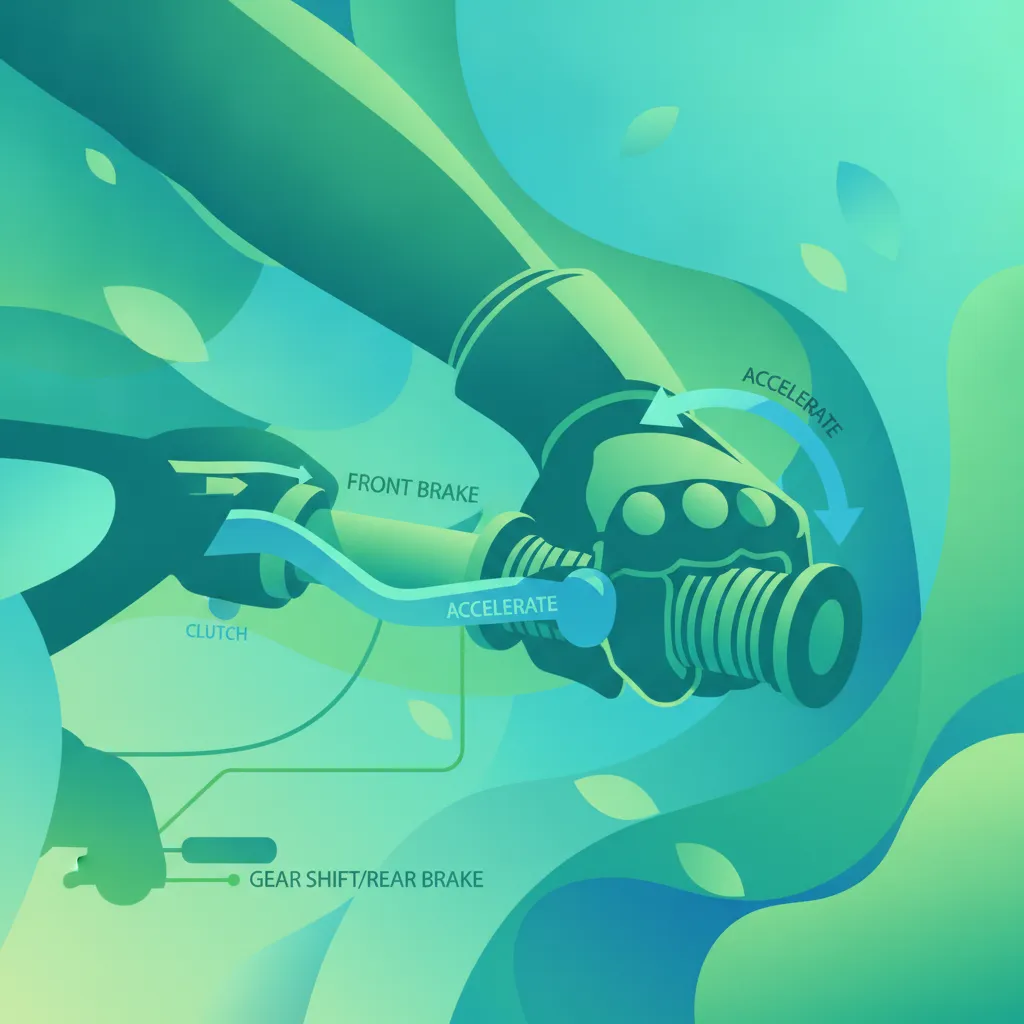
This lesson provides a functional overview of a motorcycle's essential controls, explaining the operation of the throttle, clutch, and gear selector. It differentiates between the front and rear braking systems and their roles in effective stopping. Learners will also identify handlebar switches for lights, indicators, and the horn, ensuring complete familiarity with the vehicle's interface for safe operation.

This lesson details the components and function of a motorcycle's braking system. It explains the roles of the front and rear brakes, the mechanics of hydraulic disc brakes, and the importance of maintaining proper brake fluid levels. Learners will also understand how to recognize the signs of worn brake pads, ensuring the system remains effective for safe stopping.

This lesson demystifies countersteering, the non-intuitive but essential technique for turning a motorcycle above low speeds. It explains that to turn right, a rider must momentarily push the right handlebar forward, which causes the bike to lean to the right. Mastering this core concept is the key to precise, confident, and controlled cornering.

This lesson focuses on the strategic approach to cornering: Slow, Look, Lean, and Roll. It teaches riders to adjust to a safe entry speed before the turn, choose a line that maximizes visibility and safety margin, and smoothly accelerate out of the corner. Proper line choice, including identifying the apex, is critical for maintaining stability and control through any bend.
Learn about typical errors in motorcycle braking, including improper brake balance and misuse during curves. Understand how to prevent these mistakes for safer riding and better control in Austria.
This lesson explains the physics behind motorcycle braking, detailing why the front brake is responsible for the majority of stopping force due to forward weight transfer. It introduces the concept of progressive brake application to manage this weight shift and maximize tyre grip without locking a wheel. Understanding these core principles is the foundation for developing smooth and effective braking skills.
This lesson details the components and function of a motorcycle's braking system. It explains the roles of the front and rear brakes, the mechanics of hydraulic disc brakes, and the importance of maintaining proper brake fluid levels. Learners will also understand how to recognize the signs of worn brake pads, ensuring the system remains effective for safe stopping.
This lesson addresses the complex skill of braking while the motorcycle is leaned over in a corner or on low-traction surfaces. It introduces the concept of trail braking to adjust speed and tighten a cornering line, and provides strategies for gentle brake application on wet or loose surfaces. Mastering these techniques requires a delicate touch and a deep understanding of traction limits.
This lesson provides a step-by-step guide to executing an emergency stop safely. It teaches riders how to apply firm, progressive pressure to both brakes to achieve the shortest possible stopping distance without locking the wheels. The role of ABS in these situations is also explained, highlighting how it assists the rider in maintaining steering control under maximum braking.
This lesson provides a functional overview of a motorcycle's essential controls, explaining the operation of the throttle, clutch, and gear selector. It differentiates between the front and rear braking systems and their roles in effective stopping. Learners will also identify handlebar switches for lights, indicators, and the horn, ensuring complete familiarity with the vehicle's interface for safe operation.
This lesson teaches correct braking techniques, including the coordinated use of front and rear brakes for maximum efficiency. It explains how to calculate total stopping distance based on speed, perception time, and reaction time. The content also covers adjustments needed for braking on wet or slippery surfaces to avoid loss of control.
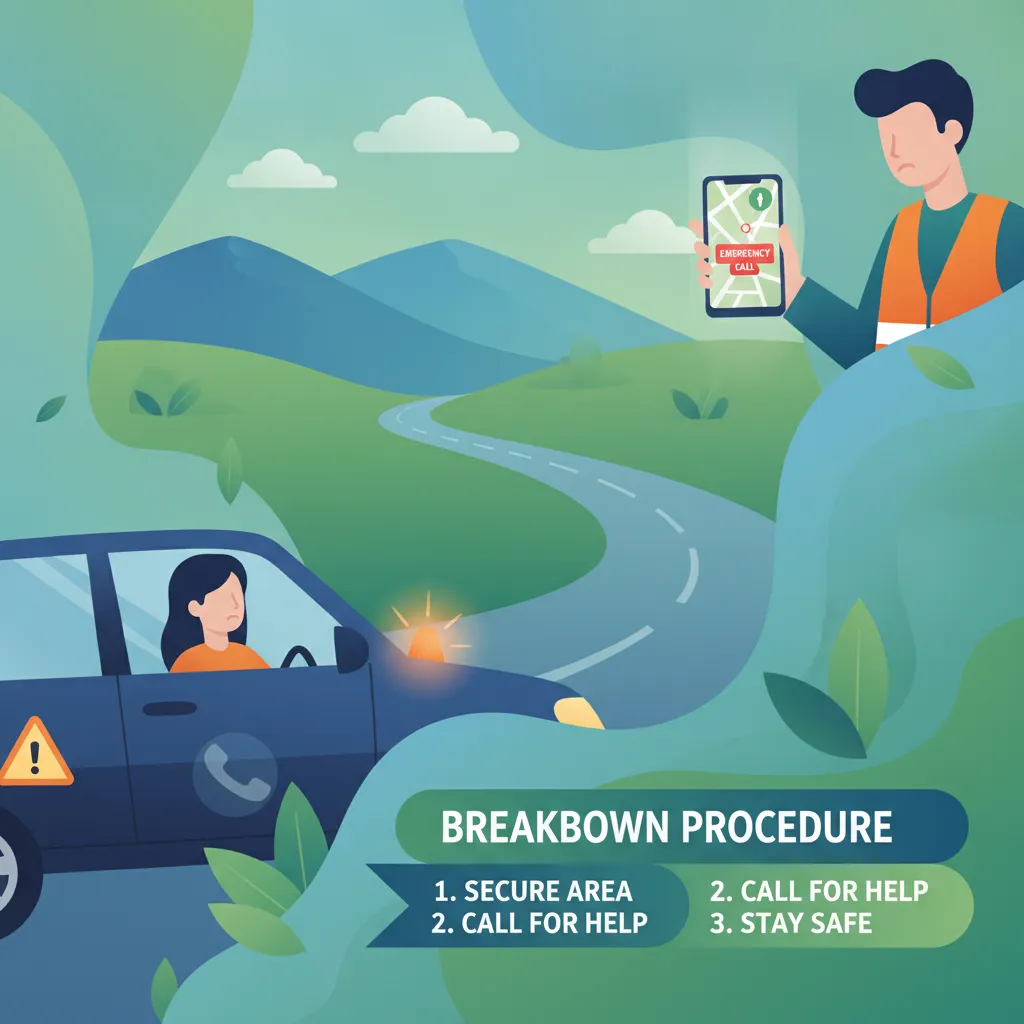
This lesson outlines the step-by-step safety protocol for a vehicle breakdown. It instructs the rider to move the motorcycle to the safest possible location, activate hazard lights, and put on a high-visibility vest. The proper placement of a warning triangle and the procedure for making an emergency call to 112 or a roadside assistance service are also detailed.

This lesson addresses the heightened vulnerability of motorcyclists and outlines essential strategies for personal safety and risk mitigation. It covers the importance of wearing certified protective gear, maintaining situational awareness, and adopting a defensive riding posture. By understanding and anticipating potential hazards in the Austrian traffic environment, riders can actively reduce their risk of accidents.

This lesson breaks down the overtaking maneuver into a safe, repeatable process: assess, signal, check, move, and return. It emphasizes the importance of ensuring a sufficient gap in oncoming traffic, checking mirrors and blind spots thoroughly, and maintaining a proper speed differential. Adherence to Austrian laws regarding where overtaking is prohibited is also covered in detail.

This lesson teaches the correct technique for setting and using motorcycle mirrors to maintain awareness of traffic behind and to the sides. It emphasizes that mirrors alone are not enough, detailing the necessity of the 'lifesaver' shoulder check to cover critical blind spots. A disciplined observation routine is crucial for safe lane changes, merging, and navigating dense traffic.
Find clear answers to common questions learners have about Front vs. Rear Brake Balance. Learn how the lesson is structured, which driving theory objectives it supports, and how it fits into the overall learning path of units and curriculum progression in Austria. These explanations help you understand key concepts, lesson flow, and exam focused study goals.
When you decelerate, weight is transferred forward to the front wheel, which significantly increases the available grip of the front tyre. Consequently, the front brake can handle much more force than the rear, which becomes lighter during hard braking.
Yes, you should typically use both. The rear brake acts as a stabiliser, helping to settle the chassis and prevent the motorcycle from diving too abruptly. It is particularly useful for control at low speeds and on slippery surfaces.
Applying the rear brake too hard can cause the rear wheel to lock and potentially skid, which reduces your control and can cause the back of the bike to slide out, leading to a loss of stability.
On loose gravel or wet surfaces, you have less traction overall. You must apply both brakes more gently and progressively to avoid locking a wheel. The front brake remains primary, but requires even more sensitivity to prevent a loss of grip.
Refine your study plan by searching for specific Austrian driving theory practice sets. Pinpoint questions related to particular road rules, signs, or challenge levels, and begin practicing immediately to reinforce your knowledge and excel in your official exam with confidence. Get started with focused revision today.