
This lesson explains the critical physics of tyre grip and traction, which are essential for every motorcyclist in Austria. You will learn how the small contact patch between your tyres and the road dictates your ability to safely brake, corner, and accelerate in varying conditions. This knowledge builds directly upon your understanding of motorcycle controls and is vital for mastering emergency maneuvers in the upcoming units.
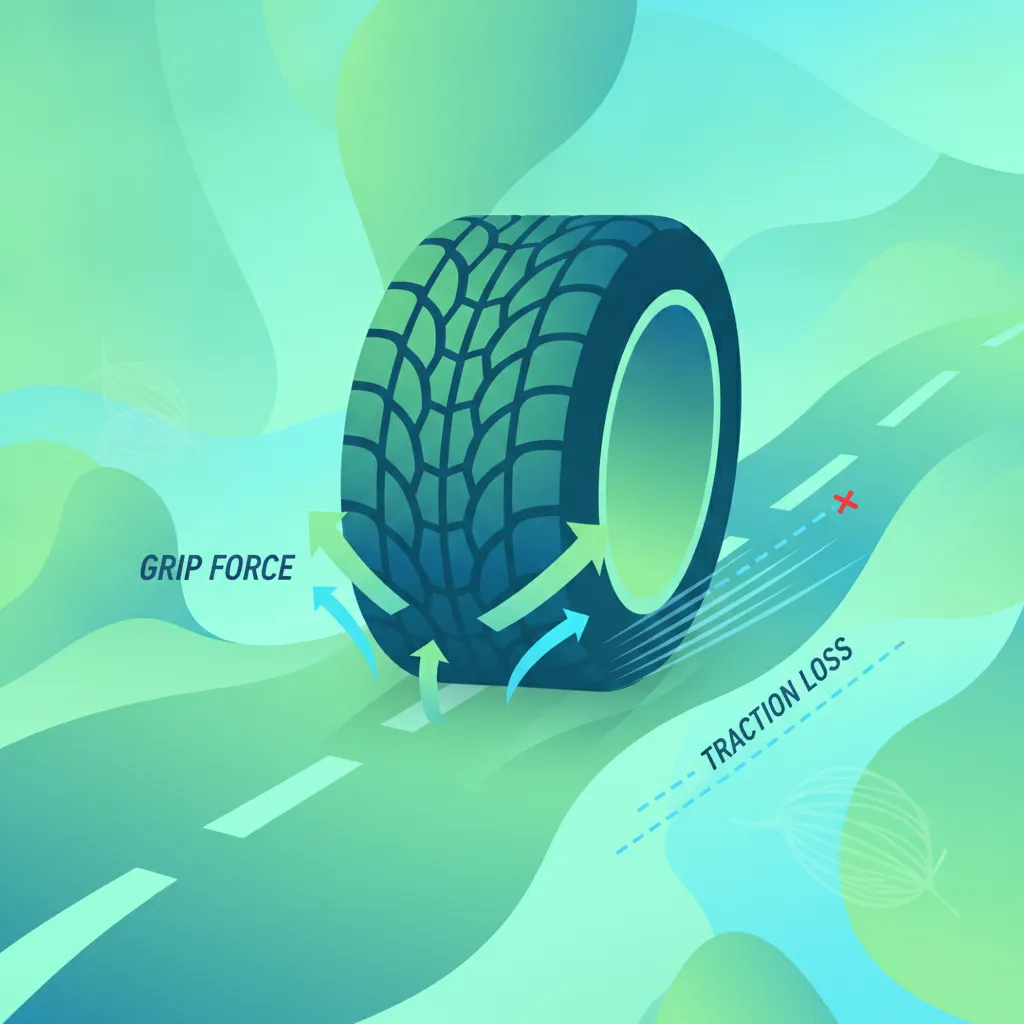
Lesson content overview
Understanding the fundamental principles of tyre grip and traction is paramount for any motorcyclist, especially when navigating the diverse conditions encountered on Austrian roads. This lesson delves into the science of how your tyres maintain contact with the road, exploring the critical factors that influence this connection. By grasping these concepts, riders can develop a safer, more confident riding style, anticipate hazards, and react effectively to maintain control in various situations. This knowledge builds upon your understanding of braking principles and will be essential for mastering advanced cornering and emergency manoeuvres within the Austrian Motorcycle Theory curriculum.
The foundation of motorcycle control lies in the interaction between your tyres and the road surface. This interaction generates the forces necessary for acceleration, braking, and cornering. Without sufficient grip, any of these actions can lead to a loss of control. Grip, often referred to as traction, is not a constant; it is a dynamic force influenced by a multitude of factors that a skilled rider must learn to manage.
The "contact patch" is the small area of the tyre that is actually in direct contact with the road surface at any given moment. This tiny patch, often no larger than the palm of your hand, is the sole point through which all forces of control are transmitted between the motorcycle and the road. Its size, shape, and the pressure distributed across it are crucial for optimal grip.
The design of a motorcycle tyre, including its profile and tread pattern, is engineered to optimise this contact patch under varying conditions. A well-maintained tyre with correct inflation pressure ensures that the contact patch operates efficiently, maximising the available adhesion.
Friction is the force that opposes motion between two surfaces in contact. In the context of motorcycle tyres, there are two primary types of friction that riders must understand: static friction and dynamic (or kinetic) friction.
Static friction is the force that resists the initiation of sliding motion between two surfaces that are at rest relative to each other. For a motorcycle tyre, static friction is the maximum amount of grip available before the tyre begins to slip or skid. This is the ideal state for control; riders strive to operate within the limits of static friction to maintain directional stability and efficient force transfer.
When you accelerate, brake, or corner, your tyres are using static friction to push against the road without actually sliding. The maximum force you can apply before slipping depends directly on the coefficient of static friction between the tyre rubber and the road surface, multiplied by the vertical load on the tyre.
Dynamic friction, also known as kinetic friction, is the frictional force that acts between surfaces that are already in relative motion, meaning one surface is sliding across the other. Crucially, the coefficient of dynamic friction is typically lower than that of static friction.
This means that once a tyre begins to skid, the amount of grip available to control the motorcycle significantly decreases. This is why a locked wheel during braking leads to longer stopping distances and a loss of directional control. Riders must always strive to avoid exceeding the static friction limit to prevent uncontrolled skidding and maintain effective command of the motorcycle. Modern Anti-lock Braking Systems (ABS) are designed precisely to prevent wheels from entering the dynamic friction regime by modulating brake pressure.
Several critical factors directly influence the amount of grip your motorcycle tyres can generate. Understanding and managing these variables is essential for safe and effective riding.
Tyre pressure, measured in bar or psi, is perhaps the most easily controllable factor affecting tyre grip. The correct inflation pressure ensures that the tyre maintains its optimal shape, which in turn dictates the size and efficiency of the contact patch.
The operating temperature of your tyre's rubber compound plays a vital role in its ability to generate grip. Rubber is a viscoelastic material, meaning its properties change with temperature.
It is crucial to allow your tyres to warm up gradually, particularly at the start of a ride, before attempting any aggressive manoeuvres.
The characteristics of the road surface have a profound impact on the coefficient of friction available and, consequently, on the available tyre grip. Riders must constantly assess and adapt to these changing conditions.
Under ideal dry conditions, clean asphalt typically offers the highest coefficient of friction, providing maximum grip. This allows for stronger braking, higher cornering speeds, and more aggressive acceleration compared to other surfaces. However, even on dry asphalt, variations can occur due to factors like loose debris, oil spills, or changes in the asphalt's composition.
Water on the road acts as a lubricant, significantly reducing the coefficient of friction between the tyre and the surface. This reduction can be drastic, requiring riders to reduce speed, increase braking distances, and use much smoother inputs for steering, braking, and acceleration.
In severe wet conditions, a phenomenon called "hydroplaning" can occur. This happens when the tyre tread cannot displace water quickly enough, causing a wedge of water to build up under the tyre, lifting it off the road surface. When hydroplaning, the rider experiences a complete loss of steering and braking control. The risk of hydroplaning increases with speed, water depth, and worn tyre tread.
Many other surfaces present significantly reduced grip:
Load transfer is the redistribution of vertical weight or load from one tyre to another during acceleration, braking, or cornering. This dynamic shift in weight significantly impacts the amount of grip each tyre can generate because grip is proportional to the vertical load on the tyre (up to the static friction limit).
Understanding load transfer is critical for smooth and controlled riding, especially when braking and cornering.
The "Traction Circle," also known as the "Circle of Adhesion," is a conceptual tool that helps riders understand the combined limits of grip a tyre can generate. It illustrates that a tyre has a finite amount of grip, which can be used for various forces: longitudinal (braking and acceleration) and lateral (cornering).
Imagine a circle representing the total available grip for a single tyre.
The traction circle demonstrates a crucial trade-off: a tyre cannot simultaneously use its full braking capability and its full cornering capability. If you are leaning hard into a corner, using a significant portion of the available grip for lateral forces, there is less grip remaining for braking or acceleration. Applying too much brake pressure in this situation will push the combined forces beyond the traction circle's limit, resulting in a loss of traction and a potential slide.
Managing this balance, especially during braking in a corner or accelerating out of one, is a hallmark of skilled riding. Riders must be smooth with their inputs, gradually transitioning between braking, leaning, and accelerating to stay within the tyre's adhesion limits.
Adhering to legal requirements and adopting best practices regarding tyre maintenance and usage is not only mandatory under Austrian road traffic regulations but also crucial for your safety.
Under Austrian law, motorcycle tyres must be inflated to the pressure recommended by the vehicle manufacturer. This information is typically found in the owner's manual or on a sticker on the motorcycle frame or swingarm. This is a fundamental maintenance requirement to ensure optimal contact patch, even tyre wear, and safe handling characteristics. Failure to comply can affect roadworthiness.
Maintaining good tyre condition is vital. This includes ensuring sufficient tread depth and inspecting tyres for any damage.
In Austria, the legal minimum tread depth for motorcycle tyres is 1.6 mm. Tyres with tread depth below this limit or those exhibiting visible damage such as cracks, bulges, or punctures are considered unroadworthy and must be replaced immediately. Adequate tread depth is crucial for water evacuation on wet roads, preventing hydroplaning and maintaining friction.
When carrying a passenger or additional cargo, the motorcycle's overall weight increases, and its load distribution changes. To compensate for this increased load and maintain the optimal contact patch, tyre pressure must be adjusted accordingly. Motorcycle manufacturers provide specific load adjustment charts, usually in the owner's manual, detailing the recommended pressure increases for such conditions. This is a mandatory safety measure under Austrian regulations when operating with increased load.
While not a direct "rule" in the sense of a fineable offense, the use of progressive braking is a recommended best practice under Austrian road safety guidelines. In emergency braking situations, riders are advised to apply the front brake first, smoothly and progressively, while simultaneously adding the rear brake as needed. This technique effectively utilises the forward load transfer, maximising the front tyre's significant stopping power while preventing rear wheel lock-up.
Austrian road traffic law implies a general duty of care for all drivers. This includes the fundamental requirement to adjust your speed to suit prevailing road and weather conditions. On surfaces with reduced traction (wet, oily, gravel, snow, or ice), riders must reduce their speed accordingly. Failure to do so dramatically increases the risk of losing control and is considered a violation of safe riding practices.
Many motorcycle accidents involving loss of control stem from a failure to correctly manage tyre grip. Recognizing and avoiding common mistakes is crucial.
Rear Wheel Lock-Up During Hard Braking:
Braking While Leaning Deep Into a Corner:
Riding with Underinflated Tyres:
Sudden Steering Input on Wet Roads:
Riding Aggressively on Cold Tyres:
The ability to dynamically adjust your riding technique based on various conditions is a cornerstone of safe motorcycle operation.
Understanding the underlying physics reinforces the importance of safe riding practices.
The maximum static friction a tyre can generate is directly proportional to the "normal force" – the vertical load pressing the tyre against the road. This explains why increasing the load on a tyre (e.g., through load transfer to the front tyre during braking) increases its grip potential, up to a certain point where the tyre's physical limits are reached. Beyond the static friction limit, the tyre slides, and the lower kinetic friction takes over.
The dynamic nature of load transfer means that the available grip at each wheel is constantly changing. A skilled rider subconsciously manages this by applying brakes and throttle progressively, allowing the suspension to compress and extend smoothly, distributing weight effectively. Abrupt inputs upset this delicate balance, leading to sudden changes in available grip and potential loss of control.
The traction circle is not just a theoretical concept; it is a real-world constraint. Every action you take – braking, accelerating, leaning – uses a portion of the tyre's finite grip. When you combine these actions, you are drawing a line within that circle. Staying safely within its boundaries means maintaining control. Exceeding it, even slightly, means you've asked more of the tyre than it can give, and a slide will result. Riders who understand this instinctively manage their combined inputs, braking more upright and accelerating smoothly out of a lean, always respecting the tyre's limits.
Mastering tyre grip is fundamental to safe and confident motorcycle riding. It involves a deep understanding of how your tyres interact with the road and the factors that influence this crucial connection.
By diligently applying these principles, you will enhance your ability to control your motorcycle under varying conditions, significantly improving your safety on Austrian roads.
This lesson explains the critical physics of motorcycle tyre grip, focusing on the contact patch, static versus dynamic friction, and how tyre pressure, temperature, and road surface conditions affect available traction. Key concepts include load transfer during braking which increases front tyre grip, and the traction circle which illustrates that tyre grip is finite and must be balanced between longitudinal forces (braking/acceleration) and lateral forces (cornering). The lesson also covers Austrian-specific requirements including the 1.6mm minimum tread depth and manufacturer tyre pressure specifications. Understanding these principles enables riders to apply smooth, progressive inputs and adjust their technique to match prevailing grip conditions, significantly reducing the risk of loss of control.
A short set of high-value points that capture the most important learning from this lesson.
The contact patch is the sole point through which all motorcycle control forces are transmitted between tyre and road
Static friction provides maximum grip; once a tyre exceeds this limit and slides, grip drops significantly due to lower dynamic friction
Tyre pressure directly affects contact patch shape and efficiency: underinflation causes distortion and heat buildup, overinflation reduces contact area
Load transfer during braking increases front tyre grip potential while reducing rear tyre grip, explaining why front brakes provide most stopping power
The traction circle shows that tyre grip is finite: heavy braking while leaned deep in a corner exceeds combined force limits and causes slides
Explore all units and lessons included in this driving theory course.
Austrian law mandates minimum 1.6mm tread depth for motorcycles; below this threshold tyres are unroadworthy
Tyres must warm to operating temperature before aggressive riding; cold rubber has significantly reduced coefficient of friction
On wet roads, braking distances can increase by 50% or more due to reduced friction coefficients
Complete most braking before entering a corner; use gentle trailing brake only while leaned
Always adjust tyre pressure when carrying passengers or cargo according to manufacturer load charts
Applying excessive rear brake pressure causing rear wheel lock-up, especially when front brake is heavily engaged
Attempting heavy braking while leaned deep into a corner, exceeding traction circle limits and causing slides
Riding aggressively on cold tyres immediately after starting, risking sudden loss of grip
Making sudden or sharp steering inputs on wet roads where reduced lateral grip is easily exceeded
Neglecting tyre pressure checks, leading to underinflation that distorts contact patch and reduces stability
Lesson content overview
A short set of high-value points that capture the most important learning from this lesson.
The contact patch is the sole point through which all motorcycle control forces are transmitted between tyre and road
Static friction provides maximum grip; once a tyre exceeds this limit and slides, grip drops significantly due to lower dynamic friction
Tyre pressure directly affects contact patch shape and efficiency: underinflation causes distortion and heat buildup, overinflation reduces contact area
Load transfer during braking increases front tyre grip potential while reducing rear tyre grip, explaining why front brakes provide most stopping power
The traction circle shows that tyre grip is finite: heavy braking while leaned deep in a corner exceeds combined force limits and causes slides
Explore all units and lessons included in this driving theory course.
Austrian law mandates minimum 1.6mm tread depth for motorcycles; below this threshold tyres are unroadworthy
Tyres must warm to operating temperature before aggressive riding; cold rubber has significantly reduced coefficient of friction
On wet roads, braking distances can increase by 50% or more due to reduced friction coefficients
Complete most braking before entering a corner; use gentle trailing brake only while leaned
Always adjust tyre pressure when carrying passengers or cargo according to manufacturer load charts
Applying excessive rear brake pressure causing rear wheel lock-up, especially when front brake is heavily engaged
Attempting heavy braking while leaned deep into a corner, exceeding traction circle limits and causing slides
Riding aggressively on cold tyres immediately after starting, risking sudden loss of grip
Making sudden or sharp steering inputs on wet roads where reduced lateral grip is easily exceeded
Neglecting tyre pressure checks, leading to underinflation that distorts contact patch and reduces stability
Explore search topics learners often look for when studying Tyre Grip and Traction Limits. These topics reflect common questions about road rules, driving situations, safety guidance, and lesson level theory preparation for learners in Austria.
Browse additional driving theory lessons that cover connected traffic rules, road signs, and common driving situations related to this topic. Improve your understanding of how different rules interact across everyday traffic scenarios.
Understand how tyre pressure, temperature, road surface conditions, and load transfer critically influence motorcycle tyre grip and traction. Essential knowledge for safe riding and passing the Austrian theory exam.

This lesson examines how adverse weather directly affects motorcycle safety. It explains how water on the road reduces tyre grip, increasing braking distances and the risk of aquaplaning. Strategies for riding in fog, dealing with reduced visibility from road spray, and identifying potential ice patches are covered to help riders manage weather-related risks.
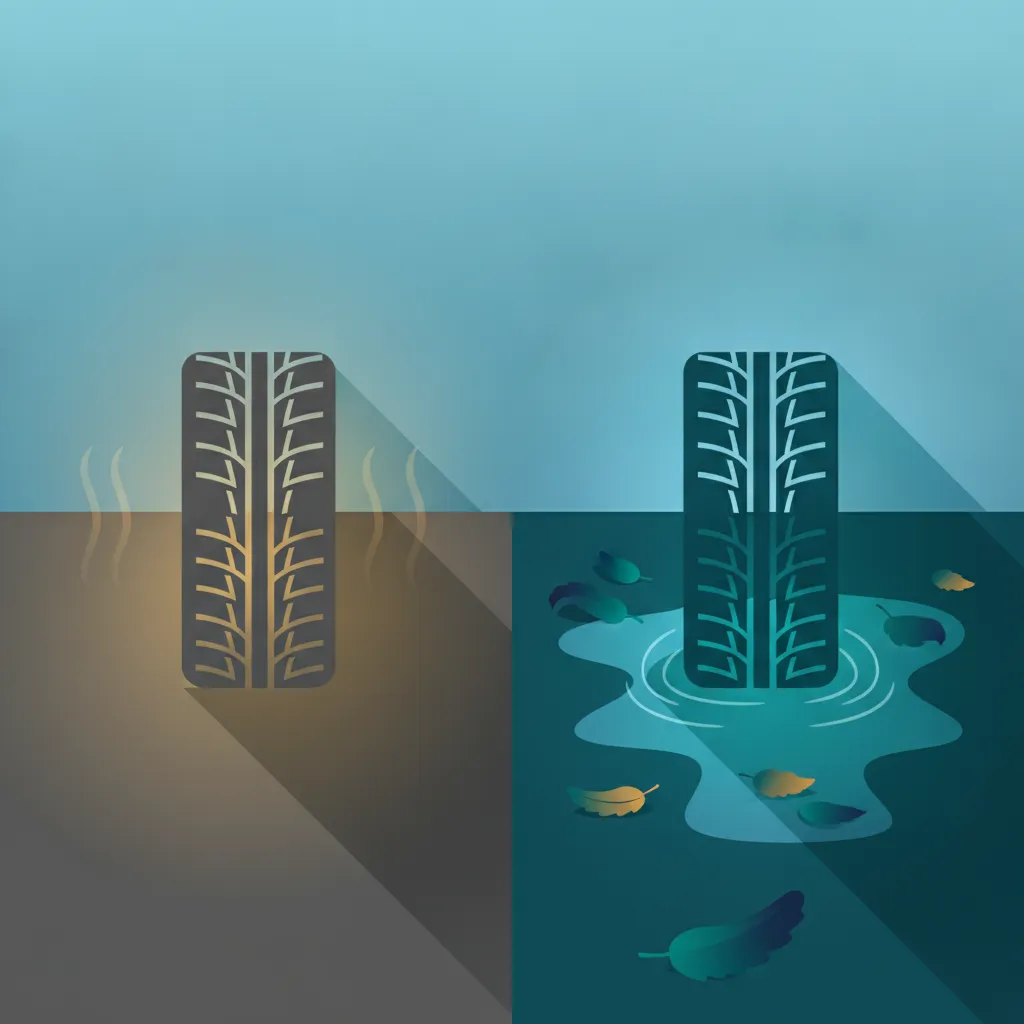
This lesson explores the critical relationship between tire grip and different road surfaces. It provides strategies for identifying and navigating hazards such as wet leaves, gravel, and potential black ice. The importance of maintaining correct tire pressure and monitoring tread wear for optimal traction is also emphasized.
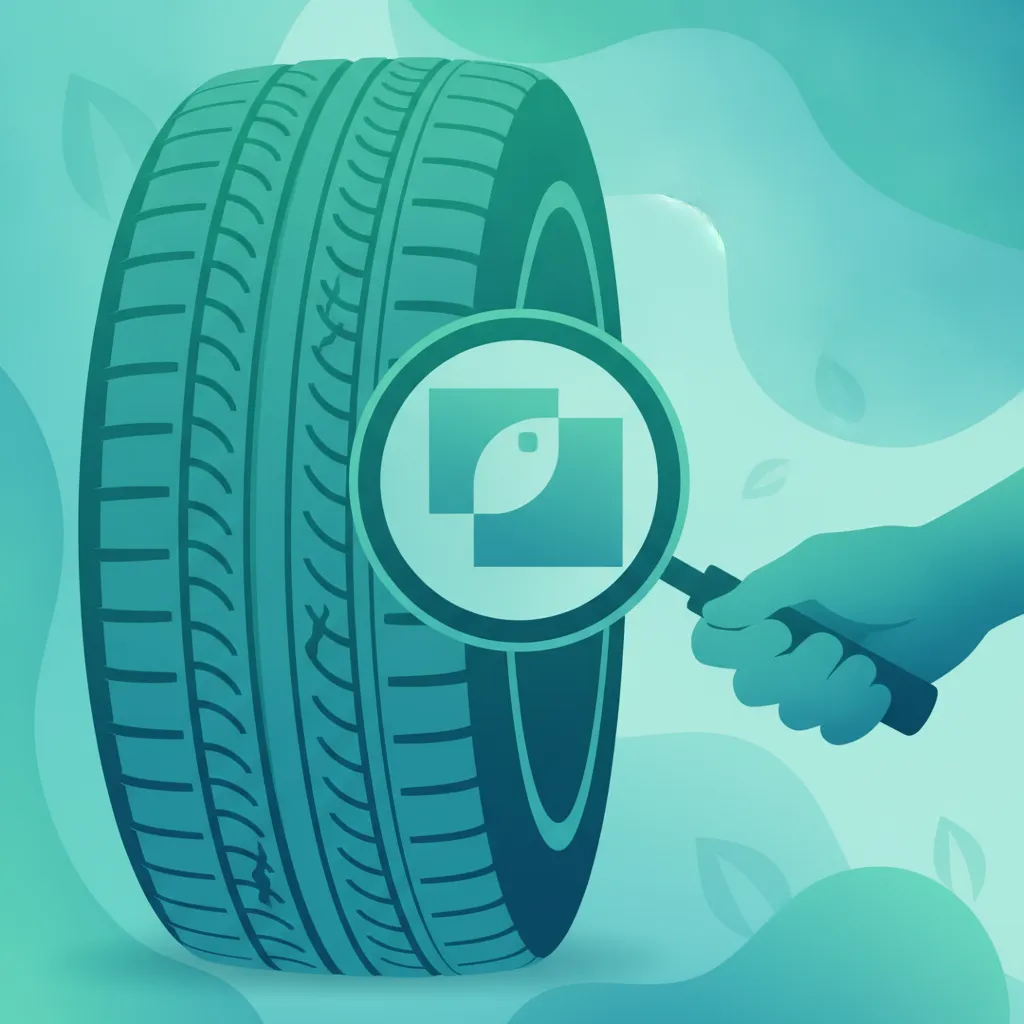
This lesson focuses specifically on motorcycle tyre maintenance, a critical safety component. It explains how to accurately measure tyre pressure, inspect for adequate tread depth, and identify uneven wear patterns that may indicate other issues. Understanding how tyre condition affects grip, handling, and braking performance is essential for every rider to maintain control.

This lesson addresses the complex skill of braking while the motorcycle is leaned over in a corner or on low-traction surfaces. It introduces the concept of trail braking to adjust speed and tighten a cornering line, and provides strategies for gentle brake application on wet or loose surfaces. Mastering these techniques requires a delicate touch and a deep understanding of traction limits.

This lesson focuses on strategies for riding safely in conditions of poor visibility, such as rain, fog, and low sun glare. It explains how to use lights effectively, increase following distances, and moderate speed to maintain control. The content also addresses braking techniques on wet surfaces to prevent skidding and hydroplaning.

This lesson highlights the specific hazards of riding on countryside roads in Austria. It teaches riders to be vigilant for wildlife crossing signs, especially at dawn and dusk, and how to safely approach and overtake slow-moving agricultural machinery. Awareness of potential surface hazards like mud, gravel, or manure from farm access points is also crucial for maintaining traction.

This lesson provides practical strategies for riding in windy conditions, a common occurrence on open roads and mountain passes. It explains how to anticipate wind gusts, use a relaxed but firm grip on the handlebars, and make subtle steering inputs to counteract side forces. Proper body positioning and lane choice can also significantly reduce the effect of wind and turbulence.

This lesson explains the significant impact of extra weight from a passenger or luggage on a motorcycle's dynamics. It covers how to properly secure loads to maintain a low center of gravity and the importance of instructing a passenger on how to lean with the bike. Riders will learn to adjust their braking, acceleration, and cornering techniques to compensate for the altered handling characteristics.

This lesson brings together many concepts by focusing on the mindset of an adaptive rider. It teaches how to constantly scan the environment and adjust speed, position, and control inputs in response to changing conditions like road surface, weather, or traffic density. The goal is to develop a proactive, flexible riding style that prioritizes safety and control in any situation.
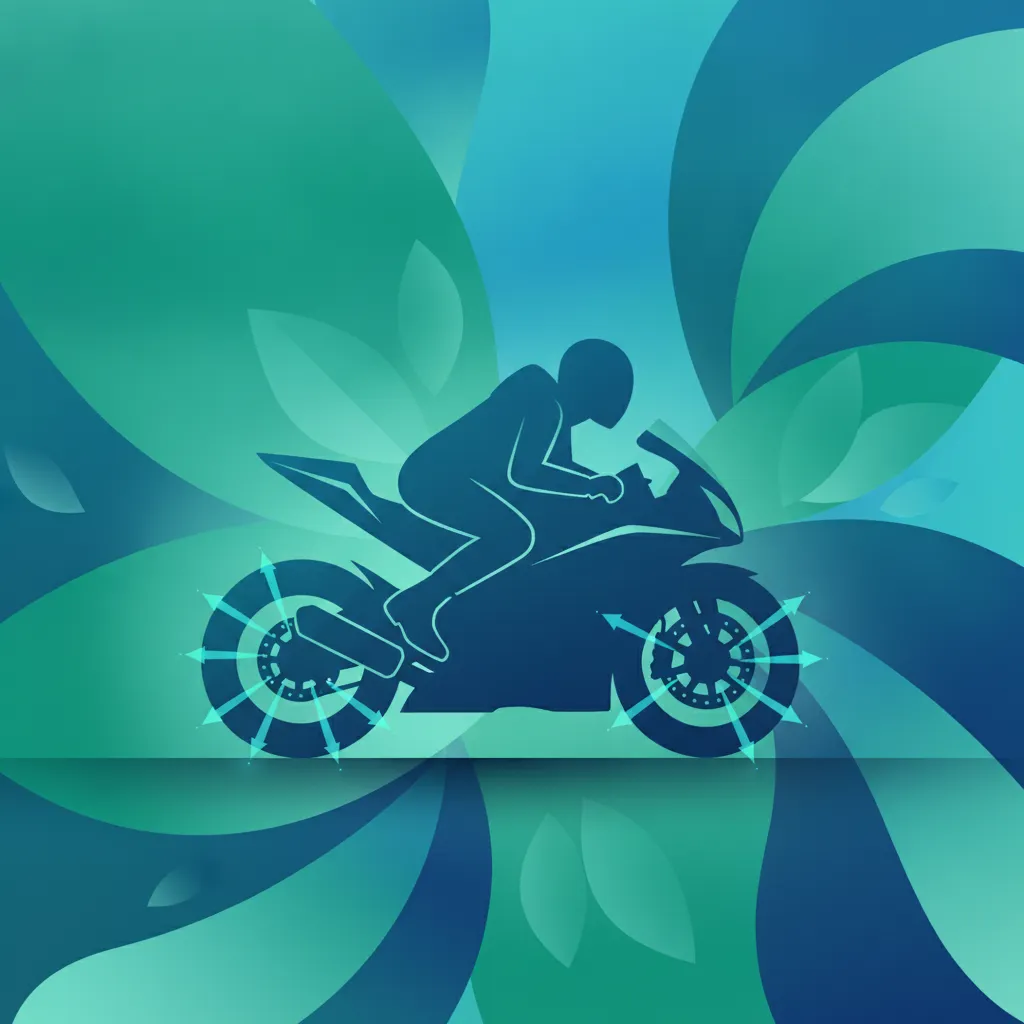
This lesson explains the physics behind motorcycle braking, detailing why the front brake is responsible for the majority of stopping force due to forward weight transfer. It introduces the concept of progressive brake application to manage this weight shift and maximize tyre grip without locking a wheel. Understanding these core principles is the foundation for developing smooth and effective braking skills.
Learn about the traction circle and how load transfer affects your motorcycle's ability to brake, accelerate, and corner. Master the balance of forces for enhanced control and safety on Austrian roads.
This lesson addresses the complex skill of braking while the motorcycle is leaned over in a corner or on low-traction surfaces. It introduces the concept of trail braking to adjust speed and tighten a cornering line, and provides strategies for gentle brake application on wet or loose surfaces. Mastering these techniques requires a delicate touch and a deep understanding of traction limits.
This lesson explains the physics behind motorcycle braking, detailing why the front brake is responsible for the majority of stopping force due to forward weight transfer. It introduces the concept of progressive brake application to manage this weight shift and maximize tyre grip without locking a wheel. Understanding these core principles is the foundation for developing smooth and effective braking skills.
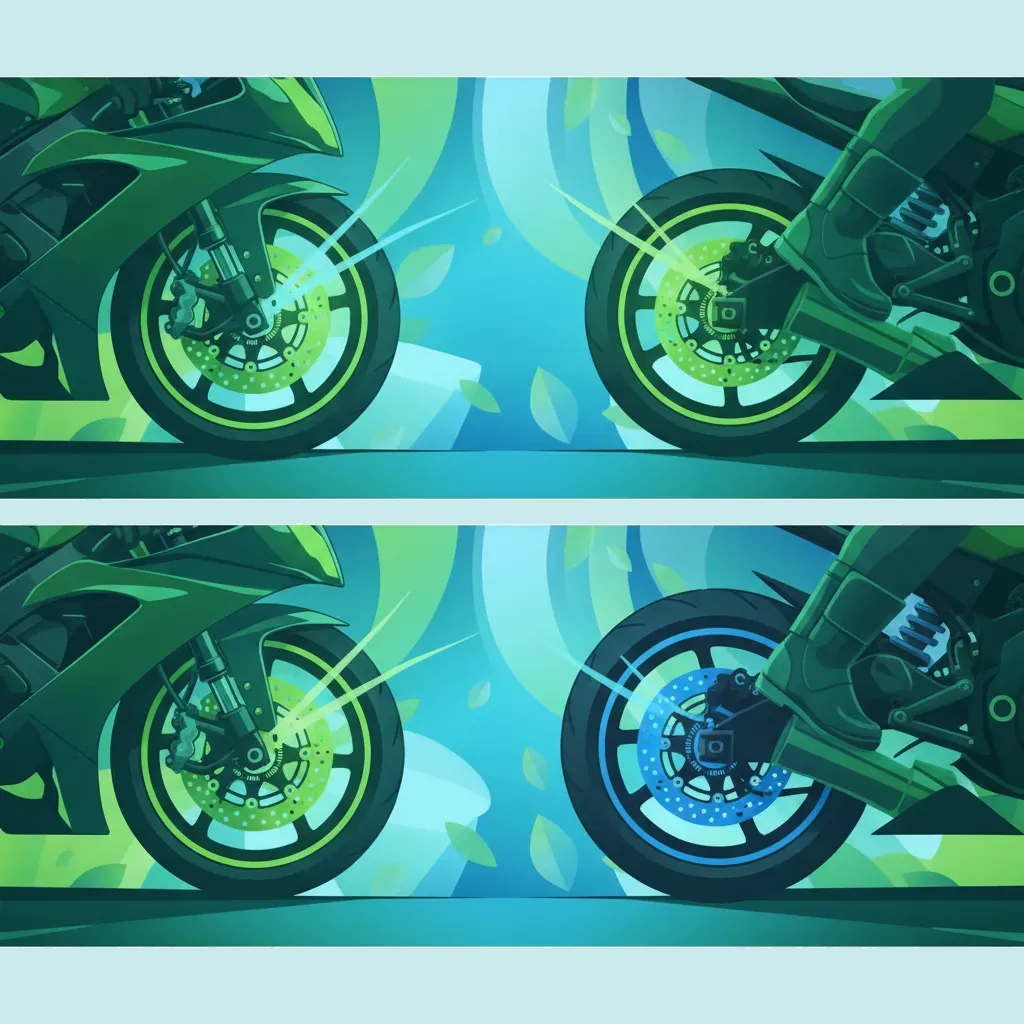
This lesson focuses on the art of coordinating the front and rear brakes to achieve stable and efficient deceleration. It explains how the ideal balance changes depending on speed, road surface, and whether the bike is traveling in a straight line or a curve. Proper brake balance enhances control, shortens stopping distances, and provides a smoother riding experience.

This lesson focuses on the dynamics of safe cornering, explaining concepts like lean angle, body positioning, and counter-steering. It teaches the proper technique of adjusting speed before a turn, maintaining a smooth path through the apex, and accelerating out of the corner. Correctly applying these principles is key to maintaining stability and control.

This lesson demystifies countersteering, the non-intuitive but essential technique for turning a motorcycle above low speeds. It explains that to turn right, a rider must momentarily push the right handlebar forward, which causes the bike to lean to the right. Mastering this core concept is the key to precise, confident, and controlled cornering.
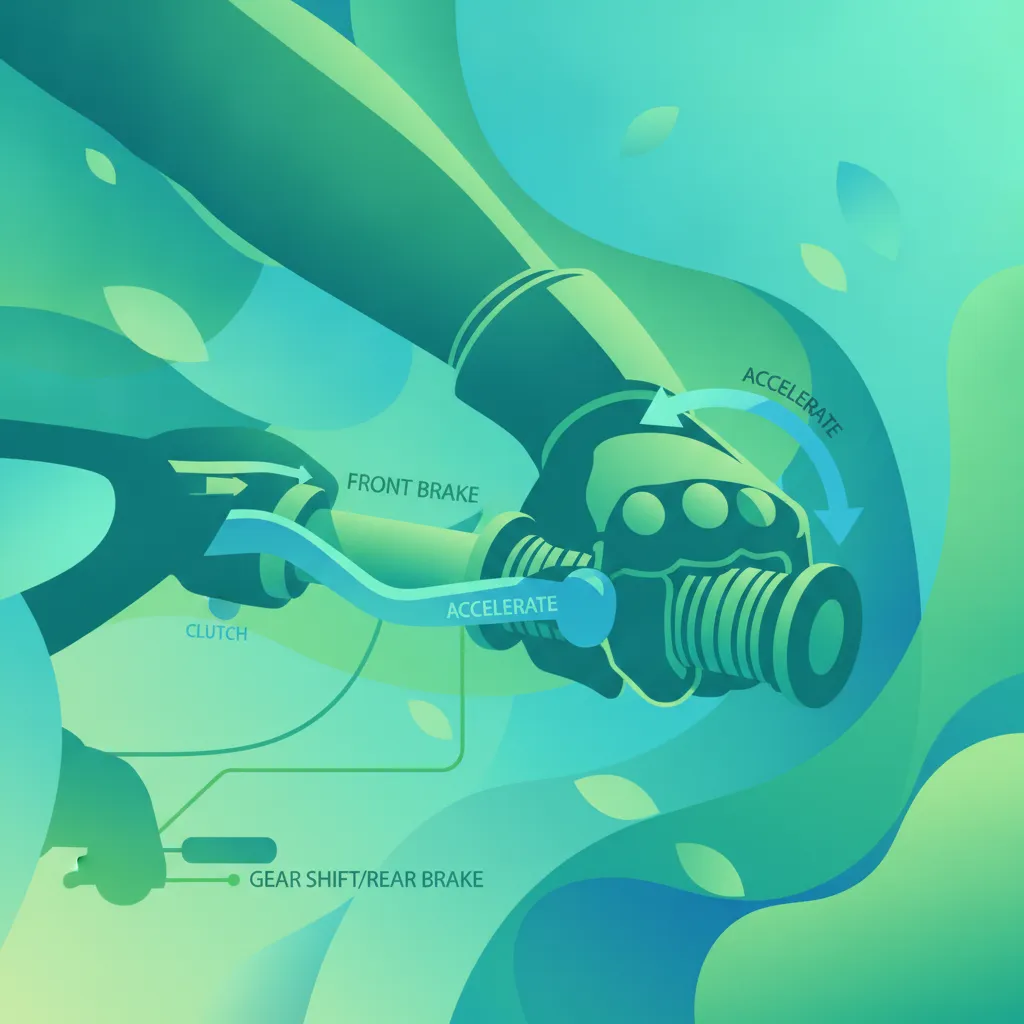
This lesson provides a functional overview of a motorcycle's essential controls, explaining the operation of the throttle, clutch, and gear selector. It differentiates between the front and rear braking systems and their roles in effective stopping. Learners will also identify handlebar switches for lights, indicators, and the horn, ensuring complete familiarity with the vehicle's interface for safe operation.
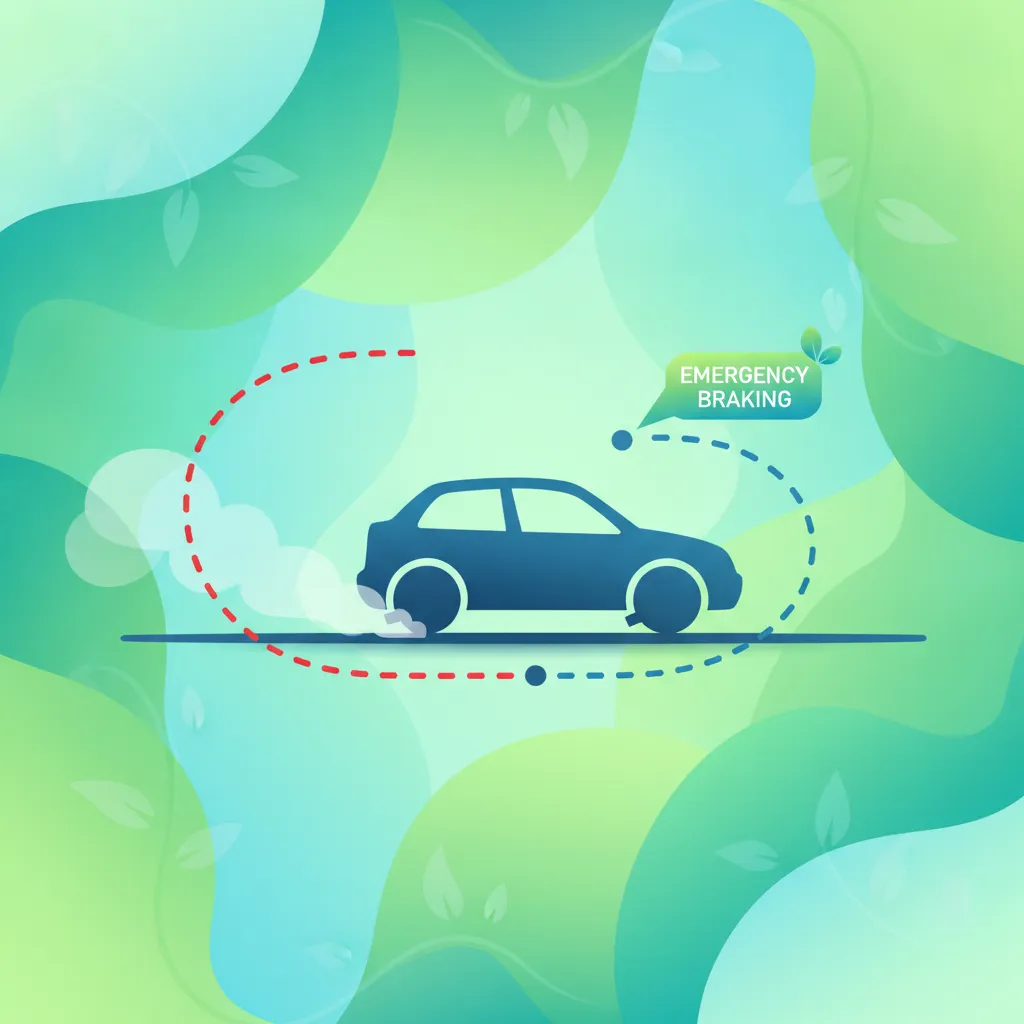
This lesson provides a step-by-step guide to executing an emergency stop safely. It teaches riders how to apply firm, progressive pressure to both brakes to achieve the shortest possible stopping distance without locking the wheels. The role of ABS in these situations is also explained, highlighting how it assists the rider in maintaining steering control under maximum braking.
This lesson explores the critical relationship between tire grip and different road surfaces. It provides strategies for identifying and navigating hazards such as wet leaves, gravel, and potential black ice. The importance of maintaining correct tire pressure and monitoring tread wear for optimal traction is also emphasized.
This lesson examines how adverse weather directly affects motorcycle safety. It explains how water on the road reduces tyre grip, increasing braking distances and the risk of aquaplaning. Strategies for riding in fog, dealing with reduced visibility from road spray, and identifying potential ice patches are covered to help riders manage weather-related risks.
This lesson explains the significant impact of extra weight from a passenger or luggage on a motorcycle's dynamics. It covers how to properly secure loads to maintain a low center of gravity and the importance of instructing a passenger on how to lean with the bike. Riders will learn to adjust their braking, acceleration, and cornering techniques to compensate for the altered handling characteristics.
Find clear answers to common questions learners have about Tyre Grip and Traction Limits. Learn how the lesson is structured, which driving theory objectives it supports, and how it fits into the overall learning path of units and curriculum progression in Austria. These explanations help you understand key concepts, lesson flow, and exam focused study goals.
Correct tyre pressure is vital because it determines the shape and size of your contact patch. If pressure is too high, the patch shrinks, reducing grip; if it is too low, the tyre may deform excessively, leading to unstable handling and poor cornering performance.
Gravel creates a loose interface between the rubber and the road, drastically reducing the coefficient of friction. Your tyres cannot gain enough mechanical lock to transfer deceleration forces, meaning even light braking can lead to a loss of traction and a skid.
Yes, motorcycle tyres are designed to perform within a specific temperature range. Cold tyres provide significantly less grip, which is why it is important to ride cautiously during the first few kilometers, especially during the colder Austrian spring or autumn months.
When you reach the limit of adhesion, you may feel the motorcycle 'vague' or notice slight movements in the handlebars. In an exam scenario, you should always aim to operate well within these limits to leave a safety margin for unexpected hazards like oil spills or road debris.
Refine your study plan by searching for specific Austrian driving theory practice sets. Pinpoint questions related to particular road rules, signs, or challenge levels, and begin practicing immediately to reinforce your knowledge and excel in your official exam with confidence. Get started with focused revision today.