
This lesson guides you through the technical requirements of navigating varying elevations and curves on Austrian roads. Building on your knowledge of motorcycle controls and traction, you will learn how to maintain stability and speed control during climbs and descents. These skills are vital for safe riding in alpine environments and are frequently tested in your category A1, A2, and A exams.

Lesson content overview
Navigating the diverse terrain of Austria on a motorcycle presents unique challenges, particularly when encountering bends (curves) and gradients (inclines and declines). Mastery of these elements is not just about skill; it's about understanding vehicle dynamics, adhering to legal obligations, and anticipating road conditions. This lesson provides a comprehensive guide to safely and efficiently riding through bends and gradients, preparing you for the demands of Austrian roads, especially the winding alpine passes.
Understanding how to manage your motorcycle through varying elevations and curves is fundamental for maintaining stability, control, and momentum. Proper techniques are crucial to prevent loss of traction, avoid brake overheating during long descents, and reduce rider fatigue. This knowledge builds directly upon your understanding of basic vehicle dynamics, braking, throttle control, gear selection, and the fundamentals of cornering and countersteering.
Riding through bends and gradients requires a refined approach that integrates physics principles with practical riding techniques. The core challenge lies in managing the motorcycle's energy, maintaining optimal tire-to-road contact, and making timely decisions.
Momentum management refers to the deliberate control of your motorcycle’s kinetic energy through precise throttle administration, appropriate gear selection, and speed adjustment. This is vital for both uphill climbs and downhill descents.
On an uphill momentum, the goal is to preserve speed while climbing steep grades. This requires anticipating the incline and adjusting your throttle and gear before the change in elevation occurs. For instance, if you encounter a 7% incline, downshifting from 4th to 2nd gear just before the climb begins allows you to apply gentle throttle, maintaining your speed without straining the engine or losing power. A common error is accelerating too late or too abruptly on an uphill, which can lead to a loss of traction or engine stall.
For downhill momentum, the focus shifts to controlling speed to prevent overspeed. Instead of accelerating, you use techniques like engine braking to manage the motorcycle’s kinetic energy. Riders must never coast downhill in neutral, as this leads to an uncontrollable increase in speed and places excessive strain on the friction brakes.
Traction optimisation means maximising the usable grip between your tires and the road surface, ensuring that the forces applied (acceleration, braking, cornering) remain within the limits of static friction. This prevents dangerous wheel slip.
Longitudinal traction pertains to acceleration and braking forces, while lateral traction relates to cornering forces. On steep gradients or when entering a bend, applying throttle or brakes gradually is crucial to prevent wheel slip. For example, on a wet mountain pass, a rider should reduce their lean angle and apply throttle progressively to maintain traction, rather than abruptly accelerating. Misunderstanding that higher RPM always equals more power uphill can be misleading; too much throttle can cause the rear wheel to spin without providing forward thrust. When braking on steep descents, using both front and rear brakes judiciously helps distribute braking force and prevents wheel lock-up.
Engine braking is the natural deceleration of your motorcycle that occurs when the throttle is closed while the bike is in gear. This resistance from the engine’s compression helps reduce speed.
The natural deceleration of a motorcycle caused by the engine's compression resistance when the throttle is closed while the vehicle is in gear.
This technique is invaluable for positive engine braking, where you use the engine's resistance to slow down, and negative engine braking, where it assists your friction brakes. On long descents, downshifting to an appropriate gear while maintaining a slight throttle helps control speed without overusing and overheating the friction brakes. For example, when approaching a 4% downgrade, downshifting from 3rd to 2nd gear and lightly throttling allows the engine braking to regulate speed, preserving your friction brakes. A common misunderstanding is believing that riding in a higher gear without throttle will sufficiently reduce speed; this often requires proper downshifts. While effective, engine braking alone is insufficient for stopping or for very low speeds; friction brakes are still necessary for final speed control.
Line choice refers to selecting the optimal trajectory through a bend to maintain speed, stability, and safety. This is particularly important on gradients, where gravity can amplify errors.
The most common technique is the Outside-Apex-Inside (OAI) Line. Here, the rider positions the motorcycle on the outer edge of the lane before entering the bend, "clips" the apex (the innermost point of the curve), and exits on the outer edge. This maximises the cornering radius, allowing for a smoother trajectory and better preservation of momentum. A Late-Apex Line might be used when anticipating an immediate uphill climb after a bend, helping the rider square off the exit to set up for the ascent.
It's crucial to stay within your lane boundaries and avoid cutting the corner tight, as this reduces stability and can force a loss of traction, especially if there's an unseen hazard. Overtaking on the inside in a bend is strictly prohibited unless specific lane markings allow it.
Speed appropriateness involves adjusting your speed to suit the specific characteristics of the bend radius, the steepness of the gradient, the road surface condition, traffic, and prevailing weather.
This involves both speed limit compliance (obeying legal maximums) and safe speed selection (voluntarily choosing a speed based on perceived risk). Riders must choose a speed that allows for safe execution of the bend while accounting for the gradient. For instance, a 50 km/h speed limit on a mountain road might be too high for a tight hairpin with a steep incline, necessitating a reduction to 30 km/h or less. Ignoring the effect of steep gradients on required braking distance is a common and dangerous misunderstanding. Gravity significantly increases the distance needed to stop when descending.
Gear selection is about choosing the appropriate transmission gear based on your current speed, the motorcycle's load, and the gradient of the road.
Before Climbing (Uphill): Downshift before the ascent begins. This provides the engine with optimal torque, allowing you to maintain momentum and prevent stalling. For a sustained uphill segment, shifting from 3rd to 2nd gear ensures the engine RPM stays within its optimal torque band.
During Descent (Downhill): Downshift before the descent starts. This engages engine braking, which helps control your speed and reduces reliance on your friction brakes, preventing overheating. Riding in too high a gear on a steep descent can quickly overstress your brakes.
Riding in neutral while in motion on public roads in Austria is illegal (as per StVO §21) because it eliminates engine braking and leads to a loss of control. Similarly, riding in too high a gear uphill can lead to a loss of power and stalling, while too high a gear downhill risks brake fade.
Adhering to specific Austrian traffic laws (StVO) is not just a legal obligation but a critical safety measure, especially on demanding mountain roads. These regulations are designed to mitigate risks inherent in navigating bends and steep gradients.
Prohibits riding a motorcycle in neutral gear while moving on public roads, regardless of the gradient. This rule is fundamental for maintaining engine braking and control.
This regulation underscores the importance of engine braking for speed control. A rider should always be in an appropriate gear, even on steep descents, to utilise engine resistance. Relying solely on friction brakes, especially downhill, can lead to their overheating and failure (brake fade). While engine braking is mandatory for assisting speed control, friction brakes must still be used for final speed adjustments and stopping.
Furthermore, mandatory helmet use (StVO §11) for both the rider and passenger is always enforced. On high-risk alpine roads, where falls can be severe, an approved, correctly strapped helmet significantly reduces the risk of head injuries.
The Austrian Road Traffic Act (StVO §28) mandates that drivers must not exceed posted speed limits. While urban areas generally have a 50 km/h limit and rural roads 80 km/h, mountain passes often feature significantly lower limits, sometimes 30-50 km/h, due to the challenging terrain. It's crucial to remember that posted limits are maximums; safe speed selection often means riding below them, especially on tight hairpins with steep gradients where stopping distances are increased by gravity.
Overtaking in bends (StVO §22) is strictly prohibited where visibility is limited. This rule is particularly critical on mountain roads with blind curves. Attempting to overtake in such conditions drastically increases the risk of head-on collisions with oncoming traffic that cannot be seen. Riders must remain behind slower vehicles through curves until visibility improves on a straight section.
Motorcycle Load Limits (StVO §30) specify that a motorcycle must not exceed its Maximum Authorized Mass (MAM). Overloading significantly impacts a motorcycle's performance and handling, especially on gradients. An overloaded bike will have reduced acceleration uphill, requiring earlier downshifts and more careful throttle application to prevent stalling. Downhill, it will increase braking distances and exacerbate the risk of brake fade. Riders must ensure all luggage and passengers keep the total weight within the MAM and distribute weight evenly.
Ignoring established best practices and regulations can lead to dangerous situations when riding through bends and gradients. Recognizing and correcting common errors is key to safe riding.
A frequent and dangerous mistake is relying solely on the front brake for speed control on long descents. This can lead to the front brake overheating, losing effectiveness (fade), or even locking up.
Riding in neutral while descending steep grades is illegal and extremely dangerous. It eliminates engine braking, forcing excessive reliance on friction brakes, and drastically increases stopping distances and the risk of brake fade and loss of control.
Instead, downshift to an appropriate gear before the descent and use engine braking in combination with intermittent, gentle application of both the front and rear friction brakes. This distributes the braking effort, keeps the brakes cooler, and maintains stopping power.
Cutting the inside line on a tight hairpin on an uphill gradient reduces the motorcycle's lean angle stability and increases the risk of low-traction situations or stalling. The correct approach is to follow an outside-apex-inside (OAI) line, maintaining an optimal lean angle and consistent speed with smooth throttle input.
Another common error is abrupt throttle application on an uphill gradient. This can cause the rear wheel to spin and lead to a loss of traction and control. Always apply throttle gradually, keeping the engine RPM within its optimal torque band for smooth power delivery. If your motorcycle is overloaded beyond its MAM before a steep climb, it will reduce the power-to-weight ratio, potentially causing the engine to stall or struggle to climb. Always ensure loads are within limits and evenly distributed.
Overtaking on blind curves is a critical violation of StVO §22 and incredibly dangerous. Limited visibility means you cannot see oncoming traffic, leading to a high risk of head-on collision. Always stay behind slower vehicles on bends until visibility is completely clear on a straight section, ideally after the crest of a hill or exit of a curve.
The techniques discussed must be adapted based on the specific conditions you encounter. Variables like weather, time of day, road type, and even your vehicle's state significantly impact safe riding practices.
Always wear full protective gear (helmet, gloves, jacket, trousers, sturdy boots) when riding, especially on high-risk alpine roads. This significantly reduces the severity of injuries in case of a fall, which can be more severe on steep and winding roads.
Let's look at how these principles come together in common riding situations.
Imagine you're approaching a 6% incline hairpin curve with a 30 km/h speed limit, on a clear day with no traffic.
Consider a 10 km descent with an average gradient of -7%, light rain, and a speed limit of 40 km/h.
Understanding the underlying physics and human psychological aspects reinforces why these riding techniques are so important.
This lesson covers the essential skills for managing motorcycle dynamics through bends combined with uphill and downhill gradients on Austrian roads. Key techniques include proper engine braking to control descent speed without overusing friction brakes, timely gear selection before elevation changes to maintain optimal engine torque, and applying the Outside-Apex-Inside line to maximize stability through curves. Austrian traffic law (StVO §21) prohibits riding in neutral, making gear selection mandatory for safe speed control. Understanding traction limits, momentum management, and how weather conditions affect grip prepares riders for both the theory exam and real-world alpine riding challenges.
A short set of high-value points that capture the most important learning from this lesson.
Engine braking is essential on descents; downshift before the slope begins to control speed and prevent brake overheating.
Momentum management requires anticipating elevation changes and adjusting throttle and gear before reaching them.
The Outside-Apex-Inside (OAI) line maximizes cornering radius and preserves momentum, especially important on gradients.
Speed selection must account for gradient steepness, as gravity significantly increases braking distances downhill.
Riding in neutral on public roads in Austria violates StVO §21 and eliminates engine braking, creating dangerous loss of control.
Explore all units and lessons included in this driving theory course.
Downshift before uphill climbs to keep engine RPM in the optimal torque band and prevent stalling.
Use engine braking in combination with intermittent, gentle application of both front and rear friction brakes on descents.
Overtaking in bends is prohibited under StVO §22 where visibility is limited due to high collision risk.
Wet or slippery conditions require smoother inputs, lower speeds, and potentially higher gears to prevent rear-wheel spin.
Maximum Authorized Mass (MAM) limits must be respected; overloaded motorcycles reduce uphill performance and increase downhill braking distances.
Relying solely on the front brake during long descents, leading to brake fade and potential failure.
Remaining in too high a gear when climbing steep inclines, causing engine strain or stalling.
Applying throttle abruptly on uphill gradients, which can cause rear-wheel spin and loss of traction.
Cutting the inside line on tight uphill hairpins, reducing lean angle stability and momentum.
Underestimating required braking distance on descents due to not accounting for gravity's effect on stopping distance.
Lesson content overview
A short set of high-value points that capture the most important learning from this lesson.
Engine braking is essential on descents; downshift before the slope begins to control speed and prevent brake overheating.
Momentum management requires anticipating elevation changes and adjusting throttle and gear before reaching them.
The Outside-Apex-Inside (OAI) line maximizes cornering radius and preserves momentum, especially important on gradients.
Speed selection must account for gradient steepness, as gravity significantly increases braking distances downhill.
Riding in neutral on public roads in Austria violates StVO §21 and eliminates engine braking, creating dangerous loss of control.
Explore all units and lessons included in this driving theory course.
Downshift before uphill climbs to keep engine RPM in the optimal torque band and prevent stalling.
Use engine braking in combination with intermittent, gentle application of both front and rear friction brakes on descents.
Overtaking in bends is prohibited under StVO §22 where visibility is limited due to high collision risk.
Wet or slippery conditions require smoother inputs, lower speeds, and potentially higher gears to prevent rear-wheel spin.
Maximum Authorized Mass (MAM) limits must be respected; overloaded motorcycles reduce uphill performance and increase downhill braking distances.
Relying solely on the front brake during long descents, leading to brake fade and potential failure.
Remaining in too high a gear when climbing steep inclines, causing engine strain or stalling.
Applying throttle abruptly on uphill gradients, which can cause rear-wheel spin and loss of traction.
Cutting the inside line on tight uphill hairpins, reducing lean angle stability and momentum.
Underestimating required braking distance on descents due to not accounting for gravity's effect on stopping distance.
Explore search topics learners often look for when studying Riding Through Bends and Gradients. These topics reflect common questions about road rules, driving situations, safety guidance, and lesson level theory preparation for learners in Austria.
Browse additional driving theory lessons that cover connected traffic rules, road signs, and common driving situations related to this topic. Improve your understanding of how different rules interact across everyday traffic scenarios.
Master essential engine braking strategies for controlling speed on downhill gradients and maintaining momentum on uphill climbs. Essential theory for Austrian motorcycle riders focusing on safety and control.
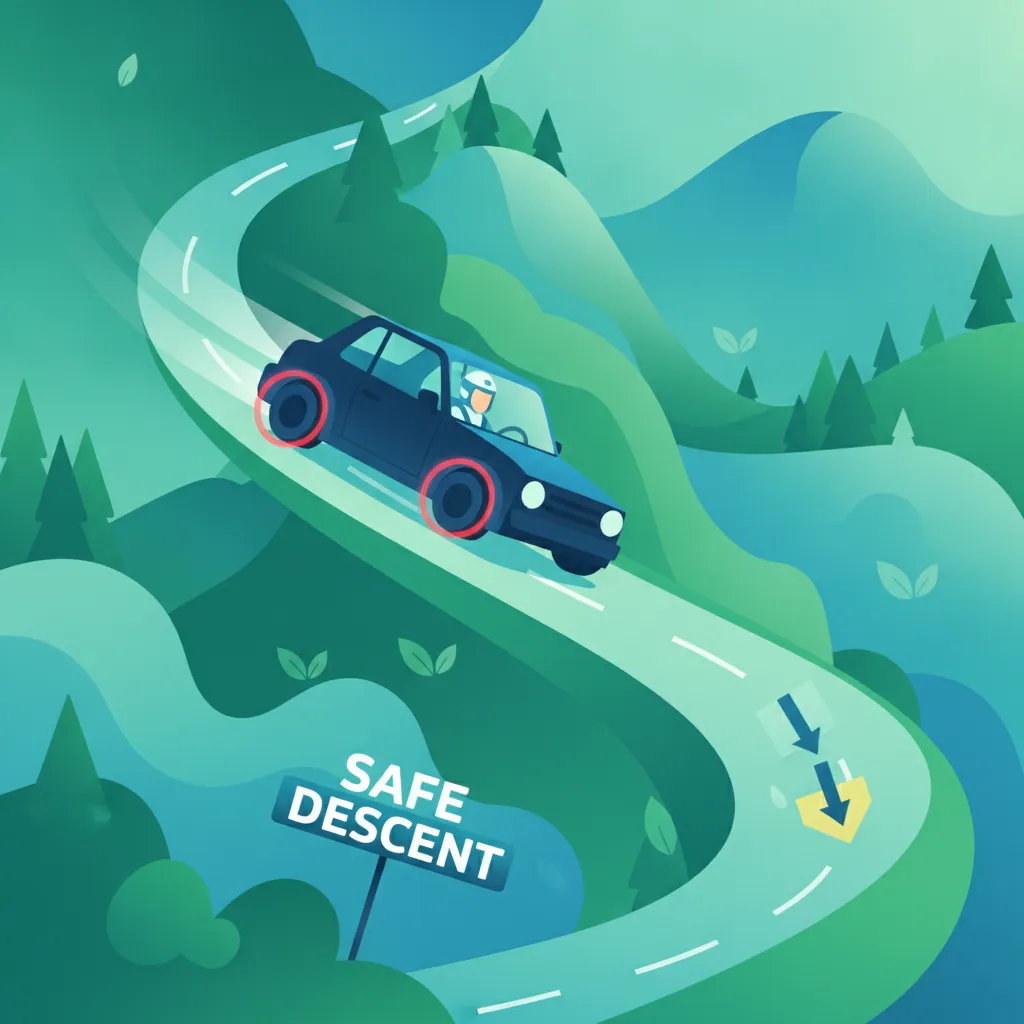
This lesson provides critical techniques for managing vehicle speed on the steep, long gradients found on Alpine roads. It emphasizes selecting the correct gear before the descent and using auxiliary braking systems to maintain a safe, controlled speed. These practices are essential to prevent service brake overheating and potential failure (brake fade).

This lesson addresses the complex skill of braking while the motorcycle is leaned over in a corner or on low-traction surfaces. It introduces the concept of trail braking to adjust speed and tighten a cornering line, and provides strategies for gentle brake application on wet or loose surfaces. Mastering these techniques requires a delicate touch and a deep understanding of traction limits.
This lesson provides a step-by-step guide to executing an emergency stop safely. It teaches riders how to apply firm, progressive pressure to both brakes to achieve the shortest possible stopping distance without locking the wheels. The role of ABS in these situations is also explained, highlighting how it assists the rider in maintaining steering control under maximum braking.
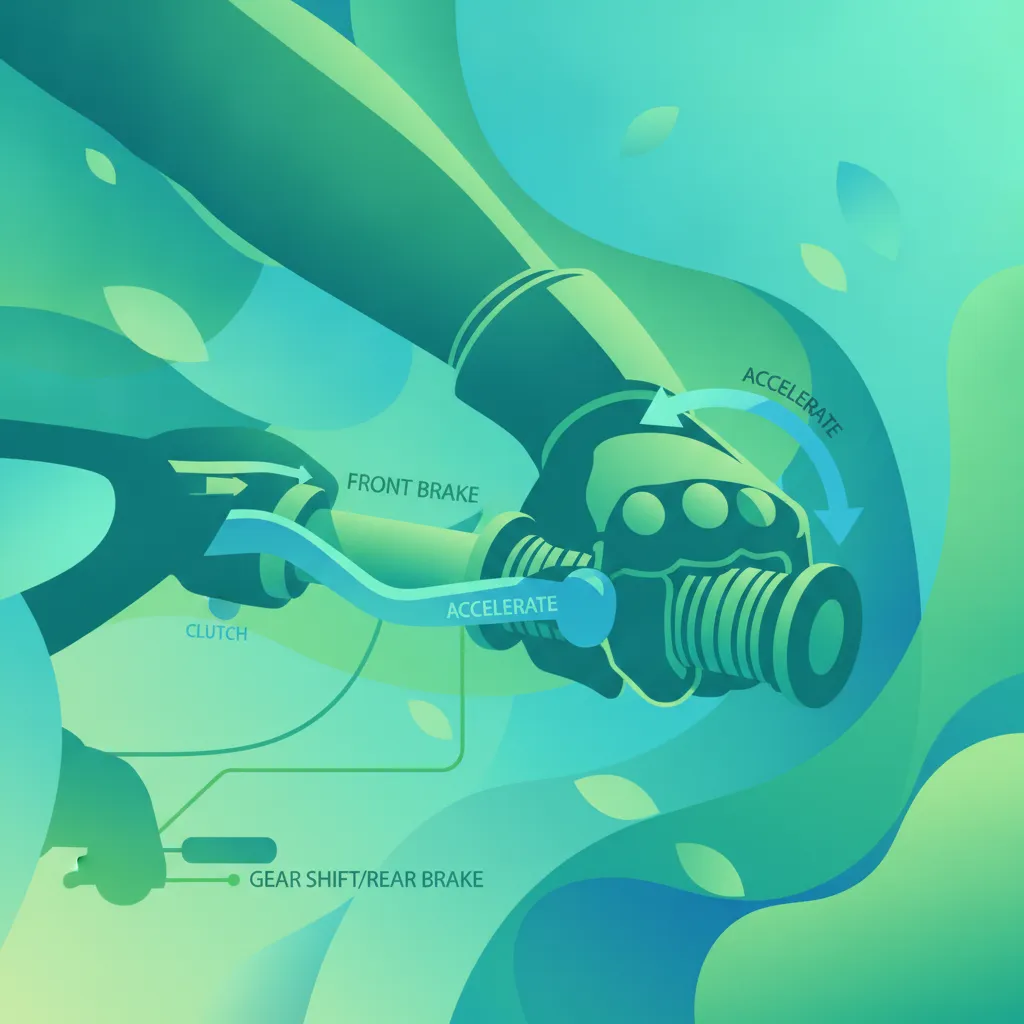
This lesson provides a functional overview of a motorcycle's essential controls, explaining the operation of the throttle, clutch, and gear selector. It differentiates between the front and rear braking systems and their roles in effective stopping. Learners will also identify handlebar switches for lights, indicators, and the horn, ensuring complete familiarity with the vehicle's interface for safe operation.
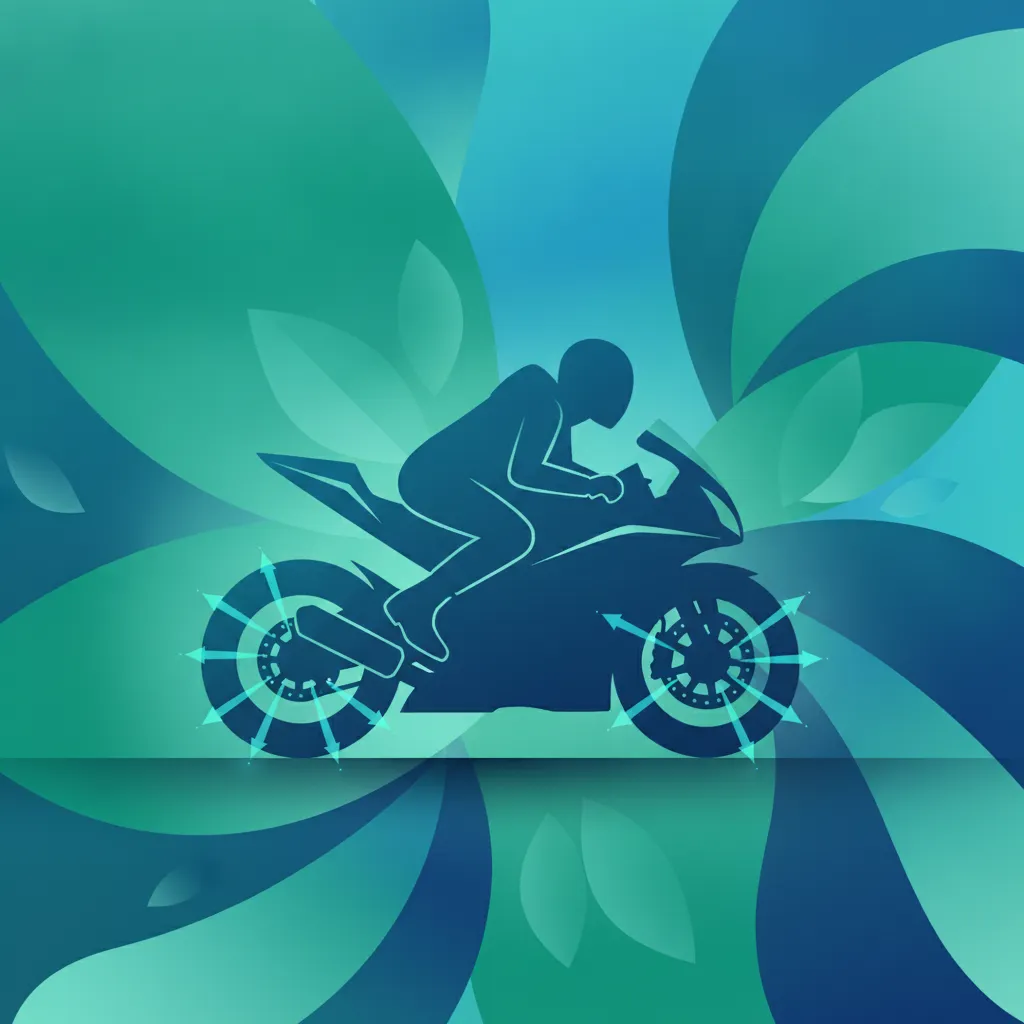
This lesson explains the physics behind motorcycle braking, detailing why the front brake is responsible for the majority of stopping force due to forward weight transfer. It introduces the concept of progressive brake application to manage this weight shift and maximize tyre grip without locking a wheel. Understanding these core principles is the foundation for developing smooth and effective braking skills.
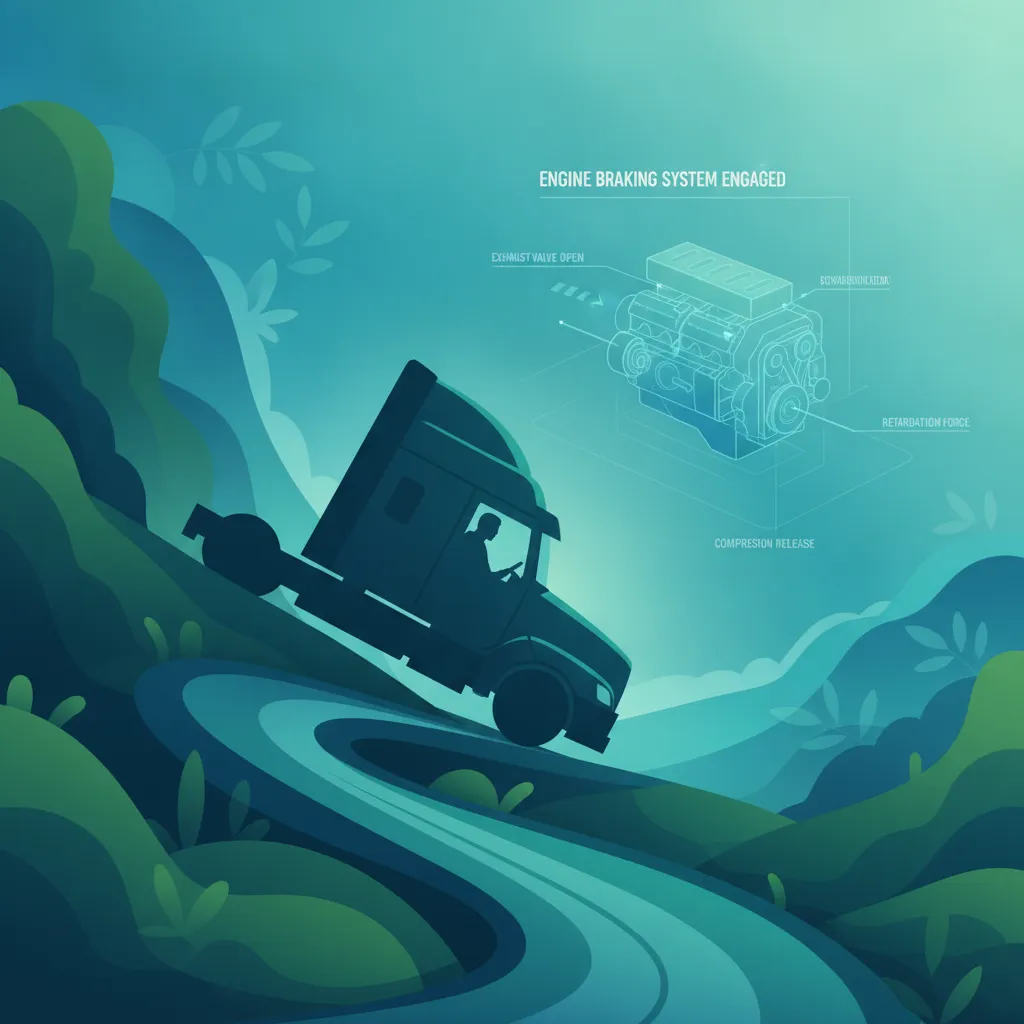
This lesson introduces auxiliary braking systems, such as engine brakes and retarders, which are designed to help control vehicle speed without using the service brakes. It explains how these systems function to slow the vehicle, especially on long downhill gradients. Using them effectively reduces service brake wear and prevents overheating.
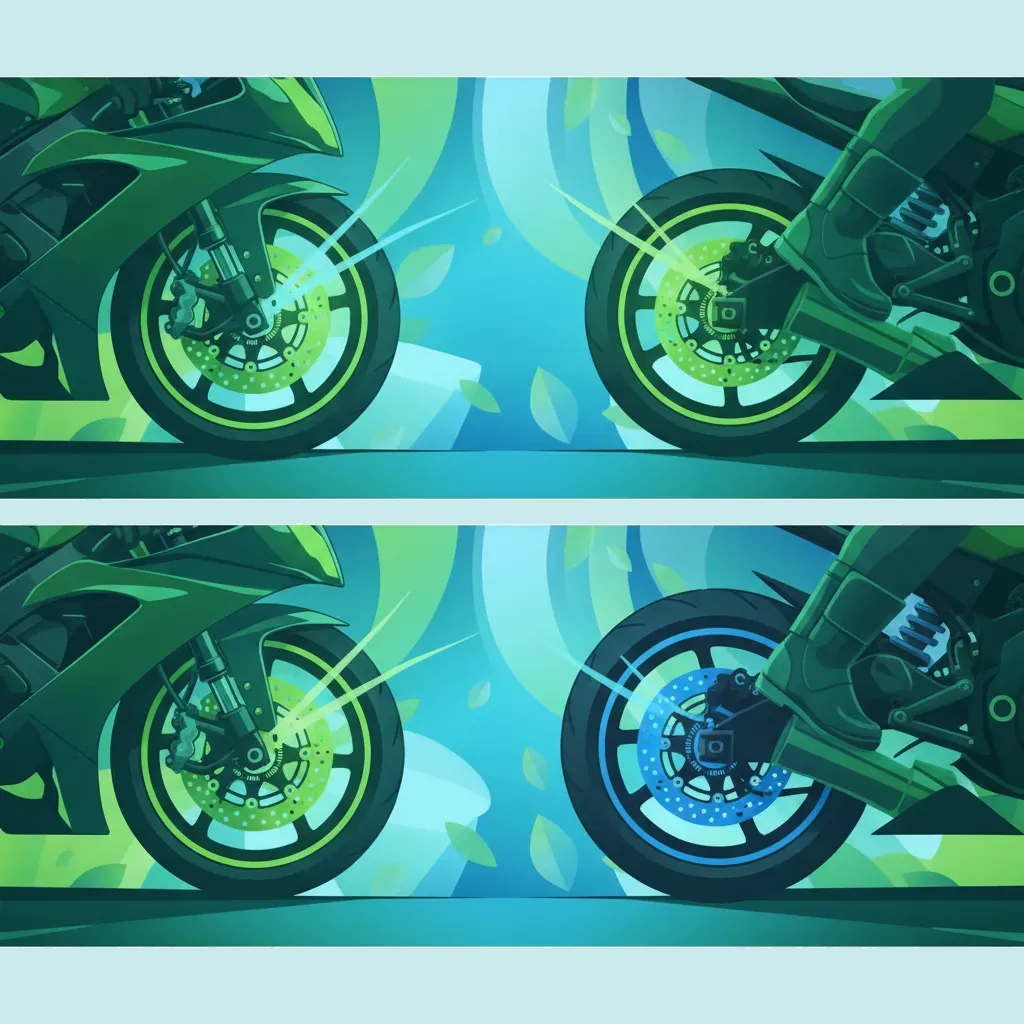
This lesson focuses on the art of coordinating the front and rear brakes to achieve stable and efficient deceleration. It explains how the ideal balance changes depending on speed, road surface, and whether the bike is traveling in a straight line or a curve. Proper brake balance enhances control, shortens stopping distances, and provides a smoother riding experience.

This lesson details the components and function of a motorcycle's braking system. It explains the roles of the front and rear brakes, the mechanics of hydraulic disc brakes, and the importance of maintaining proper brake fluid levels. Learners will also understand how to recognize the signs of worn brake pads, ensuring the system remains effective for safe stopping.
This lesson focuses on the specialized skills required for navigating alpine roads safely. It covers techniques for managing steep gradients, such as using a lower gear for engine braking on descents, and how to safely negotiate hairpin turns. The content stresses the importance of being prepared for rapid weather changes and understanding the effects of altitude on both the driver and the vehicle's performance.

This lesson teaches correct braking techniques, including the coordinated use of front and rear brakes for maximum efficiency. It explains how to calculate total stopping distance based on speed, perception time, and reaction time. The content also covers adjustments needed for braking on wet or slippery surfaces to avoid loss of control.
Understand typical riding errors and hazards encountered on bends and gradients, including issues with traction, speed control, and gear selection. Learn how to avoid critical mistakes on challenging Austrian roads.

This lesson prepares riders for the specific conditions of Austria's mountain passes. It highlights hazards such as tight hairpin turns, potential for sudden weather changes, rockfall, and variable road surfaces. Awareness of these unique challenges allows riders to anticipate risks and adapt their technique for safe and enjoyable alpine touring.

This lesson highlights the specific hazards of riding on countryside roads in Austria. It teaches riders to be vigilant for wildlife crossing signs, especially at dawn and dusk, and how to safely approach and overtake slow-moving agricultural machinery. Awareness of potential surface hazards like mud, gravel, or manure from farm access points is also crucial for maintaining traction.

This lesson provides practical strategies for riding in windy conditions, a common occurrence on open roads and mountain passes. It explains how to anticipate wind gusts, use a relaxed but firm grip on the handlebars, and make subtle steering inputs to counteract side forces. Proper body positioning and lane choice can also significantly reduce the effect of wind and turbulence.
This lesson provides advice for navigating popular scenic routes, which often feature heavy traffic, cyclists, and distracted drivers. It emphasizes maintaining focus on the road despite beautiful scenery and anticipating unpredictable actions from other tourists who may stop suddenly. Adopting a patient and defensive mindset is key to safely enjoying these remarkable roads.

This lesson addresses the heightened vulnerability of motorcyclists and outlines essential strategies for personal safety and risk mitigation. It covers the importance of wearing certified protective gear, maintaining situational awareness, and adopting a defensive riding posture. By understanding and anticipating potential hazards in the Austrian traffic environment, riders can actively reduce their risk of accidents.
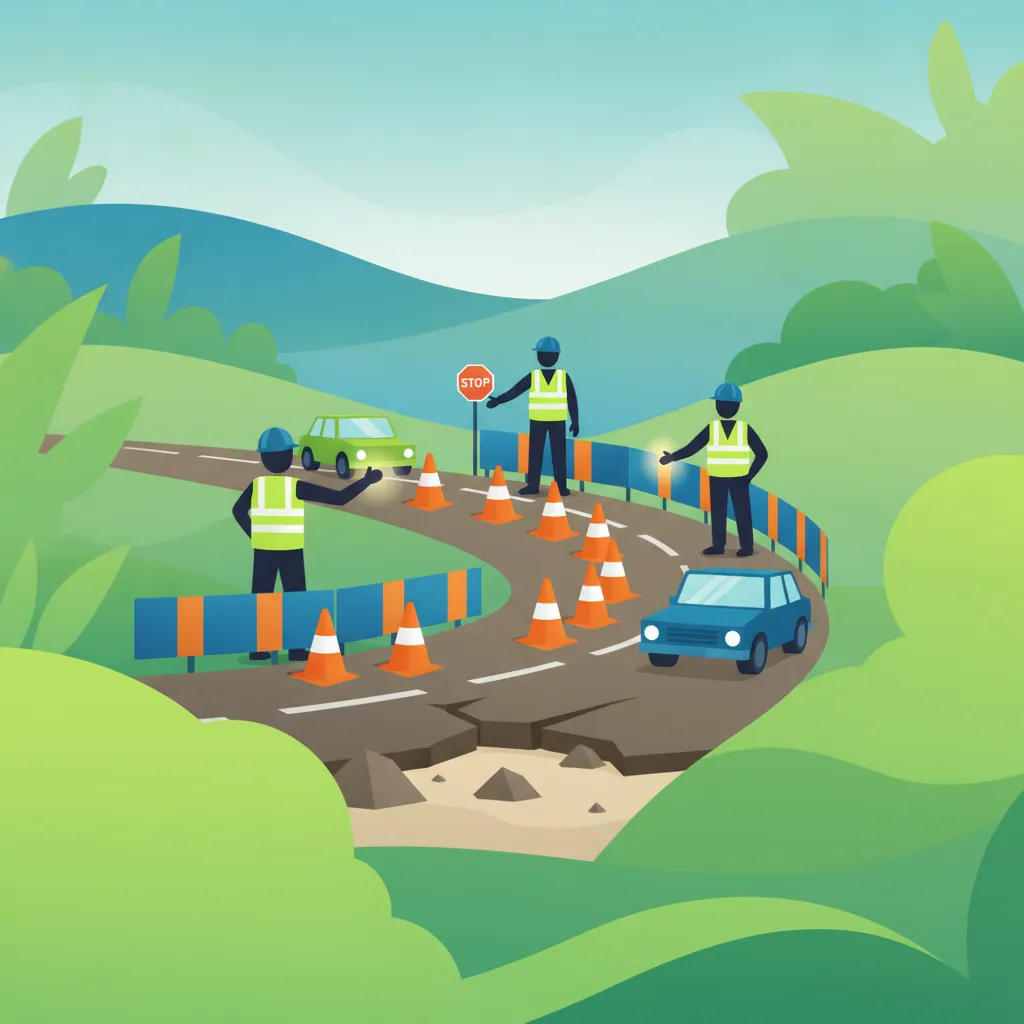
This lesson prepares riders for safely transiting through construction zones ('Baustellen'). It covers the interpretation of temporary signage, adherence to reduced speed limits, and awareness of hazards suchas altered lane markings, abrupt surface changes, and loose gravel. Respecting the safety of road workers and anticipating unpredictable traffic patterns are key themes.

This lesson covers the established procedures for riding safely in a group. It explains the benefits of a staggered riding formation for visibility and reaction space, and introduces common hand signals used for communication within the group. The roles of the lead and sweep riders are defined, and the importance of a pre-ride briefing to establish the route and rules is emphasized.

This lesson focuses on the responsible enjoyment of riding on Austria's iconic mountain passes. It emphasizes finding a smooth, safe rhythm rather than excessive speed, and the importance of managing fatigue on long, demanding rides. Topics include planning for breaks, staying hydrated, and being considerate of other road users on these popular scenic routes.
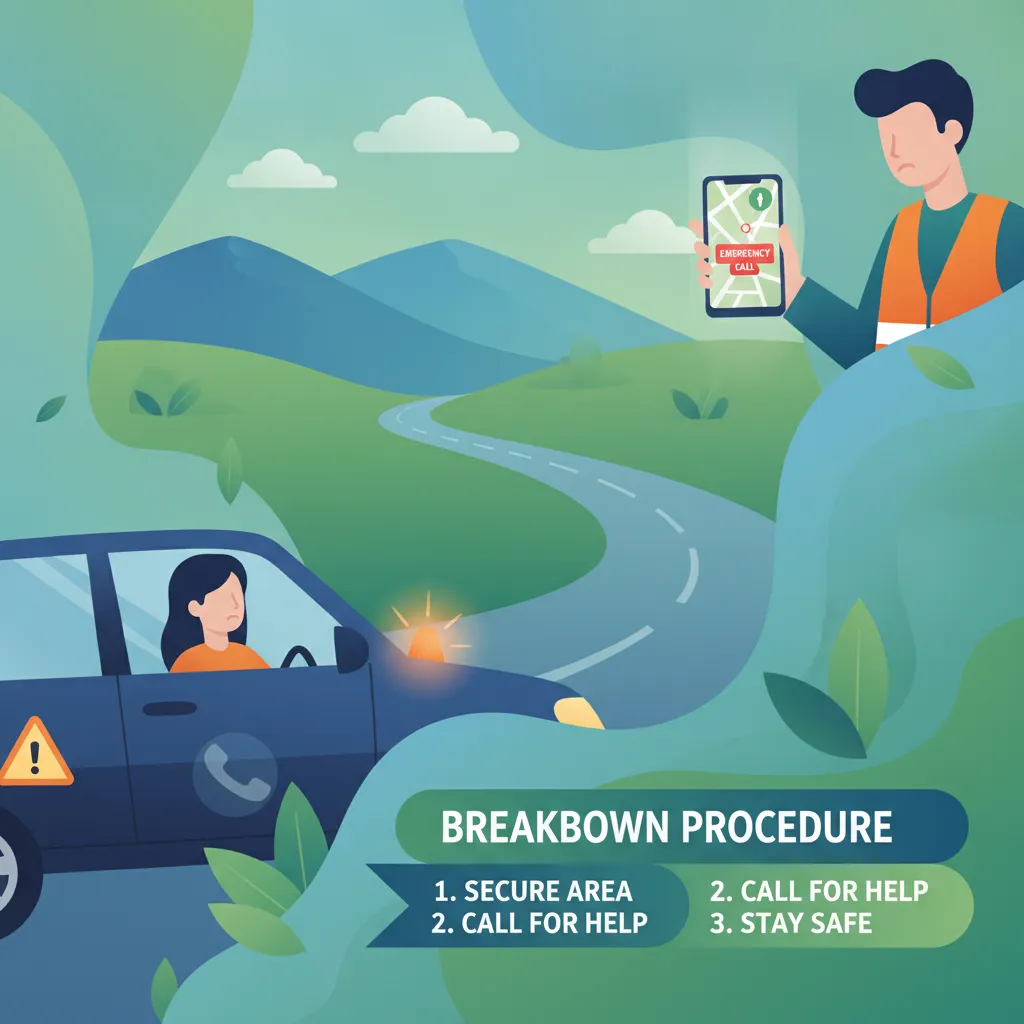
This lesson outlines the step-by-step safety protocol for a vehicle breakdown. It instructs the rider to move the motorcycle to the safest possible location, activate hazard lights, and put on a high-visibility vest. The proper placement of a warning triangle and the procedure for making an emergency call to 112 or a roadside assistance service are also detailed.

This lesson examines how adverse weather directly affects motorcycle safety. It explains how water on the road reduces tyre grip, increasing braking distances and the risk of aquaplaning. Strategies for riding in fog, dealing with reduced visibility from road spray, and identifying potential ice patches are covered to help riders manage weather-related risks.
Find clear answers to common questions learners have about Riding Through Bends and Gradients. Learn how the lesson is structured, which driving theory objectives it supports, and how it fits into the overall learning path of units and curriculum progression in Austria. These explanations help you understand key concepts, lesson flow, and exam focused study goals.
Engine braking uses the motorcycle's engine compression to help slow the bike, preventing the brakes from overheating. Overusing your service brakes on long descents can lead to brake fade, which significantly reduces your stopping power.
You should select a gear that keeps the engine in its optimal power band, avoiding both lugging the engine in a high gear and over-revving in too low a gear. Proper gear choice ensures you maintain steady momentum and control.
On steep or blind gradients, especially in curves, you must ensure your lane position allows for maximum visibility and safety. Adjusting your line helps you maintain balance and gives you more room to react to oncoming traffic or road surface changes.
Yes, the Austrian theory test includes questions on topography and road hazards. Understanding how to handle gradients and bends is a core requirement for ensuring rider safety in mountainous regions.
Refine your study plan by searching for specific Austrian driving theory practice sets. Pinpoint questions related to particular road rules, signs, or challenge levels, and begin practicing immediately to reinforce your knowledge and excel in your official exam with confidence. Get started with focused revision today.