
This lesson explores the essential physics of motorcycle braking while leaning and riding on low-traction surfaces. Mastering these techniques is critical for your Austrian motorcycle theory exam and ensures you can handle challenging road conditions confidently.

Lesson content overview
Safe motorcycle riding demands a nuanced understanding of braking, especially when navigating corners or encountering challenging road conditions. This lesson, designed for the Austrian Motorcycle Theory curriculum (A, A1, & A2 licences), delves into the critical techniques required to maintain control and traction when braking while leaned into a turn or on surfaces with reduced grip. Mastering these skills is paramount for ensuring stability, mitigating risks, and confidently handling diverse riding scenarios on Austrian roads.
At the heart of effective motorcycle braking, particularly in non-ideal conditions, lies the concept of traction. Traction refers to the grip that your tyres have on the road surface. Every tyre has a finite amount of grip it can exert before it begins to slide. This limit is graphically represented by the Traction Circle, sometimes referred to as the Friction Circle.
The Traction Circle illustrates a fundamental trade-off: any force applied in one direction reduces the available grip for forces in other directions. For instance, if a tyre is using a significant portion of its available grip to brake (longitudinal force), it has less remaining grip to handle cornering forces (lateral force). Conversely, when a motorcycle is leaned over in a corner, it's already using a considerable amount of its tyre's traction for lateral grip, leaving less for braking or acceleration.
This principle means that while cornering, any brake input must be applied judiciously, always remaining proportionate to the remaining lateral grip. Exceeding the limits of the traction circle will inevitably lead to a loss of control, resulting in a slide or crash. Understanding that the size of this traction circle is not fixed – it shrinks considerably on wet, icy, or loose surfaces – is crucial for adapting your riding style.
When you apply the brakes on a motorcycle, the vehicle's weight shifts forward, placing more load on the front wheel and reducing the load on the rear wheel. This weight transfer significantly impacts how much braking force each wheel can effectively apply. The front tyre, under this increased load, can typically generate much greater stopping power than the rear.
However, when a motorcycle is leaned into a corner, the dynamics become more complex. The tyre's contact patch – the small area of rubber touching the road – changes shape and size. As the lean angle increases, the contact patch becomes narrower and longer, and the effective grip available for braking diminishes, especially for the front wheel. This reduction in the contact patch's effective braking capability is a critical consideration when braking in a turn.
Trail braking is an advanced motorcycle control technique that allows riders to maintain some front brake pressure while entering and progressing through a corner. When executed correctly, it's a powerful tool for fine-tuning speed, adjusting your line, and improving stability.
The term "trail" refers to carrying the brake force into the turn, trailing off the pressure as the motorcycle leans further and approaches the apex. This technique is particularly useful for adjusting your entry speed, tightening your cornering line, or compensating for an unexpected change in the corner's radius.
Effective trail braking involves a smooth, progressive application and release of the front brake, often divided into three phases:
Entry Phase: As you approach the corner, initiate braking while the motorcycle is still largely upright. This allows for significant speed reduction using the front brake's maximum efficiency.
Mid-Phase: As you begin to lean the motorcycle into the corner, gradually reduce the front brake pressure. The goal is to modulate the brake force smoothly, ensuring it does not exceed the tyre's diminishing traction limit as the lean angle increases. The motorcycle should continue to turn in due to the remaining brake force helping to compress the front suspension, subtly steepening the steering angle.
Apex Phase: By the time you reach the apex of the corner, the front brake should be fully released. This frees up the tyre's full traction capability for cornering and acceleration out of the bend. In some cases, a small amount of rear brake might still be applied to maintain stability, especially if you need to hold a tight line or reduce speed further.
Trail braking offers several practical benefits. It allows riders to carry more entry speed into a corner, making a last-minute speed adjustment possible without upsetting the motorcycle's balance. It also helps to "load" the front tyre, enhancing steering input and enabling a tighter, more precise line through the bend.
A common misunderstanding among riders is the belief that heavy front braking while leaned is safe. In reality, applying too much front brake at a significant lean angle can quickly lead to a front-wheel lock or a sudden loss of traction, often resulting in a dangerous high-side crash. Trail braking is about modulation and gradual release, not aggressive application during the lean.
Applying excessive front brake while significantly leaned over can lead to a front-wheel lock and a high-side crash. Always practice progressive and gentle brake modulation when leaned.
While trail braking primarily focuses on front brake application in corners, adapting your brake balance – how much front versus rear brake you use – is crucial, especially when leaned over or on slippery surfaces.
When a motorcycle is upright, the front brake is overwhelmingly more effective due, in large part, to weight transfer. However, in a leaned position, the dynamics change. As the lean angle increases, the effective contact patch of the front tyre for braking decreases. This makes the front wheel more susceptible to locking up with less brake pressure than when upright.
In these leaned scenarios, the rear brake can play a more significant role. While it cannot provide the primary stopping power, a gentle application of the rear brake can help maintain stability and subtly adjust speed without overloading the front tyre's reduced grip. It can also help "squat" the rear of the bike, providing more reassuring feedback and stability through the corner.
When leaned over, consider using the rear brake for subtle speed adjustments. It can help maintain stability without risking a front-wheel lock.
Riding on low-traction surfaces – such as wet roads, icy patches, or loose gravel – demands a fundamentally different approach to braking. The coefficient of friction between your tyres and the road is significantly reduced, meaning the Traction Circle shrinks dramatically.
Water on the road acts as a lubricant, significantly reducing tyre grip. Braking distances can increase substantially, sometimes even doubling. On wet surfaces, all brake inputs must be smoother and more progressive. Avoid sudden, hard braking. Prioritise using both brakes gently, with a slight bias towards the rear if the front feels prone to locking. Anticipate braking earlier than you would on dry pavement.
Ice offers extremely low friction. Braking on ice should be approached with extreme caution, often requiring minimal to no brake pressure. If braking is absolutely necessary, use the rear brake with the utmost gentleness to avoid an immediate slide. The front brake should be used with extreme care, if at all. It is best to avoid riding on icy surfaces if possible.
Loose gravel or sand presents a unique challenge. The particles can shift under the tyre, reducing solid contact with the road. On such surfaces, the rear brake often becomes the primary tool for speed reduction. Applying the front brake too hard can easily cause the front wheel to wash out. If you must use the front brake, do so with extreme delicacy and only when the motorcycle is as upright as possible. A common technique is to use the rear brake to slow, and possibly to induce a controlled rear-wheel slide to help steer the bike, though this requires advanced skill.
Regardless of the surface or situation, progressive braking is a cornerstone of safe motorcycle operation.
Instead of grabbing the brakes abruptly, progressive braking involves a gentle initial squeeze (pre-pressure phase), followed by a steady increase in pressure to achieve the desired deceleration (main-brake phase), and then a gradual release (release phase). This technique minimises sudden shifts in the motorcycle's weight and dynamics, making it less prone to instability or loss of traction. It is essential for both cornering and low-traction surface braking, ensuring maximum control.
Adhering to legal requirements and recommended safety practices ensures not only your safety but also compliance with Austrian road law.
Rule 1: Mandatory Brake Testing Before Riding Before every ride, all motorcyclists in Austria (A1, A2, A categories) are legally required to verify that both the front and rear brakes are functioning correctly. This ensures that the braking system is ready for immediate and effective use, preventing potential hazards due to equipment malfunction.
Rule 2: Front Brake Usage Limitation While Leaned While not a specific hard-and-fast legal rule with a defined percentage, safe riding guidelines and traffic safety recommendations (e.g., from ÖAMTC) advise caution with front brake application when the motorcycle is significantly leaned (typically beyond 20°). The front brake should be applied very progressively and gently, and aggressive front brake use should be avoided to prevent loss of traction and potential front-wheel lock. Rear brake use often becomes more critical for stability in these situations.
Rule 3: Braking Distance Extension Under Adverse Conditions Austrian traffic law implicitly mandates that riders adapt their speed to prevailing road conditions. This includes extending braking distances significantly when encountering wet, icy, or loose surfaces. The reduced friction coefficient on such surfaces necessitates earlier anticipation of braking zones and a lower entry speed into corners.
Rule 4: Use of Rear Brake to Assist in Low-Traction Conditions It is a widely recommended practice in motorcycle safety to utilise the rear brake more extensively and gently in low-traction conditions. This helps distribute braking forces, improves stability, and reduces the risk of locking the front wheel, which is generally more critical for maintaining control.
Understanding common errors is as important as learning correct techniques. Avoiding these pitfalls can prevent dangerous situations.
Abrupt Front Brake During Full Lean: This is a critical mistake that almost guarantees a loss of traction. The front wheel, already under stress from cornering forces, will lock, leading to a high-side crash. Always apply front brake gently and progressively before leaning, or trail brake with extreme modulation.
Ignoring Low-Traction Indicators: Overlooking wet road signs, visible ice patches, or gravel can lead to severely misjudged braking distances and cornering speeds. Always scan the road ahead for surface changes and adjust your speed and braking technique proactively.
Excessive Rear Brake on Loose Gravel: While the rear brake is generally preferred on loose surfaces, applying it too harshly can cause the rear wheel to lock and slide out, resulting in a low-side crash. Use it very gently, almost feathering the pedal.
Failing to Release Front Brake After Apex: Continuing to apply front brake past the apex of a corner means you are still using valuable tyre grip for braking when it should be dedicated to cornering and accelerating out of the turn. This reduces your ability to accelerate and straighten, hindering a smooth corner exit.
Relying Solely on ABS When Cornering: While Anti-Lock Braking Systems (ABS) are invaluable safety features, they are not a substitute for proper technique. ABS prevents wheel lock, but it cannot prevent a slide if the combined braking and cornering forces exceed the tyre's total traction limits when leaned over. Use ABS as a safety net, not a licence for aggressive braking in a lean.
Neglecting Tyre Pressure Adjustments for Wet Conditions: Incorrect tyre pressure (either too high or too low) can significantly alter the tyre's contact patch and its ability to grip on wet or slippery surfaces. Always maintain optimal tyre pressure as recommended by the manufacturer.
The principles of braking in corners and on slippery surfaces are universal, but their application varies significantly depending on external factors.
When braking into a corner or on slippery surfaces, always be extra vigilant for vulnerable road users like pedestrians and cyclists. Their unpredictable movements, especially in urban or residential areas, demand greater anticipation and readiness to brake smoothly and effectively without causing alarm or a collision. In dense traffic, use the rear brake more to reduce speed and maintain a stable stance, avoiding sudden front brake inputs that might upset balance or lead to rear-end collisions.
Understanding these terms is fundamental to mastering advanced braking techniques for motorcycles.
These examples illustrate how the principles discussed in this lesson apply to real-world riding situations.
Setting: You are riding an Austrian motorcycle through a tight, 70-degree bend on a mountain road that has recently been hit by heavy rain. Correct Behavior: You significantly reduce your speed well before entering the bend. As you initiate your turn, you apply the front brake very gently and progressively, gradually releasing it as you lean into the curve (gentle trail braking). Throughout the lean, you use the rear brake lightly to maintain stability and make small speed adjustments. Your visual focus is on the curve's exit, anticipating any unseen hazards. Incorrect Behavior: You approach the bend at your usual dry-weather speed and apply heavy front brake while already leaned into the wet curve. This immediately exceeds the reduced traction limit of the wet front tyre, causing it to slide out from under you. Explanation: The wet surface drastically reduces the available friction, shrinking the traction circle. Aggressive front braking in a lean on such a surface is highly likely to cause a front-wheel lock and loss of control. Progressive braking, with careful modulation and rear brake assistance, allows for controlled speed reduction within the reduced traction limits.
Setting: You are riding on a scenic rural road when you unexpectedly encounter a stretch covered in loose gravel as you approach a moderate curve. Correct Behavior: You immediately identify the loose surface and reduce your speed by rolling off the throttle and applying the rear brake very gently and smoothly. You avoid using the front brake as much as possible, or apply it with extreme delicacy if absolutely necessary, while keeping the motorcycle as upright as feasible. You guide the motorcycle through the curve with minimal lean and a steady throttle. Incorrect Behavior: You attempt to brake hard with the front brake while leaned over the gravel patch. This causes the front wheel to slide almost instantly, leading to a loss of steering and a potential low-side crash. Explanation: Loose gravel offers extremely poor traction. The front wheel is particularly vulnerable to locking or washing out on such a surface. Prioritising the rear brake allows for more controlled deceleration, as the rear wheel is less critical for directional control and can tolerate a small amount of slip more safely.
Setting: You are approaching a roundabout that is thinly covered in ice on a cold winter morning. Correct Behavior: You significantly reduce your speed well in advance, almost to a crawl. You engage engine braking and use the rear brake with the utmost gentleness, only if necessary, to scrub off any remaining speed. You avoid any braking while in the turn, focusing instead on maintaining a steady, minimal speed and a very shallow lean angle, looking for the clearest path. Incorrect Behavior: You attempt to brake sharply while turning into the icy roundabout. The tyres instantly lose all grip, causing the motorcycle to slide uncontrollably. Explanation: Ice provides virtually no friction. Any significant brake input while turning will overwhelm the tyre's minimal grip, leading to an immediate and unavoidable slide. The safest approach is to drastically reduce speed long before reaching the ice and avoid braking while turning.
Mastering braking in corners and on slippery surfaces is a cornerstone of safe and confident motorcycle riding, particularly in a country like Austria with diverse terrains and weather conditions.
Remember these critical takeaways:
These techniques are not isolated skills; they are integral components of comprehensive riding proficiency. As you progress in your Austrian Motorcycle Theory course, you will integrate these braking principles into advanced topics like riding through various gradients, navigating alpine roads, and adapting to different weather conditions, solidifying your confidence and competence as a rider.
This lesson teaches the fundamental physics of tyre traction through the Traction Circle concept, showing how braking, cornering, and acceleration forces compete for limited grip. It introduces trail braking as a controlled technique with three distinct phases—Entry, Mid-Phase, and Apex—requiring progressive front brake modulation and gradual release toward the corner's apex. The content explains how weight transfer and lean angle affect brake effectiveness, emphasizing that rear brake becomes more critical for stability when leaned. Detailed guidance covers adaptation strategies for wet, icy, and loose surfaces, where braking must be significantly gentler and earlier. Finally, it reinforces that progressive braking technique, proper equipment checks, and anticipatory vision are essential for maintaining control and passing Austrian motorcycle theory requirements.
A short set of high-value points that capture the most important learning from this lesson.
The Traction Circle illustrates that braking, cornering, and acceleration forces compete for the same limited tyre grip, so using one reduces available capacity for the others.
Trail braking allows controlled speed reduction while leaned by gradually releasing front brake pressure as you approach the apex, freeing full traction for cornering.
Weight transfer during braking shifts load forward, increasing front braking power but also reducing the effective contact patch when leaned, making front brake more prone to lock-up.
On low-traction surfaces, the traction circle shrinks dramatically, requiring earlier braking, smoother inputs, and greater reliance on the rear brake for stability.
Progressive braking—gradually increasing and decreasing pressure—prevents wheel lock and maintains stability across all surface conditions.
Explore all units and lessons included in this driving theory course.
When leaned over, the rear brake becomes more critical for subtle speed adjustments because the front tyre's contact patch has less capacity for braking force.
Never apply heavy front brake while deeply cornered; this risks front-wheel lock and a dangerous high-side crash.
Adapt braking technique to surface type: wet roads need earlier and smoother inputs, ice requires minimal braking with extreme rear brake gentleness, and loose gravel prioritizes rear brake with very light front brake if needed.
Release the front brake completely by the apex of a corner so the tyre's full grip is available for cornering and acceleration out of the turn.
ABS is a safety net, not a substitute for proper technique—it cannot prevent a slide when combined braking and cornering forces exceed the tyre's traction limits while leaned.
Applying aggressive front brake while already significantly leaned over, which overloads the front tyre's reduced contact patch and causes a front-wheel lock.
Approaching corners at normal dry-weather speeds when road surfaces are wet, icy, or covered in loose material, leading to insufficient braking distance.
Failing to release the front brake after reaching the apex, wasting tyre grip that should be used for cornering and smooth corner exit.
Over-relying on ABS as an excuse for aggressive braking in corners rather than applying proper progressive technique.
Ignoring surface condition indicators like wet road signs or visible gravel patches, which require proactive speed adjustment before entering a corner.
Lesson content overview
A short set of high-value points that capture the most important learning from this lesson.
The Traction Circle illustrates that braking, cornering, and acceleration forces compete for the same limited tyre grip, so using one reduces available capacity for the others.
Trail braking allows controlled speed reduction while leaned by gradually releasing front brake pressure as you approach the apex, freeing full traction for cornering.
Weight transfer during braking shifts load forward, increasing front braking power but also reducing the effective contact patch when leaned, making front brake more prone to lock-up.
On low-traction surfaces, the traction circle shrinks dramatically, requiring earlier braking, smoother inputs, and greater reliance on the rear brake for stability.
Progressive braking—gradually increasing and decreasing pressure—prevents wheel lock and maintains stability across all surface conditions.
Explore all units and lessons included in this driving theory course.
When leaned over, the rear brake becomes more critical for subtle speed adjustments because the front tyre's contact patch has less capacity for braking force.
Never apply heavy front brake while deeply cornered; this risks front-wheel lock and a dangerous high-side crash.
Adapt braking technique to surface type: wet roads need earlier and smoother inputs, ice requires minimal braking with extreme rear brake gentleness, and loose gravel prioritizes rear brake with very light front brake if needed.
Release the front brake completely by the apex of a corner so the tyre's full grip is available for cornering and acceleration out of the turn.
ABS is a safety net, not a substitute for proper technique—it cannot prevent a slide when combined braking and cornering forces exceed the tyre's traction limits while leaned.
Applying aggressive front brake while already significantly leaned over, which overloads the front tyre's reduced contact patch and causes a front-wheel lock.
Approaching corners at normal dry-weather speeds when road surfaces are wet, icy, or covered in loose material, leading to insufficient braking distance.
Failing to release the front brake after reaching the apex, wasting tyre grip that should be used for cornering and smooth corner exit.
Over-relying on ABS as an excuse for aggressive braking in corners rather than applying proper progressive technique.
Ignoring surface condition indicators like wet road signs or visible gravel patches, which require proactive speed adjustment before entering a corner.
Explore search topics learners often look for when studying Braking in Corners and on Slipper Surfaces. These topics reflect common questions about road rules, driving situations, safety guidance, and lesson level theory preparation for learners in Austria.
Browse additional driving theory lessons that cover connected traffic rules, road signs, and common driving situations related to this topic. Improve your understanding of how different rules interact across everyday traffic scenarios.
Explore essential Austrian motorcycle theory on braking while cornering and on low-traction surfaces. Understand trail braking, traction limits, and weight transfer for safe riding in challenging Austrian conditions.
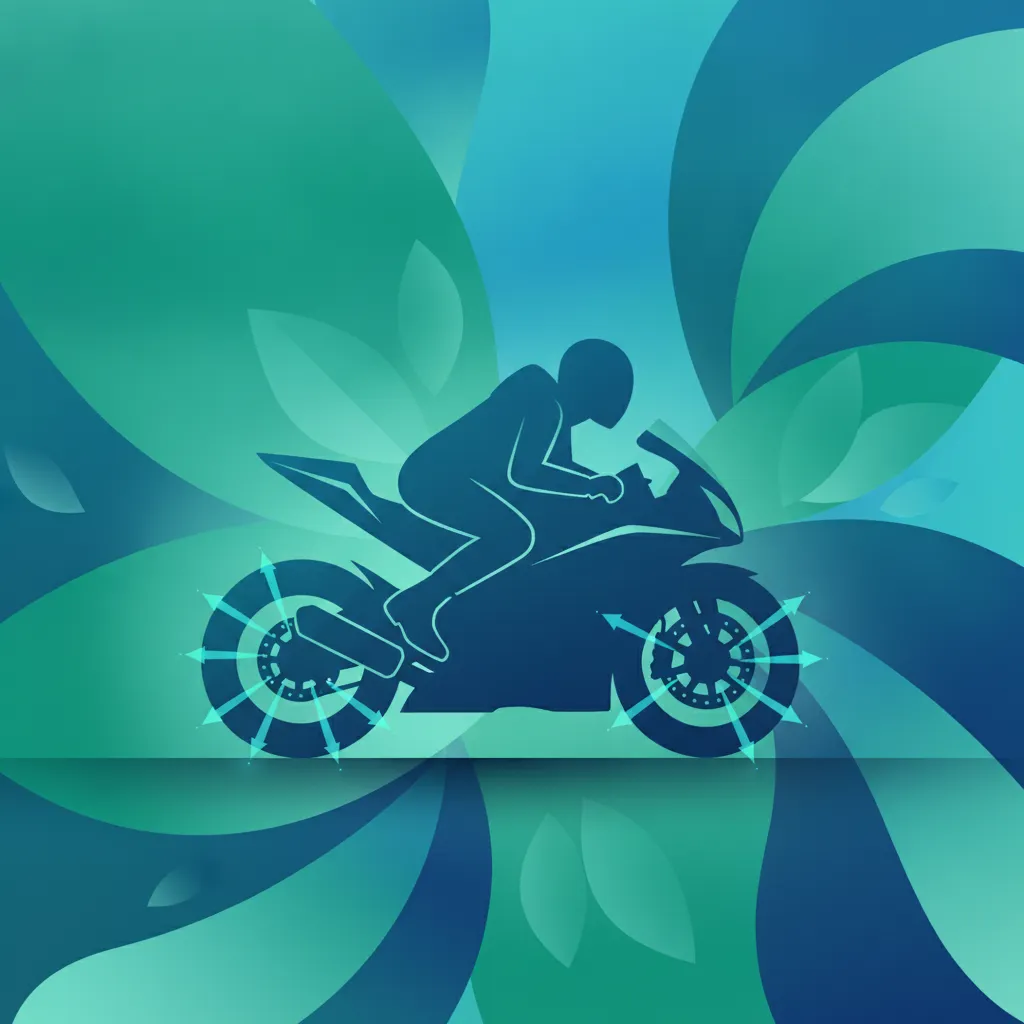
This lesson explains the physics behind motorcycle braking, detailing why the front brake is responsible for the majority of stopping force due to forward weight transfer. It introduces the concept of progressive brake application to manage this weight shift and maximize tyre grip without locking a wheel. Understanding these core principles is the foundation for developing smooth and effective braking skills.
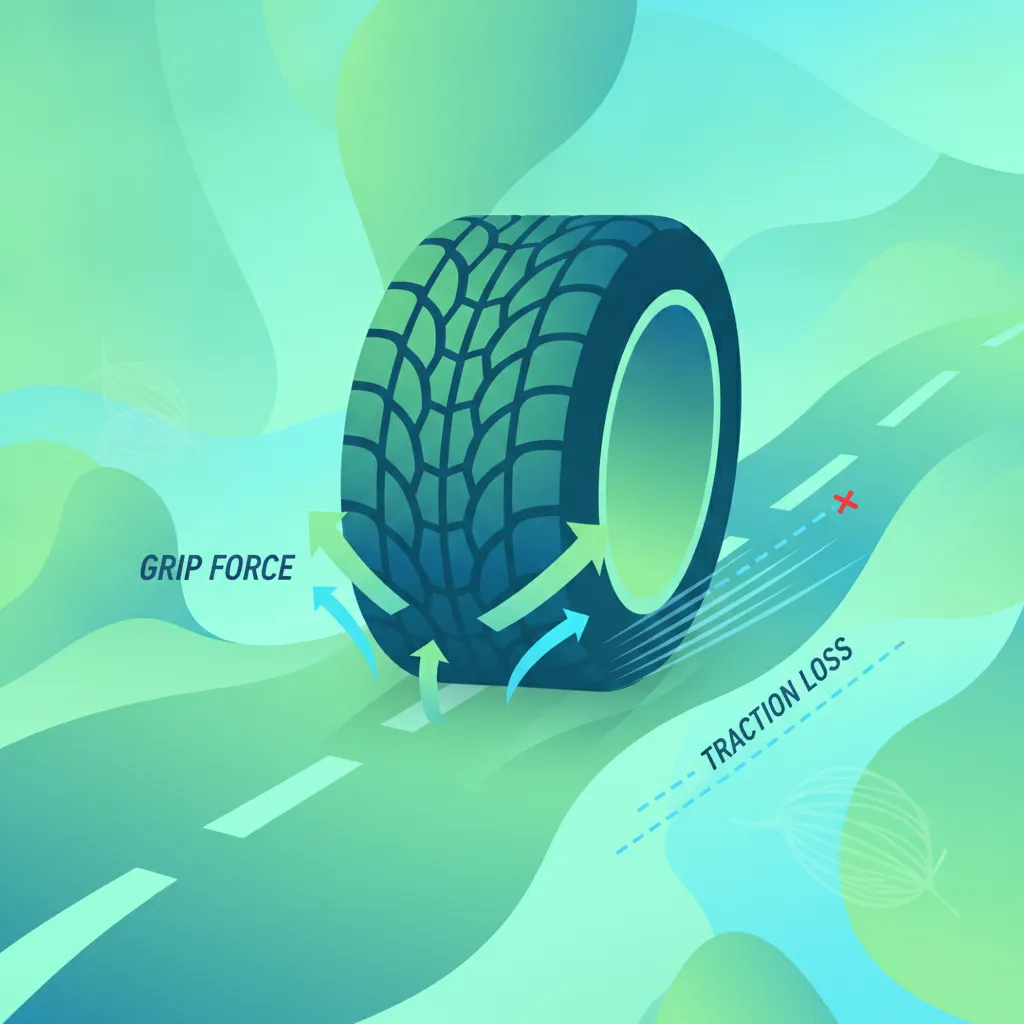
This lesson delves into the science of tyre traction, explaining how the small contact patch is critical for control. It examines how factors like tyre pressure, temperature, and road surface conditions (wet, dry, gravel) affect the available grip. Understanding the limits of traction is essential for knowing how hard a rider can safely brake or corner in any given situation.
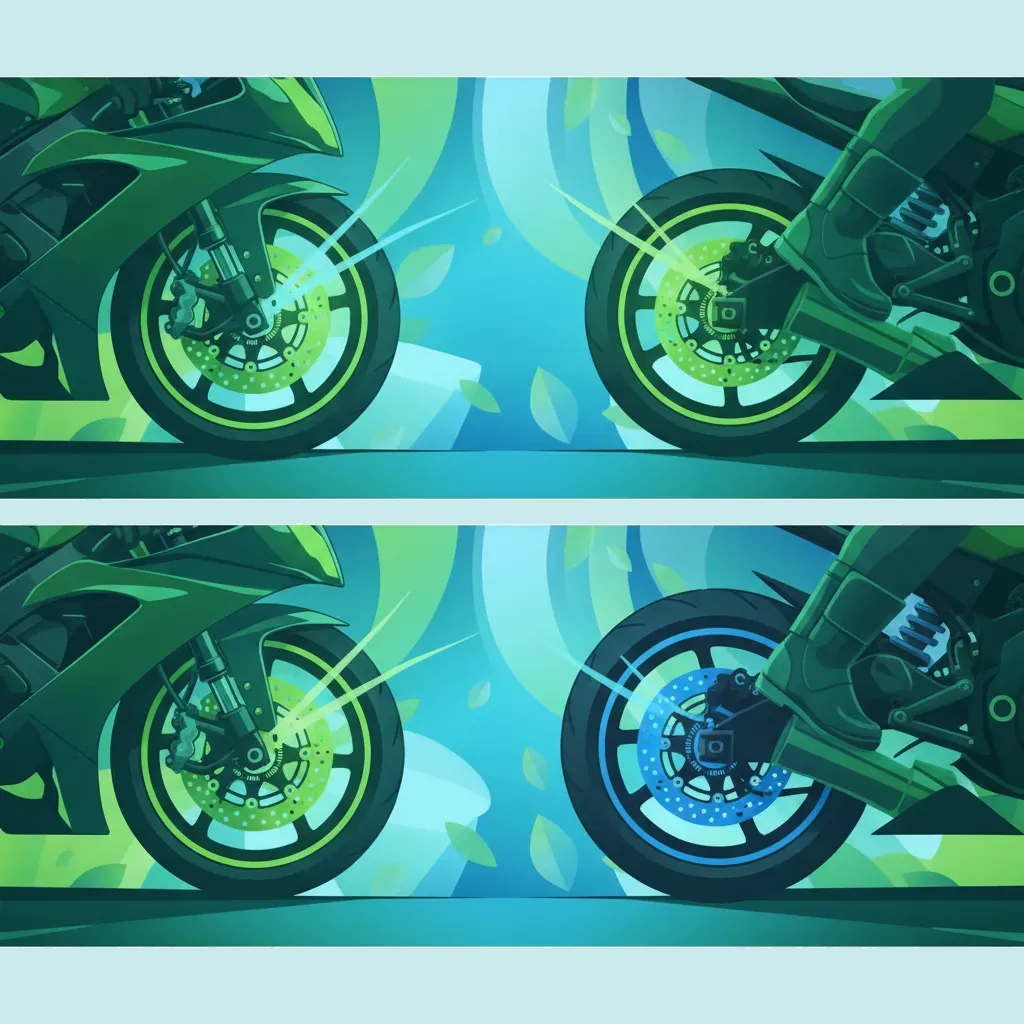
This lesson focuses on the art of coordinating the front and rear brakes to achieve stable and efficient deceleration. It explains how the ideal balance changes depending on speed, road surface, and whether the bike is traveling in a straight line or a curve. Proper brake balance enhances control, shortens stopping distances, and provides a smoother riding experience.

This lesson addresses the challenge of navigating terrain with changing elevation. It covers techniques for maintaining momentum and control on uphill climbs, including proper gear selection and throttle use. For descents, it emphasizes the use of engine braking to control speed and prevent brake overuse, a vital skill for long alpine descents.

This lesson focuses on the strategic approach to cornering: Slow, Look, Lean, and Roll. It teaches riders to adjust to a safe entry speed before the turn, choose a line that maximizes visibility and safety margin, and smoothly accelerate out of the corner. Proper line choice, including identifying the apex, is critical for maintaining stability and control through any bend.
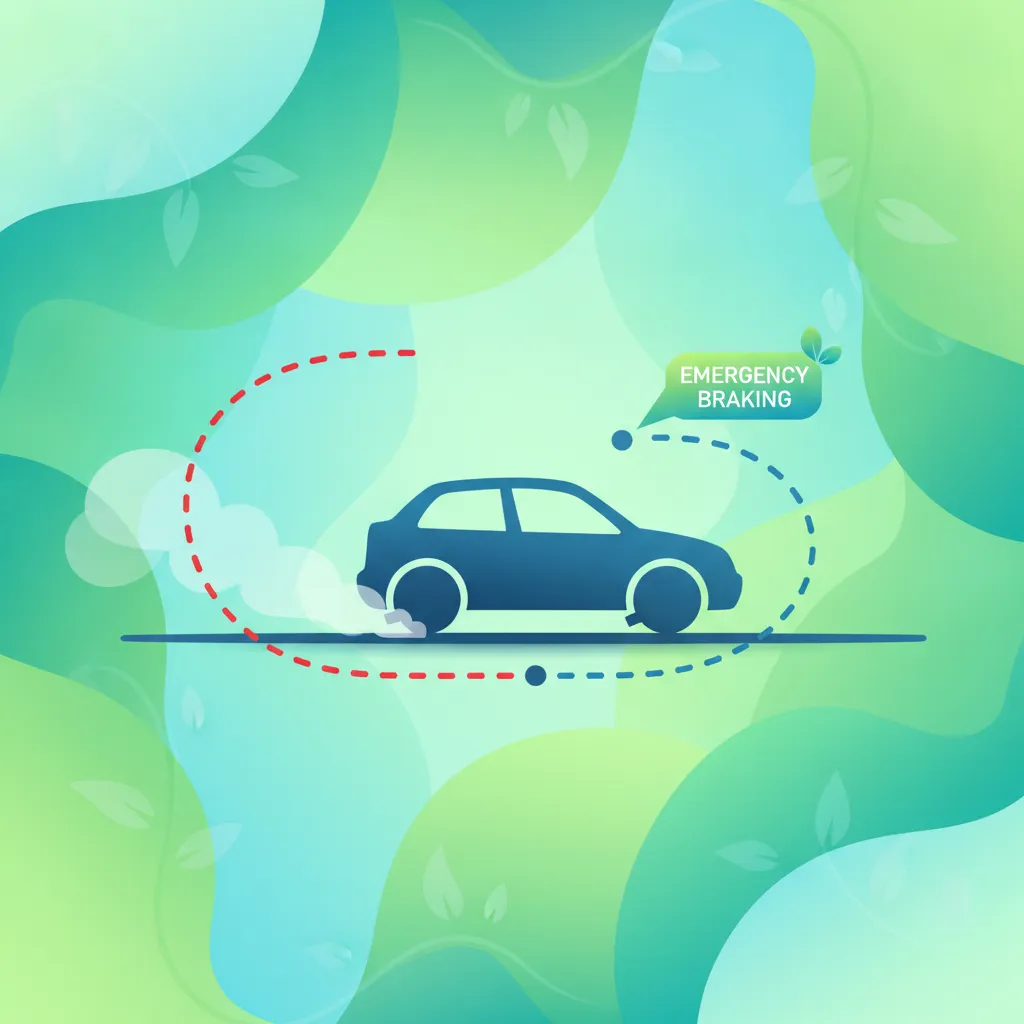
This lesson provides a step-by-step guide to executing an emergency stop safely. It teaches riders how to apply firm, progressive pressure to both brakes to achieve the shortest possible stopping distance without locking the wheels. The role of ABS in these situations is also explained, highlighting how it assists the rider in maintaining steering control under maximum braking.

This lesson focuses on the dynamics of safe cornering, explaining concepts like lean angle, body positioning, and counter-steering. It teaches the proper technique of adjusting speed before a turn, maintaining a smooth path through the apex, and accelerating out of the corner. Correctly applying these principles is key to maintaining stability and control.

This lesson details the components and function of a motorcycle's braking system. It explains the roles of the front and rear brakes, the mechanics of hydraulic disc brakes, and the importance of maintaining proper brake fluid levels. Learners will also understand how to recognize the signs of worn brake pads, ensuring the system remains effective for safe stopping.
This lesson teaches correct braking techniques, including the coordinated use of front and rear brakes for maximum efficiency. It explains how to calculate total stopping distance based on speed, perception time, and reaction time. The content also covers adjustments needed for braking on wet or slippery surfaces to avoid loss of control.

This lesson examines how adverse weather directly affects motorcycle safety. It explains how water on the road reduces tyre grip, increasing braking distances and the risk of aquaplaning. Strategies for riding in fog, dealing with reduced visibility from road spray, and identifying potential ice patches are covered to help riders manage weather-related risks.
Learn about the traction circle, weight transfer dynamics, and effective brake balance for motorcycle theory. Essential knowledge for controlling your motorcycle in corners and on slippery Austrian roads.
This lesson explains the physics behind motorcycle braking, detailing why the front brake is responsible for the majority of stopping force due to forward weight transfer. It introduces the concept of progressive brake application to manage this weight shift and maximize tyre grip without locking a wheel. Understanding these core principles is the foundation for developing smooth and effective braking skills.
This lesson focuses on the art of coordinating the front and rear brakes to achieve stable and efficient deceleration. It explains how the ideal balance changes depending on speed, road surface, and whether the bike is traveling in a straight line or a curve. Proper brake balance enhances control, shortens stopping distances, and provides a smoother riding experience.
This lesson delves into the science of tyre traction, explaining how the small contact patch is critical for control. It examines how factors like tyre pressure, temperature, and road surface conditions (wet, dry, gravel) affect the available grip. Understanding the limits of traction is essential for knowing how hard a rider can safely brake or corner in any given situation.
This lesson focuses on the dynamics of safe cornering, explaining concepts like lean angle, body positioning, and counter-steering. It teaches the proper technique of adjusting speed before a turn, maintaining a smooth path through the apex, and accelerating out of the corner. Correctly applying these principles is key to maintaining stability and control.
This lesson addresses the challenge of navigating terrain with changing elevation. It covers techniques for maintaining momentum and control on uphill climbs, including proper gear selection and throttle use. For descents, it emphasizes the use of engine braking to control speed and prevent brake overuse, a vital skill for long alpine descents.
This lesson examines how adverse weather directly affects motorcycle safety. It explains how water on the road reduces tyre grip, increasing braking distances and the risk of aquaplaning. Strategies for riding in fog, dealing with reduced visibility from road spray, and identifying potential ice patches are covered to help riders manage weather-related risks.
This lesson focuses on the strategic approach to cornering: Slow, Look, Lean, and Roll. It teaches riders to adjust to a safe entry speed before the turn, choose a line that maximizes visibility and safety margin, and smoothly accelerate out of the corner. Proper line choice, including identifying the apex, is critical for maintaining stability and control through any bend.

This lesson demystifies countersteering, the non-intuitive but essential technique for turning a motorcycle above low speeds. It explains that to turn right, a rider must momentarily push the right handlebar forward, which causes the bike to lean to the right. Mastering this core concept is the key to precise, confident, and controlled cornering.
This lesson provides a step-by-step guide to executing an emergency stop safely. It teaches riders how to apply firm, progressive pressure to both brakes to achieve the shortest possible stopping distance without locking the wheels. The role of ABS in these situations is also explained, highlighting how it assists the rider in maintaining steering control under maximum braking.
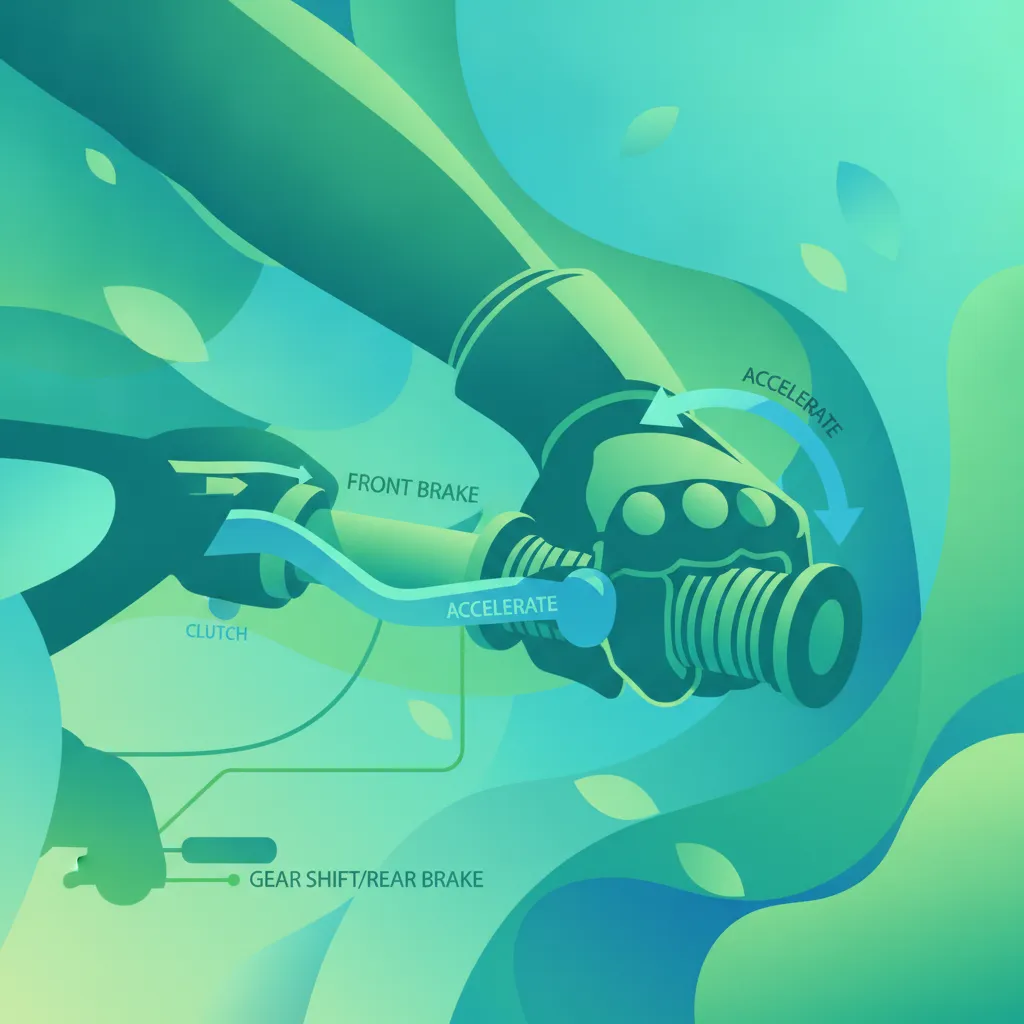
This lesson provides a functional overview of a motorcycle's essential controls, explaining the operation of the throttle, clutch, and gear selector. It differentiates between the front and rear braking systems and their roles in effective stopping. Learners will also identify handlebar switches for lights, indicators, and the horn, ensuring complete familiarity with the vehicle's interface for safe operation.
Find clear answers to common questions learners have about Braking in Corners and on Slipper Surfaces. Learn how the lesson is structured, which driving theory objectives it supports, and how it fits into the overall learning path of units and curriculum progression in Austria. These explanations help you understand key concepts, lesson flow, and exam focused study goals.
Trail braking is the technique of keeping a small amount of brake pressure while leaning into a turn. While not always a practical requirement for beginners, understanding the concept is crucial for answering advanced theory questions about cornering stability and weight transfer.
Low-traction surfaces like gravel, wet asphalt, or road markings significantly reduce the grip available for braking. You must rely more on the rear brake and use much lighter, more progressive pressure on the front brake to avoid locking the wheels.
When a motorcycle is leaned over, a large portion of the tyre's traction is already used to hold the turn. Applying sudden, hard brakes can quickly exceed the tyre's grip limit, leading to a loss of control or a front-wheel slide.
If you see an obstacle, focus your eyes on the exit of the turn if possible. You should attempt to straighten the bike slightly before applying firmer brakes, as the motorcycle is much more stable when upright. Always prioritize looking ahead to anticipate these hazards early.
Refine your study plan by searching for specific Austrian driving theory practice sets. Pinpoint questions related to particular road rules, signs, or challenge levels, and begin practicing immediately to reinforce your knowledge and excel in your official exam with confidence. Get started with focused revision today.