
This lesson explains the critical, counter-intuitive technique of countersteering, which is essential for safely navigating corners on your motorcycle. By mastering how to steer at speed, you will build the confidence needed for your category A, A1, or A2 theory test and your future practical riding.
Lesson content overview
Learning to ride a motorcycle involves mastering a unique blend of intuition and physics. One of the most crucial, yet often misunderstood, techniques for safe and effective cornering is countersteering. This lesson will demystify countersteering, explaining why and how it allows a motorcycle to lean and turn, ensuring you can navigate bends with precision, confidence, and control – a vital skill for anyone pursuing an Austrian A, A1, or A2 motorcycle licence.
Countersteering is the foundational technique used to initiate and control a motorcycle's lean angle, which in turn facilitates cornering. Unlike steering a bicycle at very low speeds or a car, turning a motorcycle at anything above walking pace doesn't involve simply turning the handlebars in the direction you want to go. Instead, you briefly push the handlebar in the opposite direction of your desired turn. This non-intuitive action is what makes the motorcycle lean into the turn.
Imagine you want to turn right. Your natural instinct might be to pull the right handlebar towards you or push the left handlebar away. However, to initiate a right turn, you must momentarily push the right handlebar forward (or push the left handlebar backward). This causes the front wheel to briefly turn left, which in turn makes the motorcycle lean to the right, allowing it to enter the right-hand turn. This seemingly "opposite" input is a fundamental principle of motorcycle dynamics.
The importance of mastering countersteering cannot be overstated. It enables riders to initiate lean angles quickly and predictably, allowing for smoother and more controlled corner entry. This precision in steering reduces the risk of loss of traction, unintended lane departure, and potential collisions, making it an indispensable skill for safe motorcycle operation on Austrian roads.
Understanding the physics behind countersteering helps solidify why this technique is so effective. Several forces interact to allow a motorcycle to lean and turn: gyroscopic precession, the motorcycle's steering geometry, and the rider's input.
Gyroscopic precession is a key physical phenomenon at play in motorcycle dynamics. A spinning object, like a motorcycle wheel, resists changes to its axis of rotation due to its angular momentum. When a force is applied to change the orientation of a spinning wheel, the wheel reacts by moving at a 90-degree angle to the applied force.
In countersteering, when you push the right handlebar forward, the front wheel briefly turns left. This small left turn applies a force to the spinning front wheel. Due to gyroscopic precession, the wheel and the entire motorcycle react by leaning to the right. This effect is more pronounced at higher speeds, making countersteering inputs feel subtle yet incredibly powerful. At very low speeds (below approximately 10-15 km/h), gyroscopic forces are minimal, and a rider relies more on body lean and direct steering input.
The design of a motorcycle, specifically its steering geometry, significantly influences how it handles and responds to countersteering inputs. Key elements include:
Different types of motorcycles (e.g., sport bikes, touring bikes, cruisers) have varying geometries, which means a rider must adapt their countersteering technique accordingly. For instance, a sport bike with a steeper rake and shorter wheelbase will respond much more quickly to a small countersteering input than a touring bike with a relaxed rake and long wheelbase.
The lean angle is the degree to which the motorcycle tilts relative to the vertical axis during cornering. This angle is crucial because it directly determines the size of the turning radius. A steeper lean angle allows for a tighter turn at a given speed, or a faster turn through a given radius.
Properly managing your lean angle is vital for maintaining traction and preventing slides. If the lean angle becomes too extreme for the available tire grip or road conditions (e.g., wet or gravel), the tires can lose traction, leading to a loss of control. Riders must constantly adjust their speed and throttle to achieve and maintain the appropriate lean angle for the turn.
Now that we understand the underlying principles, let's explore the practical mechanics of countersteering and its coordination with other riding techniques.
The core of countersteering is the momentary push of the handlebars.
Identify the Turn: As you approach a turn, look through the corner to your desired exit point.
Set Speed: Adjust your speed before initiating the turn to ensure you can negotiate the bend safely.
Initiate Countersteer: To turn right, briefly push the right handlebar forward. To turn left, briefly push the left handlebar forward. This causes the bike to lean into the desired turn. The harder you push (within reason), the faster and deeper the lean will be.
Maintain Lean (if needed): For sustained turns, you might need to hold a slight, continuous pressure on the handlebar in the "countersteering" direction to maintain the desired lean angle and line through the corner.
Exit the Turn: As you exit the turn and begin to straighten up, ease off the countersteering pressure and allow the bike to naturally return to an upright position, often aided by gentle acceleration.
A common misunderstanding among novice riders is the belief that pulling the handlebars towards the desired turn direction will initiate the lean. For example, pulling the left handlebar for a left turn. In reality, this action can cause the bike to lean away from the intended turn, leading to instability or an inability to turn effectively. Remember: push right to go right, push left to go left.
Throttle control is intimately linked with countersteering and lean angle management. Smooth and consistent throttle application during a turn significantly contributes to motorcycle stability and control.
When cornering, try to maintain a slight, consistent throttle through the bend. Abrupt changes in throttle, especially when leaned over, can destabilize the bike and lead to a loss of traction.
For instance, on a descending curve, maintaining a slight amount of throttle can prevent the bike from leaning excessively due to gravity's pull, offering more controlled cornering.
The speed at which you are traveling directly influences the magnitude of gyroscopic forces and, consequently, the feel of countersteering.
While Austrian road traffic regulations (Straßenverkehrsordnung, StVO) do not explicitly mention "countersteering," they implicitly demand its proper application through various duties of care and safety provisions.
Adhering to these regulations means employing all necessary techniques, including countersteering, to navigate corners safely and maintain control.
Understanding common mistakes can help riders refine their technique and prevent dangerous situations.
The effective application of countersteering changes depending on various external factors.
Wet, icy, or gravelly surfaces drastically reduce tire friction. This requires:
When passing vulnerable road users like cyclists, precise lane positioning is paramount. A smooth, early countersteering input allows you to move into the left lane gradually and predictably, maintaining a safe passing distance without sudden, alarming movements. This demonstrates control and predictability to other road users.
Countersteering is the non-intuitive but essential technique for effectively turning a motorcycle at speed. It involves briefly pushing the handlebar in the direction opposite your desired turn, which causes the motorcycle to lean into the turn due to gyroscopic precession and the bike's steering geometry.
Key takeaways include:
Mastering countersteering is not just a technique; it's a fundamental skill that transforms motorcycle riding from an exercise in balance into a fluid, controlled, and exhilarating experience. This foundational knowledge is essential for confidently moving on to advanced cornering techniques, speed management, and line choice in subsequent lessons.
Countersteering is the counterintuitive technique of briefly pushing the handlebar opposite to your desired turn direction to initiate a lean and change direction at speed. The technique works through gyroscopic precession acting on the spinning wheels and is influenced by the motorcycle's steering geometry (rake, trail, wheelbase). Successful cornering requires managing lean angle to match speed and road surface, maintaining smooth throttle through the bend, and initiating the input early enough to enter the curve smoothly. Austrian traffic law implicitly requires mastery of this technique through duties to maintain vehicle control and adjust speed to road conditions. Common errors include confusing push with pull, late initiation, over-leaning, and abrupt throttle use during leans.
A short set of high-value points that capture the most important learning from this lesson.
Push the handlebar opposite to your desired turn direction to initiate a lean (push right handlebar to turn right)
Gyroscopic precession causes the front wheel's brief opposite turn to translate into a motorcycle lean, which creates the turning arc
Lean angle directly determines your turning radius at any given speed, so manage lean based on the curve ahead
Smooth, consistent throttle through a corner stabilizes the motorcycle; abrupt throttle changes while leaned over can cause crashes
Austrian StVO duties of care implicitly require proper countersteering to maintain vehicle control in bends
Explore all units and lessons included in this driving theory course.
Push Right = Turn Right, Push Left = Turn Left - remember this counterintuitive rule for initiating leans
Gyroscopic forces make countersteering effective above approximately 30 km/h; below that, direct steering and body lean dominate
Steeper rake and shorter wheelbase make a bike more responsive to countersteering input; longer wheelbase requires wider inputs
Shallower lean angles are required on wet, icy, or gravel surfaces due to reduced tire traction
Throttle In widens the turn radius and adds stability; Throttle Out tightens the radius and shifts weight forward
Initiating countersteering too late, after already entering the bend, causing abrupt corrections and potentially running wide
Pulling the handlebar toward the desired turn instead of pushing the opposite one, causing the bike to lean away
Over-leaning aggressively, exceeding tire grip limits and causing a low-side crash
Applying sudden or large throttle changes while leaned over, risking high-side or loss of traction
Attempting countersteering at standstill or very low speed when gyroscopic forces are insufficient for the technique to work
Lesson content overview
A short set of high-value points that capture the most important learning from this lesson.
Push the handlebar opposite to your desired turn direction to initiate a lean (push right handlebar to turn right)
Gyroscopic precession causes the front wheel's brief opposite turn to translate into a motorcycle lean, which creates the turning arc
Lean angle directly determines your turning radius at any given speed, so manage lean based on the curve ahead
Smooth, consistent throttle through a corner stabilizes the motorcycle; abrupt throttle changes while leaned over can cause crashes
Austrian StVO duties of care implicitly require proper countersteering to maintain vehicle control in bends
Explore all units and lessons included in this driving theory course.
Push Right = Turn Right, Push Left = Turn Left - remember this counterintuitive rule for initiating leans
Gyroscopic forces make countersteering effective above approximately 30 km/h; below that, direct steering and body lean dominate
Steeper rake and shorter wheelbase make a bike more responsive to countersteering input; longer wheelbase requires wider inputs
Shallower lean angles are required on wet, icy, or gravel surfaces due to reduced tire traction
Throttle In widens the turn radius and adds stability; Throttle Out tightens the radius and shifts weight forward
Initiating countersteering too late, after already entering the bend, causing abrupt corrections and potentially running wide
Pulling the handlebar toward the desired turn instead of pushing the opposite one, causing the bike to lean away
Over-leaning aggressively, exceeding tire grip limits and causing a low-side crash
Applying sudden or large throttle changes while leaned over, risking high-side or loss of traction
Attempting countersteering at standstill or very low speed when gyroscopic forces are insufficient for the technique to work
Explore search topics learners often look for when studying Countersteering Basics. These topics reflect common questions about road rules, driving situations, safety guidance, and lesson level theory preparation for learners in Austria.
Browse additional driving theory lessons that cover connected traffic rules, road signs, and common driving situations related to this topic. Improve your understanding of how different rules interact across everyday traffic scenarios.
Explore the fundamental physics behind motorcycle cornering, including gyroscopic precession, lean angle, and how speed affects steering. Understand the forces that enable safe and controlled turns on Austrian roads.

This lesson addresses the complex skill of braking while the motorcycle is leaned over in a corner or on low-traction surfaces. It introduces the concept of trail braking to adjust speed and tighten a cornering line, and provides strategies for gentle brake application on wet or loose surfaces. Mastering these techniques requires a delicate touch and a deep understanding of traction limits.

This lesson focuses on the dynamics of safe cornering, explaining concepts like lean angle, body positioning, and counter-steering. It teaches the proper technique of adjusting speed before a turn, maintaining a smooth path through the apex, and accelerating out of the corner. Correctly applying these principles is key to maintaining stability and control.

This lesson focuses on the strategic approach to cornering: Slow, Look, Lean, and Roll. It teaches riders to adjust to a safe entry speed before the turn, choose a line that maximizes visibility and safety margin, and smoothly accelerate out of the corner. Proper line choice, including identifying the apex, is critical for maintaining stability and control through any bend.

This lesson addresses the challenge of navigating terrain with changing elevation. It covers techniques for maintaining momentum and control on uphill climbs, including proper gear selection and throttle use. For descents, it emphasizes the use of engine braking to control speed and prevent brake overuse, a vital skill for long alpine descents.
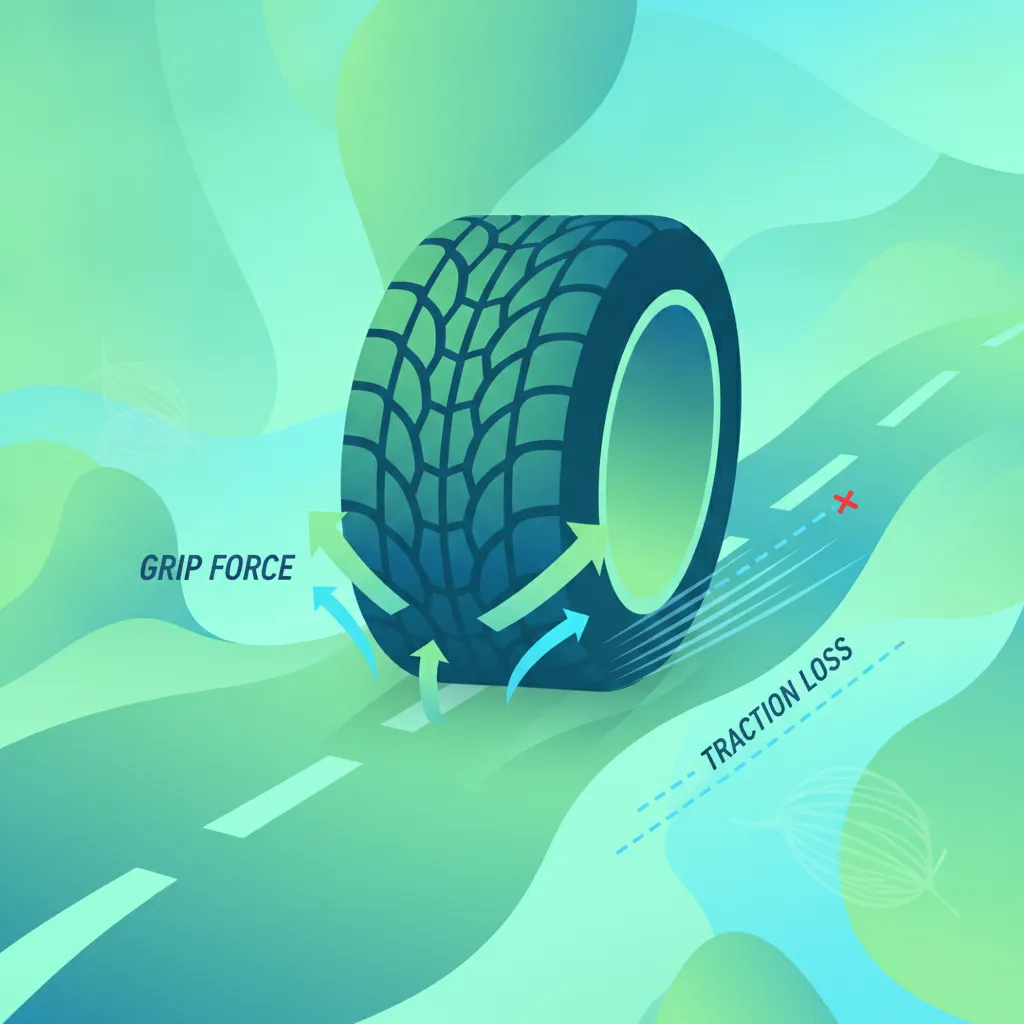
This lesson delves into the science of tyre traction, explaining how the small contact patch is critical for control. It examines how factors like tyre pressure, temperature, and road surface conditions (wet, dry, gravel) affect the available grip. Understanding the limits of traction is essential for knowing how hard a rider can safely brake or corner in any given situation.
This lesson explains the physics behind motorcycle braking, detailing why the front brake is responsible for the majority of stopping force due to forward weight transfer. It introduces the concept of progressive brake application to manage this weight shift and maximize tyre grip without locking a wheel. Understanding these core principles is the foundation for developing smooth and effective braking skills.
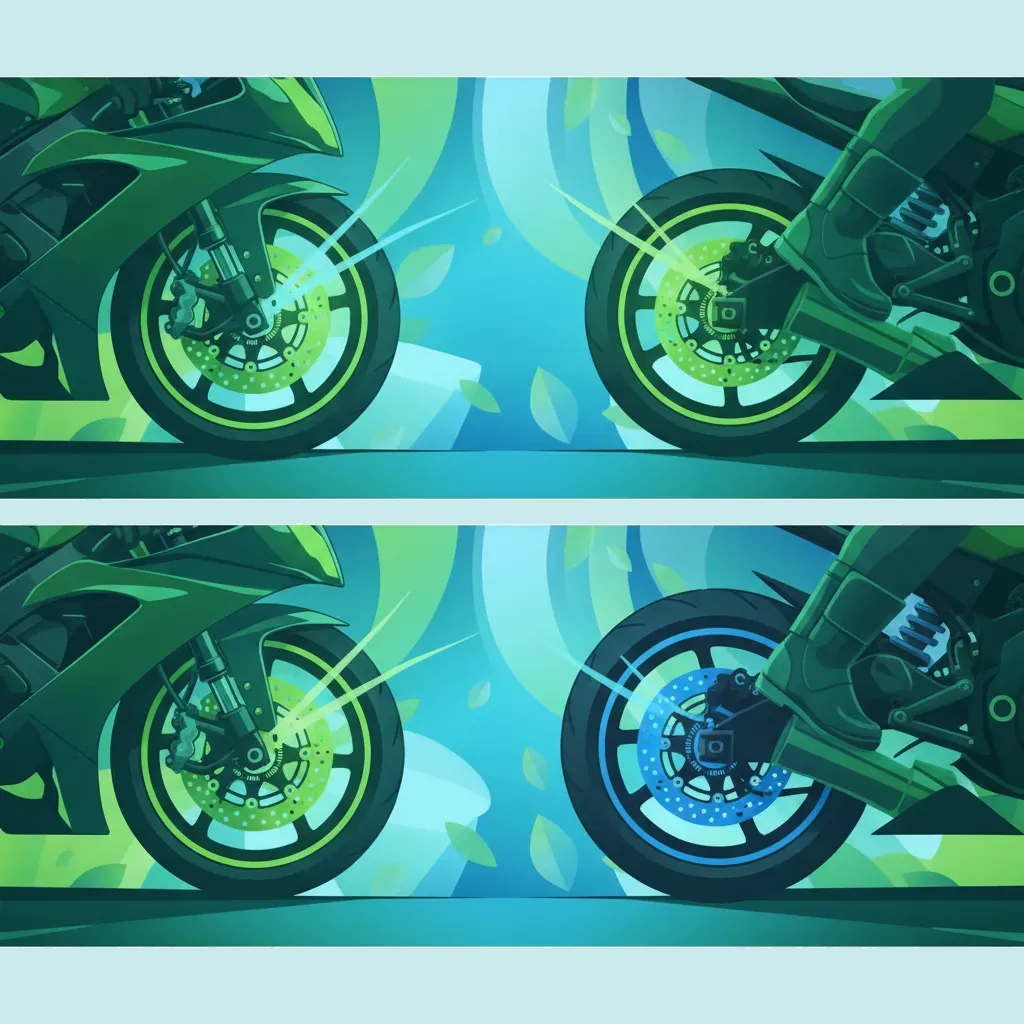
This lesson focuses on the art of coordinating the front and rear brakes to achieve stable and efficient deceleration. It explains how the ideal balance changes depending on speed, road surface, and whether the bike is traveling in a straight line or a curve. Proper brake balance enhances control, shortens stopping distances, and provides a smoother riding experience.
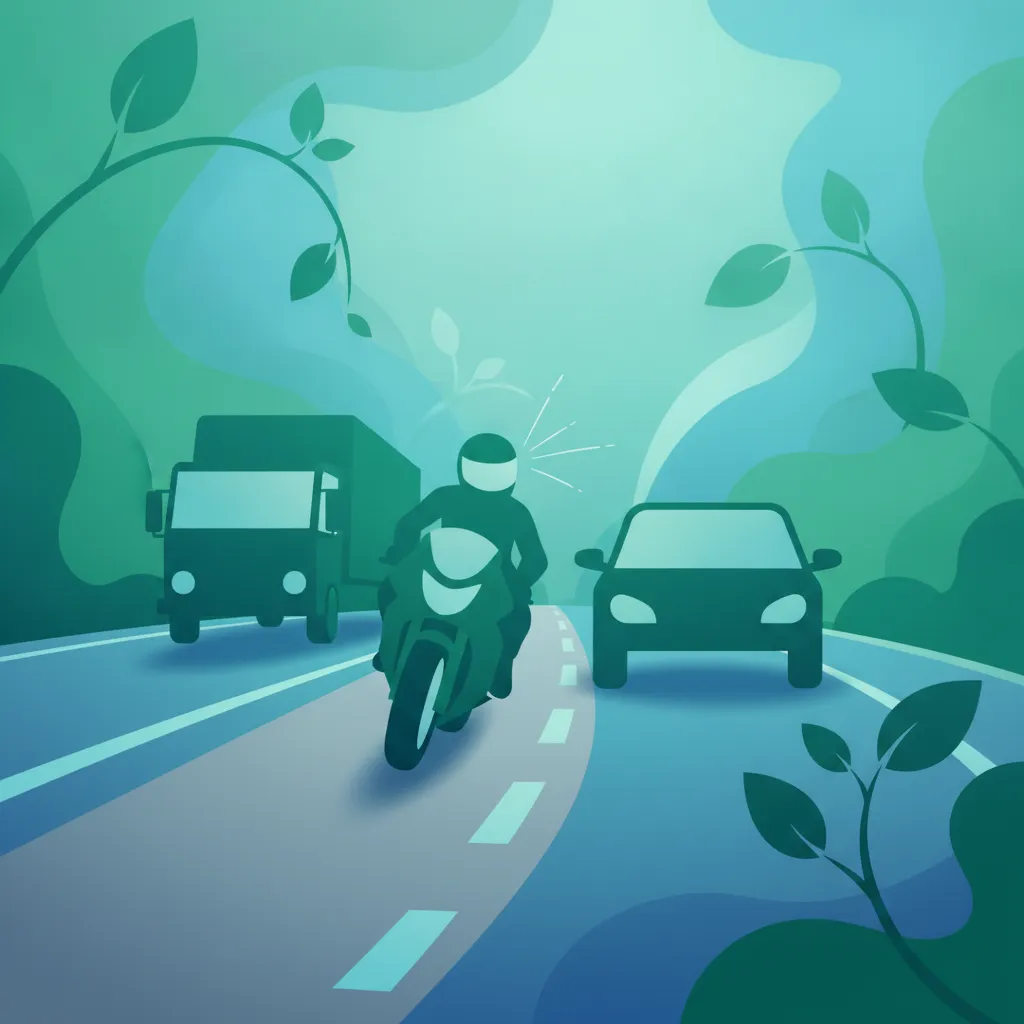
This lesson explains how to use different positions within a lane to maximize visibility, create safety buffers, and plan escape routes. It introduces the concept of anticipative riding, which involves actively scanning for potential hazards and predicting the actions of other drivers. Strategic positioning is a dynamic skill that allows a rider to manage space and time effectively in changing traffic.

This lesson provides practical strategies for riding in windy conditions, a common occurrence on open roads and mountain passes. It explains how to anticipate wind gusts, use a relaxed but firm grip on the handlebars, and make subtle steering inputs to counteract side forces. Proper body positioning and lane choice can also significantly reduce the effect of wind and turbulence.

Improper cornering technique can be unsettling and dangerous for passengers. This lesson teaches the correct approach to bends and turns: assess the corner, select the right speed and gear on approach, and steer with smooth, deliberate inputs. Understanding how to manage the vehicle's weight transfer and minimize lateral forces is key to ensuring passenger stability and comfort.
Learn about typical mistakes in motorcycle steering, such as incorrect countersteering application or throttle misuse. Understand how to correct these errors for safer riding according to Austrian road rules.
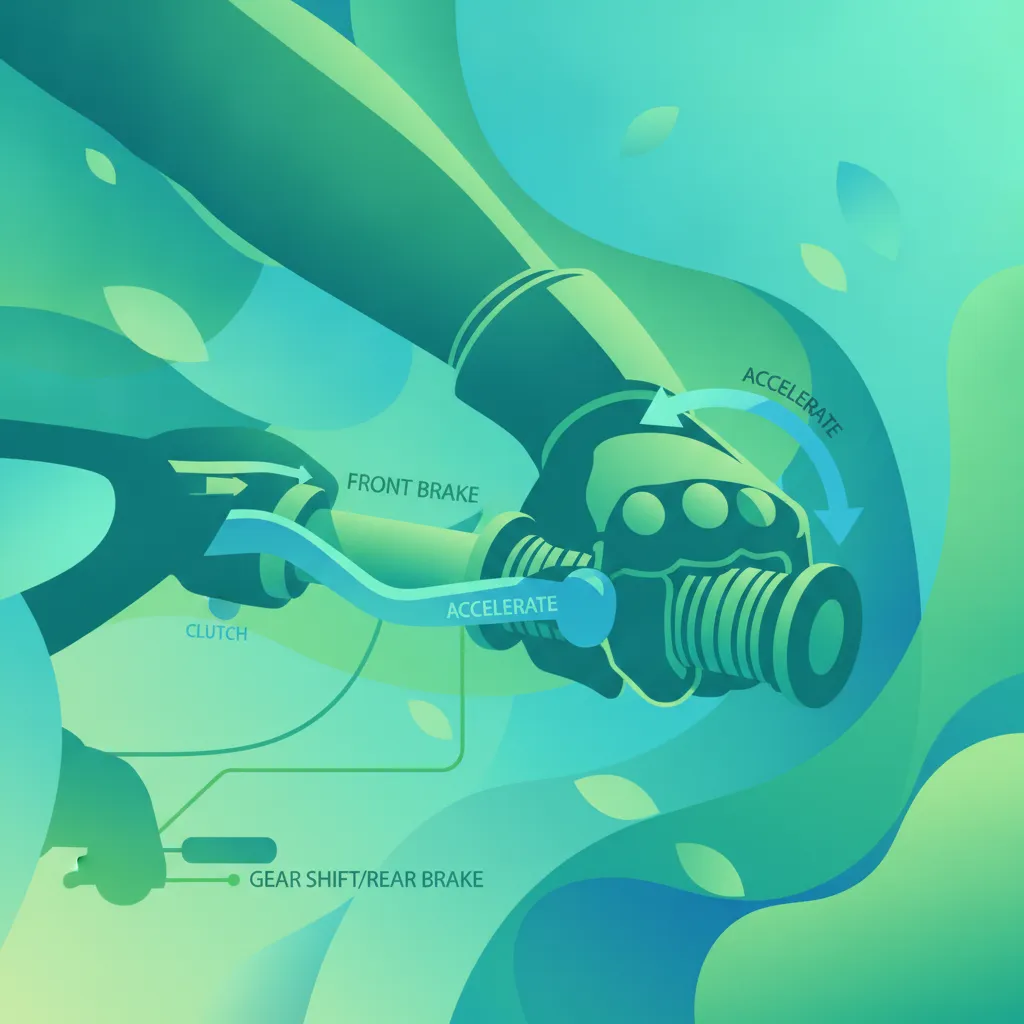
This lesson provides a functional overview of a motorcycle's essential controls, explaining the operation of the throttle, clutch, and gear selector. It differentiates between the front and rear braking systems and their roles in effective stopping. Learners will also identify handlebar switches for lights, indicators, and the horn, ensuring complete familiarity with the vehicle's interface for safe operation.
This lesson explains how to use different positions within a lane to maximize visibility, create safety buffers, and plan escape routes. It introduces the concept of anticipative riding, which involves actively scanning for potential hazards and predicting the actions of other drivers. Strategic positioning is a dynamic skill that allows a rider to manage space and time effectively in changing traffic.
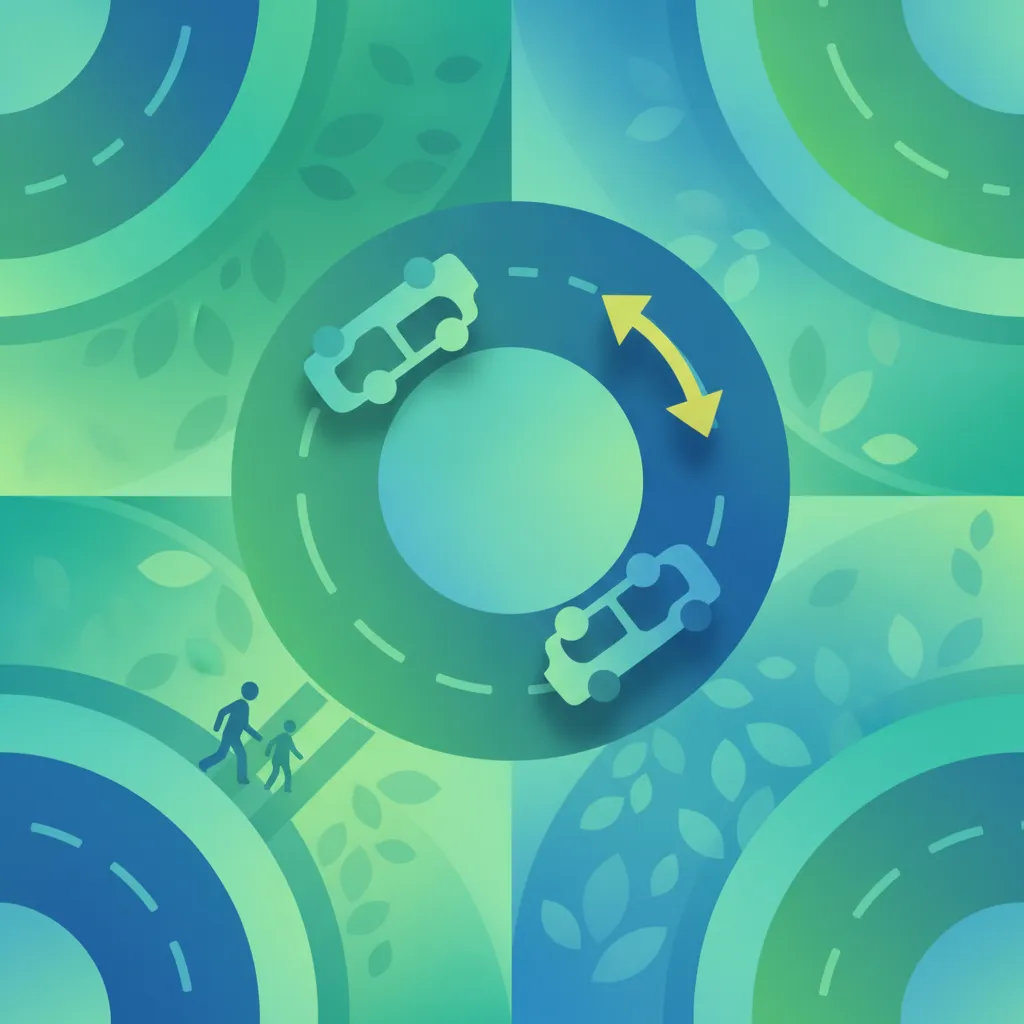
This lesson provides clear instructions for maneuvering through single and multi-lane roundabouts. It covers the critical rule of giving way to traffic already in the circle, proper lane selection based on the intended exit, and the correct use of indicators when entering and exiting. Mastering roundabouts is key to efficient and safe travel in modern Austrian traffic systems.

This lesson breaks down the overtaking maneuver into a safe, repeatable process: assess, signal, check, move, and return. It emphasizes the importance of ensuring a sufficient gap in oncoming traffic, checking mirrors and blind spots thoroughly, and maintaining a proper speed differential. Adherence to Austrian laws regarding where overtaking is prohibited is also covered in detail.

This lesson explains the correct techniques for using mirrors to maintain awareness of surrounding traffic and for checking blind spots. It details the proper timing and use of indicators to signal turns and lane changes effectively. The content reinforces that clear, early communication is key to preventing misunderstandings with other drivers.

This lesson teaches the correct technique for setting and using motorcycle mirrors to maintain awareness of traffic behind and to the sides. It emphasizes that mirrors alone are not enough, detailing the necessity of the 'lifesaver' shoulder check to cover critical blind spots. A disciplined observation routine is crucial for safe lane changes, merging, and navigating dense traffic.
This lesson addresses the challenge of navigating terrain with changing elevation. It covers techniques for maintaining momentum and control on uphill climbs, including proper gear selection and throttle use. For descents, it emphasizes the use of engine braking to control speed and prevent brake overuse, a vital skill for long alpine descents.

This lesson provides essential knowledge for using Austria's high-speed road network. It covers the correct procedure for entering via acceleration lanes, maintaining strict lane discipline (keeping right, passing left), and understanding the digital or physical Vignette (toll sticker) requirement. The formation of the 'Rettungsgasse' (emergency corridor) during traffic jams is also a key topic.
This lesson focuses on the dynamics of safe cornering, explaining concepts like lean angle, body positioning, and counter-steering. It teaches the proper technique of adjusting speed before a turn, maintaining a smooth path through the apex, and accelerating out of the corner. Correctly applying these principles is key to maintaining stability and control.
This lesson provides practical strategies for riding in windy conditions, a common occurrence on open roads and mountain passes. It explains how to anticipate wind gusts, use a relaxed but firm grip on the handlebars, and make subtle steering inputs to counteract side forces. Proper body positioning and lane choice can also significantly reduce the effect of wind and turbulence.
Find clear answers to common questions learners have about Countersteering Basics. Learn how the lesson is structured, which driving theory objectives it supports, and how it fits into the overall learning path of units and curriculum progression in Austria. These explanations help you understand key concepts, lesson flow, and exam focused study goals.
It is called countersteering because you momentarily steer the front wheel in the opposite direction of the intended turn. By pushing the handlebar on the side you wish to turn, you induce a lean that causes the motorcycle to turn in that direction.
Countersteering is ineffective at very low speeds, such as walking pace. In these situations, you use direct steering, where you turn the handlebars in the direction you want to go. Countersteering becomes the primary control method as speed increases.
Exam questions often present scenarios involving cornering, asking for the correct steering input or identifying the physical forces acting on the motorcycle. Understanding countersteering helps you select the correct answer regarding stability and handling.
Countersteering is a natural, safe, and necessary skill for all motorcyclists. While it may feel non-intuitive initially, practicing the concept theoretically helps you grasp how your motorcycle will react, leading to much safer and more predictable cornering.
Refine your study plan by searching for specific Austrian driving theory practice sets. Pinpoint questions related to particular road rules, signs, or challenge levels, and begin practicing immediately to reinforce your knowledge and excel in your official exam with confidence. Get started with focused revision today.