
This lesson explores the essential physics behind motorcycle braking, focusing on why proper front-to-rear brake distribution is critical for stopping power. It builds on your foundational knowledge of vehicle controls to prepare you for both the theoretical exam questions and the practical demands of riding on diverse Austrian roads.
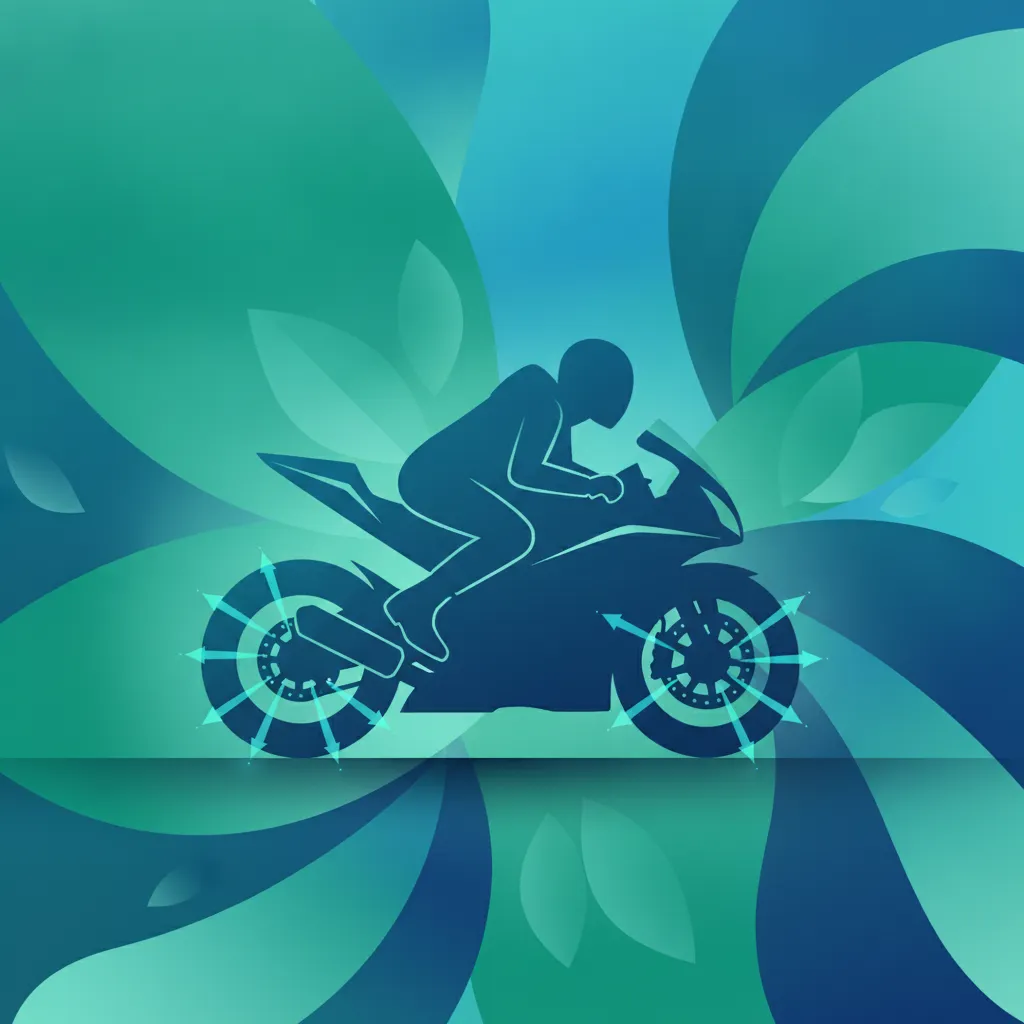
Lesson content overview
Welcome to this essential lesson on the fundamental principles of braking for motorcycles, a cornerstone of the Austrian Motorcycle Theory curriculum. Understanding how your motorcycle decelerates is not merely about pulling levers; it's about mastering the physics of motion, weight distribution, and tyre grip. This lesson will equip you with the knowledge to apply brakes effectively, control your machine confidently, and ensure your safety on Austria's diverse roads.
Effective braking is crucial not only for routine stops but critically so for emergency situations. It directly impacts stopping distances, vehicle stability, and your ability to react to unforeseen hazards. By grasping these core concepts, you lay the foundation for developing smooth, controlled, and responsive braking skills, vital for passing your licence exam and for a lifetime of safe motorcycling.
Braking on a motorcycle is a dynamic process influenced by several physical laws. As you apply the brakes, the motorcycle's inertia causes its weight to shift forward, dramatically altering the load on each tyre. This redistribution of mass is key to understanding why the front brake is predominantly responsible for stopping power. Mastering this forward weight transfer and managing tyre grip are central to safe and efficient deceleration.
Proficiency in braking extends beyond merely reducing speed; it's about maintaining complete control over your motorcycle under various conditions. Effective braking ensures optimal tyre grip, preventing dangerous wheel lock-ups that can lead to skids and loss of control. This skill is indispensable for navigating alpine roads, urban traffic, and unexpected situations, contributing significantly to overall rider safety and confidence.
Several interconnected principles govern how a motorcycle brakes. Each plays a vital role in determining stopping performance and stability. A thorough understanding of these concepts is indispensable for any rider.
During braking, the motorcycle's forward momentum creates an inertial force that effectively shifts weight from the rear of the bike to the front. This phenomenon is known as weight transfer. The extent of this shift depends on factors such as the intensity of braking, the motorcycle's geometry, and its speed.
As weight transfers to the front wheel, its tyre becomes more heavily loaded and consequently gains a significantly greater potential for grip. Conversely, the rear tyre becomes lighter, reducing its grip potential and making it more prone to locking up under heavy braking. This physical reality underpins the dominance of the front brake in achieving maximum stopping power. Riders must learn to anticipate and manage this weight shift to fully utilise the front tyre's increased grip without destabilising the motorcycle.
A frequent misunderstanding among new riders is the belief that the rear brake alone can effectively stop a motorcycle, or that both brakes contribute equally. In reality, relying solely on the rear brake or failing to progressively increase front brake pressure ignores the critical effect of weight transfer. Such actions can lead to extended stopping distances or a loss of control due to premature rear-wheel lock-up.
The friction circle is a powerful conceptual tool for understanding tyre performance. It illustrates that a tyre has a maximum amount of grip it can generate, and this grip must be shared between all forces acting upon it: braking, acceleration, and cornering. If a tyre is utilising 100% of its grip for cornering, it has 0% left for braking or acceleration, and vice versa.
When a motorcycle is upright and travelling in a straight line, the entire friction circle is available for braking and acceleration forces. However, as the motorcycle leans into a corner, a significant portion of the available grip is consumed by lateral (cornering) forces. This leaves less grip available for braking. The rider must balance these forces to stay within the friction circle's limits, ensuring the tyres maintain traction and do not slide.
A common error is assuming that braking performance is entirely independent of cornering. Many riders neglect to reduce braking pressure when initiating a lean or while in a turn. Exceeding the friction circle's limits by applying too much brake while cornering is a primary cause of front-wheel slides, a dangerous situation that can lead to a fall.
Progressive braking is the art of applying brake pressure in a measured, increasing manner rather than an abrupt, all-or-nothing squeeze. This technique allows the rider to "feel" the motorcycle's response as weight transfers forward and the tyres gain or lose grip. It is crucial for maximising deceleration while maintaining stability.
Gradual application of the front brake enables the suspension to compress and the front tyre to fully load up, increasing its contact patch and grip potential. This smooth transition harnesses the benefits of weight transfer without overwhelming the tyre's traction limit. Similarly, progressive rear brake application prevents sudden lock-up, especially useful for stabilising the bike during moderate braking or on slippery surfaces.
A common mistake is grabbing the brakes too quickly or too hard, particularly the front brake. Abrupt front braking can cause the front wheel to lock instantly, or if not locked, can rapidly compress the suspension to its limit, potentially lifting the rear wheel and leading to instability. Similarly, stomping on the rear brake often results in an immediate rear-wheel skid, especially when the rear wheel is already lightly loaded due to weight transfer.
Practice Makes Perfect: Regularly practice progressive braking in a safe environment to build muscle memory and improve your feel for the motorcycle's response under deceleration. Start gently and gradually increase pressure.
Given the principles of weight transfer, the optimal distribution of braking force heavily favours the front brake. On most motorcycles, under typical dry conditions and moderate to hard braking, the front brake can contribute approximately 70-80% of the total stopping power, with the rear brake providing the remaining 20-30%.
The front brake is your primary tool for rapid deceleration. Its effective use, applied progressively, maximises the grip available from the front tyre. The rear brake, while less powerful, plays a crucial role in providing stability and assisting in shorter stops, particularly when used in conjunction with the front brake. It helps to settle the chassis and prevent the motorcycle from pitching too far forward.
Many new riders mistakenly believe that a 50/50 split between front and rear braking is ideal. This is a dangerous misconception. Attempting to apply equal force to both brakes during hard deceleration will almost certainly lead to a rear-wheel lock-up long before the front brake reaches its full potential, compromising stopping distance and control. Riders should learn to prioritise the front brake, using the rear brake as a secondary, stabilising force.
Every tyre has a finite traction limit, a point beyond which it can no longer maintain grip and will begin to slide. Understanding and respecting these limits is paramount for safe braking. Exceeding a tyre's traction limit, whether through excessive braking, acceleration, or cornering, inevitably leads to a loss of control.
Several factors influence a tyre's traction limit:
When braking force exceeds the traction limit, the wheel locks up. A locked front wheel almost invariably leads to an immediate fall. A locked rear wheel can cause a skid, making the motorcycle difficult to control and potentially leading to a high-side crash if grip is suddenly regained. The goal of effective braking is always to apply the maximum possible braking force just below the traction limit.
Beware of Sudden Grip Loss: On slippery surfaces, the margin for error before exceeding traction limits is much smaller. Always adjust your braking technique and speed accordingly.
In Austria, as in other countries, motorcycle riders are legally obligated to operate their vehicles safely and maintain control at all times. This inherently includes the proper application of braking principles.
While specific articles of the Austrian Road Traffic Act (StVO) may not detail "progressive braking," the overarching legal principle is that a driver must always be able to control their vehicle and adapt their speed and driving style to the prevailing conditions. Improper or uncontrolled braking that leads to an accident or loss of control can result in legal consequences, including fines or penalties for negligent driving.
The rationale behind these regulations is clear: ensuring public safety. Riders who understand and apply principles like weight transfer and progressive braking are more likely to achieve shorter stopping distances, avoid collisions, and maintain stability, thereby upholding their legal responsibility on the road. For instance, an emergency stop carried out with proper progressive front-brake application demonstrates due care, whereas an abrupt, locking brake action might be deemed reckless if it causes an accident.
To comply with road safety regulations and ensure personal safety, riders must avoid several common braking mistakes:
Braking is not a one-size-fits-all skill. Effective riders constantly adapt their technique based on environmental factors and vehicle state.
Let's explore how these principles are applied in common riding situations on Austrian roads.
When approaching a stop sign or traffic light on a dry urban street, a rider should initiate braking well in advance. Begin with light, progressive front brake pressure, allowing the weight to shift forward. As the front suspension compresses, gradually increase front brake pressure while lightly applying the rear brake for stability. The goal is a smooth, controlled stop at the desired point without any sudden jerks or wheel lock-up.
On a wet Austrian road, the approach to braking needs to be modified. Increase your following distance significantly. When slowing down for a curve or intersection, apply brake pressure much more gently and progressively than on dry roads. Prioritise smooth, deliberate inputs. Reduce front brake pressure to avoid exceeding the lowered traction limit, and modulate the rear brake with extreme care to prevent lock-up. Expect longer stopping distances.
Braking effectively before a corner is crucial. As you approach a bend, complete the majority of your braking while the motorcycle is still upright and travelling in a straight line. Apply progressive front brake pressure, complemented by the rear brake, to shed speed. As you begin to lean into the corner, gradually release the brakes to dedicate the tyre's available grip to cornering forces. Minimal, gentle trailing brake can sometimes be used through a turn, but this requires advanced skill and a deep understanding of the friction circle.
In an emergency, the objective is to stop as quickly as possible while maintaining control. This requires a firm, progressive application of both brakes. Simultaneously apply maximum progressive front brake pressure, squeezing the lever firmly but smoothly, and firmly press the rear brake pedal. The key is to apply pressure just below the point of wheel lock-up, modulating as necessary. Modern motorcycles with Anti-lock Braking Systems (ABS) will assist by preventing wheel lock, allowing for maximal brake application without skidding. However, understanding progressive technique is still vital for motorcycles without ABS and for developing advanced control.
The effectiveness of your braking technique is rooted in fundamental scientific and psychological principles.
This lesson covers the fundamental physics of motorcycle braking, emphasising that forward weight transfer during deceleration makes the front brake the dominant stopping force. Key concepts include the friction circle, which illustrates the trade-off between braking, cornering, and acceleration forces competing for limited tyre grip, and progressive braking, a technique of gradual pressure application that manages weight transfer smoothly to prevent wheel lock-up. The content explains optimal brake force distribution at roughly 70-80% front and 20-30% rear, and stresses that tyre traction limits vary with road conditions, requiring riders to adapt their technique for wet, icy, or loose surfaces. Understanding and applying these principles leads to shorter stopping distances, better stability, and reduced accident risk on Austrian roads.
A short set of high-value points that capture the most important learning from this lesson.
During braking, weight transfers forward to the front wheel, dramatically increasing its grip potential and making the front brake the primary stopping tool
The friction circle shows that tyre grip is finite and must be shared between braking, acceleration, and cornering forces
Progressive braking—gradually increasing pressure—allows riders to manage weight transfer and prevent dangerous wheel lock-ups
Optimal brake force distribution favours the front brake at approximately 70-80% of total stopping power, with rear brake providing stability
Tyre traction limits vary with road surface, tyre condition, load, and temperature; exceeding these limits causes wheel lock-up and loss of control
Explore all units and lessons included in this driving theory course.
Weight transfer increases front tyre load during deceleration, giving the front brake most stopping power
On wet, icy, or loose surfaces, reduce brake pressure significantly and increase following distances
Front wheel lock-up almost invariably leads to a fall; rear wheel lock-up causes a skid that can become a high-side crash
Complete most braking while upright before entering a corner to dedicate tyre grip to cornering forces
Abrupt or excessive brake application ignores the physics of weight transfer and risks destabilising the motorcycle
Relying solely on the rear brake, which has limited grip due to weight transfer and easily locks up
Grabbing the front brake suddenly, causing immediate wheel lock or rear wheel lift and loss of control
Applying heavy front brake pressure while leaned over in a corner, exceeding the friction circle and causing a front-wheel slide
Using identical braking force on wet, gravel, or icy surfaces as on dry asphalt, resulting in immediate traction loss
Attempting equal 50/50 brake distribution, which causes rear wheel lock-up before the front brake reaches its potential
Lesson content overview
A short set of high-value points that capture the most important learning from this lesson.
During braking, weight transfers forward to the front wheel, dramatically increasing its grip potential and making the front brake the primary stopping tool
The friction circle shows that tyre grip is finite and must be shared between braking, acceleration, and cornering forces
Progressive braking—gradually increasing pressure—allows riders to manage weight transfer and prevent dangerous wheel lock-ups
Optimal brake force distribution favours the front brake at approximately 70-80% of total stopping power, with rear brake providing stability
Tyre traction limits vary with road surface, tyre condition, load, and temperature; exceeding these limits causes wheel lock-up and loss of control
Explore all units and lessons included in this driving theory course.
Weight transfer increases front tyre load during deceleration, giving the front brake most stopping power
On wet, icy, or loose surfaces, reduce brake pressure significantly and increase following distances
Front wheel lock-up almost invariably leads to a fall; rear wheel lock-up causes a skid that can become a high-side crash
Complete most braking while upright before entering a corner to dedicate tyre grip to cornering forces
Abrupt or excessive brake application ignores the physics of weight transfer and risks destabilising the motorcycle
Relying solely on the rear brake, which has limited grip due to weight transfer and easily locks up
Grabbing the front brake suddenly, causing immediate wheel lock or rear wheel lift and loss of control
Applying heavy front brake pressure while leaned over in a corner, exceeding the friction circle and causing a front-wheel slide
Using identical braking force on wet, gravel, or icy surfaces as on dry asphalt, resulting in immediate traction loss
Attempting equal 50/50 brake distribution, which causes rear wheel lock-up before the front brake reaches its potential
Explore search topics learners often look for when studying Principles of Braking on Two Wheels. These topics reflect common questions about road rules, driving situations, safety guidance, and lesson level theory preparation for learners in Austria.
Browse additional driving theory lessons that cover connected traffic rules, road signs, and common driving situations related to this topic. Improve your understanding of how different rules interact across everyday traffic scenarios.
Explore the physics of the friction circle and how it limits motorcycle braking, acceleration, and cornering. Learn how weight transfer affects tyre grip and how to maintain control on Austrian roads.
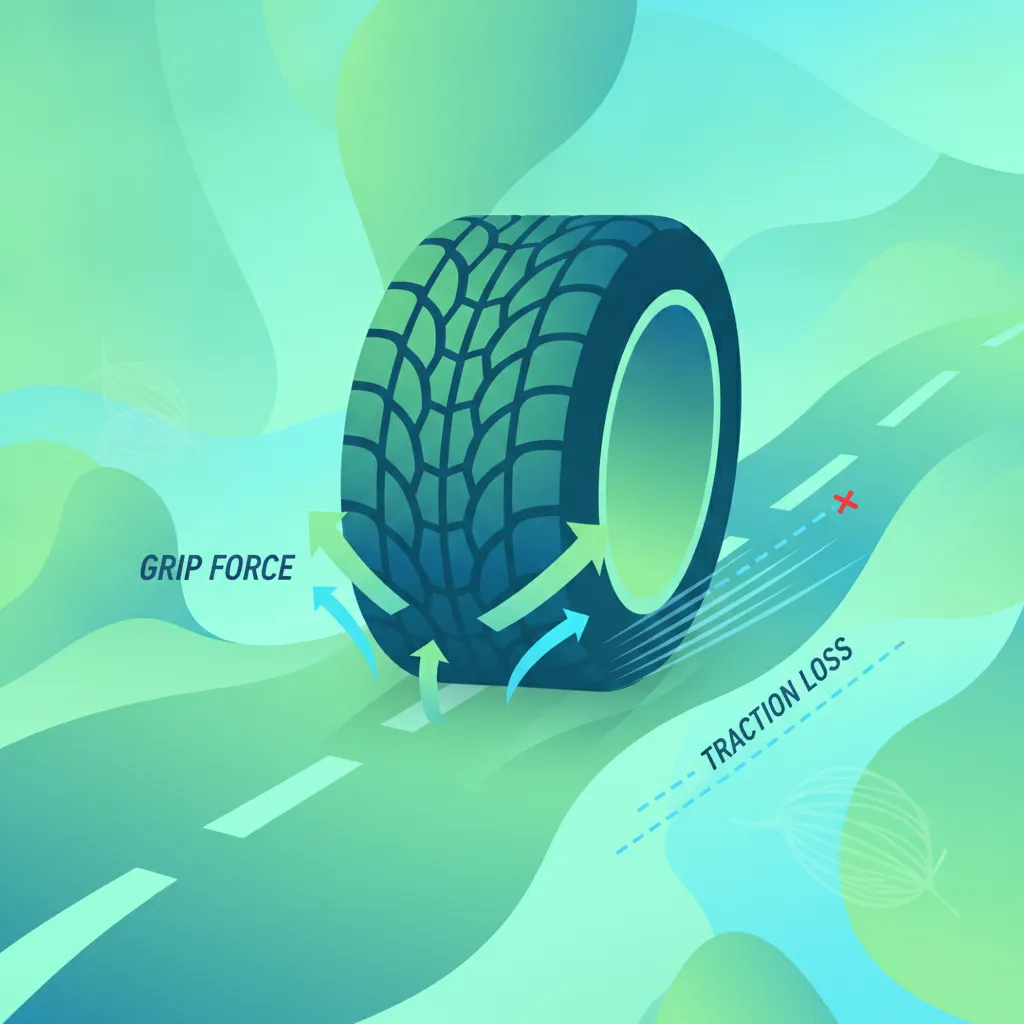
This lesson delves into the science of tyre traction, explaining how the small contact patch is critical for control. It examines how factors like tyre pressure, temperature, and road surface conditions (wet, dry, gravel) affect the available grip. Understanding the limits of traction is essential for knowing how hard a rider can safely brake or corner in any given situation.

This lesson addresses the complex skill of braking while the motorcycle is leaned over in a corner or on low-traction surfaces. It introduces the concept of trail braking to adjust speed and tighten a cornering line, and provides strategies for gentle brake application on wet or loose surfaces. Mastering these techniques requires a delicate touch and a deep understanding of traction limits.
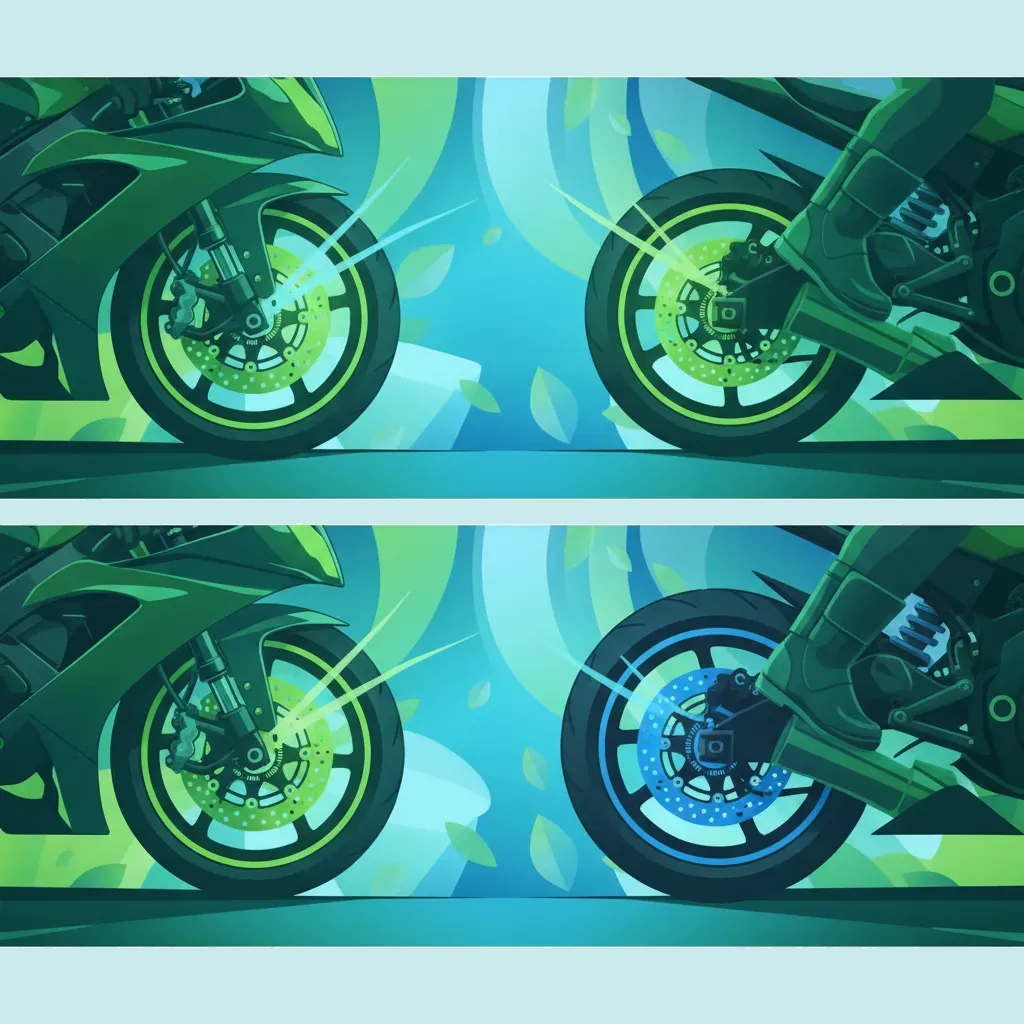
This lesson focuses on the art of coordinating the front and rear brakes to achieve stable and efficient deceleration. It explains how the ideal balance changes depending on speed, road surface, and whether the bike is traveling in a straight line or a curve. Proper brake balance enhances control, shortens stopping distances, and provides a smoother riding experience.

This lesson examines how adverse weather directly affects motorcycle safety. It explains how water on the road reduces tyre grip, increasing braking distances and the risk of aquaplaning. Strategies for riding in fog, dealing with reduced visibility from road spray, and identifying potential ice patches are covered to help riders manage weather-related risks.
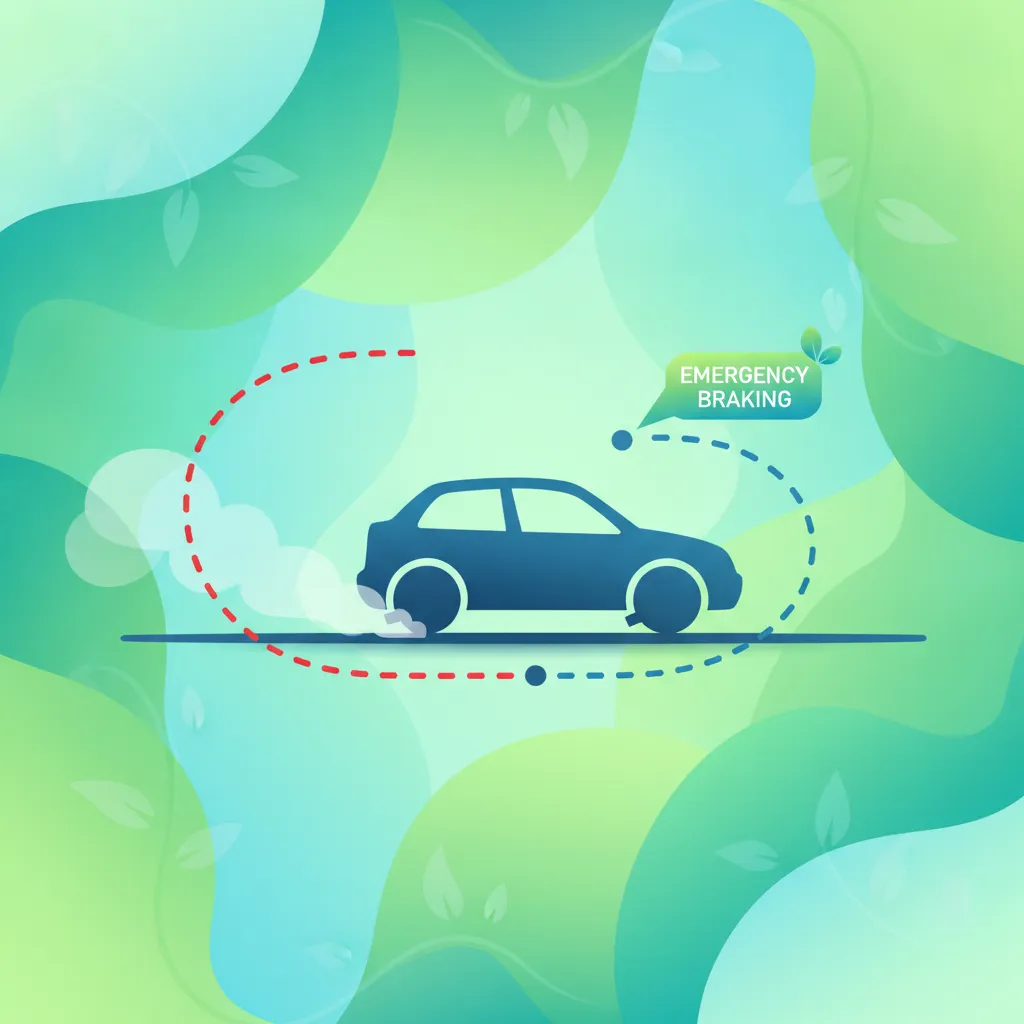
This lesson provides a step-by-step guide to executing an emergency stop safely. It teaches riders how to apply firm, progressive pressure to both brakes to achieve the shortest possible stopping distance without locking the wheels. The role of ABS in these situations is also explained, highlighting how it assists the rider in maintaining steering control under maximum braking.

This lesson details the components and function of a motorcycle's braking system. It explains the roles of the front and rear brakes, the mechanics of hydraulic disc brakes, and the importance of maintaining proper brake fluid levels. Learners will also understand how to recognize the signs of worn brake pads, ensuring the system remains effective for safe stopping.
This lesson explores the critical relationship between tire grip and different road surfaces. It provides strategies for identifying and navigating hazards such as wet leaves, gravel, and potential black ice. The importance of maintaining correct tire pressure and monitoring tread wear for optimal traction is also emphasized.
This lesson teaches correct braking techniques, including the coordinated use of front and rear brakes for maximum efficiency. It explains how to calculate total stopping distance based on speed, perception time, and reaction time. The content also covers adjustments needed for braking on wet or slippery surfaces to avoid loss of control.
This lesson focuses specifically on motorcycle tyre maintenance, a critical safety component. It explains how to accurately measure tyre pressure, inspect for adequate tread depth, and identify uneven wear patterns that may indicate other issues. Understanding how tyre condition affects grip, handling, and braking performance is essential for every rider to maintain control.
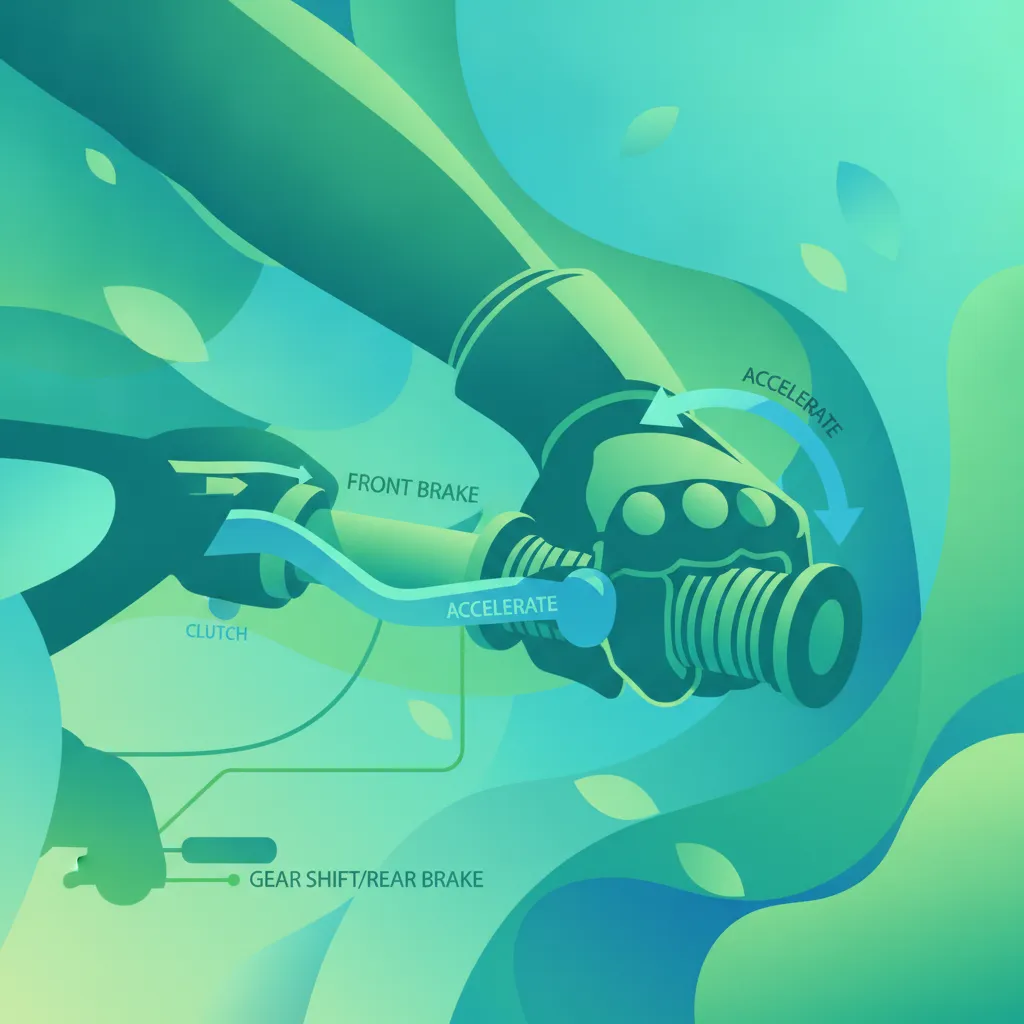
This lesson provides a functional overview of a motorcycle's essential controls, explaining the operation of the throttle, clutch, and gear selector. It differentiates between the front and rear braking systems and their roles in effective stopping. Learners will also identify handlebar switches for lights, indicators, and the horn, ensuring complete familiarity with the vehicle's interface for safe operation.
Discover how to adjust your braking for wet roads, gravel, loaded motorcycles, and low visibility. Master progressive braking techniques to ensure safety and control in diverse Austrian riding environments.
This lesson focuses on the art of coordinating the front and rear brakes to achieve stable and efficient deceleration. It explains how the ideal balance changes depending on speed, road surface, and whether the bike is traveling in a straight line or a curve. Proper brake balance enhances control, shortens stopping distances, and provides a smoother riding experience.
This lesson examines how adverse weather directly affects motorcycle safety. It explains how water on the road reduces tyre grip, increasing braking distances and the risk of aquaplaning. Strategies for riding in fog, dealing with reduced visibility from road spray, and identifying potential ice patches are covered to help riders manage weather-related risks.
This lesson provides a step-by-step guide to executing an emergency stop safely. It teaches riders how to apply firm, progressive pressure to both brakes to achieve the shortest possible stopping distance without locking the wheels. The role of ABS in these situations is also explained, highlighting how it assists the rider in maintaining steering control under maximum braking.
This lesson addresses the complex skill of braking while the motorcycle is leaned over in a corner or on low-traction surfaces. It introduces the concept of trail braking to adjust speed and tighten a cornering line, and provides strategies for gentle brake application on wet or loose surfaces. Mastering these techniques requires a delicate touch and a deep understanding of traction limits.
This lesson teaches correct braking techniques, including the coordinated use of front and rear brakes for maximum efficiency. It explains how to calculate total stopping distance based on speed, perception time, and reaction time. The content also covers adjustments needed for braking on wet or slippery surfaces to avoid loss of control.
This lesson details the components and function of a motorcycle's braking system. It explains the roles of the front and rear brakes, the mechanics of hydraulic disc brakes, and the importance of maintaining proper brake fluid levels. Learners will also understand how to recognize the signs of worn brake pads, ensuring the system remains effective for safe stopping.

This lesson brings together many concepts by focusing on the mindset of an adaptive rider. It teaches how to constantly scan the environment and adjust speed, position, and control inputs in response to changing conditions like road surface, weather, or traffic density. The goal is to develop a proactive, flexible riding style that prioritizes safety and control in any situation.
This lesson delves into the science of tyre traction, explaining how the small contact patch is critical for control. It examines how factors like tyre pressure, temperature, and road surface conditions (wet, dry, gravel) affect the available grip. Understanding the limits of traction is essential for knowing how hard a rider can safely brake or corner in any given situation.

This lesson provides guidance on tailoring riding practices to the season. For colder months, it emphasizes the importance of layered clothing and awareness of icy patches, especially in shaded areas. For spring, it highlights hazards like leftover road salt and gravel from winter maintenance, as well as slippery wet leaves, requiring heightened caution.

This lesson focuses on strategies for riding safely in conditions of poor visibility, such as rain, fog, and low sun glare. It explains how to use lights effectively, increase following distances, and moderate speed to maintain control. The content also addresses braking techniques on wet surfaces to prevent skidding and hydroplaning.
Find clear answers to common questions learners have about Principles of Braking on Two Wheels. Learn how the lesson is structured, which driving theory objectives it supports, and how it fits into the overall learning path of units and curriculum progression in Austria. These explanations help you understand key concepts, lesson flow, and exam focused study goals.
Because of weight transfer. When you brake, the motorcycle's weight shifts forward onto the front wheel, which increases the front tire's contact pressure and available grip. This allows the front brake to provide the vast majority of your stopping power.
Using only the rear brake is significantly less effective and increases your stopping distance dramatically. In the context of the Austrian theory exam, you must demonstrate understanding that balanced use of both brakes is required for maximum control and safety.
Progressive braking means applying the lever with increasing pressure rather than grabbing it instantly. This allows the suspension to settle and the tire to grip the road, preventing the wheel from locking up due to a sudden force.
On steep alpine gradients, your braking technique must be precise to manage speed without overloading the front tire or causing instability. Understanding these physics helps you maintain control on long descents where brake heat and surface conditions vary.
Refine your study plan by searching for specific Austrian driving theory practice sets. Pinpoint questions related to particular road rules, signs, or challenge levels, and begin practicing immediately to reinforce your knowledge and excel in your official exam with confidence. Get started with focused revision today.