
This lesson teaches you the critical sequence of Slow, Look, Lean, and Roll to navigate corners safely on Austrian roads. Building on your understanding of motorcycle controls, you will learn how to choose the perfect line and manage your entry speed to ensure stability through every bend, especially on challenging alpine routes.

Lesson content overview
Navigating bends and corners is a fundamental skill for every motorcyclist, critical for maintaining stability, control, and safety on the road. This lesson delves into the strategic approach to cornering, focusing on two pivotal aspects: determining the appropriate entry speed and selecting the optimal line through the bend. Mastering these techniques is not only essential for passing your Austrian motorcycle theory exam but also for confident and safe riding in real-world conditions, from urban streets to challenging alpine roads.
Cornering a motorcycle safely and efficiently is a coordinated maneuver that integrates visual planning, speed management, and precise geometric positioning. It requires the rider to anticipate the bend, adjust speed before commitment, and choose a trajectory that maximizes both visibility and safety. The goal is always to reduce risk, enhance control, and ensure a smooth, stable passage through any turn.
Correct corner entry speed and line choice are paramount for several reasons. Firstly, they directly influence the motorcycle's stability; misjudging either can lead to excessive centrifugal force, potentially overwhelming tire traction and causing a slide or fall. Secondly, a well-chosen line significantly improves a rider's sightline, allowing for earlier detection of hazards such as potholes, gravel, or oncoming traffic. This extended visibility is a crucial safety margin, providing more time to react. Finally, proper technique minimizes sudden, jerky inputs, leading to a smoother, more enjoyable, and ultimately safer riding experience.
The entry speed is the velocity at which you begin to lean and turn into a corner. It is arguably the most critical decision in the entire cornering process. The correct entry speed must be established before you initiate the turn, allowing you to focus purely on steering and maintaining your line once inside the bend.
Several factors dictate the maximum safe entry speed for any given corner:
Always aim to be too slow rather than too fast when entering a bend. It's much easier to gently accelerate mid-corner than to attempt emergency braking while leaned over, which can severely compromise stability and traction.
A common and dangerous mistake is braking too late, or worse, braking while already leaned into the bend. When a motorcycle is leaned, the tire's contact patch (the area touching the road) is reduced and primarily dedicated to lateral (side-to-side) grip for cornering. Applying brakes in this state attempts to use the same limited contact patch for longitudinal (forward-backward) braking forces, quickly exceeding the available traction. This can lead to a loss of grip, causing the tires to slide, or in severe cases, the motorcycle to "stand up" and run wide, potentially into oncoming traffic or off the road.
Therefore, the golden rule is to complete all necessary braking and deceleration before you enter the corner and begin your lean. This allows the tires to dedicate their full traction capabilities to maintaining your trajectory through the turn.
Scan and Assess: As you approach a bend, actively scan the road ahead to assess its radius, visibility, surface condition, and any potential hazards. Look for road signs indicating recommended speeds.
Decide Entry Speed: Based on your assessment, determine a safe and comfortable entry speed. This speed should allow you to navigate the corner without further braking or sudden adjustments.
Brake and Decelerate: Apply appropriate braking (usually a combination of front and rear brakes) smoothly and progressively while the motorcycle is still upright and in a straight line. Downshift gears as needed to be in the correct gear for accelerating out of the bend.
Release Brakes: Fully release the brakes before you begin to lean the motorcycle into the turn. This ensures maximum traction is available for cornering.
Initiate Turn: With your speed set and brakes released, gently initiate your lean and countersteer into the bend.
Once your entry speed is set, the next crucial element is choosing the correct line or trajectory through the corner. The widely accepted and safest technique for most bends is the "outside-in-outside" line. This strategy is designed to maximize your sight distance, increase the effective radius of the turn, and provide a greater safety margin.
The outside-in-outside line involves starting wide on the approach to the bend (towards the outer edge of your lane), moving towards the inside of the lane as you pass the apex (the tightest part of the turn), and then gradually drifting back towards the outer edge of your lane on exit.
The "apex" is the innermost point of your path through a corner, where your motorcycle is closest to the curb or edge of the road. The timing of when you hit this apex significantly impacts your cornering strategy.
A late apex occurs when the rider reaches the innermost point of the corner later in the bend, typically closer to the exit. This strategy is preferred for most road riding. It allows for maximum visibility into the corner, reduces the need for aggressive lean angles, and enables earlier acceleration out of the bend. It's particularly useful for blind corners, corners with decreasing radius, or when you need to be prepared for potential hazards mid-corner.
An early apex occurs when the rider reaches the innermost point of the corner earlier than the geometric midpoint. While it might seem intuitive to turn in early, an early apex often "closes off" the exit, forcing a tighter turn later in the bend or requiring further deceleration mid-corner. It reduces visibility through the corner and limits options for accelerating smoothly out of the bend. Early apexing is generally not recommended for road riding, except in very specific, tight situations where immediate direction change is needed at low speed.
For almost all public road riding, especially in Austria where visibility can be limited on winding roads, the late apex strategy is superior for safety and control. It prioritizes vision and stability over maximizing speed, which is crucial for unpredictable public road environments.
The apex serves as a vital reference point for timing your turn and managing your speed. It's not just a theoretical point; it's where your motorcycle's lean angle is typically at its greatest before you begin to un-lean and accelerate out.
Successfully utilizing the apex involves a sequence of actions:
While not strictly part of "entry speed and line choice," countersteering is intrinsically linked to the initiation of the turn. Once you've set your entry speed and chosen your line, countersteering is the technique used to lean the motorcycle into the desired direction. A brief, light push on the right handlebar will initiate a lean to the right, and vice versa for a left turn. This input should be smooth and deliberate, performed before or at the entry point of the corner, allowing the motorcycle to lean naturally onto your chosen line.
A comprehensive understanding of countersteering is a prerequisite for mastering cornering. Refer to "Countersteering Basics" (Unit 5.1) for a detailed explanation of this essential technique.
Maintaining traction is the underlying principle for safe cornering. The motorcycle's tires are the only connection to the road, and their grip is finite. Exceeding this grip limit, whether through excessive speed, harsh braking, or aggressive acceleration while leaned, will lead to a loss of control.
Imagine a "traction circle" for each tire. This circle represents the total available grip. Any force applied to the tire (braking, acceleration, or lateral force from leaning) uses up a portion of this circle. The key is to manage these forces so that the combined load never exceeds the circle's boundary.
Effective cornering involves smoothly transitioning between these phases, ensuring that you never demand too much grip in any single direction. This means completing braking before leaning, and initiating acceleration only as the bike begins to straighten up and lean angle reduces.
As you pass the apex and begin to exit the corner, a smooth and progressive application of the throttle is crucial. This not only increases your speed but also helps stabilize the motorcycle by transferring weight to the rear tire, enhancing rear-wheel traction. Abrupt throttle inputs can unsettle the suspension, break traction, or cause the motorcycle to run wide. Your goal is to "roll on" the throttle gently and consistently, transitioning smoothly from cornering to acceleration onto the next straight section of road.
Austrian road traffic regulations, like those in many countries, incorporate principles that directly relate to safe cornering. Adhering to these rules is mandatory and contributes significantly to overall road safety.
Safe cornering isn't a one-size-fits-all technique. Riders must constantly adapt their approach based on dynamic environmental and vehicle factors.
When sharing the road with cyclists, pedestrians, or even wildlife, modify your line and speed. Always give vulnerable users ample space. This might mean taking an even wider line to create more buffer zone or choosing an earlier apex to ensure you are well clear before accelerating.
Avoiding common errors is key to safe and proficient cornering.
Mastering corner entry speed and line choice is a cornerstone of safe and skilled motorcycle riding. Remember these fundamental principles for every bend you encounter on your Austrian motorcycle adventures:
By consistently applying these principles, you will build the confidence and competence needed to navigate any bend safely and efficiently, enjoying the freedom of the open road while minimizing risks.
This lesson teaches the systematic Slow-Look-Lean-Roll approach to cornering, emphasizing that safe entry speed must be established and brakes fully released before leaning the motorcycle. The outside-in-outside line with a late apex is recommended to maximize corner radius and visibility through the bend. The traction circle concept explains why all braking should occur while upright, with smooth throttle applied only after the apex as the bike begins to un-lean. Austrian regulations require adherence to posted speed limits, lane discipline within markings, and prohibit overtaking in bends with limited visibility. Riders must continuously adapt their technique to road surface, weather, gradients, load, and traffic conditions, always prioritizing vision through the turn and maintaining smooth control inputs.
A short set of high-value points that capture the most important learning from this lesson.
Always establish your safe entry speed and complete all braking before you lean into a corner, never brake while leaned over.
Use the outside-in-outside line to maximize corner radius, improve visibility through the bend, and maintain a safety margin from hazards.
For most road riding, aim for a late apex reached closer to the exit, which prioritizes visibility and enables smoother acceleration out of the corner.
The traction circle concept means you must avoid demanding braking, acceleration, and lean forces simultaneously; complete each phase separately for maximum grip.
Adapt your speed and line to conditions: reduce entry speed significantly on wet, icy, or low-visibility surfaces, and adjust for uphill or downhill gradients on mountain roads.
Explore all units and lessons included in this driving theory course.
Entry speed must be determined and brakes fully released before initiating lean; braking while leaned uses the same limited contact patch needed for cornering grip.
A late apex is safer for road riding than an early apex because it keeps the exit open and maximizes visibility into and out of the corner.
On downhill bends, gravity accelerates the motorcycle, so you must reduce entry speed more than on flat ground and use engine braking effectively.
Overtaking in bends is generally prohibited in Austria due to limited sightlines and high risk of head-on collision.
Smooth, progressive inputs for all controls (braking, countersteering, throttle) are essential to stay within the traction limits of your tires.
Late braking into or within a bend reduces available traction for cornering, potentially causing the tires to slide or the bike to run wide.
Using an early apex 'closes off' the exit, forces a tighter turn later, reduces visibility, and limits ability to accelerate smoothly.
Cutting inside too close to the inside of the bend or crossing lane markings reduces the effective corner radius and creates danger with oncoming traffic.
Maintaining dry-weather speed on wet or slippery surfaces overwhelms reduced tire grip and commonly leads to loss of control.
Fixating your gaze on a hazard (pothole, edge of road) causes the bike to drift toward it; always look through the turn to your intended path.
Lesson content overview
A short set of high-value points that capture the most important learning from this lesson.
Always establish your safe entry speed and complete all braking before you lean into a corner, never brake while leaned over.
Use the outside-in-outside line to maximize corner radius, improve visibility through the bend, and maintain a safety margin from hazards.
For most road riding, aim for a late apex reached closer to the exit, which prioritizes visibility and enables smoother acceleration out of the corner.
The traction circle concept means you must avoid demanding braking, acceleration, and lean forces simultaneously; complete each phase separately for maximum grip.
Adapt your speed and line to conditions: reduce entry speed significantly on wet, icy, or low-visibility surfaces, and adjust for uphill or downhill gradients on mountain roads.
Explore all units and lessons included in this driving theory course.
Entry speed must be determined and brakes fully released before initiating lean; braking while leaned uses the same limited contact patch needed for cornering grip.
A late apex is safer for road riding than an early apex because it keeps the exit open and maximizes visibility into and out of the corner.
On downhill bends, gravity accelerates the motorcycle, so you must reduce entry speed more than on flat ground and use engine braking effectively.
Overtaking in bends is generally prohibited in Austria due to limited sightlines and high risk of head-on collision.
Smooth, progressive inputs for all controls (braking, countersteering, throttle) are essential to stay within the traction limits of your tires.
Late braking into or within a bend reduces available traction for cornering, potentially causing the tires to slide or the bike to run wide.
Using an early apex 'closes off' the exit, forces a tighter turn later, reduces visibility, and limits ability to accelerate smoothly.
Cutting inside too close to the inside of the bend or crossing lane markings reduces the effective corner radius and creates danger with oncoming traffic.
Maintaining dry-weather speed on wet or slippery surfaces overwhelms reduced tire grip and commonly leads to loss of control.
Fixating your gaze on a hazard (pothole, edge of road) causes the bike to drift toward it; always look through the turn to your intended path.
Explore search topics learners often look for when studying Corner Entry Speed and Line Choice. These topics reflect common questions about road rules, driving situations, safety guidance, and lesson level theory preparation for learners in Austria.
Browse additional driving theory lessons that cover connected traffic rules, road signs, and common driving situations related to this topic. Improve your understanding of how different rules interact across everyday traffic scenarios.
Explore advanced techniques for motorcycle cornering, focusing on precise control of entry speed, optimal line selection, and understanding the traction circle. Learn how to adapt these skills for Austrian alpine roads and challenging conditions.

This lesson addresses the complex skill of braking while the motorcycle is leaned over in a corner or on low-traction surfaces. It introduces the concept of trail braking to adjust speed and tighten a cornering line, and provides strategies for gentle brake application on wet or loose surfaces. Mastering these techniques requires a delicate touch and a deep understanding of traction limits.

This lesson addresses the challenge of navigating terrain with changing elevation. It covers techniques for maintaining momentum and control on uphill climbs, including proper gear selection and throttle use. For descents, it emphasizes the use of engine braking to control speed and prevent brake overuse, a vital skill for long alpine descents.

This lesson focuses on the dynamics of safe cornering, explaining concepts like lean angle, body positioning, and counter-steering. It teaches the proper technique of adjusting speed before a turn, maintaining a smooth path through the apex, and accelerating out of the corner. Correctly applying these principles is key to maintaining stability and control.

This lesson demystifies countersteering, the non-intuitive but essential technique for turning a motorcycle above low speeds. It explains that to turn right, a rider must momentarily push the right handlebar forward, which causes the bike to lean to the right. Mastering this core concept is the key to precise, confident, and controlled cornering.

This lesson prepares riders for the specific conditions of Austria's mountain passes. It highlights hazards such as tight hairpin turns, potential for sudden weather changes, rockfall, and variable road surfaces. Awareness of these unique challenges allows riders to anticipate risks and adapt their technique for safe and enjoyable alpine touring.
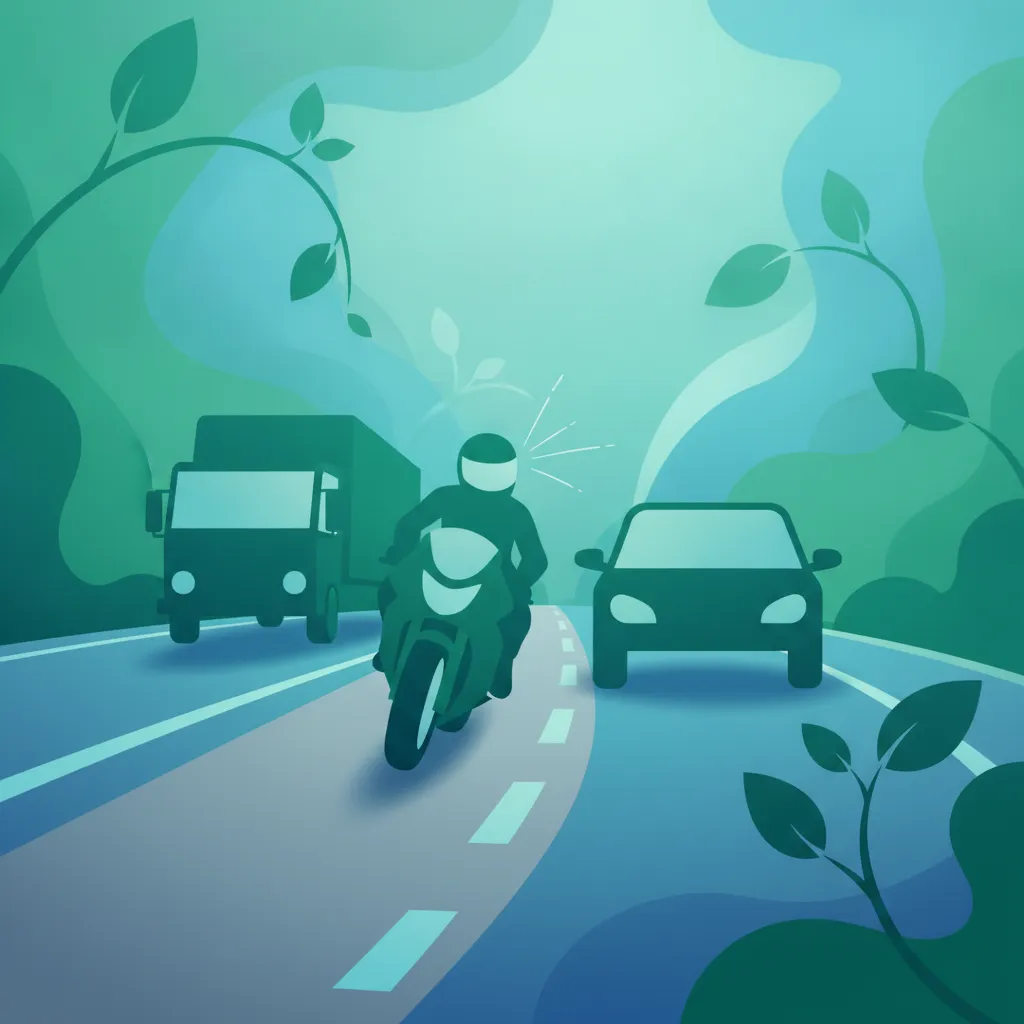
This lesson explains how to use different positions within a lane to maximize visibility, create safety buffers, and plan escape routes. It introduces the concept of anticipative riding, which involves actively scanning for potential hazards and predicting the actions of other drivers. Strategic positioning is a dynamic skill that allows a rider to manage space and time effectively in changing traffic.
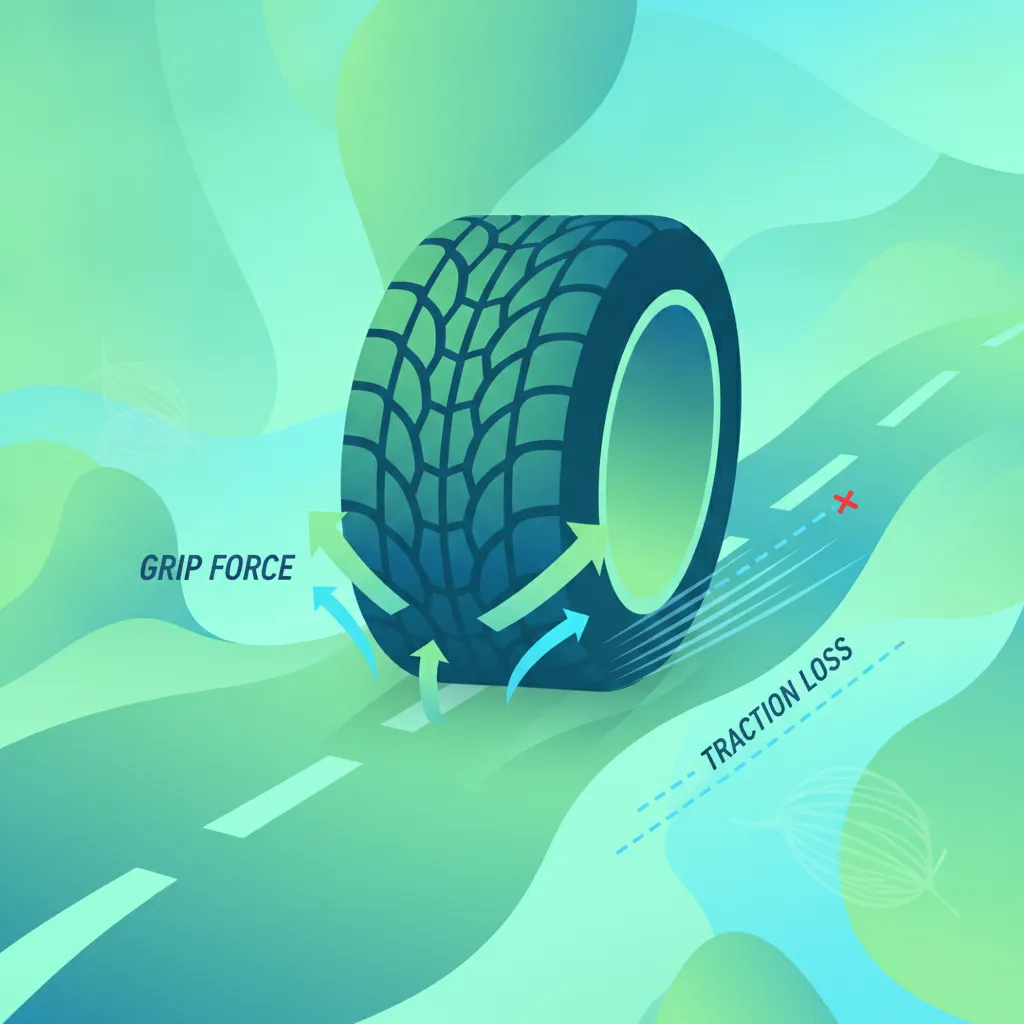
This lesson delves into the science of tyre traction, explaining how the small contact patch is critical for control. It examines how factors like tyre pressure, temperature, and road surface conditions (wet, dry, gravel) affect the available grip. Understanding the limits of traction is essential for knowing how hard a rider can safely brake or corner in any given situation.
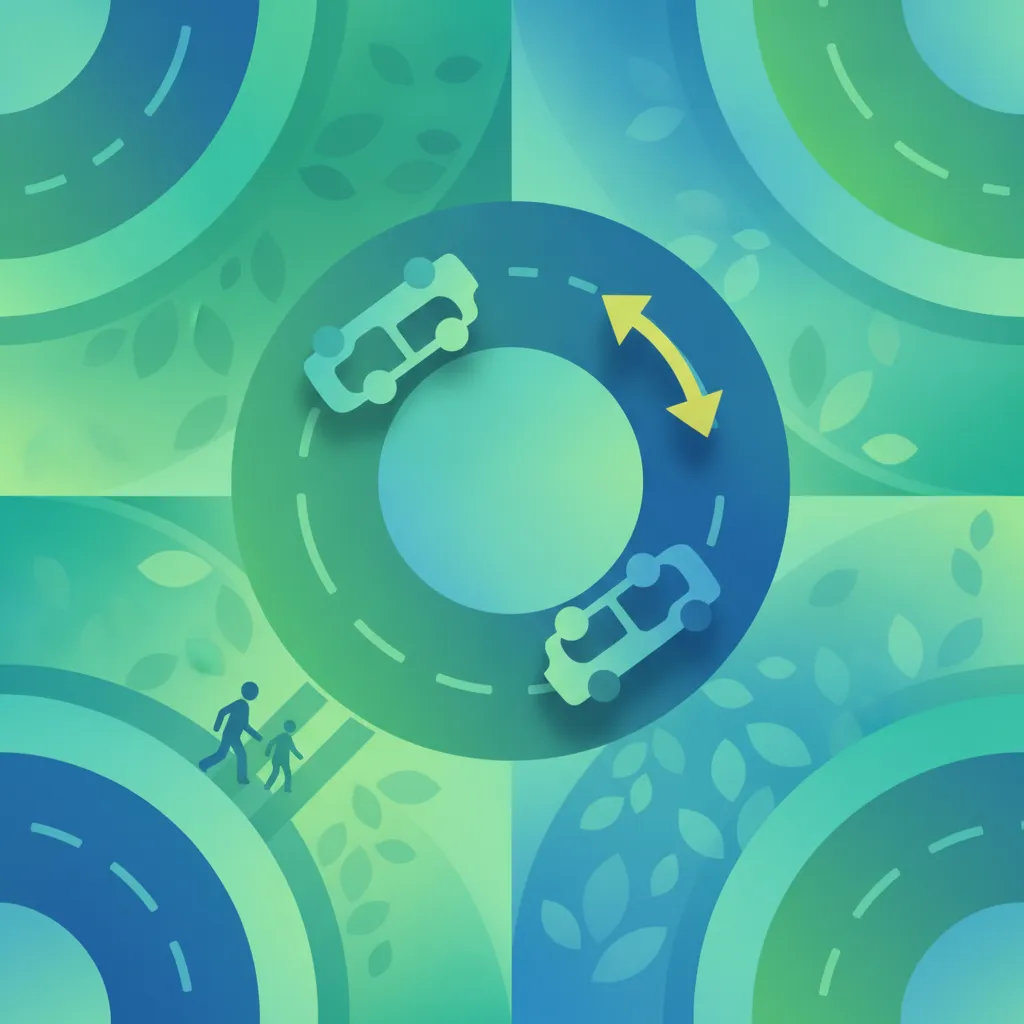
This lesson provides clear instructions for maneuvering through single and multi-lane roundabouts. It covers the critical rule of giving way to traffic already in the circle, proper lane selection based on the intended exit, and the correct use of indicators when entering and exiting. Mastering roundabouts is key to efficient and safe travel in modern Austrian traffic systems.
This lesson addresses the unique environment of road tunnels, common in Austria's alpine regions. Key safety practices include removing sunglasses before entry, adhering to specific tunnel speed limits, and maintaining a safe following distance. It also covers emergency procedures, such as locating emergency exits and using designated call boxes in case of a breakdown or accident.

This lesson teaches a safe, methodical process for navigating intersections. It stresses the importance of proper lane positioning on approach, comprehensive visual scans for cross-traffic, pedestrians, and cyclists, and clear communication of intent. Special attention is given to the increased risks associated with left turns across oncoming traffic.
Understand typical errors made when cornering on a motorcycle and learn the specific Austrian traffic regulations that apply to bends, curves, and intersections. This lesson helps you avoid hazards and ride safely.
This lesson provides clear instructions for maneuvering through single and multi-lane roundabouts. It covers the critical rule of giving way to traffic already in the circle, proper lane selection based on the intended exit, and the correct use of indicators when entering and exiting. Mastering roundabouts is key to efficient and safe travel in modern Austrian traffic systems.
This lesson teaches a safe, methodical process for navigating intersections. It stresses the importance of proper lane positioning on approach, comprehensive visual scans for cross-traffic, pedestrians, and cyclists, and clear communication of intent. Special attention is given to the increased risks associated with left turns across oncoming traffic.
This lesson provides clear instructions on how to safely navigate roundabouts. It explains the critical rule of yielding to traffic already circulating and how to choose the correct lane based on the intended exit. The content also covers proper signaling procedures for entering and exiting the roundabout to communicate intentions clearly.

This lesson provides essential knowledge for using Austria's high-speed road network. It covers the correct procedure for entering via acceleration lanes, maintaining strict lane discipline (keeping right, passing left), and understanding the digital or physical Vignette (toll sticker) requirement. The formation of the 'Rettungsgasse' (emergency corridor) during traffic jams is also a key topic.

This lesson provides a comprehensive explanation of Austria's right-of-way laws, which are fundamental to intersection safety. It covers the meaning of different priority signs and clarifies the 'Rechts vor Links' (priority to the right) rule that applies at unmarked junctions. A clear understanding of these rules is essential to prevent conflicts and collisions in urban and rural settings.
This lesson focuses on the dynamics of safe cornering, explaining concepts like lean angle, body positioning, and counter-steering. It teaches the proper technique of adjusting speed before a turn, maintaining a smooth path through the apex, and accelerating out of the corner. Correctly applying these principles is key to maintaining stability and control.

This lesson teaches a safe and systematic process for approaching and crossing intersections. It covers how to correctly assess priority based on signs and general rules, adjust speed appropriately, and perform thorough visual checks. Emphasis is placed on anticipating the actions of other road users to prevent conflicts at junctions.
This lesson addresses the complex skill of braking while the motorcycle is leaned over in a corner or on low-traction surfaces. It introduces the concept of trail braking to adjust speed and tighten a cornering line, and provides strategies for gentle brake application on wet or loose surfaces. Mastering these techniques requires a delicate touch and a deep understanding of traction limits.

This lesson provides a detailed guide to executing turning manoeuvres safely and correctly at both intersections and roundabouts. It explains the importance of proper lane positioning well in advance of the turn, the correct timing for signaling, and the necessity of checking for pedestrians and cyclists. The content also reinforces priority rules that apply when turning, particularly when crossing the path of oncoming traffic during a left turn.

This lesson breaks down the overtaking maneuver into a safe, repeatable process: assess, signal, check, move, and return. It emphasizes the importance of ensuring a sufficient gap in oncoming traffic, checking mirrors and blind spots thoroughly, and maintaining a proper speed differential. Adherence to Austrian laws regarding where overtaking is prohibited is also covered in detail.
Find clear answers to common questions learners have about Corner Entry Speed and Line Choice. Learn how the lesson is structured, which driving theory objectives it supports, and how it fits into the overall learning path of units and curriculum progression in Austria. These explanations help you understand key concepts, lesson flow, and exam focused study goals.
Choosing the correct line maximizes your vision around the corner, allowing you to see oncoming vehicles or obstacles earlier. It also reduces the need for mid-corner steering adjustments, which can unsettle the bike's balance and reduce your available grip.
It is a four-step framework for cornering: Slow down before the turn, Look where you want to go, Lean the bike into the corner, and Roll on the throttle smoothly as you exit to maintain stability.
You must reduce your entry speed significantly more than on dry pavement to compensate for lower traction. Ensure all heavy braking is completed in a straight line before you begin to lean the motorcycle.
Yes, you may encounter exam questions regarding safe positioning on narrow or sharp alpine bends. You are expected to demonstrate knowledge of 'wide-in, tight-out' or similar safety-focused lines that keep you in your lane and away from oncoming traffic.
Refine your study plan by searching for specific Austrian driving theory practice sets. Pinpoint questions related to particular road rules, signs, or challenge levels, and begin practicing immediately to reinforce your knowledge and excel in your official exam with confidence. Get started with focused revision today.