
This lesson guides you through the protocols and communication techniques required for safe group riding on Austrian roads. You will learn the importance of pre-ride planning, designated roles, and maintaining formation to ensure the safety of all riders in your group.

Lesson content overview
Group riding is a popular and enjoyable aspect of motorcycling, offering camaraderie and shared experiences on the road. However, it also introduces unique challenges that require specific knowledge and disciplined practices to ensure the safety of all participants. This lesson, part of your Austrian Motorcycle Theory curriculum for A, A1, and A2 licences, provides a comprehensive guide to established procedures for riding safely in a group. By understanding these dynamics, you can significantly reduce risks, enhance visibility, and maintain coordinated movement, making every group ride a safer and more predictable experience.
Motorcycling in a group demands a heightened level of awareness, communication, and adherence to specific protocols. Unlike riding solo, where your decisions primarily affect yourself, group riding requires constant consideration of other riders' positions, speeds, and intentions. Proper group dynamics are crucial for several reasons: they minimise collision risks, improve how the group integrates with other traffic, and boost overall rider confidence. Without established procedures, group rides can quickly become disorganised, leading to dangerous situations such as sudden braking, loss of formation, and potential accidents. This lesson will equip you with the knowledge to navigate these complexities, ensuring a smooth and secure journey for everyone involved.
Safe group riding is built upon a foundation of several key principles. These principles, when consistently applied, create a predictable and harmonious riding environment, allowing riders to focus on the road and enjoy the ride. From how motorcycles are positioned to how riders communicate, each element plays a vital role in the group's overall safety and efficiency.
The staggered formation is the cornerstone of safe group riding. It involves riders positioning themselves in an offset pattern, both laterally (side-to-side) and longitudinally (front-to-back). This arrangement is designed to provide each rider with an unobstructed view of the road ahead, minimises the effects of aerodynamic turbulence from other motorcycles, and crucially, creates ample reaction space for braking and evasive manoeuvres. Riders do not ride directly abreast or in a single straight line, but rather in a diagonal pattern, ensuring everyone has their own clear "visibility cone."
The Lead Rider is the undisputed captain of the group. Positioned at the very front, this individual is responsible for setting the pace, selecting the route, initiating all manoeuvres, and maintaining the overall safety and cohesion of the group. The Lead Rider must possess strong riding skills, excellent road awareness, and clear communication abilities. Their consistent and predictable actions serve as the primary reference point for all following riders, dictating the rhythm and flow of the entire group.
At the opposite end of the formation is the Sweep Rider. This vital role involves monitoring the entire group from the rear, ensuring no rider falls behind or gets separated. The Sweep Rider acts as a safety net, capable of adjusting the group's speed if needed to maintain cohesion, especially when navigating heavy traffic or complex road conditions. They are also the first point of contact for any issues arising at the back of the group, providing critical feedback to the Lead Rider.
Verbal communication is often impossible or impractical when riding motorcycles. Therefore, hand signals are indispensable for conveying intentions and information within a group. These are a set of standardised gestures, distinct from typical traffic signals, used to communicate actions like slowing down, stopping, indicating obstacles, or changing lanes. Universal understanding and timely execution of these signals are paramount for preventing misunderstandings and ensuring coordinated movements.
Before any group ride commences, a pre-ride briefing is essential. This short but crucial meeting establishes shared expectations and clarifies all aspects of the upcoming journey. It covers the planned route, assigns roles (Lead and Sweep), reviews hand signals, discusses desired spacing and speed, and outlines contingency plans for unexpected events. A thorough briefing aligns all riders, ensuring everyone understands the procedures and is prepared for the ride ahead.
Safe following distance refers to the minimum longitudinal (front-to-back) gap that riders must maintain between each other. This distance is vital for providing sufficient reaction time to brake or manoeuvre safely if the rider ahead suddenly stops or changes direction. Following too closely, even in a staggered formation, drastically reduces this critical reaction window, significantly increasing the risk of rear-end collisions. This distance must be actively adjusted based on speed, road conditions, and weather.
Speed consistency is the practice of all riders matching the Lead Rider's chosen pace, with only minor adjustments for safety. This prevents a "yo-yo" effect of constant acceleration and deceleration throughout the group, which can lead to fatigue, sudden braking, and instability. Maintaining a steady, predictable speed ensures a smooth flow, keeps the formation cohesive, and reduces the likelihood of riders being caught off guard by abrupt changes.
No ride is entirely without risks. Contingency planning involves predefining actions for a range of unexpected events, such as a sudden stop, encountering a major road hazard, a rider becoming incapacitated, or a motorcycle dropping out of formation. By agreeing on these procedures beforehand, the group can respond quickly and cohesively to emergencies, preventing panic, maintaining integrity, and ensuring the safety of all members.
To effectively implement the core principles, a deeper understanding of each concept is necessary. This section elaborates on the practical implications, common misunderstandings, and specific rules associated with each key element of group riding.
The staggered formation is not merely an aesthetic choice but a carefully engineered safety measure. It typically involves a minimum lateral offset of approximately 1 to 1.5 metres between adjacent riders, and a safe longitudinal distance, often expressed as two bike lengths between successive riders in the same lane position. For example, if Rider A leads in the left third of the lane, Rider B follows approximately 3 meters behind but in the right third of the lane. Rider C then follows Rider A's line, 3 meters behind Rider B, and so on. This creates a "zipper" effect, allowing each rider a clear view and their own buffer zone. A common misconception is that a tighter formation offers more protection, but in reality, overly tight spacing increases turbulence and severely limits reaction time.
The Lead Rider's duties extend beyond merely choosing a route. They must constantly assess road conditions, anticipate hazards, and adjust the group's speed accordingly. Before making any lane changes, turns, or significant speed adjustments, the Lead Rider must clearly and sufficiently signal their intentions. This includes confirming clear mirrors before any manoeuvre and ensuring enough space for the entire group to follow safely. Abrupt actions without warning can trigger a chain reaction of emergency braking or swerving, endangering the entire group. A strong Lead Rider rides predictably, smoothly, and defensively, setting an example for all followers.
The Sweep Rider's role is multifaceted. Beyond simply bringing up the rear, they are actively involved in managing the group's overall pace and ensuring no one gets lost or separated. If a rider falls behind due to mechanical issues, fatigue, or getting caught at a light, the Sweep Rider is responsible for signalling the Lead Rider to slow down or find a safe regrouping point. They also provide an extra set of eyes for potential hazards from the rear, communicating these forward if necessary. Effective Sweep Riders are experienced and observant, acting as the group's "guardian angel."
Mastering hand signals is crucial for seamless group communication. These signals must be distinct, universally understood by the group, and executed clearly with ample lead time—ideally 2-3 seconds before the intended action.
Slow down / Reduce speed: Arm bent downwards, palm facing backward, moving up and down.
Stop: Arm extended upwards with palm facing forward.
Obstacle ahead (left/right): Arm extended forward, palm down, then sweeping towards the left or right to indicate the obstacle's side.
Change lane left / right: Arm extended laterally in the direction of the turn.
Hazard in road (pothole/debris): Point downwards with either the left or right hand towards the hazard.
Single file: Raise left arm with index finger extended upwards.
Staggered formation (double file): Raise left arm with index and middle fingers extended upwards.
Fuel signal: Point to fuel tank with thumb.
Comfort stop: Extend left arm, make a fist, and bring it to shoulder.
It's vital that group signals are not confused with standard traffic hand signals (e.g., indicating a right turn with an upward-bent left arm). All signals should be reviewed during the pre-ride briefing to prevent misinterpretation.
A well-executed pre-ride briefing is the bedrock of a safe group ride. It should cover:
Skipping this briefing, even for familiar groups, can lead to costly misunderstandings.
The safe following distance is not static. A common rule of thumb is to maintain at least one bike length for every 10 km/h of speed. So, at 50 km/h, you should aim for 5 bike lengths (approx. 15-20 metres). However, this must be extended significantly in adverse conditions:
The goal is always to have enough space to react safely without causing a chain reaction of braking within the group.
The Lead Rider sets the pace, and all other riders must strive to match it closely. This doesn't mean rigidly maintaining the exact same number on the speedometer, but rather adjusting throttle and gears smoothly to avoid large speed differentials. When the Lead Rider slows for a curve or traffic, the reduction in speed should propagate smoothly through the group. Conversely, when accelerating out of a turn, all riders should accelerate together. This eliminates the need for sudden braking or aggressive acceleration, which can destabilise riders and disrupt the formation.
Effective contingency planning provides a framework for handling emergencies calmly and efficiently. Key elements include:
While specific laws might not explicitly detail every nuance of group riding, general Austrian road traffic regulations (Straßenverkehrsordnung – StVO) regarding safe distances, predictable behaviour, and signalling apply universally. Responsible group riding integrates these principles to ensure compliance and safety.
Austrian traffic laws mandate safe distances between vehicles to prevent collisions. For motorcycle groups, this translates to riding in a manner that allows each rider sufficient reaction time and space. The staggered formation, with its emphasis on lateral offset (typically at least 1 metre) and longitudinal gap (e.g., one bike length per 10 km/h), directly supports these legal requirements by improving visibility and reaction capability. Riding side-by-side (abreast) in a single lane is generally discouraged and can be interpreted as unsafe, as it reduces individual maneuvering space and often violates safe distance regulations.
While not formally enshrined as "Lead Rider" or "Sweep Rider" in traffic law, the individuals performing these roles bear significant responsibility under general road safety provisions. The Lead Rider is legally accountable for riding in a manner that does not endanger others, maintaining a safe speed, and clearly signalling all manoeuvres. Similarly, the Sweep Rider, by monitoring the group and facilitating safe passage, contributes to the overall legal compliance of the group by preventing dangerous situations caused by separation or lagging riders.
Under Austrian traffic law, drivers are required to clearly indicate their intentions. While there are standard hand signals for turning or stopping, group-specific hand signals, though not explicitly regulated, fall under the general principle of clear communication. They must be unambiguous, distinct, and performed with sufficient lead time (at least 2 seconds before the manoeuvre) to allow other road users and group members to anticipate actions. Misleading or vague signals are not only unsafe but could be legally problematic if they contribute to an incident.
All riders, whether solo or in a group, must comply with posted speed limits and maintain a safe following distance. The "one bike length per 10 km/h" rule for following distance is a practical guideline that supports the legal requirement to maintain a safe distance relevant to speed, road, and weather conditions. Failure to do so can result in fines for insufficient distance and, more importantly, significantly increase collision risk, especially for the trailing riders in a group.
In an emergency, prompt and clear communication is not just good practice but can also have legal implications. If a rider needs to stop suddenly due to a hazard, quickly signaling this (e.g., using a "stop" hand signal or brake light flashing, if safe) helps prevent rear-end collisions. Neglecting to communicate an emergency within the group could be viewed as contributing to an unsafe situation, especially if it leads to an accident involving other group members.
Austrian traffic law places restrictions on vehicle load and the safe operation of a motorcycle carrying passengers or luggage. If one or more motorcycles in the group are carrying passengers or heavy luggage (see Lesson 8.3: Riding with Passengers and Luggage), the entire group's formation and riding behaviour must be adjusted. Increased weight affects handling, braking distances, and acceleration. Therefore, the group must provide increased following distances and possibly wider lateral offsets for such motorcycles, reducing speed to ensure stability and safety for all. Ignoring load impact could be seen as unsafe operation and a violation of duty of care.
Even with the best intentions, certain scenarios can pose particular challenges for group riders. Being aware of these common pitfalls and understanding how to proactively address them is key to preventing incidents and maintaining a safe group ride.
When entering curves, riders often have a tendency to tighten up, reducing spacing. This creates aerodynamic turbulence and severely limits the ability to adjust lines or react to unexpected changes mid-corner. Correct approach: Before entering a curve, the Lead Rider should slightly increase longitudinal spacing, allowing each rider to choose their own safe line and maintain sufficient space for braking or adjusting. The Lead signals speed reduction well in advance. Consequence of incorrect approach: Reduced stability, increased risk of rear-end collisions within the curve, or riders being forced wide.
An unexpected, sudden lane change or braking by the Lead Rider is one of the most dangerous situations for a group. Followers may not have enough time to react, leading to swerving or emergency braking that can cause multiple collisions. Correct approach: The Lead Rider must anticipate manoeuvres, signal clearly and early (at least 3 seconds before action), and ensure sufficient gaps for the entire group to follow safely. Consequence of incorrect approach: A domino effect of sudden braking, potential multi-motorcycle collision.
If a rider struggles to keep pace, perhaps due to less experience, fatigue, or a mechanical issue, and the Sweep Rider fails to notice or communicate, that rider can quickly become isolated and vulnerable. Correct approach: The Sweep Rider must constantly monitor the group's cohesion. If a rider falls behind, the Sweep signals the Lead to reduce speed or pull over at the next safe opportunity, allowing the group to regroup. Consequence of incorrect approach: The lagging rider may get lost, feel pressured to speed dangerously, or become an isolated target for other traffic.
Riding in rain, fog, or icy conditions requires significant adjustments. Maintaining standard dry-road distances and speeds in adverse weather is a recipe for disaster, as braking distances increase and visibility decreases dramatically. Correct approach: Increase following distances significantly (e.g., double in rain), reduce speed, use appropriate lighting (e.g., dipped beam in rain/fog), and increase the frequency and clarity of hand signals. Consequence of incorrect approach: Reduced reaction time leading to multiple rear-end collisions, loss of control due to reduced traction.
A motorcycle carrying a passenger or heavy luggage handles differently – it's slower to accelerate, takes longer to brake, and has altered cornering dynamics. Integrating such a bike into a standard tight formation can compromise its stability and the safety of the group. Correct approach: During the pre-ride briefing, acknowledge any passenger-laden bikes. The group should increase both lateral offset and longitudinal gap around these motorcycles, allowing them more space to manoeuvre and brake safely. Consequence of incorrect approach: Instability for the passenger bike, especially on turns, and increased braking distance impacting the following rider.
Ambiguous or incorrectly performed hand signals can lead to confusion and unsafe actions. If riders don't clearly understand a signal, they might act contrary to the intended manoeuvre, creating a hazardous situation. Correct approach: All hand signals must be clear, distinct, and universally agreed upon during the pre-ride briefing. Practicing them before departure can reinforce understanding. Consequence of incorrect approach: Riders acting on different assumptions, leading to uncoordinated manoeuvres, collisions, or loss of formation.
A rider attempting to overtake the Lead Rider without prior communication or an agreed-upon procedure can disrupt the entire group's flow and create turbulence. Correct approach: Any overtaking manoeuvre within a group should be discussed and agreed upon during the pre-ride briefing. If necessary, a specific signal should be used, and the overtaking should be executed smoothly and safely without surprising other riders. Typically, the Lead Rider decides when it is safe to overtake other vehicles. Consequence of incorrect approach: Turbulence, disruption of formation, and potential for collisions as riders react unexpectedly.
Roadworks, heavy traffic, or unexpected road closures can sometimes force a group to split. If no procedure is in place, riders can become disoriented or lost. Correct approach: During the pre-ride briefing, establish a clear procedure for unplanned splits, such as having the Sweep signal a designated regrouping point (e.g., next petrol station, specific landmark). The Lead Rider should then lead the remaining group to this point. Consequence of incorrect approach: Riders getting lost, increased danger for solo riders, and frustration.
Fog, heavy rain, or night riding severely impact a rider's ability to see and be seen. Continuing with a normal formation and speed in such conditions significantly heightens risk. Correct approach: Increase following distances, reduce speed, activate appropriate lighting (e.g., dipped beam), and possibly adjust to a tighter single-file formation if visibility is extremely poor, ensuring each rider has a clear view of the brake light ahead. Consequence of incorrect approach: Reduced reaction time to hazards, increased risk of collision with unseen obstacles or other vehicles.
Inconsistent speed within the group, especially on varied terrain like uphill or downhill sections, can cause riders to bunch up or stretch out. Some riders might accelerate too quickly downhill, while others struggle uphill. Correct approach: The Lead Rider must maintain a consistent, appropriate pace for the terrain, and all riders must actively use throttle control and gear selection to match this speed, avoiding independent acceleration or deceleration. Consequence of incorrect approach: Speed differentials cause instability, requiring frequent braking or acceleration, leading to fatigue and potential collisions.
Safe group riding is dynamic and requires constant adjustment to prevailing conditions. A "one-size-fits-all" approach is insufficient; riders must be prepared to modify their formation, spacing, and communication based on external factors.
Motorcycles carrying passengers or heavy luggage have altered weight distribution and handling characteristics.
When riding near pedestrians, cyclists, or other vulnerable road users, the group's behaviour must prioritise their safety.
Understanding the underlying physics and human factors that influence group riding safety reinforces the importance of the established protocols. These relationships demonstrate why specific rules, like the staggered formation or safe following distances, are not arbitrary but critical for preventing accidents.
Applying theoretical knowledge to practical situations is vital. These scenarios illustrate how group riding principles are implemented to ensure safety.
Decision Point: How does the group maintain safe spacing and stability through complex bends?
Correct Behaviour: The Lead Rider smoothly reduces speed well before entering the first curve, signaling the deceleration with a downward arm movement. All riders proactively increase their longitudinal gap slightly, allowing each to establish their optimal line and maintain clear vision through the bend. The Sweep Rider confirms that the entire group has successfully negotiated each curve before the Lead increases pace.
Incorrect Behaviour: Riders maintain a tight, aggressive formation into the curves, leading to reduced individual reaction space, increased aerodynamic turbulence, and forcing trailing riders to brake abruptly mid-corner, compromising stability.
Decision Point: How does the group respond to an unexpected full stop in a coordinated manner?
Correct Behaviour: The Lead Rider immediately raises their left arm vertically, palm forward, signalling a full stop. They apply brakes smoothly but firmly. Each subsequent rider mirrors the stop signal and initiates braking, propagating the signal through the group. All riders ensure sufficient following distance is maintained even at low speeds to prevent rear-ending the bike ahead.
Incorrect Behaviour: The Lead Rider brakes sharply without signalling; following riders rely solely on seeing the brake light, leading to delayed reactions, harsh braking, and a near-collision as riders struggle to stop in time.
Decision Point: How should the group adjust its speed and formation to compensate for reduced grip and visibility?
Correct Behaviour: The Lead Rider smoothly reduces speed to a safer pace (e.g., 80-90 km/h) and signals the deceleration. All riders proactively increase their following distance significantly (e.g., to two bike lengths per 10 km/h, so 16-18 bike lengths at 80-90 km/h). Headlights (dipped beam) are used, and hand signals are performed with extra clarity and lead time.
Incorrect Behaviour: Riders maintain the original dry-road speed and following distances. This leads to dangerously long braking distances and reduced reaction time on the slippery surface, increasing the risk of multiple rear-end collisions if the lead has to brake unexpectedly.
Decision Point: How does the group accommodate the altered handling characteristics of a passenger-laden motorcycle?
Correct Behaviour: During the pre-ride briefing, the group established that the passenger-laden bike would be given extra space. In practice, the other riders ensure a wider lateral offset and a slightly increased longitudinal gap around this bike, particularly before corners and during braking. The Lead Rider maintains a pace that is comfortable and safe for the loaded motorcycle.
Incorrect Behaviour: The passenger-laden bike attempts to maintain the standard tight staggered formation. This compromises its stability in turns and extends its braking distance, causing the rider to struggle and potentially lose control or delay braking, endangering the following rider.
Decision Point: How does the group execute a safe and unified lane change without breaking formation or causing confusion?
Correct Behaviour: The Lead Rider observes the roadwork well in advance, signals a left lane change with a fully extended left arm for several seconds, and waits for a safe gap in the left lane. Once the Lead begins the manoeuvre, each following rider mirrors the signal and moves into the left lane one by one, maintaining their staggered position relative to the rider ahead. The Sweep Rider ensures everyone has safely moved over.
Incorrect Behaviour: The Lead Rider makes an abrupt lane change without sufficient signalling or checking for a clear path for the entire group. This causes hesitation among followers, leading to some riders cutting off other vehicles or being forced to brake hard and lose formation.
The principles of group riding are not isolated; they build upon and reinforce fundamental motorcycle safety knowledge.
Mastering group riding dynamics and safety is an essential skill for any motorcyclist participating in organised rides or touring with friends. It transforms a potentially chaotic activity into a highly enjoyable and safe experience. By consistently applying the principles discussed in this lesson, you contribute to the safety and enjoyment of the entire group.
To summarise, a safe group ride on Austrian roads hinges on:
By internalising these concepts, you will not only pass your Austrian motorcycle theory exam but also become a more responsible, confident, and skilled group rider, enhancing safety for yourself and your fellow motorcyclists on every journey.
Safe group riding requires disciplined procedures including a staggered formation that maximizes visibility and minimizes turbulence. The Lead Rider sets pace and initiates all signals, while the Sweep Rider ensures group cohesion from the rear. Standardized hand signals enable clear communication, and a pre-ride briefing aligns all participants on roles, routes, and emergency procedures. Following distances and formation must be dynamically adjusted for speed, weather, road conditions, and vehicle load to maintain safe reaction times throughout the ride.
A short set of high-value points that capture the most important learning from this lesson.
The staggered formation is the cornerstone of safe group riding, providing each rider with unobstructed visibility and sufficient reaction space
The Lead Rider controls pace, route, and signals all maneuvers, while the Sweep Rider monitors cohesion and communicates from the rear
Standardized hand signals are essential for group communication and must be distinct from standard traffic signals
A pre-ride briefing establishes shared expectations, assigns roles, reviews signals, and defines contingency procedures
Following distances must be actively adjusted based on speed, weather conditions, road type, and vehicle load
Explore all units and lessons included in this driving theory course.
Minimum staggered formation requires approximately 1-1.5 meters lateral offset and one bike length per 10 km/h of speed longitudinally
Lead Rider signals must be given at least 2-3 seconds before any maneuver to allow the entire group to react safely
In wet conditions, double the standard following distance; in fog or poor visibility, increase by 50-100%
Motorcycles carrying passengers or heavy luggage require increased spacing due to altered braking and handling characteristics
If a rider falls behind, the Sweep Rider signals the Lead to slow down or find a safe regrouping point
Tightening formation in curves, which creates aerodynamic turbulence and severely limits individual reaction space
Lead Rider making abrupt lane changes or braking without sufficient early signaling, causing a domino effect of emergency reactions
Failing to adapt following distances for adverse weather, resulting in inadequate braking distance on wet or slippery surfaces
Signal misinterpretation due to unclear execution or using traffic hand signals instead of group-specific signals
Not providing extra space for passenger-laden motorcycles, compromising their stability in turns and braking
Lesson content overview
A short set of high-value points that capture the most important learning from this lesson.
The staggered formation is the cornerstone of safe group riding, providing each rider with unobstructed visibility and sufficient reaction space
The Lead Rider controls pace, route, and signals all maneuvers, while the Sweep Rider monitors cohesion and communicates from the rear
Standardized hand signals are essential for group communication and must be distinct from standard traffic signals
A pre-ride briefing establishes shared expectations, assigns roles, reviews signals, and defines contingency procedures
Following distances must be actively adjusted based on speed, weather conditions, road type, and vehicle load
Explore all units and lessons included in this driving theory course.
Minimum staggered formation requires approximately 1-1.5 meters lateral offset and one bike length per 10 km/h of speed longitudinally
Lead Rider signals must be given at least 2-3 seconds before any maneuver to allow the entire group to react safely
In wet conditions, double the standard following distance; in fog or poor visibility, increase by 50-100%
Motorcycles carrying passengers or heavy luggage require increased spacing due to altered braking and handling characteristics
If a rider falls behind, the Sweep Rider signals the Lead to slow down or find a safe regrouping point
Tightening formation in curves, which creates aerodynamic turbulence and severely limits individual reaction space
Lead Rider making abrupt lane changes or braking without sufficient early signaling, causing a domino effect of emergency reactions
Failing to adapt following distances for adverse weather, resulting in inadequate braking distance on wet or slippery surfaces
Signal misinterpretation due to unclear execution or using traffic hand signals instead of group-specific signals
Not providing extra space for passenger-laden motorcycles, compromising their stability in turns and braking
Explore search topics learners often look for when studying Group Riding Dynamics and Safety. These topics reflect common questions about road rules, driving situations, safety guidance, and lesson level theory preparation for learners in Austria.
Browse additional driving theory lessons that cover connected traffic rules, road signs, and common driving situations related to this topic. Improve your understanding of how different rules interact across everyday traffic scenarios.
Learn essential communication methods for motorcycle groups in Austria, including standardised hand signals and the roles of lead and sweep riders. Understand how clear communication prevents misunderstandings and ensures safety during group rides.

This lesson focuses on clear communication with other road users through the correct use of signals. It covers the proper operation of turn indicators, including the importance of cancelling them after a maneuver, and the use of brake lights. Additionally, it reviews standard hand signals for turning and stopping, which serve as a vital backup or supplementary communication tool.

This lesson provides essential knowledge for using Austria's high-speed road network. It covers the correct procedure for entering via acceleration lanes, maintaining strict lane discipline (keeping right, passing left), and understanding the digital or physical Vignette (toll sticker) requirement. The formation of the 'Rettungsgasse' (emergency corridor) during traffic jams is also a key topic.

This lesson explains the correct techniques for using mirrors to maintain awareness of surrounding traffic and for checking blind spots. It details the proper timing and use of indicators to signal turns and lane changes effectively. The content reinforces that clear, early communication is key to preventing misunderstandings with other drivers.
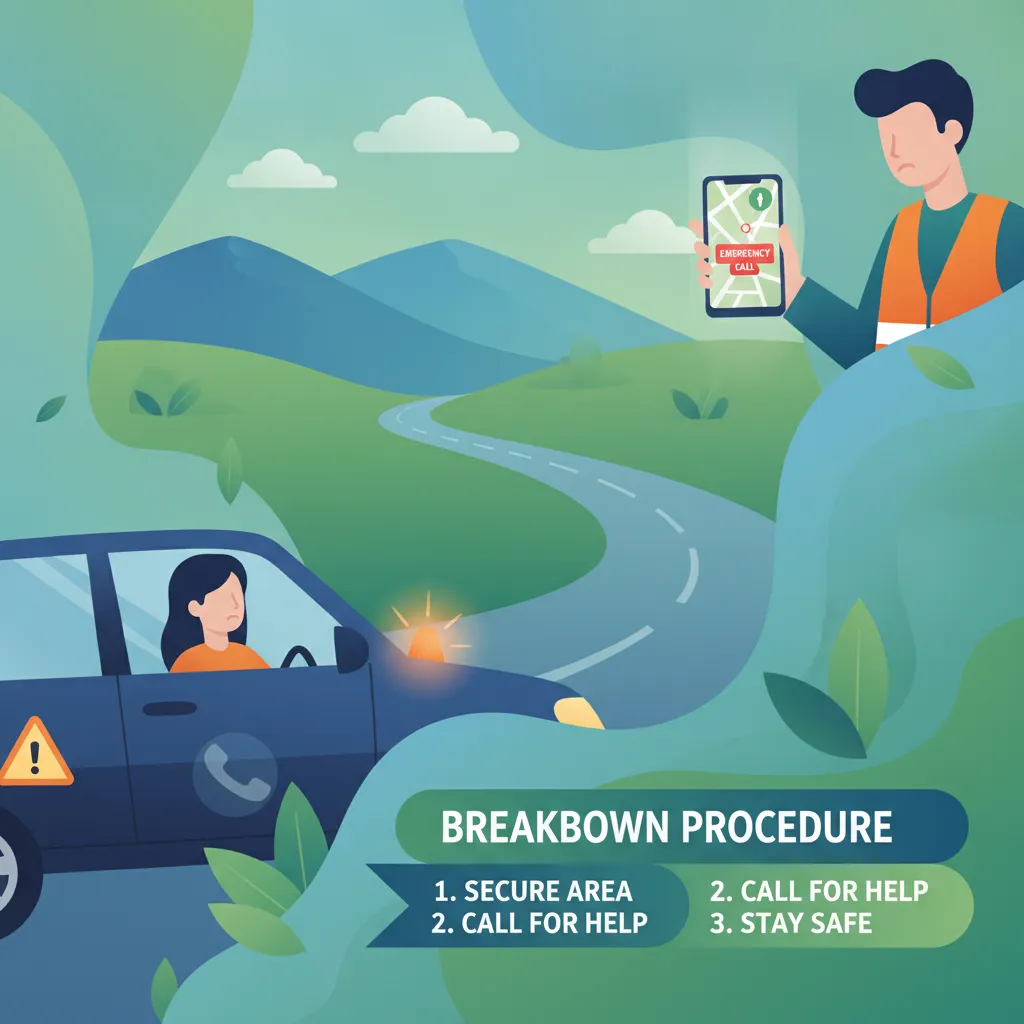
This lesson outlines the step-by-step safety protocol for a vehicle breakdown. It instructs the rider to move the motorcycle to the safest possible location, activate hazard lights, and put on a high-visibility vest. The proper placement of a warning triangle and the procedure for making an emergency call to 112 or a roadside assistance service are also detailed.

This lesson addresses the specific challenges of interacting with larger vehicles like buses and trams in an urban environment. It explains how to signal intentions clearly and predictably to avoid conflicts in shared spaces. Key topics include safely crossing tram tracks and maintaining awareness around public transport stops.

This lesson breaks down the overtaking maneuver into a safe, repeatable process: assess, signal, check, move, and return. It emphasizes the importance of ensuring a sufficient gap in oncoming traffic, checking mirrors and blind spots thoroughly, and maintaining a proper speed differential. Adherence to Austrian laws regarding where overtaking is prohibited is also covered in detail.

This lesson explains how to use different positions within a lane to maximize visibility, create safety buffers, and plan escape routes. It introduces the concept of anticipative riding, which involves actively scanning for potential hazards and predicting the actions of other drivers. Strategic positioning is a dynamic skill that allows a rider to manage space and time effectively in changing traffic.
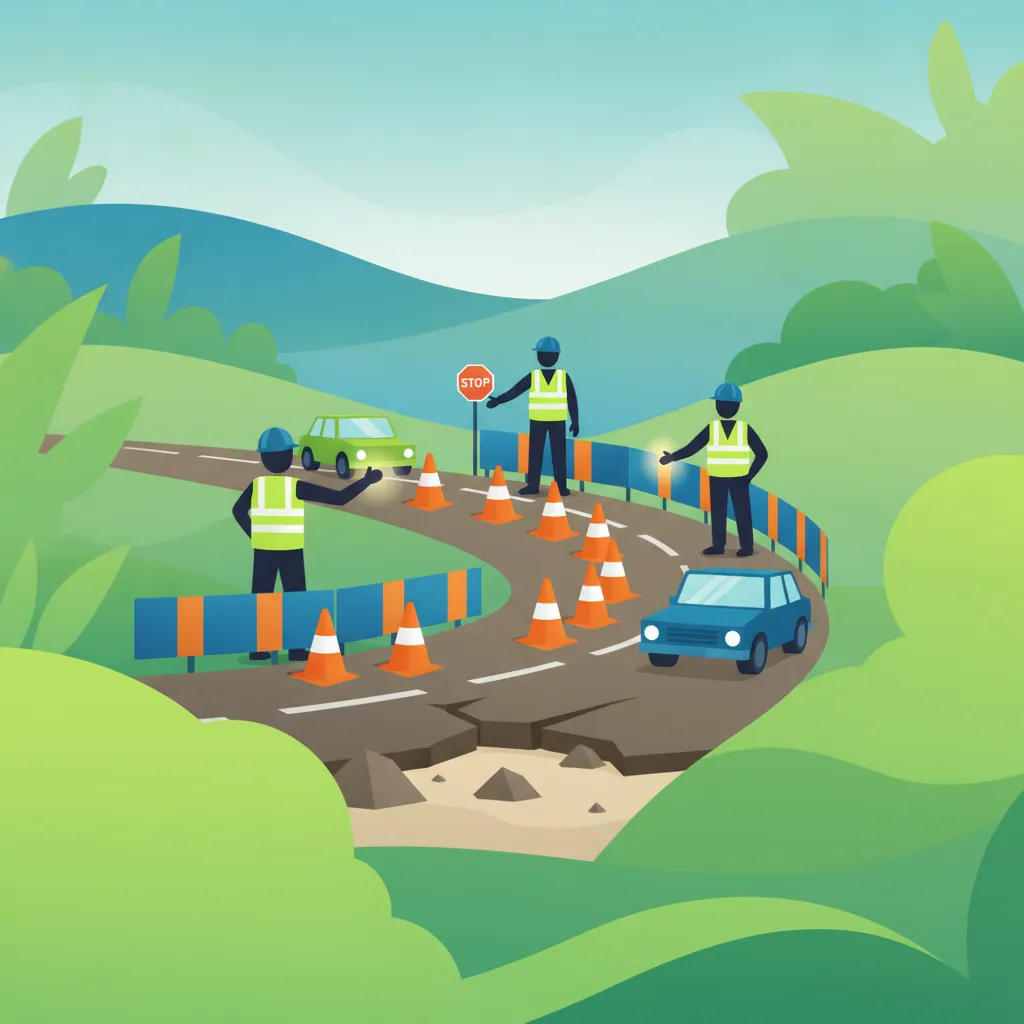
This lesson prepares riders for safely transiting through construction zones ('Baustellen'). It covers the interpretation of temporary signage, adherence to reduced speed limits, and awareness of hazards suchas altered lane markings, abrupt surface changes, and loose gravel. Respecting the safety of road workers and anticipating unpredictable traffic patterns are key themes.

This lesson covers the foundational principles of making a motorcyclist conspicuous to other road users. It examines the role of brightly colored and reflective clothing, effective helmet colors, and the mandatory use of headlights during the day. Understanding how to create a strong visual presence in traffic is a key component of proactive accident prevention for any rider.
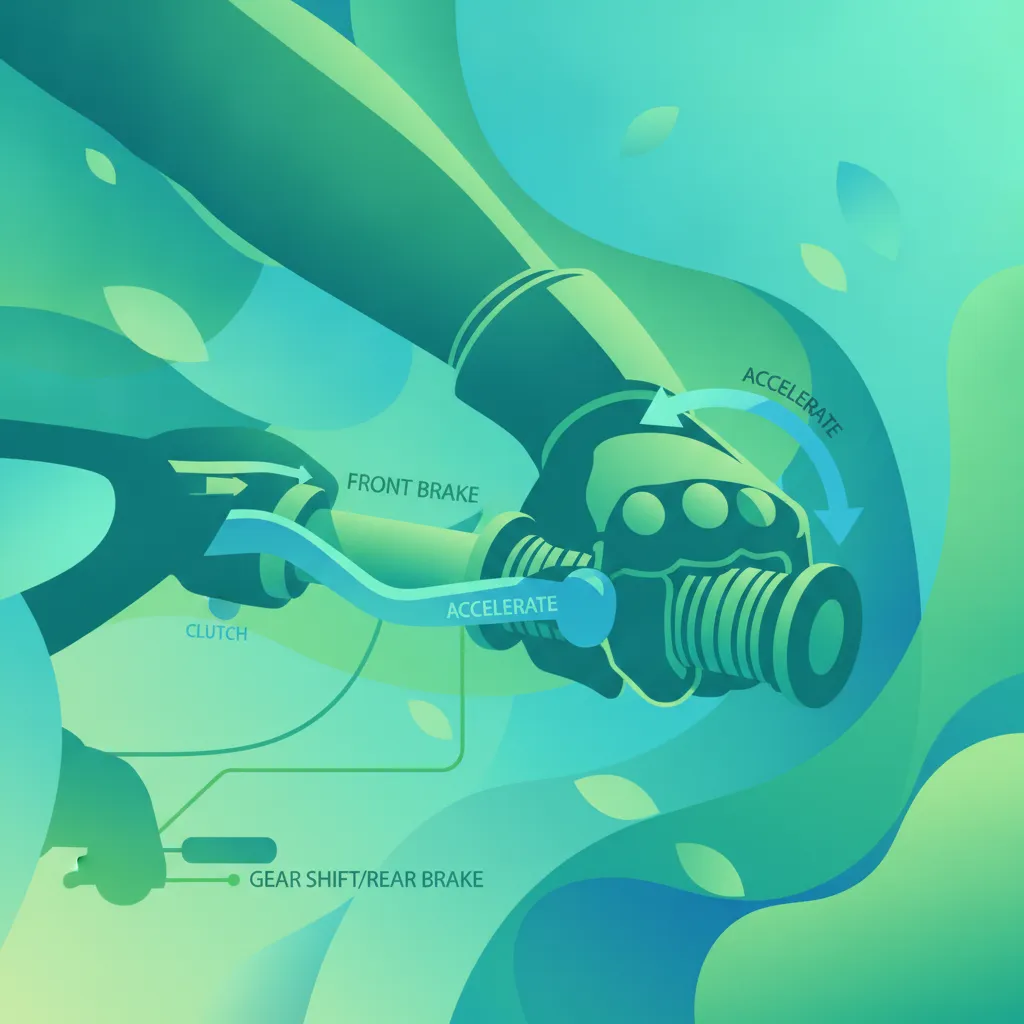
This lesson provides a functional overview of a motorcycle's essential controls, explaining the operation of the throttle, clutch, and gear selector. It differentiates between the front and rear braking systems and their roles in effective stopping. Learners will also identify handlebar switches for lights, indicators, and the horn, ensuring complete familiarity with the vehicle's interface for safe operation.
Explore the principles of staggered formations and safe following distances critical for motorcycle groups on Austrian roads. Understand how optimal spacing enhances visibility, reduces turbulence, and manages reaction times for safer group rides.
This lesson breaks down the overtaking maneuver into a safe, repeatable process: assess, signal, check, move, and return. It emphasizes the importance of ensuring a sufficient gap in oncoming traffic, checking mirrors and blind spots thoroughly, and maintaining a proper speed differential. Adherence to Austrian laws regarding where overtaking is prohibited is also covered in detail.

This lesson explains the importance of maintaining a safe following distance to prevent rear-end collisions. It introduces practical methods for judging a safe gap, such as the widely-used 'two-second rule,' and clarifies how this distance needs to be increased in adverse weather or poor visibility. The content emphasizes that an adequate buffer zone provides the necessary time and space to react and brake safely if the vehicle in front stops suddenly.
This lesson outlines the step-by-step safety protocol for a vehicle breakdown. It instructs the rider to move the motorcycle to the safest possible location, activate hazard lights, and put on a high-visibility vest. The proper placement of a warning triangle and the procedure for making an emergency call to 112 or a roadside assistance service are also detailed.
This lesson provides essential knowledge for using Austria's high-speed road network. It covers the correct procedure for entering via acceleration lanes, maintaining strict lane discipline (keeping right, passing left), and understanding the digital or physical Vignette (toll sticker) requirement. The formation of the 'Rettungsgasse' (emergency corridor) during traffic jams is also a key topic.
This lesson prepares riders for safely transiting through construction zones ('Baustellen'). It covers the interpretation of temporary signage, adherence to reduced speed limits, and awareness of hazards suchas altered lane markings, abrupt surface changes, and loose gravel. Respecting the safety of road workers and anticipating unpredictable traffic patterns are key themes.
This lesson explains how to use different positions within a lane to maximize visibility, create safety buffers, and plan escape routes. It introduces the concept of anticipative riding, which involves actively scanning for potential hazards and predicting the actions of other drivers. Strategic positioning is a dynamic skill that allows a rider to manage space and time effectively in changing traffic.
Find clear answers to common questions learners have about Group Riding Dynamics and Safety. Learn how the lesson is structured, which driving theory objectives it supports, and how it fits into the overall learning path of units and curriculum progression in Austria. These explanations help you understand key concepts, lesson flow, and exam focused study goals.
Staggered formation allows each rider to have a clear view of the road ahead and provides enough lateral space to maneuver or stop in an emergency without colliding with the bike in front.
The sweep or tail rider stays at the back of the group to ensure no rider is left behind, assists with traffic control if needed, and notifies the lead rider if someone has a breakdown.
While electronic indicators are mandatory, hand signals are supplementary tools used to communicate intentions clearly within a group. Knowing them is essential for safety and understanding rider-to-rider communication.
A briefing should cover the planned route, expected pace, rest stops, emergency protocols, and specific rules for group formation to ensure everyone is synchronized before hitting the road.
Refine your study plan by searching for specific Austrian driving theory practice sets. Pinpoint questions related to particular road rules, signs, or challenge levels, and begin practicing immediately to reinforce your knowledge and excel in your official exam with confidence. Get started with focused revision today.