
This lesson focuses on the critical communication skills needed for Category AM riders when interacting with larger vehicles in shared traffic. You will learn how to signal clearly, position your moped effectively, and manage the specific risks associated with public transport and heavy vehicles. Building on your knowledge of road signs and priority, this lesson ensures you can safely navigate complex urban environments.

Lesson content overview
Operating a moped, scooter, or light quadricycle (Category AM) in Austria's mixed traffic environment demands keen awareness and clear communication, especially when interacting with larger vehicles like cars, buses, and trams. Due to their size, stopping distances, and unique operating characteristics, these larger vehicles present specific challenges for smaller road users. This lesson outlines essential techniques and Austrian traffic regulations (StVO) to ensure your intentions are clearly understood, enhancing safety for everyone on the road.
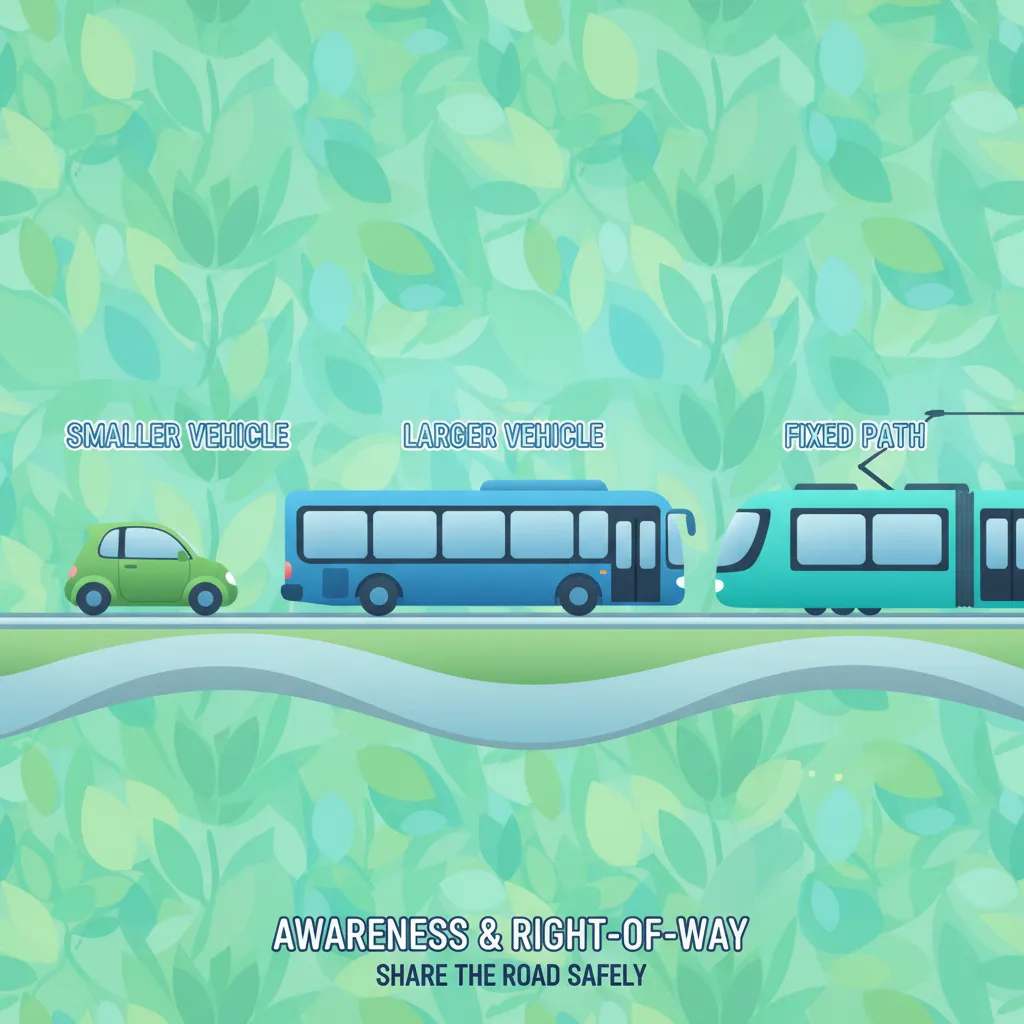
Mopeds and scooters are significantly smaller and less visible than cars, buses, and trams. This size difference creates several challenges that riders must actively address through their communication and positioning:
Effective communication through early signalling, clear positioning, and predictable actions is paramount. It reduces uncertainty for other drivers, allows them adequate time to perceive and respond, and minimizes the risk of inadvertently encroaching on their path.
To foster safe interactions with larger vehicles, Category AM riders should adhere to several core principles that guide their communication strategy. These principles are designed to overcome the inherent challenges of size disparity and ensure mutual understanding on the road.
Early signalling is the act of activating your visual signals (indicators, hand gestures) well in advance of the maneuver you intend to perform. This foresight is critical for larger vehicles. For cars, you should signal at least 200 metres before your intended action. For buses and trams, given their specific routes and anticipated movements, a minimum distance of 50 metres is generally required, though earlier is always safer.
Always Signal Sooner Than You Think You Need To. For mopeds, it's a common mistake to signal too late. Remember, larger vehicles need more time to register your signal, process it, and adjust their course or speed.
Consistent signalling means keeping your signal active throughout the entire maneuver until it is fully completed. For instance, if you are changing lanes, your indicator should remain on until your moped has fully entered the new lane. This prevents ambiguity and avoids confusing other drivers who might otherwise assume you've aborted your intention.
Your position on the road serves as a powerful non-verbal signal. Placing your moped within the lane or on the designated part of the road where a larger vehicle expects traffic to flow helps them predict your path. This involves:
Ensuring your signals and your moped's movements are within the visible range of drivers is crucial. This often means actively adjusting your position to be seen, rather than assuming you are visible. For example, when approaching a large truck or bus, consider their higher vantage point and extensive blind spots.
Blind spots are areas around a vehicle that are not visible to the driver, even with properly adjusted mirrors. For large vehicles, these blind spots are extensive and can easily conceal a moped.
To counteract these blind spots, regularly check your mirrors and perform quick shoulder checks (head checks) before initiating any maneuver, such as a lane change or turn. This quick glance over your shoulder confirms that no larger vehicle is hidden from your mirrors.
A quick, outward glance over your shoulder to visually confirm that the path is clear in areas not covered by mirrors, especially before lane changes or turns.
Performing maneuvers at a speed and rate that other drivers, especially those of larger vehicles, can anticipate is key to road safety. Avoid sudden acceleration, abrupt braking, or last-minute lane changes. Riders should strive to:
Each type of larger vehicle presents unique considerations for moped riders. Understanding these specifics helps tailor your communication and actions for maximum safety.
Buses regularly stop to pick up and drop off passengers, often pulling to the side of the road or into designated bus bays. These interactions require particular care from moped riders.
Trams operate on fixed tracks and have specific right-of-way rules that moped riders must strictly observe. Their inability to swerve makes clear communication and adherence to rules paramount.
While the focus here is on larger public transport vehicles, the principles of early and consistent signalling apply universally to all cars and general traffic. Remember the 200-metre rule for signalling intent to cars.
Adherence to the Austrian Road Traffic Act (Straßenverkehrs-Ordnung – StVO) is not just a legal obligation but a cornerstone of safe riding. Several paragraphs of the StVO specifically address interactions with larger vehicles.
Even experienced riders can sometimes fall into habits that compromise safety when interacting with larger vehicles. Awareness of these common errors is the first step to avoiding them.
Environmental and contextual factors significantly impact visibility and reaction times, demanding adaptations to your communication strategy.
Understanding these terms is fundamental for safe and effective communication on the road.
Applying the principles discussed in real-world situations is key to mastering safe interaction with larger vehicles.
Setting: An urban street with a tram line crossing horizontally. You are approaching the intersection, intending to turn left. Light traffic, daytime. Correct behavior: You activate your left indicator approximately 70 metres before the tram crossing, ensuring ample warning for any approaching tram and other road users. You position your moped in the left-most lane designated for turning left. Before initiating the turn, you check for trams, yielding if one is approaching, and then cross the tram tracks at the marked zebra crossing when clear. Incorrect behavior: You activate your left indicator only 10 metres before the intersection, giving minimal warning. You then attempt to turn while cutting across the tram rails at an unmarked point, risking a collision with a tram or losing control. Explanation: Early signalling (StVO §12) and crossing at designated points (StVO §20) are crucial for safety. Trams have priority (StVO §44), and a sudden, late maneuver can lead to severe accidents.
Setting: A city bus stop on a busy road. A bus is stopped to board passengers. There is no dedicated overtaking lane. Correct behavior: As you approach the bus stop, you see the bus stopped with its hazard lights on. You reduce your speed, stop your moped safely behind the bus, and wait patiently until the bus has finished boarding/alighting passengers and pulls away. Only then do you proceed, remaining vigilant for pedestrians who may have crossed in front or behind the bus. Incorrect behavior: You become impatient and attempt to squeeze past the bus on the right within the 5-metre prohibited zone, potentially endangering passengers crossing the road. Explanation: Overtaking a bus actively boarding passengers within the prohibited zone is a violation of StVO §41 and creates a high risk of striking pedestrians. Patience and adherence to rules are vital.
Setting: A two-lane road where your lane is merging right into a lane currently occupied by a bus traveling ahead. Correct behavior: Well before the merge point, you activate your right turn indicator. You then actively check your right mirror and perform a thorough right shoulder check to ensure no part of the bus, especially its extensive blind spot, conceals your moped. Once confirmed clear, you smoothly and predictably merge into the lane, maintaining a safe distance from the bus. Incorrect behavior: You activate your indicator only as you begin to merge, or you rely solely on your mirrors, failing to check the bus's significant blind spot. This sudden entry could surprise the bus driver, leading to a side collision. Explanation: Early signalling and a comprehensive mirror/shoulder check sequence (StVO §21) are essential to prevent collisions in the large blind spots of buses.
Setting: A dedicated bike lane that crosses a tram line at a designated intersection. Moderate traffic. Correct behavior: You approach the intersection, slow down, and align your moped with the marked zebra crossing for bikes. You check for approaching trams and, if one is present, stop before the tracks and yield. Once the tram has passed, you proceed to cross the tracks at the designated point, ensuring your wheels are perpendicular to the rails to avoid slipping. Incorrect behavior: You attempt to cut across the tram rails at an angle or at an unmarked point, risking your wheels getting caught in the grooves and causing a fall. Explanation: Safe crossing of tram tracks (StVO §20) requires using marked points and a proper approach angle to prevent accidents.
Setting: Nighttime, low street illumination. You are approaching a bus stop where a bus is already stopped, and there is no dedicated overtaking lane. Correct behavior: You activate your left indicator well in advance, giving any following vehicles ample warning of your approach and slowdown. You ensure your moped's lights and any reflective gear you are wearing are clean and fully visible. You then reduce speed and stop safely behind the bus, yielding to any passengers. Incorrect behavior: You rely on dim or unmaintained indicator lights, or you fail to use reflective clothing, making your intentions and presence difficult to perceive for other drivers in the dark. Explanation: Reduced visibility at night demands extra care. Clear, early signalling and enhanced rider visibility (e.g., reflective gear) are paramount to safe interaction with large vehicles and pedestrians (StVO §12).
Mastering communication with cars, buses, and trams is a cornerstone of safe riding for Category AM license holders in Austria. Key takeaways include:
By integrating these practices, you can ensure predictable and safe interactions with all road users, contributing to a smoother and more secure traffic flow for everyone.
This lesson covers essential communication strategies for Austrian AM riders when sharing roads with cars, buses, and trams. Key rules include signalling at least 200m before turning for cars and 50m for buses/trams (StVO §12), never crossing tram tracks except at marked points (StVO §20), maintaining a 5-metre clearance from bus stops (StVO §18), and yielding to trams at intersections unless signs indicate otherwise (StVO §44). Riders must actively manage blind spots through mirror and shoulder checks (StVO §21), position themselves for maximum visibility, and adapt their signalling and speed to weather and light conditions. The lesson includes five practical scenarios demonstrating correct versus incorrect behavior in urban intersections, bus stop situations, lane merges, and nighttime riding.
A short set of high-value points that capture the most important learning from this lesson.
Signal early and maintain signals throughout: minimum 200m for cars, 50m for buses/trams, per StVO §§12 and 16.
Never ride on tram tracks—cross only at marked designated points at approximately 90 degrees to prevent wheel entrapment, per StVO §20.
Do not stop within 5 metres of a bus stop or overtake boarding buses unless a dedicated overtaking lane exists, per StVO §§18 and 41.
Always assume trams have priority at intersections unless traffic signs or signals indicate otherwise, per StVO §44.
Position your moped where you remain visible in larger vehicles' mirrors—if you cannot see the driver in their side mirror, they likely cannot see you.
Explore all units and lessons included in this driving theory course.
StVO §12 requires early signalling: 200m for cars, 50m for buses and trams, to give larger vehicles adequate reaction time.
StVO §21 mandates mirror checks and shoulder checks before any lane change or lateral movement to counter extensive blind spots.
StVO §44 means trams generally have priority at intersections—never attempt to 'beat' a tram across.
StVO §41 prohibits overtaking stopped buses boarding passengers unless a dedicated overtaking lane is clearly marked.
In adverse weather or at night, increase signalling distance and ensure high visibility with reflective gear.
Activating indicators too late (less than required distances) when turning or changing lanes near larger vehicles.
Attempting to ride along or cut across tram tracks at unmarked points rather than using designated crossings.
Overtaking or cutting in front of a bus that is actively boarding passengers within the 5-metre prohibited zone.
Assuming a tram will yield to a moped—trams have priority unless signs or signals explicitly state otherwise.
Relying solely on mirrors without performing shoulder checks, failing to notice vehicles in large blind spots.
Lesson content overview
A short set of high-value points that capture the most important learning from this lesson.
Signal early and maintain signals throughout: minimum 200m for cars, 50m for buses/trams, per StVO §§12 and 16.
Never ride on tram tracks—cross only at marked designated points at approximately 90 degrees to prevent wheel entrapment, per StVO §20.
Do not stop within 5 metres of a bus stop or overtake boarding buses unless a dedicated overtaking lane exists, per StVO §§18 and 41.
Always assume trams have priority at intersections unless traffic signs or signals indicate otherwise, per StVO §44.
Position your moped where you remain visible in larger vehicles' mirrors—if you cannot see the driver in their side mirror, they likely cannot see you.
Explore all units and lessons included in this driving theory course.
StVO §12 requires early signalling: 200m for cars, 50m for buses and trams, to give larger vehicles adequate reaction time.
StVO §21 mandates mirror checks and shoulder checks before any lane change or lateral movement to counter extensive blind spots.
StVO §44 means trams generally have priority at intersections—never attempt to 'beat' a tram across.
StVO §41 prohibits overtaking stopped buses boarding passengers unless a dedicated overtaking lane is clearly marked.
In adverse weather or at night, increase signalling distance and ensure high visibility with reflective gear.
Activating indicators too late (less than required distances) when turning or changing lanes near larger vehicles.
Attempting to ride along or cut across tram tracks at unmarked points rather than using designated crossings.
Overtaking or cutting in front of a bus that is actively boarding passengers within the 5-metre prohibited zone.
Assuming a tram will yield to a moped—trams have priority unless signs or signals explicitly state otherwise.
Relying solely on mirrors without performing shoulder checks, failing to notice vehicles in large blind spots.
Explore search topics learners often look for when studying Communicating Intent to Cars, Buses, and Trams. These topics reflect common questions about road rules, driving situations, safety guidance, and lesson level theory preparation for learners in Austria.
Browse additional driving theory lessons that cover connected traffic rules, road signs, and common driving situations related to this topic. Improve your understanding of how different rules interact across everyday traffic scenarios.
Understand the precise Austrian traffic regulations (StVO) for Category AM riders when dealing with buses and trams. This lesson clarifies rules around bus stops, tram tracks, and priority situations to ensure safe urban navigation.
This lesson provides specific guidance for sharing the road with different types of vehicles in Austria. It covers the dangers of large vehicle blind spots, the rules for navigating near buses and dedicated tram tracks, and common conflict points at intersections. Understanding the behavior and limitations of other vehicles is key to safely navigating complex urban environments.
This lesson addresses the specific hazard of tram tracks in urban areas, which can be slippery and cause a loss of balance. It teaches the correct angle at which to cross tracks and the importance of being aware of tram signals and movements. The content also provides guidance for safely sharing road space near tram and bus stops.

Cities like Vienna and Graz have extensive tram networks that require special attention from bus drivers. This lesson covers the rules of priority concerning trams, the dangers of crossing tracks, and the specific hazards at shared stops where passengers cross traffic lanes. It emphasizes the need for extreme caution and clear communication with other road users in these complex environments.
This lesson focuses on the unique challenges presented by tram systems in Austrian cities. It teaches riders how to cross tracks at a safe angle to avoid tyres getting caught, especially in wet conditions, and explains the absolute priority trams have in most situations. Awareness around tram stops and bus lanes is also covered to ensure safe coexistence with public transport.

This lesson outlines the legal speed limits for Category AM vehicles in Austria, covering urban, residential, and rural areas. It explains how to identify different speed zones through signage and the importance of adjusting speed based on traffic, weather, and road conditions. Adherence to these limits is a fundamental aspect of both legal compliance and safety.
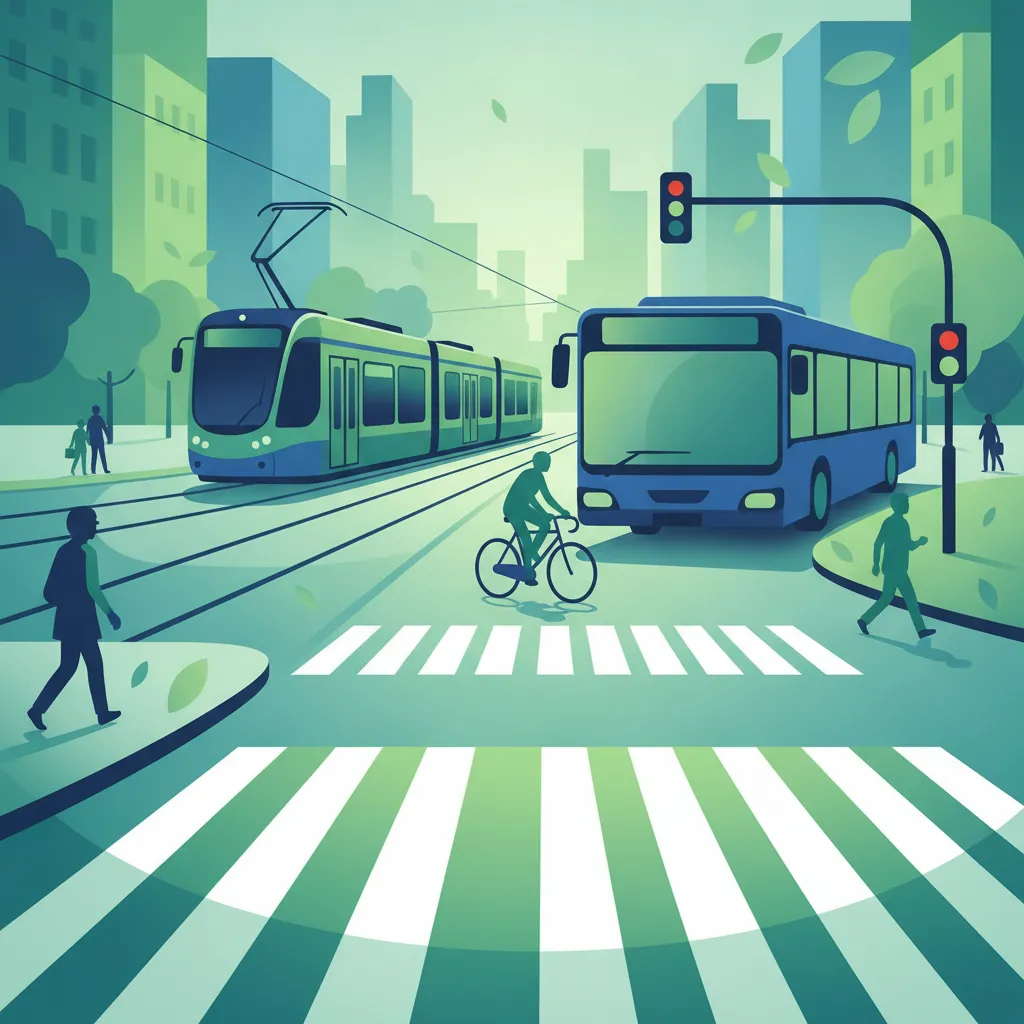
This lesson addresses the unique challenges and priority rules that apply when interacting with public transport and cyclists at intersections. It clarifies the specific right-of-way regulations for trams, which often have priority over other traffic, and the procedures for navigating around bus stops. The content also covers how to safely manage crossings with dedicated bicycle lanes, ensuring the protection of all road users.

This lesson focuses on the specific regulations and safety protocols for driving near trams (Straßenbahn) in Austrian cities. It clarifies the priority rules, which almost always favor the tram, and explains how to safely share lanes or cross tram tracks. The content provides critical guidance on how to behave at tram stops, ensuring the safety of boarding and alighting passengers is always the primary concern.
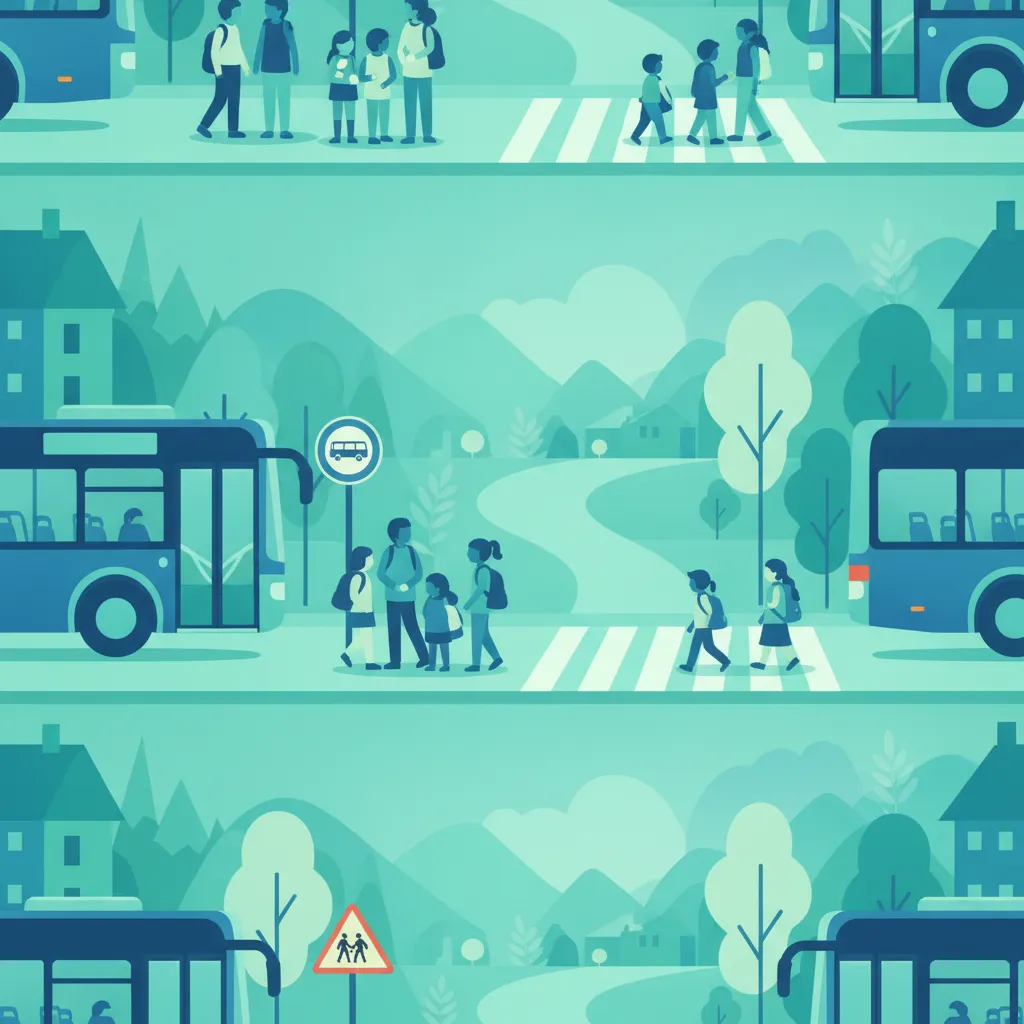
This lesson details the specific regulations and best practices for driving in areas with high pedestrian activity, such as bus stops and school zones. It explains the driver's obligation to stop for school buses with flashing lights and to yield to public buses pulling out from a stop. The content emphasizes the requirement to significantly reduce speed in marked school zones to ensure the safety of children.
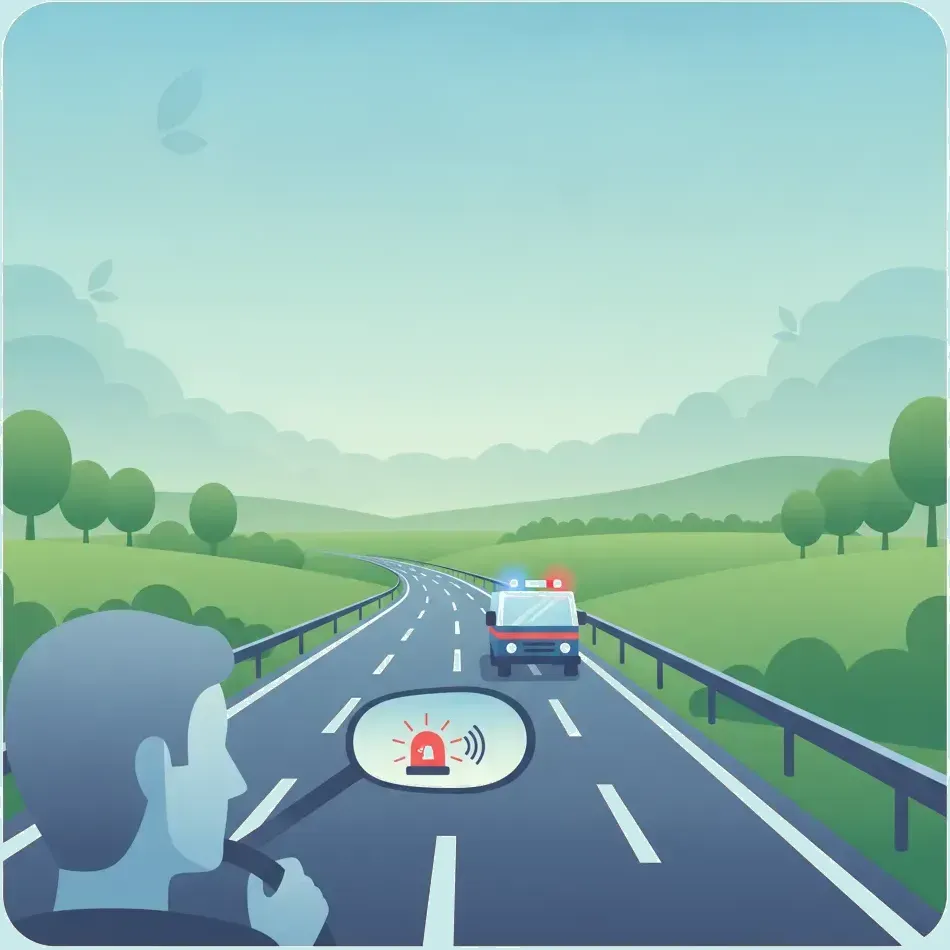
This lesson explains the correct protocol when encountering emergency vehicles with active sirens and lights. It details the legal requirement to yield the right-of-way and provides practical guidance on how to pull over safely and efficiently. Understanding these procedures helps ensure emergency services can reach their destination without delay.

This lesson focuses on the interpretation of traffic lights and road surface markings that guide riders through intersections. It covers the meaning of each traffic light phase, the rules for amber lights, and the significance of various lane lines and stop lines. Properly understanding these signals is essential for maintaining traffic flow and ensuring safety at junctions.
Learn from typical mistakes Category AM riders make when communicating with cars, buses, and trams in Austria. This lesson uses practical scenarios to highlight correct signalling, positioning, and hazard perception for safer riding.
This lesson provides specific guidance for sharing the road with different types of vehicles in Austria. It covers the dangers of large vehicle blind spots, the rules for navigating near buses and dedicated tram tracks, and common conflict points at intersections. Understanding the behavior and limitations of other vehicles is key to safely navigating complex urban environments.

This lesson focuses on identifying and mitigating common hazards in dense urban settings. It explains how to maintain a safe distance from parked cars to avoid opening doors and how to navigate narrow streets. Additionally, it covers the special rules and heightened awareness required when riding in or near pedestrian zones and school areas.

This lesson focuses on the rider's primary responsibility: ensuring they are visible and their actions are predictable to other road users. It explains effective strategies such as using proper lighting, wearing reflective clothing, and adopting a safe road position. The content also emphasizes how clear signaling and anticipating the actions of others can significantly reduce the risk of collisions.

This lesson identifies and analyzes common risk-taking behaviors prevalent among young and inexperienced riders. It covers the dangers of distractions like mobile phone use, the influence of peer pressure, and the false sense of security from overconfidence. The goal is to foster a mature and responsible approach to riding.

This lesson provides essential knowledge for using Austria's high-speed road network. It covers the correct procedure for entering via acceleration lanes, maintaining strict lane discipline (keeping right, passing left), and understanding the digital or physical Vignette (toll sticker) requirement. The formation of the 'Rettungsgasse' (emergency corridor) during traffic jams is also a key topic.

This lesson explains the correct techniques for using mirrors to maintain awareness of surrounding traffic and for checking blind spots. It details the proper timing and use of indicators to signal turns and lane changes effectively. The content reinforces that clear, early communication is key to preventing misunderstandings with other drivers.
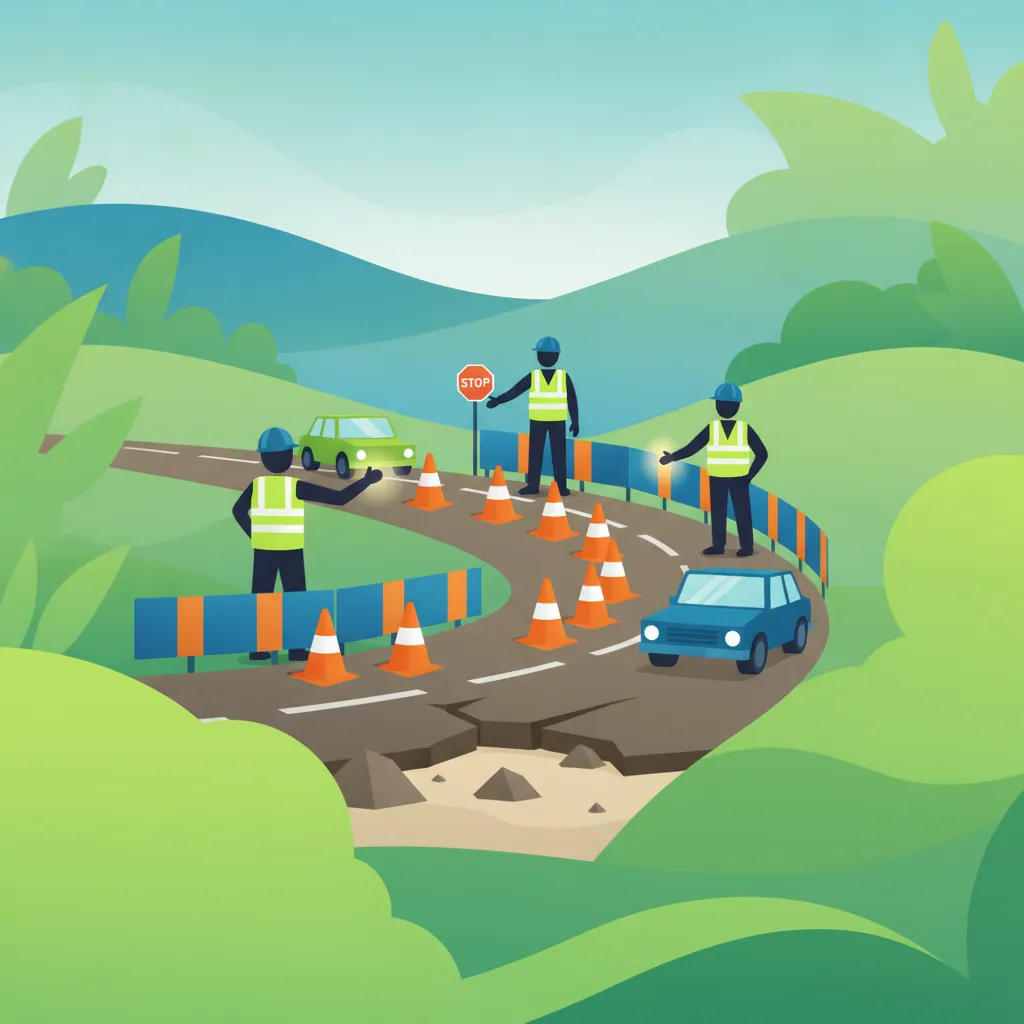
This lesson prepares riders for safely transiting through construction zones ('Baustellen'). It covers the interpretation of temporary signage, adherence to reduced speed limits, and awareness of hazards suchas altered lane markings, abrupt surface changes, and loose gravel. Respecting the safety of road workers and anticipating unpredictable traffic patterns are key themes.
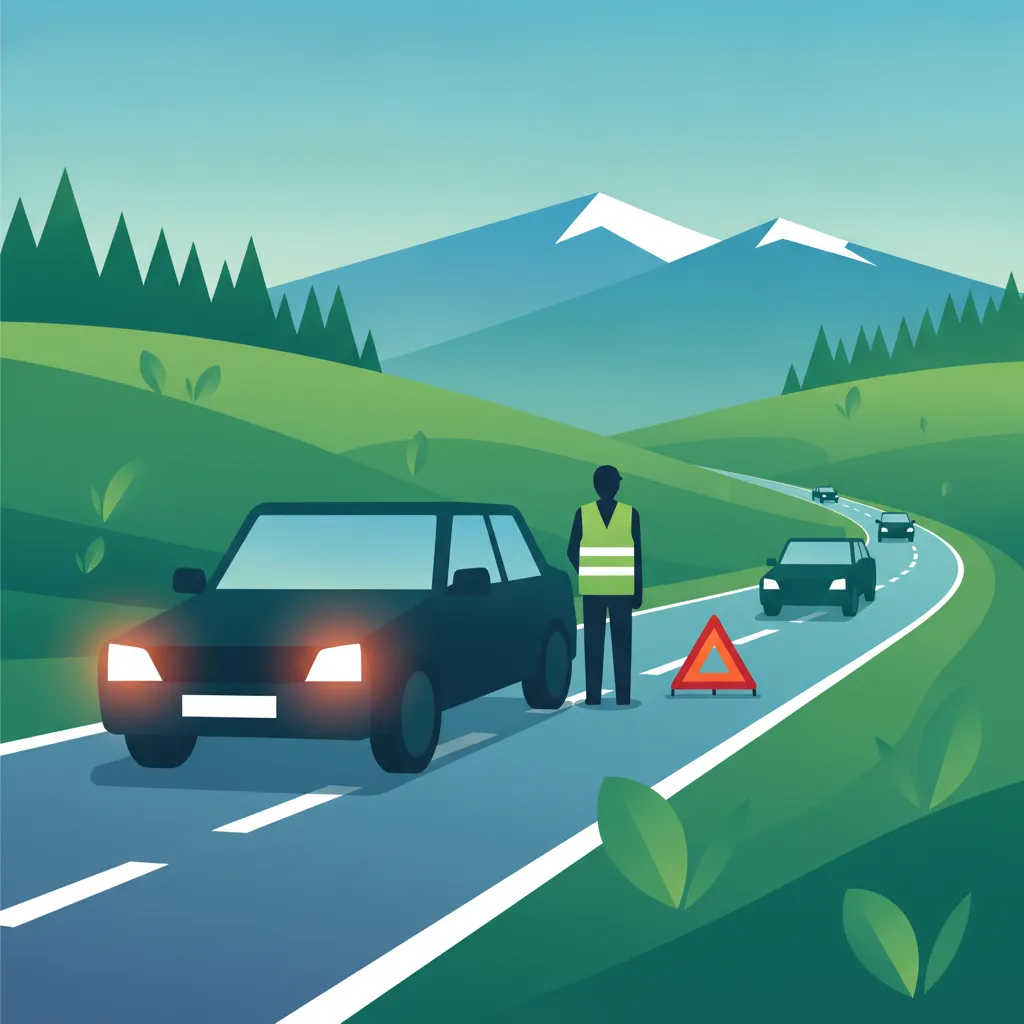
This lesson equips riders with the knowledge to manage an unexpected breakdown or accident. It outlines the steps for securing the vehicle and scene safely, including the use of hazard lights and a reflective vest. It also covers the procedure for contacting emergency services and providing essential information.

This lesson provides guidance on selecting the appropriate road position to maximize visibility and safety. It covers strategies for riding in different parts of a lane based on traffic, road conditions, and potential hazards like parked cars. The goal is to establish a defensive position that allows for adequate reaction time and makes the rider predictable to others.
This lesson focuses on the interpretation of traffic lights and road surface markings that guide riders through intersections. It covers the meaning of each traffic light phase, the rules for amber lights, and the significance of various lane lines and stop lines. Properly understanding these signals is essential for maintaining traffic flow and ensuring safety at junctions.
Find clear answers to common questions learners have about Communicating Intent to Cars, Buses, and Trams. Learn how the lesson is structured, which driving theory objectives it supports, and how it fits into the overall learning path of units and curriculum progression in Austria. These explanations help you understand key concepts, lesson flow, and exam focused study goals.
Overtaking a bus that has stopped to allow passengers to exit is dangerous because pedestrians may cross the road in front of the bus. In the AM theory exam, you will often face scenarios where you must wait until it is clear and safe to move, as visibility is severely restricted.
Always cross tram tracks at as close to a right angle (90 degrees) as possible to prevent your wheels from getting caught in the rails. If the road surface is wet, exercise extra caution as metal tracks become extremely slippery.
Yes, signaling your intent early and consistently is a core safety principle in Austrian StVO. Even if you think no one is watching, using your indicators correctly reinforces safe habits and ensures you are ready for any unexpected road users.
Refine your study plan by searching for specific Austrian driving theory practice sets. Pinpoint questions related to particular road rules, signs, or challenge levels, and begin practicing immediately to reinforce your knowledge and excel in your official exam with confidence. Get started with focused revision today.