
This lesson examines the psychological and behavioral risks frequently encountered by young moped and scooter riders. It is a critical component of your Category AM preparation, helping you identify dangerous habits that could lead to accidents or exam failure. By understanding these human factors, you will be better equipped to make mature decisions on the road.

Lesson content overview
Riding a moped, small scooter, or light quadricycle (Category AM) offers freedom and mobility, especially for young individuals. However, this privilege comes with significant responsibilities. This lesson explores the common risk-taking behaviours prevalent among young and inexperienced riders in Austria, providing insights into their origins and, crucially, how to avoid them. By understanding these pitfalls, you can cultivate a mature and responsible approach to riding, ensuring your safety and the safety of others on Austrian roads.
This comprehensive guide is designed for learners pursuing the Austrian AM Driving Theory, building upon fundamental knowledge of traffic signs, right-of-way rules, and the Austrian Road Traffic Act (StVO). A strong grasp of visibility, road positioning, and the basic physics of two-wheel vehicles is essential to fully appreciate the concepts discussed here. The goal is to equip you with the knowledge to make informed, safe decisions every time you ride.
Risk-taking behaviours among young riders often stem from a complex interplay of psychological development, a natural lack of experience, and various external influences. Understanding these root causes is the first step toward developing a safer riding mindset.
During adolescence, the human brain undergoes significant development, particularly in areas responsible for impulse control, long-term planning, and risk assessment. This developmental stage can lead to an underdeveloped sense of risk perception, making young riders more prone to impulsive actions and less likely to fully anticipate the consequences of dangerous behaviours. The thrill of new mobility combined with this natural neurological tendency can generate a false sense of invulnerability, where the rider believes accidents won't happen to them. Legal frameworks in Austria, such as the StVO and the Führerscheingesetz (Driving Licence Act), are designed to counteract these inherent tendencies by mandating specific safe practices.
Lack of riding experience is another significant factor contributing to risk-taking. Experienced riders develop an intuitive understanding of vehicle dynamics, road conditions, and traffic patterns over time. In contrast, new riders, even after passing their theory and practical tests, are still in the learning phase of real-world riding. This inexperience can lead to an overestimation of personal riding abilities or a misconception about a vehicle's safety features. Proper self-confidence calibration – aligning perceived skill with actual competence and legal limits – is crucial. It deters reckless maneuvers and encourages adherence to speed limits, safe distances, and prudent overtaking practices.
Constantly evaluate your actual riding skill against your perceived ability. Do not let overconfidence lead you to exceed your limits or the vehicle's capabilities.
Several specific behaviours significantly increase the risk of accidents for young riders. Recognizing and actively avoiding these actions is paramount for safety.
Distraction is any activity that diverts a rider’s visual, auditory, or cognitive attention away from the primary task of safe riding. When you are distracted, your ability to perceive hazards, react quickly, and make timely decisions is severely compromised.
Distractions can manifest in various forms:
Even a brief glance at a phone screen for a few seconds can be equivalent to riding blind for a significant distance, especially at higher speeds.
In Austria, the legal framework explicitly addresses distracted driving. The Austrian Road Traffic Act (StVO) is clear on the matter:
Drivers must operate vehicles without distraction. The use of hand-held devices, such as mobile phones, is prohibited while riding. This applies to all Category AM riders in any traffic situation.
This regulation is mandatory and aims to prevent delayed reaction times and cognitive overload. For instance, a rider who checks a text message while approaching or crossing an intersection risks failing to notice a vehicle with the right-of-way, potentially leading to a collision. While using a hands-free system for calls or navigation is generally permitted, it's crucial to understand that even voice-controlled systems can still induce cognitive distraction. The safest practice is to interact with devices only when safely stopped.
Peer pressure refers to the social influence exerted by friends or peer groups that encourages a rider to engage in unsafe behaviour to gain acceptance or avoid social exclusion. This type of pressure can be particularly strong during adolescence, leading individuals to make choices they might otherwise avoid.
Peer pressure can manifest in several ways while riding:
While peer pressure isn't directly legislated, StVO § 1 mandates that all road users must behave responsibly and considerately. This implicitly includes the responsibility to resist unsafe peer influences. Mistaking peer conformity for personal decision-making, or believing that "everyone does it" makes it safe, are common misunderstandings that can lead to severe consequences. For example, a group of teenagers attempting a dangerous high-speed maneuver on a city street could easily lose control, resulting in serious injury or a crash. Your safety and adherence to the law should always take precedence over peer approval.
Overconfidence is an inflated belief in one’s riding abilities or the safety of a vehicle, which often leads to risky actions. This "false sense of security" can be extremely dangerous for new riders.
Overconfidence typically involves two main aspects:
StVO § 12 and § 57 require adherence to speed limits and mandate adapting speed to prevailing conditions. Overconfidence is a direct and frequent cause of violations related to speed and general prudence. A common misunderstanding is the belief that a history of accident-free rides implies invulnerability. This can lead a rider to exceed the speed limit on a residential road, falsely believing their braking system will compensate, only to find themselves unable to stop when a child suddenly steps onto the road.
Speed mismanagement is riding at speeds inappropriate for road conditions, traffic density, or your vehicle's capability. This includes both exceeding posted speed limits and failing to reduce speed when conditions demand it (e.g., in adverse weather or heavy traffic). The StVO § 57 specifically outlines the adherence to speed limits and the need to adjust speed according to circumstances.
Braking distance is proportional to the square of your speed. A 10% increase in speed results in a 21% longer braking distance, significantly increasing crash probability.
For example, riding a scooter at 50 km/h in a 30 km/h zone, especially on a wet road, dramatically increases the stopping distance and the likelihood of a crash. Always reduce speed when conditions are less than ideal. Maintaining a safe following distance is equally vital; this distance should allow you enough time to react and stop safely if the vehicle in front suddenly brakes.
Wearing a certified helmet and appropriate protective attire is non-negotiable for safe riding. This equipment is specifically designed to protect the rider in the event of a crash.
In Austria, wearing a certified helmet is not just a recommendation; it is a legal requirement.
Wearing a certified helmet is compulsory for riders of motorcycles and mopeds.
This applies to all two-wheel vehicles and all road riding conditions. Furthermore, specific local ordinances, like the Viennese Ordinance § 6, reinforce this by stipulating enforcement measures and penalties for non-compliance. A common misconception is believing that a helmet is optional for short trips or low-speed riding. However, even a minor fall at low speed can result in severe head injuries if unprotected. Medical evidence unequivocally shows that helmets reduce the risk of head injury by up to 70% in crashes.
While the helmet is paramount, other protective gear significantly contributes to rider safety and visibility. This includes:
Wearing reflective clothing, especially in low-light conditions, also increases rider visibility by up to 30%, making you more noticeable to other road users. Always choose gear that meets relevant safety standards and is appropriate for the riding conditions.
Effective speed management is fundamental to safe riding. It involves more than just adhering to posted speed limits; it requires a constant assessment of your surroundings and adjusting your speed accordingly.
Speed mismanagement occurs when a rider operates at a speed that is inappropriate for the specific road conditions, traffic density, or vehicle capability. This includes two main components:
The StVO § 57 makes it clear that drivers must not only observe speed limits but also adapt their speed to road, traffic, and visibility conditions. A rider might assume that a scooter's lower power makes higher speeds safe, but this is a dangerous misconception. A scooter, like any vehicle, has specific braking and handling limits that are severely impacted by excessive speed, especially in poor conditions.
Your reaction time—the time it takes from perceiving a hazard to initiating an action (like braking)—is crucial. For an average rider, this is approximately 1.5 seconds. Distractions can easily reduce this by 0.5 to 1.0 second, significantly increasing the overall stopping distance.
Consider a rider traveling at 50 km/h on a wet road who must brake suddenly. The reduced friction will drastically increase the braking distance compared to dry conditions. If the rider is also overconfident and accelerates, underestimating the stopping distance, they might skid into a parked car or another obstacle. Always maintain a speed that allows you to stop safely within the visible distance ahead, considering all relevant factors.
Hazard perception is the ability to anticipate and respond to potential dangers on the road. It involves actively scanning the environment, identifying potential risks, and predicting how they might unfold, allowing you to react in advance rather than improvising. A lack of experience or distraction often leads to inadequate hazard perception.
Key elements of strong hazard perception include:
The StVO § 1 implicitly requires safe and prudent operation of a vehicle, which includes excellent hazard perception. Believing that quick reflexes alone can compensate for inadequate scanning is a dangerous misunderstanding. A rider who fails to check their left side before merging into traffic could easily cause a side-impact collision with an unseen vehicle. Developing good scanning habits—constantly moving your eyes, checking your mirrors every 5-8 seconds, and actively looking for escape routes—is fundamental to defensive riding.
Practice "reading" the road ahead. Look for clues like brake lights, turning wheels, pedestrian movements, and changes in road surface, always anticipating potential hazards.
The Austrian Road Traffic Act (StVO) provides the legal backbone for all road users, including Category AM riders. Understanding and adhering to these regulations is crucial not only for safety but also to avoid legal consequences.
| Regulation | Statement | Applicability | Legal Status | Rationale | Correct Example | Incorrect Example |
|---|---|---|---|---|---|---|
| StVO § 37 (1) | Drivers must operate vehicles without distraction; use of hand-held devices is prohibited while riding. | All Category AM riders in any traffic situation. | Mandatory | Prevents delayed reaction times and cognitive overload. | Rider glances at a phone briefly while stopped at traffic lights. | Rider reads a text while moving through a green light. |
| StVO § 52 (2) | Wearing a certified helmet is compulsory for riders of motorcycles and mopeds. | All road riding conditions. | Mandatory | Mitigates head injury severity. | Rider wears a properly fastened helmet before departing. | Rider rides without a helmet on a short urban trip. |
| StVO § 57 | Speed limits must be observed, adapting speed to road, traffic, and visibility conditions. | All road categories, irrespective of vehicle type. | Mandatory | Aligns speed with safe stopping distance. | Rider maintains 30 km/h in a residential zone with children present. | Rider travels at 50 km/h in a 30 km/h zone on a wet road. |
| StVO § 5 | Duty to drive safely, prudently, and considerately. | Universal for all drivers. | Mandatory | Ensures overall traffic safety and prevents reckless actions. | Rider avoids overtaking in a narrow alley to maintain safe distance. | Rider overtakes a slow-moving vehicle in a tight urban street without clear visibility. |
It is important to remember that these regulations are not merely arbitrary rules but are established to ensure overall traffic safety and minimize the risk of accidents. Non-compliance can lead to fines, penalty points, and potentially severe personal consequences.
Understanding risk behaviours in theory is one thing; applying this knowledge in real-world scenarios is another. Here are some examples of how common risk behaviours can play out and the correct, safe responses.
Scenario 1 – Mobile Phone Distraction:
Scenario 2 – Peer Pressure at a Roundabout:
Scenario 3 – Overconfidence in Wet Conditions:
Scenario 4 – Inadequate Scanning at an Intersection:
Every action or inaction on the road has a consequence. Understanding these cause-and-effect relationships is fundamental to preventing accidents and ensuring long-term safety.
For young riders navigating the Austrian road network, understanding and mitigating common risk behaviours is not merely about passing a driving theory exam; it is about cultivating a lifelong commitment to safety. You must consciously recognize and actively counter the dangers of distraction, resist the negative influences of peer pressure, and maintain a realistic perspective on your abilities to avoid overconfidence.
Always adhere to legal mandates, particularly the compulsory use of a certified helmet (StVO § 52 (2)), the prohibition of handheld device usage while riding (StVO § 37 (1)), and strict adherence to speed limits (StVO § 57). Beyond the law, embrace defensive riding techniques: constantly scan your surroundings, maintain safe following distances, adjust your speed for prevailing conditions, and ensure your vehicle and protective equipment are always functional and compliant.
Developing a responsible riding mindset means being acutely aware of the psychological drivers behind risky behaviours. It involves knowing your personal limits and making independent, law-compliant choices regardless of external pressures. You must also recognize the broader traffic context, understanding how mixed traffic, vulnerable road users, and varying road infrastructure impact your safe riding decisions.
Safe riding is a continuous, proactive process that demands constant vigilance, unwavering compliance with regulations, and honest self-awareness. By internalizing these principles, you will not only reduce your risk of accidents but also contribute to safer roads for everyone in Austria.
This lesson explores the psychological and behavioral factors that make young AM riders vulnerable to risk-taking, including underdeveloped risk perception in adolescent brains and the influence of peer pressure. It details specific distractions (visual, auditory, cognitive), the dangers of overconfidence, and the legal requirements of Austrian traffic law, particularly StVO provisions on device use, helmet requirements, and speed limits. Through practical scenarios, learners see how distraction, peer pressure, and overconfidence lead to dangerous decisions, while understanding that defensive riding—constant scanning, appropriate speed adjustment, and hazard anticipation—is essential for both exam success and lifelong road safety in Austria.
A short set of high-value points that capture the most important learning from this lesson.
Distracted riding includes visual, auditory, and cognitive forms—any activity that diverts attention from safe riding can be fatal.
Peer pressure can push riders to exceed speed limits or attempt dangerous maneuvers; your safety must always take priority over group acceptance.
Overconfidence leads to skill overestimation and misconceptions about vehicle safety features—modern brakes cannot compensate for excessive speed.
StVO § 52 (2) mandates certified helmet use for all moped riders in Austria, regardless of trip length or speed.
Effective hazard perception requires constant scanning of mirrors, blind spots, and the road ahead to anticipate hazards before they unfold.
Explore all units and lessons included in this driving theory course.
StVO § 37 (1) prohibits handheld mobile phones while riding; hands-free devices still cause cognitive distraction.
Braking distance increases with the square of speed—a 10% speed increase creates a 21% longer stopping distance.
Adolescent brain development affects impulse control and risk assessment, making young riders more prone to impulsive decisions.
Defensive riding means anticipating others' mistakes, not assuming they will follow the rules.
Protective gear beyond helmets (gloves, jacket, boots) and reflective clothing significantly improve safety and visibility.
Assuming a helmet is optional for short, low-speed trips—falls at any speed can cause severe head injuries.
Believing quick reflexes can compensate for not actively scanning the environment for hazards.
Thinking that because 'everyone rides fast' in a peer group, it is safe to follow suit.
Relying on a vehicle's advanced features (brakes, tires) to guarantee safety while riding recklessly.
Interpreting 'green light means go' as permission to proceed without checking for distracted or turning drivers.
Lesson content overview
A short set of high-value points that capture the most important learning from this lesson.
Distracted riding includes visual, auditory, and cognitive forms—any activity that diverts attention from safe riding can be fatal.
Peer pressure can push riders to exceed speed limits or attempt dangerous maneuvers; your safety must always take priority over group acceptance.
Overconfidence leads to skill overestimation and misconceptions about vehicle safety features—modern brakes cannot compensate for excessive speed.
StVO § 52 (2) mandates certified helmet use for all moped riders in Austria, regardless of trip length or speed.
Effective hazard perception requires constant scanning of mirrors, blind spots, and the road ahead to anticipate hazards before they unfold.
Explore all units and lessons included in this driving theory course.
StVO § 37 (1) prohibits handheld mobile phones while riding; hands-free devices still cause cognitive distraction.
Braking distance increases with the square of speed—a 10% speed increase creates a 21% longer stopping distance.
Adolescent brain development affects impulse control and risk assessment, making young riders more prone to impulsive decisions.
Defensive riding means anticipating others' mistakes, not assuming they will follow the rules.
Protective gear beyond helmets (gloves, jacket, boots) and reflective clothing significantly improve safety and visibility.
Assuming a helmet is optional for short, low-speed trips—falls at any speed can cause severe head injuries.
Believing quick reflexes can compensate for not actively scanning the environment for hazards.
Thinking that because 'everyone rides fast' in a peer group, it is safe to follow suit.
Relying on a vehicle's advanced features (brakes, tires) to guarantee safety while riding recklessly.
Interpreting 'green light means go' as permission to proceed without checking for distracted or turning drivers.
Explore search topics learners often look for when studying Common Risk Behaviours among Young Riders. These topics reflect common questions about road rules, driving situations, safety guidance, and lesson level theory preparation for learners in Austria.
Browse additional driving theory lessons that cover connected traffic rules, road signs, and common driving situations related to this topic. Improve your understanding of how different rules interact across everyday traffic scenarios.
Explore the psychological factors behind risk-taking in young AM riders, including adolescent brain development, risk perception, and how to counter overconfidence and peer pressure. Essential for safe Austrian driving theory.
This lesson explores the key psychological factors that influence a driver's performance and safety on the road. It covers topics such as risk perception, attention allocation, and the process of making sound decisions, especially when under stress or facing unexpected hazards. By understanding concepts like cognitive load and the importance of maintaining a defensive mindset, drivers can better anticipate dangers and avoid common mental errors that lead to collisions.

This lesson delves into the psychology of riding, exploring how mental states like stress, anger, or overconfidence can lead to poor decisions. It discusses common cognitive errors, such as tunnel vision and risk compensation, that can compromise a rider's safety. Developing self-awareness and maintaining a calm, focused mindset are presented as key defensive skills.
This lesson examines the specific risk factors that are statistically higher for novice drivers, including issues like inaccurate risk perception, overconfidence, and susceptibility to peer pressure and distractions. It aims to build self-awareness about these behavioural tendencies. By understanding these common pitfalls, new drivers can consciously adopt strategies to manage them, leading to safer driving habits from the very beginning of their driving career.

This lesson emphasizes the practical and ethical duties of motorcyclists on Austrian roads, focusing on proactive risk assessment and sound judgment. It teaches learners how to recognize potential hazards, anticipate the actions of other road users, and consistently adhere to traffic regulations. Cultivating this responsible mindset is crucial for personal safety and protecting others in traffic.

This lesson explains how fatigue, alcohol, and drugs dangerously impair a rider's judgment, coordination, and reaction time. It specifies the legal blood alcohol concentration (BAC) limit for vehicle operators in Austria and describes the severe penalties for driving under the influence (DUI). The importance of being well-rested and completely sober before every ride is strongly emphasized.

This lesson brings together many concepts by focusing on the mindset of an adaptive rider. It teaches how to constantly scan the environment and adjust speed, position, and control inputs in response to changing conditions like road surface, weather, or traffic density. The goal is to develop a proactive, flexible riding style that prioritizes safety and control in any situation.

This lesson provides advanced strategies for proactively managing interactions with vulnerable road users to prevent conflicts before they arise. It teaches drivers to predict the likely behavior of pedestrians, cyclists, and e-scooter riders, especially at intersections and in congested areas. Key techniques include maintaining larger safety distances, covering the brake, and making eye contact to ensure mutual awareness and avoid accidents.

This lesson prepares riders for the specific conditions of Austria's mountain passes. It highlights hazards such as tight hairpin turns, potential for sudden weather changes, rockfall, and variable road surfaces. Awareness of these unique challenges allows riders to anticipate risks and adapt their technique for safe and enjoyable alpine touring.

This lesson explains how to use different positions within a lane to maximize visibility, create safety buffers, and plan escape routes. It introduces the concept of anticipative riding, which involves actively scanning for potential hazards and predicting the actions of other drivers. Strategic positioning is a dynamic skill that allows a rider to manage space and time effectively in changing traffic.

This lesson introduces the proactive mindset of defensive driving, which focuses on anticipating potential hazards rather than just reacting to them. It teaches techniques for systematic risk assessment, including scanning the road ahead, checking mirrors frequently, and being aware of the potential actions of other road users. By adopting these safe habits, drivers can create a buffer of safety around their vehicle and significantly reduce the likelihood of being involved in an accident.
Understand the specific Austrian traffic laws (StVO) and legal consequences related to common risk behaviours for Category AM riders, such as distraction and speeding. Crucial knowledge for passing your theory test.

This lesson provides a clear overview of the legal penalties for traffic violations in Austria. It details the system of fines, demerit points, and the conditions that can lead to license suspension or revocation. Understanding these consequences reinforces the importance of lawful and responsible riding.

This lesson provides an overview of the legal framework for traffic enforcement in Austria. It explains the structure of fines for common offenses, the demerit point system that can lead to licence suspension, and the more severe consequences for major violations. Understanding these penalties reinforces the importance of consistent adherence to all traffic laws.

This lesson provides a comprehensive overview of a driver's legal responsibilities and the potential consequences of failing to adhere to traffic laws. Learners will explore the concept of liability in the event of an accident and the structure of the official penalty catalogue. The material covers the impact of fines, demerit points, and potential driving bans (Fahrverbot) on one's license, as well as the effects on insurance premiums.
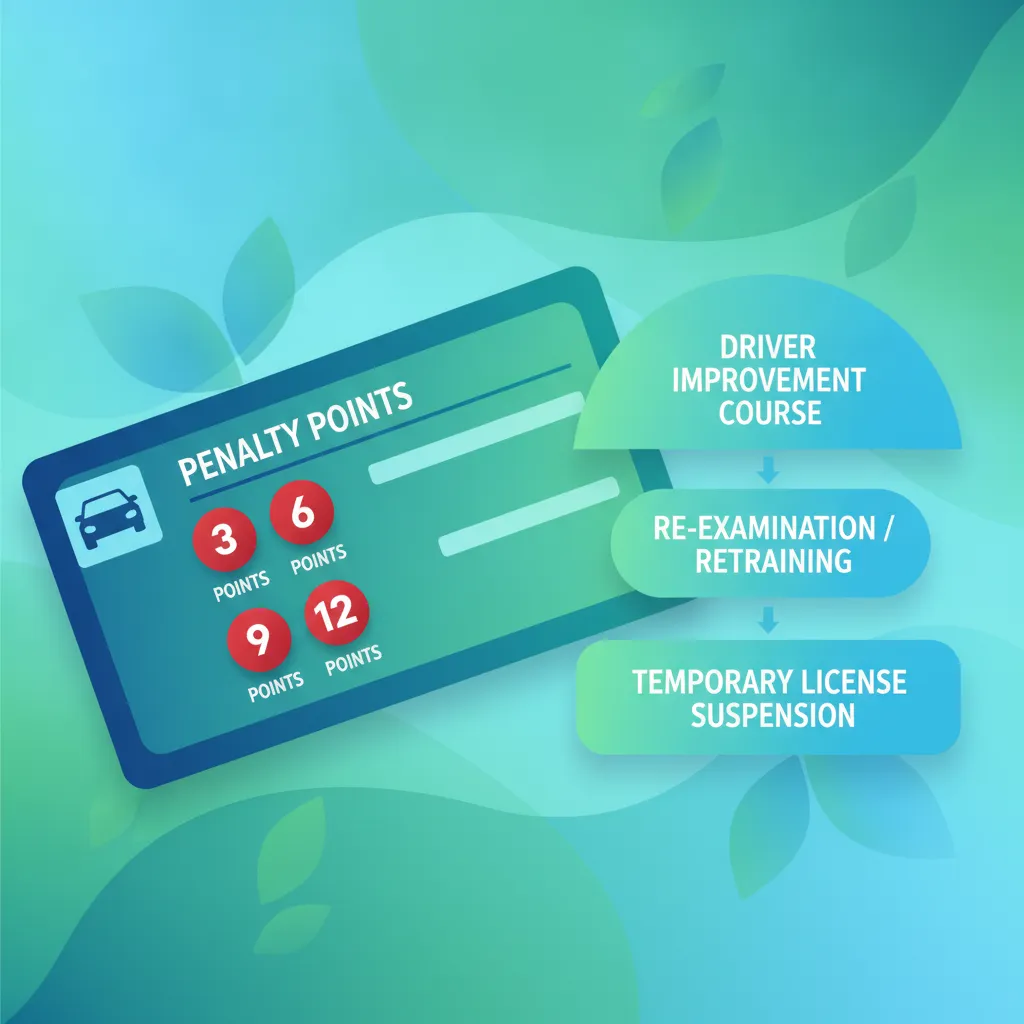
This lesson offers a clear explanation of the Austrian system of penalties for traffic offenses, including the demerit points system (Vormerksystem). It details which violations lead to points, the accumulation process, and the consequences at each stage, such as mandatory driver improvement courses and potential license suspension (Fahrverbot). Understanding this system provides a strong incentive for consistent compliance with all traffic regulations.
This lesson provides an overview of the legal framework governing heavy vehicle drivers in Austria. It details the potential penalties for violations, including fines, penalty points, and the risk of licence suspension. A clear understanding of these consequences reinforces the importance of compliant and responsible driving.
This lesson explains the system of penalties and enforcement for heavy vehicle operations in Austria. It covers the fines and penalty points associated with common traffic violations, such as overloading or insecure loads. Learners will understand the role of authorities in conducting roadside checks and inspections to ensure regulatory compliance.

This lesson details the legal ramifications of operating an overloaded heavy vehicle in Austria, which include significant fines and penalty points. It also emphasizes the severe safety risks, such as compromised braking performance and increased mechanical stress on the vehicle. Understanding these consequences reinforces the importance of strict adherence to weight limits.
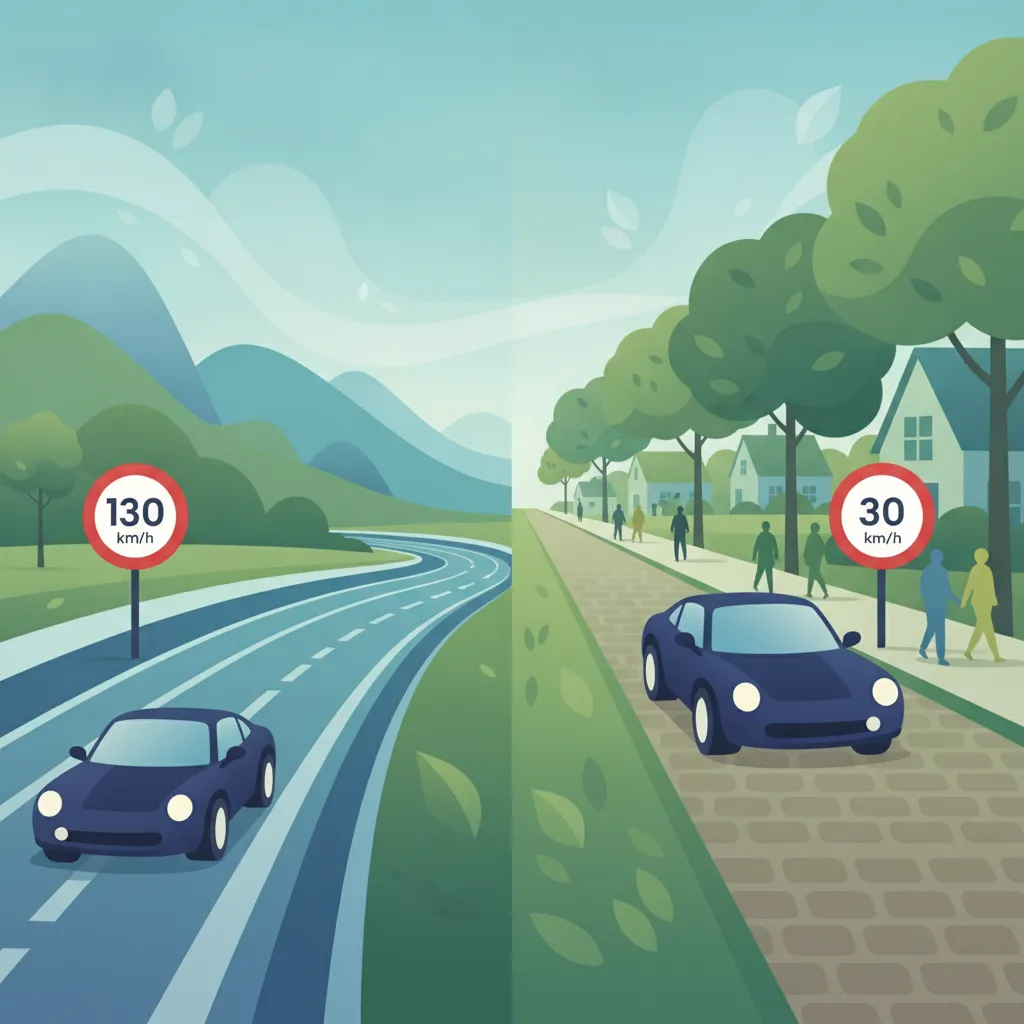
This lesson details the legally prescribed speed limits across Austria's road network, including the specific limits for urban areas (Ortsgebiet), rural roads (Landstraßen), motorways (Autobahnen), and expressways (Schnellstraßen). Learners will understand how to interpret speed limit signs, including those with supplementary conditions. Adherence to these legal requirements is a fundamental aspect of road safety and compliance with the Austrian road traffic act (StVO).

This lesson focuses on the driver's legal and ethical responsibility for the safety of all passengers. It details the mandatory use of seatbelts for all occupants and provides a thorough explanation of Austrian regulations concerning child restraints. Learners will understand how to choose and correctly install the appropriate child seat based on a child's age, weight, and height, ensuring maximum protection in the event of a collision.
Find clear answers to common questions learners have about Common Risk Behaviours among Young Riders. Learn how the lesson is structured, which driving theory objectives it supports, and how it fits into the overall learning path of units and curriculum progression in Austria. These explanations help you understand key concepts, lesson flow, and exam focused study goals.
Young riders often underestimate the stopping distance and stability of a moped, especially compared to cars. Overconfidence can lead to excessive speed in corners or late braking, which are common causes of accidents and a frequent topic in the theory exam.
The exam often presents scenarios where a rider is tempted to follow others' risky behavior, like ignoring a speed limit or filtering unsafely. Recognizing that the correct answer must always follow the StVO, regardless of what other drivers do, is key.
Using a phone while riding is highly distracting and generally prohibited in ways that compromise safety. You must follow the legal requirements regarding hands-free use and focus primarily on the road, as distractions are a core exam assessment area.
Refine your study plan by searching for specific Austrian driving theory practice sets. Pinpoint questions related to particular road rules, signs, or challenge levels, and begin practicing immediately to reinforce your knowledge and excel in your official exam with confidence. Get started with focused revision today.