
This lesson establishes the foundation of the Austrian Road Traffic Act (StVO) specifically tailored for moped and small scooter riders. You will learn the essential rules of right-of-way and how to interpret common road markings to navigate traffic safely and lawfully. Mastering these concepts is critical for your AM license theory exam and for making correct decisions in real-world traffic.
Lesson content overview
Navigating Austrian roads safely and lawfully as an AM category rider – whether on a moped, small scooter, or light quadricycle (up to 45 km/h) – begins with a solid understanding of the Austrian Road Traffic Act, known as the StVO (Straßenverkehrsordnung). This foundational lesson introduces the core principles that govern how road users interact, focusing on the essential concepts of right-of-way, road markings, and priority signs. By grasping these rules, you will be equipped to anticipate the actions of others, make informed decisions, and contribute to a safer traffic environment.
The StVO is designed to minimize conflict points, reduce the risk of collisions, and ensure a predictable flow of traffic for everyone. For AM riders, who are more vulnerable than occupants of larger vehicles, a precise understanding of these regulations is paramount. This lesson lays the groundwork for all subsequent learning in the Austrian AM Driving Theory course, enabling you to interpret complex traffic situations and react appropriately.
The Austrian StVO establishes a clear hierarchy of road users, a legal ranking that determines who may take precedence in various traffic situations. This hierarchy is not merely about traffic flow; it's a fundamental principle reflecting societal emphasis on protecting the most vulnerable participants in traffic. Understanding this order is crucial, as it dictates your responsibility to yield, even when a sign might suggest otherwise for motor vehicles.
At the top of this hierarchy are pedestrians, followed by cyclists, then motorized two-wheelers (including AM category vehicles), and finally, larger motor vehicles. This means that as an AM rider, you hold a position of greater vulnerability than a car driver but must always be mindful of those above you in the hierarchy.
This hierarchy means that an AM rider must yield to pedestrians at marked crossings (zebra crossings) and often to cyclists when their paths intersect, even if specific priority signs are absent or seem to contradict this general principle for motor vehicles.
Practically, this translates into an obligation: you must always be prepared to stop for pedestrians who intend to cross at a designated pedestrian crossing. Similarly, when sharing paths with cyclists, particularly in designated zones or when they are proceeding lawfully, you must exercise caution and yield to avoid conflict. Ignoring this fundamental principle is a common cause of accidents involving vulnerable road users and carries significant legal consequences under StVO § 5.
At the heart of traffic regulation lies the concept of right-of-way, which in Austrian German is primarily referred to as Vorfahrt. This dictates who has the legal entitlement to proceed before others at a specific point in traffic, such as an intersection or a merge point. Conversely, Nachrang describes the obligation to yield or give way to traffic that has Vorfahrt. These principles are vital for preventing collisions and ensuring smooth traffic flow.
Vorfahrt signifies the legal entitlement of a vehicle or road user to proceed first in a traffic situation. This privilege is not granted arbitrarily; it is clearly indicated by traffic signs, road markings, or, in their absence, by default rules. When you have Vorfahrt, you are generally expected to continue your journey without stopping or yielding, assuming the intersection or path is clear and safe to proceed.
However, having Vorfahrt does not mean you can proceed blindly or without caution. It is always your responsibility to ensure that the intersection is clear and that other road users are aware of your intention to proceed. Even with the right-of-way, you must be prepared for unexpected actions from others. StVO § 12 specifically addresses priority at intersections, stating that vehicles on a main road (Vorfahrtstraße) generally have priority.
Nachrang is the counterpart to Vorfahrt; it is the legal obligation to give way to traffic that has the right-of-way. This often means slowing down, stopping, and waiting until the path is clear before proceeding. The duty to yield is most commonly indicated by specific traffic signs, such as the "Vorfahrt gewähren" (Yield) sign or the "Stop" sign, but it also applies in situations governed by default rules, like the right-hand rule at uncontrolled intersections.
Failing to observe Nachrang can lead directly to collisions and carries severe legal penalties. When you are required to yield, you must do so in a way that does not force the priority traffic to brake or alter its course significantly. This includes stopping at a point where you have a clear view of the intersecting traffic and allowing sufficient time for priority vehicles to pass safely.
Priority signs are critical visual cues that explicitly dictate right-of-way at intersections and junctions. For AM riders, understanding and instantly recognizing these signs is fundamental to safe and lawful riding. They override most general rules of precedence, such as the right-hand rule, and must be obeyed without exception unless a traffic light is active and contradicts them.
The Vorfahrtstraße sign, a white triangular sign with a red border, tells you that you are on a priority road. This means that traffic from any intersecting side roads (unless they are also priority roads, which is rare at the same intersection) must yield to you. When you encounter this sign, you typically have the right to proceed without stopping or yielding, provided the way is clear. This sign is crucial for maintaining consistent traffic flow on main routes.
Even on a Vorfahrtstraße, always remain vigilant. Never assume other drivers will automatically yield. Glance left and right at intersections, especially in urban areas, to confirm other drivers are stopping.
The Vorfahrt gewähren sign, commonly known as the Yield sign, is an inverted white triangle with a red border. This sign places a clear obligation on you: you must yield to traffic on the intersecting road. This often means slowing down significantly and, if necessary, stopping completely to allow priority traffic to pass. You may only proceed when it is safe to do so without impeding any vehicles with Vorfahrt.
The yield sign is frequently found at the entrance to priority roads, roundabouts, or where a less important road merges with a more significant one. Misinterpreting or ignoring this sign is a common cause of accidents, particularly side-impact collisions at intersections.
The Stop sign, an octagonal red sign with white lettering, is one of the most unambiguous and mandatory priority signs. When you encounter a Stop sign, you are legally required to bring your vehicle to a complete halt before the designated stop line (or, if no line is present, at a point where you have a clear view of intersecting traffic without entering the intersection). After coming to a full stop, you must then yield to all traffic on the intersecting road, regardless of direction, before proceeding.
A "rolling stop" or slowing down without fully stopping is a violation and can be very dangerous, as it prevents you from adequately assessing the traffic situation. This sign is typically used at intersections with particularly poor visibility or high traffic volumes, where an absolute pause is deemed necessary for safety.
Road markings are vital visual cues painted on the road surface that reinforce traffic signs and guide road users. For AM riders, understanding these markings is essential for maintaining lane discipline, performing maneuvers safely, and understanding priority. They work in conjunction with signs to regulate traffic flow and define safe areas of travel.
Solid white lines indicate that crossing the line is prohibited. This applies to lane changes, overtaking, or turning. You must stay within your lane when a solid white line is present. These are commonly found near intersections, pedestrian crossings, and tunnels to prevent dangerous maneuvers.
Broken white lines, in contrast, indicate that lane changes or overtaking are permitted, provided it is safe to do so. They offer flexibility but still require the rider to check mirrors, signal intentions, and ensure sufficient space and visibility. For AM riders, understanding when and where you can legally change lanes or overtake is critical for safe integration into mixed traffic.
While white lines typically govern lane usage and overtaking in general, yellow lines on the roadway often indicate special restrictions or prohibitions, particularly regarding stopping, parking, or specific zones.
A solid yellow line at the edge of the road, for instance, often indicates a no-parking or no-stopping zone. In other contexts, a solid yellow line in the center of the road, especially a double solid yellow line, explicitly prohibits overtaking for traffic in both directions. A broken yellow line might permit overtaking under specific conditions, often one-way. For AM riders, these lines define boundaries for safe and legal maneuverability.
Beyond continuous lines, road surfaces feature various other markings. Directional arrows painted within lanes indicate the mandatory direction of travel from that lane (e.g., straight ahead, turn left, turn right). You must position your moped or scooter in the correct lane well in advance if you intend to turn.
Other special markings include zebra crossings (white stripes indicating pedestrian priority), bicycle lane markings, and warning markings that alert you to upcoming hazards or changes in road conditions. Ignoring these visual cues can lead to incorrect lane usage, illegal turns, or dangerous interactions with other road users.
Not all intersections are regulated by traffic lights, priority signs, or clear road markings. These are known as uncontrolled intersections (Kreuzungen ohne Verkehrszeichen). In Austria, the rule governing priority at such intersections is the right-hand rule (Rechtsregel).
At an uncontrolled intersection, the fundamental principle is that vehicles approaching from the right have priority. This applies unless otherwise indicated by signs, signals, or the hierarchy of road users (e.g., you must still yield to pedestrians).
As an AM rider, this means you must always be prepared to yield to any vehicle or road user approaching from your right at an uncontrolled junction. This rule aims to provide a default, predictable system where specific signage is absent. It is crucial to scan both left and right carefully when approaching such intersections, as the absence of signs can sometimes lead to confusion or hesitant driving by others.
Violating right-of-way rules is not only dangerous but also carries specific legal penalties under the StVO. Awareness of common pitfalls can help AM riders avoid accidents and fines.
The application of priority rules is not static; it must be adapted to various external conditions. An AM rider's ability to assess and react to these variables is a hallmark of safe riding.
Adhering strictly to right-of-way rules is not just a legal obligation; it's a fundamental safety principle. The impact of following these rules correctly, versus violating them, is profound:
| Action | If Followed Correctly | If Violated |
|---|---|---|
| Yield at "Vorfahrt gewähren" sign | Smooth traffic flow, prevents collisions with priority traffic. | Increased risk of side-impact collisions; legal penalties, potential injuries. |
| Stop fully at "Stop" sign | Allows thorough assessment of intersecting traffic, ensures safety. | May cause severe right-of-way accidents, significant fines, legal liability. |
| Adhere to road markings (solid lines) | Maintains lane discipline, reduces risky maneuvers, predictable traffic. | Dangerous overtaking or lane changes, potential head-on collisions, fines. |
| Respect hierarchy (yield to pedestrians) | Protects vulnerable users, complies with humanitarian and legal standards. | Severe pedestrian injury or fatality, criminal charges, lifelong consequences. |
| Observe right-hand rule at uncontrolled intersections | Predictable traffic behavior, reduces confusion and conflict points. | Unexpected interruptions, near-misses, potential collisions, legal blame. |
The consistent application of these rules creates a predictable environment where all road users can make safe decisions. As an AM rider, your proactive understanding and adherence to these basic StVO concepts will significantly reduce your risk of accidents and contribute to overall road safety in Austria.
Here are a few scenarios to help solidify your understanding of basic StVO concepts in real-world situations for AM riders:
Scenario: Pedestrian at Crossing An AM rider is approaching a marked Zebrastreifen (pedestrian crossing) in an urban area. A pedestrian is standing on the sidewalk, clearly indicating their intention to cross.
Scenario: Yielding at a Main Road An AM rider is exiting a side street onto a main road, where a Vorfahrt gewähren (Yield) sign is clearly visible. A car is approaching from the left on the main road.
Scenario: Uncontrolled Crossroads An AM rider approaches an uncontrolled four-way intersection simultaneously with another AM rider approaching from the right. There are no signs or traffic lights.
Scenario: Overtaking Restriction An AM rider is traveling behind a slower tractor on a narrow rural road. There is a solid yellow line painted in the center of the road.
These scenarios illustrate how the fundamental principles discussed in this lesson apply directly to everyday riding. Practicing these behaviors consistently is key to becoming a safe and confident AM rider.
To deepen your understanding of Austrian road traffic law and prepare for your AM driving theory exam, explore these resources:
This lesson establishes the core principles of the Austrian StVO essential for AM category riders, covering the hierarchy of road users that prioritizes pedestrians and cyclists over motorized vehicles, and the fundamental concepts of Vorfahrt (right-of-way) and Nachrang (yielding obligation). Key priority signs—Vorfahrtstraße, Vorfahrt gewähren, and Stop—dictate who may proceed at intersections and override default rules. At uncontrolled intersections, the right-hand rule (Rechtsregel) determines priority when no signs are present. Understanding road markings such as solid and broken white and yellow lines, along with directional arrows, enables safe lane positioning and maneuver execution. These foundational concepts, combined with awareness of contextual factors like weather and time of day, prepare riders for both the theory exam and real-world traffic situations.
A short set of high-value points that capture the most important learning from this lesson.
The hierarchy of road users places pedestrians first, then cyclists, then motorized two-wheelers including AM riders, with larger motor vehicles last
Vorfahrt is your legal right to proceed; Nachrang is your legal obligation to yield to others with priority
Priority signs (Vorfahrtstraße, Vorfahrt gewähren, Stop) override default rules and must be obeyed without exception
At uncontrolled intersections (Kreuzungen ohne Verkehrszeichen), the right-hand rule applies under StVO § 14
Road markings like solid yellow lines prohibit overtaking, while broken lines permit it when safe
Explore all units and lessons included in this driving theory course.
Vorfahrtstraße sign (white triangle with red border) = you have priority over intersecting traffic
Vorfahrt gewähren sign (inverted red-bordered triangle) = you must yield before proceeding
Stop sign (octagonal red with white letters) = mandatory complete stop before the stop line required
Right-hand rule: traffic approaching from your right has priority at uncontrolled intersections
Pedestrians have absolute priority at zebra crossings (Zebrastreifen) under StVO § 9 regardless of other signs
Assuming priority at an uncontrolled intersection when approaching from the left instead of yielding to traffic from the right
Performing a rolling stop instead of a complete halt at a Stop sign, which fails to satisfy legal requirements
Misinterpreting the hierarchy by failing to yield to pedestrians at crossings, believing other priority signs take precedence
Crossing solid white or solid yellow lines to overtake, ignoring the prohibition indicated by these road markings
Entering roundabouts without yielding to traffic already circulating inside the circle
Lesson content overview
A short set of high-value points that capture the most important learning from this lesson.
The hierarchy of road users places pedestrians first, then cyclists, then motorized two-wheelers including AM riders, with larger motor vehicles last
Vorfahrt is your legal right to proceed; Nachrang is your legal obligation to yield to others with priority
Priority signs (Vorfahrtstraße, Vorfahrt gewähren, Stop) override default rules and must be obeyed without exception
At uncontrolled intersections (Kreuzungen ohne Verkehrszeichen), the right-hand rule applies under StVO § 14
Road markings like solid yellow lines prohibit overtaking, while broken lines permit it when safe
Explore all units and lessons included in this driving theory course.
Vorfahrtstraße sign (white triangle with red border) = you have priority over intersecting traffic
Vorfahrt gewähren sign (inverted red-bordered triangle) = you must yield before proceeding
Stop sign (octagonal red with white letters) = mandatory complete stop before the stop line required
Right-hand rule: traffic approaching from your right has priority at uncontrolled intersections
Pedestrians have absolute priority at zebra crossings (Zebrastreifen) under StVO § 9 regardless of other signs
Assuming priority at an uncontrolled intersection when approaching from the left instead of yielding to traffic from the right
Performing a rolling stop instead of a complete halt at a Stop sign, which fails to satisfy legal requirements
Misinterpreting the hierarchy by failing to yield to pedestrians at crossings, believing other priority signs take precedence
Crossing solid white or solid yellow lines to overtake, ignoring the prohibition indicated by these road markings
Entering roundabouts without yielding to traffic already circulating inside the circle
Explore search topics learners often look for when studying Basic StVO Concepts for AM Riders. These topics reflect common questions about road rules, driving situations, safety guidance, and lesson level theory preparation for learners in Austria.
Browse additional driving theory lessons that cover connected traffic rules, road signs, and common driving situations related to this topic. Improve your understanding of how different rules interact across everyday traffic scenarios.
Learn about the legal ranking of road users in Austria, from pedestrians to motor vehicles. Understand how this hierarchy impacts AM riders and their responsibility to protect vulnerable road users according to the StVO.
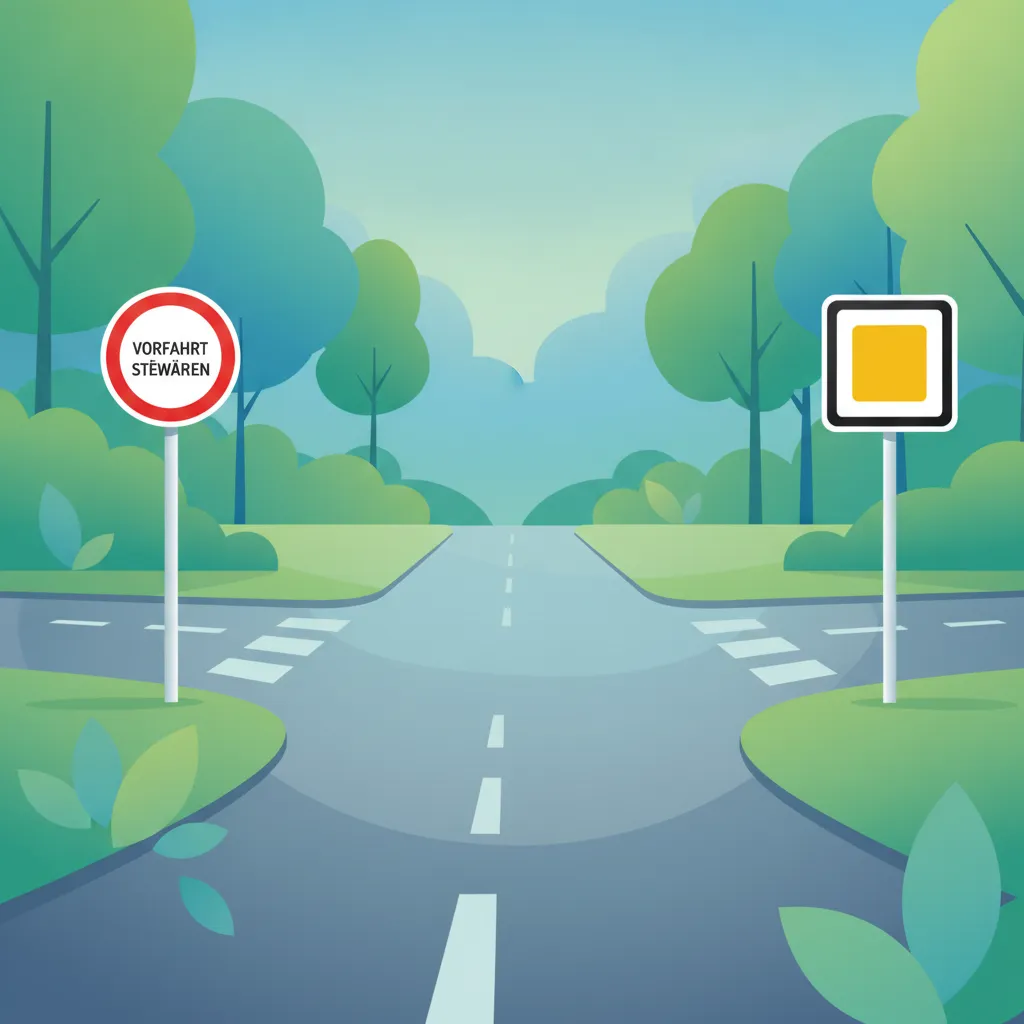
This lesson explains the fundamental concepts of priority that govern traffic at Austrian junctions. It differentiates between having priority ('Vorfahrt') and the duty to yield ('Nachrang'), detailing the signs that establish these rules. Correct application of these principles is critical for preventing collisions at intersections and roundabouts.

This lesson explains the core principles of Vorrang (having priority) and Nachrang (the obligation to yield) which form the basis of the Austrian traffic hierarchy. Learners will understand how priority roads are designated by signs and how drivers on secondary roads must yield right-of-way. The content clarifies the legal foundation for these rules under the Austrian road traffic act (StVO), providing a clear framework for decision-making at intersections.
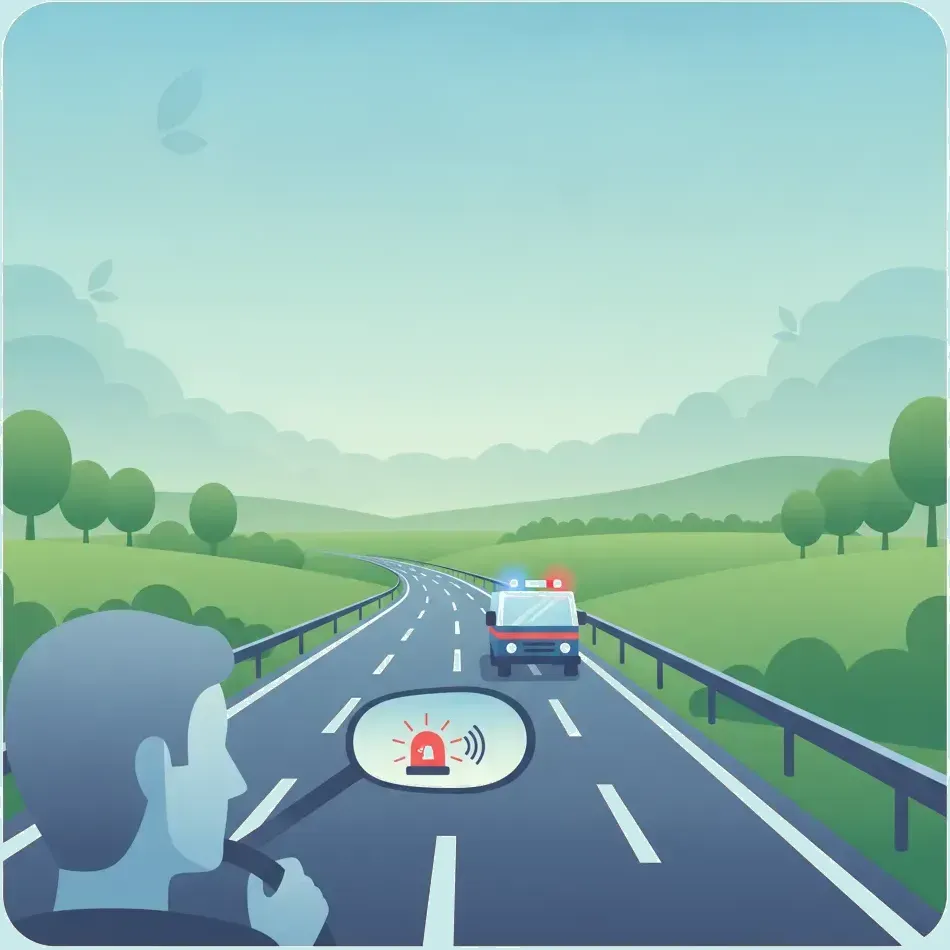
This lesson explains the correct protocol when encountering emergency vehicles with active sirens and lights. It details the legal requirement to yield the right-of-way and provides practical guidance on how to pull over safely and efficiently. Understanding these procedures helps ensure emergency services can reach their destination without delay.

This lesson provides a comprehensive explanation of Austria's right-of-way laws, which are fundamental to intersection safety. It covers the meaning of different priority signs and clarifies the 'Rechts vor Links' (priority to the right) rule that applies at unmarked junctions. A clear understanding of these rules is essential to prevent conflicts and collisions in urban and rural settings.

This lesson focuses on the interpretation of traffic lights and road surface markings that guide riders through intersections. It covers the meaning of each traffic light phase, the rules for amber lights, and the significance of various lane lines and stop lines. Properly understanding these signals is essential for maintaining traffic flow and ensuring safety at junctions.
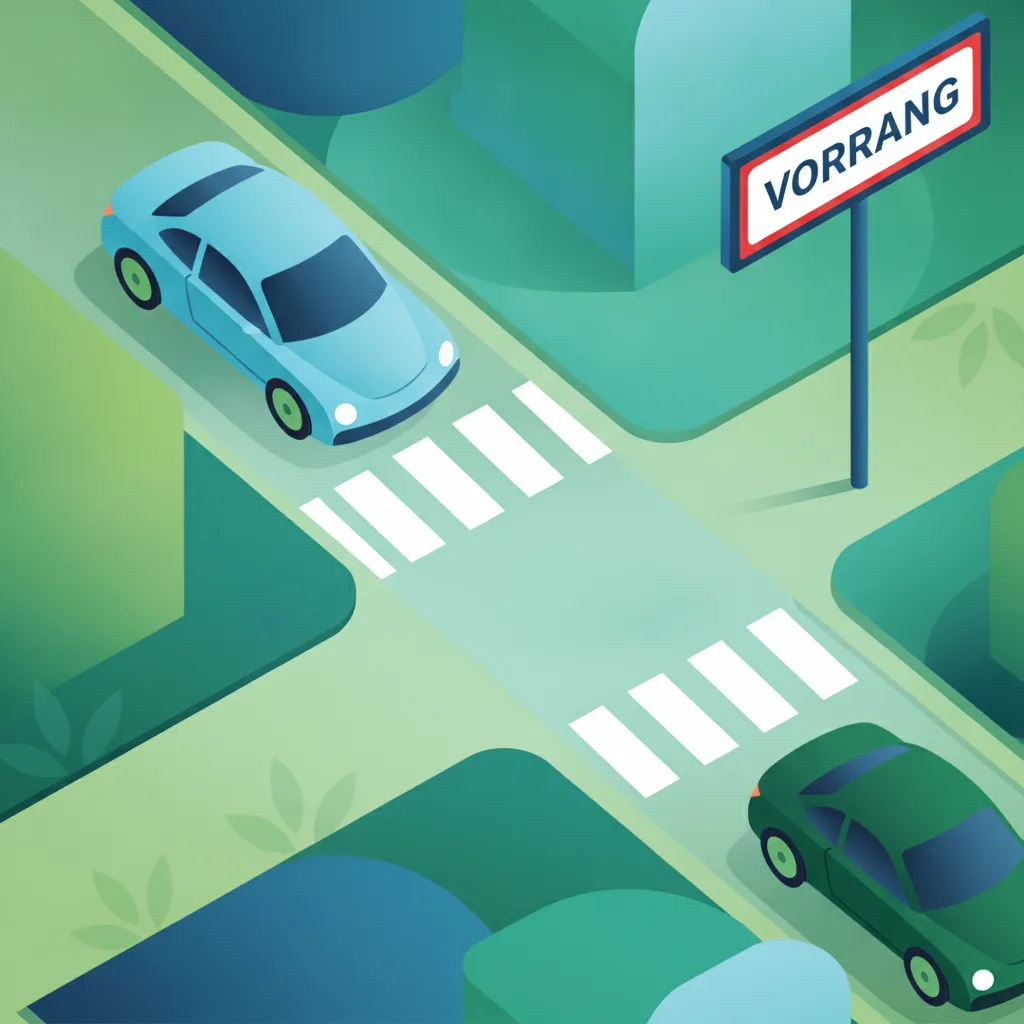
This lesson provides a detailed analysis of the core Austrian traffic rules that govern priority at junctions and in traffic. It focuses on the principles of Vorrang (having priority), Nachrang (yielding), and the Rechtsregel (default right-of-way from the right). Learners will understand the hierarchy of these rules and their application at various types of intersections, from unmarked junctions to those controlled by priority road signs, ensuring correct and safe decision-making.

This lesson outlines the legal speed limits for Category AM vehicles in Austria, covering urban, residential, and rural areas. It explains how to identify different speed zones through signage and the importance of adjusting speed based on traffic, weather, and road conditions. Adherence to these limits is a fundamental aspect of both legal compliance and safety.

This lesson teaches a safe and systematic process for approaching and crossing intersections. It covers how to correctly assess priority based on signs and general rules, adjust speed appropriately, and perform thorough visual checks. Emphasis is placed on anticipating the actions of other road users to prevent conflicts at junctions.

This lesson focuses on the rider's primary responsibility: ensuring they are visible and their actions are predictable to other road users. It explains effective strategies such as using proper lighting, wearing reflective clothing, and adopting a safe road position. The content also emphasizes how clear signaling and anticipating the actions of others can significantly reduce the risk of collisions.

This lesson provides essential knowledge for using Austria's high-speed road network. It covers the correct procedure for entering via acceleration lanes, maintaining strict lane discipline (keeping right, passing left), and understanding the digital or physical Vignette (toll sticker) requirement. The formation of the 'Rettungsgasse' (emergency corridor) during traffic jams is also a key topic.
Master the application of the right-hand rule (Rechtsregel) in Austria for AM riders at uncontrolled intersections. Understand when and how to yield to traffic approaching from the right according to StVO principles.
This lesson provides a comprehensive explanation of Austria's right-of-way laws, which are fundamental to intersection safety. It covers the meaning of different priority signs and clarifies the 'Rechts vor Links' (priority to the right) rule that applies at unmarked junctions. A clear understanding of these rules is essential to prevent conflicts and collisions in urban and rural settings.
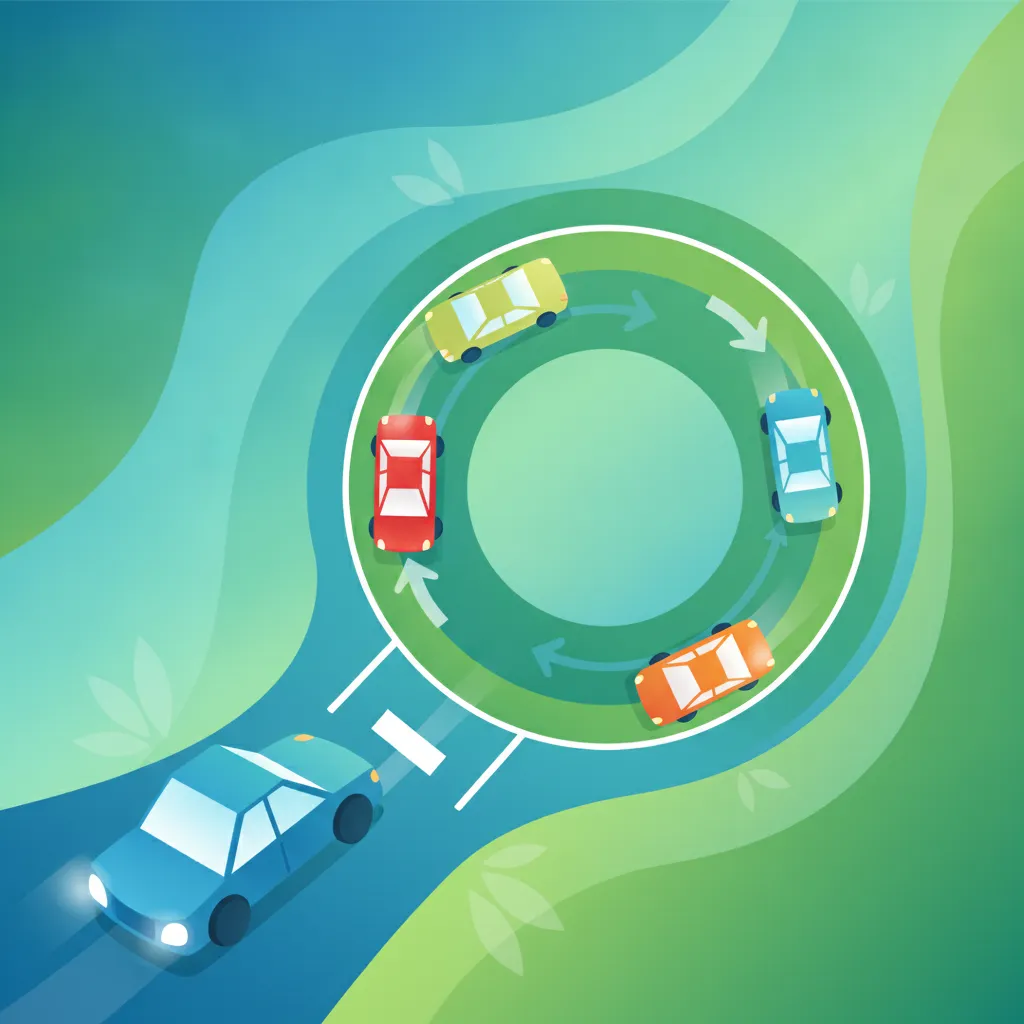
This lesson provides clear instructions on how to safely navigate roundabouts. It explains the critical rule of yielding to traffic already circulating and how to choose the correct lane based on the intended exit. The content also covers proper signaling procedures for entering and exiting the roundabout to communicate intentions clearly.
This lesson teaches a safe and systematic process for approaching and crossing intersections. It covers how to correctly assess priority based on signs and general rules, adjust speed appropriately, and perform thorough visual checks. Emphasis is placed on anticipating the actions of other road users to prevent conflicts at junctions.
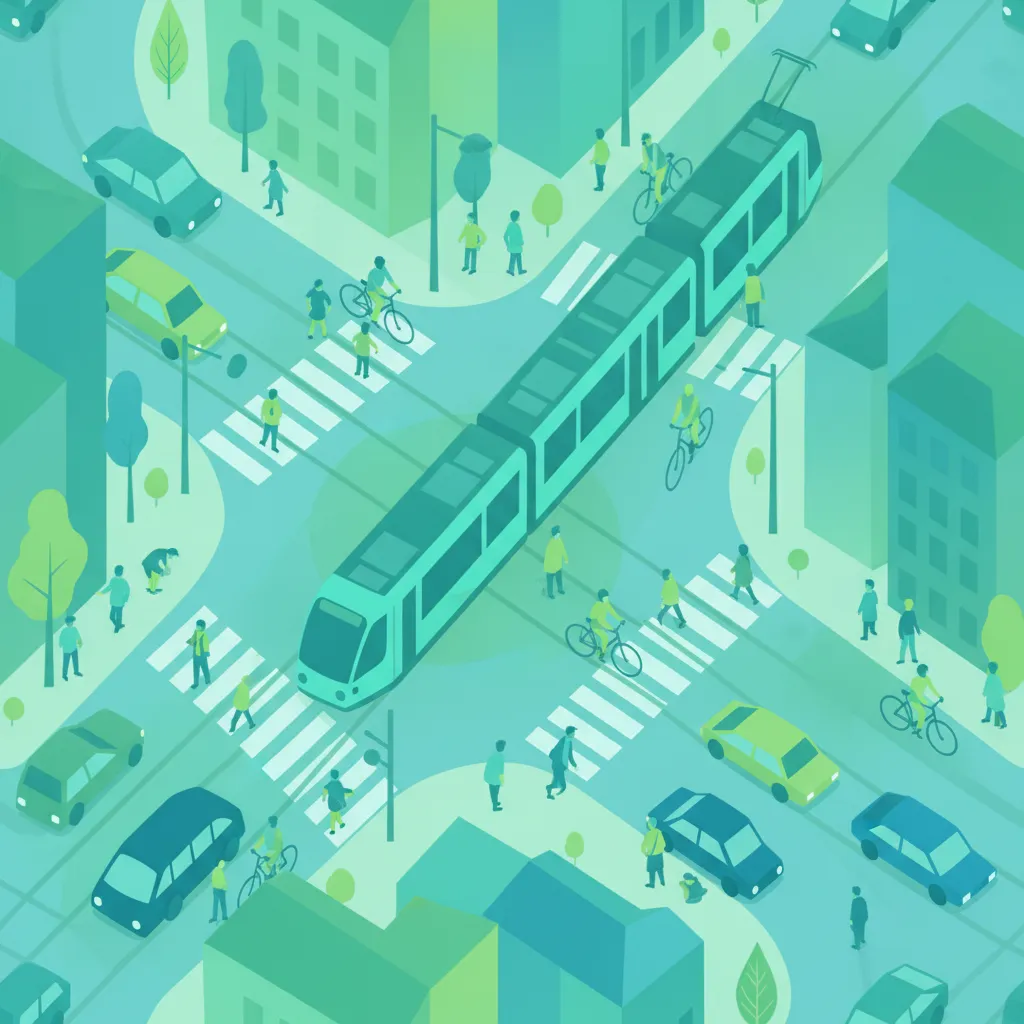
This lesson teaches a safe, methodical process for navigating intersections. It stresses the importance of proper lane positioning on approach, comprehensive visual scans for cross-traffic, pedestrians, and cyclists, and clear communication of intent. Special attention is given to the increased risks associated with left turns across oncoming traffic.
This lesson explains the fundamental concepts of priority that govern traffic at Austrian junctions. It differentiates between having priority ('Vorfahrt') and the duty to yield ('Nachrang'), detailing the signs that establish these rules. Correct application of these principles is critical for preventing collisions at intersections and roundabouts.
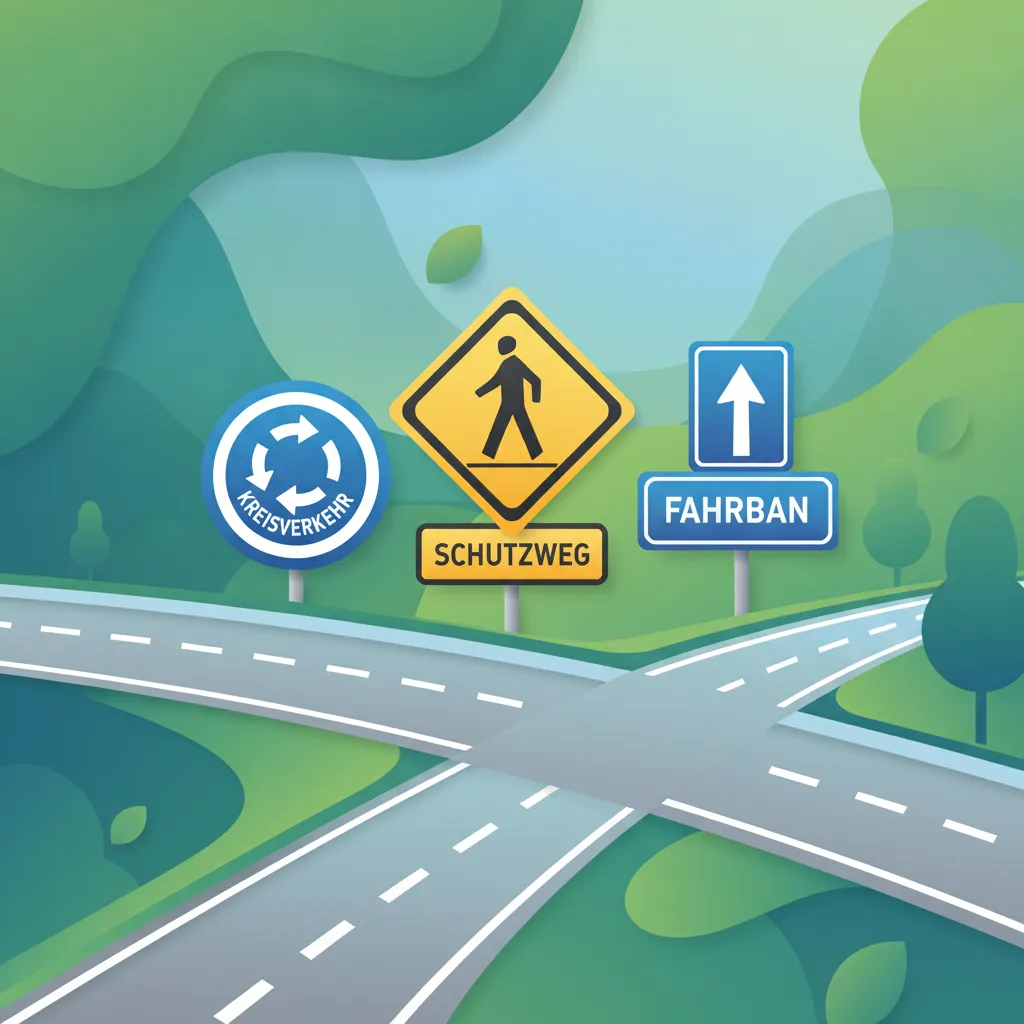
This lesson covers the specific regulations associated with special Austrian road signs and areas. It details the rules for 'Schutzweg' (protected pedestrian crossings), 'Kreisverkehr' (roundabouts), and the distinction between 'Fahrbahn' (road) and 'Fahrstreifen' (lane). Understanding these specific contexts is essential for safe navigation in urban and suburban environments.
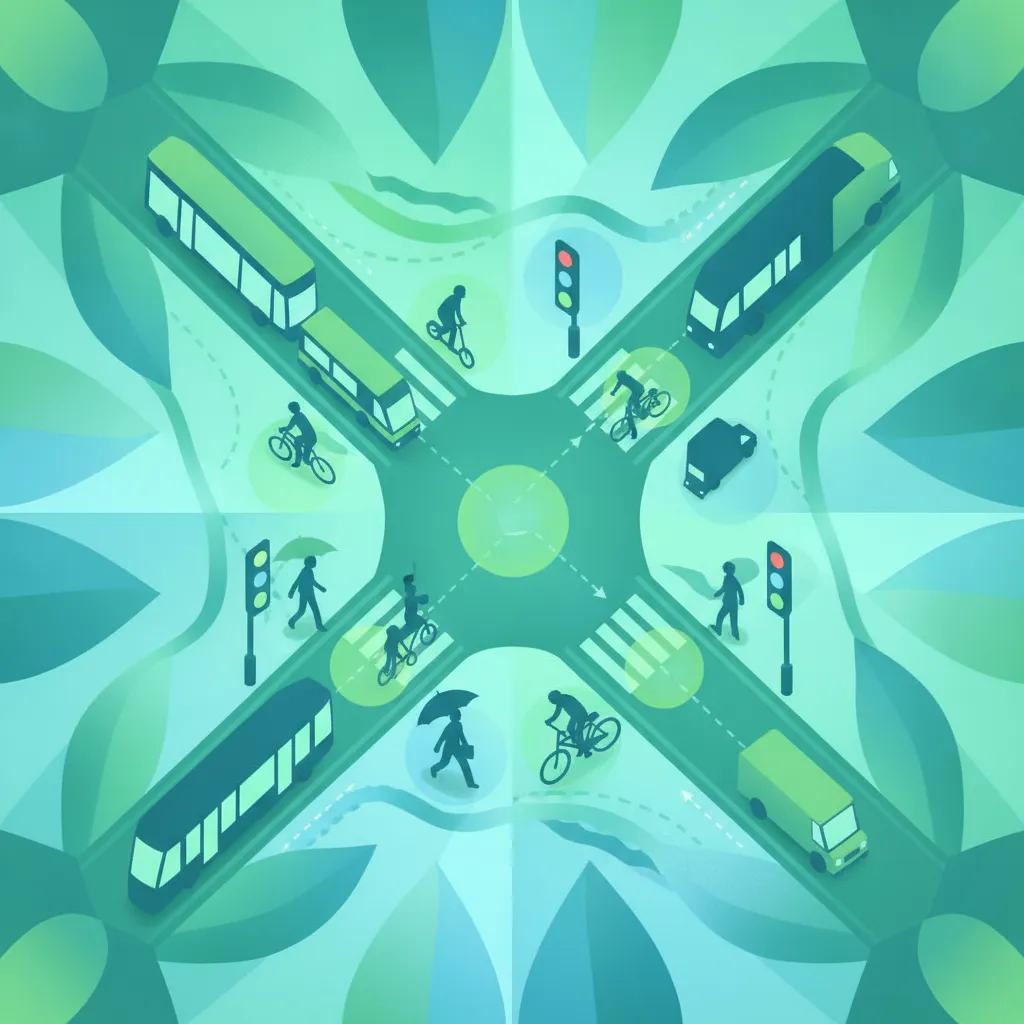
This lesson examines various common intersection layouts, including T-intersections, four-way junctions, and complex multi-lane crossings. It explains how right-of-way is determined in each scenario, whether through traffic signals, stop or yield signs, or the default right-hand rule. Understanding how to identify conflict points and apply the correct priority rule is essential for preventing collisions and ensuring smooth traffic movement.
This lesson explains the correct protocol when encountering emergency vehicles with active sirens and lights. It details the legal requirement to yield the right-of-way and provides practical guidance on how to pull over safely and efficiently. Understanding these procedures helps ensure emergency services can reach their destination without delay.
This lesson focuses on the interpretation of traffic lights and road surface markings that guide riders through intersections. It covers the meaning of each traffic light phase, the rules for amber lights, and the significance of various lane lines and stop lines. Properly understanding these signals is essential for maintaining traffic flow and ensuring safety at junctions.
This lesson provides a detailed analysis of the core Austrian traffic rules that govern priority at junctions and in traffic. It focuses on the principles of Vorrang (having priority), Nachrang (yielding), and the Rechtsregel (default right-of-way from the right). Learners will understand the hierarchy of these rules and their application at various types of intersections, from unmarked junctions to those controlled by priority road signs, ensuring correct and safe decision-making.
Find clear answers to common questions learners have about Basic StVO Concepts for AM Riders. Learn how the lesson is structured, which driving theory objectives it supports, and how it fits into the overall learning path of units and curriculum progression in Austria. These explanations help you understand key concepts, lesson flow, and exam focused study goals.
Vorfahrt refers to the right of way, meaning you are allowed to proceed first. Nachrang means you must yield to other traffic, which requires you to slow down or stop to let others pass safely before you proceed.
Yes, as a participant in road traffic, you must follow the same fundamental StVO principles as drivers of larger vehicles. However, AM riders must also be aware of their specific limitations regarding speed and motorway access.
In the absence of traffic signs, the general rule in Austria is 'right before left' (Rechtsvorrang). Always scan intersections carefully for this rule if no specific priority signage is visible.
The best way to avoid mistakes is to identify the hierarchy of traffic control: first look for police signals, then traffic lights, then road signs, and finally the general 'right before left' rule. Applying this step-by-step checklist prevents confusion.
Refine your study plan by searching for specific Austrian driving theory practice sets. Pinpoint questions related to particular road rules, signs, or challenge levels, and begin practicing immediately to reinforce your knowledge and excel in your official exam with confidence. Get started with focused revision today.