
This lesson guides you through selecting the correct road position to keep you safe and visible on your moped or scooter. You will learn how to adapt your positioning in response to different road conditions, parked vehicles, and traffic flow in accordance with Austrian traffic rules.

Lesson content overview
As a rider of a moped, small scooter, or light quadricycle in Austria, understanding and applying proper road positioning is crucial for your safety and the safety of others. This lesson delves into the strategic placement of your vehicle within a lane, considering various road types, traffic conditions, and potential hazards. By mastering these techniques, you enhance your visibility, increase your reaction time, and become a predictable road user, significantly reducing the risk of accidents.
Your position on the road is not merely about staying within the lines; it's a dynamic decision-making process that constantly adapts to the environment. An optimal road position helps you see potential dangers sooner and ensures other drivers can see you, especially critical for smaller vehicles like mopeds and scooters. In the context of Austrian traffic law (StVO), correct positioning is a fundamental aspect of defensive riding, allowing you to anticipate and respond to unforeseen events effectively.
Defensive riding is built upon a set of core principles that guide your lane positioning choices. These principles are designed to proactively reduce risks and provide you with the best possible chance to react to developing situations on Austrian roads.
One of your primary goals as a rider is to be seen by all other road users. This means actively avoiding areas where you might disappear from a driver's view, such as blind spots. Positioning yourself where you are most conspicuous helps prevent collisions by giving others ample time to register your presence.
Simultaneously, maintaining a predictable road position means avoiding sudden or erratic movements. When your actions are predictable, other drivers can anticipate your movements, fostering a safer traffic flow for everyone. Erratic lane changes or unusual positioning can confuse other road users and lead to dangerous situations.
Effective road positioning allows you to spot potential hazards far in advance, giving you precious seconds to react. This includes everything from a car door suddenly opening to a vehicle pulling out of a side street. By maintaining a safe distance and choosing a strategic lane position, you create "escape routes" – clear paths that you can use to avoid a collision if a hazard materializes. This proactive approach is a cornerstone of safe riding.
The lateral placement of your moped or scooter within a lane is known as lane positioning. This placement is not static but changes based on the road environment and prevailing conditions.
On most roads, riding in the centre of the lane width is often the ideal position. This central alignment offers several key advantages:
While the lane centre is generally preferred, there are specific situations where a near curb position (riding closer to the edge of the road) is necessary or advisable:
Always assess the situation carefully before moving to a near curb position. Riding too close to the curb can sometimes make you less visible, put you in areas with more debris, or increase the risk of being "squeezed" by other vehicles.
Certain road features and traffic situations inherently pose greater risks for moped and scooter riders. Intelligent lane positioning is your primary tool for mitigating these dangers.
Large vehicles such as trucks, buses, and even larger cars have significant blind spots (also known as "no-zones") where the driver cannot see you, even with their mirrors. These areas are extremely dangerous for smaller vehicles.
An area around a vehicle, particularly a larger one, that cannot be seen by the driver using their mirrors. Riding in this zone makes you invisible and greatly increases collision risk.
Your strategy must be to actively avoid these no-zones. Never ride directly beside or behind a large vehicle for an extended period. If you cannot see the driver's face in their mirror, they likely cannot see you.
Instead, either stay far enough back to be visible in their rear-view mirrors or move ahead to a position where you are clearly visible to the driver. When passing a large vehicle, do so quickly and safely, then move back into a visible position.
The parking hazard zone is the area immediately adjacent to parked vehicles, particularly on urban streets. This zone is dangerous because a car door can suddenly open into your path, leading to a severe "dooring" accident.
The area alongside parked vehicles where an opening door or a vehicle pulling out can create a sudden obstacle or collision risk for a passing rider.
To mitigate this risk, maintain a safe lateral distance from parked cars. If cars are parked on your right side (as in Austria), ride closer to the left side of your lane, creating a buffer of at least one metre, if possible. This gives you time and space to react if a door opens unexpectedly.
Cities in Austria, like Vienna or Graz, feature tram tracks that can pose a unique hazard for two-wheeled vehicles. The grooves of tram tracks can trap your wheels, causing a loss of control.
When encountering tram tracks that cross your path, the safest approach is to cross them as perpendicularly as possible – at a right angle (90 degrees). This minimises the chance of your wheels getting caught in the tracks. Avoid riding parallel to tram tracks for any significant distance, especially if they are wet or uneven.
When crossing tram tracks, slightly increase your speed and maintain a firm grip on your handlebars. Look well ahead to ensure you have a clear path to cross.
The characteristics of the road itself—its width, curves, surface, and whether it's an urban street or a high-speed motorway—all influence your optimal lane position.
Lane width directly impacts how you position your vehicle. A standard lane typically allows ample space for a moped or scooter to maintain a central position. However, on narrow lanes (often less than 2.5 metres wide), particularly on rural or residential roads, specific rules apply.
On such narrow roads, if a larger vehicle (like a car) needs to pass you or is approaching from the opposite direction, the general principle is that the wider vehicle should use the "outer" side of the lane, closer to the road edge. As a moped rider, you should generally stay closer to the "inner" side (towards the centre of the road or the left edge in Austria's right-hand traffic system) to provide adequate clearance. However, this must always be done without compromising your safety or creating a new hazard. Overtaking on narrow roads is often restricted and requires extreme caution.
Never assume you have an automatic right-of-way simply because you are on a smaller vehicle in a narrow lane. Always prioritise safety and defensive riding.
Navigating curves requires a deliberate adjustment in your lane position to enhance both visibility and stability. The key is to position yourself to maximise your line of sight through the bend and to provide more stable handling.
For a left-hand curve, position your moped towards the right side of your lane as you approach and enter the curve. This allows you to see further around the bend, spotting oncoming traffic or hazards earlier. As you exit the curve, you can gently drift back towards the lane centre.
For a right-hand curve, position your moped towards the left side of your lane as you approach. This again opens up your view through the curve, allowing you to see around any obstacles or oncoming vehicles that might be cutting the corner.
This technique, often referred to as "outside-inside-outside" for optimal path, is about maintaining the best possible view and creating the largest turning radius for smoother, safer cornering.
The condition of the road surface significantly influences where you should position your moped. Different conditions can dramatically affect your grip and stability.
Approaching and navigating intersections requires precise lane positioning to ensure you are seen and can clearly see other traffic.
While mopeds (especially Category AM vehicles) might have limitations on motorway access depending on their engine capacity and local regulations, understanding positioning on high-speed roads is vital for those who do use them (e.g., light quadricycles or scooters with higher engine capacities).
On motorways or similar high-speed roads, it is imperative to stay in the middle of your chosen lane. This provides maximum space on either side, allowing you to react to sudden braking or lane changes from other high-speed vehicles.
Never ride on the hard shoulder of a motorway. The shoulder is strictly for emergencies, breakdowns, or specific authorised vehicles. Riding there is illegal and extremely dangerous due to debris and unexpected stationary vehicles.
Maintaining a consistent, central lane position at speed also contributes to your predictability for other drivers, reducing the likelihood of them misjudging your position or speed.
Adhering to specific Austrian traffic regulations (StVO) is not just about legality but also about ensuring your safety and the predictability of traffic flow.
Rule: Riders must remain within designated lane boundaries except when legally overtaking or avoiding a specific, immediate hazard. Legal Status: Mandatory Rationale: This ensures predictable behaviour for all road users and prevents dangerous weaving or encroaching into other lanes. Crossing solid white lines is generally prohibited unless for specific authorised manoeuvres. Example (Correct): A scooter riding consistently in the centre of its lane on a multi-lane road. Example (Incorrect): A scooter continually weaving in and out of its lane or riding partially on a solid white line.
Rule: On narrow roads, especially those where the lane width is less than approximately 2.5 metres and where vehicles cannot comfortably pass side-by-side, the wider vehicle (e.g., a car) is generally expected to position further towards the outer edge, while the rider of a smaller vehicle (moped, scooter) should position towards the inner side to allow safe passage. Legal Status: Mandatory (based on principles of safe driving and mutual consideration in StVO § 13) Rationale: This rule facilitates safe passing and prevents unsafe squeezing or head-on collision risks on constricted roads. Example (Correct): On a very narrow two-way rural road, the moped rider stays closer to the left edge of the lane to give an oncoming car more space towards the right. Example (Incorrect): A moped rider hugging the right edge of a narrow lane, forcing an oncoming car to swerve dramatically.
Rule: When encountering tram tracks, riders must cross them as perpendicularly (at a right angle) as possible. Riding parallel to tram tracks is to be avoided where possible. Legal Status: Mandatory Rationale: Crossing at a right angle prevents wheels from getting trapped in the grooves, which can cause loss of control and falls. Example (Correct): A scooter rider approaching tram tracks and steering directly across them at a 90-degree angle. Example (Incorrect): A scooter rider attempting to turn onto a road by riding parallel with the tram tracks before trying to cross.
Rule: Riders on motorways (where permitted) must stay in the middle of their designated lane. Use of the hard shoulder for regular travel is strictly prohibited. Legal Status: Mandatory Rationale: This ensures stability, maintains adequate safety distances from other high-speed vehicles, and keeps the shoulder clear for emergencies. Example (Correct): A rider maintaining a consistent central position within their lane on a motorway. Example (Incorrect): A rider continuously hugging the far right edge of the lane on a motorway or riding on the hard shoulder.
Being aware of common errors can significantly enhance your defensive riding.
Many accidents involving mopeds and scooters occur when riders do not maintain enough distance from parked vehicles.
Failing to recognise and avoid the "no-zones" around trucks and buses is a critical mistake.
Hugging the inside of a curve, especially a left-hand bend, significantly reduces your visibility.
Attempting to cross tram tracks at an acute angle or riding along them is inherently dangerous.
Effective road positioning goes beyond fixed rules; it requires constant assessment of the dynamic environment.
When you encounter pedestrians, cyclists, or other vulnerable road users, your lane positioning must adapt to provide them with ample safety clearance.
Always assume vulnerable road users might not see you. Your responsibility is to ensure their safety through your positioning and actions.
Let's look at how these principles are applied in real-world Austrian driving situations.
Setting: You are riding your scooter on a residential street. There are cars parked along the right-hand side of your lane. Rule Applied: Avoid the parking hazard zone. Correct Behaviour: You position your scooter towards the left side of your lane, maintaining a safe distance of at least one metre from the parked cars. This gives you space to react if a car door suddenly opens. Incorrect Behaviour: You hug the curb, riding directly next to the parked cars, putting you at high risk of a "dooring" accident.
Setting: You are on a narrow rural road with two-way traffic. An oncoming car is approaching. Rule Applied: Lane width considerations for narrow roads. Correct Behaviour: You move closer to the left side of your lane (the "inner" side) to allow the wider oncoming car more space towards the right edge of the road, facilitating a safer pass for both vehicles. Incorrect Behaviour: You stay close to the right edge of the lane, forcing the oncoming car to potentially encroach onto the shoulder or dangerously close to your moped.
Setting: You are approaching a left-hand curve on an urban road. Rule Applied: Safe curve positioning and road surface condition awareness. Correct Behaviour: You position your scooter towards the right side of your lane as you approach the curve. This improves your line of sight through the bend and helps you spot any hazards or oncoming traffic sooner. You also avoid any potential oil/water accumulation near the left curb. Incorrect Behaviour: You hug the inside (left edge) of the curve, significantly reducing your visibility and potentially encountering a slippery road edge.
For a comprehensive understanding of safe riding in Austria, consider exploring these related topics.
This lesson covers essential road positioning strategies for moped and scooter riders in Austria, emphasising that lane position is a dynamic decision that adapts to traffic, road type, and hazards. Key principles include riding in the lane centre for maximum visibility and reaction space, maintaining safe distances from parked vehicles to prevent dooring, and using the outside-inside-outside technique on curves to improve sightlines. The lesson also addresses specific Austrian concerns such as navigating tram tracks, handling narrow rural roads, and avoiding blind spots around large vehicles, all while referencing StVO regulations for legal compliance.
A short set of high-value points that capture the most important learning from this lesson.
Riding in the centre of your lane maximises visibility and creates equal buffer zones on both sides for reaction time.
Always maintain at least one metre of clearance from parked cars to avoid dangerous 'dooring' incidents.
Approach curves by positioning on the outside of the lane to see further around the bend and maintain stability.
Cross tram tracks at a 90-degree angle to prevent your wheels from being trapped in the grooves.
If you cannot see a large vehicle driver's face in their mirror, they cannot see you—you are in their blind spot.
Explore all units and lessons included in this driving theory course.
On narrow roads, smaller vehicles should position towards the inner side to give wider vehicles more space to pass.
Use the 'outside-inside-outside' technique on curves: stay towards the outside edge approaching the bend, move inward at the apex, then drift back out on exit.
Avoid riding near lane edges in wet conditions—water, oil, and debris accumulate there and reduce traction.
Never ride on the motorway hard shoulder; it is reserved strictly for emergencies and authorised vehicles.
Stay in the middle of your lane on high-speed roads to maintain maximum space for reacting to sudden braking or lane changes.
Riding too close to parked cars reduces escape routes and greatly increases the risk of being hit by an opening door.
Failing to check for blind spots around trucks and buses can place you in a 'no-zone' where the driver cannot see you at all.
Hugging the inside of a left-hand curve limits your sightline and reduces stability just when you need it most.
Attempting to cross tram tracks at a shallow angle risks trapping your wheels in the grooves and causing a fall.
Moving to the near-curb position without assessing the situation can make you less visible and increase exposure to debris.
Lesson content overview
A short set of high-value points that capture the most important learning from this lesson.
Riding in the centre of your lane maximises visibility and creates equal buffer zones on both sides for reaction time.
Always maintain at least one metre of clearance from parked cars to avoid dangerous 'dooring' incidents.
Approach curves by positioning on the outside of the lane to see further around the bend and maintain stability.
Cross tram tracks at a 90-degree angle to prevent your wheels from being trapped in the grooves.
If you cannot see a large vehicle driver's face in their mirror, they cannot see you—you are in their blind spot.
Explore all units and lessons included in this driving theory course.
On narrow roads, smaller vehicles should position towards the inner side to give wider vehicles more space to pass.
Use the 'outside-inside-outside' technique on curves: stay towards the outside edge approaching the bend, move inward at the apex, then drift back out on exit.
Avoid riding near lane edges in wet conditions—water, oil, and debris accumulate there and reduce traction.
Never ride on the motorway hard shoulder; it is reserved strictly for emergencies and authorised vehicles.
Stay in the middle of your lane on high-speed roads to maintain maximum space for reacting to sudden braking or lane changes.
Riding too close to parked cars reduces escape routes and greatly increases the risk of being hit by an opening door.
Failing to check for blind spots around trucks and buses can place you in a 'no-zone' where the driver cannot see you at all.
Hugging the inside of a left-hand curve limits your sightline and reduces stability just when you need it most.
Attempting to cross tram tracks at a shallow angle risks trapping your wheels in the grooves and causing a fall.
Moving to the near-curb position without assessing the situation can make you less visible and increase exposure to debris.
Explore search topics learners often look for when studying Road Position on Different Road Types. These topics reflect common questions about road rules, driving situations, safety guidance, and lesson level theory preparation for learners in Austria.
Browse additional driving theory lessons that cover connected traffic rules, road signs, and common driving situations related to this topic. Improve your understanding of how different rules interact across everyday traffic scenarios.
Learn to identify and avoid dangerous road positions that increase risk for moped riders. This lesson covers common errors like blind spots, parking hazards, and incorrect curve positioning, focusing on defensive strategies within Austrian traffic rules.
This lesson explains how to use different positions within a lane to maximize visibility, create safety buffers, and plan escape routes. It introduces the concept of anticipative riding, which involves actively scanning for potential hazards and predicting the actions of other drivers. Strategic positioning is a dynamic skill that allows a rider to manage space and time effectively in changing traffic.

This lesson focuses on identifying and mitigating common hazards in dense urban settings. It explains how to maintain a safe distance from parked cars to avoid opening doors and how to navigate narrow streets. Additionally, it covers the special rules and heightened awareness required when riding in or near pedestrian zones and school areas.

This lesson focuses on the rider's primary responsibility: ensuring they are visible and their actions are predictable to other road users. It explains effective strategies such as using proper lighting, wearing reflective clothing, and adopting a safe road position. The content also emphasizes how clear signaling and anticipating the actions of others can significantly reduce the risk of collisions.

This lesson identifies and analyzes common risk-taking behaviors prevalent among young and inexperienced riders. It covers the dangers of distractions like mobile phone use, the influence of peer pressure, and the false sense of security from overconfidence. The goal is to foster a mature and responsible approach to riding.

This lesson teaches a safe and systematic process for approaching and crossing intersections. It covers how to correctly assess priority based on signs and general rules, adjust speed appropriately, and perform thorough visual checks. Emphasis is placed on anticipating the actions of other road users to prevent conflicts at junctions.
This lesson prepares riders for safely transiting through construction zones ('Baustellen'). It covers the interpretation of temporary signage, adherence to reduced speed limits, and awareness of hazards suchas altered lane markings, abrupt surface changes, and loose gravel. Respecting the safety of road workers and anticipating unpredictable traffic patterns are key themes.

This lesson highlights the specific hazards of riding on countryside roads in Austria. It teaches riders to be vigilant for wildlife crossing signs, especially at dawn and dusk, and how to safely approach and overtake slow-moving agricultural machinery. Awareness of potential surface hazards like mud, gravel, or manure from farm access points is also crucial for maintaining traction.
This lesson provides advice for navigating popular scenic routes, which often feature heavy traffic, cyclists, and distracted drivers. It emphasizes maintaining focus on the road despite beautiful scenery and anticipating unpredictable actions from other tourists who may stop suddenly. Adopting a patient and defensive mindset is key to safely enjoying these remarkable roads.
This lesson teaches a safe, methodical process for navigating intersections. It stresses the importance of proper lane positioning on approach, comprehensive visual scans for cross-traffic, pedestrians, and cyclists, and clear communication of intent. Special attention is given to the increased risks associated with left turns across oncoming traffic.
This lesson provides clear instructions on how to safely navigate roundabouts. It explains the critical rule of yielding to traffic already circulating and how to choose the correct lane based on the intended exit. The content also covers proper signaling procedures for entering and exiting the roundabout to communicate intentions clearly.
Understand how to adapt your road position based on different road types and environments in Austria. This lesson explores strategies for narrow lanes, complex junctions, urban streets, and high-speed roads to ensure visibility and safety.
This lesson outlines the legal speed limits for Category AM vehicles in Austria, covering urban, residential, and rural areas. It explains how to identify different speed zones through signage and the importance of adjusting speed based on traffic, weather, and road conditions. Adherence to these limits is a fundamental aspect of both legal compliance and safety.

This lesson provides essential knowledge for using Austria's high-speed road network. It covers the correct procedure for entering via acceleration lanes, maintaining strict lane discipline (keeping right, passing left), and understanding the digital or physical Vignette (toll sticker) requirement. The formation of the 'Rettungsgasse' (emergency corridor) during traffic jams is also a key topic.
This lesson teaches a safe and systematic process for approaching and crossing intersections. It covers how to correctly assess priority based on signs and general rules, adjust speed appropriately, and perform thorough visual checks. Emphasis is placed on anticipating the actions of other road users to prevent conflicts at junctions.

This lesson provides a comprehensive explanation of Austria's right-of-way laws, which are fundamental to intersection safety. It covers the meaning of different priority signs and clarifies the 'Rechts vor Links' (priority to the right) rule that applies at unmarked junctions. A clear understanding of these rules is essential to prevent conflicts and collisions in urban and rural settings.

This lesson focuses on the interpretation of traffic lights and road surface markings that guide riders through intersections. It covers the meaning of each traffic light phase, the rules for amber lights, and the significance of various lane lines and stop lines. Properly understanding these signals is essential for maintaining traffic flow and ensuring safety at junctions.
This lesson explains how to use different positions within a lane to maximize visibility, create safety buffers, and plan escape routes. It introduces the concept of anticipative riding, which involves actively scanning for potential hazards and predicting the actions of other drivers. Strategic positioning is a dynamic skill that allows a rider to manage space and time effectively in changing traffic.
This lesson provides clear instructions on how to safely navigate roundabouts. It explains the critical rule of yielding to traffic already circulating and how to choose the correct lane based on the intended exit. The content also covers proper signaling procedures for entering and exiting the roundabout to communicate intentions clearly.
This lesson focuses on identifying and mitigating common hazards in dense urban settings. It explains how to maintain a safe distance from parked cars to avoid opening doors and how to navigate narrow streets. Additionally, it covers the special rules and heightened awareness required when riding in or near pedestrian zones and school areas.
This lesson provides advice for navigating popular scenic routes, which often feature heavy traffic, cyclists, and distracted drivers. It emphasizes maintaining focus on the road despite beautiful scenery and anticipating unpredictable actions from other tourists who may stop suddenly. Adopting a patient and defensive mindset is key to safely enjoying these remarkable roads.
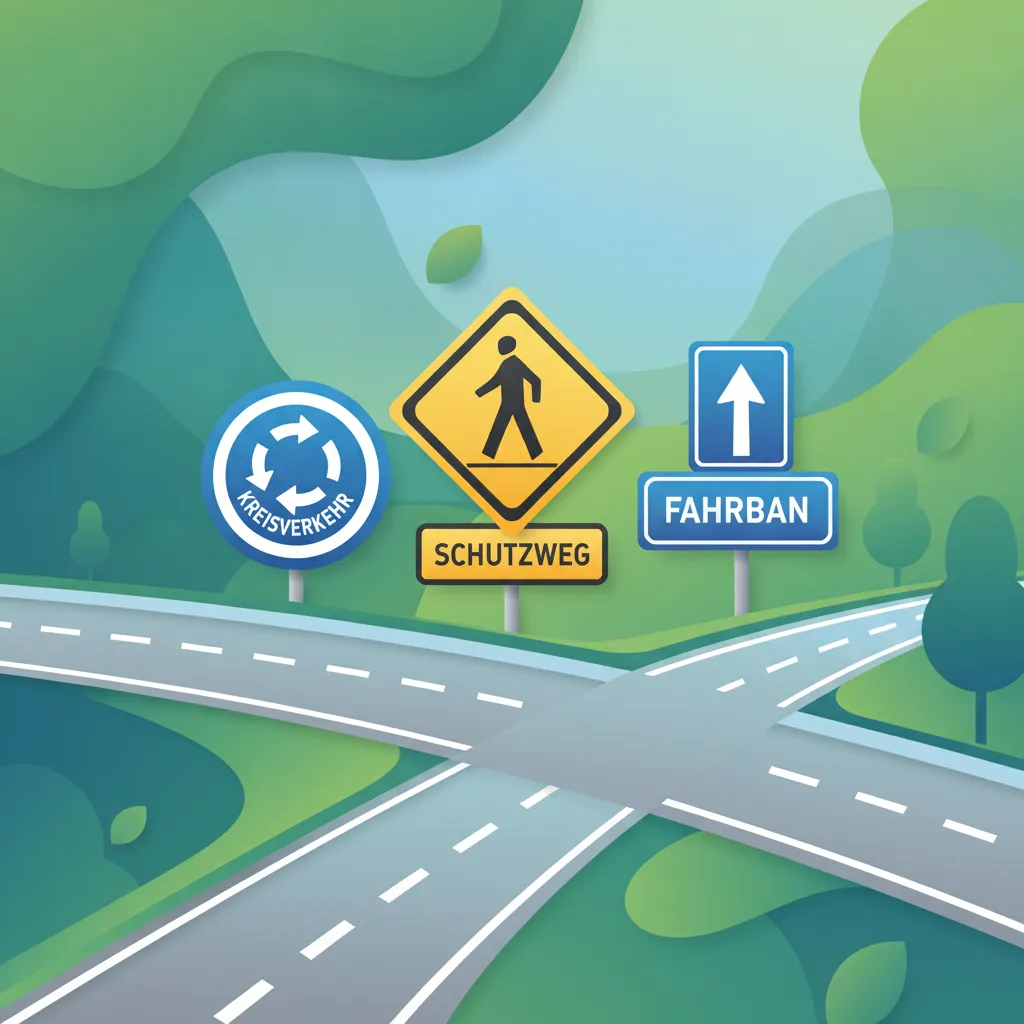
This lesson covers the specific regulations associated with special Austrian road signs and areas. It details the rules for 'Schutzweg' (protected pedestrian crossings), 'Kreisverkehr' (roundabouts), and the distinction between 'Fahrbahn' (road) and 'Fahrstreifen' (lane). Understanding these specific contexts is essential for safe navigation in urban and suburban environments.
Find clear answers to common questions learners have about Road Position on Different Road Types. Learn how the lesson is structured, which driving theory objectives it supports, and how it fits into the overall learning path of units and curriculum progression in Austria. These explanations help you understand key concepts, lesson flow, and exam focused study goals.
Generally, you should ride in the part of the lane where you are most visible to other road users, often slightly offset from the center. Avoid hugging the curb, as this encourages cars to overtake dangerously close, and always leave space for potential hazards like car doors.
The exam often features situational images where you must identify the safest position for your vehicle. Understanding these rules demonstrates your ability to anticipate danger and act defensively, which is a core requirement for passing your theory test.
Yes. As you approach a junction, you should position yourself clearly to indicate your intended direction, ensuring you remain visible to following traffic while preparing to safely complete your turn according to standard priority rules.
The most significant risk is the 'dooring' hazard, where a driver or passenger opens a car door without checking mirrors. Riding with enough clearance allows you to react or steer clear if a door suddenly opens in front of you.
Refine your study plan by searching for specific Austrian driving theory practice sets. Pinpoint questions related to particular road rules, signs, or challenge levels, and begin practicing immediately to reinforce your knowledge and excel in your official exam with confidence. Get started with focused revision today.