
This lesson guides you through the essential priority rules, known as Vorfahrt and Nachrang, that govern Austrian intersections. Understanding these principles is a fundamental requirement for all AM licence holders to ensure safe and predictable riding. You will learn how to identify the relevant road signs and apply the correct yielding procedures in various traffic scenarios.
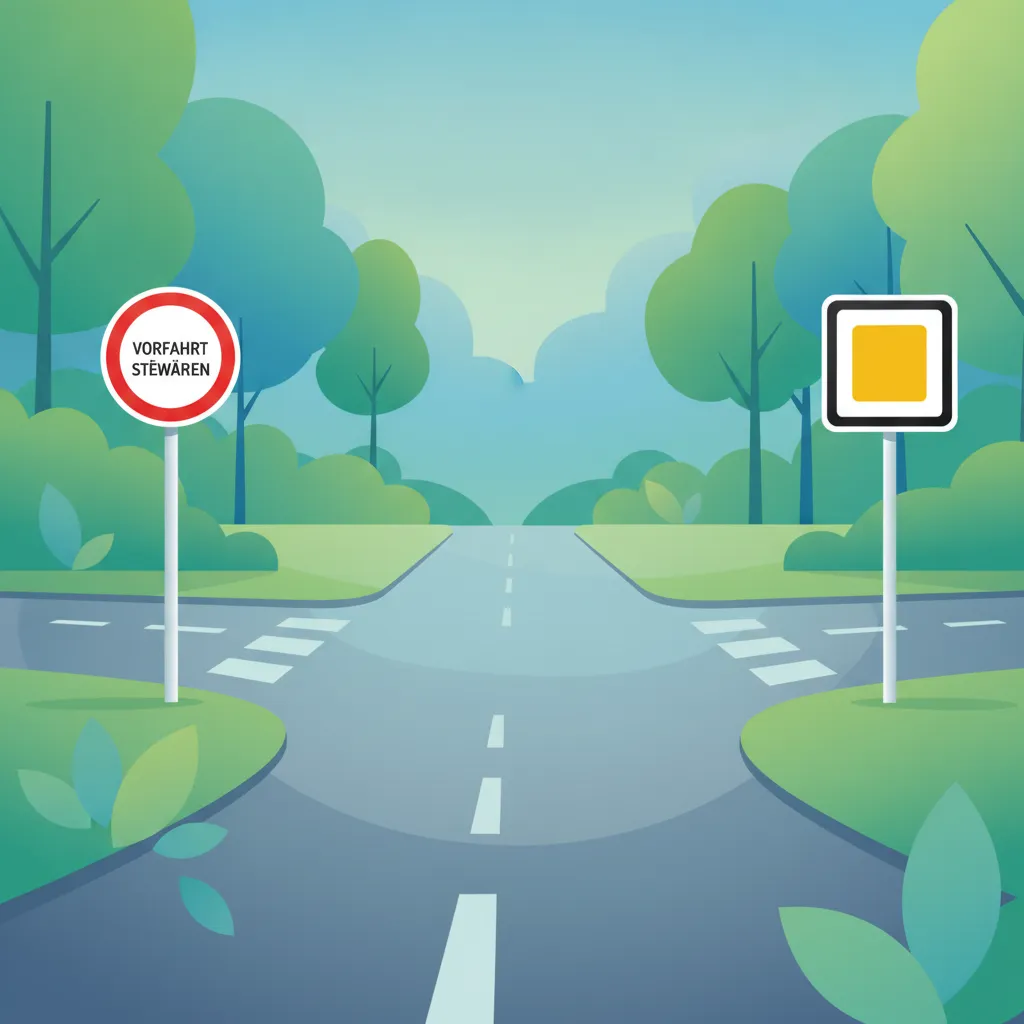
Lesson content overview
Navigating Austrian roads, especially at junctions, requires a clear understanding of traffic priority. This comprehensive lesson delves into the core principles of Vorfahrt (right-of-way) and Nachrang (the duty to yield), equipping you with the knowledge to make safe and informed decisions behind the handlebars of your moped or scooter. Mastering these rules is not just about passing your AM license theory test; it's fundamental to preventing collisions and ensuring smooth traffic flow for all road users.
At its heart, traffic priority dictates which road user has the legal right to proceed first at any point where paths might conflict, such as an intersection or junction. In Austria, this concept is primarily known as Vorfahrt, which translates directly to "right-of-way" or "priority."
Vorfahrt is the legal entitlement of a driver to proceed without having to yield to other traffic participants at a conflict point. When you have Vorfahrt, other drivers are legally obligated to wait for you, ensuring that you can continue your journey safely and without interruption. This system is crucial for predictable traffic flow and significantly reduces the risk of accidents by clarifying who moves when.
For moped riders, understanding when you have Vorfahrt is vital. It influences your speed, road positioning, and communication with other road users. However, having Vorfahrt does not mean you can proceed recklessly. It always comes with the responsibility to maintain vigilance and be prepared for unexpected actions from other drivers.
Vorfahrt can manifest in different forms, depending on the specific road environment and traffic control measures:
Vorrangstraße (priority road) generally grants you unrestricted Vorfahrt over intersecting roads, provided no other overriding signals are present.Vorfahrt, but only for the duration of the green signal. Similarly, certain lane markings might grant priority when turning, but only if the path is clear.As a moped rider, you are a smaller vehicle in mixed traffic. Recognizing when you have Vorfahrt allows you to proceed confidently and maintain a steady pace, contributing to overall traffic efficiency. Conversely, being aware of when others have Vorfahrt over you prepares you to adjust your speed or stop, preventing dangerous situations.
It's a common misunderstanding that a "stop" sign always means you must wait for all traffic to clear. While you must stop, your subsequent action depends on whether you actually need to yield to approaching traffic. If the path is clear after stopping, you may proceed. This highlights the nuanced application of priority rules.
The counterpart to Vorfahrt is Nachrang, which describes the legal obligation to give way to other traffic participants who have Vorfahrt. Understanding Nachrang is just as important as knowing when you have Vorfahrt, as it directly concerns your responsibility to prevent collisions.
Nachrang means you must allow other road users to proceed first. This typically involves slowing down, stopping, or waiting until the path is clear for those with Vorfahrt. It's a proactive measure designed to manage conflict points on the road.
When you are required to exercise Nachrang, your primary goal is to avoid interfering with the progress of priority traffic. This means not only physically stopping or yielding but also making your intentions clear to other drivers through appropriate signaling and predictable movements.
Just like Vorfahrt, Nachrang can have different levels of strictness:
Zebrastreifen) is absolute; you must stop even if no pedestrians are currently crossing, but merely waiting to cross. Similarly, a red traffic light demands absolute Nachrang (you must stop).Vorfahrt gewähren (yield) sign, for instance, requires you to yield to cross traffic if there is any. If the crossroad is clear, you can proceed after assessing the situation.Yielding safely involves more than just braking. It requires anticipation, clear judgment, and proper execution:
Nachrang and identify the priority traffic.A common mistake is assuming that a yield sign only applies when visible traffic is present. Drivers must still assess the possibility of approaching priority traffic, even if none is immediately visible, by checking mirrors and blind spots.
Austrian traffic law, the Straßenverkehrsordnung (StVO), establishes several fundamental rules for determining priority. These rules are primarily conveyed through signs, but also apply as default regulations in the absence of explicit signage.
One of the most foundational priority rules in Austria, and much of continental Europe, is the Vorrang von Rechts, often simply called the "right-hand rule."
This rule simplifies decision-making at intersections where no other guidance is provided. As a moped rider, if you approach an intersection and there are no Vorfahrt signs, traffic lights, or road markings, you must yield to any vehicle approaching from your right. This rule is often referred to as Querlänge in Austrian legal texts, referring to cross traffic.
Specific traffic signs are used to establish Vorfahrt or Nachrang explicitly. These signs override the right-hand rule when present.
Vorrangstraße (Priority Road Sign)This sign indicates that the road you are currently on has priority over any intersecting roads.
When you see the Vorrangstraße sign, you generally do not need to yield to traffic entering from side roads. However, you must still be cautious and prepared for drivers who might not obey the yield rules. The Vorrangstraße sign usually appears at the beginning of a priority road and after major intersections along its course.
Ende der Vorrangstraße)When you pass this sign, it signifies that the priority previously granted to the road no longer applies. Future intersections may then be governed by other signs or revert to the Vorrang von Rechts rule.
These signs specifically impose the duty to yield on you.
Vorfahrt gewähren (Yield Sign)This triangular sign, with a red border and white background, requires you to yield to cross traffic.
When you encounter a Vorfahrt gewähren sign, you must slow down and be prepared to stop. You only proceed when it is safe to do so, without forcing priority traffic to change its speed or direction. This is a Nachrang situation.
Halt (Stop Sign)The octagonal red Halt sign is the most stringent yield sign.
This sign demands a full and complete stop at the stop line, or before the intersection if no line is present. After stopping, you must then yield to any cross traffic, regardless of direction, before carefully proceeding. Even if no traffic is visible, a full stop is mandatory.
Roundabouts (Kreisverkehr) have specific priority rules that deviate from the standard right-hand rule.
In Austria, the general rule for roundabouts is that vehicles already circulating within the roundabout have priority over vehicles entering it. This rule is almost always reinforced by a Vorfahrt gewähren sign placed at each entry point to the roundabout.
It is a common misunderstanding to apply the right-hand rule inside a roundabout. This is incorrect and can lead to dangerous situations. Your priority within the roundabout is governed by your position and the general rule that circulating traffic has Vorfahrt.
Certain road users are granted statutory priority, regardless of general signs or the right-hand rule, due to their vulnerability. This is a critical aspect of safe riding, especially for moped riders who are also considered more vulnerable than car drivers.
Pedestrians are among the most vulnerable road users. They have explicit priority in several situations:
Marked Crossings (Zebrastreifen): At a Zebrastreifen (zebra crossing), pedestrians have absolute priority. You must stop for any pedestrian who is on the crossing or clearly intending to cross it. This means stopping even if they are just waiting at the curb.
Traffic Signals: When pedestrians have a green light, they have priority over turning vehicles, even if those vehicles also have a green light.
Cyclists also receive special priority in certain contexts:
Radweg): Cyclists on designated bicycle lanes or paths often have priority, especially when crossing roads or merging. Signs like Radweg or Fahrradverkehr Vorrang can indicate this.Vorfahrt, always be extra cautious around pedestrians and cyclists. As a moped rider, you are also relatively vulnerable, and it is a good practice to anticipate and yield if it means preventing an accident, regardless of who has the legal right-of-way.The specific rules governing priority are codified in the Austrian Straßenverkehrsordnung (StVO). Understanding these sections helps reinforce the legal basis for your actions.
Vorfahrt gewähren sign must yield to cross traffic.Vorrangstraße have priority over intersecting roads, establishing a clear road hierarchy.Zebrastreifen), protecting vulnerable road users.Vorfahrt gewähren and Vorrangstraße.Disregarding priority rules is a leading cause of accidents. Moped riders, being exposed, are particularly vulnerable when priority is misunderstood or violated.
Vorfahrt gewähren SignWhy Wrong: This directly violates StVO § 48 and creates an immediate conflict with cross traffic. Correct Behavior: Always slow down and be prepared to stop. Only proceed when the intersecting road is clear, ensuring priority traffic does not need to brake or swerve. Consequence: High risk of side-impact collision, fines, and potentially points on your license.
Why Wrong: Misinterpreting road hierarchy can lead to dangerous assumptions. While Vorrangstraße is common, not every main road automatically has priority.
Correct Behavior: Actively identify Vorrangstraße signs. In their absence, other rules (like the right-hand rule) might apply, or you might be approaching an intersection where you need to yield.
Consequence: Accident risk, especially if colliding with traffic on a genuinely priority road, fines.
Why Wrong: This is a direct violation of StVO § 40 and a very common cause of roundabout collisions. Correct Behavior: Yield at the entry line, observe circulating traffic, and wait for a safe gap before entering. Consequence: Collision within the roundabout, fines, and potential injury.
Why Wrong: Violates StVO § 43. Pedestrians have absolute priority at these crossings. Correct Behavior: Always stop well before the crosswalk if pedestrians are present or waiting to cross, allowing them ample time and space. Consequence: Extremely high risk of severe injury to pedestrians, heavy penalties, and criminal charges.
Why Wrong: The right-hand rule applies only at uncontrolled intersections. It does not apply within roundabouts or where signs/signals dictate priority. Correct Behavior: Inside a roundabout, circulating traffic has priority. At other intersections, obey all signs and traffic lights. Consequence: Confusion and collisions, especially at roundabouts.
Why Wrong: Traffic signals always supersede priority road signs when they are active.
Correct Behavior: Obey all traffic lights. A red light means stop, even if you are on a designated Vorrangstraße.
Consequence: Running a red light is a serious offense, leading to severe penalties, license suspension, and high accident risk.
Why Wrong: Cyclists on designated paths often have priority, especially when crossing an intersection or merging. Ignoring them violates their statutory rights. Correct Behavior: Actively look for and yield to cyclists on bicycle lanes, particularly when turning or crossing their path. Consequence: Collision with cyclists, fines, and legal liability.
Why Wrong: A police officer's directions always override all signs, signals, and road markings. Correct Behavior: Always obey instructions given by a police officer directing traffic, even if they contradict other rules. Consequence: Penalty for disregarding law enforcement, potential for traffic chaos.
Priority rules are absolute, but their safe application must be adapted to varying conditions. As a moped rider, your judgment and reaction time are crucial.
Vorfahrt gewähren signs, traffic lights, and numerous pedestrian crossings. High traffic density and the presence of many vulnerable users demand constant vigilance and strict adherence to rules.Vorrangstraße or the right-hand rule. Visibility can be limited by vegetation or terrain, increasing the importance of early observation and slower speeds.Vorfahrt, it is always safer to yield or give extra space to prevent an accident. Human safety always outweighs strict adherence to the letter of the law in a dangerous situation.For moped riders, mastering Vorfahrt and Nachrang is not merely an academic exercise; it is a fundamental skill for survival on the road.
Let's consider some practical scenarios to solidify your understanding.
Rule Applied: Vorrang von Rechts (Right-hand rule).
Correct Behavior: As the moped rider, you must yield to the car approaching from your right. You would slow down or stop, allow the car to pass, and then proceed when it is safe.
Incorrect Behavior: Proceeding without yielding to the car from the right, leading to a side-impact collision.
Rule Applied: Vorfahrt gewähren (Yield sign), StVO § 48.
Correct Behavior: You must stop or slow down significantly at the yield line, allow the truck on the main road to pass, and only enter the main road when it is completely safe and clear.
Incorrect Behavior: Rolling through the intersection or attempting to turn onto the main road before the truck has passed, forcing the truck to brake or swerve.
Rule Applied: Priority at Roundabouts (StVO § 40). Correct Behavior: You must stop or slow down at the entry point and wait for a safe gap in the circulating traffic. Once the path is clear, you can enter the roundabout. Incorrect Behavior: Entering the roundabout without yielding, cutting off the circulating cars and potentially causing an accident.
Rule Applied: Vorrang von Fußgängern (Pedestrian Priority), StVO § 43.
Correct Behavior: You must stop completely before the zebra crossing and allow the pedestrians to cross safely. Do not proceed until they have cleared your path.
Incorrect Behavior: Slowing down but not stopping, or trying to pass before the pedestrians have fully crossed, endangering them.
Rule Applied: Traffic signals supersede priority road signs. Correct Behavior: You must obey the red traffic light and stop, even though you are on a priority road. You wait for the light to turn green before proceeding. Incorrect Behavior: Assuming your priority road status allows you to proceed through the red light, causing a dangerous collision with cross traffic that has a green light.
Successfully navigating Austrian traffic as an AM license holder hinges on your ability to correctly identify and apply priority rules. Vorfahrt and Nachrang are more than just theoretical concepts; they are the bedrock of road safety and efficient traffic flow.
Remember these key takeaways:
Vorrang von Rechts) applies at uncontrolled intersections.Vorrangstraße and Vorfahrt gewähren override the right-hand rule.By diligently applying these rules, practicing vigilance, and prioritizing safety, you will become a confident, responsible, and secure moped rider on Austrian roads.
This lesson covers the fundamental Austrian priority rules Vorfahrt (right-of-way) and Nachrang (duty to yield) essential for safe moped riding. Key concepts include the right-hand rule applying only at uncontrolled intersections, priority signs overriding defaults, and traffic signals always taking precedence over signs. Roundabouts require yielding to circulating traffic, and vulnerable road users like pedestrians and cyclists receive special statutory protection. Understanding these rules, codified in sections of the StVO, is critical for both passing the AM theory exam and preventing collisions at intersections.
A short set of high-value points that capture the most important learning from this lesson.
Vorfahrt is the legal right to proceed first; Nachrang is the legal duty to yield to others with priority.
The right-hand rule (Vorrang von Rechts) applies only at uncontrolled intersections without signs, signals, or markings.
Priority signs like Vorrangstraße and Vorfahrt gewähren override the default right-hand rule when present.
Roundabouts give priority to circulating traffic, not vehicles entering from the right.
Traffic signals always supersede priority road signs when active, regardless of your right-of-way status.
Explore all units and lessons included in this driving theory course.
Vorrangstraße grants priority over intersecting roads until an Ende der Vorrangstraße sign is passed.
Absolute Nachrang (red light, pedestrian crossings) requires yielding regardless of actual traffic presence; relative Nachrang applies only when priority traffic exists.
Pedestrians on Zebrastreifen crossings have absolute priority and must be allowed to cross even if they are only waiting.
The Halt (stop) sign requires a complete stop before proceeding, unlike the Vorfahrt gewähren sign which only requires slowing and yielding.
Vulnerable users (pedestrians, cyclists) have statutory priority that overrides general rules in their favor.
Applying the right-hand rule inside a roundabout, where circulating traffic always has priority.
Assuming priority road status allows proceeding through a red traffic light.
Failing to stop fully at a Halt sign—only slowing down is insufficient.
Not yielding to pedestrians waiting at a Zebrastreifen, assuming they must wait for traffic to pass.
Assuming that a clear path after stopping means no yielding obligation remains; visibility may be limited.
Lesson content overview
A short set of high-value points that capture the most important learning from this lesson.
Vorfahrt is the legal right to proceed first; Nachrang is the legal duty to yield to others with priority.
The right-hand rule (Vorrang von Rechts) applies only at uncontrolled intersections without signs, signals, or markings.
Priority signs like Vorrangstraße and Vorfahrt gewähren override the default right-hand rule when present.
Roundabouts give priority to circulating traffic, not vehicles entering from the right.
Traffic signals always supersede priority road signs when active, regardless of your right-of-way status.
Explore all units and lessons included in this driving theory course.
Vorrangstraße grants priority over intersecting roads until an Ende der Vorrangstraße sign is passed.
Absolute Nachrang (red light, pedestrian crossings) requires yielding regardless of actual traffic presence; relative Nachrang applies only when priority traffic exists.
Pedestrians on Zebrastreifen crossings have absolute priority and must be allowed to cross even if they are only waiting.
The Halt (stop) sign requires a complete stop before proceeding, unlike the Vorfahrt gewähren sign which only requires slowing and yielding.
Vulnerable users (pedestrians, cyclists) have statutory priority that overrides general rules in their favor.
Applying the right-hand rule inside a roundabout, where circulating traffic always has priority.
Assuming priority road status allows proceeding through a red traffic light.
Failing to stop fully at a Halt sign—only slowing down is insufficient.
Not yielding to pedestrians waiting at a Zebrastreifen, assuming they must wait for traffic to pass.
Assuming that a clear path after stopping means no yielding obligation remains; visibility may be limited.
Explore search topics learners often look for when studying Priority Rules: Vorfahrt und Nachrang. These topics reflect common questions about road rules, driving situations, safety guidance, and lesson level theory preparation for learners in Austria.
Browse additional driving theory lessons that cover connected traffic rules, road signs, and common driving situations related to this topic. Improve your understanding of how different rules interact across everyday traffic scenarios.
Deepen your understanding of priority rules at complex intersections and multi-lane junctions in Austria. This lesson clarifies specific scenarios and advanced regulations for safe navigation beyond basic priority situations, essential for AM license theory.

This lesson teaches a safe and systematic process for approaching and crossing intersections. It covers how to correctly assess priority based on signs and general rules, adjust speed appropriately, and perform thorough visual checks. Emphasis is placed on anticipating the actions of other road users to prevent conflicts at junctions.

This lesson provides a comprehensive explanation of Austria's right-of-way laws, which are fundamental to intersection safety. It covers the meaning of different priority signs and clarifies the 'Rechts vor Links' (priority to the right) rule that applies at unmarked junctions. A clear understanding of these rules is essential to prevent conflicts and collisions in urban and rural settings.
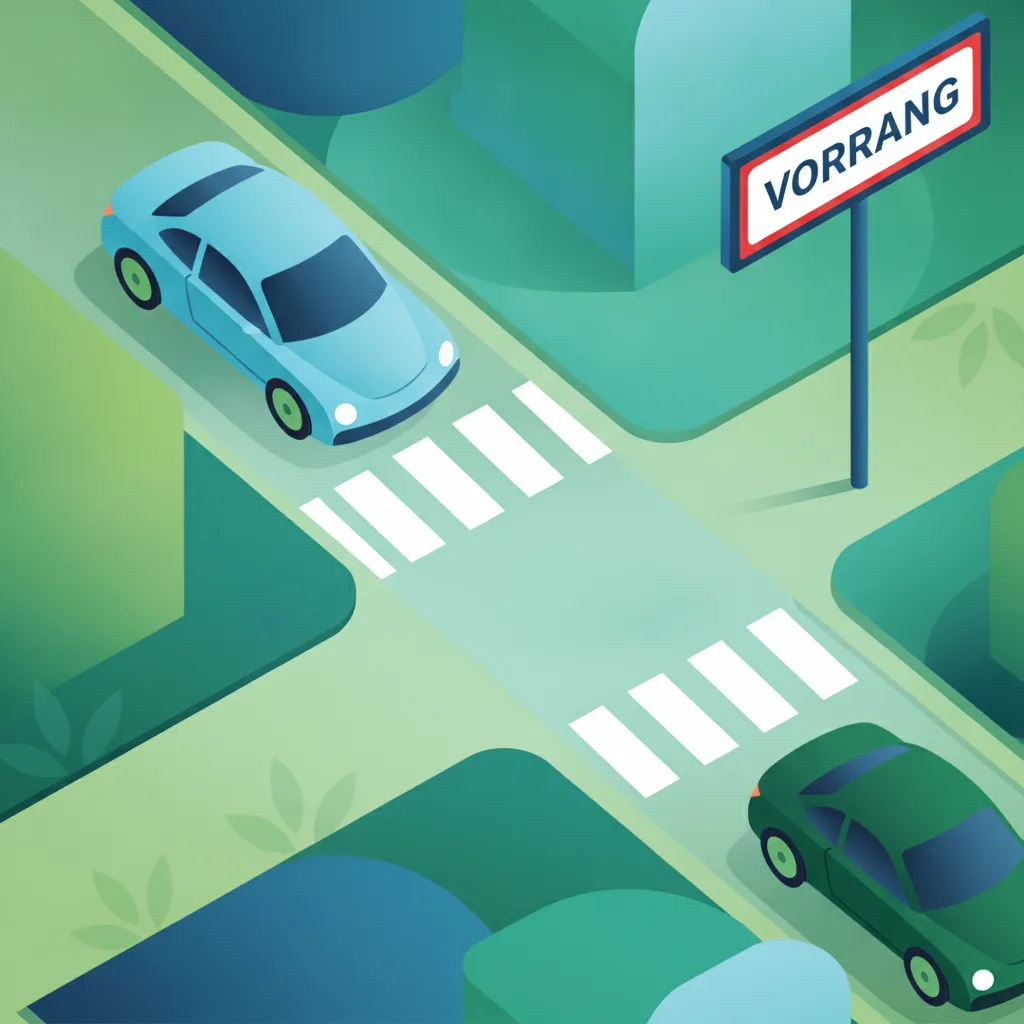
This lesson provides a detailed analysis of the core Austrian traffic rules that govern priority at junctions and in traffic. It focuses on the principles of Vorrang (having priority), Nachrang (yielding), and the Rechtsregel (default right-of-way from the right). Learners will understand the hierarchy of these rules and their application at various types of intersections, from unmarked junctions to those controlled by priority road signs, ensuring correct and safe decision-making.
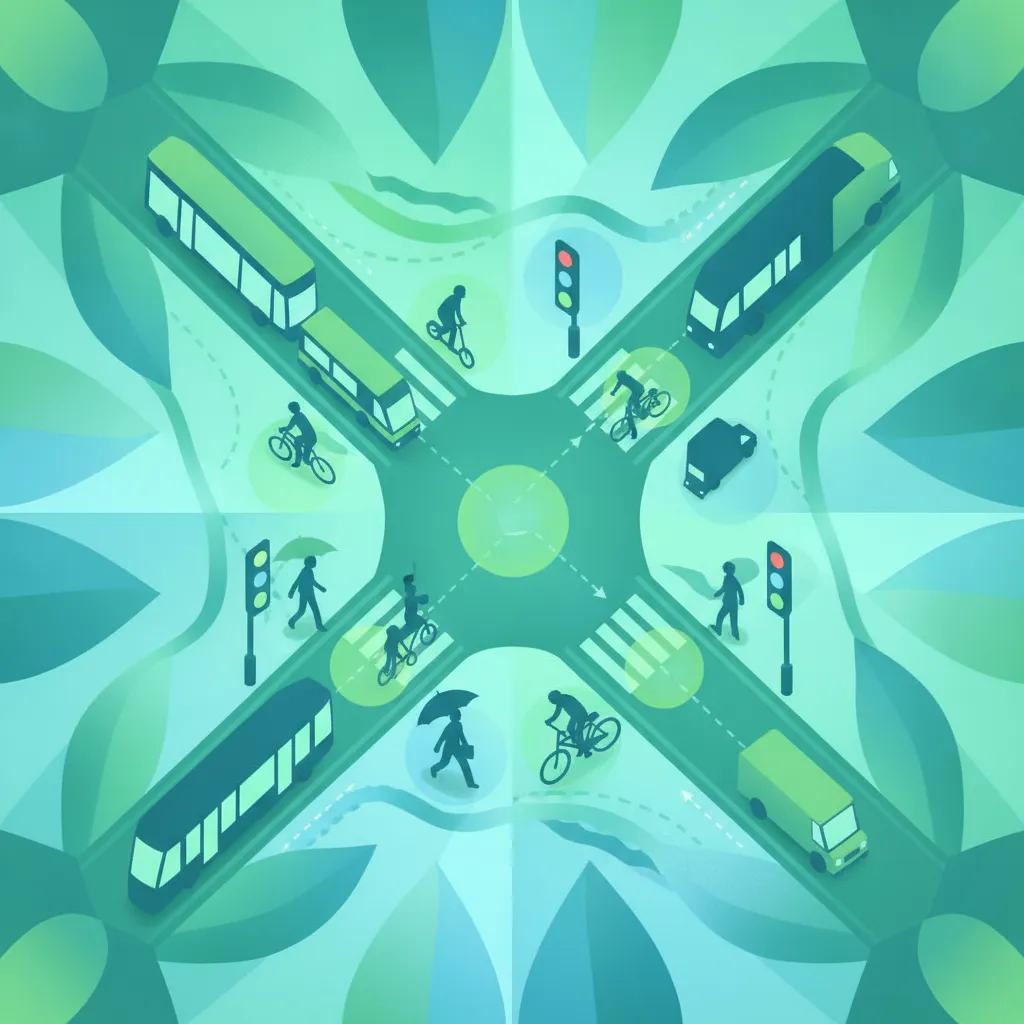
This lesson examines various common intersection layouts, including T-intersections, four-way junctions, and complex multi-lane crossings. It explains how right-of-way is determined in each scenario, whether through traffic signals, stop or yield signs, or the default right-hand rule. Understanding how to identify conflict points and apply the correct priority rule is essential for preventing collisions and ensuring smooth traffic movement.

This lesson explains the core principles of Vorrang (having priority) and Nachrang (the obligation to yield) which form the basis of the Austrian traffic hierarchy. Learners will understand how priority roads are designated by signs and how drivers on secondary roads must yield right-of-way. The content clarifies the legal foundation for these rules under the Austrian road traffic act (StVO), providing a clear framework for decision-making at intersections.
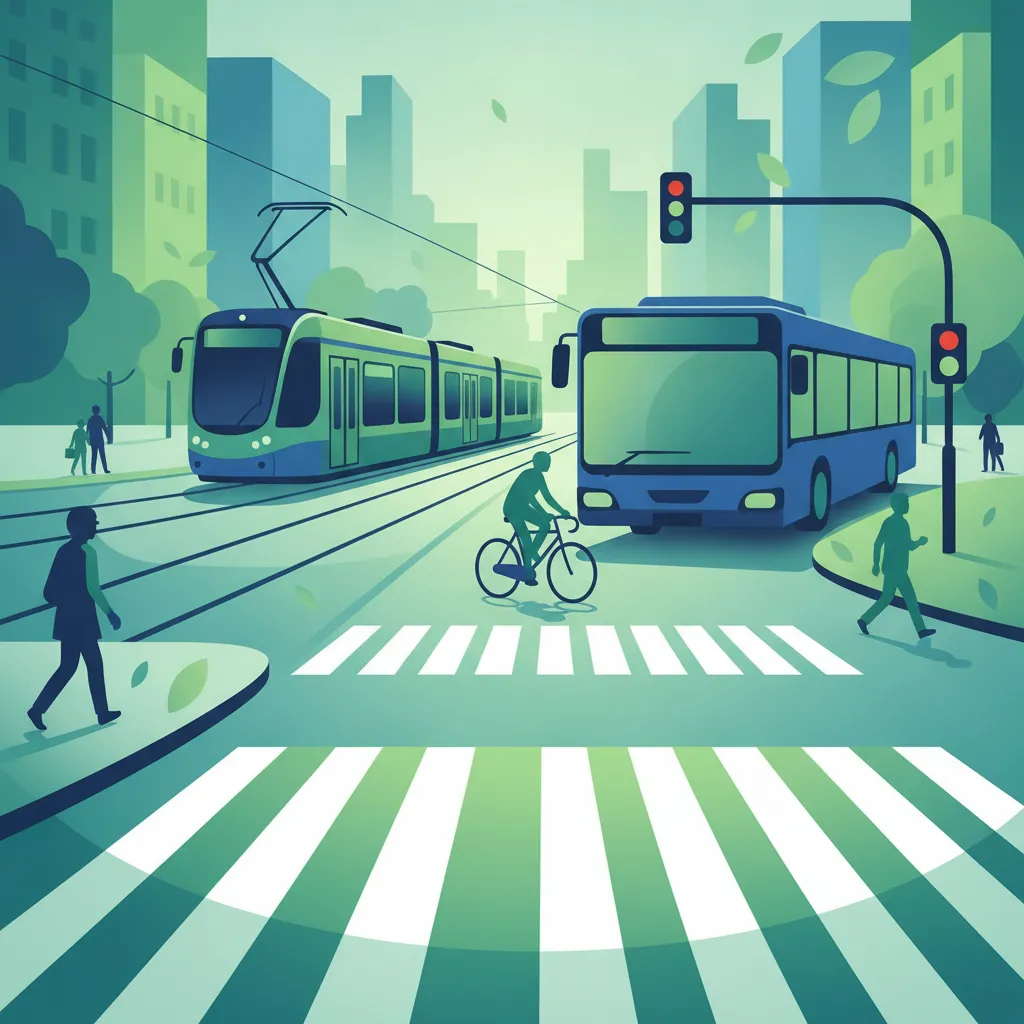
This lesson addresses the unique challenges and priority rules that apply when interacting with public transport and cyclists at intersections. It clarifies the specific right-of-way regulations for trams, which often have priority over other traffic, and the procedures for navigating around bus stops. The content also covers how to safely manage crossings with dedicated bicycle lanes, ensuring the protection of all road users.
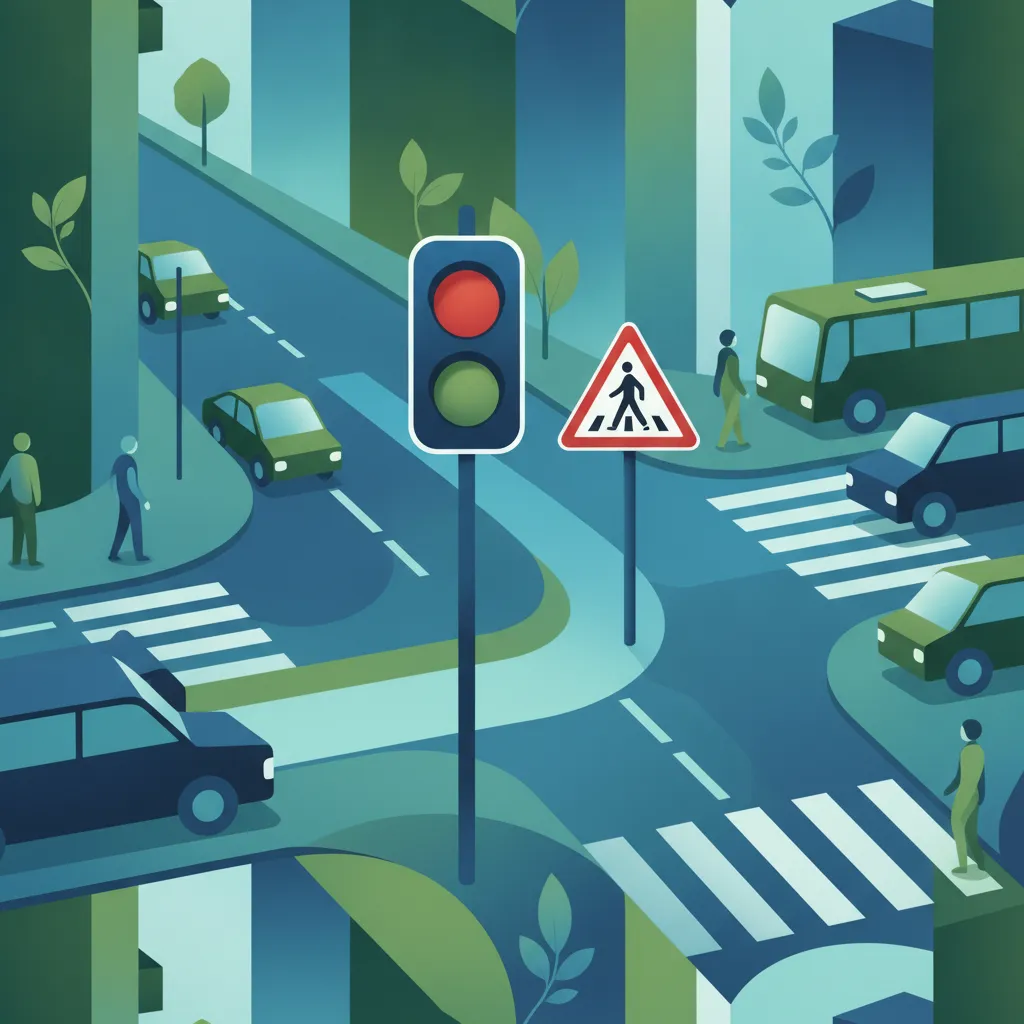
This lesson explains the operation and meaning of traffic light signals in Austria, including the standard red, yellow, and green phases, as well as flashing signals and arrows. It also covers other priority control devices, such as stop signs and yield signs, which are used to manage right-of-way at intersections. Understanding the hierarchy between these signals and signs is crucial for navigating junctions safely and in compliance with the law.

This lesson addresses advanced manoeuvres that require precise timing and judgment, such as merging onto a motorway from an acceleration lane. It explains the importance of matching the speed of the traffic flow and finding a safe gap before moving over. The content also covers procedures for navigating lane drops and the 'zipper merge' (Reißverschlusssystem) principle in congested situations, promoting efficient and cooperative driving.
This lesson teaches a safe, methodical process for navigating intersections. It stresses the importance of proper lane positioning on approach, comprehensive visual scans for cross-traffic, pedestrians, and cyclists, and clear communication of intent. Special attention is given to the increased risks associated with left turns across oncoming traffic.
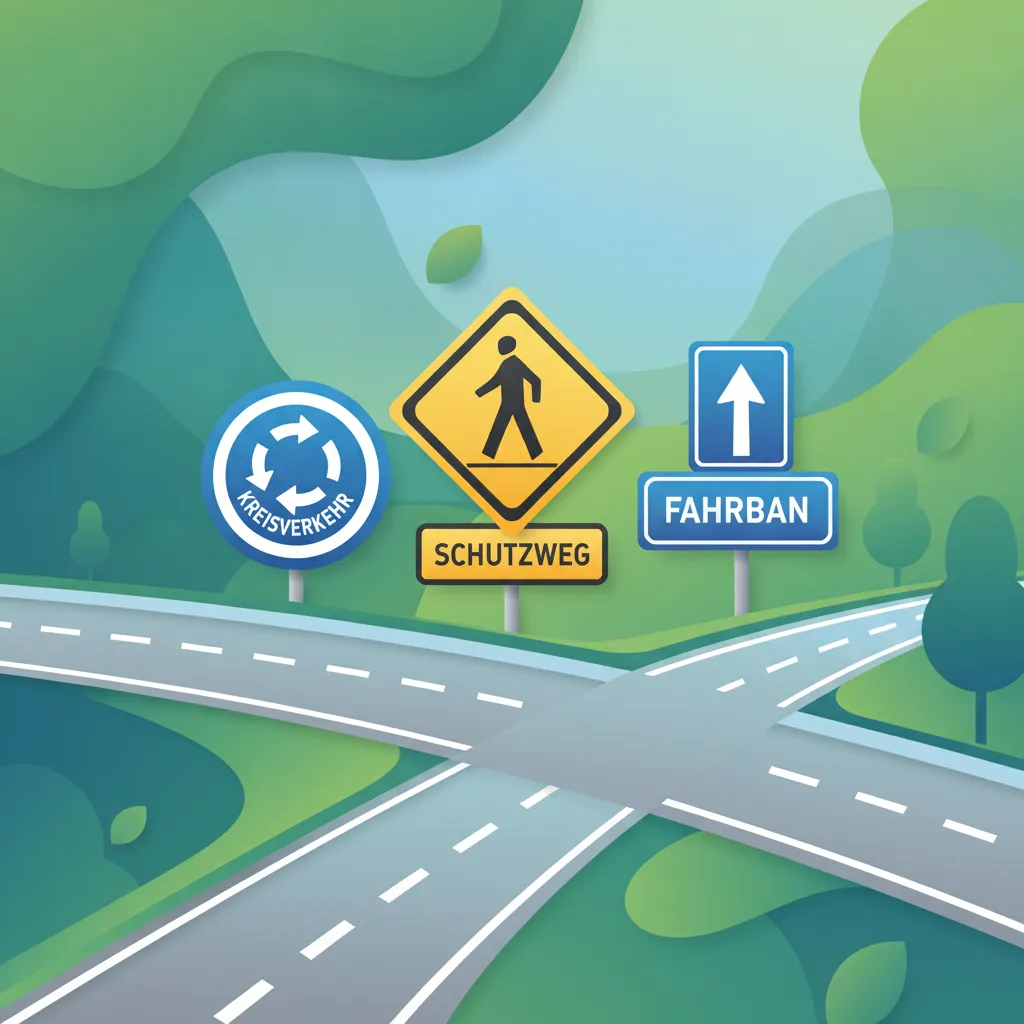
This lesson covers the specific regulations associated with special Austrian road signs and areas. It details the rules for 'Schutzweg' (protected pedestrian crossings), 'Kreisverkehr' (roundabouts), and the distinction between 'Fahrbahn' (road) and 'Fahrstreifen' (lane). Understanding these specific contexts is essential for safe navigation in urban and suburban environments.
Learn about frequent misunderstandings and common errors related to priority rules like Vorfahrt and Nachrang in Austria. This lesson highlights typical mistakes at junctions, roundabouts, and with vulnerable road users to improve your theoretical knowledge.
This lesson explains the core principles of Vorrang (having priority) and Nachrang (the obligation to yield) which form the basis of the Austrian traffic hierarchy. Learners will understand how priority roads are designated by signs and how drivers on secondary roads must yield right-of-way. The content clarifies the legal foundation for these rules under the Austrian road traffic act (StVO), providing a clear framework for decision-making at intersections.
This lesson provides a detailed analysis of the core Austrian traffic rules that govern priority at junctions and in traffic. It focuses on the principles of Vorrang (having priority), Nachrang (yielding), and the Rechtsregel (default right-of-way from the right). Learners will understand the hierarchy of these rules and their application at various types of intersections, from unmarked junctions to those controlled by priority road signs, ensuring correct and safe decision-making.
This lesson provides a comprehensive explanation of Austria's right-of-way laws, which are fundamental to intersection safety. It covers the meaning of different priority signs and clarifies the 'Rechts vor Links' (priority to the right) rule that applies at unmarked junctions. A clear understanding of these rules is essential to prevent conflicts and collisions in urban and rural settings.
This lesson explains the operation and meaning of traffic light signals in Austria, including the standard red, yellow, and green phases, as well as flashing signals and arrows. It also covers other priority control devices, such as stop signs and yield signs, which are used to manage right-of-way at intersections. Understanding the hierarchy between these signals and signs is crucial for navigating junctions safely and in compliance with the law.
This lesson examines various common intersection layouts, including T-intersections, four-way junctions, and complex multi-lane crossings. It explains how right-of-way is determined in each scenario, whether through traffic signals, stop or yield signs, or the default right-hand rule. Understanding how to identify conflict points and apply the correct priority rule is essential for preventing collisions and ensuring smooth traffic movement.
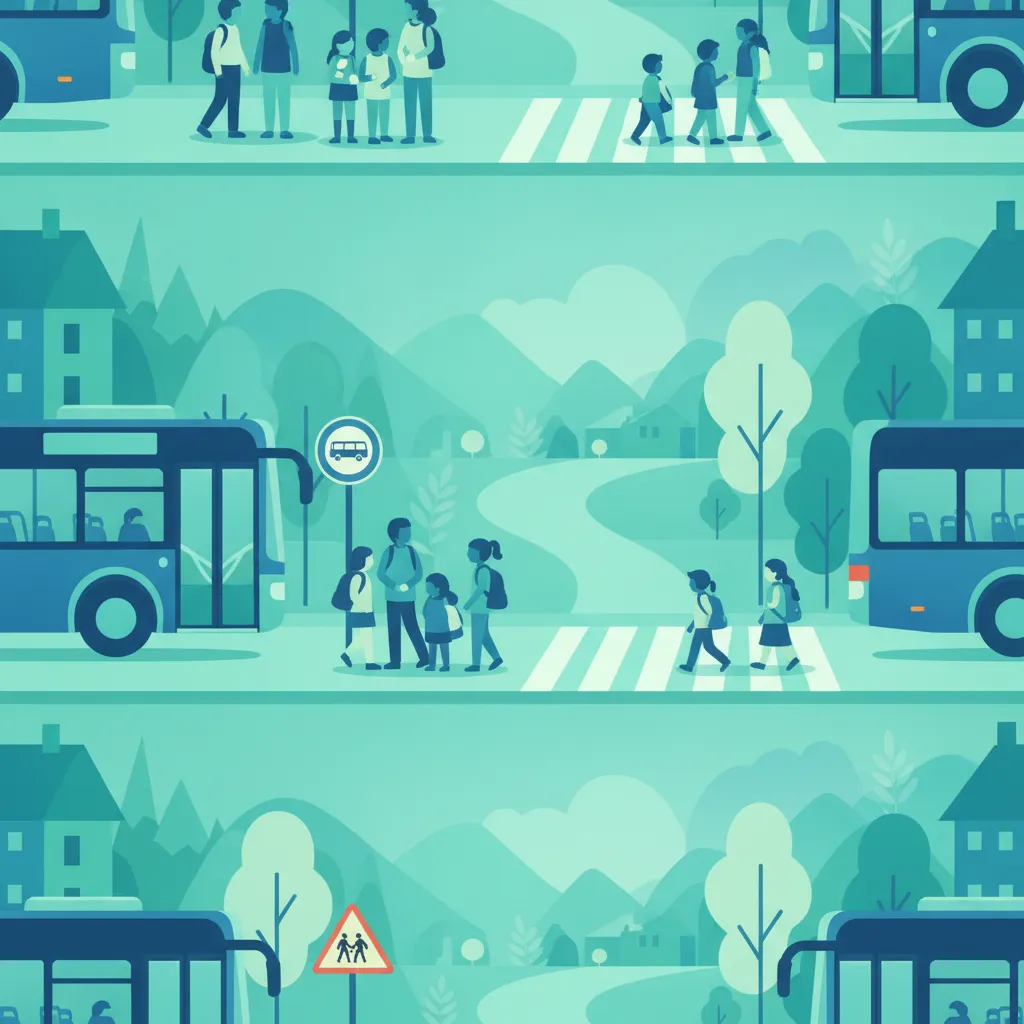
This lesson details the specific regulations and best practices for driving in areas with high pedestrian activity, such as bus stops and school zones. It explains the driver's obligation to stop for school buses with flashing lights and to yield to public buses pulling out from a stop. The content emphasizes the requirement to significantly reduce speed in marked school zones to ensure the safety of children.
This lesson addresses the unique challenges and priority rules that apply when interacting with public transport and cyclists at intersections. It clarifies the specific right-of-way regulations for trams, which often have priority over other traffic, and the procedures for navigating around bus stops. The content also covers how to safely manage crossings with dedicated bicycle lanes, ensuring the protection of all road users.
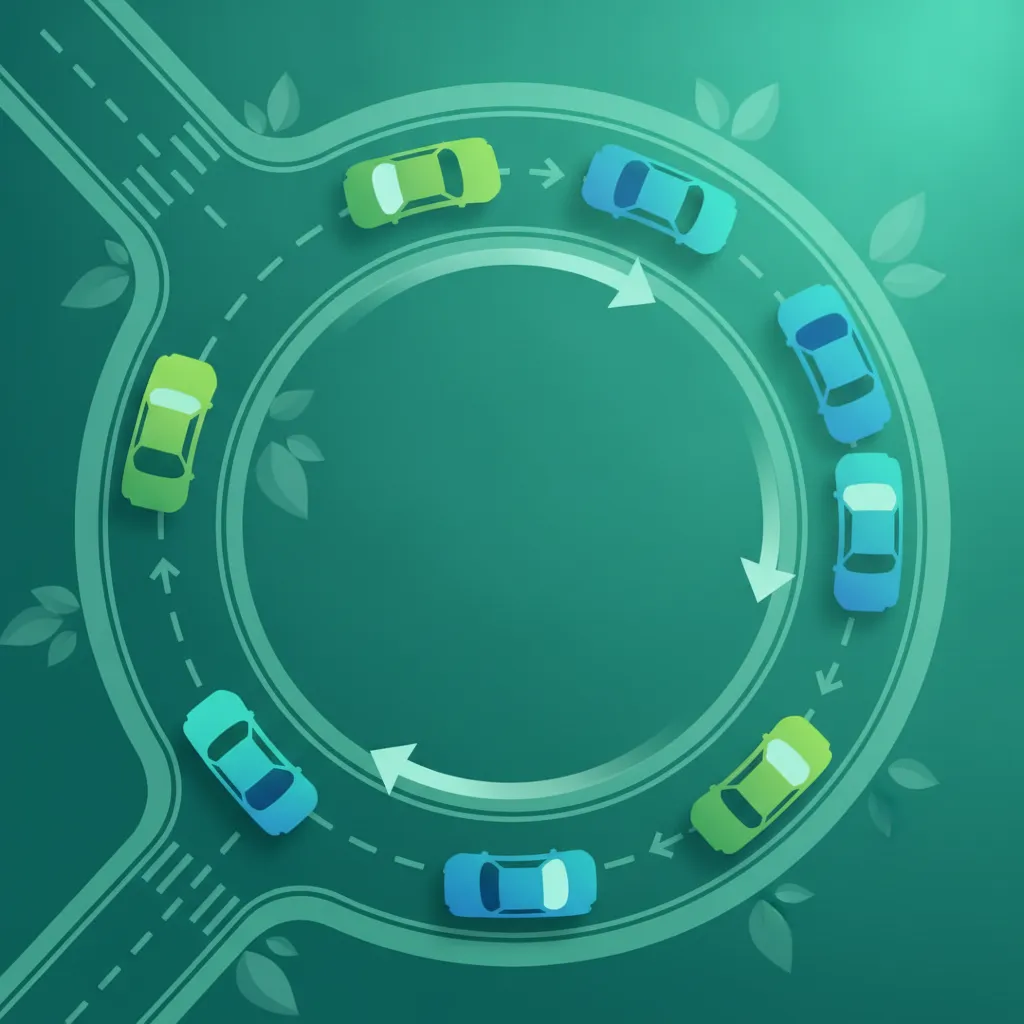
This lesson focuses on the rules for navigating roundabouts (Kreisverkehr) in Austria. It highlights the fundamental give-way rule, where traffic entering the roundabout must yield to traffic already circulating within it. Learners will understand the correct procedures for lane selection, signaling intent to exit, and maintaining safe traffic flow, supported by explanations of specific Austrian roundabout signage.

This lesson focuses on the specific regulations and safety protocols for driving near trams (Straßenbahn) in Austrian cities. It clarifies the priority rules, which almost always favor the tram, and explains how to safely share lanes or cross tram tracks. The content provides critical guidance on how to behave at tram stops, ensuring the safety of boarding and alighting passengers is always the primary concern.

This lesson focuses on the high-risk manoeuvre of overtaking, outlining the strict rules and safety considerations involved. It covers how to assess if an overtaking manoeuvre is necessary, safe, and legal, emphasizing the need for a sufficiently long clear view of the road ahead. Learners will understand the correct procedure, from signaling and accelerating to safely returning to the lane, and will be able to identify signs and markings where overtaking is prohibited.
Find clear answers to common questions learners have about Priority Rules: Vorfahrt und Nachrang. Learn how the lesson is structured, which driving theory objectives it supports, and how it fits into the overall learning path of units and curriculum progression in Austria. These explanations help you understand key concepts, lesson flow, and exam focused study goals.
Vorfahrt refers to having the priority or right of way at an intersection. Nachrang means you have a duty to yield to traffic coming from other directions, usually indicated by signs like the inverted triangle or stop sign.
In Austria, if no signs are present, the general rule of right-before-left often applies, but you must always be cautious and prepared to yield if necessary, especially in urban environments with trams or public transport.
The exam often uses diagrams of intersections where you must decide which vehicle can proceed first. You need to identify signs, markings, and the presence of special vehicles to correctly apply the priority hierarchy.
No. While you must always respect pedestrians at a marked crossing (Schutzweg), priority rules at intersections are distinct. Always be aware of your surroundings and the specific signs governing the junction.
Refine your study plan by searching for specific Austrian driving theory practice sets. Pinpoint questions related to particular road rules, signs, or challenge levels, and begin practicing immediately to reinforce your knowledge and excel in your official exam with confidence. Get started with focused revision today.