
This lesson provides a comprehensive guide to navigating intersections safely by understanding Austria's right-of-way laws. As a vital part of your motorcycle theory training, you will learn to interpret priority signs and master the universal Rechts vor Links rule to ensure your safety and that of others.
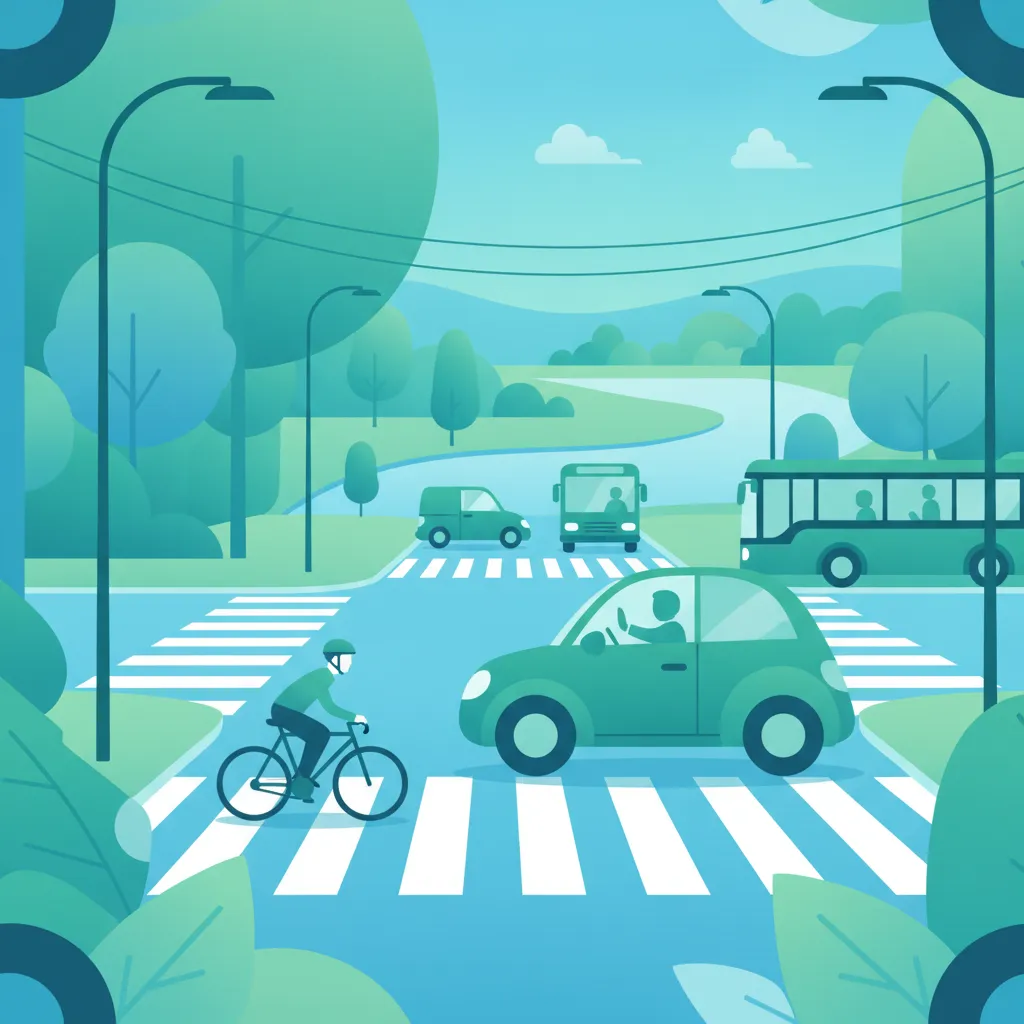
Lesson content overview
Understanding and correctly applying right-of-way rules is a cornerstone of safe driving, particularly crucial for motorcyclists navigating the diverse road environments of Austria. These regulations are designed to prevent conflicts and ensure a smooth, predictable flow of traffic at intersections, roundabouts, and various junctions. As a motorcyclist, anticipating the actions of other road users based on these rules is paramount for your safety and the safety of others.
This lesson provides a comprehensive explanation of Austria's right-of-way laws. We will delve into the meaning of different priority signs, clarify the fundamental 'Rechts vor Links' (priority to the right) rule that governs unmarked junctions, and discuss how to react to vulnerable road users like pedestrians and trams. A solid grasp of these concepts is not only essential for passing your Austrian motorcycle theory test but also for maintaining situational awareness and avoiding collisions in both urban and rural settings.
The legal framework governing who has priority, or "right-of-way," at any given point on the road is critical for road safety. For motorcyclists, who are often less visible than larger vehicles, a proactive understanding of these rules helps in anticipating potential hazards and making timely, safe decisions. Incorrectly assuming or yielding priority can lead to unexpected movements, which are a major cause of intersection accidents. By adhering strictly to these rules, you contribute to a safer environment for everyone and minimize the risk of conflicts and collisions.
Right-of-way rules are built on fundamental safety principles aimed at minimizing conflict points and simplifying decision-making for all road users. They strike a balance between maintaining traffic flow and ensuring safety, allowing drivers to confidently predict how others will act at junctions.
A legal ranking, known as the priority hierarchy, dictates which road user must yield to another. This ranking considers factors such as vehicle type, the role of the road, and the presence of traffic signs. This explicit system reduces the mental load on drivers by clearly defining who must give way. As a motorcyclist, you must generally yield to pedestrians, certain higher-priority vehicles, and traffic on designated priority roads, unless specific signage indicates otherwise.
Traffic signs and road markings are the primary means by which priority is communicated to road users. These visual cues clearly indicate which road or lane has the right-of-way through an intersection, or when a driver must yield. Correctly interpreting these signs is essential for safe navigation. They override default rules like 'Rechts vor Links' and are fundamental to managing complex traffic situations.
When no signs or road markings dictate priority at an intersection, the default rule in Austria is 'Rechts vor Links', meaning "priority to the right". This simple, universally applicable rule requires drivers to yield to traffic approaching from their right-hand side. It is crucial for motorcyclists to be acutely aware of this rule at every unmarked junction, preparing to stop and allow traffic from the right to proceed before continuing.
Specific signs and rules govern various types of junctions and road situations in Austria. Mastering these details is key to safe and legal riding.
A priority road, known as Vorgangstraße or Hauptstraße, is a road where traffic has the right-of-way at all intersections and junctions. This status is clearly indicated by a specific rectangular sign.
Vehicles traveling on a priority road do not need to stop or yield at intersections with secondary roads, unless other signs (like a stop light or a specific yield sign within the priority road) are present. The priority status begins at the point where the Priority Road Sign is placed and continues until a Priority Road Ends sign (a similar sign with a black diagonal stripe) is encountered.
Sometimes, a supplementary sign with an arrow is placed beneath the priority road sign to indicate how the priority road curves or continues through a complex intersection. This helps clarify the flow of priority.
Common Misunderstandings: A frequent mistake is assuming that priority continues indefinitely or failing to notice when a priority road ends. Always be vigilant for the Priority Road Ends sign, as after this point, different priority rules (often 'Rechts vor Links' or new signage) will apply.
The Yield Sign (Vorfahrt gewähren) is one of the most common priority signs and requires you to give way.
When you encounter a Yield Sign, you must slow down and be prepared to stop. You are legally obliged to yield to all traffic on the intersecting road, which has priority. This means you must only proceed when it is safe to do so without hindering or endangering other road users. This sign always overrides the 'Rechts vor Links' rule; even if traffic from your left would normally yield to you, they now have priority due to the sign.
Always be prepared to stop completely at a Yield sign, especially if visibility is limited or traffic on the main road is heavy. Slowing down might not be enough to ensure safety.
The Stop Sign (Stoppschild) is an even stricter priority sign, demanding a mandatory halt.
When you see a Stop Sign, you must bring your motorcycle to a complete stop before the stop line painted on the road, or before entering the intersection if no line is present. After stopping, you must check for traffic from all directions and only proceed when it is safe and clear. This sign adds an extra layer of safety, often used at intersections with severely limited visibility or high accident rates. Unlike a Yield Sign, a full stop is always required, even if there is no traffic.
Common Misunderstandings: Many drivers "roll through" a stop sign, slowing down but not coming to a complete stop. This is a common violation and can lead to dangerous situations, as you might not have enough time to react to approaching traffic.
At intersections where there are no traffic lights, Priority Road Signs, Yield Signs, or Stop Signs, the Rechts vor Links (priority to the right) rule applies as the default. This means that any vehicle approaching from your right-hand side has priority over you.
It is imperative to slow down significantly when approaching an unmarked intersection, scan for traffic from your right, and be prepared to stop. Only proceed when the path is clear or when traffic from your right has yielded to you (which they shouldn't if it's truly unmarked). This rule is especially common in residential areas or on minor roads.
Never assume 'Rechts vor Links' applies if there is any sign indicating priority. Signs always override the default rule.
Pedestrian crossings, also known as Zebrastreifen due to their white parallel stripes, grant pedestrians specific priority.
You must yield to pedestrians who are already on the crossing or are clearly intending to step onto it. This means slowing down and stopping if necessary to allow them to cross safely. This rule applies even if you are on a priority road or have other right-of-way indications for vehicles. Pedestrians are considered vulnerable road users, and their safety takes precedence.
Common Misunderstandings: A frequent error is to proceed if a pedestrian is near but not yet on the crossing. If it's clear they intend to cross, you must stop. Maintain eye contact where possible to confirm their intentions.
Trams operate on fixed tracks and have unique characteristics; they cannot stop or maneuver quickly. Consequently, trams generally have absolute priority at all intersections in Austria, unless explicitly indicated otherwise by traffic lights or specific signage.
When you approach an intersection with tram tracks, you must assume the tram has priority. Always be prepared to yield, slowing down and waiting for the tram to pass before crossing the tracks or making a turn that would intersect its path. Pay close attention to tram signals and warning sounds.
Beyond signs, road markings also play a role in clarifying priority, especially at larger or more complex intersections. White arrows painted on the road surface can indicate the continuation of a priority road.
These Priority Continuation Arrows clarify which direction the priority road takes, particularly when it deviates from a straight path. Drivers in lanes marked with such an arrow maintain their priority. Other lanes might be governed by separate yield or stop signs. It is crucial to observe these markings, especially on multi-lane roads, to avoid confusion and collisions. Ignoring these arrows can lead to incorrectly assuming priority or failing to yield when required.
Austria's Road Traffic Regulations (Straßenverkehrsordnung, StVO) define all right-of-way rules. Understanding the legal basis reinforces the importance of compliance.
These paragraphs detail the mandatory nature of these rules and the specific responsibilities of road users. For instance:
Priority Road Ends sign.Zebrastreifen have priority, requiring vehicles to yield.Failure to comply with these regulations is a traffic offense, carrying potential fines, points on your license, and increased insurance premiums in the event of an accident.
Even experienced drivers can make mistakes regarding right-of-way. As a motorcyclist, being acutely aware of these common pitfalls can help you stay safe.
Yield Sign without stopping when necessary. Always be prepared to stop completely if traffic is approaching on the priority road.Priority Road Ends sign has been passed. Always look for this sign and adjust your priority assumptions accordingly.Zebrastreifen yet.Yield Sign or Stop Sign is present. Signs always override 'Rechts vor Links'.The safe application of right-of-way rules often requires adjustment based on prevailing conditions.
Adverse weather (rain, snow, fog) and low light conditions (night, dusk) significantly reduce visibility and increase stopping distances. In such situations, approach intersections more cautiously, even when you have priority. You may need to slow down earlier or stop more definitively at a Yield Sign to ensure you can safely assess traffic before proceeding. Reflections on wet roads can also obscure markings.
In urban areas, even on priority roads, the presence of numerous pedestrians, cyclists, and parked vehicles necessitates heightened awareness. Pedestrian crossings are more frequent, and interaction with public transport (like trams and buses) is common. Rural roads might have more unmarked intersections where Rechts vor Links is prevalent, often with higher approach speeds. Always adapt your caution level to the environment.
The type of vehicle you are riding or carrying can influence your yielding decisions. Heavy motorcycles or those carrying passengers or luggage require longer stopping distances. This factor should always be considered, prompting you to begin slowing down earlier and increasing your safety margins at junctions.
Furthermore, certain road users are considered "vulnerable." Pedestrians and cyclists, as discussed, often have specific priority at crossings. Other vulnerable users include children, the elderly, and individuals with disabilities. Always exercise extra caution and be prepared to yield to them, even if the strict letter of the law might suggest otherwise in ambiguous situations.
The design of Austrian right-of-way rules is not arbitrary; it's rooted in clear safety principles and traffic flow optimization:
Rechts vor Links rule, for example, leverages the natural tendency for drivers to scan to their right first, making it intuitively easier to apply at unmarked junctions.Statistical analyses consistently show that intersections with clear priority signage have significantly lower accident rates compared to unmarked intersections, highlighting the effectiveness of these rules in practice.
Priority Road, Yield, and Stop signs and their precise implications.Zebrastreifen and trams at intersections without exception.By internalizing these principles and applying them diligently, you will develop the confidence and competence necessary to navigate Austria's roads safely and responsibly as a motorcyclist.
This lesson covers Austria's priority hierarchy system, which determines who must yield at intersections. The core signs are the Priority Road sign (B1) granting right-of-way, the Yield sign (B2) requiring you to slow and give way, and the Stop sign (B3) demanding a complete halt. When no signs are present, the Rechts vor Links rule applies, giving priority to traffic from your right. Special attention is needed for vulnerable users: pedestrians at zebra crossings always have priority, and trams have absolute priority at intersections. Understanding when priority signs end is equally important, as the Priority Road Ends sign signals the transition back to default rules or signed instructions.
A short set of high-value points that capture the most important learning from this lesson.
Priority signs (B1 priority road, B2 yield, B3 stop) always override the default Rechts vor Links rule at unmarked junctions
At unmarked intersections, always yield to traffic approaching from your right under the Rechts vor Links rule
Trams have absolute priority at all intersections unless explicitly indicated otherwise by traffic lights or specific signage
Pedestrians on or clearly intending to enter a Zebrastreifen (zebra crossing) must be yielded to regardless of other priority indicators
The Priority Road Ends sign (black diagonal stripe) marks where your priority status terminates and new rules apply
Explore all units and lessons included in this driving theory course.
Priority Road Sign (B1): rectangular yellow square on white, indicates right-of-way until a Priority Road Ends sign is encountered
Yield Sign (B2): triangular white with red border, requires slowing and giving way to all intersecting traffic
Stop Sign (B3): octagonal red with white STOP, always requires a complete stop before the stop line or intersection
Zebra crossings grant pedestrians priority even when you are on a priority road or would otherwise have vehicle priority
After passing a Priority Road Ends sign, you become a secondary road user and must yield at subsequent intersections
Rolling through a stop sign without coming to a complete halt, which remains a traffic violation even without visible traffic
Assuming Rechts vor Links applies when yield or stop signs are present at an intersection
Continuing to act as priority road traffic after passing a Priority Road Ends sign
Failing to yield to pedestrians who are clearly intending to cross but have not yet stepped onto the Zebrastreifen
Underestimating tram speed or attempting to cross tracks when a tram is approaching due to their inability to stop quickly
Lesson content overview
A short set of high-value points that capture the most important learning from this lesson.
Priority signs (B1 priority road, B2 yield, B3 stop) always override the default Rechts vor Links rule at unmarked junctions
At unmarked intersections, always yield to traffic approaching from your right under the Rechts vor Links rule
Trams have absolute priority at all intersections unless explicitly indicated otherwise by traffic lights or specific signage
Pedestrians on or clearly intending to enter a Zebrastreifen (zebra crossing) must be yielded to regardless of other priority indicators
The Priority Road Ends sign (black diagonal stripe) marks where your priority status terminates and new rules apply
Explore all units and lessons included in this driving theory course.
Priority Road Sign (B1): rectangular yellow square on white, indicates right-of-way until a Priority Road Ends sign is encountered
Yield Sign (B2): triangular white with red border, requires slowing and giving way to all intersecting traffic
Stop Sign (B3): octagonal red with white STOP, always requires a complete stop before the stop line or intersection
Zebra crossings grant pedestrians priority even when you are on a priority road or would otherwise have vehicle priority
After passing a Priority Road Ends sign, you become a secondary road user and must yield at subsequent intersections
Rolling through a stop sign without coming to a complete halt, which remains a traffic violation even without visible traffic
Assuming Rechts vor Links applies when yield or stop signs are present at an intersection
Continuing to act as priority road traffic after passing a Priority Road Ends sign
Failing to yield to pedestrians who are clearly intending to cross but have not yet stepped onto the Zebrastreifen
Underestimating tram speed or attempting to cross tracks when a tram is approaching due to their inability to stop quickly
Explore search topics learners often look for when studying Yielding and Right‑of‑Way Rules. These topics reflect common questions about road rules, driving situations, safety guidance, and lesson level theory preparation for learners in Austria.
Browse additional driving theory lessons that cover connected traffic rules, road signs, and common driving situations related to this topic. Improve your understanding of how different rules interact across everyday traffic scenarios.
Explore complex right-of-way scenarios in Austria beyond basic rules. Learn about yielding to trams, emergency vehicles, and pedestrians, and understand priority at special junctions for your motorcycle theory.
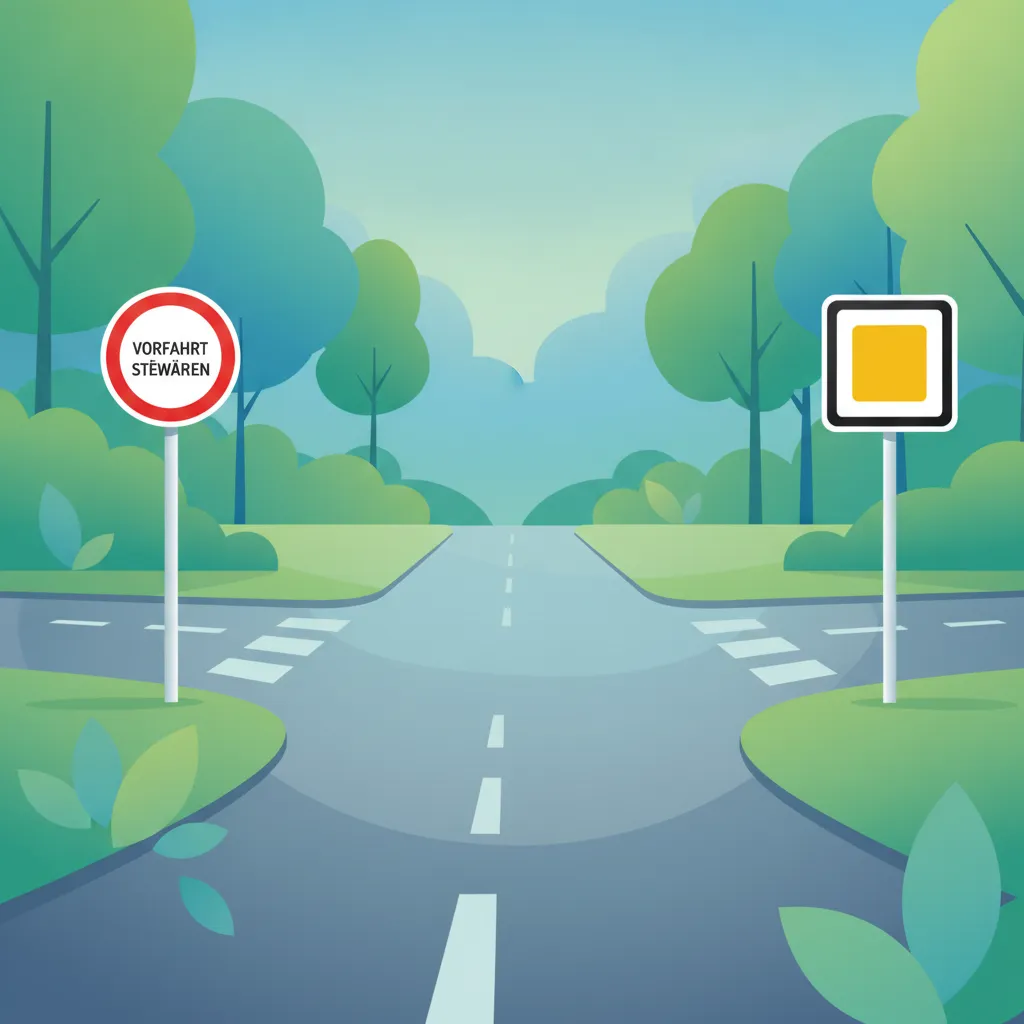
This lesson explains the fundamental concepts of priority that govern traffic at Austrian junctions. It differentiates between having priority ('Vorfahrt') and the duty to yield ('Nachrang'), detailing the signs that establish these rules. Correct application of these principles is critical for preventing collisions at intersections and roundabouts.
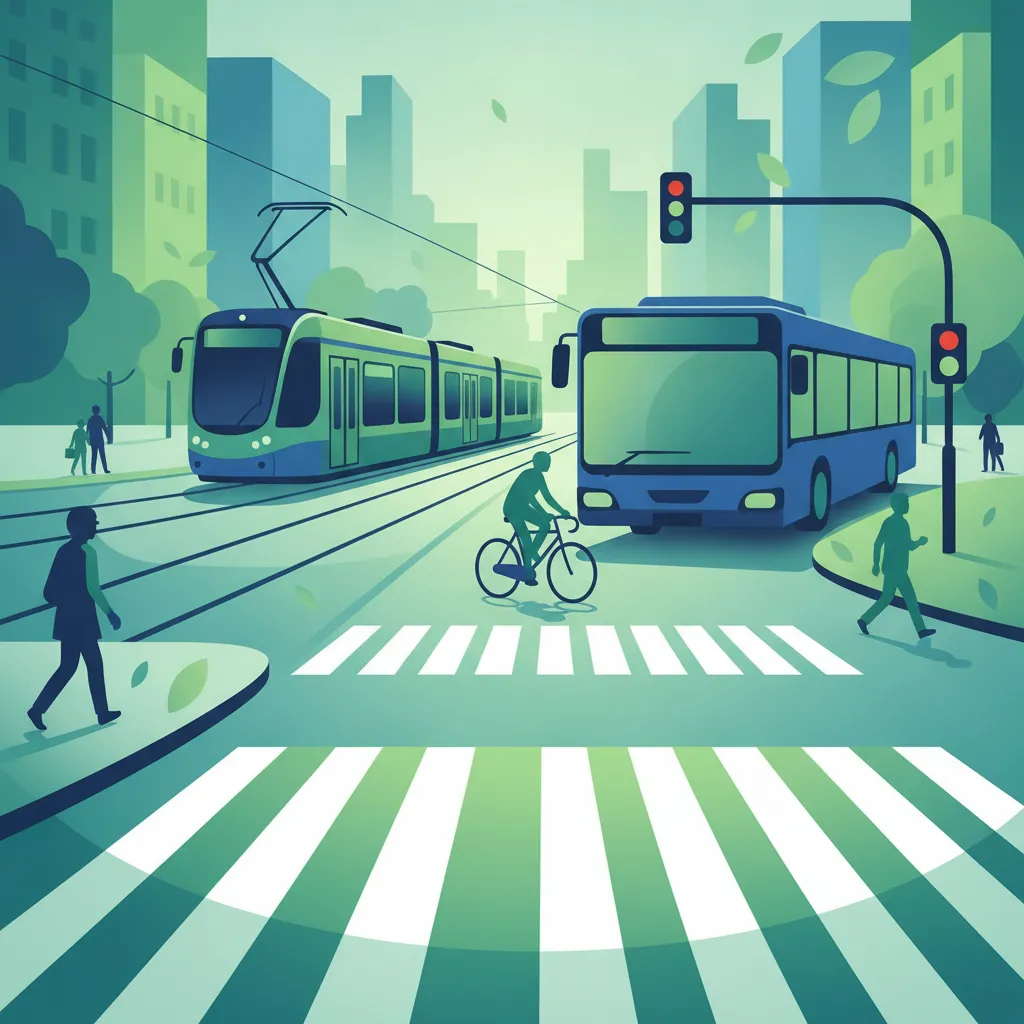
This lesson addresses the unique challenges and priority rules that apply when interacting with public transport and cyclists at intersections. It clarifies the specific right-of-way regulations for trams, which often have priority over other traffic, and the procedures for navigating around bus stops. The content also covers how to safely manage crossings with dedicated bicycle lanes, ensuring the protection of all road users.
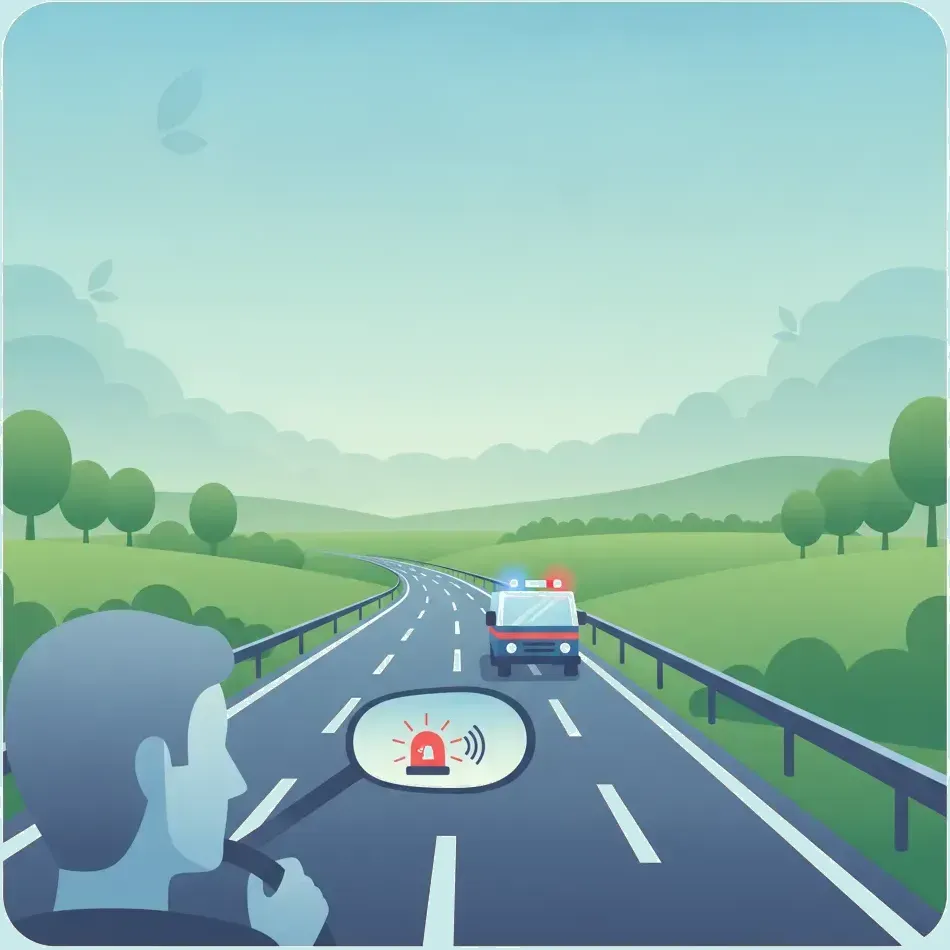
This lesson explains the correct protocol when encountering emergency vehicles with active sirens and lights. It details the legal requirement to yield the right-of-way and provides practical guidance on how to pull over safely and efficiently. Understanding these procedures helps ensure emergency services can reach their destination without delay.

This lesson explains the core principles of Vorrang (having priority) and Nachrang (the obligation to yield) which form the basis of the Austrian traffic hierarchy. Learners will understand how priority roads are designated by signs and how drivers on secondary roads must yield right-of-way. The content clarifies the legal foundation for these rules under the Austrian road traffic act (StVO), providing a clear framework for decision-making at intersections.
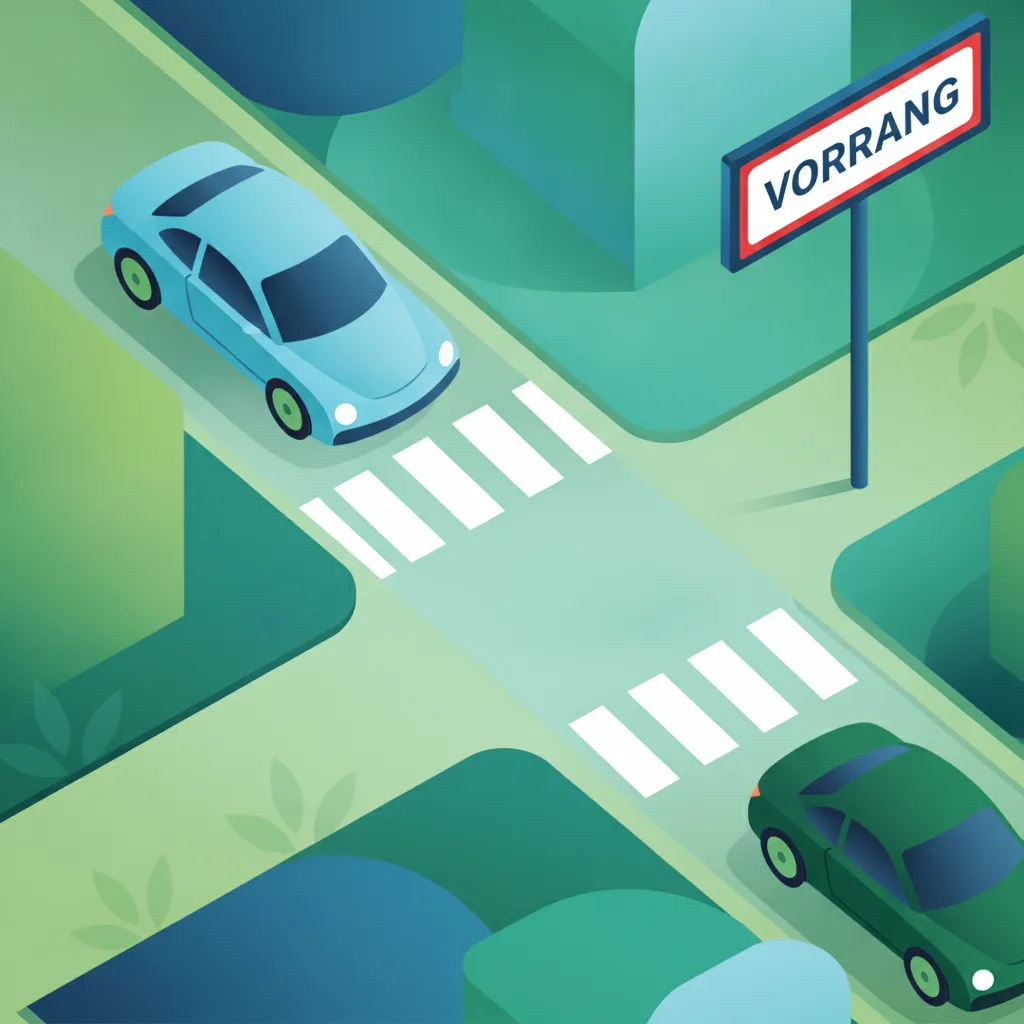
This lesson provides a detailed analysis of the core Austrian traffic rules that govern priority at junctions and in traffic. It focuses on the principles of Vorrang (having priority), Nachrang (yielding), and the Rechtsregel (default right-of-way from the right). Learners will understand the hierarchy of these rules and their application at various types of intersections, from unmarked junctions to those controlled by priority road signs, ensuring correct and safe decision-making.
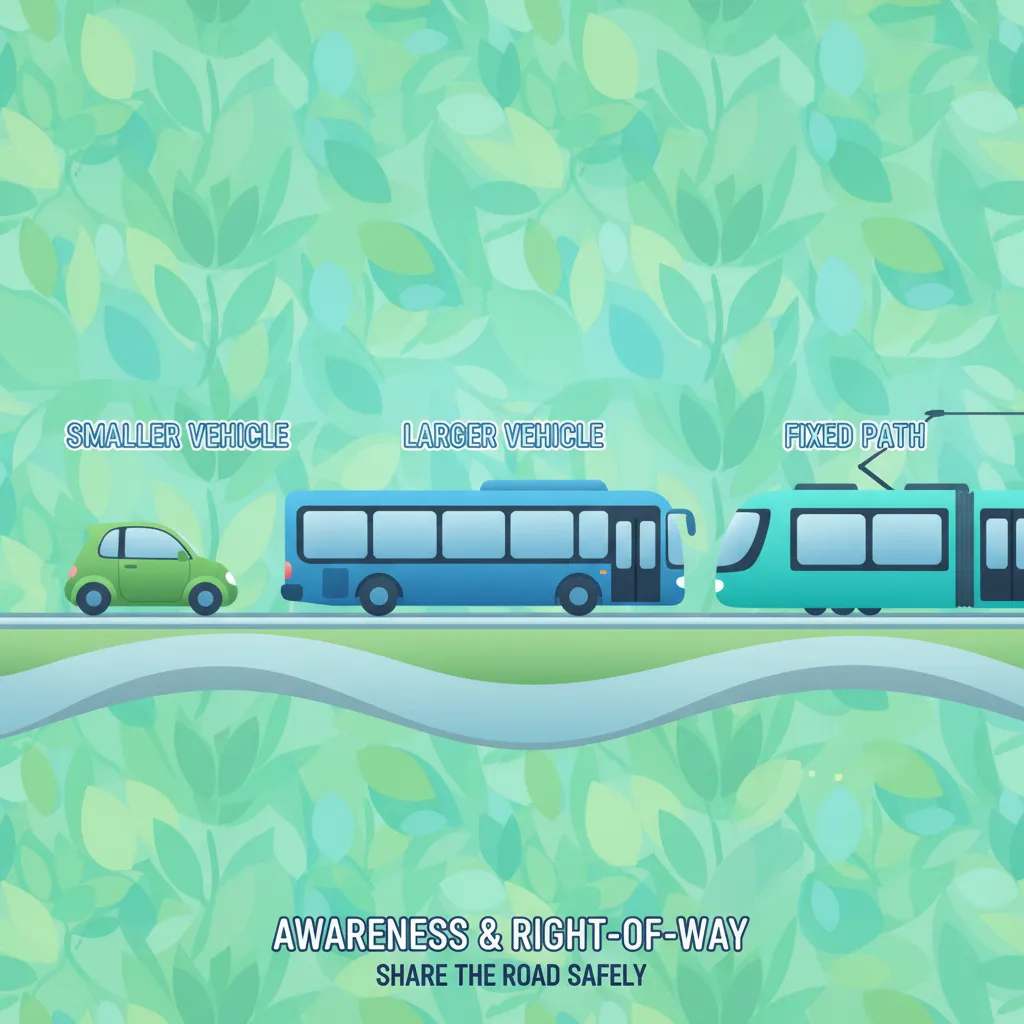
This lesson provides specific guidance for sharing the road with different types of vehicles in Austria. It covers the dangers of large vehicle blind spots, the rules for navigating near buses and dedicated tram tracks, and common conflict points at intersections. Understanding the behavior and limitations of other vehicles is key to safely navigating complex urban environments.
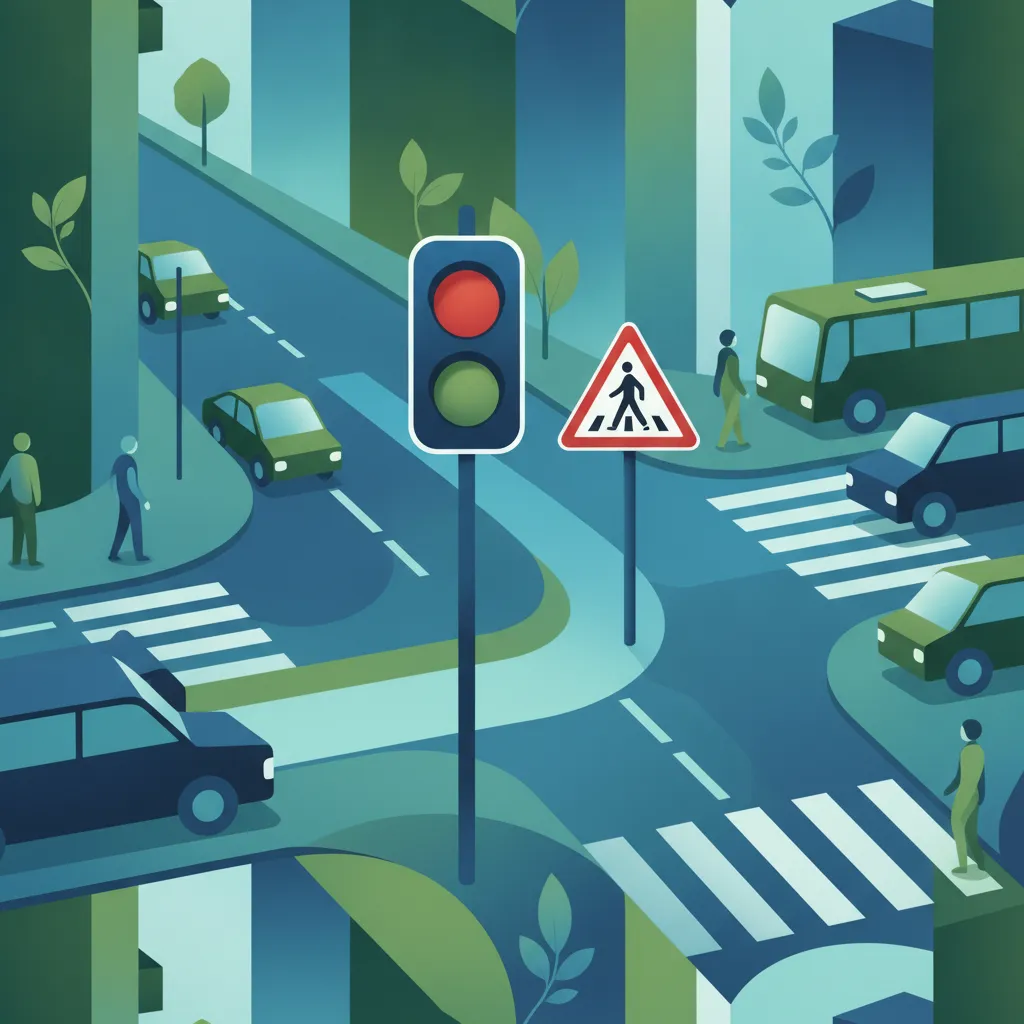
This lesson explains the operation and meaning of traffic light signals in Austria, including the standard red, yellow, and green phases, as well as flashing signals and arrows. It also covers other priority control devices, such as stop signs and yield signs, which are used to manage right-of-way at intersections. Understanding the hierarchy between these signals and signs is crucial for navigating junctions safely and in compliance with the law.
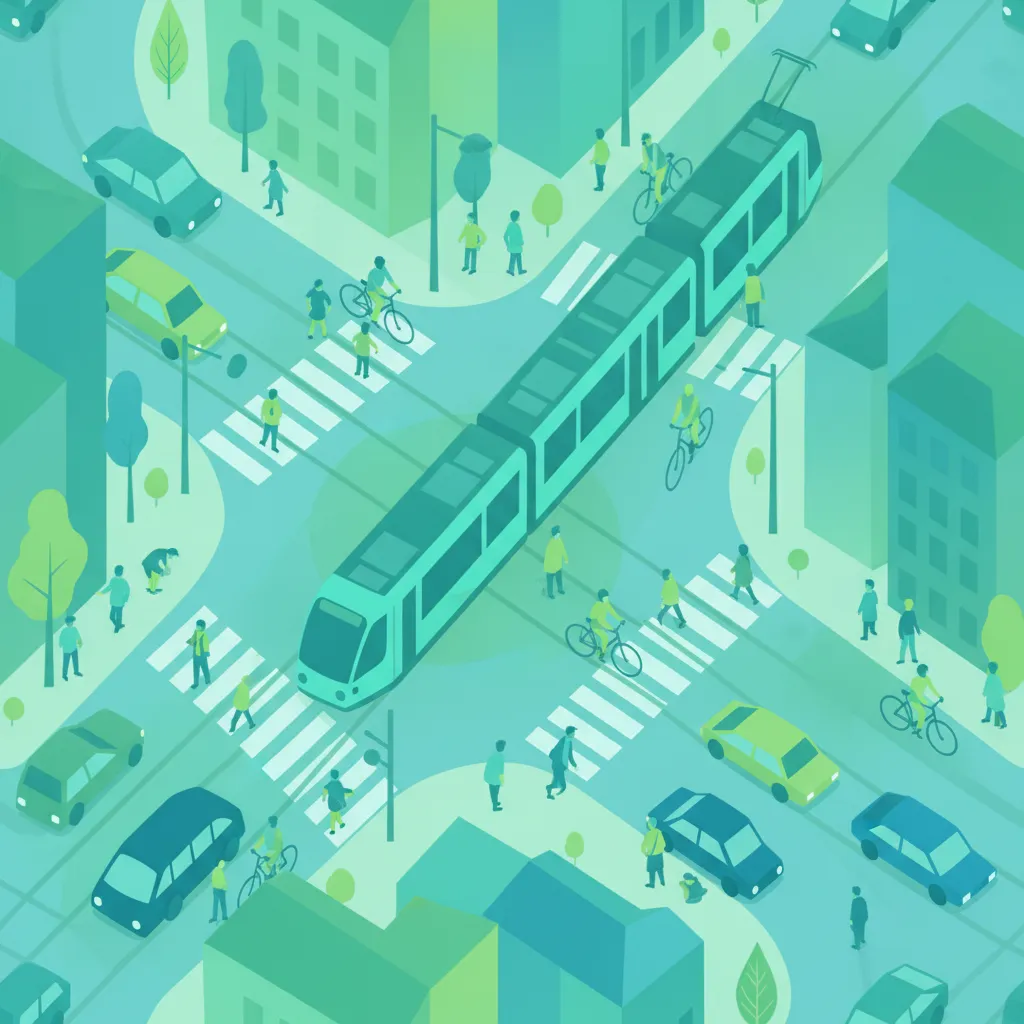
This lesson teaches a safe, methodical process for navigating intersections. It stresses the importance of proper lane positioning on approach, comprehensive visual scans for cross-traffic, pedestrians, and cyclists, and clear communication of intent. Special attention is given to the increased risks associated with left turns across oncoming traffic.

This lesson focuses on the specific regulations and safety protocols for driving near trams (Straßenbahn) in Austrian cities. It clarifies the priority rules, which almost always favor the tram, and explains how to safely share lanes or cross tram tracks. The content provides critical guidance on how to behave at tram stops, ensuring the safety of boarding and alighting passengers is always the primary concern.
This lesson examines various common intersection layouts, including T-intersections, four-way junctions, and complex multi-lane crossings. It explains how right-of-way is determined in each scenario, whether through traffic signals, stop or yield signs, or the default right-hand rule. Understanding how to identify conflict points and apply the correct priority rule is essential for preventing collisions and ensuring smooth traffic movement.
Master Austria's default 'priority to the right' (Rechts vor Links) rule. This lesson clarifies how to navigate unmarked junctions and intersections safely for your motorcycle theory exam.
This lesson explains the fundamental concepts of priority that govern traffic at Austrian junctions. It differentiates between having priority ('Vorfahrt') and the duty to yield ('Nachrang'), detailing the signs that establish these rules. Correct application of these principles is critical for preventing collisions at intersections and roundabouts.
This lesson provides a detailed analysis of the core Austrian traffic rules that govern priority at junctions and in traffic. It focuses on the principles of Vorrang (having priority), Nachrang (yielding), and the Rechtsregel (default right-of-way from the right). Learners will understand the hierarchy of these rules and their application at various types of intersections, from unmarked junctions to those controlled by priority road signs, ensuring correct and safe decision-making.
This lesson explains the core principles of Vorrang (having priority) and Nachrang (the obligation to yield) which form the basis of the Austrian traffic hierarchy. Learners will understand how priority roads are designated by signs and how drivers on secondary roads must yield right-of-way. The content clarifies the legal foundation for these rules under the Austrian road traffic act (StVO), providing a clear framework for decision-making at intersections.
This lesson examines various common intersection layouts, including T-intersections, four-way junctions, and complex multi-lane crossings. It explains how right-of-way is determined in each scenario, whether through traffic signals, stop or yield signs, or the default right-hand rule. Understanding how to identify conflict points and apply the correct priority rule is essential for preventing collisions and ensuring smooth traffic movement.
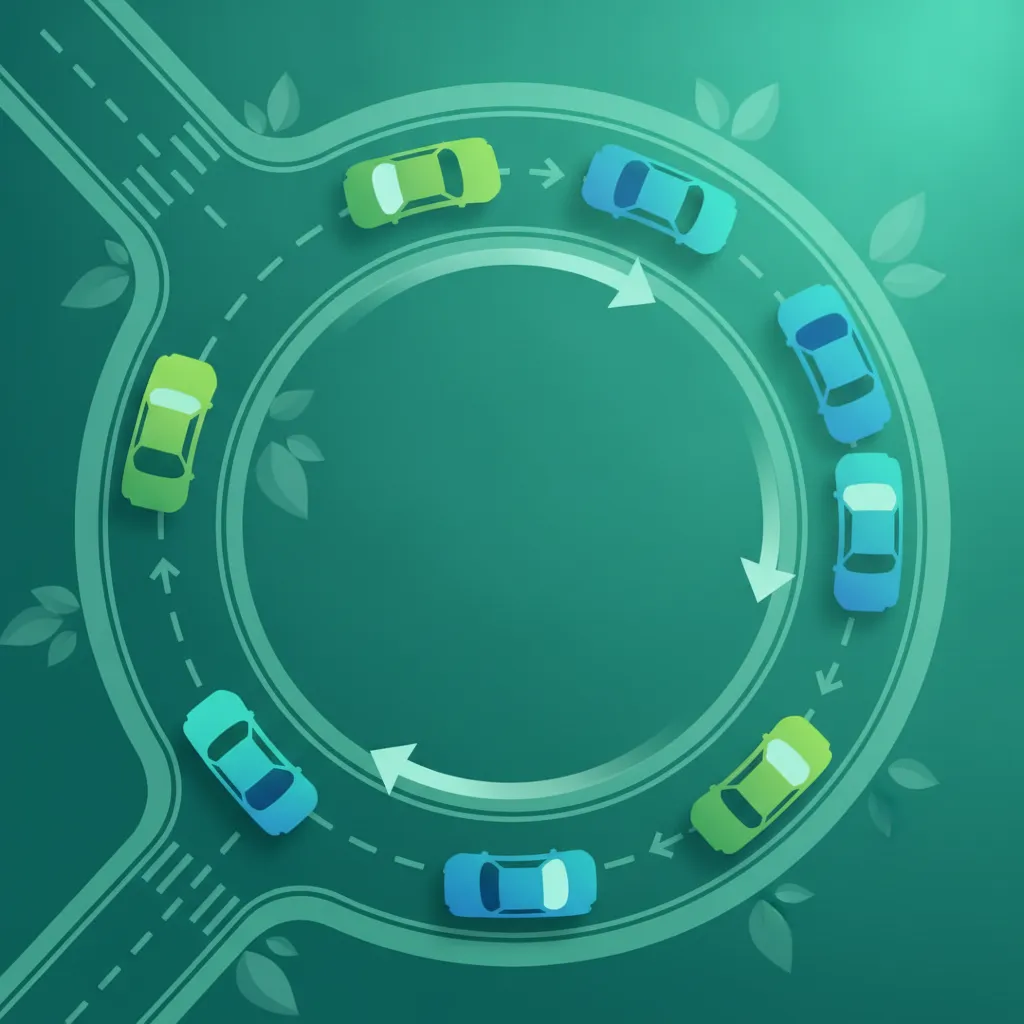
This lesson focuses on the rules for navigating roundabouts (Kreisverkehr) in Austria. It highlights the fundamental give-way rule, where traffic entering the roundabout must yield to traffic already circulating within it. Learners will understand the correct procedures for lane selection, signaling intent to exit, and maintaining safe traffic flow, supported by explanations of specific Austrian roundabout signage.
This lesson explains the operation and meaning of traffic light signals in Austria, including the standard red, yellow, and green phases, as well as flashing signals and arrows. It also covers other priority control devices, such as stop signs and yield signs, which are used to manage right-of-way at intersections. Understanding the hierarchy between these signals and signs is crucial for navigating junctions safely and in compliance with the law.
This lesson teaches a safe, methodical process for navigating intersections. It stresses the importance of proper lane positioning on approach, comprehensive visual scans for cross-traffic, pedestrians, and cyclists, and clear communication of intent. Special attention is given to the increased risks associated with left turns across oncoming traffic.
This lesson provides clear instructions for maneuvering through single and multi-lane roundabouts. It covers the critical rule of giving way to traffic already in the circle, proper lane selection based on the intended exit, and the correct use of indicators when entering and exiting. Mastering roundabouts is key to efficient and safe travel in modern Austrian traffic systems.

This lesson provides a detailed guide to executing turning manoeuvres safely and correctly at both intersections and roundabouts. It explains the importance of proper lane positioning well in advance of the turn, the correct timing for signaling, and the necessity of checking for pedestrians and cyclists. The content also reinforces priority rules that apply when turning, particularly when crossing the path of oncoming traffic during a left turn.
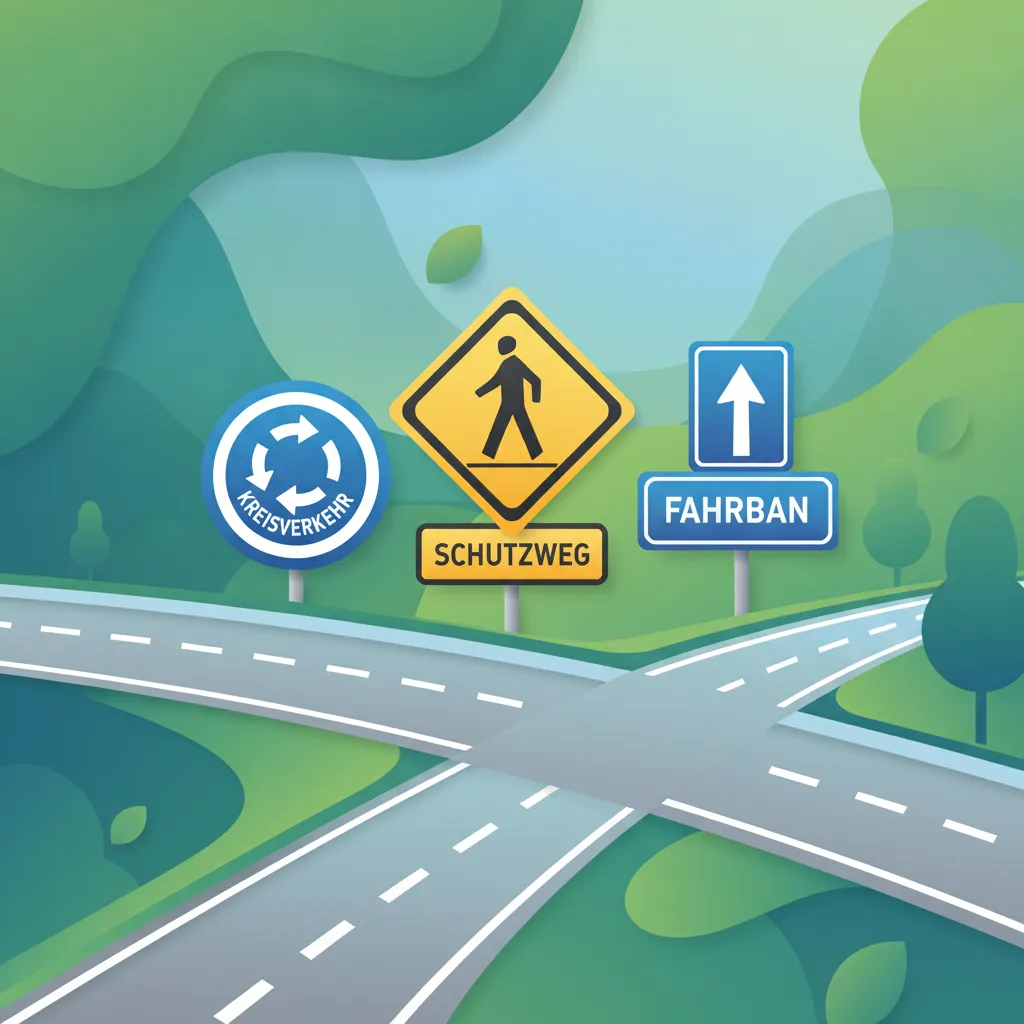
This lesson covers the specific regulations associated with special Austrian road signs and areas. It details the rules for 'Schutzweg' (protected pedestrian crossings), 'Kreisverkehr' (roundabouts), and the distinction between 'Fahrbahn' (road) and 'Fahrstreifen' (lane). Understanding these specific contexts is essential for safe navigation in urban and suburban environments.
Find clear answers to common questions learners have about Yielding and Right‑of‑Way Rules. Learn how the lesson is structured, which driving theory objectives it supports, and how it fits into the overall learning path of units and curriculum progression in Austria. These explanations help you understand key concepts, lesson flow, and exam focused study goals.
Rechts vor Links means priority to the right. At any junction where there are no traffic lights or priority signs, vehicles coming from the right have the right of way. As a motorcyclist, you must slow down and be prepared to stop if a vehicle approaches from your right.
No, generally vehicles exiting from a driveway, parking lot, or private property do not have priority. They must yield to all traffic on the main road. However, always exercise defensive riding and be prepared to brake if they ignore this rule.
In Austria, trams generally have the right of way over other traffic at intersections, even if you are coming from the right, provided the tram is not explicitly governed by a specific priority sign that says otherwise. Always treat trams with caution.
You will see a diamond-shaped yellow sign with a white border. This indicates you are on a priority road and maintain priority until you reach an intersection with a different sign, such as 'Yield' or 'Stop'.
Refine your study plan by searching for specific Austrian driving theory practice sets. Pinpoint questions related to particular road rules, signs, or challenge levels, and begin practicing immediately to reinforce your knowledge and excel in your official exam with confidence. Get started with focused revision today.