
This lesson provides a foundational understanding of the core priority rules that every driver in Austria must master. By focusing on the Rechtsregel, Vorrang, and Nachrang concepts, you will gain the clarity required to navigate intersections safely and confidently throughout your Category B theory exam.
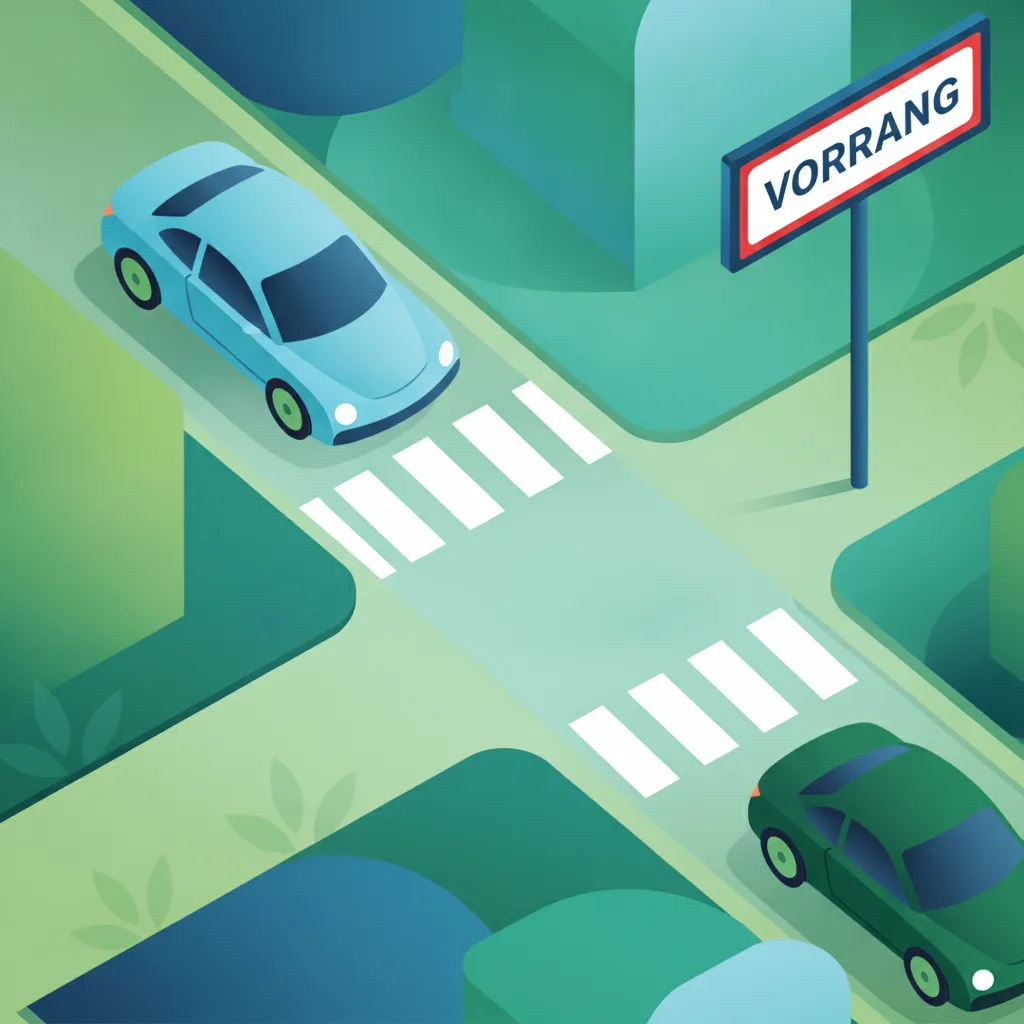
Lesson content overview
Navigating Austrian roads safely and efficiently requires a deep understanding of the country's core traffic priority rules. These rules, collectively known as right-of-way principles, dictate which vehicle or road user has the legal authority to proceed first at junctions, intersections, and other points of potential conflict. This lesson provides a detailed analysis of Vorrang (priority), Nachrang (yielding), and the Rechtsregel (default right-of-way from the right), which are fundamental to making correct and safe decisions on the road.
The Austrian Road Traffic Act (Straßenverkehrsordnung – StVO) establishes a clear hierarchy of rules to govern traffic flow and prevent collisions. These principles are not merely suggestions but legally binding obligations, and their mastery is essential for anyone seeking an Austrian Category B driver's license. By understanding these rules, drivers can anticipate the actions of others, react appropriately, and contribute to overall road safety.
Priority rules are the backbone of orderly traffic. Without them, every junction would be a chaotic free-for-all, leading to constant gridlock and frequent accidents. These rules provide predictability, allowing drivers to assess situations quickly and make informed decisions about when to stop, when to proceed, and when to expect others to yield. Correct application of priority rules significantly reduces conflict points and enhances the flow of traffic.
This lesson assumes a basic familiarity with road signs and general traffic flow concepts. We will delve into specific regulations concerning "Kreuzungen" (intersections) and "Verkehrsknotenpunkte" (traffic nodes), where multiple traffic streams converge. The principles discussed here form the logical framework that underpins more complex scenarios encountered in later parts of the Austrian Driving License B Theory Course, such as roundabouts and pedestrian crossings.
At its core, Austrian traffic law employs a hierarchical system for determining right-of-way. This hierarchy ensures that there is always a clear decision-making process at any point of conflict. Understanding this structure is crucial, as higher-level rules override lower-level ones.
Vorrang is the state of having the right-of-way. It is not merely a suggestion but a legal status that dictates who may proceed first and who must wait. This status is granted either by the general traffic law, specific traffic signs, or temporary traffic control devices like traffic lights. A driver with Vorrang expects others to yield to them, ensuring a smoother flow of traffic on designated routes.
There are several ways Vorrang can be established:
If you are on a road with Vorrang, you have the legal right to proceed without stopping or yielding to traffic from intersecting roads, provided no higher-priority rule (like an emergency vehicle or a pedestrian crossing) overrides it. However, having Vorrang does not absolve you of the responsibility to drive safely. You must still observe the traffic situation, be prepared for unexpected actions by other drivers, and avoid causing a collision. It is crucial to ensure that other road users have clearly recognized and are yielding to your priority before you proceed.
A frequent misunderstanding is that Vorrang grants an absolute right-of-way, meaning one can drive without any caution. This is incorrect. While you have the legal right to proceed, you must still maintain awareness, anticipate potential hazards, and be ready to react defensively. For example, if another driver clearly fails to yield, you are still obliged to attempt to prevent an accident if possible. Furthermore, Vorrang can be overridden by specific Verkehrsvorschriften (traffic regulations), such as directions from a police officer, or by explicit Ausschlusszeichen (exclusion signs) that might modify priority at a specific junction.
Having Vorrang does not mean you can drive recklessly. Always be prepared for other road users to make mistakes or fail to observe your priority. Your primary duty is to prevent accidents.
Nachrang is the direct opposite of Vorrang. When you have Nachrang, you are legally obliged to yield to other traffic participants who have Vorrang. This means you must slow down, stop if necessary, and wait until there is a safe and clear gap in the higher-priority traffic before proceeding. This rule is critical for preventing collisions at junctions and merging points.
Nachrang is most commonly indicated by specific traffic signs:
When faced with a Nachrang situation, your actions should be clear and predictable:
Observe Early: Scan the intersecting road for approaching traffic with Vorrang well in advance.
Adjust Speed: Reduce your speed significantly to be able to stop comfortably.
Stop or Slow: If a "Halt" (Stop) sign is present, stop completely at the stop line. If it's a "Vorfahrt gewähren" (Yield) sign, you only need to stop if there is approaching traffic that requires you to yield.
Check All Directions: Look left, right, and then left again to ensure the path is clear. Pay special attention to faster-moving traffic.
Proceed Safely: Enter the intersection only when there is a sufficiently large and safe gap in traffic, ensuring you do not force the Vorrang traffic to slow down or swerve.
A common mistake is "rolling through" a stop sign, failing to come to a complete halt. Another error is assuming that just because no explicit yield or stop sign is present, you don't have to yield when crossing a priority road. Always remember that the absence of a yield sign doesn't automatically grant you priority if the intersecting road is a designated Vorrangstraße. Drivers often misjudge the speed and distance of approaching Vorrang traffic, leading to risky maneuvers or near-misses.
The Rechtsregel, or "Vorfahrt von rechts," is the default rule of priority in Austria for situations where no other specific signs, signals, or regulations are present. It states that at an uncontrolled intersection, traffic approaching from your right has priority. This rule provides a simple, universal mechanism to resolve right-of-way conflicts at junctions that are not otherwise regulated.
The Rechtsregel applies exclusively to uncontrolled intersections. An uncontrolled intersection is one that lacks:
The Rechtsregel does not apply if any of the above conditions are met. For example, if you are on a priority road (Vorrangstraße), that sign overrides the Rechtsregel, and traffic from your right on a side road would have to yield to you. Similarly, at a junction regulated by traffic lights, the lights dictate priority, not the Rechtsregel.
When approaching an uncontrolled intersection:
Even if you are turning left at an uncontrolled intersection where the Rechtsregel applies, you must still yield to traffic coming from your right that is going straight or turning right. You also have to yield to oncoming traffic (from your left) if you are turning left across their path. The Rechtsregel primarily resolves conflicts for traffic going straight or turning right.
A common misunderstanding is that the Rechtsregel applies everywhere unless there's a stop sign. This is incorrect; it is superseded by any priority signage, traffic lights, or specific rules for roundabouts. Another error is confusing it with a "first-come, first-served" rule. The Rechtsregel is a strict rule based on direction, not on who arrived at the intersection first. Always prioritize safety and be prepared to yield even if you think you have priority, especially if the situation is ambiguous or another driver seems confused.
The principles of Vorrang, Nachrang, and Rechtsregel are codified in the Austrian Road Traffic Act (StVO). These sections provide the legal basis for the rules discussed.
This section of the StVO primarily defines the Vorrangstraße and the general conditions under which a road user has Vorrang. It states that traffic on a priority road has priority unless otherwise explicitly indicated by signs or signals. This ensures smooth and continuous flow on main arteries, reducing the need for vehicles to stop frequently.
Section 46 outlines the duty to yield (Nachrang). It mandates that drivers must give way to Vorrang traffic and must stop completely if Vorrang traffic is present and requires them to do so to prevent a collision. This applies to situations indicated by "Vorfahrt gewähren" (yield) signs, "Halt" (stop) signs, or when entering a priority road from a subordinate one.
Section 48 establishes the Rechtsregel as the default rule for uncontrolled intersections, requiring drivers to yield to traffic approaching from their right. Crucially, this section also specifies the exceptions: the Rechtsregel does not apply if priority is regulated by traffic lights, roundabouts, or specific priority signs (Vorrangstraße, yield, or stop signs). This clarifies the hierarchy, ensuring that explicit regulations always override the default rule.
Understanding these rules theoretically is one thing; applying them correctly in dynamic traffic situations is another. Here are some common scenarios to illustrate their application.
In this scenario, the driver on the main road (Vorrangstraße) has Vorrang. The driver on the side road, facing the "Vorfahrt gewähren" sign, has Nachrang. The side road driver must slow down, check for traffic on the main road, and only proceed when it is safe to do so without impeding the Vorrang traffic. The Rechtsregel does not apply here because priority is explicitly regulated by signs.
Here, no signs or lights regulate priority, so the Rechtsregel applies. Each driver must yield to the vehicle approaching from their immediate right. This can lead to complex situations if all four drivers arrive at the same time. The general principle is that the driver whose path is clear after yielding to their right may proceed, and so on. In practice, this requires clear communication and cautious negotiation, often with a driver taking the initiative to yield, breaking the deadlock.
In some city intersections, especially older or specific layouts, you might encounter temporary priority settings, though less common today. These could be indicated by specific signs for a limited period or direction. Drivers must adhere to these temporary rules, which can override the standard Rechtsregel or even a general Vorrangstraße status for that specific junction. Always observe all signage carefully, as priority can change.
Even if you are on a Vorrangstraße and thus generally have Vorrang over other vehicles, pedestrians and cyclists on marked pedestrian crossings (Zebrastreifen) always have Vorrang over vehicles. This is a critical override to vehicle priority rules. You must stop before the crossing, allowing pedestrians and cyclists to cross safely, regardless of your vehicle's priority status. Failure to do so endangers vulnerable road users and carries severe penalties.
While covered in detail in a dedicated lesson (Unit 4), it's important to note here that roundabouts have their own specific priority rules, which typically override the Rechtsregel. In Austria, the general rule is that traffic already circulating within the roundabout has Vorrang over traffic entering the roundabout. This means drivers entering a roundabout must yield to traffic already inside. However, specific signs at the entrance of a roundabout can confirm this or, rarely, alter it. Always look for the yield sign upon entering a roundabout.
The application of priority rules is not always black and white. Various environmental and vehicle-specific factors can influence how safely and effectively these rules are applied in practice.
Adverse weather conditions such as heavy rain, fog, snow, or glare from the sun significantly reduce visibility and increase stopping distances. In such conditions, drivers with Nachrang must increase their observation distance and allow a much larger safety margin before entering an intersection or merging. Even drivers with Vorrang should exercise extra caution, reduce speed, and be prepared for others to misjudge distances or fail to see them. The risk of misinterpreting another driver's intentions or movements increases dramatically.
The type of road and the prevailing traffic density also affect how priority rules are applied. In busy urban intersections, where traffic lights and signs are common, the primary focus is on following those controls. In quieter residential areas with many uncontrolled junctions, the Rechtsregel becomes paramount, requiring constant vigilance for traffic from the right. On rural roads, higher speeds mean that judging distances for yielding or proceeding requires more foresight and longer reaction times.
Heavy vehicles, such as trucks, buses, or cars towing trailers, have significantly longer braking distances and require more space for maneuvering. When these vehicles have Nachrang, they must begin the yielding process much earlier and ensure an even larger gap before entering an intersection or merging. Conversely, if you are driving a smaller vehicle and a heavy vehicle has Nachrang, be aware that it might take them longer to stop or accelerate, so do not assume they can react as quickly as you might.
As mentioned, pedestrians and cyclists on marked crossings (Zebrastreifen) always have priority over vehicles. This is a fundamental safety principle. Drivers must be constantly vigilant for vulnerable road users, especially in urban areas and near schools or public transport stops. Even at uncontrolled intersections, drivers turning right must yield to pedestrians crossing the road they are turning into. This special priority for vulnerable users overrides almost all other vehicular priority rules.
Construction zones, roadworks, or special events can temporarily alter established priority rules. Temporary traffic signs, cones, or flag persons will be used to direct traffic and establish new priority flows. Drivers must always obey these temporary signs and instructions, even if they contradict permanent signage. These temporary arrangements are put in place for safety and efficiency during the altered conditions.
The underlying logic of priority rules is to create predictability and minimize conflicts. When drivers consistently apply these rules, traffic flows more smoothly, and the likelihood of dangerous situations decreases.
Violating priority rules is a serious offense in Austria and is a leading cause of accidents. Consequences can include:
To successfully obtain your Austrian Category B driver's license and drive safely, you must internalize these core behaviour rules:
Mastering these principles will enable you to navigate Austrian roads confidently, predict the actions of other road users, and make safe, responsible decisions in diverse traffic situations.
This lesson covers the three foundational Austrian priority rules: Vorrang (having priority), Nachrang (yielding), and the Rechtsregel (right-hand rule). Vorrang grants the legal right to proceed and is typically indicated by priority road signs, while Nachrang requires drivers to slow or stop and yield to higher-priority traffic. The Rechtsregel serves as the default rule at uncontrolled intersections, giving priority to traffic approaching from the right, but it is superseded by any explicit signs, traffic lights, or roundabout regulations. Critically, pedestrians and cyclists on marked crossings always override vehicular priority rules. Understanding this hierarchy and applying it with constant awareness is essential for safe driving and passing the Austrian Category B theory exam.
A short set of high-value points that capture the most important learning from this lesson.
Vorrang means you have the legal right to proceed, typically indicated by the yellow diamond Vorrangstraße sign (B1), but you must still exercise caution and be prepared for others to fail to yield
Nachrang means you must yield to traffic with priority, indicated by 'Vorfahrt gewähren' (yield) or 'Halt' (stop) signs, requiring you to slow down or stop as necessary
The Rechtsregel is the default right-hand rule giving priority to traffic approaching from the right, but it only applies at uncontrolled intersections with no signs, lights, or roundabout regulations
Explicit priority signs always override the Rechtsregel; a Vorrangstraße sign takes precedence over any right-hand rule at intersecting side roads
Pedestrians and cyclists on marked Zebrastreifen crossings always have priority over all vehicles, overriding any vehicular priority status
Explore all units and lessons included in this driving theory course.
Vorrangstraße (yellow diamond B1 sign) grants continuous priority through intersections unless explicitly revoked by other signs
A 'Halt' (stop) sign requires complete cessation behind the stop line; a 'Vorfahrt gewähren' (yield) sign requires slowing and yielding only if traffic is present
The Rechtsregel does NOT apply at roundabouts, signal-controlled intersections, or when priority signs are present
Vulnerable road users on marked crossings always have priority regardless of your vehicular right-of-way
Having Vorrang does not mean driving without caution—you must still prevent accidents even when others fail to yield to you
Assuming the Rechtsregel applies at any unmarked junction, when it is actually overridden by any priority signage, traffic lights, or roundabout rules
Rolling through stop signs without coming to a complete halt, which is a traffic violation even if no other vehicles are visible
Believing that Vorrang grants absolute priority allowing you to drive without caution—Vorrang holders must still maintain awareness and avoid collisions
Forgetting that pedestrians and cyclists on Zebrastreifen crossings always have priority over vehicles, even on a Vorrangstraße
Confusing the Rechtsregel with a 'first-come, first-served' principle—the rule is based strictly on direction of approach, not arrival time
Lesson content overview
A short set of high-value points that capture the most important learning from this lesson.
Vorrang means you have the legal right to proceed, typically indicated by the yellow diamond Vorrangstraße sign (B1), but you must still exercise caution and be prepared for others to fail to yield
Nachrang means you must yield to traffic with priority, indicated by 'Vorfahrt gewähren' (yield) or 'Halt' (stop) signs, requiring you to slow down or stop as necessary
The Rechtsregel is the default right-hand rule giving priority to traffic approaching from the right, but it only applies at uncontrolled intersections with no signs, lights, or roundabout regulations
Explicit priority signs always override the Rechtsregel; a Vorrangstraße sign takes precedence over any right-hand rule at intersecting side roads
Pedestrians and cyclists on marked Zebrastreifen crossings always have priority over all vehicles, overriding any vehicular priority status
Explore all units and lessons included in this driving theory course.
Vorrangstraße (yellow diamond B1 sign) grants continuous priority through intersections unless explicitly revoked by other signs
A 'Halt' (stop) sign requires complete cessation behind the stop line; a 'Vorfahrt gewähren' (yield) sign requires slowing and yielding only if traffic is present
The Rechtsregel does NOT apply at roundabouts, signal-controlled intersections, or when priority signs are present
Vulnerable road users on marked crossings always have priority regardless of your vehicular right-of-way
Having Vorrang does not mean driving without caution—you must still prevent accidents even when others fail to yield to you
Assuming the Rechtsregel applies at any unmarked junction, when it is actually overridden by any priority signage, traffic lights, or roundabout rules
Rolling through stop signs without coming to a complete halt, which is a traffic violation even if no other vehicles are visible
Believing that Vorrang grants absolute priority allowing you to drive without caution—Vorrang holders must still maintain awareness and avoid collisions
Forgetting that pedestrians and cyclists on Zebrastreifen crossings always have priority over vehicles, even on a Vorrangstraße
Confusing the Rechtsregel with a 'first-come, first-served' principle—the rule is based strictly on direction of approach, not arrival time
Explore search topics learners often look for when studying Core Behaviour Rules (Vorrang, Nachrang, Rechtsregel). These topics reflect common questions about road rules, driving situations, safety guidance, and lesson level theory preparation for learners in Austria.
Browse additional driving theory lessons that cover connected traffic rules, road signs, and common driving situations related to this topic. Improve your understanding of how different rules interact across everyday traffic scenarios.
Explore detailed explanations of how to navigate complex intersections and junctions according to Austrian traffic law. Understand advanced priority rules beyond the basics for safer driving.
This lesson examines various common intersection layouts, including T-intersections, four-way junctions, and complex multi-lane crossings. It explains how right-of-way is determined in each scenario, whether through traffic signals, stop or yield signs, or the default right-hand rule. Understanding how to identify conflict points and apply the correct priority rule is essential for preventing collisions and ensuring smooth traffic movement.

This lesson provides a comprehensive explanation of Austria's right-of-way laws, which are fundamental to intersection safety. It covers the meaning of different priority signs and clarifies the 'Rechts vor Links' (priority to the right) rule that applies at unmarked junctions. A clear understanding of these rules is essential to prevent conflicts and collisions in urban and rural settings.
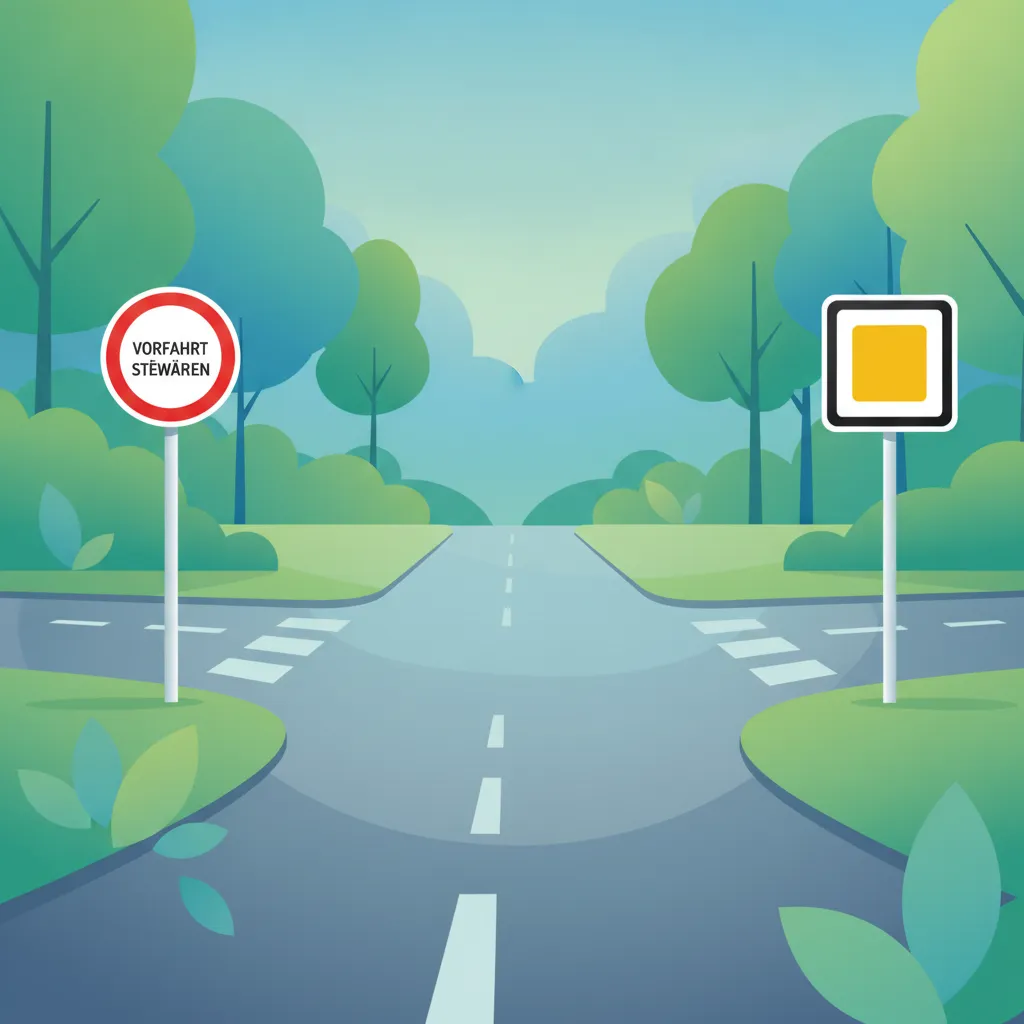
This lesson explains the fundamental concepts of priority that govern traffic at Austrian junctions. It differentiates between having priority ('Vorfahrt') and the duty to yield ('Nachrang'), detailing the signs that establish these rules. Correct application of these principles is critical for preventing collisions at intersections and roundabouts.

This lesson teaches a safe and systematic process for approaching and crossing intersections. It covers how to correctly assess priority based on signs and general rules, adjust speed appropriately, and perform thorough visual checks. Emphasis is placed on anticipating the actions of other road users to prevent conflicts at junctions.
This lesson teaches a safe, methodical process for navigating intersections. It stresses the importance of proper lane positioning on approach, comprehensive visual scans for cross-traffic, pedestrians, and cyclists, and clear communication of intent. Special attention is given to the increased risks associated with left turns across oncoming traffic.
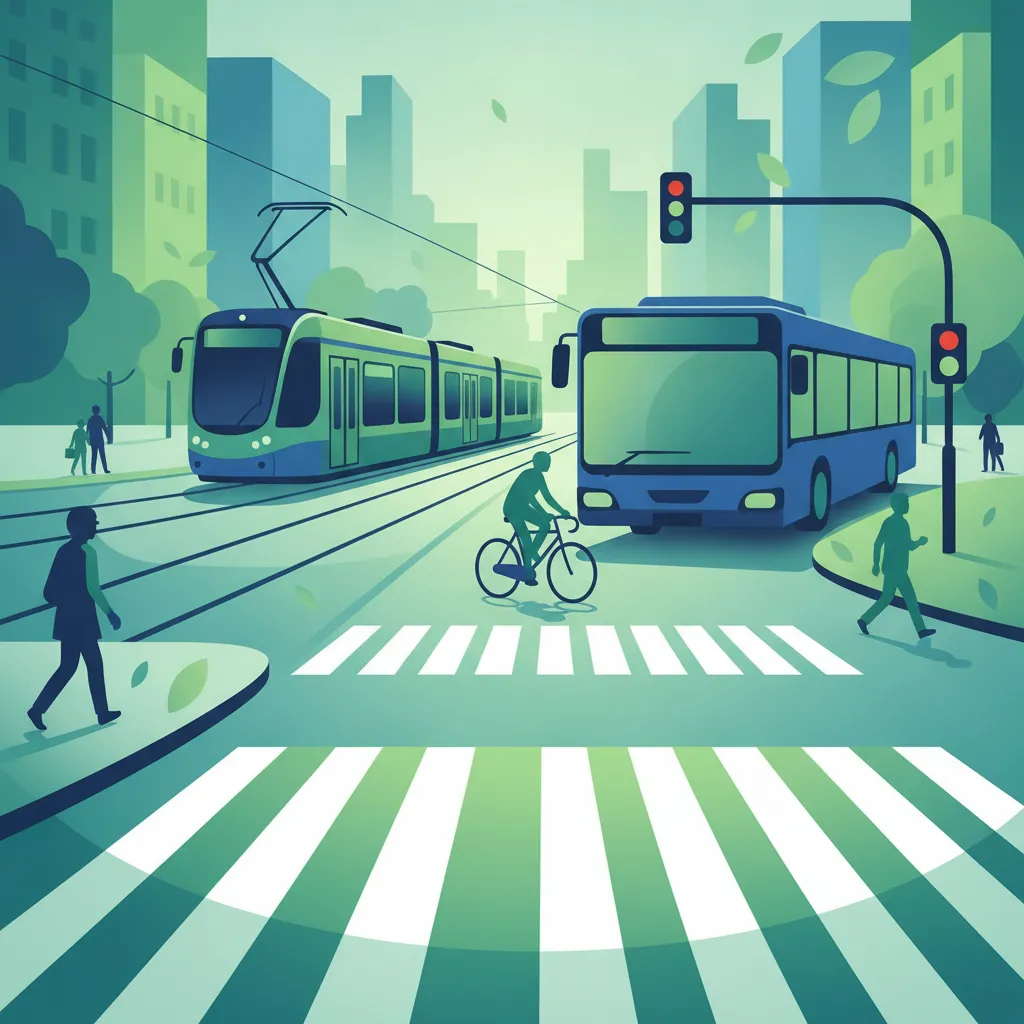
This lesson addresses the unique challenges and priority rules that apply when interacting with public transport and cyclists at intersections. It clarifies the specific right-of-way regulations for trams, which often have priority over other traffic, and the procedures for navigating around bus stops. The content also covers how to safely manage crossings with dedicated bicycle lanes, ensuring the protection of all road users.
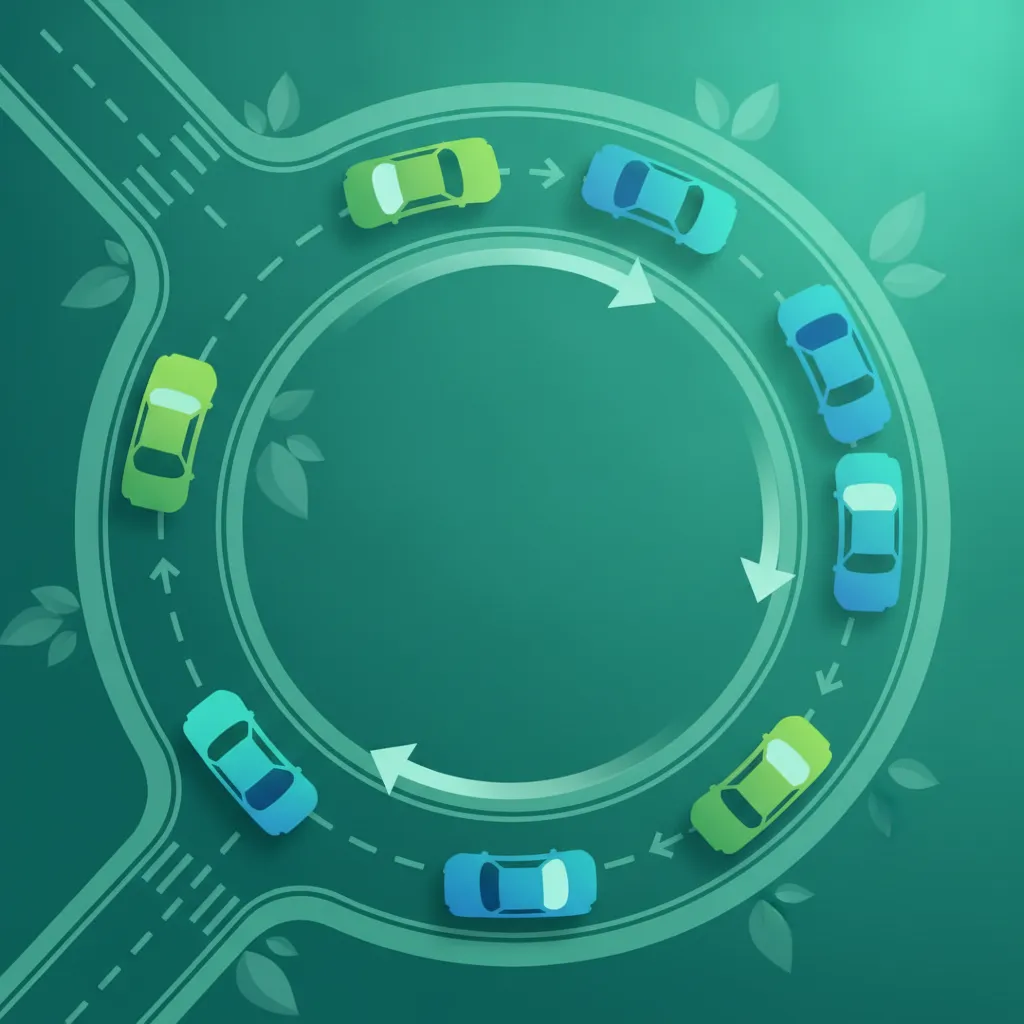
This lesson focuses on the rules for navigating roundabouts (Kreisverkehr) in Austria. It highlights the fundamental give-way rule, where traffic entering the roundabout must yield to traffic already circulating within it. Learners will understand the correct procedures for lane selection, signaling intent to exit, and maintaining safe traffic flow, supported by explanations of specific Austrian roundabout signage.

This lesson provides a detailed guide to executing turning manoeuvres safely and correctly at both intersections and roundabouts. It explains the importance of proper lane positioning well in advance of the turn, the correct timing for signaling, and the necessity of checking for pedestrians and cyclists. The content also reinforces priority rules that apply when turning, particularly when crossing the path of oncoming traffic during a left turn.
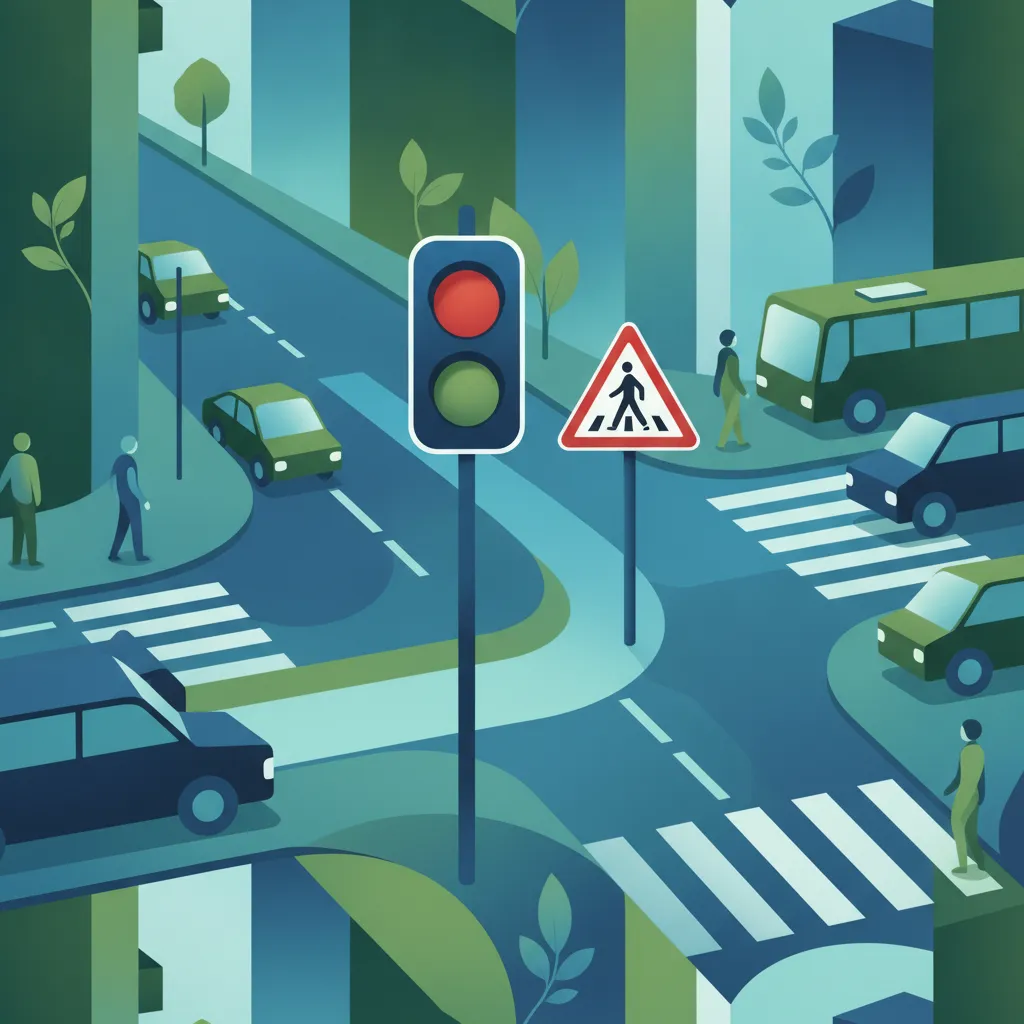
This lesson explains the operation and meaning of traffic light signals in Austria, including the standard red, yellow, and green phases, as well as flashing signals and arrows. It also covers other priority control devices, such as stop signs and yield signs, which are used to manage right-of-way at intersections. Understanding the hierarchy between these signals and signs is crucial for navigating junctions safely and in compliance with the law.

This lesson addresses advanced manoeuvres that require precise timing and judgment, such as merging onto a motorway from an acceleration lane. It explains the importance of matching the speed of the traffic flow and finding a safe gap before moving over. The content also covers procedures for navigating lane drops and the 'zipper merge' (Reißverschlusssystem) principle in congested situations, promoting efficient and cooperative driving.
Learn to identify and avoid frequent errors when applying Austrian priority rules, including Vorrang, Nachrang, and Rechtsregel. Understand these principles through practical examples and traffic situations.

This lesson explains the core principles of Vorrang (having priority) and Nachrang (the obligation to yield) which form the basis of the Austrian traffic hierarchy. Learners will understand how priority roads are designated by signs and how drivers on secondary roads must yield right-of-way. The content clarifies the legal foundation for these rules under the Austrian road traffic act (StVO), providing a clear framework for decision-making at intersections.
This lesson explains the fundamental concepts of priority that govern traffic at Austrian junctions. It differentiates between having priority ('Vorfahrt') and the duty to yield ('Nachrang'), detailing the signs that establish these rules. Correct application of these principles is critical for preventing collisions at intersections and roundabouts.
This lesson provides a comprehensive explanation of Austria's right-of-way laws, which are fundamental to intersection safety. It covers the meaning of different priority signs and clarifies the 'Rechts vor Links' (priority to the right) rule that applies at unmarked junctions. A clear understanding of these rules is essential to prevent conflicts and collisions in urban and rural settings.
This lesson examines various common intersection layouts, including T-intersections, four-way junctions, and complex multi-lane crossings. It explains how right-of-way is determined in each scenario, whether through traffic signals, stop or yield signs, or the default right-hand rule. Understanding how to identify conflict points and apply the correct priority rule is essential for preventing collisions and ensuring smooth traffic movement.
This lesson addresses the unique challenges and priority rules that apply when interacting with public transport and cyclists at intersections. It clarifies the specific right-of-way regulations for trams, which often have priority over other traffic, and the procedures for navigating around bus stops. The content also covers how to safely manage crossings with dedicated bicycle lanes, ensuring the protection of all road users.

This lesson focuses on the specific regulations and safety protocols for driving near trams (Straßenbahn) in Austrian cities. It clarifies the priority rules, which almost always favor the tram, and explains how to safely share lanes or cross tram tracks. The content provides critical guidance on how to behave at tram stops, ensuring the safety of boarding and alighting passengers is always the primary concern.
This lesson focuses on the rules for navigating roundabouts (Kreisverkehr) in Austria. It highlights the fundamental give-way rule, where traffic entering the roundabout must yield to traffic already circulating within it. Learners will understand the correct procedures for lane selection, signaling intent to exit, and maintaining safe traffic flow, supported by explanations of specific Austrian roundabout signage.
This lesson explains the operation and meaning of traffic light signals in Austria, including the standard red, yellow, and green phases, as well as flashing signals and arrows. It also covers other priority control devices, such as stop signs and yield signs, which are used to manage right-of-way at intersections. Understanding the hierarchy between these signals and signs is crucial for navigating junctions safely and in compliance with the law.
Find clear answers to common questions learners have about Core Behaviour Rules (Vorrang, Nachrang, Rechtsregel). Learn how the lesson is structured, which driving theory objectives it supports, and how it fits into the overall learning path of units and curriculum progression in Austria. These explanations help you understand key concepts, lesson flow, and exam focused study goals.
The Rechtsregel (right-hand rule) dictates that at unmarked intersections, vehicles coming from the right have priority. It is the default rule unless specific traffic signs or signals indicate otherwise.
In many cases yes, but it depends on the traffic situation and specific signage. Generally, a tram has priority unless a sign dictates a Nachrang, but you must always exercise caution when interacting with trams at intersections.
If you are at an intersection without any priority signs or road markings, you must apply the default right-hand rule. Always scan carefully for traffic approaching from your right before entering the junction.
A common mistake is assuming priority exists when it has been negated by a sign. Always look for the 'Priority Road' (Vorrangstraße) or 'Yield' (Nachrang) signs, as they override the default right-hand rule.
Refine your study plan by searching for specific Austrian driving theory practice sets. Pinpoint questions related to particular road rules, signs, or challenge levels, and begin practicing immediately to reinforce your knowledge and excel in your official exam with confidence. Get started with focused revision today.