
In this lesson, you will learn the essential rules for safely navigating roundabouts as a moped rider in Austria. We cover the mandatory yielding protocols, how to position your vehicle, and the correct signaling procedures required by the Austrian StVO. Mastering these techniques is vital for your success in the AM theory exam and your daily safety on the road.
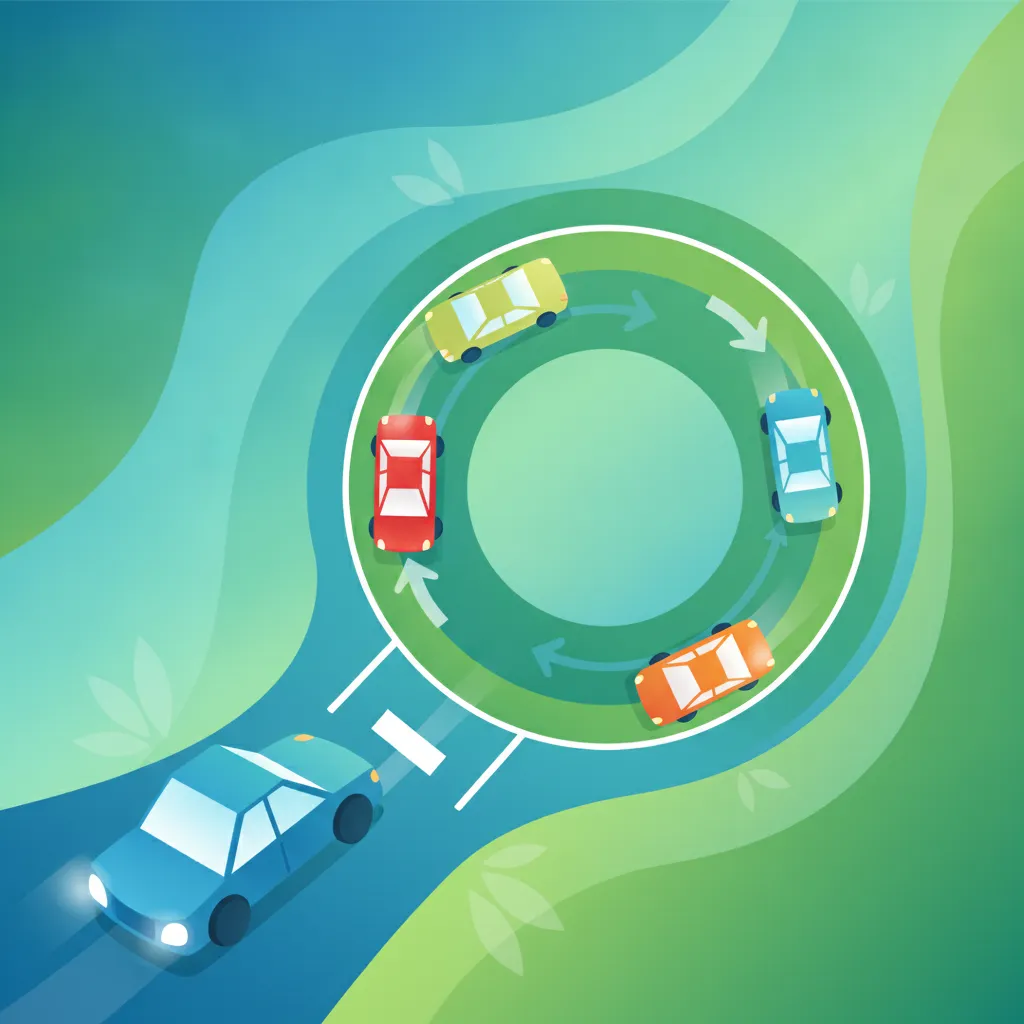
Lesson content overview
Roundabouts are a common and efficient type of intersection designed to improve traffic flow and reduce the severity of collisions. For riders in Austrian AM Driving Theory – Safe Riding for Mopeds and Small Scooters, understanding how to navigate these circular intersections safely and correctly is paramount. This lesson provides comprehensive instructions on the critical procedures for entering, circulating, and exiting roundabouts, ensuring you can manage them confidently and in accordance with Austrian road traffic law (StVO).
A roundabout is a circular intersection where traffic flows in one direction (counter-clockwise in countries with right-hand traffic like Austria) around a central island. Unlike traditional intersections with traffic lights or stop signs, roundabouts typically require vehicles to yield before entering and then circulate until their intended exit.
Roundabouts are engineered to reduce common conflict points found at cross-intersections. By converting straight-through and left-turn movements into a continuous flow, they minimize the need for complete stops and sharp turns, generally leading to smoother traffic. The design naturally slows down vehicles, which can significantly enhance safety, particularly for vulnerable road users (VRUs) such as moped riders, cyclists, and pedestrians.
For AM license holders, especially those riding mopeds and small scooters, roundabouts demand precise understanding and execution. Due to their smaller size and reduced visibility compared to cars, moped riders must be acutely aware of their road positioning and communicate their intentions clearly. Mastering roundabout navigation secures a smooth journey, prevents collisions, and reduces accident risks for all road users. A clear grasp of right-of-way, lane discipline, and signaling is fundamental to safely integrating into the traffic flow and exiting without incident.
Navigating roundabouts safely relies on a set of core principles that minimize conflicts and ensure predictable movements. These principles form the foundation of efficient and accident-free passage through these intersections.
The most fundamental rule at nearly all roundabouts is to yield to traffic already circulating within the roundabout. This means that vehicles approaching the roundabout must stop, if necessary, and wait until there is a safe gap in the traffic flow before entering. This rule prevents collisions at the entry point and maintains a continuous flow for vehicles already inside. As an AM rider, you must carefully assess the speed and distance of circulating vehicles to determine when it is safe to proceed without forcing another driver to brake or swerve.
Proper lane discipline is crucial, especially on multi-lane roundabouts. You must select the correct lane before entering the roundabout based on your intended exit. This planning reduces the need for dangerous lane changes within the roundabout itself, which are common conflict points. Typically, the inner lane is used for immediate right turns (first exit), while the outer lane is for continuing past the first exit (second, third, or beyond). Always pay attention to road markings and signage at the approach.
Effective communication of your intentions to other road users is vital for safety. While signaling upon entry to a roundabout is generally not obligatory in Austria, it can increase predictability. However, signaling your exit is mandatory. You must activate your turn signal after passing the exit preceding your intended departure point. This alerts other drivers and riders about your upcoming exit, allowing them to adjust their speed or prepare to enter the roundabout.
Maintaining an appropriate speed is essential for safely navigating roundabouts. You must reduce your speed on approach to allow sufficient time to assess gaps, select lanes, and react to other traffic. Once inside, maintain a speed that provides vehicle stability and allows you to stop or yield safely if an unexpected situation arises. In urban areas, the speed limit in roundabouts is often 30 km/h, unless specific signage indicates otherwise. Adhering to these limits helps ensure you have enough time to perceive hazards and react effectively.
Austrian road traffic law (StVO) provides specific regulations governing the use of roundabouts, which are essential for every AM license holder to know and follow.
According to Austrian traffic law, specifically StVO § 9, vehicles already within the roundabout (circulating traffic) always have priority over those approaching. This means that if you are approaching a roundabout, you must yield to any vehicle already inside or entering from another approach.
The legal obligation to give priority to another road user, meaning you must slow down or stop to allow them to proceed safely.
Practical Application: When you approach a roundabout, slow down and scan for traffic already moving inside the circle. If there are vehicles, you must wait at the entry line (often marked with a dashed line or shark's teeth markings) until a safe gap appears. Only then may you enter the roundabout. Never force your way in, as this is a common cause of collisions.
On roundabouts with multiple lanes, StVO § 43 dictates that you must use the appropriate lane as indicated by road markings and signage. This rule is crucial for preventing chaotic lane changes within the roundabout itself.
Lane Selection Guidelines:
Some multi-lane roundabouts may have specific lane arrows painted on the road surface or overhead signs that supersede these general guidelines. Always follow these explicit instructions.
The aim is to choose your lane early and maintain it through the roundabout, only signaling your intention to exit once you have passed the previous exit.
The use of vehicle indicators is critical for clear communication. While signaling upon entry to a roundabout is not legally mandatory in Austria (and can sometimes be confusing if done too early), signaling when exiting is mandatory according to StVO § 58.
Correct Signaling Procedure:
Signaling too early (e.g., before the exit preceding your own) can mislead other drivers, particularly those waiting to enter the roundabout, causing confusion and potential hazards. Conversely, failing to signal at all is a common violation and highly dangerous, as it leaves other road users guessing your intentions.
StVO § 30 emphasizes the general duty to avoid danger and maintain a safe distance. This principle directly applies to speed control and stopping distances at roundabouts. You must maintain a speed that allows you to react safely to unexpected situations and come to a complete stop if necessary.
Recommended Speed: In many urban roundabouts in Austria, a recommended or posted speed limit of 30 km/h is common. This reduced speed provides more time for perception and reaction, allows for smoother steering, and significantly shortens stopping distances.
Stopping Distance Factors: Your ability to stop safely depends on:
Always assume that stopping distances will be longer than you expect, especially when visibility is poor or the road is wet. Build in a generous safety margin.
Beyond the strict rules, understanding the underlying dynamics and practical application of these principles will make you a truly proficient and safe roundabout rider.
Entering a roundabout safely hinges on your ability to accurately assess gaps in circulating traffic. A "gap" is a safe space between circulating vehicles that allows you to enter the roundabout without forcing another vehicle to slow down, brake, or change direction.
Slow Down on Approach: Give yourself maximum time to observe. Reduce your speed significantly as you near the entry line.
Look Left, Then Right, Then Left Again: Traffic inside the roundabout comes from your left. You also need to check for traffic exiting from other approaches that might affect your entry.
Estimate Speed and Distance: Judge the speed of oncoming circulating vehicles and the distance between them. A larger gap is always safer.
Wait if Unsure: If you are uncertain whether a gap is sufficient, it is always safer to wait for the next clear opportunity. Never try to force an entry.
Be Prepared to Stop: Always approach the roundabout prepared to stop completely at the yield line if no safe gap presents itself.
Overestimating a gap is a common mistake that can lead to dangerous situations. Practice makes perfect in gap assessment, but starting cautiously and gradually building confidence is key.
As mentioned, strategic lane selection begins before you enter the roundabout. This concept is particularly important on multi-lane roundabouts, which are designed to handle higher traffic volumes.
Roundabout Characteristics and Lane Use:
Once you have entered a multi-lane roundabout, avoid changing lanes while circulating. This creates unnecessary conflict points and is a primary cause of collisions within roundabouts. Commit to your chosen lane and exit from it.
While the legal requirement for signaling at roundabouts in Austria is specific to exiting, a well-timed signal on approach can sometimes be beneficial, especially for your first exit, to clearly communicate a quick departure. However, the critical moment for signaling is as you prepare to leave.
Identify Your Exit: Know exactly which exit you intend to take before you reach the roundabout.
Pass the Preceding Exit: Circulate until the front of your moped is approximately alongside the exit before your desired one.
Activate Right Indicator: Immediately activate your right-turn indicator.
Maintain Signal to Exit: Keep the indicator flashing until you have fully turned off the roundabout and are moving straight onto the new road.
This precise timing prevents confusion and ensures other drivers correctly interpret your intentions.
Roundabouts vary significantly in their design, and your approach must adapt accordingly.
Being aware of common errors can significantly enhance your safety and confidence at roundabouts.
Your strategy for navigating roundabouts must adapt to different environmental and traffic conditions.
Understanding key terminology will help you grasp the concepts discussed in this lesson and communicate effectively about road situations.
To solidify your understanding, let's consider a few practical situations you might encounter.
Setting: You are on your moped approaching a single-lane roundabout in an urban area during peak traffic. You intend to take the second exit (straight through).
Correct Behavior:
Incorrect Behavior: Accelerating into the roundabout, hoping an approaching car will slow down for you, or attempting to squeeze into a gap that is too small, potentially causing a near-collision or forcing another driver to brake harshly.
Setting: You are on your moped approaching a two-lane roundabout in a larger town. You need to take the third exit (a left turn).
Correct Behavior:
Incorrect Behavior: Entering in the outer lane and then trying to cut across to the inner lane inside the roundabout, creating a high-risk lane change situation with circulating traffic.
Setting: You are riding your moped and approaching a single-lane roundabout in heavy rain. The road surface is very wet.
Correct Behavior:
Incorrect Behavior: Approaching at the normal speed, misjudging the reduced braking ability on a wet surface, and having to brake abruptly, risking a skid or collision.
Mastering roundabout navigation is a key skill for safe riding under your Austrian AM Driving Theory license. To recap the essential strategies:
By consistently applying these principles, you will navigate roundabouts safely and efficiently, contributing to smoother traffic flow and reducing accident risks for yourself and all other road users.
This lesson covers the essential Austrian traffic rules for safely navigating roundabouts as an AM moped rider, with specific legal citations from the StVO. You must always yield to circulating traffic, select your entry lane based on your intended exit before entering, and signal your exit after passing the exit immediately before yours—this signaling is mandatory under StVO § 58. Speed should be controlled to approximately 30 km/h in urban areas, with adjustments for weather conditions. The lesson also details common mistakes including forced entry, early signaling, lane changes within the roundabout, and failure to yield to pedestrians, providing practical scenarios to illustrate correct behavior.
A short set of high-value points that capture the most important learning from this lesson.
Yielding to circulating traffic is the golden rule at all Austrian roundabouts, per StVO § 9; vehicles already inside always have priority.
Select your lane before entering based on your intended exit: outer lane for first/second exit, inner lane for third exit or beyond.
Exit signaling is mandatory in Austria—activate your right indicator only after passing the exit immediately before your intended one.
Maintain appropriate speed (typically 30 km/h in urban areas) to allow sufficient time for gap assessment and safe stopping.
Avoid changing lanes within the roundabout; commit to your chosen lane from entry to exit.
Explore all units and lessons included in this driving theory course.
StVO § 9 establishes priority for circulating traffic; StVO § 43 governs lane discipline; StVO § 58 mandates exit signaling; StVO § 30 covers safe speed and stopping distances.
On single-lane roundabouts: yield, enter without signaling, signal right after passing the exit before yours, then exit.
Gap assessment requires looking left (for circulating traffic), then right (for other approaches), estimating speed and distance before deciding to enter.
Wet or slippery conditions dramatically increase braking distance—reduce speed and seek larger gaps in adverse weather.
Pedestrians at marked crosswalks near roundabouts always have priority, even over circulating traffic.
Forcing entry when no safe gap exists, causing other drivers to brake or swerve—this is both dangerous and a frequent collision cause.
Signaling too early (before the preceding exit) which misleads drivers waiting to enter, creating confusion and potential hazards.
Changing lanes inside the roundabout instead of committing to the lane selected before entry—this creates dangerous conflict points.
Failing to signal at all when exiting, which is a legal violation and leaves other road users guessing your intentions.
Approaching at excessive speed, reducing time for gap assessment and increasing stopping distance beyond safe limits.
Lesson content overview
A short set of high-value points that capture the most important learning from this lesson.
Yielding to circulating traffic is the golden rule at all Austrian roundabouts, per StVO § 9; vehicles already inside always have priority.
Select your lane before entering based on your intended exit: outer lane for first/second exit, inner lane for third exit or beyond.
Exit signaling is mandatory in Austria—activate your right indicator only after passing the exit immediately before your intended one.
Maintain appropriate speed (typically 30 km/h in urban areas) to allow sufficient time for gap assessment and safe stopping.
Avoid changing lanes within the roundabout; commit to your chosen lane from entry to exit.
Explore all units and lessons included in this driving theory course.
StVO § 9 establishes priority for circulating traffic; StVO § 43 governs lane discipline; StVO § 58 mandates exit signaling; StVO § 30 covers safe speed and stopping distances.
On single-lane roundabouts: yield, enter without signaling, signal right after passing the exit before yours, then exit.
Gap assessment requires looking left (for circulating traffic), then right (for other approaches), estimating speed and distance before deciding to enter.
Wet or slippery conditions dramatically increase braking distance—reduce speed and seek larger gaps in adverse weather.
Pedestrians at marked crosswalks near roundabouts always have priority, even over circulating traffic.
Forcing entry when no safe gap exists, causing other drivers to brake or swerve—this is both dangerous and a frequent collision cause.
Signaling too early (before the preceding exit) which misleads drivers waiting to enter, creating confusion and potential hazards.
Changing lanes inside the roundabout instead of committing to the lane selected before entry—this creates dangerous conflict points.
Failing to signal at all when exiting, which is a legal violation and leaves other road users guessing your intentions.
Approaching at excessive speed, reducing time for gap assessment and increasing stopping distance beyond safe limits.
Explore search topics learners often look for when studying Roundabouts: Entry, Yield, and Exit Strategies. These topics reflect common questions about road rules, driving situations, safety guidance, and lesson level theory preparation for learners in Austria.
Browse additional driving theory lessons that cover connected traffic rules, road signs, and common driving situations related to this topic. Improve your understanding of how different rules interact across everyday traffic scenarios.
Explore detailed Austrian driving theory explanations for challenging roundabout situations. Learn to identify and avoid frequent errors faced by AM riders when navigating multi-lane roundabouts, yielding correctly, and signaling for exits.
This lesson provides clear instructions for maneuvering through single and multi-lane roundabouts. It covers the critical rule of giving way to traffic already in the circle, proper lane selection based on the intended exit, and the correct use of indicators when entering and exiting. Mastering roundabouts is key to efficient and safe travel in modern Austrian traffic systems.
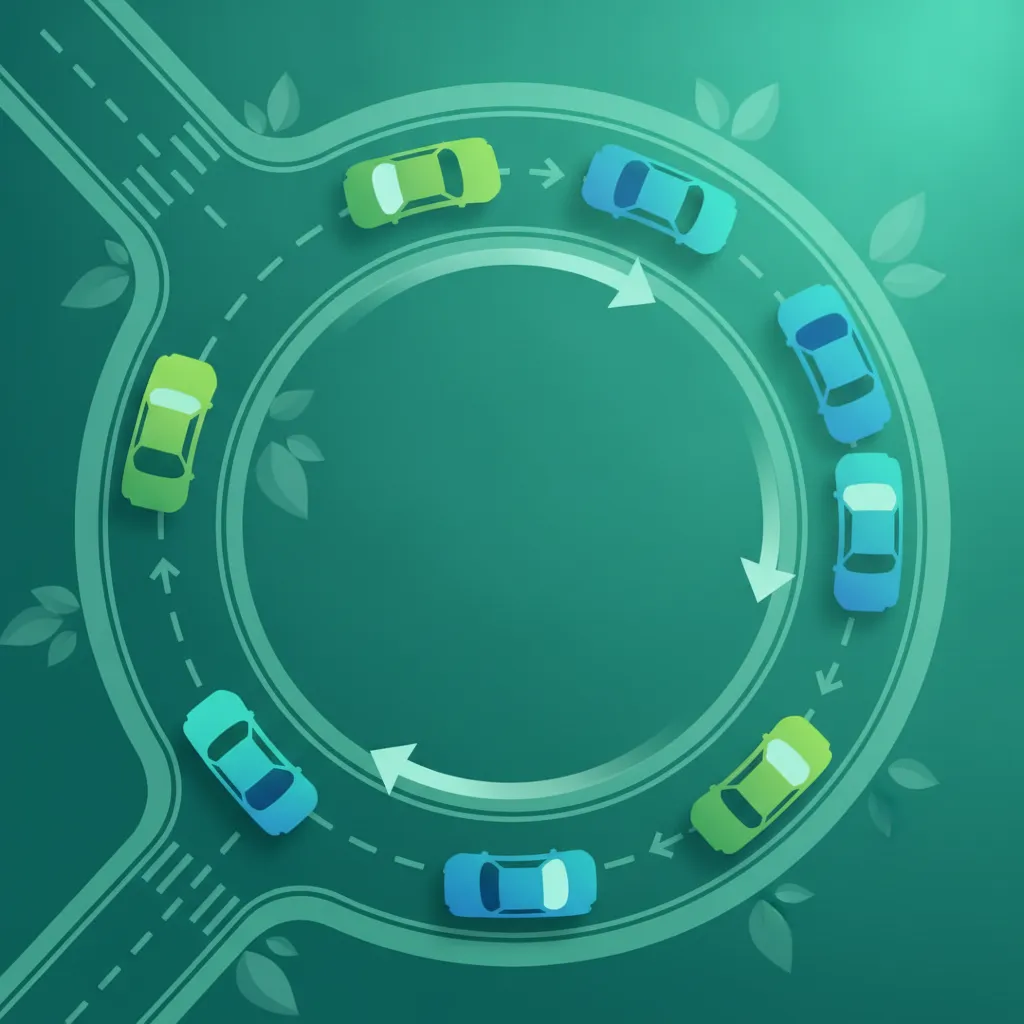
This lesson focuses on the rules for navigating roundabouts (Kreisverkehr) in Austria. It highlights the fundamental give-way rule, where traffic entering the roundabout must yield to traffic already circulating within it. Learners will understand the correct procedures for lane selection, signaling intent to exit, and maintaining safe traffic flow, supported by explanations of specific Austrian roundabout signage.

This lesson addresses advanced manoeuvres that require precise timing and judgment, such as merging onto a motorway from an acceleration lane. It explains the importance of matching the speed of the traffic flow and finding a safe gap before moving over. The content also covers procedures for navigating lane drops and the 'zipper merge' (Reißverschlusssystem) principle in congested situations, promoting efficient and cooperative driving.
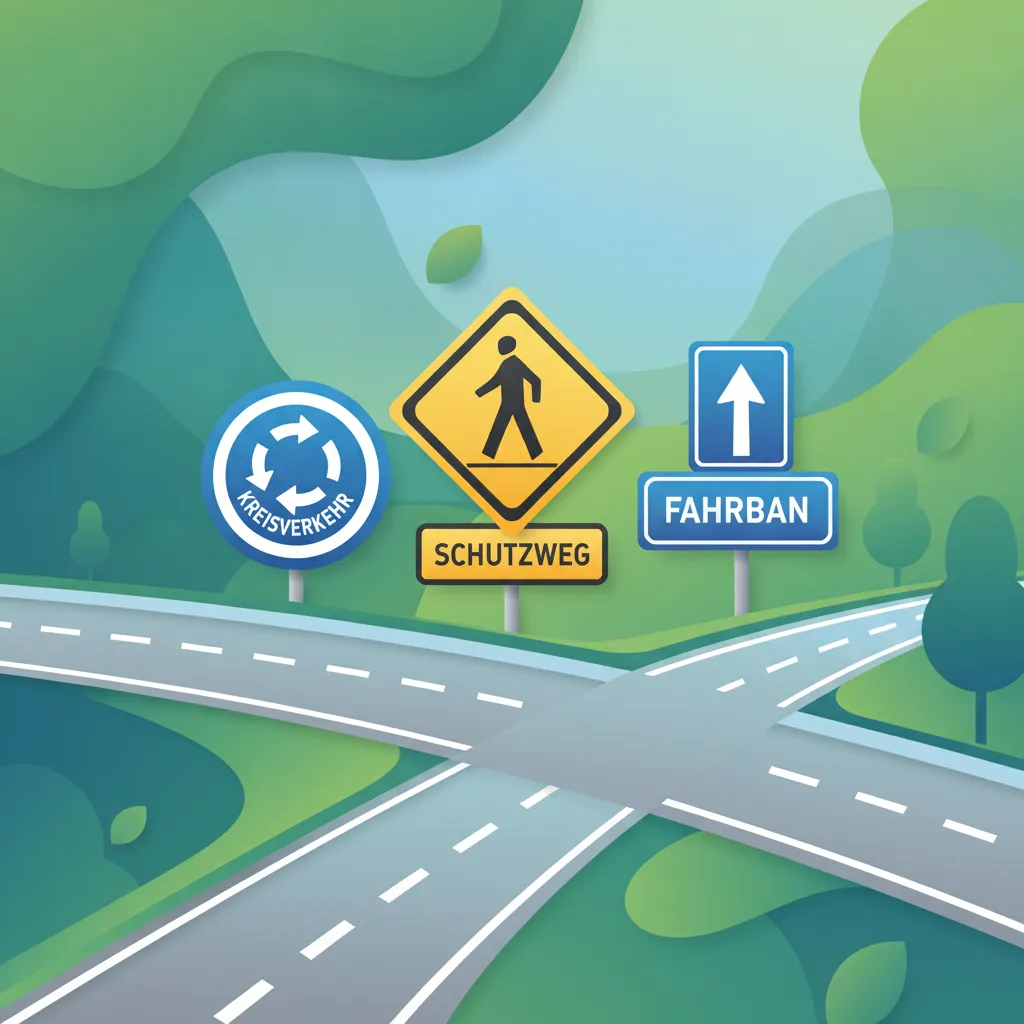
This lesson covers the specific regulations associated with special Austrian road signs and areas. It details the rules for 'Schutzweg' (protected pedestrian crossings), 'Kreisverkehr' (roundabouts), and the distinction between 'Fahrbahn' (road) and 'Fahrstreifen' (lane). Understanding these specific contexts is essential for safe navigation in urban and suburban environments.

This lesson provides a detailed guide to executing turning manoeuvres safely and correctly at both intersections and roundabouts. It explains the importance of proper lane positioning well in advance of the turn, the correct timing for signaling, and the necessity of checking for pedestrians and cyclists. The content also reinforces priority rules that apply when turning, particularly when crossing the path of oncoming traffic during a left turn.

This lesson consolidates knowledge by applying it to common everyday driving situations. It offers practical tips on topics like smooth driving for fuel efficiency, managing distractions in the cabin, and maintaining courtesy in frustrating traffic. The content reinforces defensive driving principles as a constant habit, helping learners transition from theoretical knowledge to confident, safe, and responsible real-world driving.

This lesson covers the principles of proper lane discipline, including maintaining a correct and steady position within a lane and adhering to the 'keep right' rule on multi-lane roads. It details the safe and systematic protocol for changing lanes, which involves checking mirrors, signaling intention, performing a blind spot check, and then smoothly executing the manoeuvre. Correct lane usage is essential for maintaining predictable and safe traffic flow.

This lesson explores the distinct challenges of urban driving, focusing on managing the vehicle in dense, slow-moving, or stop-and-go traffic. It covers strategies for effective lane management, anticipating traffic signal changes, and navigating common city road features like one-way streets and traffic calming measures. Understanding these dynamics helps reduce stress and improve safety in congested environments.

This lesson introduces the proactive mindset of defensive driving, which focuses on anticipating potential hazards rather than just reacting to them. It teaches techniques for systematic risk assessment, including scanning the road ahead, checking mirrors frequently, and being aware of the potential actions of other road users. By adopting these safe habits, drivers can create a buffer of safety around their vehicle and significantly reduce the likelihood of being involved in an accident.

This lesson focuses on the safety-critical skill of reversing, emphasizing the importance of all-around observation before and during the manoeuvre. It covers the correct use of mirrors and the necessity of checking blind spots to ensure the path is clear of pedestrians, obstacles, and other vehicles. Learners will understand techniques for maintaining slow, controlled speed and making accurate steering adjustments while backing up in various situations.
Understand the fundamental Austrian traffic law (StVO) regarding roundabouts. This lesson covers essential rules for entry, yielding, lane selection, and mandatory signaling for AM riders, ensuring safe navigation.
This lesson focuses on the rules for navigating roundabouts (Kreisverkehr) in Austria. It highlights the fundamental give-way rule, where traffic entering the roundabout must yield to traffic already circulating within it. Learners will understand the correct procedures for lane selection, signaling intent to exit, and maintaining safe traffic flow, supported by explanations of specific Austrian roundabout signage.
This lesson provides clear instructions for maneuvering through single and multi-lane roundabouts. It covers the critical rule of giving way to traffic already in the circle, proper lane selection based on the intended exit, and the correct use of indicators when entering and exiting. Mastering roundabouts is key to efficient and safe travel in modern Austrian traffic systems.
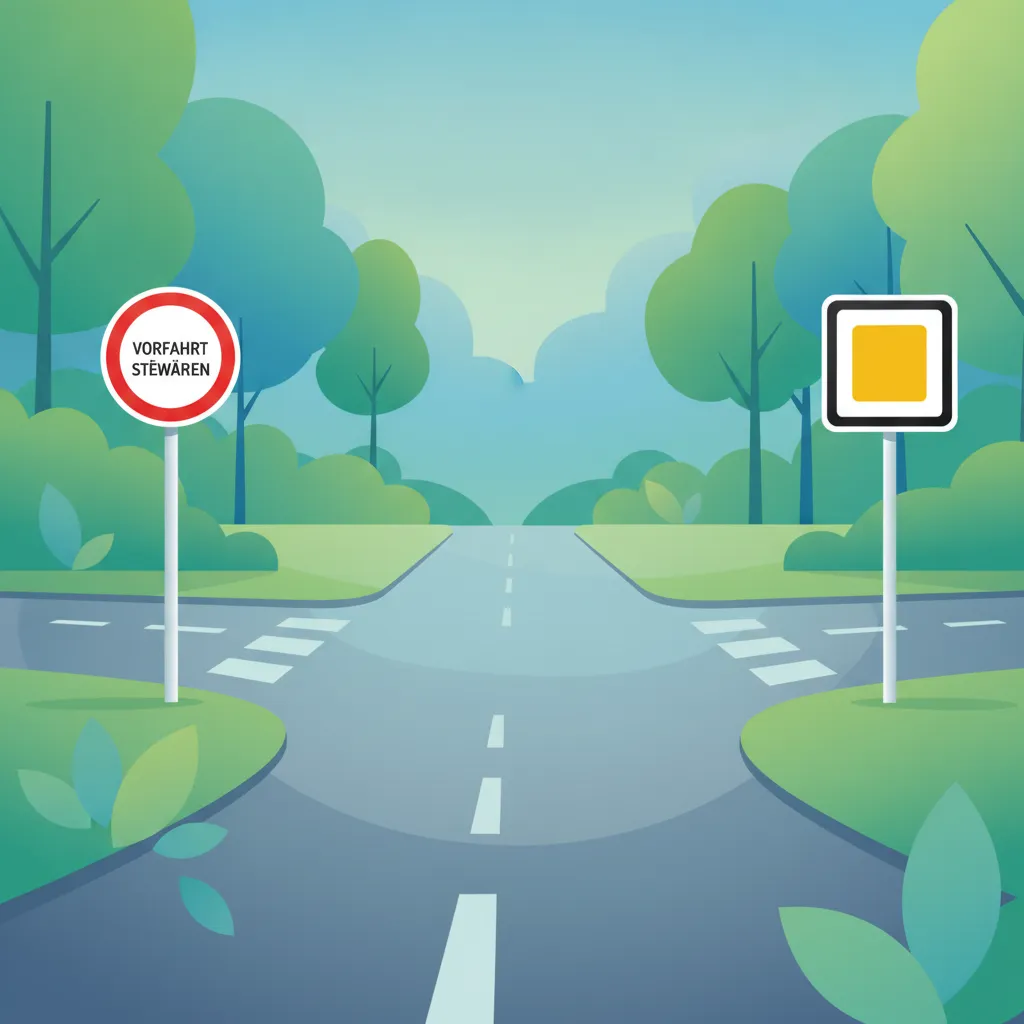
This lesson explains the fundamental concepts of priority that govern traffic at Austrian junctions. It differentiates between having priority ('Vorfahrt') and the duty to yield ('Nachrang'), detailing the signs that establish these rules. Correct application of these principles is critical for preventing collisions at intersections and roundabouts.

This lesson provides a comprehensive explanation of Austria's right-of-way laws, which are fundamental to intersection safety. It covers the meaning of different priority signs and clarifies the 'Rechts vor Links' (priority to the right) rule that applies at unmarked junctions. A clear understanding of these rules is essential to prevent conflicts and collisions in urban and rural settings.

This lesson explains the operation and meaning of traffic light signals in Austria, including the standard red, yellow, and green phases, as well as flashing signals and arrows. It also covers other priority control devices, such as stop signs and yield signs, which are used to manage right-of-way at intersections. Understanding the hierarchy between these signals and signs is crucial for navigating junctions safely and in compliance with the law.
This lesson covers the specific regulations associated with special Austrian road signs and areas. It details the rules for 'Schutzweg' (protected pedestrian crossings), 'Kreisverkehr' (roundabouts), and the distinction between 'Fahrbahn' (road) and 'Fahrstreifen' (lane). Understanding these specific contexts is essential for safe navigation in urban and suburban environments.
This lesson provides a detailed guide to executing turning manoeuvres safely and correctly at both intersections and roundabouts. It explains the importance of proper lane positioning well in advance of the turn, the correct timing for signaling, and the necessity of checking for pedestrians and cyclists. The content also reinforces priority rules that apply when turning, particularly when crossing the path of oncoming traffic during a left turn.
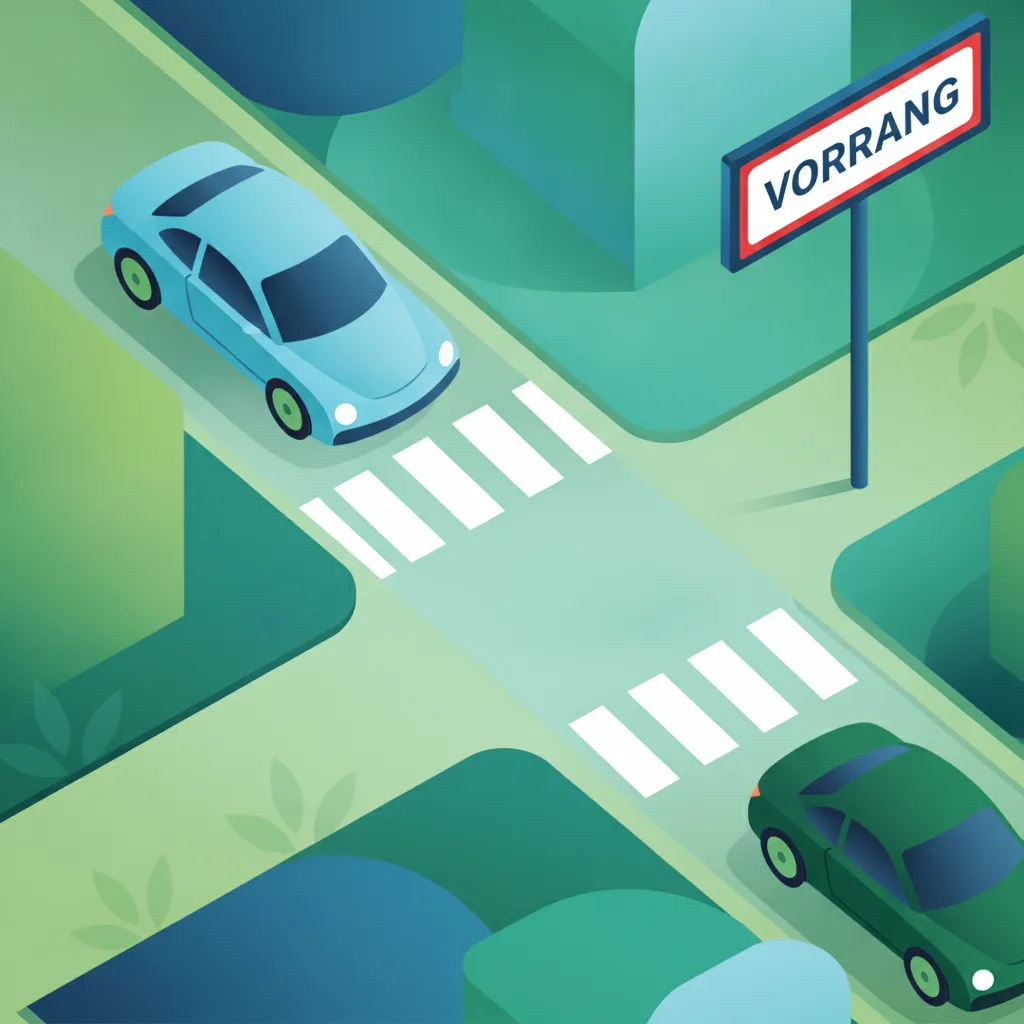
This lesson provides a detailed analysis of the core Austrian traffic rules that govern priority at junctions and in traffic. It focuses on the principles of Vorrang (having priority), Nachrang (yielding), and the Rechtsregel (default right-of-way from the right). Learners will understand the hierarchy of these rules and their application at various types of intersections, from unmarked junctions to those controlled by priority road signs, ensuring correct and safe decision-making.

This lesson examines various common intersection layouts, including T-intersections, four-way junctions, and complex multi-lane crossings. It explains how right-of-way is determined in each scenario, whether through traffic signals, stop or yield signs, or the default right-hand rule. Understanding how to identify conflict points and apply the correct priority rule is essential for preventing collisions and ensuring smooth traffic movement.

This lesson teaches a safe and systematic process for approaching and crossing intersections. It covers how to correctly assess priority based on signs and general rules, adjust speed appropriately, and perform thorough visual checks. Emphasis is placed on anticipating the actions of other road users to prevent conflicts at junctions.
Find clear answers to common questions learners have about Roundabouts: Entry, Yield, and Exit Strategies. Learn how the lesson is structured, which driving theory objectives it supports, and how it fits into the overall learning path of units and curriculum progression in Austria. These explanations help you understand key concepts, lesson flow, and exam focused study goals.
Yes, in Austria, traffic already circulating within the roundabout generally has priority unless indicated otherwise by specific traffic signs. Always look to your left before entering.
You must signal when leaving the roundabout. While not mandatory when entering, it is good practice to be aware of the positioning of other vehicles, and you must signal your intent to exit clearly before reaching your turning point.
Yes, as an AM license holder, it is often safer to adopt a dominant position in the lane to ensure you are clearly visible to other drivers and to prevent them from attempting dangerous overtakes within the roundabout.
Refine your study plan by searching for specific Austrian driving theory practice sets. Pinpoint questions related to particular road rules, signs, or challenge levels, and begin practicing immediately to reinforce your knowledge and excel in your official exam with confidence. Get started with focused revision today.