
This lesson guides you through the essential steps for safely approaching and navigating junctions as a moped or scooter rider. It builds on your knowledge of road signs and priority rules to ensure you remain predictable and safe in complex urban traffic environments.

Lesson content overview
Junctions, also known as intersections (Kreuzungen), are among the most complex and potentially dangerous areas on any road network. For riders of mopeds, small scooters, and light quadricycles in Austria (Category AM), mastering the art of approaching and crossing these intersections safely is paramount. This lesson provides a systematic, step-by-step process to ensure you navigate junctions with confidence and minimize risk, focusing on interpreting priority, adjusting speed, performing thorough visual checks, and anticipating the actions of other road users.
Junctions represent points of conflict where multiple traffic streams converge. Whether it's a simple crossroads, a complex multi-lane intersection, or a junction with tram tracks, the potential for collisions is significantly higher than on open roads. As an AM rider, you are a vulnerable road user, making accurate decision-making and proactive safety measures at junctions even more critical. Understanding and applying the principles of safe junction negotiation is not just about avoiding accidents; it's also about adhering to Austrian traffic law (StVO – Straßenverkehrsordnung) and contributing to a safer road environment for everyone.
Navigating junctions effectively relies on five interconnected principles. Each plays a vital role in preventing incidents and ensuring smooth, predictable movement through intersections.
In Austria, the rules governing right-of-way (Vorfahrt) are clearly defined by the Straßenverkehrsordnung (StVO). Understanding these rules is fundamental to safe junction navigation.
Vehicles on a designated priority road have the right-of-way at intersections unless explicitly indicated otherwise by other signs or signals. You can identify a priority road by the Vorfahrtstraße sign.
If you are approaching a junction from a side road and encounter a Vorfahrt gewähren (Yield) sign, you must slow down and be prepared to stop. You are required to yield to all traffic on the intersecting road before proceeding. This applies whether the cross traffic is approaching from your left or right. You only proceed when the way is clear and your entry will not force other vehicles to brake or swerve.
Common Mistake: Many riders mistakenly believe they only need to slow down at a yield sign. You must be prepared to stop completely if traffic on the main road makes it unsafe to proceed.
A Stop sign (Halt) requires a mandatory, complete halt of your vehicle before the stop line. You must stop fully, even if the intersection appears clear. After stopping, you must visually check for traffic in all directions (left, right, and straight ahead) and yield to all other traffic before proceeding. Only when the way is absolutely clear should you move off.
Traffic lights (Ampeln) provide clear instructions for managing traffic flow at busy junctions.
When an amber light appears, assess your speed and distance to the stop line. If you can safely stop, do so. If an emergency stop would be required, or if you are already in the intersection, you may continue with caution.
At marked pedestrian crossings (Zebrastreifen) and at uncontrolled crossing points where pedestrians are waiting to cross, pedestrians always have priority. You must slow down and stop to allow them to cross safely. Similarly, be extra cautious around cyclists, especially when they are making turns or crossing your path. Always yield to them at marked crossings and anticipate their movements, even if you technically have priority in some situations (e.g., a cyclist signalling to exit a roundabout while you are on it).
Intersections that include tram tracks require heightened awareness. Trams (Straßenbahnen) generally have priority over road traffic. Always look for specific tram signals (often a white light or arrow) and yield to an approaching tram. Crossing tram tracks requires careful steering to avoid getting your wheels caught.
The speed at which you approach a junction directly impacts your ability to react and safely navigate it. Proper speed adjustment is a key defensive riding technique.
Your total stopping distance is the sum of your perception distance (the distance your vehicle travels from the moment you perceive a hazard until you decide to react) and your braking distance (the distance your vehicle travels from when you apply the brakes until it comes to a complete stop). Both increase significantly with speed. By reducing your speed well in advance of a junction, you:
When a Stop sign is present, your objective is to arrive at the stop line at a controlled speed that allows for a smooth, complete stop. Begin decelerating early, using engine braking if appropriate for your moped, and then gently applying the brakes. The goal is a full, stationary stop at the line, not a rolling stop.
Identify the stop sign well in advance.
Begin to reduce your speed smoothly.
Position your moped appropriately for your intended direction (left, straight, right).
Come to a complete stop at the stop line.
Scan thoroughly left, right, and ahead for traffic and pedestrians.
Proceed only when the way is clear and safe.
At a Vorfahrt gewähren (Yield) sign or an uncontrolled intersection (Rechts vor Links), you may not need to come to a full stop if the way is clear. However, you must reduce your speed to a "creeping" speed (Schrittgeschwindigkeit), typically around 10-15 km/h. This allows you to:
The amber light (Gelb) requires careful judgment. If you are approaching a traffic light and it turns amber, your primary goal is to stop safely before the stop line. Accelerating to "beat" the light is illegal and highly dangerous. If you are already very close to or within the intersection when the light turns amber, it might be safer to continue through cautiously rather than performing an emergency stop that could cause a rear-end collision.
Effective visual scanning is paramount for hazard perception and accident prevention at junctions. It means actively looking for potential dangers, not just glancing.
As an AM rider, you have fewer protections than car occupants, making thorough observation vital. You must scan far ahead, to your immediate left and right, and check your mirrors. Never assume a junction is clear until you have visually confirmed it.
Despite the open nature of mopeds, blind spots can still exist, particularly for other road users trying to see you. For your own vision, objects like street furniture, parked cars, or larger vehicles can obscure your view. Always move your head and body (a technique often called "lifesaver" or "shoulder check") to look around potential obstructions, especially before turning or changing lanes.
"Tunnel vision" occurs when a rider focuses too intently on a single point or hazard, neglecting the broader environment. At junctions, this can lead to missing critical information from other directions. To avoid tunnel vision, consciously broaden your gaze, move your eyes frequently, and systematically scan the entire junction area.
Accurate gap acceptance is a skill that develops with practice, but it's based on clear principles of time and distance.
When you need to yield (at a yield sign, stop sign, or uncontrolled intersection), you must wait for a gap in the cross traffic that is large enough for you to enter and clear the intersection safely without causing other vehicles to brake or swerve. Consider:
A "safe" gap is not a fixed measurement. It varies depending on:
Never guess or gamble on a gap. If you have any doubt about the safety of a gap, err on the side of caution and wait. Forcing your way into traffic creates a hazardous situation for everyone and increases your risk of a collision. It's always better to wait a few extra seconds than to be involved in an accident.
Anticipation is a cornerstone of defensive riding. It involves thinking ahead and predicting potential scenarios at a junction.
Special attention is required for cyclists and pedestrians, as they are less protected and often less predictable than motor vehicles.
The most dangerous assumption at a junction is "they will see me" or "they will yield." Never assume other road users will do what you expect them to do. Always be prepared for them to make mistakes, run a red light, or fail to yield. This defensive mindset is crucial for AM riders.
Being aware of common errors can help you actively prevent them.
Entering a Junction Without a Full Stop at a Stop Sign:
Misjudging Gap Size on a High-Speed Road:
Assuming Priority at an Uncontrolled Intersection:
Proceeding Through an Amber Traffic Light During Transition:
Failing to Yield to Pedestrians:
Incomplete Visual Checks (Tunnel Vision):
Accelerating to "Beat" a Crossing Vehicle:
Misinterpreting Road Markings:
Riding conditions significantly influence safe junction negotiation. Your approach needs to adapt to different environments and circumstances.
Wet, snowy, or icy surfaces dramatically increase stopping distances for all vehicles and reduce tire grip.
Wet tram tracks are extremely slippery. Reduce speed significantly and cross them at as close to a 90-degree angle as possible to maintain stability.
Always give way to cyclists and pedestrians at marked crosswalks, even if you technically have priority. Anticipate that they may move unpredictably or be less visible. Make eye contact if possible to confirm they've seen you.
Mastering the approach and crossing of junctions is a fundamental skill for every AM rider in Austria. It requires a blend of knowledge (Austrian StVO rules), practical skills (speed control, scanning), and a defensive mindset (anticipation, safe gap acceptance). By systematically applying the principles outlined in this lesson, you will significantly reduce your risk of accidents, navigate complex traffic situations with greater confidence, and contribute to a safer road environment for all. Continuous practice and vigilance are key to becoming a skilled and responsible rider.
This lesson teaches AM riders a systematic approach to safely navigating Austrian junctions by understanding priority rules defined in the StVO, including priority roads (Vorfahrtstraße), yield signs (Vorfahrt gewähren), and the right-before-left rule (Rechts vor Links) at uncontrolled intersections. Effective junction negotiation requires proper speed adjustment, thorough three-stage visual scanning, accurate gap acceptance based on time-to-collision, and defensive anticipation of other road users' unpredictable behavior. Common errors include incomplete stops at stop signs, misjudging gaps on fast roads, and failing to yield to pedestrians at crossings, all of which can be prevented through disciplined application of the procedures outlined.
A short set of high-value points that capture the most important learning from this lesson.
At any unsigned intersection in Austria, always yield to traffic approaching from your right (Rechts vor Links) before proceeding.
A yield sign (Vorfahrt gewähren) requires you to slow to creeping speed and be prepared to stop, not merely slow down.
Approach a Stop sign by decelerating early, stopping completely at the line, then scanning left, right, and ahead before proceeding.
On an amber light, you must prepare to stop unless you are already too close to stop safely without causing an emergency situation.
Pedestrians always have priority at marked crossings (Zebrastreifen); you must stop and allow them to cross safely.
Explore all units and lessons included in this driving theory course.
Rechts vor Links: yield to traffic from your right at all uncontrolled intersections with no signs or lights.
Stop means a complete, momentary halt—not rolling through or slowing only.
Gap acceptance depends on your moped's acceleration, the speed and distance of cross traffic, and road conditions.
Scan in three stages: preliminary (far ahead), intermediate (assessing approaching vehicles), and close (immediate crossing point).
Wet tram tracks are extremely slippery; cross them at near 90 degrees and reduce speed significantly.
Confusing yield and stop signs: yield requires slowing to creeping speed with readiness to stop, not a full stop unless necessary.
Underestimating gap size on high-speed roads; always allow a larger gap when cross traffic is traveling faster.
Failing to check traffic from the right at uncontrolled intersections due to forgetting the Rechts vor Links rule.
Accelerating to beat an amber light instead of preparing to stop safely before the stop line.
Suffering tunnel vision at junctions by focusing on one direction and missing hazards from other paths.
Lesson content overview
A short set of high-value points that capture the most important learning from this lesson.
At any unsigned intersection in Austria, always yield to traffic approaching from your right (Rechts vor Links) before proceeding.
A yield sign (Vorfahrt gewähren) requires you to slow to creeping speed and be prepared to stop, not merely slow down.
Approach a Stop sign by decelerating early, stopping completely at the line, then scanning left, right, and ahead before proceeding.
On an amber light, you must prepare to stop unless you are already too close to stop safely without causing an emergency situation.
Pedestrians always have priority at marked crossings (Zebrastreifen); you must stop and allow them to cross safely.
Explore all units and lessons included in this driving theory course.
Rechts vor Links: yield to traffic from your right at all uncontrolled intersections with no signs or lights.
Stop means a complete, momentary halt—not rolling through or slowing only.
Gap acceptance depends on your moped's acceleration, the speed and distance of cross traffic, and road conditions.
Scan in three stages: preliminary (far ahead), intermediate (assessing approaching vehicles), and close (immediate crossing point).
Wet tram tracks are extremely slippery; cross them at near 90 degrees and reduce speed significantly.
Confusing yield and stop signs: yield requires slowing to creeping speed with readiness to stop, not a full stop unless necessary.
Underestimating gap size on high-speed roads; always allow a larger gap when cross traffic is traveling faster.
Failing to check traffic from the right at uncontrolled intersections due to forgetting the Rechts vor Links rule.
Accelerating to beat an amber light instead of preparing to stop safely before the stop line.
Suffering tunnel vision at junctions by focusing on one direction and missing hazards from other paths.
Explore search topics learners often look for when studying Approaching and Crossing Junctions Safely. These topics reflect common questions about road rules, driving situations, safety guidance, and lesson level theory preparation for learners in Austria.
Browse additional driving theory lessons that cover connected traffic rules, road signs, and common driving situations related to this topic. Improve your understanding of how different rules interact across everyday traffic scenarios.
Learn from typical errors made by AM riders when approaching and crossing junctions in Austria. Understand how to avoid hazardous situations and improve your hazard perception for safer intersection navigation.
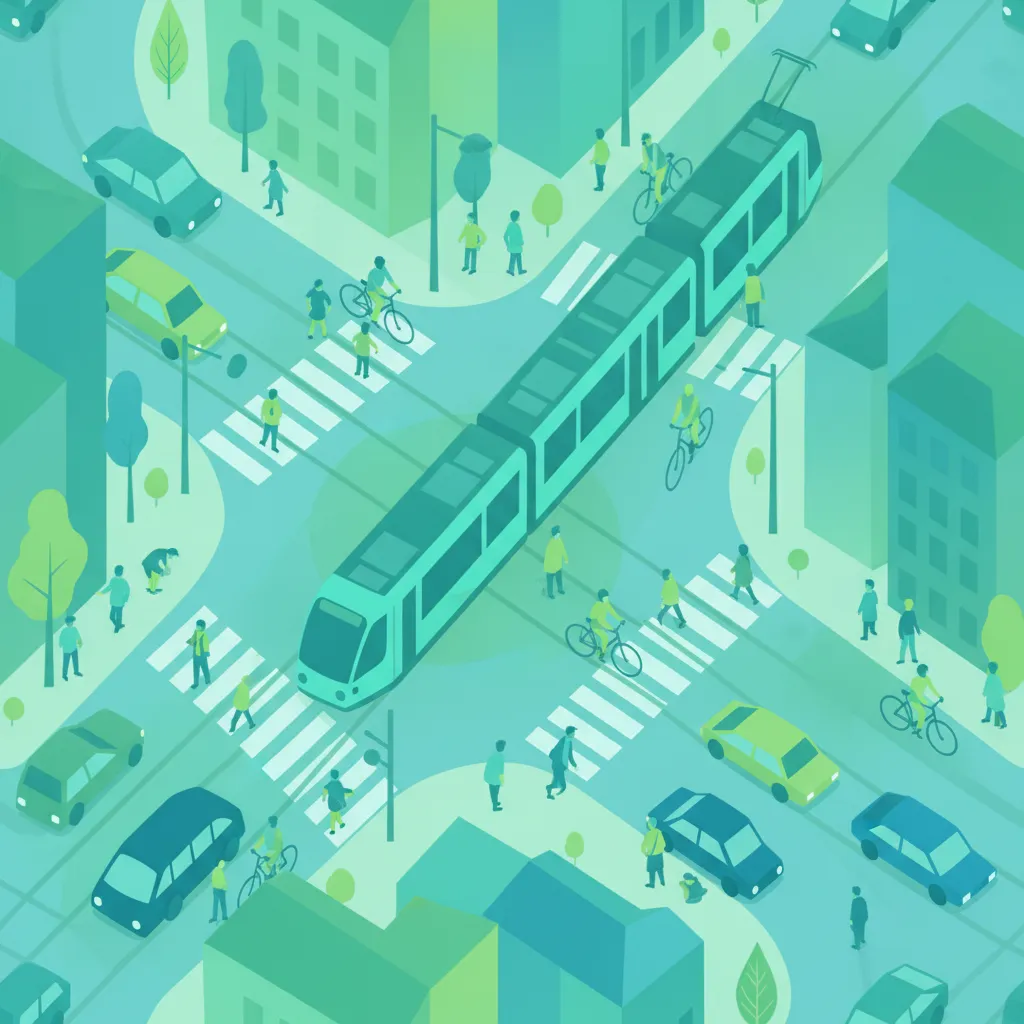
This lesson teaches a safe, methodical process for navigating intersections. It stresses the importance of proper lane positioning on approach, comprehensive visual scans for cross-traffic, pedestrians, and cyclists, and clear communication of intent. Special attention is given to the increased risks associated with left turns across oncoming traffic.
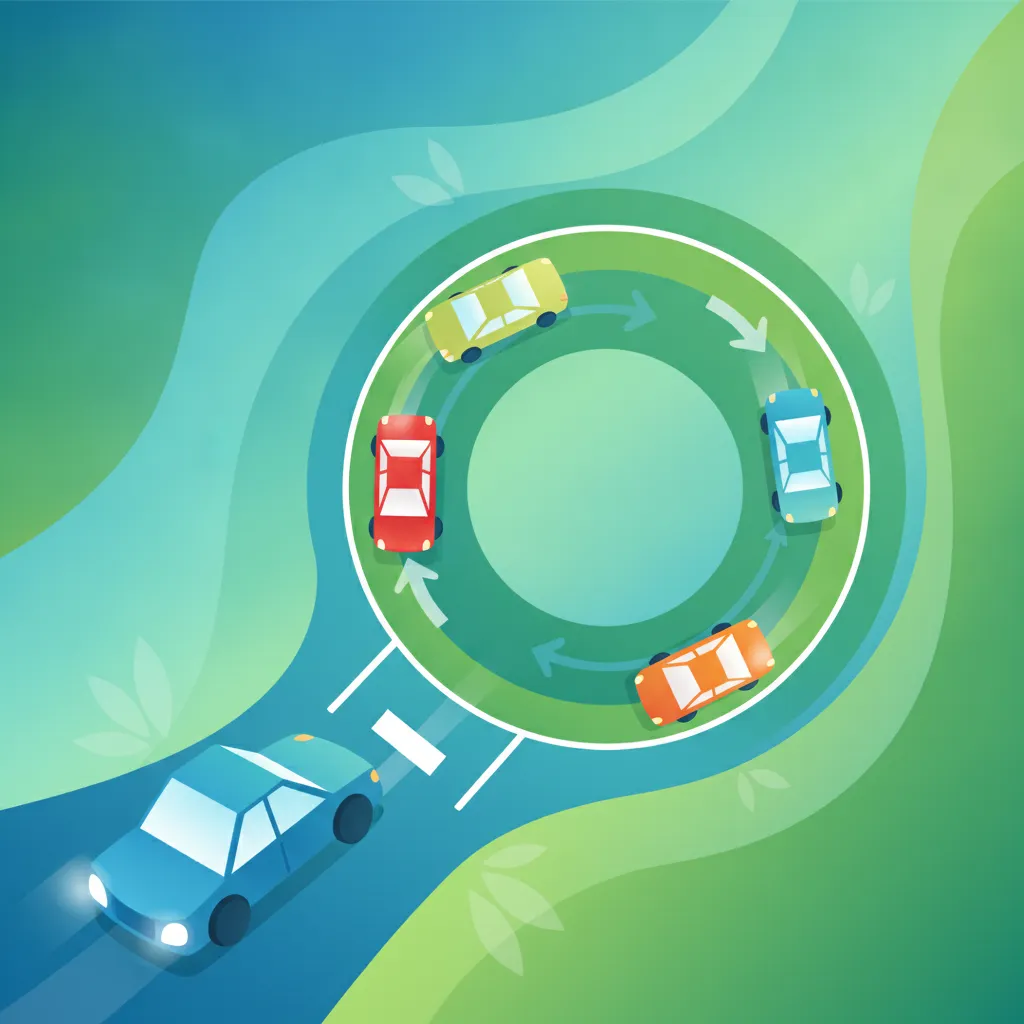
This lesson provides clear instructions on how to safely navigate roundabouts. It explains the critical rule of yielding to traffic already circulating and how to choose the correct lane based on the intended exit. The content also covers proper signaling procedures for entering and exiting the roundabout to communicate intentions clearly.
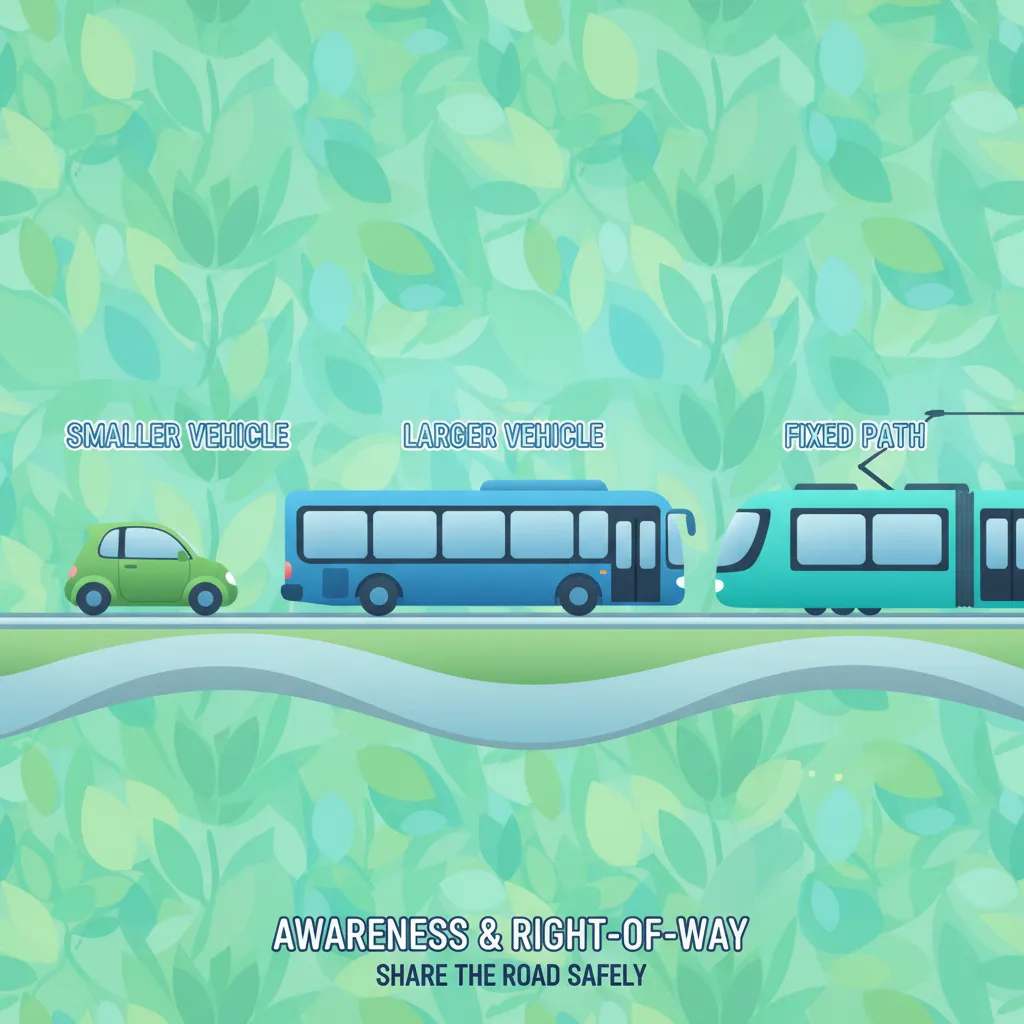
This lesson provides specific guidance for sharing the road with different types of vehicles in Austria. It covers the dangers of large vehicle blind spots, the rules for navigating near buses and dedicated tram tracks, and common conflict points at intersections. Understanding the behavior and limitations of other vehicles is key to safely navigating complex urban environments.

This lesson focuses on the interpretation of traffic lights and road surface markings that guide riders through intersections. It covers the meaning of each traffic light phase, the rules for amber lights, and the significance of various lane lines and stop lines. Properly understanding these signals is essential for maintaining traffic flow and ensuring safety at junctions.

This lesson focuses on identifying and mitigating common hazards in dense urban settings. It explains how to maintain a safe distance from parked cars to avoid opening doors and how to navigate narrow streets. Additionally, it covers the special rules and heightened awareness required when riding in or near pedestrian zones and school areas.
This lesson addresses the specific challenges of interacting with larger vehicles like buses and trams in an urban environment. It explains how to signal intentions clearly and predictably to avoid conflicts in shared spaces. Key topics include safely crossing tram tracks and maintaining awareness around public transport stops.

This lesson identifies and analyzes common risk-taking behaviors prevalent among young and inexperienced riders. It covers the dangers of distractions like mobile phone use, the influence of peer pressure, and the false sense of security from overconfidence. The goal is to foster a mature and responsible approach to riding.
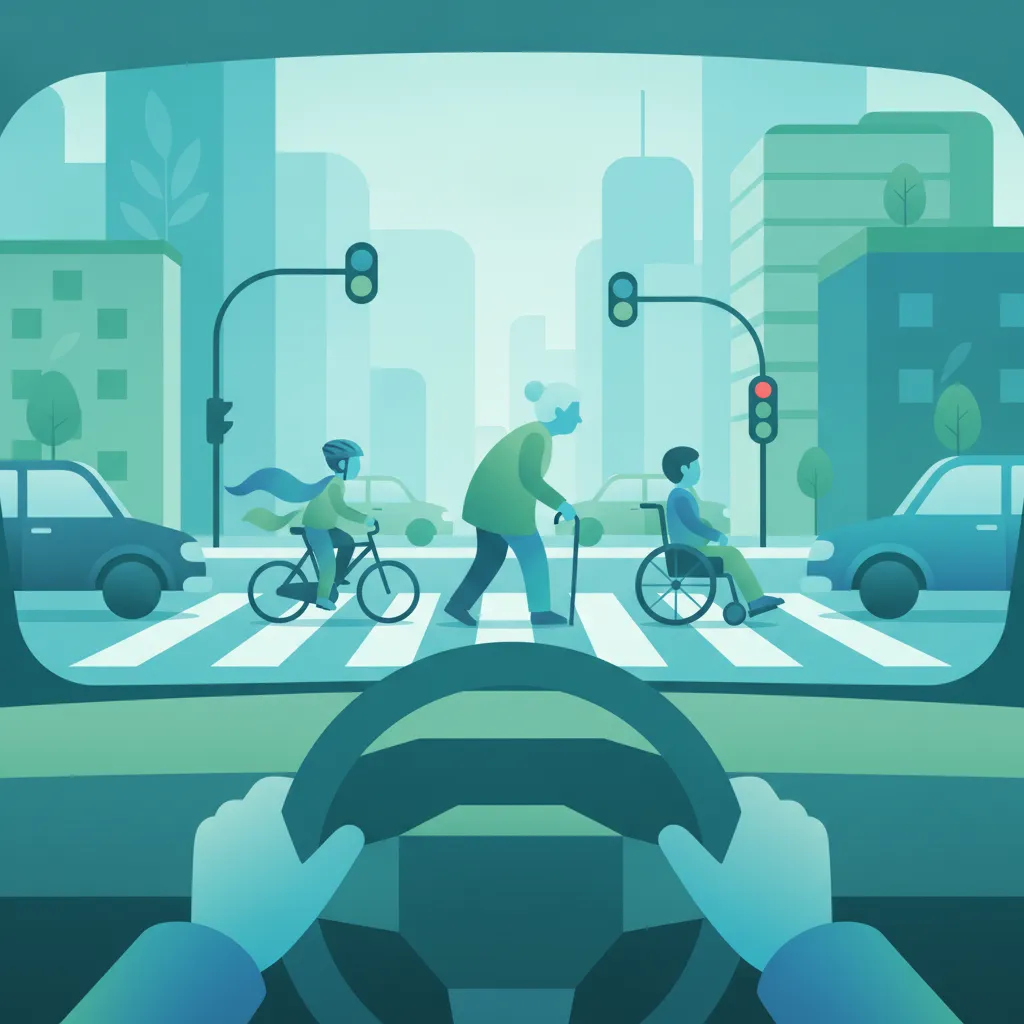
This lesson provides advanced strategies for proactively managing interactions with vulnerable road users to prevent conflicts before they arise. It teaches drivers to predict the likely behavior of pedestrians, cyclists, and e-scooter riders, especially at intersections and in congested areas. Key techniques include maintaining larger safety distances, covering the brake, and making eye contact to ensure mutual awareness and avoid accidents.

This lesson explains the correct techniques for using mirrors to maintain awareness of surrounding traffic and for checking blind spots. It details the proper timing and use of indicators to signal turns and lane changes effectively. The content reinforces that clear, early communication is key to preventing misunderstandings with other drivers.
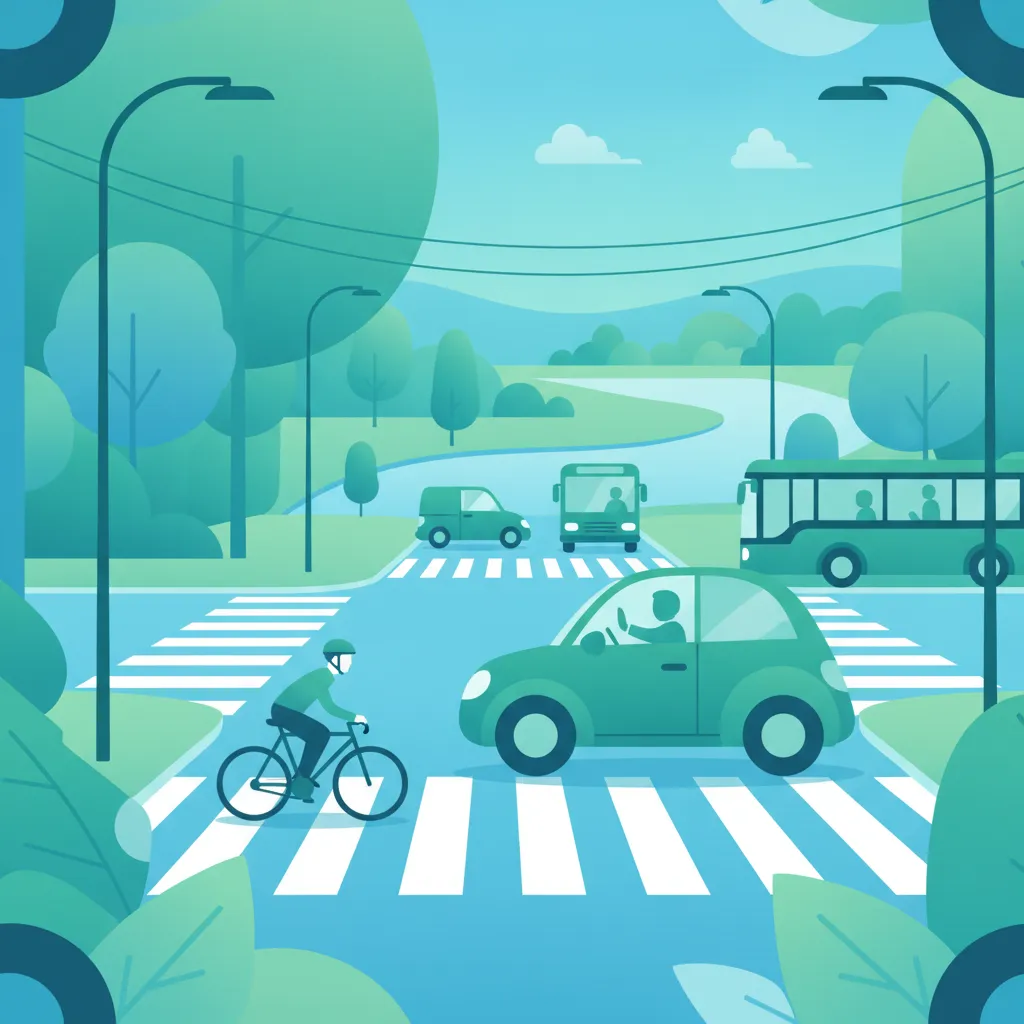
This lesson provides a comprehensive explanation of Austria's right-of-way laws, which are fundamental to intersection safety. It covers the meaning of different priority signs and clarifies the 'Rechts vor Links' (priority to the right) rule that applies at unmarked junctions. A clear understanding of these rules is essential to prevent conflicts and collisions in urban and rural settings.
Explore advanced and special right-of-way situations at Austrian intersections beyond basic rules. Understand complex scenarios involving trams, emergency vehicles, and unique junction designs for AM licence holders.
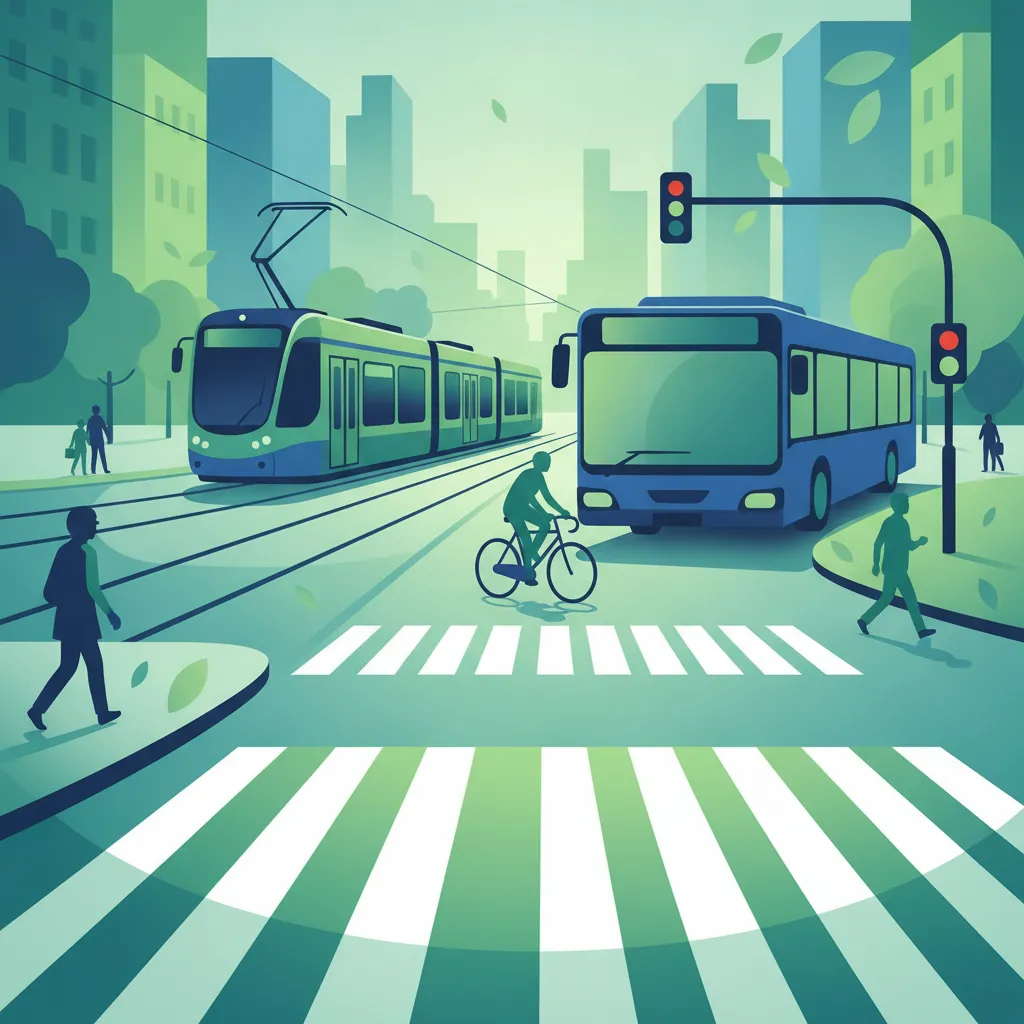
This lesson addresses the unique challenges and priority rules that apply when interacting with public transport and cyclists at intersections. It clarifies the specific right-of-way regulations for trams, which often have priority over other traffic, and the procedures for navigating around bus stops. The content also covers how to safely manage crossings with dedicated bicycle lanes, ensuring the protection of all road users.
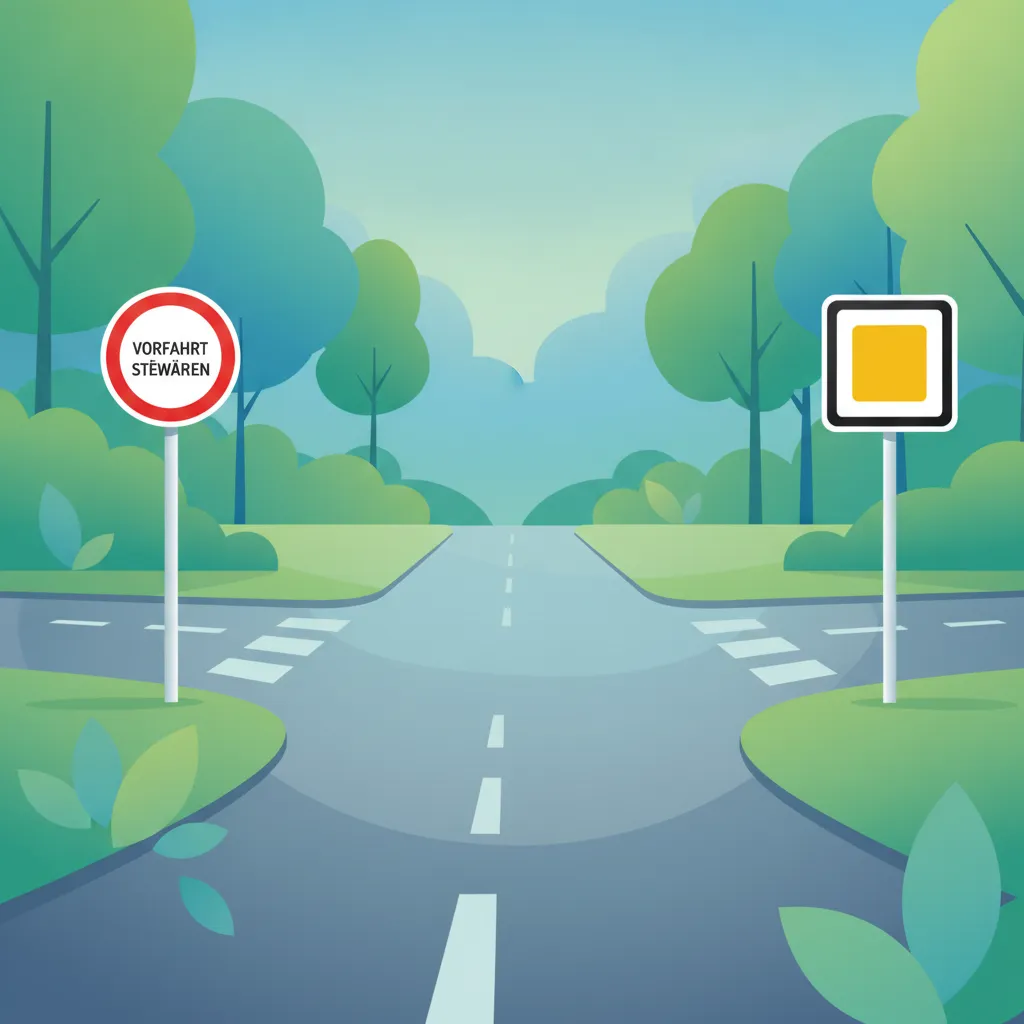
This lesson explains the fundamental concepts of priority that govern traffic at Austrian junctions. It differentiates between having priority ('Vorfahrt') and the duty to yield ('Nachrang'), detailing the signs that establish these rules. Correct application of these principles is critical for preventing collisions at intersections and roundabouts.
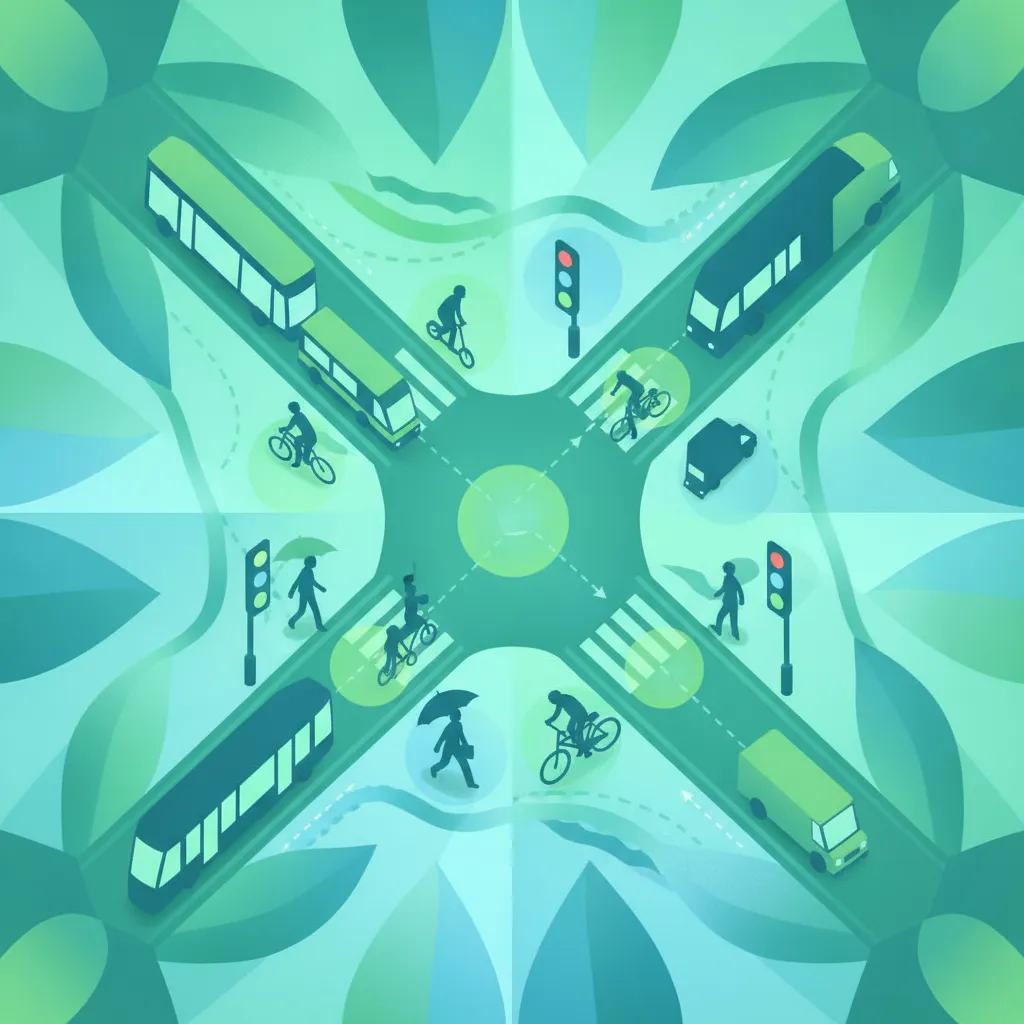
This lesson examines various common intersection layouts, including T-intersections, four-way junctions, and complex multi-lane crossings. It explains how right-of-way is determined in each scenario, whether through traffic signals, stop or yield signs, or the default right-hand rule. Understanding how to identify conflict points and apply the correct priority rule is essential for preventing collisions and ensuring smooth traffic movement.
This lesson provides a comprehensive explanation of Austria's right-of-way laws, which are fundamental to intersection safety. It covers the meaning of different priority signs and clarifies the 'Rechts vor Links' (priority to the right) rule that applies at unmarked junctions. A clear understanding of these rules is essential to prevent conflicts and collisions in urban and rural settings.
This lesson teaches a safe, methodical process for navigating intersections. It stresses the importance of proper lane positioning on approach, comprehensive visual scans for cross-traffic, pedestrians, and cyclists, and clear communication of intent. Special attention is given to the increased risks associated with left turns across oncoming traffic.
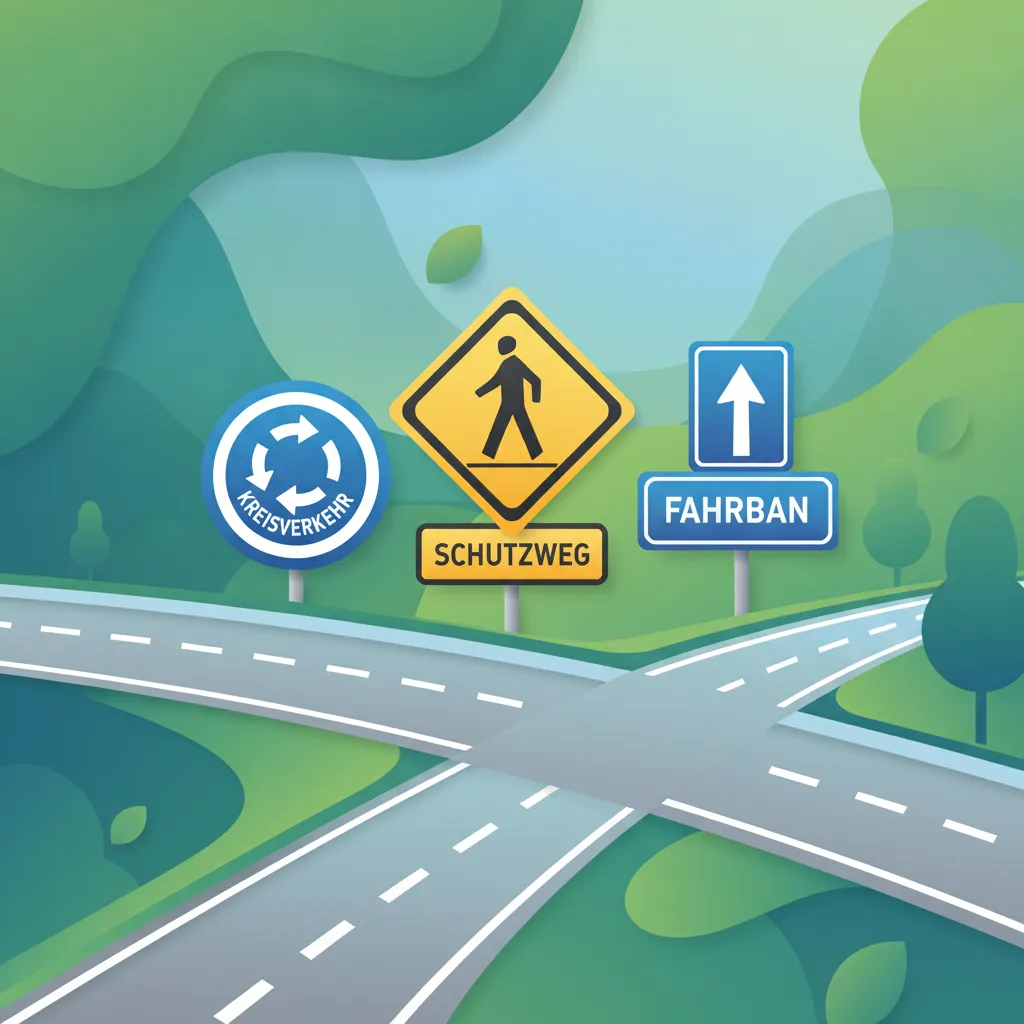
This lesson covers the specific regulations associated with special Austrian road signs and areas. It details the rules for 'Schutzweg' (protected pedestrian crossings), 'Kreisverkehr' (roundabouts), and the distinction between 'Fahrbahn' (road) and 'Fahrstreifen' (lane). Understanding these specific contexts is essential for safe navigation in urban and suburban environments.
This lesson provides clear instructions on how to safely navigate roundabouts. It explains the critical rule of yielding to traffic already circulating and how to choose the correct lane based on the intended exit. The content also covers proper signaling procedures for entering and exiting the roundabout to communicate intentions clearly.
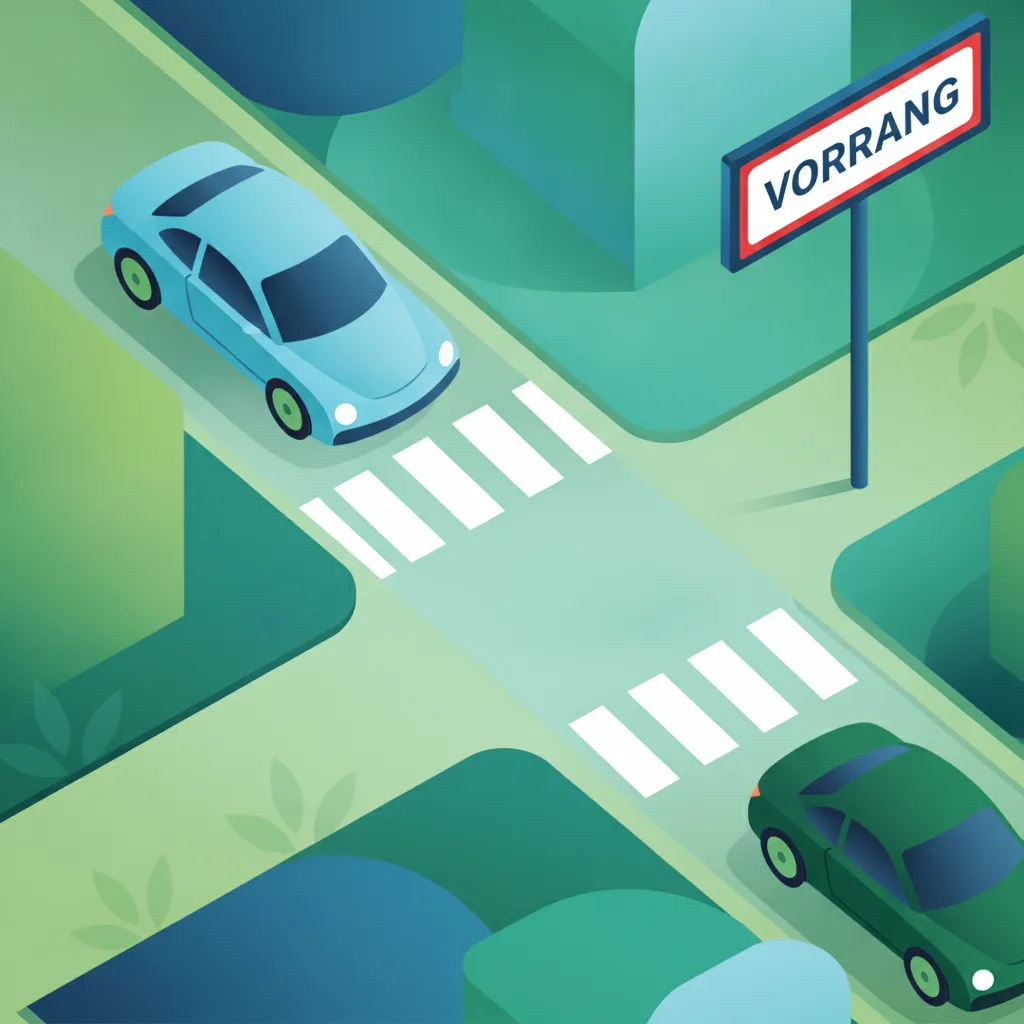
This lesson provides a detailed analysis of the core Austrian traffic rules that govern priority at junctions and in traffic. It focuses on the principles of Vorrang (having priority), Nachrang (yielding), and the Rechtsregel (default right-of-way from the right). Learners will understand the hierarchy of these rules and their application at various types of intersections, from unmarked junctions to those controlled by priority road signs, ensuring correct and safe decision-making.

Cities like Vienna and Graz have extensive tram networks that require special attention from bus drivers. This lesson covers the rules of priority concerning trams, the dangers of crossing tracks, and the specific hazards at shared stops where passengers cross traffic lanes. It emphasizes the need for extreme caution and clear communication with other road users in these complex environments.

This lesson focuses on the specific regulations and safety protocols for driving near trams (Straßenbahn) in Austrian cities. It clarifies the priority rules, which almost always favor the tram, and explains how to safely share lanes or cross tram tracks. The content provides critical guidance on how to behave at tram stops, ensuring the safety of boarding and alighting passengers is always the primary concern.
Find clear answers to common questions learners have about Approaching and Crossing Junctions Safely. Learn how the lesson is structured, which driving theory objectives it supports, and how it fits into the overall learning path of units and curriculum progression in Austria. These explanations help you understand key concepts, lesson flow, and exam focused study goals.
Always look for traffic signs or road markings that indicate who has priority. If no signs are present, the general rule of 'right before left' (Rechts vor Links) applies, unless otherwise specified by other traffic control measures.
No, you only need to stop completely if there is a 'Stop' sign or a red traffic light. If there is a 'Give Way' sign, you must slow down and prepare to stop, but you only stop if other traffic is approaching that has priority.
Because mopeds and small scooters are smaller and less visible than cars, you must be extra vigilant. Always assume other drivers might not see you, choose a road position that makes you visible, and never assume they will yield just because you have the right of way.
When in doubt, always prioritize safety over your right of way. Slow down, perform thorough visual checks, and proceed only when you are certain it is safe to do so. In an exam scenario, look for all indicators like road markings and signals systematically.
Refine your study plan by searching for specific Austrian driving theory practice sets. Pinpoint questions related to particular road rules, signs, or challenge levels, and begin practicing immediately to reinforce your knowledge and excel in your official exam with confidence. Get started with focused revision today.