
Intersections are high-risk areas that demand precise control and constant observation from every motorcycle rider. This lesson builds on your knowledge of traffic rules to help you navigate junctions safely, manage priority situations, and communicate your intentions clearly to other road users as required for your A1, A2, or A licence.
Lesson content overview
Intersections are dynamic and complex environments on Austrian roads, statistically representing some of the highest-risk locations for motorcyclists. Navigating them safely requires a blend of precise observation, strategic positioning, clear communication, and a thorough understanding of right-of-way rules. This comprehensive guide, tailored for the Austrian Motorcycle Theory curriculum, will equip you with the essential knowledge and techniques to approach and cross intersections with confidence and reduced risk.
This lesson builds upon foundational knowledge from earlier units, such as Seeing, Being Seen and Communicating as a Rider for visibility and signaling, and Braking, Traction, Tyres and Emergency Control for vehicle handling. Mastery of these concepts is crucial for managing the multiple conflict points and potential hazards present at every intersection.
Before even approaching an intersection, a motorcyclist must identify its type to understand the applicable right-of-way rules. These rules dictate who has the legal entitlement to proceed first and are paramount for preventing collisions.
Signal-controlled intersections use traffic lights, stop signs, or a combination of both to regulate the flow of traffic. Traffic lights (Ampeln) are perhaps the most common form of control, indicating when to stop, proceed, or yield. A green light permits movement, a red light requires a complete stop, and a yellow light (often preceded by green or red) warns of an impending change. Stop signs require you to bring your motorcycle to a complete halt before the stop line, even if the intersection appears clear, and only proceed when safe.
Priority intersections are typically found where a minor road meets a major road. Traffic on the major, or 'priority', road has precedence. You will encounter yield signs (Vorrang geben) which require you to slow down and be prepared to stop, giving way to all traffic on the intersecting priority road. The priority road itself is often marked with a 'Priority Road' sign, indicating that traffic on this road has the right-of-way.
It is a common mistake to assume right-of-way based solely on your lane position; always look for signs and road markings that explicitly state priority. Disregarding a yield sign can lead to severe accidents and legal consequences.
Uncontrolled intersections lack traffic lights, stop signs, or yield signs. In Austria, the fundamental rule at these junctions is "right before left" (Rechts vor Links). This means any vehicle approaching from your right has priority, regardless of whether they are on a seemingly minor road. This rule applies even if the intersecting road appears less significant than your own.
At uncontrolled intersections, the "right before left" rule is absolute. Always be prepared to yield to traffic approaching from your right, even if it seems counterintuitive or if the other road is smaller.
Regardless of the type of intersection or your traffic signal, pedestrians at marked zebra crossings (Zebrastreifen) always have priority. You must stop completely if a pedestrian steps onto or is preparing to step onto a marked crossing. Cyclists proceeding straight through an intersection also typically have the right-of-way over turning vehicles. Your duty of care extends to all vulnerable road users.
Proper lane positioning as you approach an intersection is vital for a motorcyclist's safety. It ensures you are visible to other road users, allows you to maintain an escape route, and provides the best line of sight for scanning hazards.
When approaching an intersection, choose the lane (or the correct segment within a lane) that corresponds to your intended maneuver:
Riding too close to the curb or on the far edge of the lane increases the risk of 'masking,' where your motorcycle becomes hidden in another driver's blind spot, particularly for those turning across your path. Always strive to place your motorcycle where it is most likely to be seen.
Motorcyclists are inherently less visible than larger vehicles. To compensate, a disciplined and comprehensive visual scanning technique is paramount at intersections. This involves systematic head-turns and eye movements to detect potential hazards from all directions.
As you approach an intersection, initiate a scanning pattern that covers all potential conflict points:
Do not fixate on one vehicle or direction. Maintain a fluid, wide-angle scan. Your eyes should be constantly moving, processing information, and anticipating potential movements of other road users.
Even with thorough scanning, vehicles can hide in blind spots. Always assume other drivers might not see you, especially when they are turning. Look for subtle cues like vehicle wheels turning, drivers looking away, or vehicles accelerating unexpectedly. Predictive hazard anticipation means assessing the future movements of other traffic based on their speed, distance, and driver behavior. If a vehicle approaches too fast or a driver seems distracted, anticipate a potential violation of right-of-way and be prepared to react.
Your intentions must be unmistakably clear to other road users. This is achieved through a combination of electronic signals, hand signals, and your body positioning.
In Austria, you are legally required to activate your turn signals (Blinker) at least three seconds before initiating a turn or lane change. This gives other drivers sufficient time to register your intention and adjust their actions accordingly. Ensure your signals are visible and correctly indicate your direction.
While electronic signals are primary, hand signals provide an additional layer of communication, particularly in bright sunlight, if your indicators are malfunctioning, or for emphasis.
Even gentle application of your brakes activates your brake light, signaling to trailing vehicles that you are reducing speed. Use engine braking in conjunction with light brake application where appropriate to ensure your brake light illuminates and warns traffic behind you of your deceleration. Avoid abrupt braking unless absolutely necessary.
Turning left across oncoming traffic is statistically one of the most dangerous maneuvers for motorcyclists at an intersection. It involves crossing the path of potentially faster-moving vehicles that may underestimate your speed or not see you at all.
Unless a specific green arrow (protected left turn signal) is displayed, all left turns across oncoming traffic are "unprotected." This means you must yield to all oncoming vehicles that are proceeding straight or turning right.
Position Appropriately: Move to the center-left of your lane to maximize visibility and create an optimal turning arc.
Activate Signal: Engage your left turn indicator at least three seconds before the turn.
Scan Thoroughly: Perform a comprehensive visual scan: check mirrors, over your left shoulder for following traffic, then repeatedly scan oncoming traffic for a safe gap.
Assess Gap Acceptance: Crucially, judge the speed and distance of oncoming vehicles. Do not commit to the turn unless there is a clearly safe and sufficient gap. For motorcycles, a larger gap is generally safer than for cars due to our smaller profile and potential for other drivers to misjudge our speed.
Initiate Turn: Once a safe gap is confirmed, proceed smoothly and at a controlled speed, maintaining your scan throughout the turn.
Clear the Intersection: Complete the turn and accelerate out of the intersection into the new lane, canceling your signal.
If a green arrow specifically for left turns is displayed, you have the right-of-way, and oncoming traffic should be stopped. However, still perform a quick scan to ensure the intersection is clear of late-running vehicles or pedestrians before proceeding. Never assume a green light for straight traffic automatically implies a protected left turn.
Intersections are frequented by pedestrians and cyclists, who are particularly vulnerable due to their lack of protection. Your responsibility to ensure their safety is paramount.
In Austria, pedestrians at marked zebra crossings (Fußgängerüberweg) have absolute priority. You must stop fully before the crossing line if a pedestrian is on the crossing or clearly intends to cross. Even if you have a green light, you must yield to pedestrians at these crossings. Be especially vigilant for children, elderly individuals, or distracted pedestrians who might step into the road unexpectedly.
Cyclists can be hard to spot, especially at dawn, dusk, or in busy urban environments. When turning, always check for cyclists who may be proceeding straight alongside you or approaching from a side road. If a cyclist is going straight through an intersection while you are turning, they typically have the right-of-way. Give them ample space and time to clear the intersection.
Even experienced riders can fall prey to common errors at intersections. Awareness of these pitfalls can significantly reduce your risk.
Intersection navigation is not a static process; it must adapt to changing environmental and traffic conditions.
If your motorcycle is heavily loaded or towing a small trailer, your braking distances will increase, and your acceleration may be reduced. Adjust your gap acceptance accordingly, taking more conservative margins, especially for left turns. Maintain proper tyre pressure, as low pressure can reduce traction and compromise stability, particularly when braking or turning at an intersection.
The methodical process for approaching and crossing intersections is rooted in fundamental safety principles and the physics of vehicle dynamics:
Successfully navigating intersections is a cornerstone of safe motorcycling. By internalizing and consistently applying the following principles, you significantly reduce your risk:
Mastering these techniques and understanding the underlying rationale will not only help you pass your Austrian motorcycle theory test but, more importantly, will enable you to ride safely and confidently through any intersection you encounter.
This lesson teaches Austrian motorcycle riders a systematic approach to intersection navigation, covering signal-controlled, priority, and uncontrolled junction types with their respective right-of-way rules. Proper lane positioning within your lane enhances visibility, while a disciplined three-phase visual scan (rear-up, side, front) detects hazards from all conflict points. Left turns across oncoming traffic require extreme caution and a larger safety gap than cars, and riders must always yield to pedestrians at zebra crossings and cyclists proceeding straight. Environmental conditions such as rain, fog, and night riding demand adjusted speed, increased scanning frequency, and smoother maneuvers to account for reduced traction and visibility.
A short set of high-value points that capture the most important learning from this lesson.
Identify the intersection type (signal-controlled, priority, or uncontrolled) to apply the correct right-of-way rules before proceeding.
Position your motorcycle in the optimal lane segment based on your intended maneuver: center for straight, center-left for left turns, right-side for right turns.
Execute a systematic three-phase visual scan: rear-up check in mirrors, side scan of cross-traffic, and front scan of the intersection ahead.
Unprotected left turns across oncoming traffic require a larger safety gap than cars due to smaller profile and speed misjudgment risks.
Always yield to pedestrians at zebra crossings and cyclists proceeding straight, even if you have a green light.
Explore all units and lessons included in this driving theory course.
At uncontrolled intersections in Austria, 'right before left' (Rechts vor Links) means traffic from your right always has priority regardless of road size.
Activate turn indicators at least three seconds before any turn or lane change; supplement with hand signals for added visibility.
Position away from the curb and lane edges to avoid being hidden in other drivers' blind spots (masking).
A green traffic light does not guarantee a protected left turn; look for a specific green arrow signal.
Wet roads and reduced lighting increase braking distances and hazard visibility—adjust speed and scanning intensity accordingly.
Underestimating oncoming vehicle speed and entering an intersection with insufficient gap, especially for left turns.
Relying only on mirrors without performing head-checks, causing cyclists or vehicles in blind spots to be missed.
Assuming right-of-way without verifying signage, particularly misinterpreting 'right before left' at uncontrolled junctions.
Leaving turn signals activated after completing a turn, which misleads other road users about your intentions.
Failing to yield to pedestrians at zebra crossings because focused on vehicle traffic or signal phases.
Lesson content overview
A short set of high-value points that capture the most important learning from this lesson.
Identify the intersection type (signal-controlled, priority, or uncontrolled) to apply the correct right-of-way rules before proceeding.
Position your motorcycle in the optimal lane segment based on your intended maneuver: center for straight, center-left for left turns, right-side for right turns.
Execute a systematic three-phase visual scan: rear-up check in mirrors, side scan of cross-traffic, and front scan of the intersection ahead.
Unprotected left turns across oncoming traffic require a larger safety gap than cars due to smaller profile and speed misjudgment risks.
Always yield to pedestrians at zebra crossings and cyclists proceeding straight, even if you have a green light.
Explore all units and lessons included in this driving theory course.
At uncontrolled intersections in Austria, 'right before left' (Rechts vor Links) means traffic from your right always has priority regardless of road size.
Activate turn indicators at least three seconds before any turn or lane change; supplement with hand signals for added visibility.
Position away from the curb and lane edges to avoid being hidden in other drivers' blind spots (masking).
A green traffic light does not guarantee a protected left turn; look for a specific green arrow signal.
Wet roads and reduced lighting increase braking distances and hazard visibility—adjust speed and scanning intensity accordingly.
Underestimating oncoming vehicle speed and entering an intersection with insufficient gap, especially for left turns.
Relying only on mirrors without performing head-checks, causing cyclists or vehicles in blind spots to be missed.
Assuming right-of-way without verifying signage, particularly misinterpreting 'right before left' at uncontrolled junctions.
Leaving turn signals activated after completing a turn, which misleads other road users about your intentions.
Failing to yield to pedestrians at zebra crossings because focused on vehicle traffic or signal phases.
Explore search topics learners often look for when studying Approaching and Crossing Intersections. These topics reflect common questions about road rules, driving situations, safety guidance, and lesson level theory preparation for learners in Austria.
Browse additional driving theory lessons that cover connected traffic rules, road signs, and common driving situations related to this topic. Improve your understanding of how different rules interact across everyday traffic scenarios.
Explore advanced strategies for approaching and crossing complex intersections, including multi-lane junctions and those with unique traffic control systems. Learn to manage multiple hazards and apply priority rules effectively in challenging Austrian urban and rural environments.
This lesson examines various common intersection layouts, including T-intersections, four-way junctions, and complex multi-lane crossings. It explains how right-of-way is determined in each scenario, whether through traffic signals, stop or yield signs, or the default right-hand rule. Understanding how to identify conflict points and apply the correct priority rule is essential for preventing collisions and ensuring smooth traffic movement.
This lesson provides a comprehensive explanation of Austria's right-of-way laws, which are fundamental to intersection safety. It covers the meaning of different priority signs and clarifies the 'Rechts vor Links' (priority to the right) rule that applies at unmarked junctions. A clear understanding of these rules is essential to prevent conflicts and collisions in urban and rural settings.
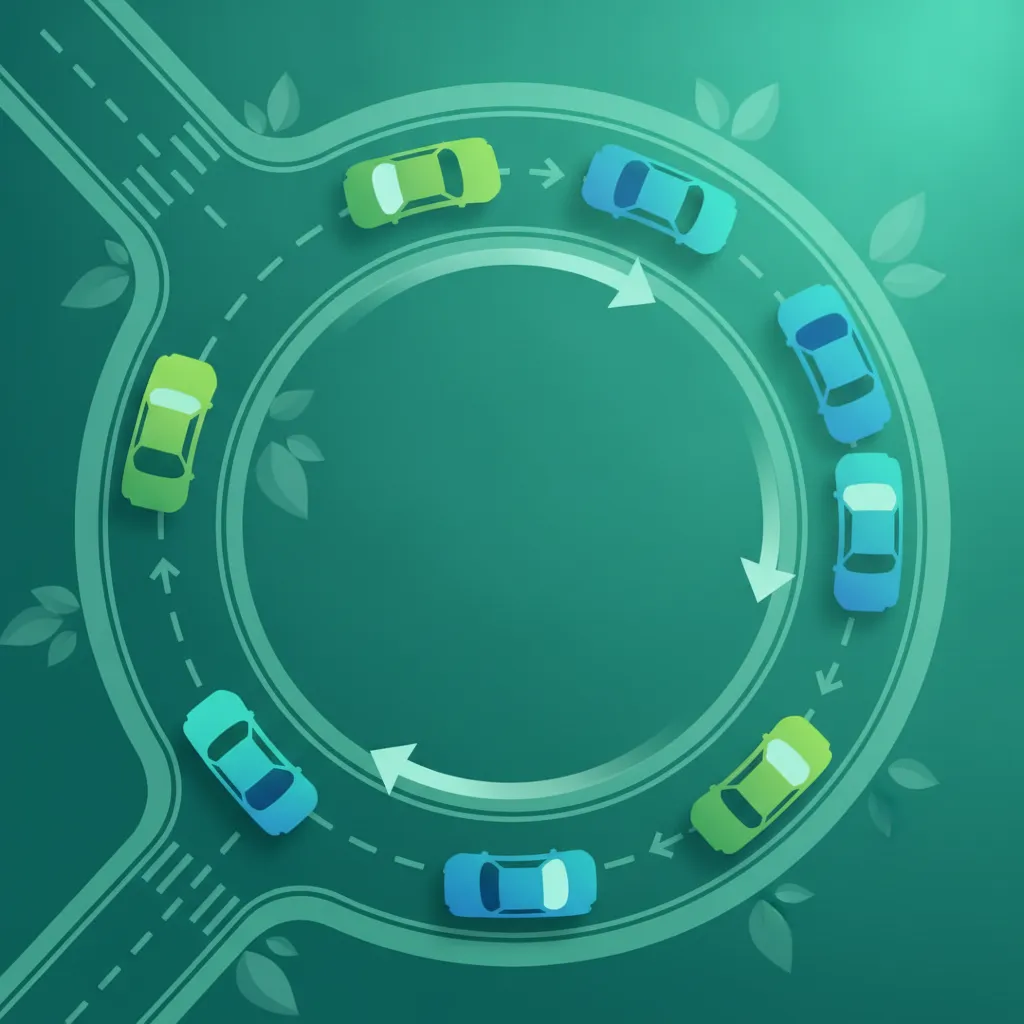
This lesson focuses on the rules for navigating roundabouts (Kreisverkehr) in Austria. It highlights the fundamental give-way rule, where traffic entering the roundabout must yield to traffic already circulating within it. Learners will understand the correct procedures for lane selection, signaling intent to exit, and maintaining safe traffic flow, supported by explanations of specific Austrian roundabout signage.

This lesson provides a detailed guide to executing turning manoeuvres safely and correctly at both intersections and roundabouts. It explains the importance of proper lane positioning well in advance of the turn, the correct timing for signaling, and the necessity of checking for pedestrians and cyclists. The content also reinforces priority rules that apply when turning, particularly when crossing the path of oncoming traffic during a left turn.
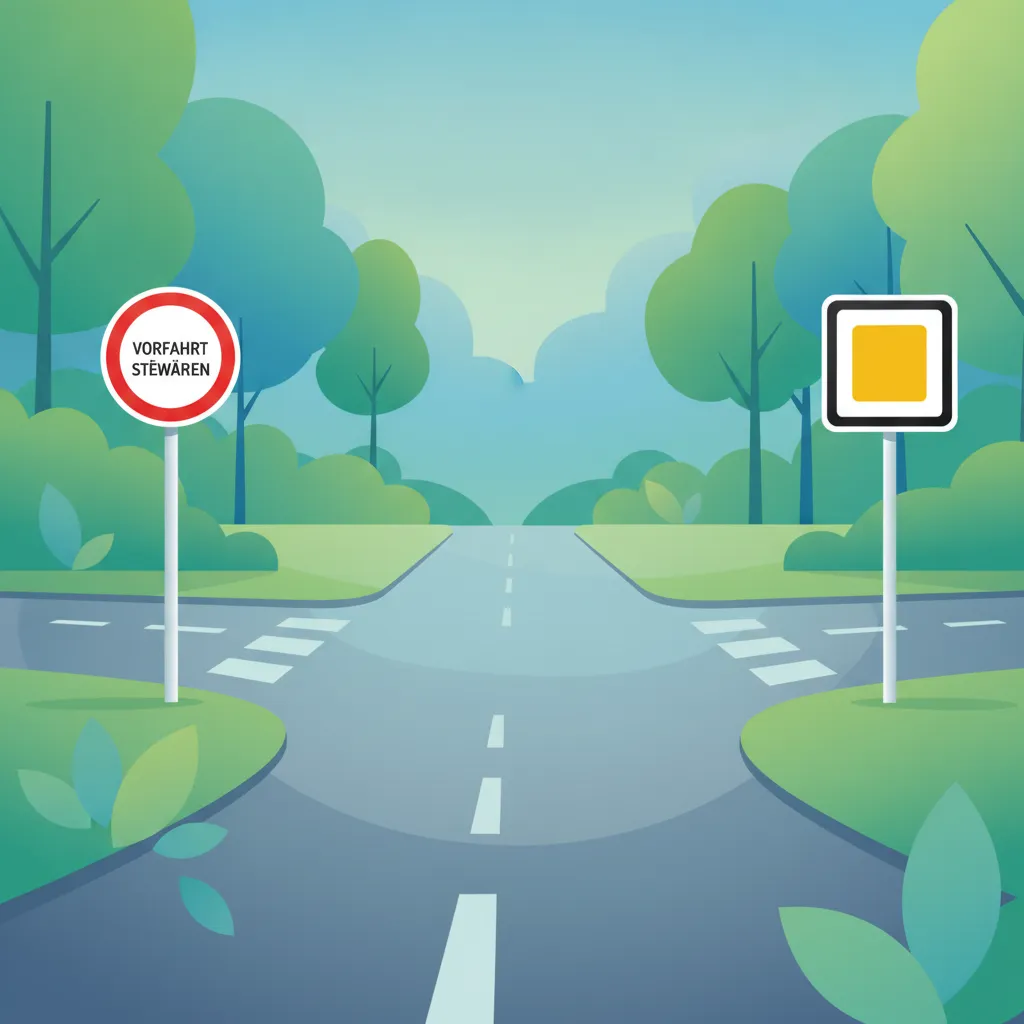
This lesson explains the fundamental concepts of priority that govern traffic at Austrian junctions. It differentiates between having priority ('Vorfahrt') and the duty to yield ('Nachrang'), detailing the signs that establish these rules. Correct application of these principles is critical for preventing collisions at intersections and roundabouts.
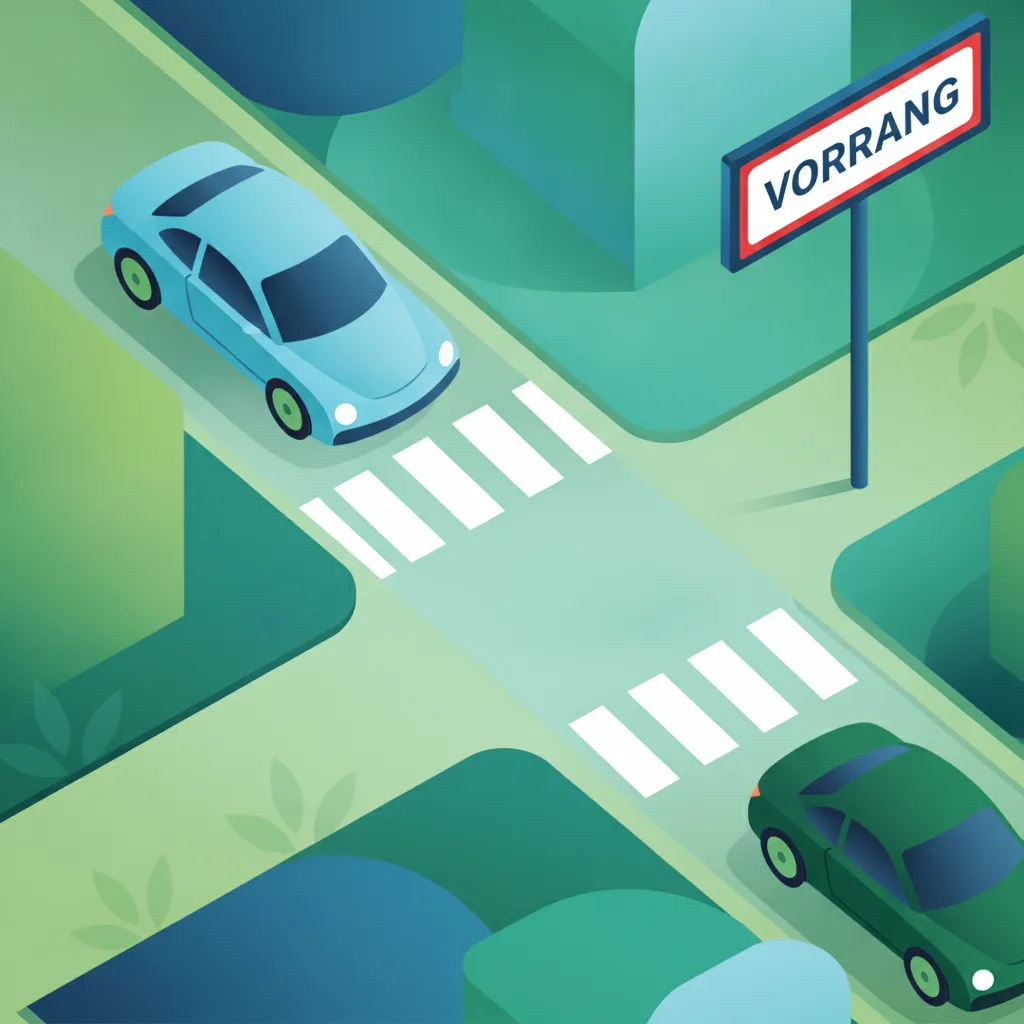
This lesson provides a detailed analysis of the core Austrian traffic rules that govern priority at junctions and in traffic. It focuses on the principles of Vorrang (having priority), Nachrang (yielding), and the Rechtsregel (default right-of-way from the right). Learners will understand the hierarchy of these rules and their application at various types of intersections, from unmarked junctions to those controlled by priority road signs, ensuring correct and safe decision-making.

This lesson addresses advanced manoeuvres that require precise timing and judgment, such as merging onto a motorway from an acceleration lane. It explains the importance of matching the speed of the traffic flow and finding a safe gap before moving over. The content also covers procedures for navigating lane drops and the 'zipper merge' (Reißverschlusssystem) principle in congested situations, promoting efficient and cooperative driving.
This lesson provides clear instructions for maneuvering through single and multi-lane roundabouts. It covers the critical rule of giving way to traffic already in the circle, proper lane selection based on the intended exit, and the correct use of indicators when entering and exiting. Mastering roundabouts is key to efficient and safe travel in modern Austrian traffic systems.
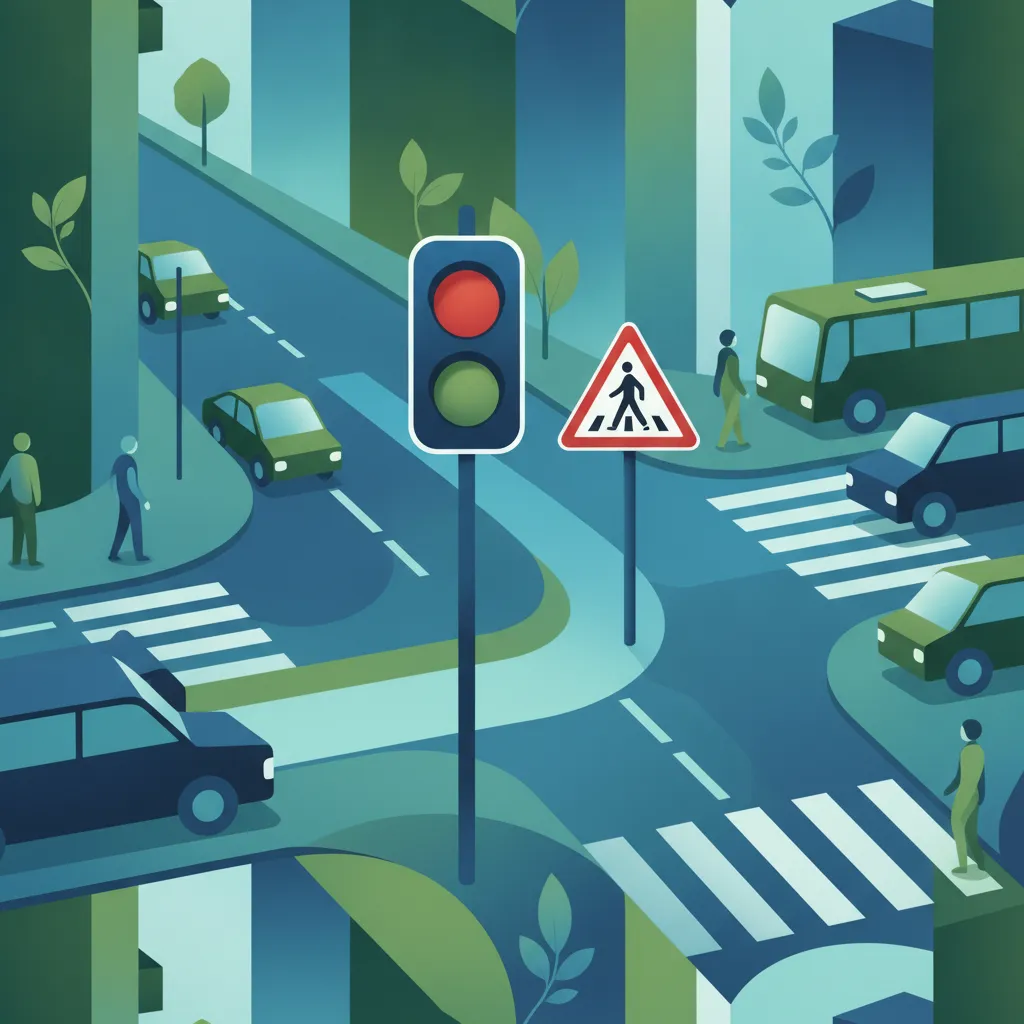
This lesson explains the operation and meaning of traffic light signals in Austria, including the standard red, yellow, and green phases, as well as flashing signals and arrows. It also covers other priority control devices, such as stop signs and yield signs, which are used to manage right-of-way at intersections. Understanding the hierarchy between these signals and signs is crucial for navigating junctions safely and in compliance with the law.
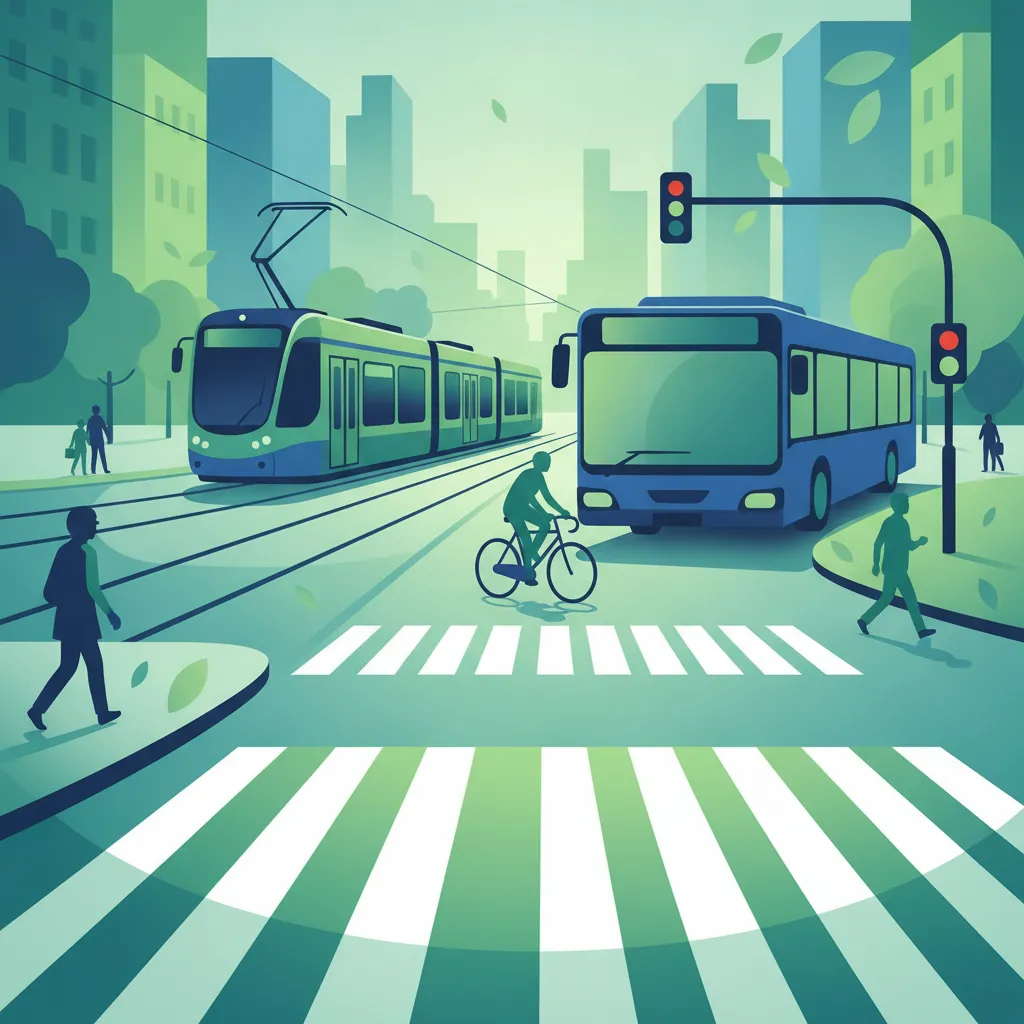
This lesson addresses the unique challenges and priority rules that apply when interacting with public transport and cyclists at intersections. It clarifies the specific right-of-way regulations for trams, which often have priority over other traffic, and the procedures for navigating around bus stops. The content also covers how to safely manage crossings with dedicated bicycle lanes, ensuring the protection of all road users.
Understand common hazards motorcyclists face at intersections, such as poor visibility, unexpected cross-traffic, and cyclist interactions. This lesson provides real-world scenarios to build better observational skills and decision-making for safer riding through junctions.
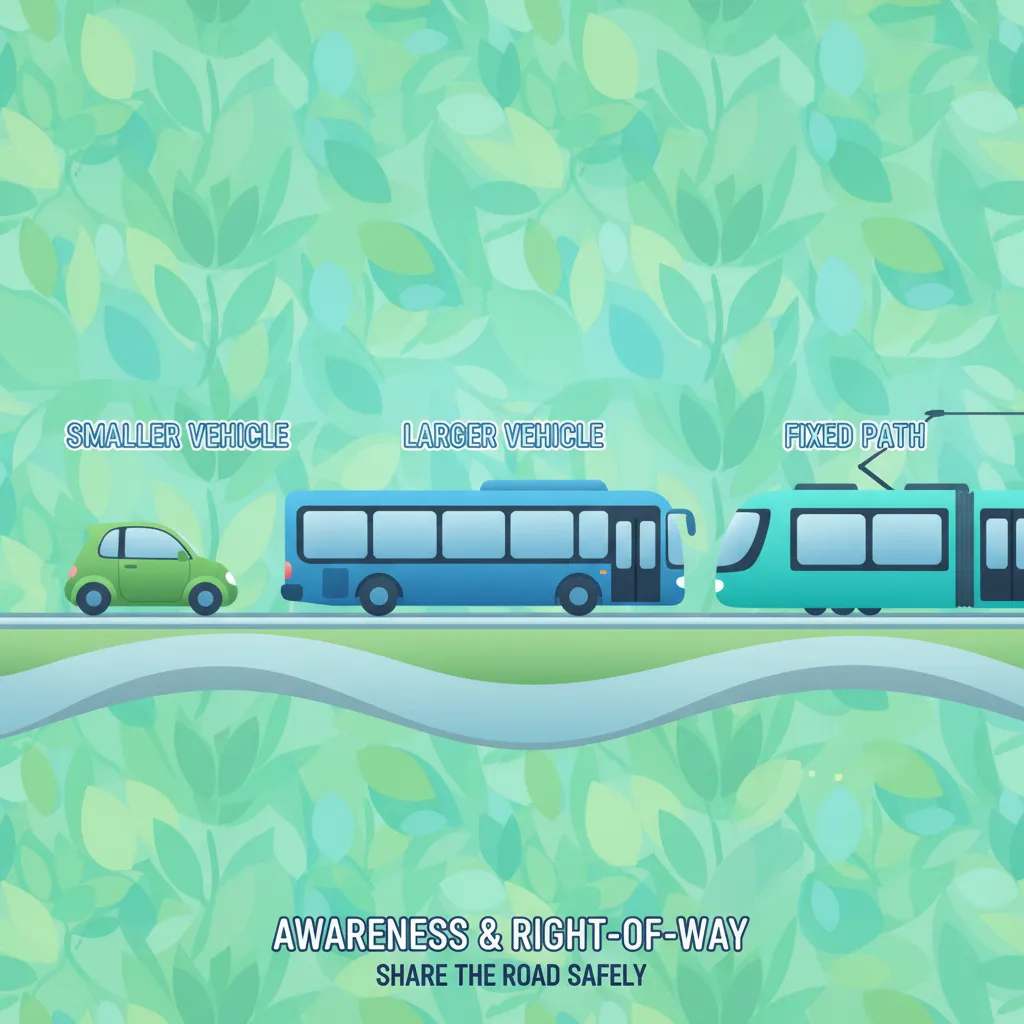
This lesson provides specific guidance for sharing the road with different types of vehicles in Austria. It covers the dangers of large vehicle blind spots, the rules for navigating near buses and dedicated tram tracks, and common conflict points at intersections. Understanding the behavior and limitations of other vehicles is key to safely navigating complex urban environments.

This lesson teaches a safe and systematic process for approaching and crossing intersections. It covers how to correctly assess priority based on signs and general rules, adjust speed appropriately, and perform thorough visual checks. Emphasis is placed on anticipating the actions of other road users to prevent conflicts at junctions.

This lesson highlights the specific hazards of riding on countryside roads in Austria. It teaches riders to be vigilant for wildlife crossing signs, especially at dawn and dusk, and how to safely approach and overtake slow-moving agricultural machinery. Awareness of potential surface hazards like mud, gravel, or manure from farm access points is also crucial for maintaining traction.

This lesson addresses the heightened vulnerability of motorcyclists and outlines essential strategies for personal safety and risk mitigation. It covers the importance of wearing certified protective gear, maintaining situational awareness, and adopting a defensive riding posture. By understanding and anticipating potential hazards in the Austrian traffic environment, riders can actively reduce their risk of accidents.
This lesson provides advice for navigating popular scenic routes, which often feature heavy traffic, cyclists, and distracted drivers. It emphasizes maintaining focus on the road despite beautiful scenery and anticipating unpredictable actions from other tourists who may stop suddenly. Adopting a patient and defensive mindset is key to safely enjoying these remarkable roads.
This lesson provides a comprehensive explanation of Austria's right-of-way laws, which are fundamental to intersection safety. It covers the meaning of different priority signs and clarifies the 'Rechts vor Links' (priority to the right) rule that applies at unmarked junctions. A clear understanding of these rules is essential to prevent conflicts and collisions in urban and rural settings.
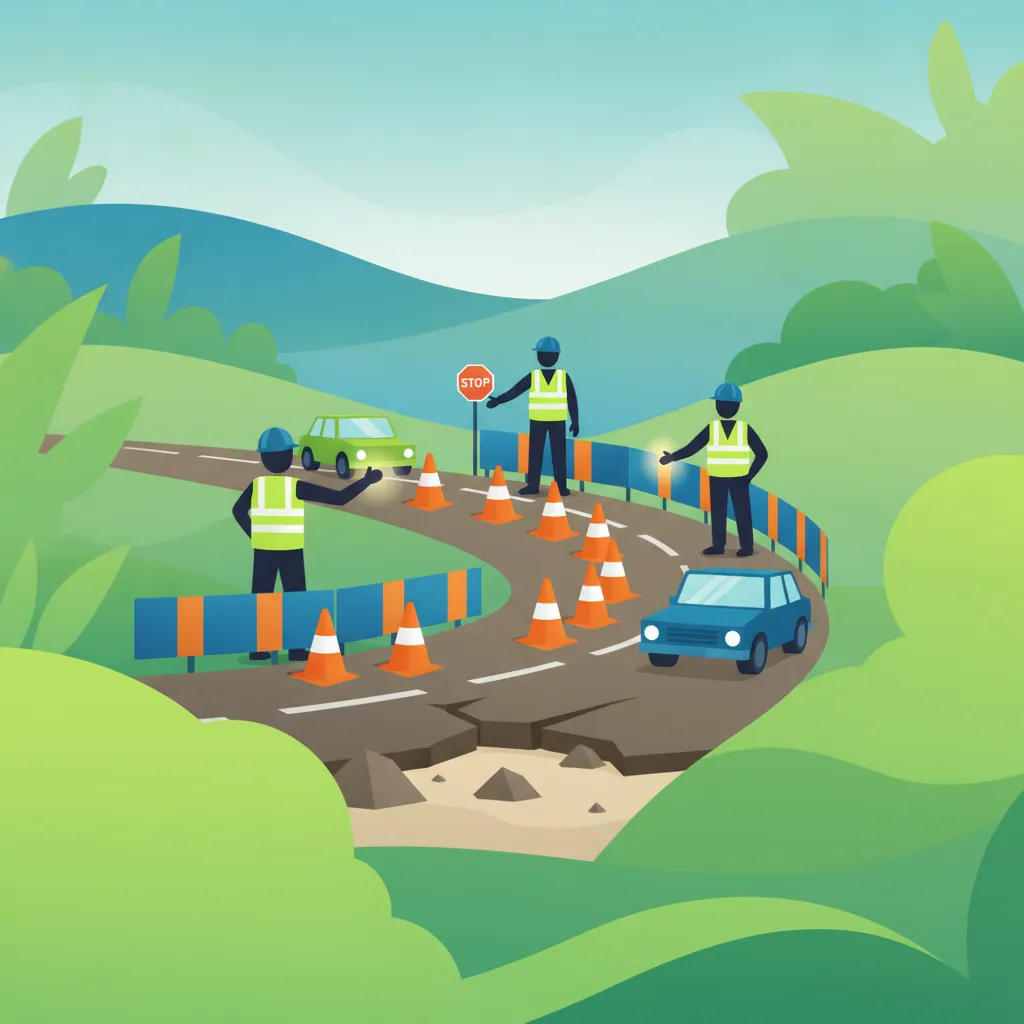
This lesson prepares riders for safely transiting through construction zones ('Baustellen'). It covers the interpretation of temporary signage, adherence to reduced speed limits, and awareness of hazards suchas altered lane markings, abrupt surface changes, and loose gravel. Respecting the safety of road workers and anticipating unpredictable traffic patterns are key themes.

This lesson focuses on identifying and mitigating common hazards in dense urban settings. It explains how to maintain a safe distance from parked cars to avoid opening doors and how to navigate narrow streets. Additionally, it covers the special rules and heightened awareness required when riding in or near pedestrian zones and school areas.
This lesson explains how to use different positions within a lane to maximize visibility, create safety buffers, and plan escape routes. It introduces the concept of anticipative riding, which involves actively scanning for potential hazards and predicting the actions of other drivers. Strategic positioning is a dynamic skill that allows a rider to manage space and time effectively in changing traffic.

This lesson prepares riders for the specific conditions of Austria's mountain passes. It highlights hazards such as tight hairpin turns, potential for sudden weather changes, rockfall, and variable road surfaces. Awareness of these unique challenges allows riders to anticipate risks and adapt their technique for safe and enjoyable alpine touring.
Find clear answers to common questions learners have about Approaching and Crossing Intersections. Learn how the lesson is structured, which driving theory objectives it supports, and how it fits into the overall learning path of units and curriculum progression in Austria. These explanations help you understand key concepts, lesson flow, and exam focused study goals.
The primary danger is crossing the path of oncoming traffic while being less visible than a car. You must carefully assess the gap in traffic, ensure your intention is clear, and complete a final head check before committing to the turn.
In Austria, the standard rule is 'right before left' unless road signs, traffic lights, or road markings indicate otherwise. Always slow down and be prepared to yield if you see a vehicle approaching from your right at an unsigned intersection.
Yes, your lane position should be used to 'claim' your space and signal your intent. Moving towards the center or the appropriate side of your lane helps prevent other drivers from squeezing past you and improves your field of vision.
The exam often features images of complex junctions where you must identify who has priority or notice hidden hazards. This lesson teaches you the systematic observation required to correctly identify these scenarios in theory questions.
Refine your study plan by searching for specific Austrian driving theory practice sets. Pinpoint questions related to particular road rules, signs, or challenge levels, and begin practicing immediately to reinforce your knowledge and excel in your official exam with confidence. Get started with focused revision today.