
This lesson guides you through the critical legal and safety requirements for overtaking other vehicles on Austrian roads. Building on your foundational knowledge of observation and lane discipline, you will learn how to identify where overtaking is prohibited and how to execute the manoeuvre safely to pass the Category B theory exam.

Lesson content overview
Overtaking is a fundamental driving maneuver in the Austrian Category B driving context, allowing drivers to pass slower vehicles moving in the same direction. While it can improve traffic flow, it is inherently a high-risk action that demands exceptional judgment, strict adherence to traffic regulations, and a profound awareness of the surrounding traffic environment to prevent collisions. This lesson provides an exhaustive conceptual framework for performing overtaking maneuvers safely and legally on Austrian roads.
Successful overtaking hinges on guaranteeing sufficient clearance for acceleration, safe lane changes, and a smooth return to the original lane without endangering yourself or other road users. Austrian legal provisions, primarily outlined in the Road Traffic Act (StVO), standardize this behavior to minimize accidents caused by misjudgment or reckless driving.
Overtaking involves deliberately moving into an adjacent lane, accelerating past a slower vehicle, and then returning to your original lane. This maneuver is distinct from simply changing lanes to avoid an obstacle or to prepare for a turn; it specifically aims to pass another vehicle traveling in the same direction.
There are primarily two subcategories of overtaking:
The practical meaning of overtaking is to maintain efficient traffic flow, especially when encountering slower vehicles or specific traffic signals that necessitate a lane change. However, it must always be executed only when legally permitted, on suitable road sections, and with an absolutely clear view ahead.
Overtaking is one of the most complex and potentially dangerous maneuvers a driver performs. It involves high speeds, significant lane changes, and interaction with multiple vehicles, including oncoming traffic (on two-lane roads), the vehicle being overtaken, and vehicles behind. Errors in judgment can lead to severe head-on collisions, side-swipes, or rear-end accidents. Therefore, understanding and strictly applying the rules and safety principles are paramount for every driver.
Common mistakes in overtaking include initiating the maneuver on bends, over a hill crest, or in zones where overtaking is explicitly prohibited. These errors dramatically increase the risk of an accident by reducing visibility or violating established safety parameters.
Identifying whether you are in a legal overtaking zone is the first and most critical step before even considering a pass. Austrian traffic law uses a combination of road signs and markings to define where overtaking is permitted, restricted, or outright prohibited. Drivers must be able to instantly recognize these indicators.
Traffic signs provide clear instructions regarding overtaking. It is crucial to be familiar with the most common "No Overtaking" signs:
When you encounter a "No Overtaking" sign, the prohibition applies regardless of other road conditions, such as clear visibility. These signs are typically placed in areas where road geometry, historical accident data, or other factors make overtaking inherently unsafe.
Road markings work in conjunction with signs to define overtaking zones.
Important Note: Even if a broken line suggests overtaking is allowed, you must always check for "No Overtaking" signs, ensure sufficient clear view distance, and confirm the maneuver is safe before proceeding. Road markings are only one part of the overall assessment.
Beyond signs and markings, there are specific scenarios where Austrian law prohibits overtaking to protect vulnerable road users or compensate for limited visibility.
Key Prohibited Scenarios for Overtaking:
B7a (Overtaking Prohibited) override other conditions.Understanding these zones and prohibitions is fundamental. Attempting to overtake in these situations is not only illegal but also extremely dangerous, significantly increasing the risk of an accident.
Legal permission to overtake is merely the first hurdle. The actual execution requires adherence to several critical safety principles that dictate when and how to perform the maneuver.
This is arguably the most crucial factor. Before initiating any overtaking maneuver, you must assess whether you have a clear, unimpeded view of the road ahead for a sufficient distance. This distance varies depending on the road type and speed:
Minimum Clear View Distances (Austrian Standards):
Factors influencing the required distance also include your vehicle's length, acceleration capability, and the road's curvature. You must be able to see far enough ahead to identify any oncoming traffic, other hazards, or the end of the overtaking zone before committing to the pass. Failing to accurately judge this distance is a common cause of head-on collisions.
Overtaking should be decisive and swift to minimize the time spent in the adjacent lane and reduce exposure to potential hazards, especially oncoming traffic. To achieve this, your vehicle must be able to accelerate sufficiently to establish a safe speed differential over the vehicle being overtaken.
General Guidelines for Speed Differential:
Attempting to overtake without a significant speed advantage means you will spend too long alongside the other vehicle, increasing risk and potentially frustrating other drivers behind you. Always ensure you have enough engine power and road length to safely achieve this differential.
Throughout the overtaking process, maintaining safe distances is paramount:
Executing an overtaking maneuver involves a sequence of precise steps. Missing or rushing any of these steps can compromise safety.
Step 1: Assessment and Decision-Making: Before even considering a pass, conduct a thorough assessment. Check your mirrors (rear-view and side mirrors) and blind spots to ensure no vehicle is already overtaking you or rapidly approaching from behind. Evaluate the clear view distance ahead, identify any "No Overtaking" signs or solid lines, and confirm you can achieve a safe speed differential without exceeding the speed limit. Ensure the vehicle you intend to overtake is not signaling a turn or preparing to change lanes.
Step 2: Signaling Your Intentions: Once you have decided it is safe and legal to overtake, activate your right turn indicator (in right-hand traffic countries like Austria). This communicates your intention to change lanes and move into the adjacent lane to other road users, especially those behind you. Signal sufficiently in advance to give others time to react.
Step 3: Executing the Pass: Move smoothly and decisively into the adjacent lane. Accelerate firmly but controlled, maintaining the necessary speed differential to pass the slower vehicle quickly. Keep a safe lateral distance from the vehicle you are overtaking. Do not linger alongside the other vehicle.
Step 4: Safely Returning to Your Lane: Once you have completely passed the other vehicle and can see it fully in your left side mirror, you are ready to return. Crucially, ensure there is a safe distance between your vehicle and the overtaken vehicle (typically at least 30 meters) before initiating your return. Activate your left turn indicator to signal your intention to merge back into your original lane. Gently steer back into your lane, cancel the signal, and maintain your speed or adjust it as necessary.
The Austrian Road Traffic Act (Straßenverkehrsordnung or StVO) provides the legal backbone for all traffic rules, including specific regulations for overtaking. Drivers are legally obliged to know and follow these provisions.
Here are some key regulations from the StVO relevant to overtaking:
Understanding these specific legal mandates is not just about avoiding penalties; it's about internalizing the safety principles that underpin them.
Overtaking is rarely a black-and-white decision. Various external and internal factors can influence its safety and legality.
Your vehicle's state also impacts the feasibility and safety of overtaking:
Special care must be taken when overtaking near vulnerable road users:
The context of the road type significantly alters overtaking dynamics:
Being aware of common mistakes can help drivers prevent dangerous situations:
Overtaking is a dynamic maneuver that requires a combination of legal compliance, precise judgment, and advanced driving skills. By consistently applying the core principles discussed in this lesson, drivers can navigate Austrian roads safely and efficiently.
The pillars of safe overtaking include:
Mastering these concepts is crucial for obtaining your Austrian Category B driver's license and, more importantly, for becoming a responsible and safe driver on Austria’s diverse road network. It contributes directly to smoother traffic flow and significantly reduces the risk of accidents related to this complex maneuver.
Explore all units and lessons included in this driving theory course.
Lesson content overview
Explore all units and lessons included in this driving theory course.
Explore search topics learners often look for when studying Overtaking Rules and Safe Execution. These topics reflect common questions about road rules, driving situations, safety guidance, and lesson level theory preparation for learners in Austria.
Browse additional driving theory lessons that cover connected traffic rules, road signs, and common driving situations related to this topic. Improve your understanding of how different rules interact across everyday traffic scenarios.
Explore complex and advanced overtaking scenarios on Austrian roads beyond basic rules. Understand how to safely manage special situations, adverse conditions, and interactions with various road users for the theory exam.

This lesson breaks down the overtaking maneuver into a safe, repeatable process: assess, signal, check, move, and return. It emphasizes the importance of ensuring a sufficient gap in oncoming traffic, checking mirrors and blind spots thoroughly, and maintaining a proper speed differential. Adherence to Austrian laws regarding where overtaking is prohibited is also covered in detail.

This lesson provides a comprehensive explanation of Austria's right-of-way laws, which are fundamental to intersection safety. It covers the meaning of different priority signs and clarifies the 'Rechts vor Links' (priority to the right) rule that applies at unmarked junctions. A clear understanding of these rules is essential to prevent conflicts and collisions in urban and rural settings.

This lesson addresses advanced manoeuvres that require precise timing and judgment, such as merging onto a motorway from an acceleration lane. It explains the importance of matching the speed of the traffic flow and finding a safe gap before moving over. The content also covers procedures for navigating lane drops and the 'zipper merge' (Reißverschlusssystem) principle in congested situations, promoting efficient and cooperative driving.

This lesson provides a comprehensive guide to driving on high-speed motorways (Autobahnen) and expressways (Schnellstraßen). It details the correct procedure for using the acceleration lane to merge safely, the principles of strict lane discipline, and strategies for choosing a safe speed relative to traffic flow and conditions. The lesson also explains the rules for using exit ramps and the purpose of the hard shoulder (Pannenstreifen).
This lesson provides clear instructions for maneuvering through single and multi-lane roundabouts. It covers the critical rule of giving way to traffic already in the circle, proper lane selection based on the intended exit, and the correct use of indicators when entering and exiting. Mastering roundabouts is key to efficient and safe travel in modern Austrian traffic systems.
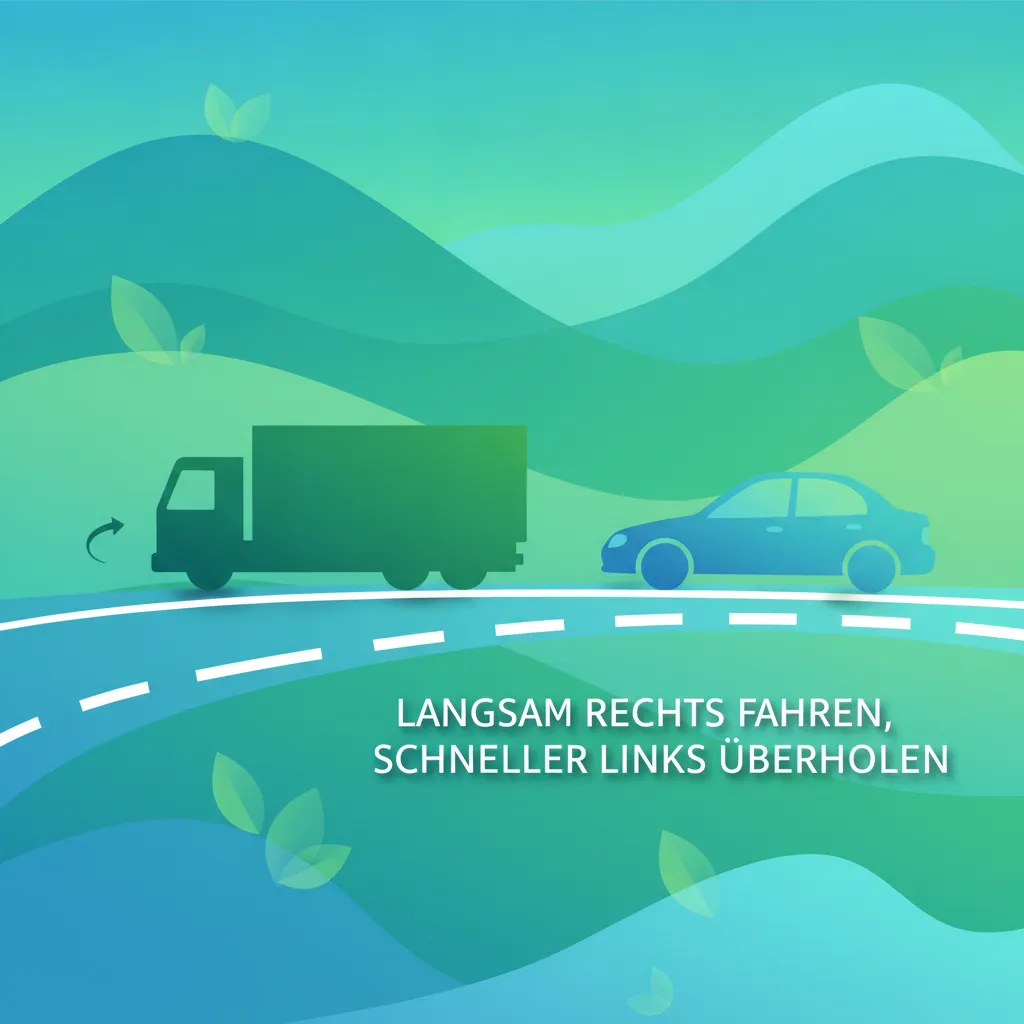
High-speed driving in a large vehicle requires excellent lane discipline and forward planning. This lesson covers Austrian speed limits for buses, rules for joining and leaving the motorway, safe overtaking procedures, and maintaining appropriate following distances. The critical importance of forming an emergency corridor ('Rettungsgasse') in traffic jams is also a key topic.

This lesson focuses on the safety-critical skill of reversing, emphasizing the importance of all-around observation before and during the manoeuvre. It covers the correct use of mirrors and the necessity of checking blind spots to ensure the path is clear of pedestrians, obstacles, and other vehicles. Learners will understand techniques for maintaining slow, controlled speed and making accurate steering adjustments while backing up in various situations.

This lesson provides essential knowledge for using Austria's high-speed road network. It covers the correct procedure for entering via acceleration lanes, maintaining strict lane discipline (keeping right, passing left), and understanding the digital or physical Vignette (toll sticker) requirement. The formation of the 'Rettungsgasse' (emergency corridor) during traffic jams is also a key topic.

This lesson explains the importance of maintaining a safe following distance to prevent rear-end collisions. It introduces practical methods for judging a safe gap, such as the widely-used 'two-second rule,' and clarifies how this distance needs to be increased in adverse weather or poor visibility. The content emphasizes that an adequate buffer zone provides the necessary time and space to react and brake safely if the vehicle in front stops suddenly.

This lesson details the general traffic rules applicable to heavy goods vehicles on Austrian roads, highlighting differences from passenger car regulations. It covers key topics such as right-of-way at intersections, specific rules for overtaking, maintaining proper lane discipline, and adhering to designated speed limits. Understanding these rules is critical for safe integration into mixed traffic.
Learn about the most frequent and dangerous mistakes drivers make when overtaking in Austria. This lesson focuses on identifying potential errors and providing clear strategies to ensure safe and legal execution of the manoeuvre.
This lesson breaks down the overtaking maneuver into a safe, repeatable process: assess, signal, check, move, and return. It emphasizes the importance of ensuring a sufficient gap in oncoming traffic, checking mirrors and blind spots thoroughly, and maintaining a proper speed differential. Adherence to Austrian laws regarding where overtaking is prohibited is also covered in detail.
This lesson addresses advanced manoeuvres that require precise timing and judgment, such as merging onto a motorway from an acceleration lane. It explains the importance of matching the speed of the traffic flow and finding a safe gap before moving over. The content also covers procedures for navigating lane drops and the 'zipper merge' (Reißverschlusssystem) principle in congested situations, promoting efficient and cooperative driving.
This lesson focuses on the safety-critical skill of reversing, emphasizing the importance of all-around observation before and during the manoeuvre. It covers the correct use of mirrors and the necessity of checking blind spots to ensure the path is clear of pedestrians, obstacles, and other vehicles. Learners will understand techniques for maintaining slow, controlled speed and making accurate steering adjustments while backing up in various situations.
This lesson provides a comprehensive explanation of Austria's right-of-way laws, which are fundamental to intersection safety. It covers the meaning of different priority signs and clarifies the 'Rechts vor Links' (priority to the right) rule that applies at unmarked junctions. A clear understanding of these rules is essential to prevent conflicts and collisions in urban and rural settings.
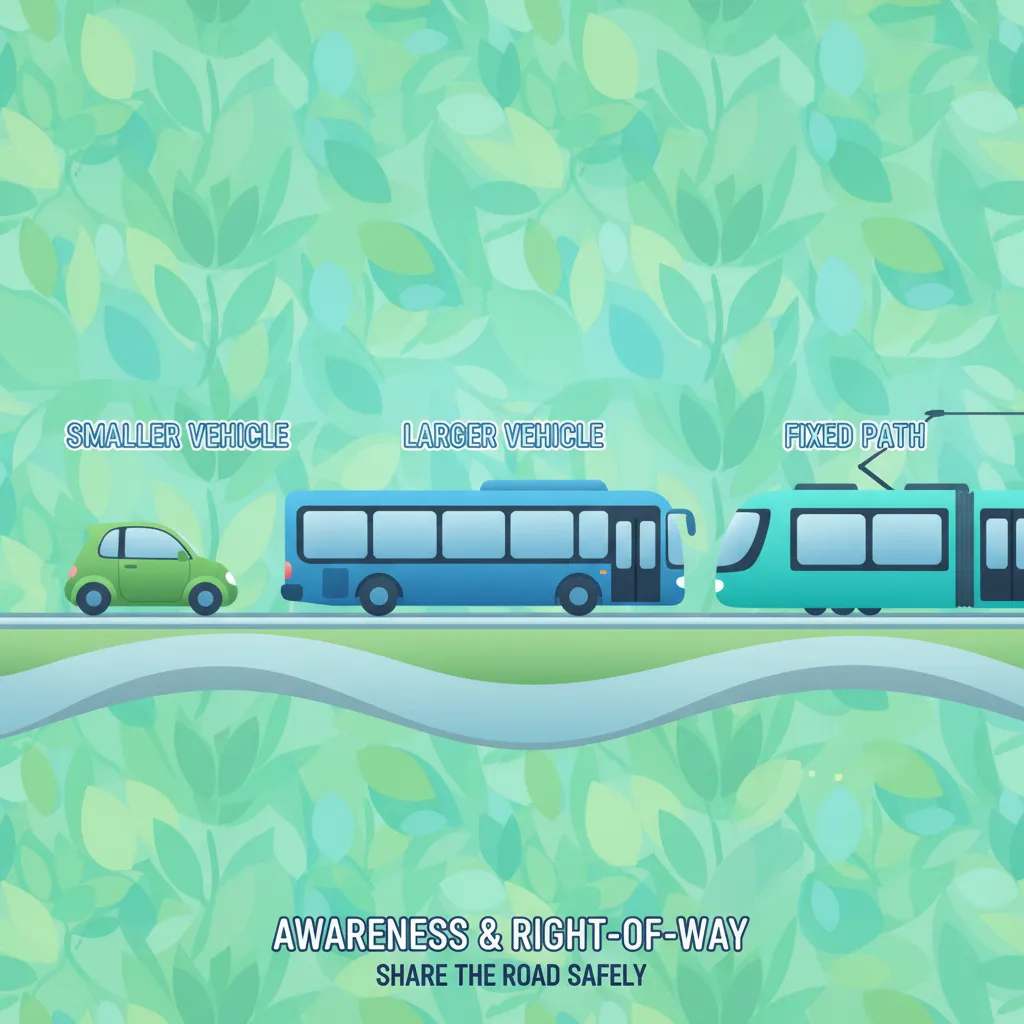
This lesson provides specific guidance for sharing the road with different types of vehicles in Austria. It covers the dangers of large vehicle blind spots, the rules for navigating near buses and dedicated tram tracks, and common conflict points at intersections. Understanding the behavior and limitations of other vehicles is key to safely navigating complex urban environments.
This lesson provides clear instructions for maneuvering through single and multi-lane roundabouts. It covers the critical rule of giving way to traffic already in the circle, proper lane selection based on the intended exit, and the correct use of indicators when entering and exiting. Mastering roundabouts is key to efficient and safe travel in modern Austrian traffic systems.

This lesson introduces the proactive mindset of defensive driving, which focuses on anticipating potential hazards rather than just reacting to them. It teaches techniques for systematic risk assessment, including scanning the road ahead, checking mirrors frequently, and being aware of the potential actions of other road users. By adopting these safe habits, drivers can create a buffer of safety around their vehicle and significantly reduce the likelihood of being involved in an accident.

This lesson covers the principles of proper lane discipline, including maintaining a correct and steady position within a lane and adhering to the 'keep right' rule on multi-lane roads. It details the safe and systematic protocol for changing lanes, which involves checking mirrors, signaling intention, performing a blind spot check, and then smoothly executing the manoeuvre. Correct lane usage is essential for maintaining predictable and safe traffic flow.
This lesson provides a comprehensive guide to driving on high-speed motorways (Autobahnen) and expressways (Schnellstraßen). It details the correct procedure for using the acceleration lane to merge safely, the principles of strict lane discipline, and strategies for choosing a safe speed relative to traffic flow and conditions. The lesson also explains the rules for using exit ramps and the purpose of the hard shoulder (Pannenstreifen).

This lesson explains the fundamental concepts of priority that govern traffic at Austrian junctions. It differentiates between having priority ('Vorfahrt') and the duty to yield ('Nachrang'), detailing the signs that establish these rules. Correct application of these principles is critical for preventing collisions at intersections and roundabouts.
Find clear answers to common questions learners have about Overtaking Rules and Safe Execution. Learn how the lesson is structured, which driving theory objectives it supports, and how it fits into the overall learning path of units and curriculum progression in Austria. These explanations help you understand key concepts, lesson flow, and exam focused study goals.
No, you must generally not overtake a vehicle that has clearly indicated an intention to turn left, as this creates a significant collision risk. Always wait for the vehicle to complete its manoeuvre.
Yes, look for the circular red-bordered sign with a car and truck symbol. This explicitly prohibits overtaking for multiple-track motor vehicles. Additionally, solid white lines on the road also forbid overtaking.
In Austria, you must generally overtake on the left. Overtaking on the right is only permitted in specific situations, such as when the vehicle in front is clearly turning left or when driving in lanes designated for different directions in city traffic.
You must check your rear-view mirror, side mirrors, and blind spots. Ensure you have sufficient clear road ahead, enough power to complete the pass quickly, and that no one behind you has already begun to overtake you.
Refine your study plan by searching for specific Austrian driving theory practice sets. Pinpoint questions related to particular road rules, signs, or challenge levels, and begin practicing immediately to reinforce your knowledge and excel in your official exam with confidence. Get started with focused revision today.