
This lesson guides you through the technical requirements and safety protocols for turning at intersections and roundabouts in Austria. It bridges your understanding of basic priority rules with the practical lane management skills needed to navigate common conflict points safely. Mastering these maneuvers is essential for both your theory exam and your confidence as a Category B driver.

Lesson content overview
Mastering turns at intersections and roundabouts is a fundamental skill for every driver in Austria. These manoeuvres, while seemingly straightforward, are critical points of conflict in traffic, demanding precise execution, keen observation, and strict adherence to traffic laws. This lesson provides an in-depth guide to safely and correctly performing turns, ensuring smooth traffic flow and protecting all road users, especially vulnerable pedestrians and cyclists.
Turning at intersections and roundabouts requires more than just steering your vehicle in a new direction. It involves a complex interplay of lane discipline, timely signalling, accurate speed management, and a thorough understanding of priority rules. Neglecting any of these elements can lead to dangerous situations, collisions, and legal penalties under the Austrian Traffic Regulations (StVO). Developing proficiency in these areas is essential for your safety and the safety of others on Austria's diverse road network.
This lesson builds upon foundational knowledge from earlier units, including traffic signs and road markings, fundamental priority rules, and basic lane discipline. By integrating these concepts, you will gain a holistic understanding of how to approach, execute, and exit turns confidently and responsibly.
Effective turning relies on several core principles that ensure predictability and safety. These principles are designed to minimize uncertainty for other drivers and vulnerable road users, thereby reducing the risk of accidents.
The practice of occupying the correct lane well in advance of the intended turn, preventing sudden changes and ensuring a predictable path for other road users.
Initiating a turn signal at least 100 metres before reaching the intersection or roundabout exit to clearly communicate your intentions to all road users.
Understanding and adhering to the legal hierarchy that dictates which road users have the right of way, particularly when turning across the path of other traffic.
Always scanning for pedestrians, cyclists, and motorcyclists before and during a turn, as these users are often less visible and require specific consideration.
Reducing your speed early and smoothly before a turn to maintain control, improve reaction time, and ensure stability throughout the manoeuvre.
These principles are interconnected. For instance, proper lane discipline and early signalling work together to make your intentions clear, while speed adaptation allows for thorough observation and correct priority recognition.
Correct lane positioning is the first crucial step in any turning manoeuvre. According to Austrian StVO § 16-1, drivers must position their vehicle in the appropriate lane well before reaching the turning point. This prevents sudden, last-minute lane changes that can confuse other drivers and lead to collisions.
Following road markings and signs is paramount. Dedicated turn lanes will often have arrows painted on the road surface indicating "left turn only," "right turn only," or "straight ahead." Always merge into these lanes early and avoid changing lanes once you are within a dedicated turn lane or the junction itself.
Attempting to turn from the wrong lane is a common violation that disrupts traffic flow and creates significant collision risks, especially with vehicles attempting to go straight or turn in the correct lane.
Clear and timely signalling is essential for communicating your intentions to other road users, allowing them to anticipate your actions and react safely. In Austria, StVO § 39-9 mandates specific rules for indicator usage.
Your vehicle's turn indicators must be activated:
This 100-metre rule provides sufficient advance warning for following drivers, oncoming traffic, and pedestrians. Signalling too late gives others insufficient time to react, increasing the risk of accidents. Conversely, signalling too early can mislead others if there are other junctions or entrances before your actual turning point. Always deactivate your indicator once the turn is completed to avoid confusion.
Priority rules dictate who has the right of way at any given point on the road, and these are particularly crucial when turning at intersections. Misunderstanding or ignoring priority rules is a leading cause of collisions.
A road designated by a specific sign where traffic generally has the right of way over traffic entering or crossing from other roads.
At intersections without specific traffic lights or priority signs, the general rule is "right before left" (rechts vor links), meaning you must yield to traffic coming from your right. However, many intersections in Austria are governed by specific signs:
A left turn is inherently more complex than a right turn because it typically involves crossing the path of oncoming traffic. According to StVO § 11-3, when making a left turn, you must yield to:
This means you must wait for a safe and sufficient gap in oncoming traffic before initiating your turn. Never assume that an oncoming vehicle will slow down or yield to you. Accurately judge the speed and distance of approaching vehicles before committing to your turn.
When waiting to turn left, keep your wheels straight. If you are rear-ended with your wheels already turned left, your vehicle could be propelled into the path of oncoming traffic.
Roundabouts, known as Kreisverkehr in Austria, are circular intersections designed to improve traffic flow and reduce the severity of collisions. However, they have specific rules for entry, circulation, and exit that must be followed.
A circular intersection where traffic flows in a counter-clockwise direction (in countries with right-hand traffic) and drivers entering must yield to vehicles already circulating.
Upon Approaching a Roundabout:
While Circulating in a Roundabout:
Proper signalling is critical for clear communication within a roundabout:
Failing to signal your exit from a roundabout is a common mistake that can confuse other drivers and lead to rear-end collisions or prevent waiting drivers from entering.
When turning, drivers have a heightened responsibility to ensure the safety of vulnerable road users, especially pedestrians and cyclists, who are less protected and often harder to see.
Pedestrian Crossings (Zebrastreifen):
According to StVO § 41-1, you must yield to pedestrians who are already on or are clearly about to enter a designated pedestrian crossing (Zebrastreifen). This rule applies regardless of whether you are turning or going straight. Always check for pedestrians before turning, especially when turning right, as they may be crossing the road you intend to enter.
Cyclist Lanes (Radweg) and Bicycle Crossings: StVO § 54-2 grants specific priority to cyclists on marked bicycle lanes or crossings. When turning, particularly right, you must check for and yield to cyclists who are travelling alongside you or are crossing your path. Cyclists can often approach quickly and may be in your blind spot. Always look over your shoulder before turning to ensure the path is clear.
The "Dutch Reach" method, where you open your car door with your far hand (e.g., right hand for left door), forces you to twist your body and naturally check for cyclists and pedestrians before exiting your vehicle. While not directly a turning rule, it instills good observation habits.
Adherence to specific sections of the Austrian StVO is crucial for safe and legal turning manoeuvres.
Zebrastreifen).Even experienced drivers can make mistakes when turning. Being aware of these common errors can help you prevent them.
Safe turning practices must be adapted to various environmental and contextual factors.
The rules governing turning manoeuvres are not arbitrary; they are designed based on principles of physics, human psychology, and accident statistics to maximize safety and efficiency.
Let's apply these rules to common driving situations you will encounter in Austria.
Scenario 1 – Left Turn at a T-junction (Priority Road)
Vorfahrtstraße (priority road) and wish to turn left onto a side road at a T-junction. There is oncoming traffic proceeding straight on the Vorfahrtstraße.Scenario 2 – Taking the Third Exit at a Roundabout
Kreisverkehr (roundabout) with four exits and intend to take the third exit (approximately 3 o'clock position relative to your entry).Roundabout sign (Sign 302). You reduce your speed and prepare to yield to any vehicles already circulating within the roundabout. You do not signal upon entry. You enter safely when there's a gap, staying in a suitable lane for your exit (typically the right lane or as marked). After passing the second exit, you activate your right turn indicator to signal your intention to leave at the third exit. You then exit the roundabout smoothly.Scenario 3 – Right Turn at a Controlled Intersection with Pedestrians
Zebrastreifen (pedestrian crossing).Zebrastreifen, you stop before the crossing to allow them to complete their crossing safely, as per StVO § 41-1. Once the pedestrian has cleared the crossing, you complete your right turn.Safe and legal turning in the Austrian driving environment hinges on a set of integrated practices:
Vorfahrtstraße, Give Way, Stop) and traffic lights.By diligently applying these principles and adhering to the Austrian StVO, you will navigate turns at intersections and roundabouts with confidence, safety, and legal compliance.
This lesson covers the essential procedures for turning safely at Austrian intersections and roundabouts, grounded in specific StVO regulations. Key points include the 100-metre signalling rule, correct lane positioning (near the centre line for left turns, near the kerb for right turns), and yielding requirements—particularly yielding to oncoming traffic when turning left and to circulating traffic when entering roundabouts. The content emphasises protecting vulnerable road users such as pedestrians on Zebrastreifen and cyclists on Radwege, and includes practical scenarios demonstrating correct versus incorrect behaviour. Adapting speed and observation to weather, lighting, and road conditions is also stressed for safe manoeuvring.
A short set of high-value points that capture the most important learning from this lesson.
Signal at least 100 metres before any turn or roundabout exit to give other road users adequate warning time.
When turning left, you must always yield to oncoming traffic proceeding straight or turning right, regardless of priority road status.
At roundabouts, yield to circulating traffic upon entry, maintain your lane while inside, and signal right before your intended exit.
Always yield to pedestrians on or about to enter a marked Zebrastreifen and to cyclists on Radwege, especially when turning across their path.
Position your vehicle in the correct lane well before the intersection—left turns stay near the centre line, right turns stay near the kerb.
Explore all units and lessons included in this driving theory course.
StVO § 39-9 mandates indicator activation at least 100 metres before turning; StVO § 39-10 requires right signal before roundabout exit.
At uncontrolled intersections without signs, 'right before left' (rechts vor links) applies—yield to traffic coming from your right.
Keep wheels straight when waiting to turn left; if rear-ended with wheels turned, you could be pushed into oncoming traffic.
Do not use your indicator when entering a standard roundabout unless taking the first exit immediately.
Reduce speed early before any turn to manage centrifugal force and maintain tyre grip, especially in wet or icy conditions.
Activating the turn signal too late (within the intersection rather than 100 metres before) gives following traffic insufficient reaction time.
Entering a roundabout without yielding to vehicles already circulating inside, disrupting traffic flow and risking collisions.
Failing to signal right before exiting a roundabout, confusing other drivers about your intended path.
Turning from the wrong lane—turning left from a right-hand lane or vice versa—creates dangerous conflicts with vehicles in the correct lane.
Neglecting to check for cyclists and pedestrians before turning, particularly when they may be in a blind spot or crossing a Zebrastreifen.
Lesson content overview
A short set of high-value points that capture the most important learning from this lesson.
Signal at least 100 metres before any turn or roundabout exit to give other road users adequate warning time.
When turning left, you must always yield to oncoming traffic proceeding straight or turning right, regardless of priority road status.
At roundabouts, yield to circulating traffic upon entry, maintain your lane while inside, and signal right before your intended exit.
Always yield to pedestrians on or about to enter a marked Zebrastreifen and to cyclists on Radwege, especially when turning across their path.
Position your vehicle in the correct lane well before the intersection—left turns stay near the centre line, right turns stay near the kerb.
Explore all units and lessons included in this driving theory course.
StVO § 39-9 mandates indicator activation at least 100 metres before turning; StVO § 39-10 requires right signal before roundabout exit.
At uncontrolled intersections without signs, 'right before left' (rechts vor links) applies—yield to traffic coming from your right.
Keep wheels straight when waiting to turn left; if rear-ended with wheels turned, you could be pushed into oncoming traffic.
Do not use your indicator when entering a standard roundabout unless taking the first exit immediately.
Reduce speed early before any turn to manage centrifugal force and maintain tyre grip, especially in wet or icy conditions.
Activating the turn signal too late (within the intersection rather than 100 metres before) gives following traffic insufficient reaction time.
Entering a roundabout without yielding to vehicles already circulating inside, disrupting traffic flow and risking collisions.
Failing to signal right before exiting a roundabout, confusing other drivers about your intended path.
Turning from the wrong lane—turning left from a right-hand lane or vice versa—creates dangerous conflicts with vehicles in the correct lane.
Neglecting to check for cyclists and pedestrians before turning, particularly when they may be in a blind spot or crossing a Zebrastreifen.
Explore search topics learners often look for when studying Turning at Intersections and Roundabouts. These topics reflect common questions about road rules, driving situations, safety guidance, and lesson level theory preparation for learners in Austria.
Browse additional driving theory lessons that cover connected traffic rules, road signs, and common driving situations related to this topic. Improve your understanding of how different rules interact across everyday traffic scenarios.
Explore advanced principles for navigating complex intersections and multi-lane roundabouts in Austria. Learn about priority exceptions, challenging scenarios, and specific StVO regulations beyond basic turning manoeuvres for enhanced driving competence.
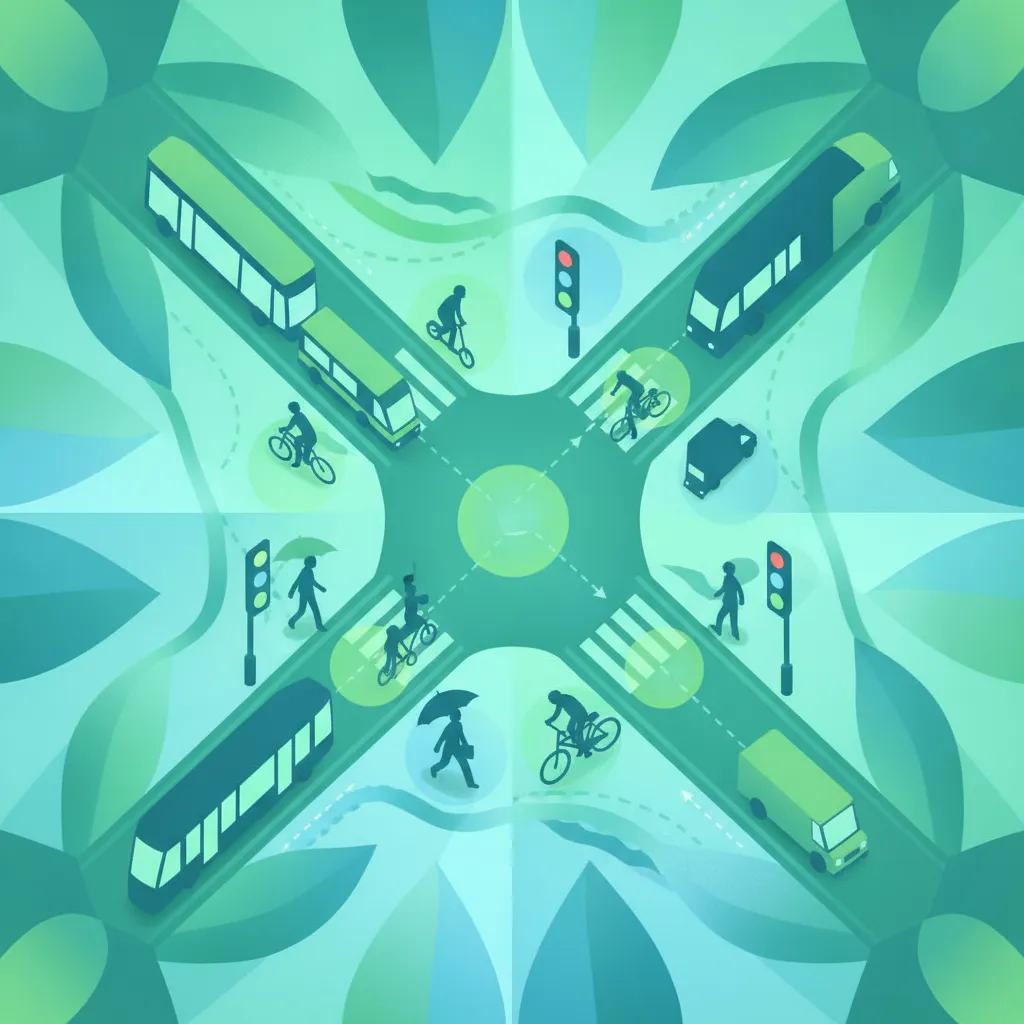
This lesson examines various common intersection layouts, including T-intersections, four-way junctions, and complex multi-lane crossings. It explains how right-of-way is determined in each scenario, whether through traffic signals, stop or yield signs, or the default right-hand rule. Understanding how to identify conflict points and apply the correct priority rule is essential for preventing collisions and ensuring smooth traffic movement.

This lesson provides a comprehensive explanation of Austria's right-of-way laws, which are fundamental to intersection safety. It covers the meaning of different priority signs and clarifies the 'Rechts vor Links' (priority to the right) rule that applies at unmarked junctions. A clear understanding of these rules is essential to prevent conflicts and collisions in urban and rural settings.
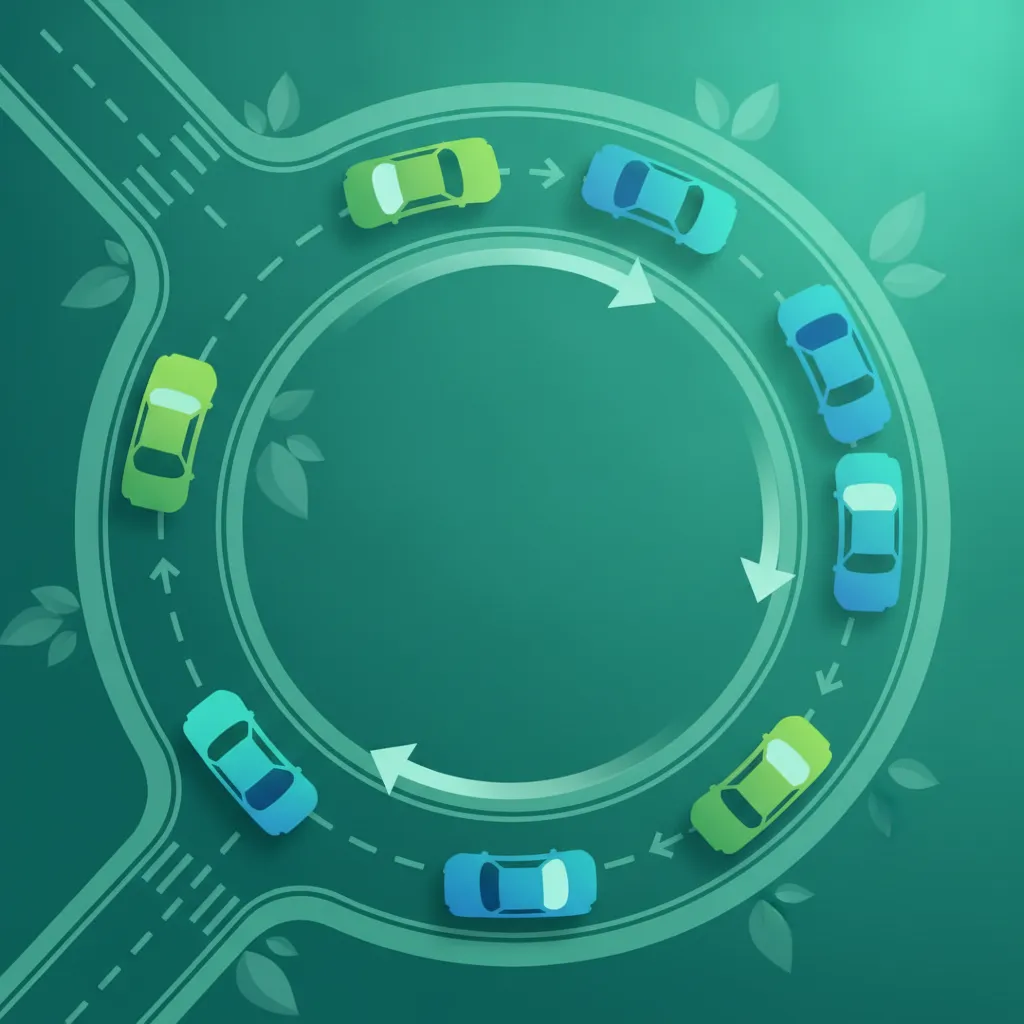
This lesson focuses on the rules for navigating roundabouts (Kreisverkehr) in Austria. It highlights the fundamental give-way rule, where traffic entering the roundabout must yield to traffic already circulating within it. Learners will understand the correct procedures for lane selection, signaling intent to exit, and maintaining safe traffic flow, supported by explanations of specific Austrian roundabout signage.
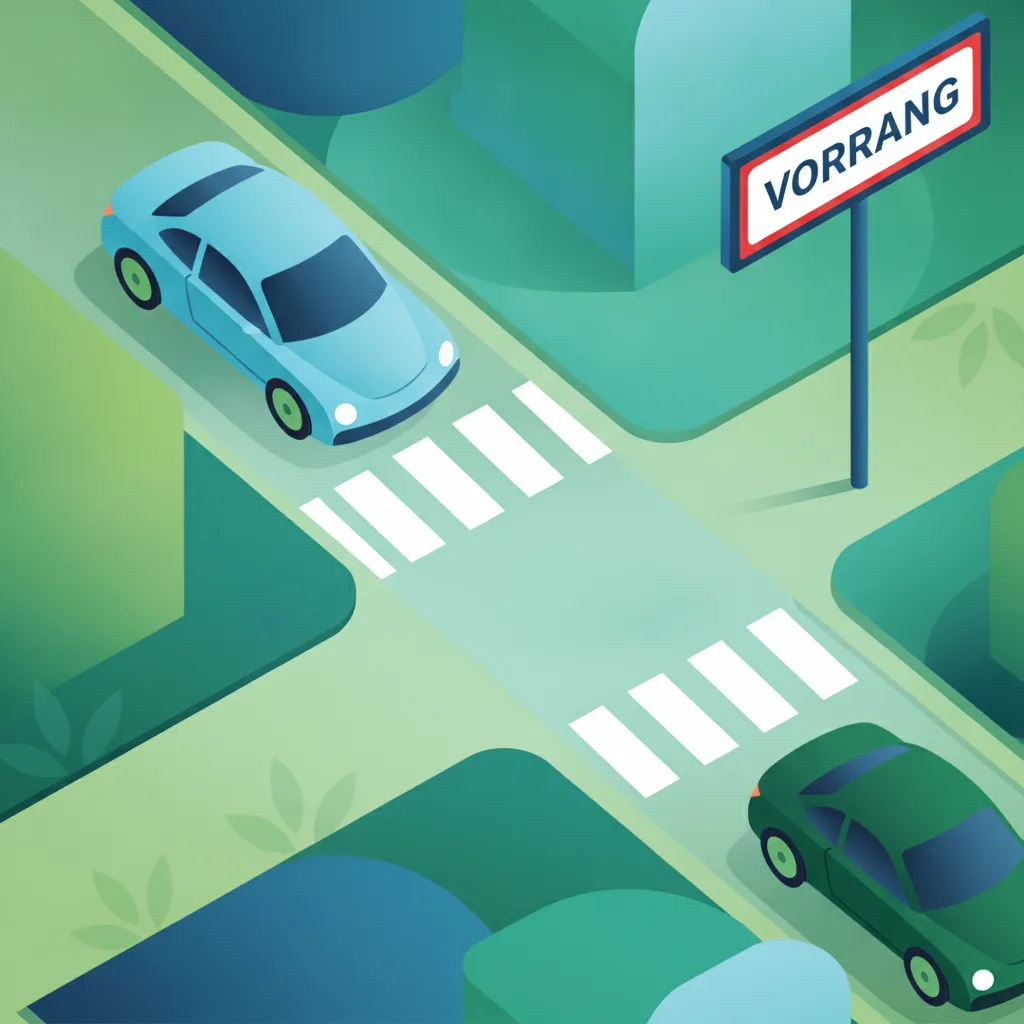
This lesson provides a detailed analysis of the core Austrian traffic rules that govern priority at junctions and in traffic. It focuses on the principles of Vorrang (having priority), Nachrang (yielding), and the Rechtsregel (default right-of-way from the right). Learners will understand the hierarchy of these rules and their application at various types of intersections, from unmarked junctions to those controlled by priority road signs, ensuring correct and safe decision-making.
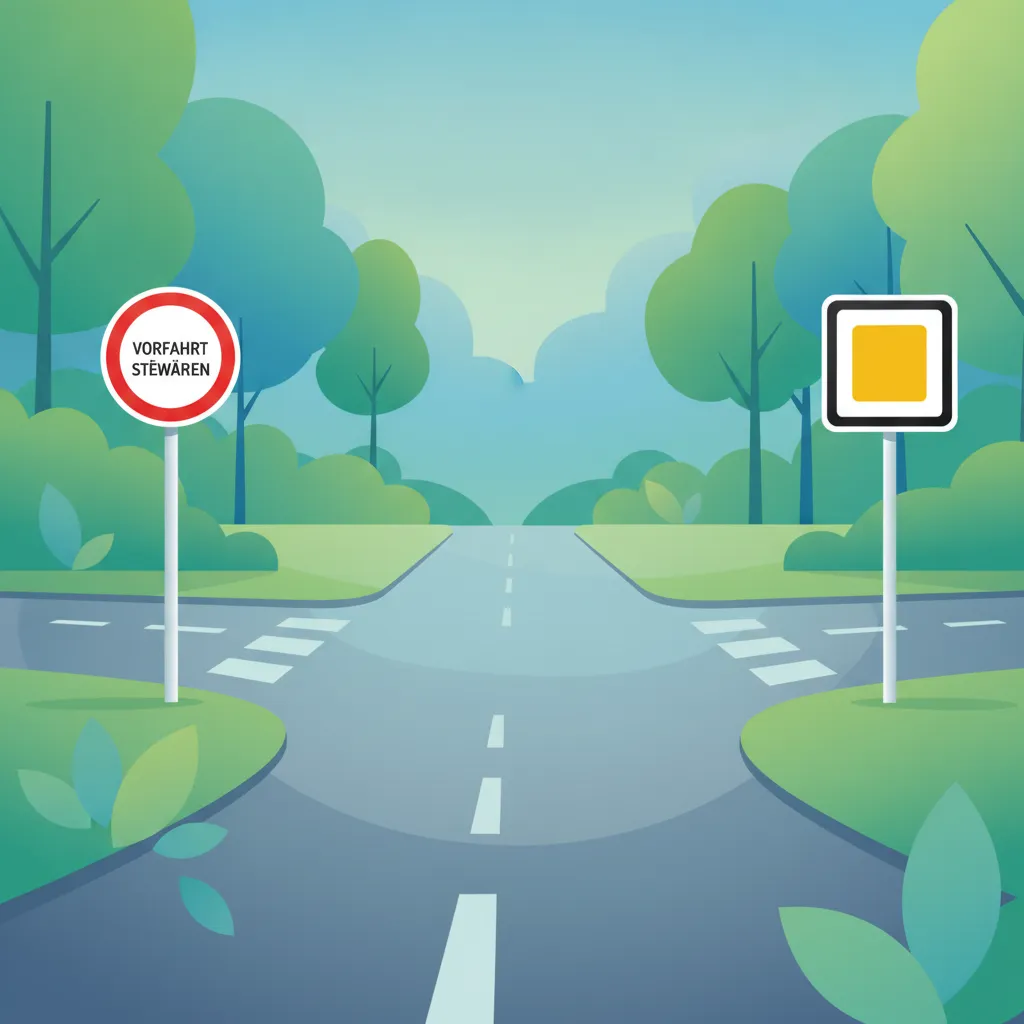
This lesson explains the fundamental concepts of priority that govern traffic at Austrian junctions. It differentiates between having priority ('Vorfahrt') and the duty to yield ('Nachrang'), detailing the signs that establish these rules. Correct application of these principles is critical for preventing collisions at intersections and roundabouts.
This lesson provides clear instructions for maneuvering through single and multi-lane roundabouts. It covers the critical rule of giving way to traffic already in the circle, proper lane selection based on the intended exit, and the correct use of indicators when entering and exiting. Mastering roundabouts is key to efficient and safe travel in modern Austrian traffic systems.

This lesson teaches a safe and systematic process for approaching and crossing intersections. It covers how to correctly assess priority based on signs and general rules, adjust speed appropriately, and perform thorough visual checks. Emphasis is placed on anticipating the actions of other road users to prevent conflicts at junctions.

This lesson addresses the unique challenges and priority rules that apply when interacting with public transport and cyclists at intersections. It clarifies the specific right-of-way regulations for trams, which often have priority over other traffic, and the procedures for navigating around bus stops. The content also covers how to safely manage crossings with dedicated bicycle lanes, ensuring the protection of all road users.

This lesson teaches a safe, methodical process for navigating intersections. It stresses the importance of proper lane positioning on approach, comprehensive visual scans for cross-traffic, pedestrians, and cyclists, and clear communication of intent. Special attention is given to the increased risks associated with left turns across oncoming traffic.
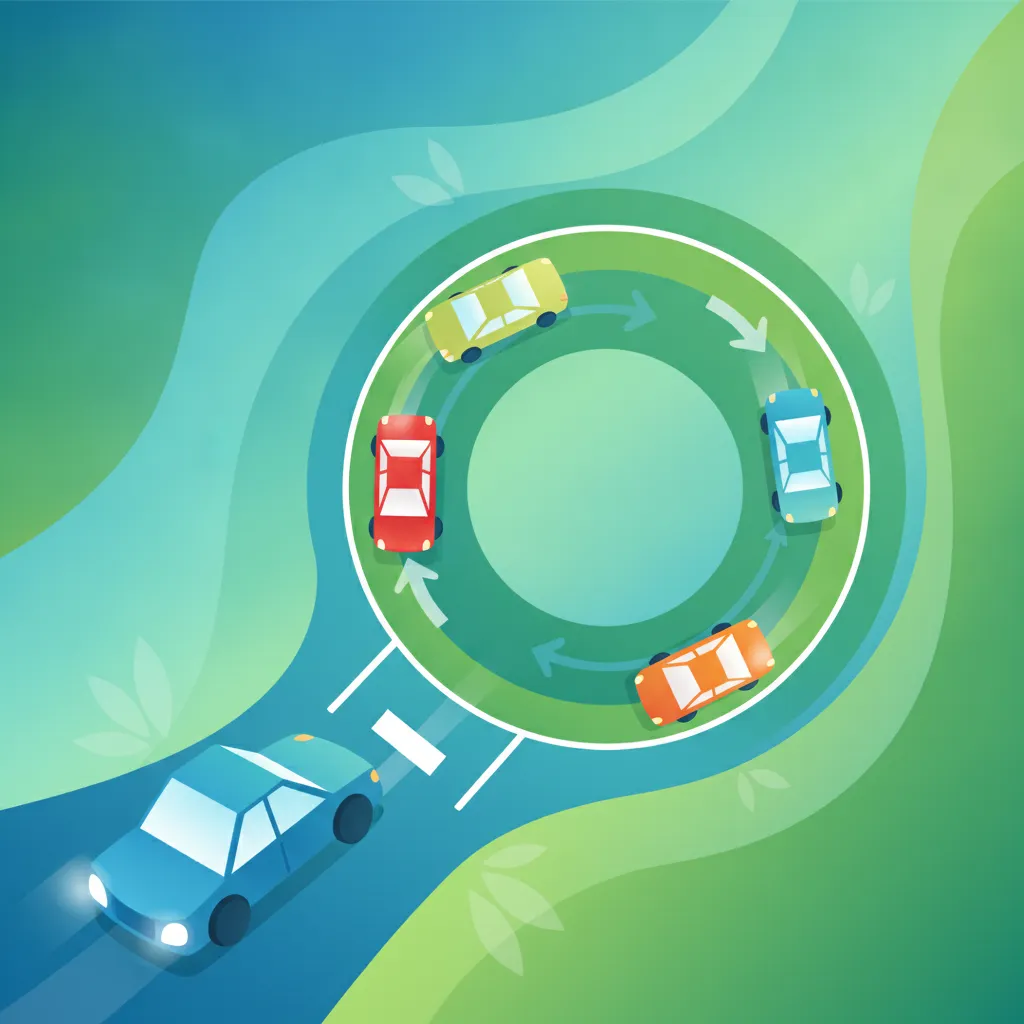
This lesson provides clear instructions on how to safely navigate roundabouts. It explains the critical rule of yielding to traffic already circulating and how to choose the correct lane based on the intended exit. The content also covers proper signaling procedures for entering and exiting the roundabout to communicate intentions clearly.
Understand common errors and violations related to turning at intersections and roundabouts according to Austrian traffic law. This lesson focuses on identifying risky behaviours and reinforcing correct procedures for safer driving.
This lesson provides clear instructions on how to safely navigate roundabouts. It explains the critical rule of yielding to traffic already circulating and how to choose the correct lane based on the intended exit. The content also covers proper signaling procedures for entering and exiting the roundabout to communicate intentions clearly.
This lesson focuses on the rules for navigating roundabouts (Kreisverkehr) in Austria. It highlights the fundamental give-way rule, where traffic entering the roundabout must yield to traffic already circulating within it. Learners will understand the correct procedures for lane selection, signaling intent to exit, and maintaining safe traffic flow, supported by explanations of specific Austrian roundabout signage.
This lesson provides clear instructions for maneuvering through single and multi-lane roundabouts. It covers the critical rule of giving way to traffic already in the circle, proper lane selection based on the intended exit, and the correct use of indicators when entering and exiting. Mastering roundabouts is key to efficient and safe travel in modern Austrian traffic systems.
This lesson provides a comprehensive explanation of Austria's right-of-way laws, which are fundamental to intersection safety. It covers the meaning of different priority signs and clarifies the 'Rechts vor Links' (priority to the right) rule that applies at unmarked junctions. A clear understanding of these rules is essential to prevent conflicts and collisions in urban and rural settings.
This lesson teaches a safe, methodical process for navigating intersections. It stresses the importance of proper lane positioning on approach, comprehensive visual scans for cross-traffic, pedestrians, and cyclists, and clear communication of intent. Special attention is given to the increased risks associated with left turns across oncoming traffic.
This lesson teaches a safe and systematic process for approaching and crossing intersections. It covers how to correctly assess priority based on signs and general rules, adjust speed appropriately, and perform thorough visual checks. Emphasis is placed on anticipating the actions of other road users to prevent conflicts at junctions.

This lesson focuses on the strategic approach to navigating intersections and roundabouts in a large vehicle. It covers the importance of correct lane positioning well in advance of the turn to accommodate the vehicle's size and off-tracking. The lesson also reinforces right-of-way rules and how to safely merge with and cross traffic.
This lesson examines various common intersection layouts, including T-intersections, four-way junctions, and complex multi-lane crossings. It explains how right-of-way is determined in each scenario, whether through traffic signals, stop or yield signs, or the default right-hand rule. Understanding how to identify conflict points and apply the correct priority rule is essential for preventing collisions and ensuring smooth traffic movement.
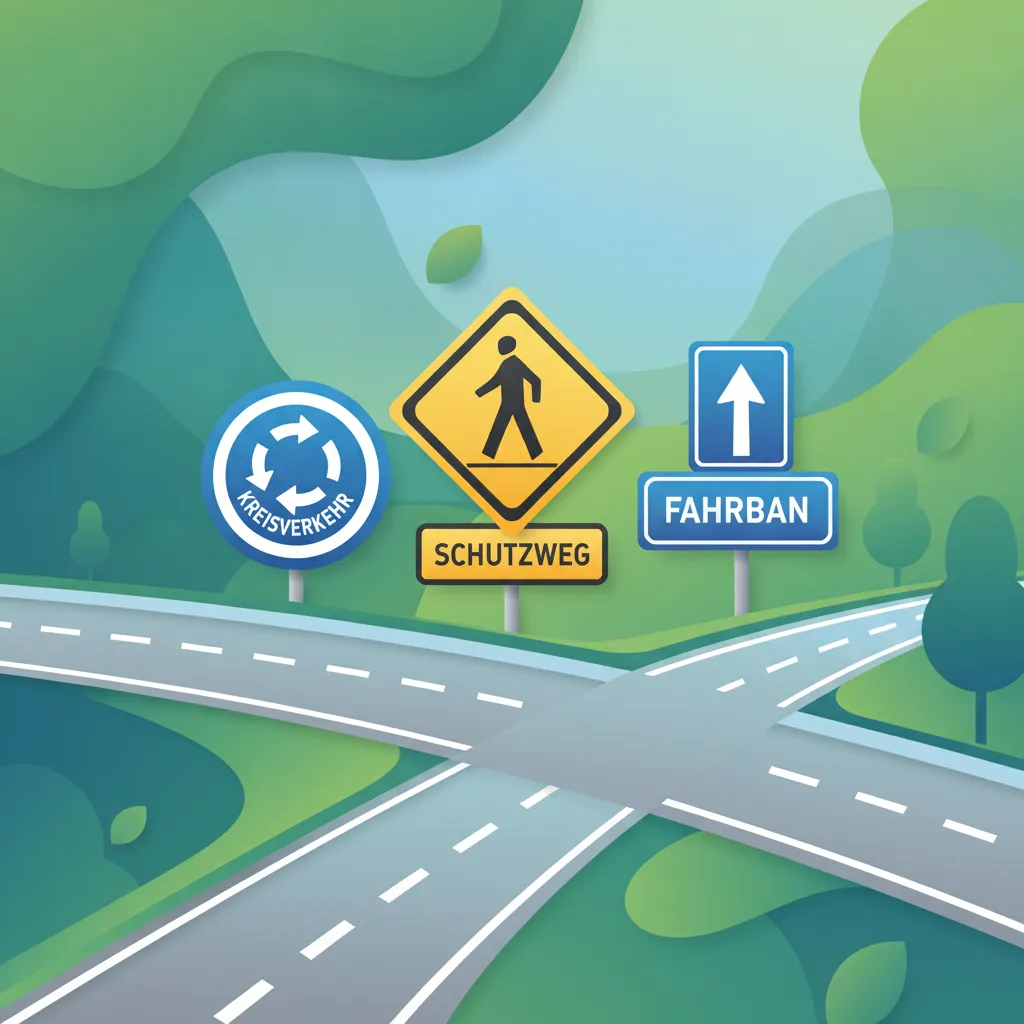
This lesson covers the specific regulations associated with special Austrian road signs and areas. It details the rules for 'Schutzweg' (protected pedestrian crossings), 'Kreisverkehr' (roundabouts), and the distinction between 'Fahrbahn' (road) and 'Fahrstreifen' (lane). Understanding these specific contexts is essential for safe navigation in urban and suburban environments.

This lesson addresses the specific danger of right-hand turns, where cyclists and pedestrians in the vehicle's right-side blind spot are at high risk. It covers the defensive driving techniques required, including careful observation, slow speed, and yielding the right-of-way. These procedures are critical for preventing serious accidents in urban areas.
Find clear answers to common questions learners have about Turning at Intersections and Roundabouts. Learn how the lesson is structured, which driving theory objectives it supports, and how it fits into the overall learning path of units and curriculum progression in Austria. These explanations help you understand key concepts, lesson flow, and exam focused study goals.
Yes. When turning right, you must ensure that you do not endanger or obstruct cyclists riding straight ahead alongside your vehicle. Always perform a shoulder check to the right to verify there is no cyclist in your blind spot before committing to the turn.
In Austria, vehicles already inside the roundabout generally have priority unless signs indicate otherwise. You must yield to traffic in the roundabout before entering, and always signal when exiting the roundabout to inform other drivers of your intentions.
A common mistake is failing to yield to oncoming traffic that is traveling straight or turning right. You must wait for a safe gap in the oncoming flow before completing your turn, ensuring you do not force other drivers to brake or change direction.
Early signaling is a mandatory safety requirement in Austrian traffic law. On the theory exam, scenarios often test your ability to show your intent early enough to influence the behavior of other road users, allowing them to adjust their speed or position accordingly.
Refine your study plan by searching for specific Austrian driving theory practice sets. Pinpoint questions related to particular road rules, signs, or challenge levels, and begin practicing immediately to reinforce your knowledge and excel in your official exam with confidence. Get started with focused revision today.