
This lesson establishes the fundamental traffic regulations unique to heavy goods vehicles on Austrian roads. You will learn how these rules differ from passenger car requirements to ensure safe navigation in diverse traffic conditions. This knowledge is essential for both your theory exam and daily professional operation.

Lesson content overview
Operating heavy goods vehicles (HGVs) and other C-category vehicles on Austrian roads demands a specialized understanding of traffic rules. While many regulations align with those for passenger cars, the significant differences in vehicle size, mass, maneuverability, and stopping distances necessitate specific provisions under the Austrian Road Traffic Act (Straßenverkehrsordnung, StVO). This lesson provides a detailed overview of these essential rules, covering right-of-way, overtaking, lane discipline, speed limits, and stopping procedures.
Mastering these regulations is not only critical for passing your Austrian driving license theory exam for heavy goods vehicles (C, C1, C1E, CE) but also for ensuring the safety of all road users. Proper adherence to these rules helps prevent accidents, minimizes road infrastructure wear, and ensures compliance with Austrian traffic law, allowing for the safe and efficient integration of heavy vehicles into mixed traffic conditions.
The distinct operational characteristics of heavy vehicles—such as their extended stopping distances, limited maneuverability, larger blind spots, and greater kinetic energy—form the fundamental basis for Austria's specialized traffic regulations. These rules are designed to mitigate risks inherent to heavy vehicle operation, protect vulnerable road users, and maintain traffic flow. They are rooted in principles of physics, vehicle dynamics, and legal protection.
A solid understanding of basic Austrian traffic signs, vehicle dimensions, and axle load limits (as covered in Lesson 1.3 and Lesson 2) is a prerequisite for fully grasping the nuances of these general traffic rules. Familiarity with the overall legal framework of the StVO is also assumed.
Key underlying principles include:
Right-of-way, or Vorfahrt in Austria, dictates the legal order in which road users must proceed at intersections or when merging. For heavy vehicles, these rules often come with additional considerations due to their size and stopping capabilities. At uncontrolled intersections, where no traffic signals or explicit priority signs are present, the general "priority-to-right" rule typically applies, meaning vehicles approaching from the right have the right-of-way. However, heavy vehicles must exercise extreme caution.
The Austrian StVO §41 governs right-of-way at intersections. While the priority-to-right rule is fundamental, heavy vehicles must often yield even when they technically have priority if their size or speed prevents safe passage. This is particularly crucial at busy intersections or when the heavy vehicle is turning. Drivers of LGVs must be prepared to yield to passenger cars, cyclists, and pedestrians unless a road sign explicitly grants them priority.
A common mistake for heavy vehicle drivers is assuming "priority-to-right" applies universally without considering the practical implications of their vehicle's size. Even with a priority sign, if proceeding would cause an unsafe situation due as a heavy vehicle, it is safer and legally prudent to yield.
When approaching any intersection in a heavy vehicle, always prioritize safety over strict adherence to right-of-way. Be prepared to stop or slow down, especially if visibility is limited or you are turning.
Overtaking (Überholen) involves passing a slower vehicle by moving into an adjacent lane. Due to their length, acceleration capabilities, and required clear line of sight, heavy vehicles face stricter rules and specific restrictions when performing overtaking maneuvers. The Austrian StVO §38 broadly covers overtaking prohibitions, with additional specific provisions for heavy vehicles in §38a, which often relate to minimum overtaking distances and specific road conditions.
Key rules for heavy vehicle overtaking include:
A common error is to misjudge the required overtaking distance, particularly when driving a fully loaded HGV which has slower acceleration. Overtaking on the wrong side of a double-line marking or failing to check blind spots are dangerous violations that can lead to severe collisions.
Lane discipline (Spurführung) refers to the obligation to stay within designated lanes, avoid unnecessary lane changes, and maintain proper vehicle positioning. For heavy vehicles, strict lane discipline is crucial for maintaining stability, facilitating traffic flow, and preventing unpredictable movements that could surprise or endanger other road users. The Austrian StVO §30 addresses general lane usage rules, with specific implications for heavy vehicles.
Key aspects of lane discipline for heavy vehicles include:
Continuously occupying the leftmost lane on a motorway without actively overtaking is a common violation that impedes traffic flow and can result in fines and points.
Heavy vehicles are subject to maximum permissible speeds (Geschwindigkeitsbegrenzung) that often differ from those for passenger cars. These limits vary by road type, vehicle classification, and whether a trailer is being towed, and are established under StVO §35. These adapted speed limits are essential for aligning driving speed with the vehicle's braking capacity, load stability, and overall safety characteristics.
General speed limits for heavy vehicles in Austria include:
It is a common mistake to assume passenger car speed limits apply or to ignore supplementary signs that indicate lower limits specifically for heavy vehicles. Drivers must always be attentive to road signs and adapt their speed not only to the posted limits but also to current weather conditions, visibility, and vehicle load.
Rules governing where and how heavy vehicles may come to a halt or be parked are crucial for safety, especially regarding visibility and obstruction. These regulations are primarily covered in the Austrian StVO §52 (stopping distances) and other sections related to parking. Due to their length and height, heavy vehicles can easily obstruct sightlines or impede traffic if improperly stopped or parked.
Key stopping and parking regulations for heavy vehicles:
A frequent error is stopping too close to pedestrian crossings or junctions, which creates dangerous blind spots for pedestrians and other drivers, increasing the risk of accidents. Drivers must always consider the substantial footprint of their vehicle when stopping or parking.
Adherence to specific sections of the Austrian StVO is non-negotiable for heavy vehicle operators. Violations not only lead to fines and penalty points but also significantly increase the risk of serious accidents. Understanding the rationale behind these rules helps foster a safer driving mindset.
The application of general traffic rules for heavy vehicles is not static; it must adapt to various environmental and contextual conditions. Understanding these conditional variations is essential for safe and responsible driving.
Understanding the "why" behind traffic rules for heavy vehicles reinforces their importance. Every regulation is designed to create a safer, more predictable, and efficient road environment.
The principles discussed in this lesson on general traffic rules for heavy vehicles are deeply interconnected with other critical areas of your Austrian driving license theory course.
Concept Dependencies:
Future Lessons Building on This Foundation:
To solidify your understanding, consider these common driving scenarios and how the general traffic rules for heavy vehicles apply:
Setting: A rural two-lane road intersects another similar road without any traffic signals or priority signs. Rule: Right-of-Way (Vorfahrt) – At uncontrolled intersections, the general rule of priority-to-right applies. However, heavy vehicles must exercise extreme caution and often yield to ensure safety due to their longer stopping distances. Correct Behavior: The truck driver, approaching the intersection, sees a passenger car coming from the right. Despite potentially reaching the intersection first, the truck driver slows down significantly, prepares to stop, and yields to the passenger car, allowing it to pass safely before proceeding. Explanation: Even when technically having priority, the heavy vehicle's size and inertia make it safer and often necessary to yield to prevent a potential collision, especially if the passenger car driver might misjudge the truck's stopping capability.
Setting: A single carriageway with a noticeable uphill gradient. The road is marked with a solid double white line, indicating a no-overtaking zone. Visibility is limited by the crest of the hill ahead. Rule: Overtaking is prohibited where solid double lines are present. Overtaking on steep uphill gradients also requires a minimum clear sight distance of 150 metres, which is not met here. Correct Behavior: The truck driver recognizes the solid double line and the limited visibility due to the hill crest. The driver maintains a safe following distance behind the slower car, remaining in their lane and refraining from attempting to overtake. Explanation: Overtaking in such conditions is highly dangerous due to the risk of a head-on collision with unseen oncoming traffic and the difficulty for a heavy vehicle to accelerate quickly uphill.
Setting: A three-lane motorway. The posted speed limit for heavy vehicles (with trailers) is 80 km/h. Rule: Heavy vehicles must keep to the rightmost lane unless actively overtaking. They should return to the right lane as soon as an overtaking maneuver is safely completed. Heavy vehicles are often prohibited from using the leftmost lane. Correct Behavior: A loaded truck, traveling at its legal speed limit of 80 km/h, remains in the rightmost lane. If it needs to overtake a slower vehicle, it signals, moves to the middle lane, completes the overtake efficiently, and then signals and returns to the rightmost lane. It avoids using the leftmost lane. Explanation: Maintaining the rightmost lane whenever possible helps to optimize traffic flow for all vehicles, reduces congestion, and prevents the perception of heavy vehicles "blocking" faster traffic.
Setting: An urban street with a zebra crossing (pedestrian crossing) and no traffic lights. Rule: Heavy vehicles must stop at least 5 metres before the pedestrian crossing to ensure clear visibility for both pedestrians and other drivers. Correct Behavior: As the truck approaches the zebra crossing and sees pedestrians waiting, the driver brings the vehicle to a complete stop approximately 5 metres before the crossing. This allows the pedestrians a clear view of approaching traffic and ensures that the truck's large body does not obscure their presence from other drivers. Explanation: Stopping too close to a pedestrian crossing in a heavy vehicle creates a dangerous blind spot, potentially leading to accidents as pedestrians step out from behind the truck without being seen by oncoming traffic, or vice versa.
Setting: A motorway in Austria during a heavy rainstorm. Visibility is poor, and the road surface is very wet. The posted speed limit for trucks is 80 km/h under normal conditions. Rule: Drivers must reduce their speed proportionally to road conditions, even if it means driving below the posted maximum speed limit. Safe speed may be significantly lower than 80 km/h. Correct Behavior: The truck driver assesses the reduced visibility and slick road conditions. They voluntarily reduce their speed to a safer pace, perhaps 60 km/h or even lower, and increase their following distance. They also ensure their headlights (low beam) are on. Explanation: Wet conditions drastically increase stopping distances and the risk of hydroplaning for heavy vehicles. Adhering to the absolute maximum speed limit during adverse weather is irresponsible and unsafe, as it exceeds the vehicle's safe operating envelope for the given conditions.
Successfully operating heavy vehicles on Austrian roads relies on a detailed understanding and consistent application of specific traffic regulations. These rules are not arbitrary but are carefully designed to account for the unique characteristics and limitations of heavy goods vehicles.
Key principles to remember include:
By integrating these rules and their underlying rationales into your driving practice, you will contribute to safer roads for everyone in Austria and ensure successful professional operation of heavy goods vehicles.
This lesson covers essential traffic rules specific to heavy goods vehicles in Austria, highlighting how vehicle mass, dimensions, and blind spots necessitate stricter regulations than those for passenger cars. Key areas include right-of-way principles that often require yielding even with priority, strict overtaking rules with minimum sight distances, mandatory right-lane discipline on motorways, and lower speed limits (50/70/80/100 km/h depending on vehicle type and road). Special attention is given to stopping distances before pedestrian crossings, proper hazard light usage, and conditional adaptations for weather, load, and road type. Five practical scenarios demonstrate correct behavior at intersections, during overtaking, on motorways, at pedestrian crossings, and in adverse weather conditions.
A short set of high-value points that capture the most important learning from this lesson.
Heavy vehicles must often yield at intersections even when technically having priority, due to their extended stopping distances compared to passenger cars.
Overtaking is prohibited where solid double lines exist and requires at least 150 metres clear sight distance on uphill gradients.
On motorways, heavy vehicles must keep to the rightmost lane except when actively overtaking, and are typically prohibited from using the leftmost lane.
Speed limits for heavy vehicles are lower than passenger cars: up to 100 km/h (under 7.5t) or 80 km/h (over 7.5t or with trailer) on motorways, and 70 km/h on rural roads.
Heavy vehicles must stop at least 5 metres before uncontrolled pedestrian crossings to prevent creating dangerous blind spots for pedestrians and other drivers.
Explore all units and lessons included in this driving theory course.
StVO §41 governs right-of-way, §38/§38a covers overtaking prohibitions, §30 addresses lane usage, §35 sets speed limits, and §52 specifies stopping distances.
Hazard warning lights (Gefahrenblinklicht) may only be used when stationary and posing danger, never while moving.
All lane changes require at least 5 seconds of signaling time due to heavy vehicles' larger blind spots (Toter Winkel).
Speed must be adapted to weather conditions, vehicle load, visibility, and road type even if below posted maximum limits.
Heavy vehicles are prohibited from parking within 5 metres of pedestrian crossings and 10 metres of intersections.
Assuming priority-to-right applies universally without adjusting for the heavy vehicle's longer stopping distance, leading to dangerous situations.
Misjudging required overtaking distance when driving a fully loaded HGV with slower acceleration, particularly on single carriageways.
Continuously occupying the middle or left lane on motorways without actively overtaking, impeding faster traffic and risking fines.
Stopping too close to pedestrian crossings or junctions, creating dangerous blind spots for pedestrians and other road users.
Using hazard warning lights while the vehicle is moving, which misleads other drivers about the vehicle's status.
Lesson content overview
A short set of high-value points that capture the most important learning from this lesson.
Heavy vehicles must often yield at intersections even when technically having priority, due to their extended stopping distances compared to passenger cars.
Overtaking is prohibited where solid double lines exist and requires at least 150 metres clear sight distance on uphill gradients.
On motorways, heavy vehicles must keep to the rightmost lane except when actively overtaking, and are typically prohibited from using the leftmost lane.
Speed limits for heavy vehicles are lower than passenger cars: up to 100 km/h (under 7.5t) or 80 km/h (over 7.5t or with trailer) on motorways, and 70 km/h on rural roads.
Heavy vehicles must stop at least 5 metres before uncontrolled pedestrian crossings to prevent creating dangerous blind spots for pedestrians and other drivers.
Explore all units and lessons included in this driving theory course.
StVO §41 governs right-of-way, §38/§38a covers overtaking prohibitions, §30 addresses lane usage, §35 sets speed limits, and §52 specifies stopping distances.
Hazard warning lights (Gefahrenblinklicht) may only be used when stationary and posing danger, never while moving.
All lane changes require at least 5 seconds of signaling time due to heavy vehicles' larger blind spots (Toter Winkel).
Speed must be adapted to weather conditions, vehicle load, visibility, and road type even if below posted maximum limits.
Heavy vehicles are prohibited from parking within 5 metres of pedestrian crossings and 10 metres of intersections.
Assuming priority-to-right applies universally without adjusting for the heavy vehicle's longer stopping distance, leading to dangerous situations.
Misjudging required overtaking distance when driving a fully loaded HGV with slower acceleration, particularly on single carriageways.
Continuously occupying the middle or left lane on motorways without actively overtaking, impeding faster traffic and risking fines.
Stopping too close to pedestrian crossings or junctions, creating dangerous blind spots for pedestrians and other road users.
Using hazard warning lights while the vehicle is moving, which misleads other drivers about the vehicle's status.
Explore search topics learners often look for when studying General Traffic Rules for Heavy Vehicles. These topics reflect common questions about road rules, driving situations, safety guidance, and lesson level theory preparation for learners in Austria.
Browse additional driving theory lessons that cover connected traffic rules, road signs, and common driving situations related to this topic. Improve your understanding of how different rules interact across everyday traffic scenarios.
Explore specific exceptions and advanced scenarios for heavy goods vehicles regarding general traffic rules in Austria. This lesson clarifies situations where standard regulations may differ for trucks, C1, C, and CE license holders.

This lesson details the regulations for heavy goods vehicles on Austria's high-speed road network. It covers the specific speed limits, rules on lane usage (e.g., when overtaking is permitted), and procedures for entering and exiting the motorway. Adherence to these rules is crucial for safety in a fast-paced environment.
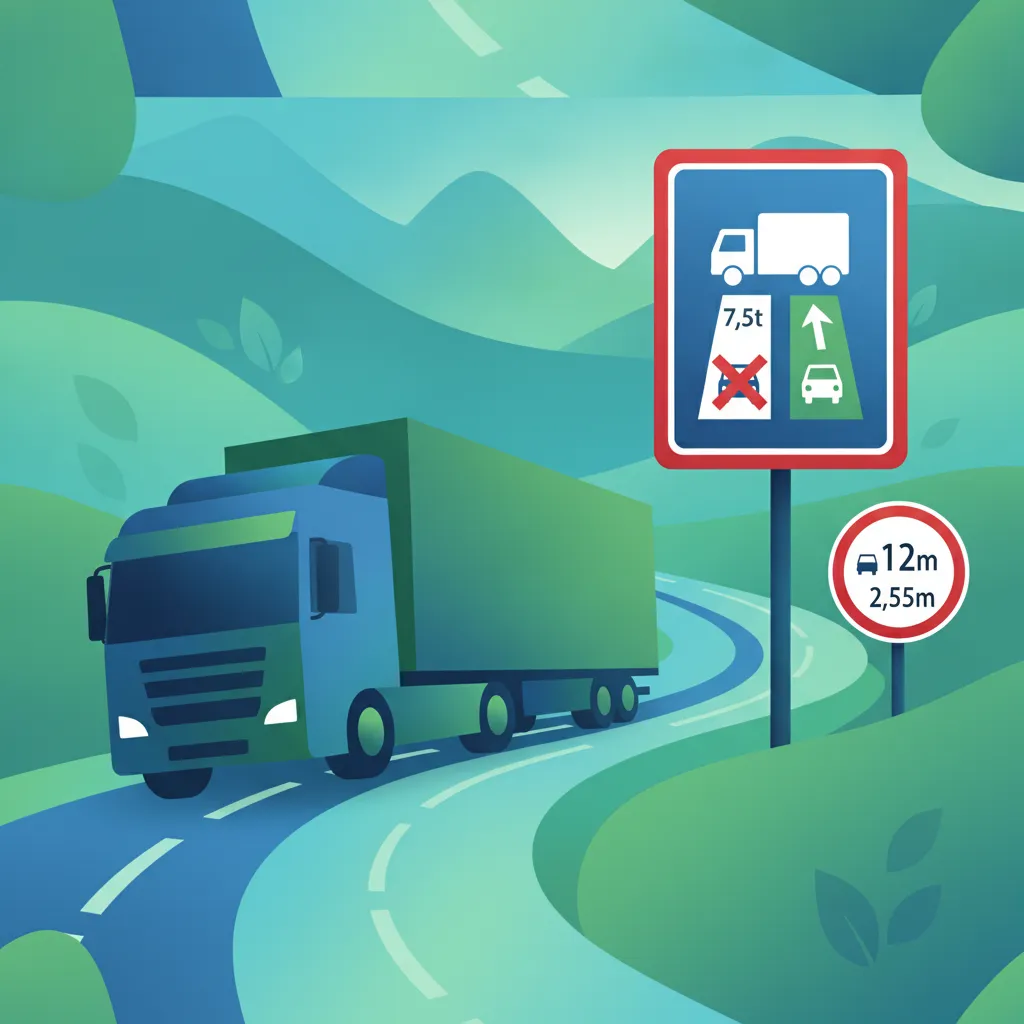
This lesson focuses on the specific Austrian road signs and supplemental plates that apply to heavy goods vehicles. It explains how to interpret signage indicating weight limits, height and width restrictions, lane usage rules, and other critical regulatory information. Correctly understanding these signs is essential for legal compliance and safe navigation on Austria's roads.

This lesson focuses on the legal restrictions concerning a heavy vehicle's dimensions, including maximum height, width, and length. It teaches drivers how to interpret road signs and supplemental plates that indicate these limits. This knowledge is crucial for route planning, especially when navigating under bridges, through tunnels, and on restricted roads.

This lesson covers the specific weight restrictions that apply to sensitive infrastructure like Alpine passes and bridges throughout Austria. It explains how to identify these limits through road signage and incorporate them into route planning. Adhering to these restrictions is vital for preventing structural damage and ensuring safety in challenging terrain.
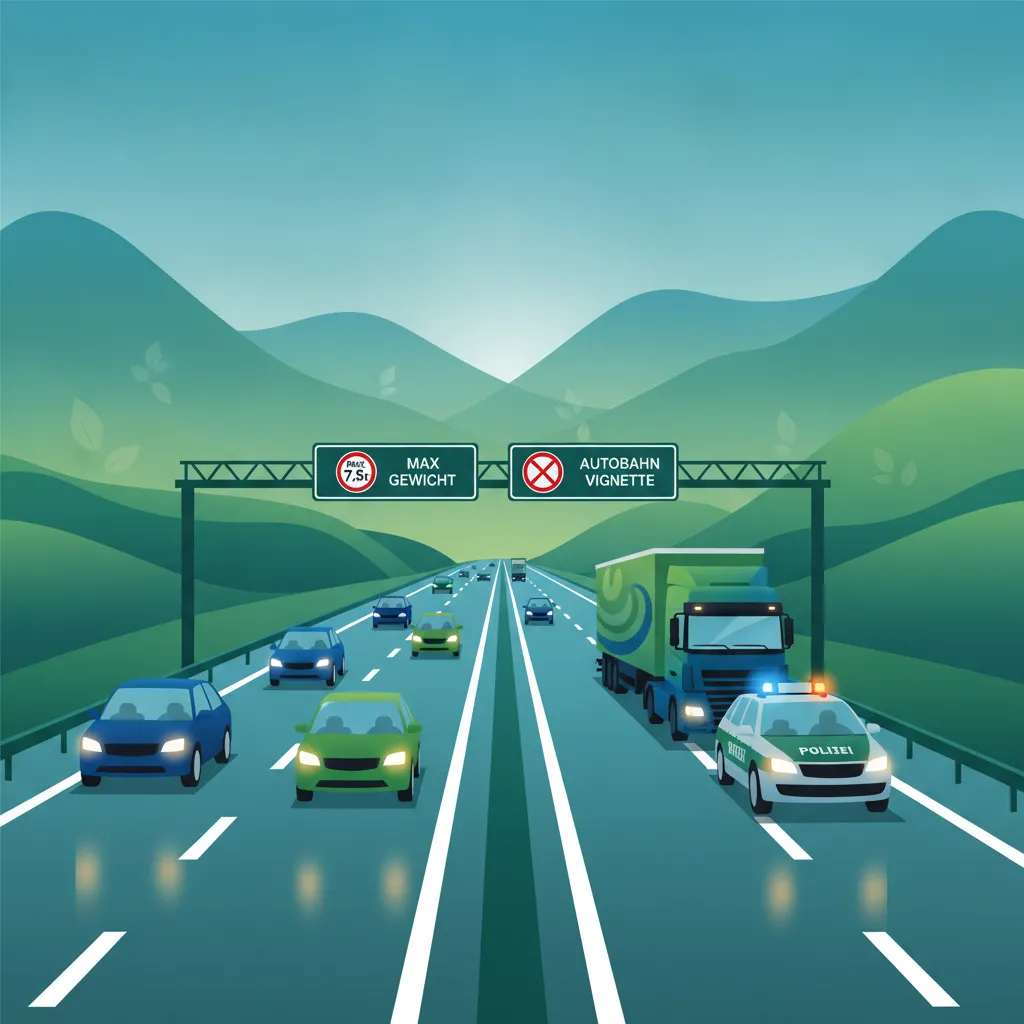
This lesson explains the system of penalties and enforcement for heavy vehicle operations in Austria. It covers the fines and penalty points associated with common traffic violations, such as overloading or insecure loads. Learners will understand the role of authorities in conducting roadside checks and inspections to ensure regulatory compliance.
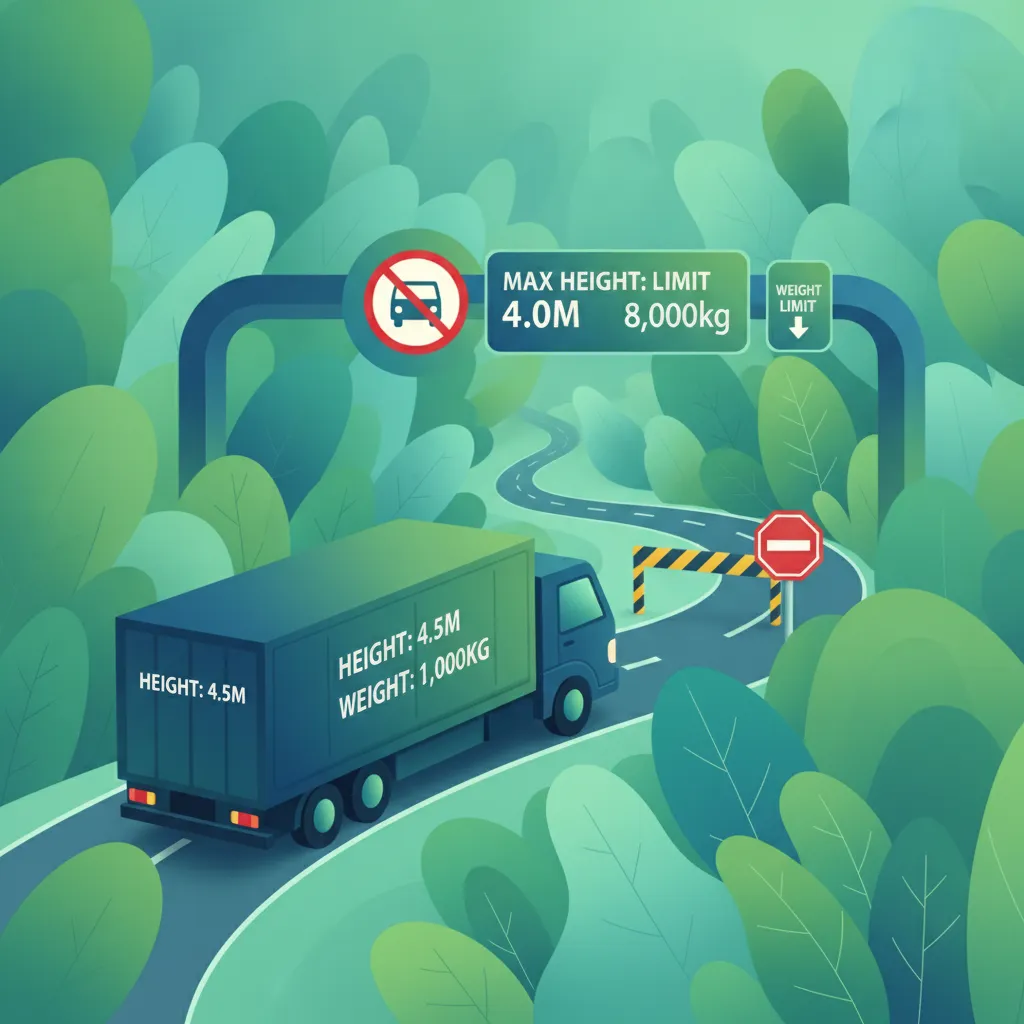
This lesson covers the practical aspects of planning a route for a heavy goods vehicle. It explains how to use maps and specialized GPS systems to identify and avoid roads with height, weight, or other restrictions. Proactive route planning is essential for ensuring an efficient, legal, and safe journey.

This lesson details the legal ramifications of operating an overloaded heavy vehicle in Austria, which include significant fines and penalty points. It also emphasizes the severe safety risks, such as compromised braking performance and increased mechanical stress on the vehicle. Understanding these consequences reinforces the importance of strict adherence to weight limits.

This lesson explains the regulations governing the use of designated delivery and loading zones in urban areas. It covers topics such as time restrictions, the potential need for permits, and the correct way to position the vehicle to minimize traffic disruption. Adhering to these rules is essential for efficient and legal urban logistics.

This lesson outlines the standardized procedure for handling a vehicle breakdown safely. It covers pulling over to a safe location, activating hazard lights, deploying the warning triangle, and wearing a high-visibility vest. It also explains when and how to contact roadside assistance or emergency services.
Understand the dynamics and specific rules for heavy goods vehicles interacting with passenger cars, cyclists, and pedestrians in mixed traffic environments. Focuses on safe merging, right-of-way, and maintaining appropriate distances on Austrian roads.
This lesson details the regulations for heavy goods vehicles on Austria's high-speed road network. It covers the specific speed limits, rules on lane usage (e.g., when overtaking is permitted), and procedures for entering and exiting the motorway. Adherence to these rules is crucial for safety in a fast-paced environment.
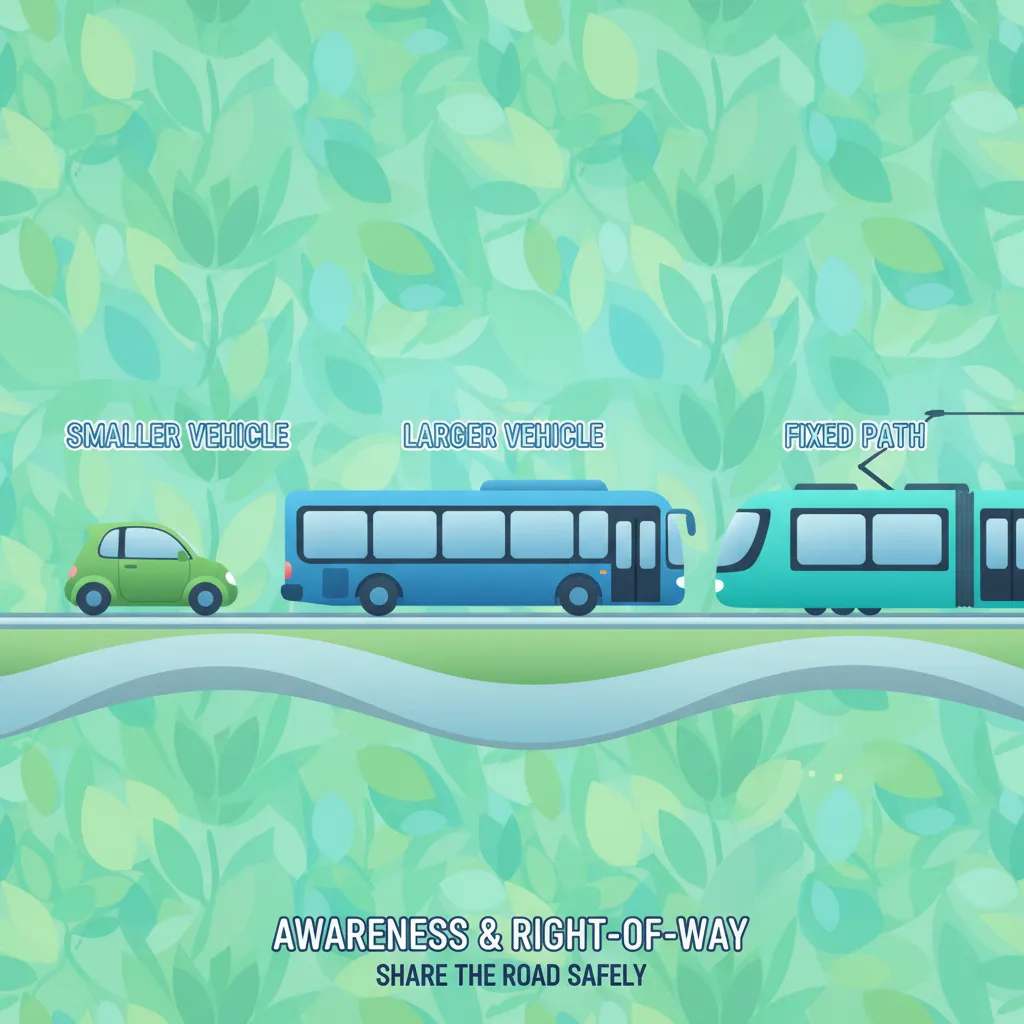
This lesson provides specific guidance for sharing the road with different types of vehicles in Austria. It covers the dangers of large vehicle blind spots, the rules for navigating near buses and dedicated tram tracks, and common conflict points at intersections. Understanding the behavior and limitations of other vehicles is key to safely navigating complex urban environments.
This lesson focuses on the specific Austrian road signs and supplemental plates that apply to heavy goods vehicles. It explains how to interpret signage indicating weight limits, height and width restrictions, lane usage rules, and other critical regulatory information. Correctly understanding these signs is essential for legal compliance and safe navigation on Austria's roads.

This lesson focuses on the specific challenges and safety protocols for operating a heavy vehicle on a construction site. It covers how to communicate with flaggers and site supervisors, navigate around other heavy machinery, and be aware of ground-level personnel. A high level of caution and clear communication is required in these dynamic environments.
This lesson details the legal ramifications of operating an overloaded heavy vehicle in Austria, which include significant fines and penalty points. It also emphasizes the severe safety risks, such as compromised braking performance and increased mechanical stress on the vehicle. Understanding these consequences reinforces the importance of strict adherence to weight limits.
This lesson focuses on the legal restrictions concerning a heavy vehicle's dimensions, including maximum height, width, and length. It teaches drivers how to interpret road signs and supplemental plates that indicate these limits. This knowledge is crucial for route planning, especially when navigating under bridges, through tunnels, and on restricted roads.
This lesson explains the system of penalties and enforcement for heavy vehicle operations in Austria. It covers the fines and penalty points associated with common traffic violations, such as overloading or insecure loads. Learners will understand the role of authorities in conducting roadside checks and inspections to ensure regulatory compliance.
This lesson covers the specific weight restrictions that apply to sensitive infrastructure like Alpine passes and bridges throughout Austria. It explains how to identify these limits through road signage and incorporate them into route planning. Adhering to these restrictions is vital for preventing structural damage and ensuring safety in challenging terrain.
This lesson covers the practical aspects of planning a route for a heavy goods vehicle. It explains how to use maps and specialized GPS systems to identify and avoid roads with height, weight, or other restrictions. Proactive route planning is essential for ensuring an efficient, legal, and safe journey.

This lesson consolidates the legal restrictions on the maximum dimensions and weight for different vehicle combinations in Austria. It covers how to read signs indicating these limits and the importance of compliance for route planning. Adhering to these regulations is essential for legal operation and avoiding fines.
Find clear answers to common questions learners have about General Traffic Rules for Heavy Vehicles. Learn how the lesson is structured, which driving theory objectives it supports, and how it fits into the overall learning path of units and curriculum progression in Austria. These explanations help you understand key concepts, lesson flow, and exam focused study goals.
No, heavy vehicles in categories C and C1 are subject to lower speed limits on motorways and rural roads compared to passenger cars. You must always refer to the specific signs and the legal limits for your vehicle's total mass.
Overtaking with a heavy goods vehicle is prohibited in specific areas marked by road signs, often in tunnels, on certain mountain passes, or in specific sections of the Autobahn where traffic flow is prioritized. Always look for the 'No Overtaking for Trucks' sign.
While the fundamental right-of-way rules remain the same, the physical constraints and stopping distances of heavy vehicles require you to anticipate situations earlier. You must never assume the same acceleration or braking capability as a passenger car.
Heavy vehicles are generally required to use the rightmost lanes. Using the leftmost lane is often strictly prohibited for vehicles over a certain mass or length, except when necessary to follow directional signs at junctions.
Refine your study plan by searching for specific Austrian driving theory practice sets. Pinpoint questions related to particular road rules, signs, or challenge levels, and begin practicing immediately to reinforce your knowledge and excel in your official exam with confidence. Get started with focused revision today.