
Driving a bus on high-speed Austrian roads requires precise lane management and anticipation. This lesson covers the specific traffic rules for motorways and Schnellstraßen, ensuring you understand how to navigate them safely while managing your passenger responsibilities.
Lesson content overview
Driving a bus or coach on Austria's high-speed roads, such as motorways (Autobahnen) and expressways (Schnellstraßen), demands a high level of skill, excellent lane discipline, and meticulous forward planning. As part of the Austrian Driving Theory Course for Bus & Coach Licence (Category D), this lesson provides a comprehensive guide to the specific rules and best practices required to operate large passenger vehicles safely and efficiently in these environments. Understanding these regulations is crucial for protecting your passengers, other road users, and complying with the stringent legal obligations of professional drivers.
Austria's road network includes dedicated high-speed routes designed to facilitate efficient long-distance travel. These are primarily categorised as Motorways (Autobahnen) and Schnellstraßen (Expressways). While both are designed for faster travel, they have distinct characteristics and, crucially, different speed limits and specific rules for heavy vehicles like buses and coaches.
Motorways are typically multi-lane roads with strictly controlled access, no at-grade intersections, and often feature wider lanes and shoulders. Schnellstraßen, while also having limited access, may sometimes have slightly lower design standards or fewer lanes, leading to variations in permissible speeds. For a Category D licence holder, mastering the nuances of driving on these roads is fundamental for ensuring passenger comfort and safety.
Adhering to correct speed limits is paramount for bus and coach drivers due to the increased mass and longer stopping distances of these vehicles. Unlike passenger cars, Category D vehicles have specific, lower maximum speeds on Austria's high-speed road network. These limits are designed to reduce kinetic energy, allowing for adequate reaction time and mitigating the severity of potential accidents.
On Austrian motorways, known as Autobahnen, the general speed limit for buses and coaches is 100 km/h. This is a significant distinction from the 130 km/h typically allowed for passenger cars. On Schnellstraßen, the standard speed limit for Category D vehicles is 80 km/h, unless specific signage indicates otherwise. Drivers must constantly monitor their speed via the speedometer and adjust not only for these legal maximums but also for prevailing road, weather, and traffic conditions. Temporary speed limit signs always supersede the general limits.
Common Misunderstanding: Never assume the general speed limit for passenger cars (e.g., 130 km/h on Autobahnen) applies to buses or coaches. Always adhere to the vehicle-specific limits.
Joining a motorway or Schnellstraße requires a precise and coordinated procedure to safely integrate into the flow of high-speed traffic without causing disruption or hazard. The acceleration lane (on-ramp) is a critical component of this process.
When entering a motorway or Schnellstraße, your primary goal is to accelerate the bus or coach to match the speed of the traffic already present on the main carriageway. The acceleration lane is specifically designed for this purpose. It provides a safe space to increase speed before merging.
Assess Traffic: Before entering the acceleration lane, observe the flow of traffic on the main carriageway. Pay attention to gaps and the speed of oncoming vehicles.
Accelerate Smoothly: Enter the acceleration lane and gradually increase your speed, aiming to reach a speed that is as close as possible to the main traffic flow (e.g., 100 km/h on an Autobahn). Use the full length of the acceleration lane if necessary.
Signal Intention: Once you have matched speed, clearly signal your intention to merge into the rightmost lane of the main carriageway.
Merge Safely: Look for a safe gap in traffic using your mirrors and head checks. Merge smoothly and predictably, avoiding abrupt braking or sudden steering movements. Drivers on the main carriageway are generally expected to facilitate merging, but the merging vehicle has the responsibility to do so safely.
Merging too slowly or without proper signalling are common errors that can lead to dangerous situations, forcing other drivers to brake or swerve. Always prioritise safety over perceived urgency.
Leaving a motorway or Schnellstraße also requires careful planning and execution. The deceleration lane (off-ramp) is used to safely reduce speed away from the main traffic flow.
For bus and coach drivers, early planning is crucial when preparing to exit. Due to the vehicle's length and mass, sudden lane changes or late braking can be hazardous.
Anticipate and Position Early: As soon as you see signs indicating your intended exit, begin planning your lane change. For safety, you must shift to the far right lane at least 500 metres before the exit.
Signal Intention: Clearly signal your intention to exit well in advance.
Enter Deceleration Lane: Move into the deceleration lane smoothly. Once fully within this lane, begin to reduce your speed gradually. Do not brake abruptly while still on the main carriageway.
Adjust Speed for Off-Ramp: Continue to reduce your speed to an appropriate level for the off-ramp curve and any subsequent junctions, often significantly lower than motorway speeds.
Staying in a middle or left lane too long before an exit is a common mistake that can lead to rushed and dangerous lane changes, potentially causing collisions with other vehicles attempting to exit or continuing straight.
Maintaining impeccable lane discipline is a cornerstone of safe driving on high-speed roads, particularly for large vehicles like buses and coaches. Consistent and predictable lane usage ensures smooth traffic flow and reduces the risk of accidents.
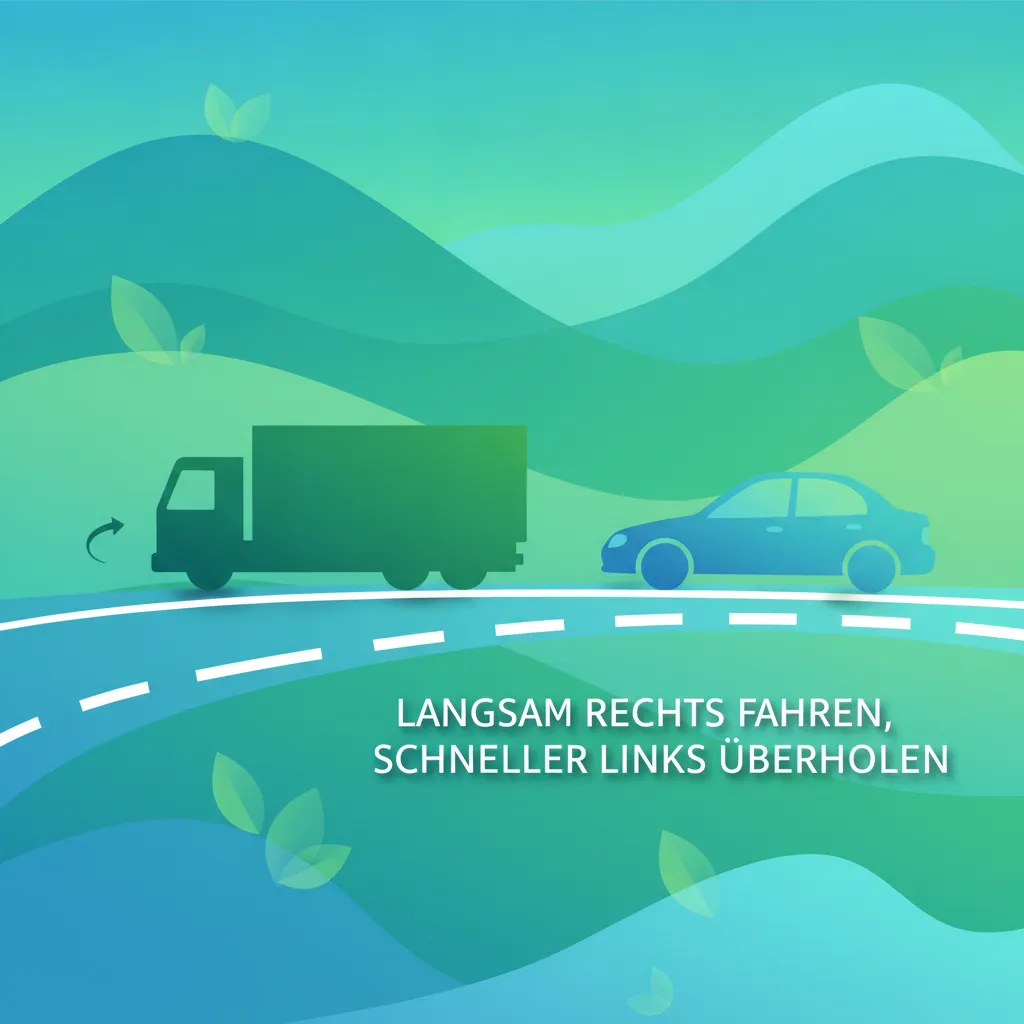
On Austrian motorways and Schnellstraßen, buses and coaches are generally required to keep to the rightmost lane available for continuous travel. This rule is in place to ensure that faster-moving traffic can use the left lanes for overtaking without being impeded by larger, potentially slower vehicles.
You should only use a left lane for overtaking a slower vehicle, and you must return to the rightmost lane as soon as it is safe to do so and practical. Cruising in the left lane, even if traffic is light, is a violation of lane discipline and can lead to frustration and dangerous overtaking maneuvers by other drivers.
The hard shoulder (Pannenstreifen) is a designated area on the far right of motorways and Schnellstraßen, strictly reserved for emergencies or when directed by official traffic signs or authorities. Under no circumstances should it be used for regular driving, overtaking, or as a shortcut to bypass traffic jams. Using the hard shoulder inappropriately can delay emergency services and create significant hazards.
Exceptions for Hard Shoulder Use: You may use the hard shoulder if your vehicle breaks down, in the event of an accident, or if instructed by police or road management signs (e.g., during specific traffic management schemes).
Overtaking is a fundamental maneuver on high-speed roads, but for bus and coach drivers, it must be executed with extreme caution and strict adherence to regulations. The size and length of your vehicle mean that overtaking requires more space and time than for a passenger car.
On Austrian motorways and Schnellstraßen, all overtaking maneuvers must be performed on the left side of the vehicle being passed. Overtaking on the right is strictly prohibited and highly dangerous, as it often catches other drivers by surprise. This rule is critical for maintaining predictable traffic flow and preventing collisions.
When contemplating an overtaking maneuver:
Always consider the overall traffic situation. If there's a long queue of vehicles in the left lane, or if your destination exit is approaching, it may be safer to remain in the right lane even if it means travelling at a slightly slower speed.
Maintaining an adequate following distance is one of the most critical safety measures on high-speed roads, especially when driving a bus or coach. The increased weight and momentum of a large passenger vehicle significantly extend its braking distance compared to a car.
A common guideline for following distance is the "2-second rule." This means you should maintain a minimum gap of two seconds between your vehicle and the vehicle directly in front of you. To apply this rule:
At a speed of 100 km/h, a 2-second gap translates to approximately 55 metres of following distance. This distance provides crucial time for you to react to unexpected events, such as sudden braking by the vehicle ahead, and allows enough space for your bus to come to a safe stop. In adverse weather conditions (rain, snow, ice) or low visibility, this minimum distance should be significantly increased to at least 3 seconds or more.
Insufficient Following Distance: A short following distance dramatically reduces your reaction time and stopping distance, making rear-end collisions far more likely and severe, especially with a heavy bus.
The Rettungsgasse, or emergency corridor, is a mandatory life-saving measure on Austrian motorways and Schnellstraßen. It ensures rapid access for emergency vehicles (police, ambulance, fire services) in the event of a traffic jam or slow-moving traffic. Non-compliance can result in significant fines and, more importantly, can have fatal consequences by delaying critical emergency response.
The formation of a Rettungsgasse is legally required whenever traffic slows to 60 km/h or less, or whenever congestion begins to form. The principle is simple: drivers in the leftmost lane move fully to the left, and drivers in all other lanes move fully to the right. This creates a clear, central lane for emergency vehicles.
For a two-lane road (per direction):
For a three-lane road (per direction):
Anticipate Congestion: As soon as you notice traffic slowing down or beginning to form a queue (even if not yet fully stopped), immediately prepare to form the Rettungsgasse.
Position Correctly: If you are in the leftmost lane, move your bus as far to the left as safely possible, without encroaching on the median. If you are in any other lane, move your bus as far to the right as safely possible, potentially using part of the hard shoulder if necessary and safe.
Maintain Position: Keep the emergency corridor clear until traffic flow normalises. Do not use the Rettungsgasse yourself, even if it appears empty.
Ignoring the Rettungsgasse rule is a serious offense in Austria. Professional drivers, especially those transporting passengers, have an enhanced responsibility to set an example and ensure compliance.
While a dedicated lesson (Module 8.4) covers Austrian tunnel regulations in detail, it's essential to briefly mention some key aspects relevant to high-speed road driving. Tunnels on motorways and Schnellstraßen often have specific rules that supersede general road regulations due to the enclosed environment and potential for rapid hazard development.
Understanding common mistakes helps in avoiding them and adopting best practices for safe high-speed driving with a bus or coach.
Driving conditions on motorways and Schnellstraßen can change rapidly, and a professional bus and coach driver must constantly adapt their driving style to maintain safety.
Driving a bus or coach on Austrian motorways and Schnellstraßen requires a thorough understanding of specific regulations and a commitment to safe, professional driving practices. Key principles include:
Adhering to these rules not only ensures legal compliance but is fundamental to the safety and comfort of your passengers and all other road users.
This lesson covers the essential rules for driving buses and coaches on Austrian high-speed roads, emphasizing the specific speed limits of 100 km/h on motorways and 80 km/h on expressways for Category D vehicles. Key procedures include proper use of acceleration and deceleration lanes when joining or exiting, strict lane discipline requiring buses to keep right except when overtaking, and the mandatory Rettungsgasse formation protocol when traffic slows to 60 km/h or less. The lesson also addresses safe following distances using the 2-second rule (approximately 55m at 100 km/h), correct overtaking procedures (left side only), and the prohibition on using the hard shoulder except in genuine emergencies. Understanding and applying these rules is critical for both passing the Austrian Category D theory exam and ensuring the safety of passengers and other road users on motorways and Schnellstraßen.
A short set of high-value points that capture the most important learning from this lesson.
Category D vehicles are limited to 100 km/h on Austrian Autobahnen and 80 km/h on Schnellstraßen, significantly lower than passenger car limits
Buses must keep to the rightmost lane at all times and only use the left lane for overtaking, returning as soon as it is safe
The Rettungsgasse must be formed whenever traffic slows to 60 km/h or less by moving fully left (left lane) or fully right (all other lanes)
Maintain a minimum 2-second following distance, approximately 55 metres at 100 km/h, and increase it significantly in adverse conditions
Position in the rightmost lane at least 500 metres before your exit and decelerate only within the deceleration lane
Explore all units and lessons included in this driving theory course.
Autobahn speed limit for buses: 100 km/h; Schnellstraße speed limit: 80 km/h (unless otherwise signed)
Rettungsgasse rule: left lane moves fully left, all other lanes move fully right when traffic reaches 60 km/h or less
Exit positioning: shift to the far right lane at least 500 metres before the exit point
Overtaking on Austrian motorways and Schnellstraßen is only permitted on the left side
Hard shoulder may only be used for breakdowns or when directed by authorities, never for regular driving or bypassing traffic
Assuming passenger car speed limits (130 km/h) apply to buses and driving too fast on Autobahnen
Failing to form the Rettungsgasse properly by staying in the centre of the lane instead of moving fully left or right
Cruising in the left lane instead of keeping to the rightmost lane, obstructing faster traffic
Beginning lane changes too close to the exit, potentially causing dangerous late maneuvers or missing the exit entirely
Overtaking on the right side of another vehicle, which is prohibited and highly dangerous on high-speed roads
Lesson content overview
A short set of high-value points that capture the most important learning from this lesson.
Category D vehicles are limited to 100 km/h on Austrian Autobahnen and 80 km/h on Schnellstraßen, significantly lower than passenger car limits
Buses must keep to the rightmost lane at all times and only use the left lane for overtaking, returning as soon as it is safe
The Rettungsgasse must be formed whenever traffic slows to 60 km/h or less by moving fully left (left lane) or fully right (all other lanes)
Maintain a minimum 2-second following distance, approximately 55 metres at 100 km/h, and increase it significantly in adverse conditions
Position in the rightmost lane at least 500 metres before your exit and decelerate only within the deceleration lane
Explore all units and lessons included in this driving theory course.
Autobahn speed limit for buses: 100 km/h; Schnellstraße speed limit: 80 km/h (unless otherwise signed)
Rettungsgasse rule: left lane moves fully left, all other lanes move fully right when traffic reaches 60 km/h or less
Exit positioning: shift to the far right lane at least 500 metres before the exit point
Overtaking on Austrian motorways and Schnellstraßen is only permitted on the left side
Hard shoulder may only be used for breakdowns or when directed by authorities, never for regular driving or bypassing traffic
Assuming passenger car speed limits (130 km/h) apply to buses and driving too fast on Autobahnen
Failing to form the Rettungsgasse properly by staying in the centre of the lane instead of moving fully left or right
Cruising in the left lane instead of keeping to the rightmost lane, obstructing faster traffic
Beginning lane changes too close to the exit, potentially causing dangerous late maneuvers or missing the exit entirely
Overtaking on the right side of another vehicle, which is prohibited and highly dangerous on high-speed roads
Explore search topics learners often look for when studying Motorway and Schnellstraßen Driving Rules. These topics reflect common questions about road rules, driving situations, safety guidance, and lesson level theory preparation for learners in Austria.
Browse additional driving theory lessons that cover connected traffic rules, road signs, and common driving situations related to this topic. Improve your understanding of how different rules interact across everyday traffic scenarios.
Explore complex scenarios and advanced driving techniques for Category D vehicles on Austrian motorways and Schnellstraßen. Understand critical decisions for lane changes, overtaking, and dealing with unexpected traffic situations, building on fundamental rules.

Rural Austrian roads present unique challenges, including lack of markings, tight spaces, and slow-moving agricultural vehicles. This lesson teaches how to read the road ahead, anticipate hazards around blind bends, and use passing places effectively when meeting other large vehicles. It emphasizes adjusting speed to suit the limited visibility and variable road conditions.

Transporting children carries the highest level of responsibility. This lesson covers the specific Austrian rules for school buses, including the use of warning signs and lights. It focuses on developing a mindset of extreme caution, anticipating that children may run into the road unexpectedly, and managing the chaotic traffic environment often found around schools during drop-off and pick-up times.

Driving in tourist hotspots in cities like Salzburg or alpine resorts requires extra patience and vigilance. This lesson explores common unpredictable behaviours, such as pedestrians stepping into the road to take photos or groups of tourists being unaware of traffic. It teaches drivers to slow down, be prepared for anything, and use communication tools like the horn sparingly and appropriately.

Many Austrian towns and city centres feature narrow roads not designed for large vehicles. This lesson provides strategies for assessing tight spaces, positioning the vehicle to maximize clearance, and navigating complex, non-standard junctions. It emphasizes the importance of slow speeds, constant observation, and understanding the vehicle's swept path to avoid contact with buildings, street furniture, and other vehicles.
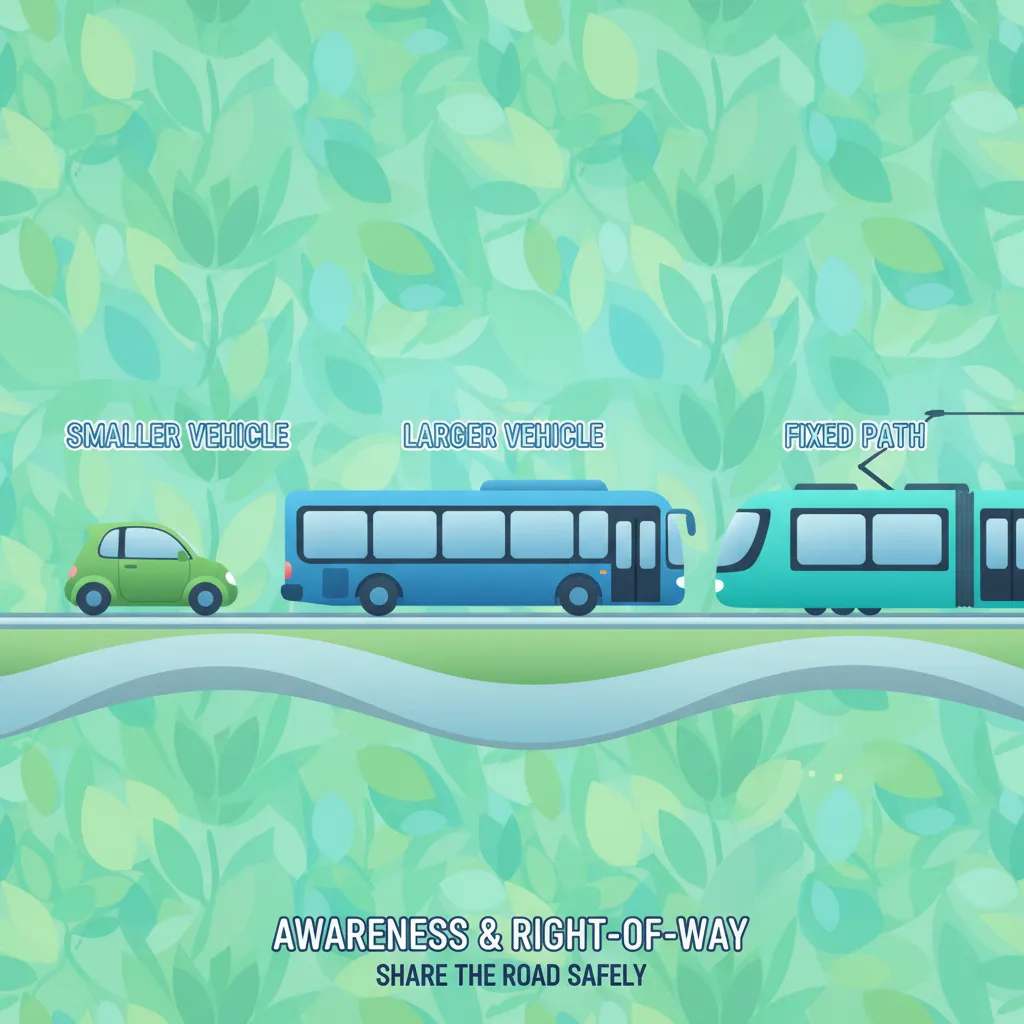
This lesson provides specific guidance for sharing the road with different types of vehicles in Austria. It covers the dangers of large vehicle blind spots, the rules for navigating near buses and dedicated tram tracks, and common conflict points at intersections. Understanding the behavior and limitations of other vehicles is key to safely navigating complex urban environments.

Driving a bus in a busy city like Vienna or Salzburg requires constant forward planning and anticipation. This lesson teaches techniques for maintaining adequate space around the vehicle, positioning correctly for upcoming junctions, and reading the flow of traffic. Adopting a defensive mindset is key to navigating complex urban environments without incident.
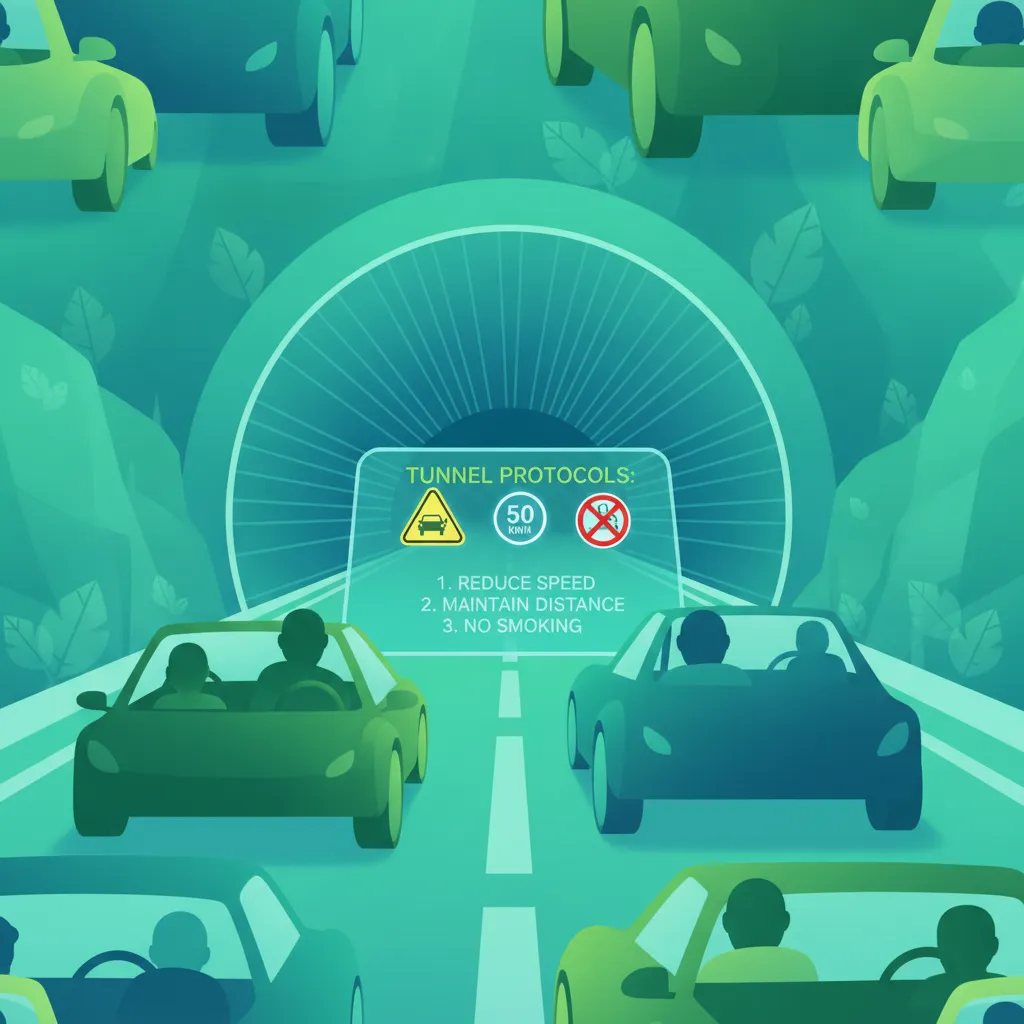
Austria's mountainous terrain means drivers will frequently encounter long tunnels. This lesson details the specific regulations, such as turning on lights and maintaining distance, as well as how to react to tunnel-specific warning signs and signals. Crucially, it covers the correct emergency procedures to follow in the event of a fire, accident, or breakdown inside a tunnel.

This lesson details the specific regulations and best practices for driving in areas with high pedestrian activity, such as bus stops and school zones. It explains the driver's obligation to stop for school buses with flashing lights and to yield to public buses pulling out from a stop. The content emphasizes the requirement to significantly reduce speed in marked school zones to ensure the safety of children.

This lesson provides essential knowledge for using Austria's high-speed road network. It covers the correct procedure for entering via acceleration lanes, maintaining strict lane discipline (keeping right, passing left), and understanding the digital or physical Vignette (toll sticker) requirement. The formation of the 'Rettungsgasse' (emergency corridor) during traffic jams is also a key topic.

Adverse weather demands a significant adjustment in driving technique. This lesson explains the dangers of aquaplaning in heavy rain, the need for drastically reduced speed in fog, and how to anticipate and correct for the effects of strong crosswinds on a high-sided vehicle. It reinforces the importance of increasing following distances and using appropriate lighting to see and be seen.
Learn to identify and avoid frequent errors made by bus and coach drivers on Austrian Autobahnen and Schnellstraßen. This covers misunderstandings of speed limits, lane discipline, Rettungsgasse formation, and safe merging/exiting procedures.
Rural Austrian roads present unique challenges, including lack of markings, tight spaces, and slow-moving agricultural vehicles. This lesson teaches how to read the road ahead, anticipate hazards around blind bends, and use passing places effectively when meeting other large vehicles. It emphasizes adjusting speed to suit the limited visibility and variable road conditions.

Bus lanes are a key tool for public transport efficiency, but they have specific rules. This lesson explains how to identify Austrian bus lanes through road markings and signs, including their hours of operation. It clarifies the regulations for entering or leaving a lane to make turns and identifies other authorized users, such as taxis or cyclists, where permitted.
This lesson details the specific regulations and best practices for driving in areas with high pedestrian activity, such as bus stops and school zones. It explains the driver's obligation to stop for school buses with flashing lights and to yield to public buses pulling out from a stop. The content emphasizes the requirement to significantly reduce speed in marked school zones to ensure the safety of children.
Driving a bus in a busy city like Vienna or Salzburg requires constant forward planning and anticipation. This lesson teaches techniques for maintaining adequate space around the vehicle, positioning correctly for upcoming junctions, and reading the flow of traffic. Adopting a defensive mindset is key to navigating complex urban environments without incident.
Many Austrian towns and city centres feature narrow roads not designed for large vehicles. This lesson provides strategies for assessing tight spaces, positioning the vehicle to maximize clearance, and navigating complex, non-standard junctions. It emphasizes the importance of slow speeds, constant observation, and understanding the vehicle's swept path to avoid contact with buildings, street furniture, and other vehicles.
Transporting children carries the highest level of responsibility. This lesson covers the specific Austrian rules for school buses, including the use of warning signs and lights. It focuses on developing a mindset of extreme caution, anticipating that children may run into the road unexpectedly, and managing the chaotic traffic environment often found around schools during drop-off and pick-up times.
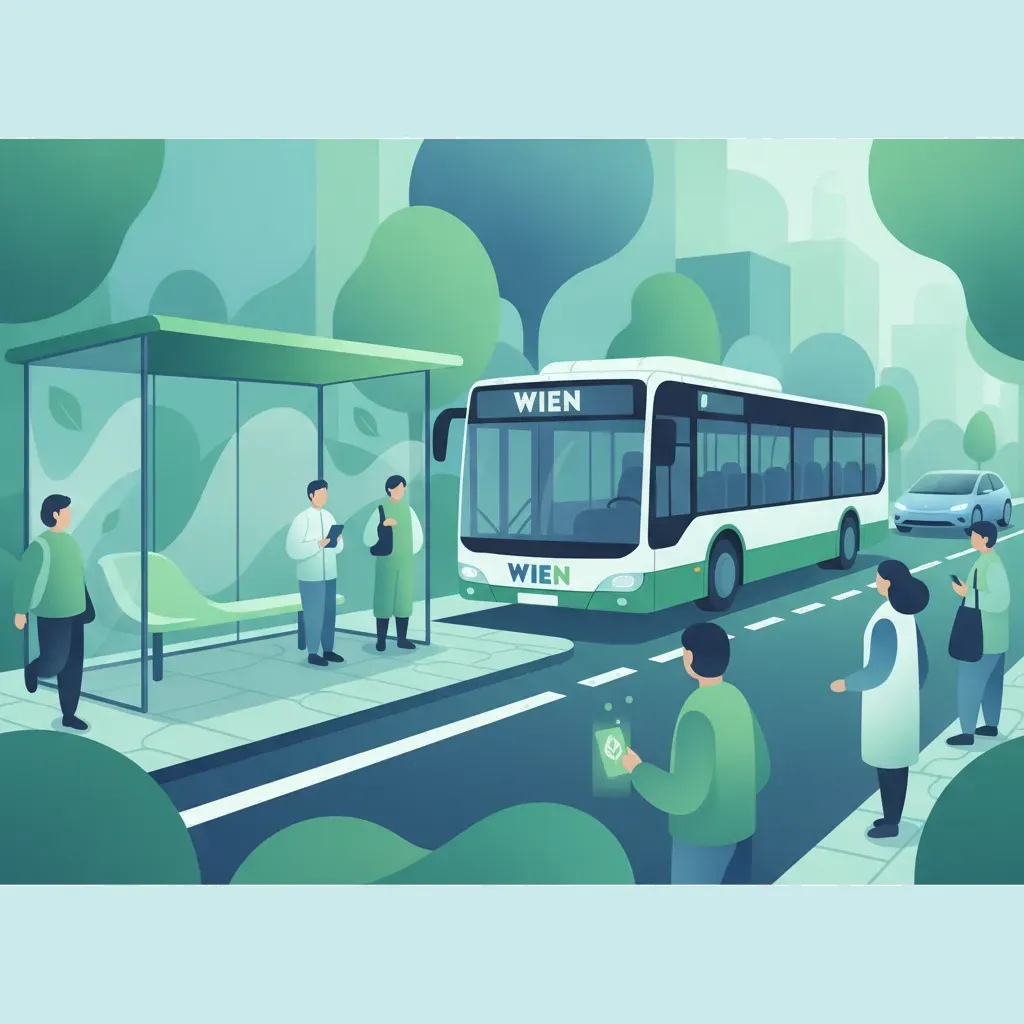
A safe stop begins with a planned approach. This lesson covers how to signal your intentions early, manage your speed, and scan for hazards like pedestrians and cyclists near the stop. It emphasizes the importance of aligning the bus parallel and close to the kerb to minimize the step for passengers, creating a safe platform for boarding and alighting.
This lesson provides specific guidance for sharing the road with different types of vehicles in Austria. It covers the dangers of large vehicle blind spots, the rules for navigating near buses and dedicated tram tracks, and common conflict points at intersections. Understanding the behavior and limitations of other vehicles is key to safely navigating complex urban environments.

Buses and coaches have significant blind spots that pose a major risk to pedestrians, cyclists, and other vehicles. This lesson teaches you how to correctly set up and systematically scan all mirrors, including wide-angle and kerb-view mirrors. It also covers the use of modern camera systems to gain a complete picture of the area surrounding the vehicle, especially before moving off.
Driving in tourist hotspots in cities like Salzburg or alpine resorts requires extra patience and vigilance. This lesson explores common unpredictable behaviours, such as pedestrians stepping into the road to take photos or groups of tourists being unaware of traffic. It teaches drivers to slow down, be prepared for anything, and use communication tools like the horn sparingly and appropriately.
Find clear answers to common questions learners have about Motorway and Schnellstraßen Driving Rules. Learn how the lesson is structured, which driving theory objectives it supports, and how it fits into the overall learning path of units and curriculum progression in Austria. These explanations help you understand key concepts, lesson flow, and exam focused study goals.
The Rettungsgasse must be formed as soon as traffic begins to slow down or crawl, not just when an emergency vehicle is heard. Drivers in the left lane move to the left, while all other lanes move to the right to create an unobstructed path for emergency services.
Yes. Buses are subject to specific speed regulations in Austria which are typically lower than the general passenger car limit. You must be familiar with the maximum permitted speed for your vehicle category as defined by Austrian traffic law.
Not necessarily. In some sections or under certain traffic conditions, heavy vehicles may be restricted from using specific lanes for overtaking. Always watch for road signs indicating lane restrictions for heavy vehicles.
Due to the size and weight of a bus, you must maintain a significantly longer following distance than a private car to ensure enough reaction time for emergency braking. Aim for a time-based gap, usually at least two seconds, adjusted for road conditions and vehicle mass.
Refine your study plan by searching for specific Austrian driving theory practice sets. Pinpoint questions related to particular road rules, signs, or challenge levels, and begin practicing immediately to reinforce your knowledge and excel in your official exam with confidence. Get started with focused revision today.