
This lesson focuses on advanced vehicle manoeuvres that are vital for navigating busy motorways and urban roads with confidence. You will explore the technicalities of merging, managing lane drops, and applying the zipper system correctly to ensure safe traffic flow and pass your Category B theory exam.

Lesson content overview
Navigating Austria's diverse road network, from bustling city streets to high-speed motorways, requires more than just basic driving skills. This lesson delves into advanced manoeuvres crucial for safety and efficiency: merging onto motorways, managing lane drops, and understanding the 'zipper merge' (Reißverschlusssystem) principle. Mastering these complex actions ensures smooth traffic flow, reduces the risk of collisions, and keeps you compliant with Austrian traffic laws.
These manoeuvres demand precise timing, keen judgment, and continuous observation, building upon your understanding of lane discipline, priority rules, and speed management. By the end of this chapter, you will have a comprehensive grasp of how to execute these critical driving tasks safely and cooperatively.
Complex manoeuvres involve integrating your vehicle into an existing traffic stream or adapting to changing lane configurations. The underlying logic for these rules is rooted in safety, physics, and legal intent. Prioritising safety means preventing rear-end and side-impact collisions, which are common during poorly executed lane changes. The physics of relative speed and stopping distances dictate safe merging gaps, especially on high-speed roads. Legally, the road user hierarchy grants priority to traffic already in a lane, preserving orderly and predictable flow.
This knowledge is essential for every driver aiming for their Austrian Category B driver's license, as it directly impacts your ability to drive confidently and responsibly on motorways and in congested urban environments.
Merging onto a motorway is a manoeuvre that transitions your vehicle from a lower-speed access point to a higher-speed traffic flow. This process typically involves using an acceleration lane to match the speed of the main carriageway before integrating smoothly. It requires careful observation, precise speed control, and clear communication with other drivers.
An acceleration lane is a dedicated lane designed to allow vehicles to increase their speed to match that of the traffic already on the main road, such as a motorway (Autobahn) or an express road (Schnellstraße). This lane is a critical component for safe merging. It is imperative to use the entire length of the acceleration lane to build up sufficient speed. Do not slow down or stop at the beginning or middle of the acceleration lane unless traffic in the main flow forces you to.
Drivers must accelerate decisively to achieve a speed that is as close as possible to the speed of the vehicles in the target lane. This speed matching minimises the speed differential, making it easier and safer to blend into the traffic.
Executing a merge requires a structured approach to ensure safety and efficiency:
Observation (Spiegel und Schulterblick): As you enter the acceleration lane, continuously scan your mirrors (rear-view and side mirrors) to identify gaps in the target lane. Crucially, perform a blind spot check (Schulterblick) by quickly glancing over your shoulder in the direction of the merge to check for vehicles not visible in your mirrors.
Signalling Intent: Signal your intention to merge into the target lane using your turn indicator. In Austria, you must signal for at least 3 seconds before initiating the merge. This gives other drivers sufficient warning to anticipate your manoeuvre and adjust their speed or position if necessary.
Speed Matching and Gap Assessment: Accelerate to match the speed of the traffic you intend to join. Simultaneously, assess the distance and relative speed of approaching vehicles in the target lane to identify a safe and adequate gap. A safe gap provides enough space for your vehicle to enter without forcing other drivers to brake or swerve.
Smooth Lane Transition: Once a safe gap is identified and your speed matches the flow, steer smoothly and decisively into the target lane. Avoid abrupt movements or hesitations that could disrupt traffic flow.
Maintain Safe Following Distance: After merging, immediately establish and maintain a minimum safe following distance, typically a two-second gap, to the vehicle in front of you. This provides ample time to react to sudden changes in traffic conditions.
Speed matching is fundamental to merging safety. If you merge at a speed significantly slower than the main traffic flow, you become an obstacle, forcing others to brake, which can lead to rear-end collisions. Conversely, merging too fast without a clear gap can lead to dangerous cut-ins.
Gap assessment involves judging both the distance and the speed of vehicles around you. On motorways, where speeds are high, even a seemingly large gap can close quickly. A useful rule of thumb is to look for a gap that is at least four to six seconds long, allowing for sufficient reaction time and space for your vehicle. Remember that a heavily loaded vehicle or one towing a trailer will require a longer acceleration time and thus a larger gap for safe merging.
Always remember: traffic already on the motorway has priority over vehicles entering from an acceleration lane. You must yield to them.
Lane drops, also known as lane closures or lane ends, occur when a traffic lane discontinues, requiring vehicles in that lane to merge into an adjacent, continuing lane. These situations are common on multi-lane roads, during roadworks, or at exits. Identifying and responding to lane drops correctly is vital for maintaining traffic flow and preventing accidents.
Lane drops are typically announced by various indicators:
Lane drops can be gradual, providing ample warning and distance for merging, or abrupt, often due to unexpected roadworks, demanding quick and decisive action.
When a lane drops, drivers in the lane that is ending must yield to traffic already in the continuing lane. This means you do not have automatic priority. You must adjust your speed and position to find a safe gap and merge without forcing the continuing traffic to brake or swerve. Signalling your intention is, again, mandatory and should be done early (at least 3 seconds before merging).
When approaching a lane drop, it's often more efficient and safer to utilise the full length of the closing lane before merging, especially in congested conditions, as this is the basis of the zipper merge principle.
Early observation is paramount when approaching lane drops. By noticing the signs and road markings well in advance, you can prepare for the merge, assess traffic conditions, and identify a suitable gap without rushing. This proactive approach reduces stress and the likelihood of sudden manoeuvres. Always check your blind spots before moving into the adjacent lane.
The Zipper Merge, known in Austria as the Reißverschlusssystem (zipper system), is a systematic method for merging traffic in lane closure zones. Instead of merging early, drivers are encouraged to use both lanes up to the point of the merge and then alternate entry into the single continuing lane, much like the teeth of a zipper interlocking.
The zipper merge is a cooperative driving technique primarily used in areas of lane closure due to roadworks or other obstructions. It aims to maximise road capacity and minimise congestion by ensuring both lanes are used equally until the final merge point. This prevents one lane from becoming excessively long while the other remains underutilised.
While not always explicitly mandated by a single sign code, the principle of cooperative merging and maintaining efficient traffic flow is supported by Austrian traffic law, particularly StVO § 7 (2), which encourages smooth and considerate driving behaviour. Specific signage in roadwork zones often indicates that drivers should merge alternately.
The primary benefits of the zipper merge include:
A common misconception is that drivers in the ending lane are "cutting in" or being aggressive. However, when applied correctly, the zipper merge is the most efficient and safest method for managing lane closures, especially in congested conditions. Drivers attempting to merge too early often create longer queues in one lane and hinder the overall flow.
Yielding is a fundamental principle in traffic law, defining situations where one road user must give way to another to avoid a conflict. It involves adjusting your speed or position to allow another vehicle to proceed safely. In the context of complex manoeuvres, yielding is critical for preventing collisions at merging points and lane drops.
As discussed, traffic entering a main carriageway from an acceleration lane or a side road must yield to vehicles already travelling on the main road. This is a non-negotiable rule designed to maintain the continuous flow of higher-speed traffic. Drivers on the main road should not have to brake or swerve for merging traffic.
Similarly, when a lane ends, drivers in the closing lane must yield to traffic in the continuing lane. Even in a zipper merge situation, while cooperation is expected, the initial priority still rests with the traffic that is continuing straight in its established lane, until the alternating merge pattern is established.
In Austria, the principle of yielding is enshrined in the Road Traffic Act (Straßenverkehrsordnung - StVO). Specific articles govern these situations:
This section of the Austrian Road Traffic Act broadly governs situations where drivers must yield, including specific provisions for entering main roads and merging traffic. It legally obligates drivers to give way to others who have priority.
Failing to yield when required is a serious traffic offence and a common cause of accidents, particularly side-impact collisions or rear-end incidents if other drivers have to brake sharply.
Adherence to specific Austrian traffic regulations is not just about avoiding penalties; it's about ensuring the safety of all road users and contributing to efficient traffic flow.
The most crucial rule for merging drivers is the mandatory requirement to yield to traffic already travelling on the main lane. This applies whenever you enter a motorway, an express road, or any road where you are joining an existing traffic stream. You must not force your way in. This rule is clearly stated in StVO § 41, ensuring that the primary flow of traffic is maintained without disruption or danger from merging vehicles. Correct execution involves accelerating to match speed, checking for a safe gap, and merging only when it is truly safe and does not impede others.
Under StVO § 46, drivers are legally obligated to indicate their intention to merge using a turn signal for at least three seconds before commencing the manoeuvre. This advanced warning is vital. It allows other drivers in the target lane sufficient time to register your intent, assess the situation, and, if necessary, adjust their speed or lane position to facilitate your merge. A late or absent signal can lead to confusion, sudden braking, or dangerous last-minute reactions from other road users.
While not always an absolute legal mandate in every situation, the zipper merge (Reißverschlusssystem) is a highly recommended practice in lane closure zones and often specifically indicated by signage in roadwork areas. StVO § 7 (2) supports the underlying principle of cooperative and considerate driving, which forms the basis of the zipper merge. This section encourages drivers to act in a way that does not impede or endanger others, which is precisely what the zipper merge aims to achieve by optimising traffic flow and preventing unnecessary congestion. In areas with specific "zipper merge" signage, drivers are expected to alternate entry.
StVO § 5 generally addresses the requirement to maintain a safe distance from other vehicles. While merging, this translates into ensuring that you have at least a two-second following distance to the vehicle ahead after you have completed your merge. This ensures you have adequate reaction time and stopping distance if the traffic ahead suddenly slows or stops. Failing to establish a safe distance immediately after merging can lead to rear-end collisions.
The successful execution of complex manoeuvres like merging and navigating lane drops is not static; it must adapt to various environmental and vehicle-specific conditions.
While less common directly on motorways, merging and lane drop scenarios can occur on other multi-lane roads where vulnerable road users such as cyclists or motorcyclists might be present. Always assume they may be harder to see due to their smaller profile. In such cases, extreme caution, larger safety margins, and an even more thorough blind spot check are essential. Never assume a vulnerable user has seen you or will yield.
Understanding the scientific and psychological aspects behind traffic rules can deepen your appreciation for their importance and improve your driving decisions.
Human reaction time is approximately one second. This seemingly small delay means that at higher speeds, a considerable distance is covered before a driver even begins to react to a hazard. For instance, at 100 km/h, you travel roughly 28 metres in one second. This inherent delay, combined with the vehicle's braking distance (which increases exponentially with speed), dictates the minimum safe distances and gaps required for safe merging. Rushing a merge or not leaving enough space critically reduces your safety margin.
The 'zipper merge' (Reißverschlusssystem) specifically leverages the psychology of cooperation. When drivers understand and apply this principle, traffic flow is smoother, and driver frustration is reduced. Knowing that other drivers are expected to yield alternately creates a predictable and fair system. Conversely, aggressive or selfish merging, such as blocking the ending lane early or refusing to let others in, increases frustration, promotes road rage, and exacerbates congestion. Cooperative behaviour is key to collective road safety and efficiency.
Mastering complex manoeuvres like merging, navigating lane drops, and executing the zipper merge is a hallmark of a skilled and responsible driver. These actions are not merely technical; they embody the principles of defensive, cooperative, and anticipatory driving.
To summarise:
By integrating these principles and practices into your driving, you will not only reduce your risk of accidents but also contribute significantly to the overall efficiency and safety of Austrian roads.
This lesson covers the essential techniques for executing complex driving manoeuvres in Austrian traffic, focusing on motorway merging, lane drops, and the cooperative zipper merge system (Reißverschlusssystem). Safe merging requires using the full acceleration lane to match traffic speed, performing thorough observation including blind spot checks, and signalling for at least 3 seconds before entry. In lane closure zones, the zipper merge principle promotes efficient traffic flow by having drivers from both lanes alternate at the merge point. Key legal requirements from Austrian traffic law (StVO) mandate yielding to existing traffic, proper signalling, and maintaining safe following distances, with specific adjustments needed for adverse weather, reduced visibility, or heavily loaded vehicles.
A short set of high-value points that capture the most important learning from this lesson.
Traffic already on the motorway always has priority; you must yield when merging from an acceleration lane.
Use the full length of the acceleration lane to match motorway speed before merging, never stop or slow at its beginning.
The zipper merge (Reißverschlusssystem) is the recommended cooperative technique for lane closures, where drivers from both lanes alternate merging at the convergence point.
Signal your intention to merge at least 3 seconds before initiating the manoeuvre to give other drivers adequate warning.
Environmental factors like weather, visibility, and vehicle load significantly affect acceleration capability and required merging gaps.
Explore all units and lessons included in this driving theory course.
StVO § 41 mandates yielding to main road traffic; StVO § 46 requires at least 3 seconds of signalling before merging.
Perform both mirror checks and a blind spot check (Schulterblick) before every lane change or merge.
A safe merging gap should be at least 4-6 seconds long to accommodate reaction time and speed differential.
In lane drops, drivers in the ending lane must yield to traffic already in the continuing lane.
Heavy loads or trailers drastically reduce acceleration, requiring longer acceleration lanes and larger gaps.
Stopping at the end of an acceleration lane instead of using it fully to build speed, creating a hazardous obstacle.
Failing to signal before merging, depriving other drivers of crucial information about your intended manoeuvre.
Merging at a speed significantly lower than traffic flow, forcing other vehicles to brake abruptly.
Not performing a proper blind spot check (Schulterblick), risking collision with vehicles in mirrors' blind spots.
Merging too early during zipper merge situations instead of using the full lane length up to the merge point.
Lesson content overview
A short set of high-value points that capture the most important learning from this lesson.
Traffic already on the motorway always has priority; you must yield when merging from an acceleration lane.
Use the full length of the acceleration lane to match motorway speed before merging, never stop or slow at its beginning.
The zipper merge (Reißverschlusssystem) is the recommended cooperative technique for lane closures, where drivers from both lanes alternate merging at the convergence point.
Signal your intention to merge at least 3 seconds before initiating the manoeuvre to give other drivers adequate warning.
Environmental factors like weather, visibility, and vehicle load significantly affect acceleration capability and required merging gaps.
Explore all units and lessons included in this driving theory course.
StVO § 41 mandates yielding to main road traffic; StVO § 46 requires at least 3 seconds of signalling before merging.
Perform both mirror checks and a blind spot check (Schulterblick) before every lane change or merge.
A safe merging gap should be at least 4-6 seconds long to accommodate reaction time and speed differential.
In lane drops, drivers in the ending lane must yield to traffic already in the continuing lane.
Heavy loads or trailers drastically reduce acceleration, requiring longer acceleration lanes and larger gaps.
Stopping at the end of an acceleration lane instead of using it fully to build speed, creating a hazardous obstacle.
Failing to signal before merging, depriving other drivers of crucial information about your intended manoeuvre.
Merging at a speed significantly lower than traffic flow, forcing other vehicles to brake abruptly.
Not performing a proper blind spot check (Schulterblick), risking collision with vehicles in mirrors' blind spots.
Merging too early during zipper merge situations instead of using the full lane length up to the merge point.
Explore search topics learners often look for when studying Complex Manoeuvres: Merging, Lane Drops, and Yielding. These topics reflect common questions about road rules, driving situations, safety guidance, and lesson level theory preparation for learners in Austria.
Browse additional driving theory lessons that cover connected traffic rules, road signs, and common driving situations related to this topic. Improve your understanding of how different rules interact across everyday traffic scenarios.
Explore detailed explanations and real-world scenarios for merging onto motorways and handling lane changes in Austria. Understand complex manoeuvres like lane drops and the zipper merge for safe traffic integration, as part of your driving theory preparation.

This lesson covers the principles of proper lane discipline, including maintaining a correct and steady position within a lane and adhering to the 'keep right' rule on multi-lane roads. It details the safe and systematic protocol for changing lanes, which involves checking mirrors, signaling intention, performing a blind spot check, and then smoothly executing the manoeuvre. Correct lane usage is essential for maintaining predictable and safe traffic flow.

This lesson provides a comprehensive guide to driving on high-speed motorways (Autobahnen) and expressways (Schnellstraßen). It details the correct procedure for using the acceleration lane to merge safely, the principles of strict lane discipline, and strategies for choosing a safe speed relative to traffic flow and conditions. The lesson also explains the rules for using exit ramps and the purpose of the hard shoulder (Pannenstreifen).

This lesson explains how to use different positions within a lane to maximize visibility, create safety buffers, and plan escape routes. It introduces the concept of anticipative riding, which involves actively scanning for potential hazards and predicting the actions of other drivers. Strategic positioning is a dynamic skill that allows a rider to manage space and time effectively in changing traffic.

This lesson provides essential knowledge for using Austria's high-speed road network. It covers the correct procedure for entering via acceleration lanes, maintaining strict lane discipline (keeping right, passing left), and understanding the digital or physical Vignette (toll sticker) requirement. The formation of the 'Rettungsgasse' (emergency corridor) during traffic jams is also a key topic.

This lesson details the various types of road markings and their significance for guiding traffic and ensuring safety. Learners will understand the rules associated with solid versus broken lane lines, the instructions provided by directional arrows painted on the road, and the purpose of stop lines and pedestrian crossing markings. The content emphasizes how these markings work in conjunction with signs to regulate traffic flow and define legal lane usage.

Bus lanes are a key tool for public transport efficiency, but they have specific rules. This lesson explains how to identify Austrian bus lanes through road markings and signs, including their hours of operation. It clarifies the regulations for entering or leaving a lane to make turns and identifies other authorized users, such as taxis or cyclists, where permitted.
This lesson provides clear instructions for maneuvering through single and multi-lane roundabouts. It covers the critical rule of giving way to traffic already in the circle, proper lane selection based on the intended exit, and the correct use of indicators when entering and exiting. Mastering roundabouts is key to efficient and safe travel in modern Austrian traffic systems.

This lesson provides a comprehensive explanation of Austria's right-of-way laws, which are fundamental to intersection safety. It covers the meaning of different priority signs and clarifies the 'Rechts vor Links' (priority to the right) rule that applies at unmarked junctions. A clear understanding of these rules is essential to prevent conflicts and collisions in urban and rural settings.
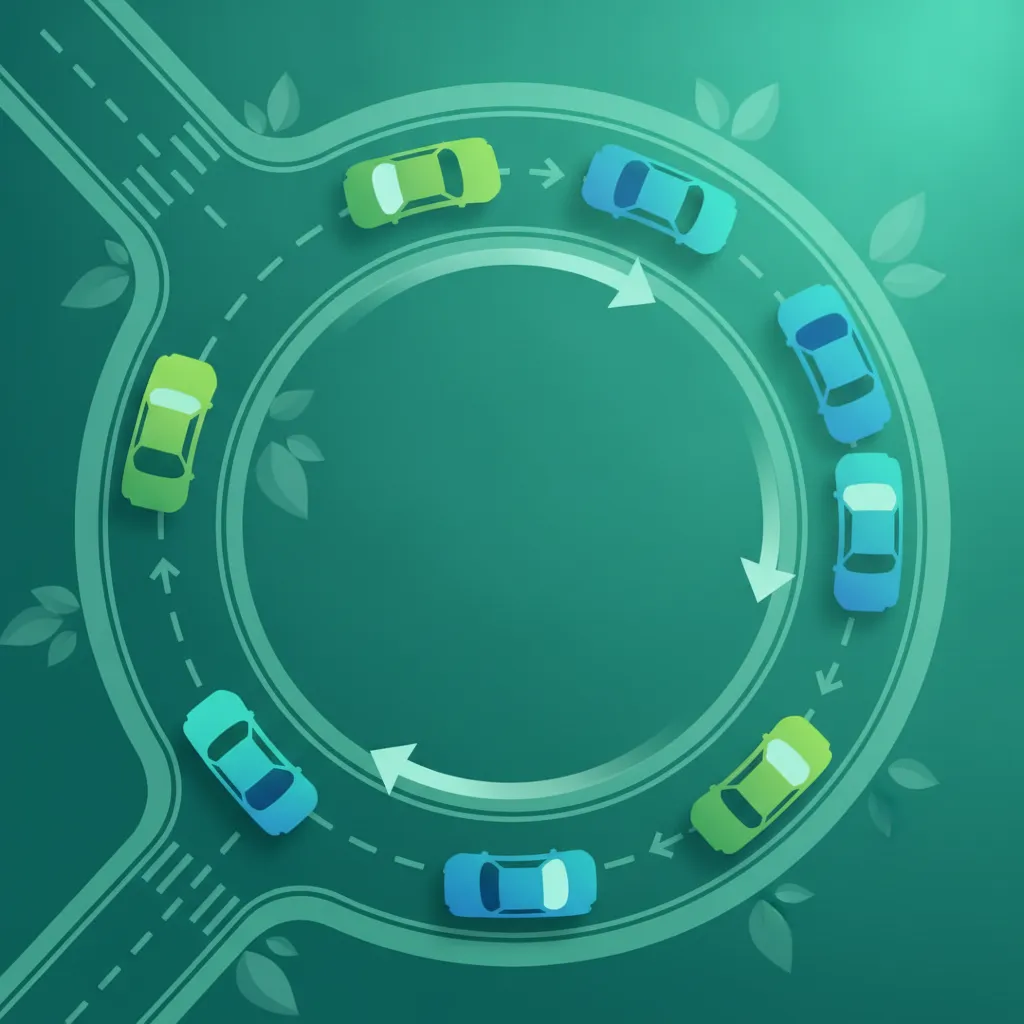
This lesson focuses on the rules for navigating roundabouts (Kreisverkehr) in Austria. It highlights the fundamental give-way rule, where traffic entering the roundabout must yield to traffic already circulating within it. Learners will understand the correct procedures for lane selection, signaling intent to exit, and maintaining safe traffic flow, supported by explanations of specific Austrian roundabout signage.
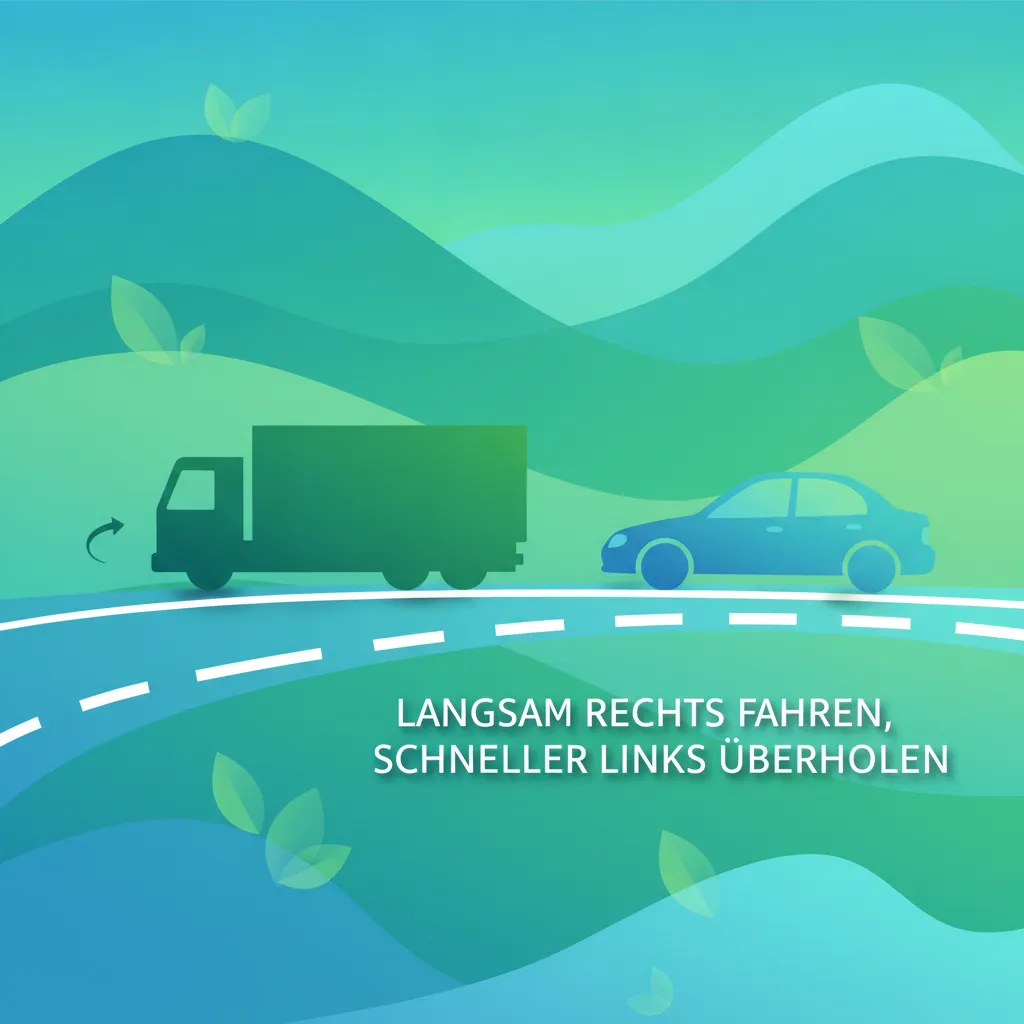
High-speed driving in a large vehicle requires excellent lane discipline and forward planning. This lesson covers Austrian speed limits for buses, rules for joining and leaving the motorway, safe overtaking procedures, and maintaining appropriate following distances. The critical importance of forming an emergency corridor ('Rettungsgasse') in traffic jams is also a key topic.
Learn about cooperative driving principles and the specific 'zipper merge' (Reißverschlusssystem) rule in Austrian traffic. Understand how these concepts improve traffic flow and safety during lane closures and congested conditions, essential for your driving theory knowledge.

This lesson introduces the foundational elements of Austrian traffic culture, placing a strong emphasis on cooperation, courtesy, and effective non-verbal communication between road users. It delves into the societal expectations for driver behavior, highlighting how mutual respect and clear signaling enhance safety for everyone. By understanding and applying these norms, drivers can contribute to a more harmonious and predictable traffic environment, reducing conflicts and potential accidents.
This lesson provides a comprehensive guide to driving on high-speed motorways (Autobahnen) and expressways (Schnellstraßen). It details the correct procedure for using the acceleration lane to merge safely, the principles of strict lane discipline, and strategies for choosing a safe speed relative to traffic flow and conditions. The lesson also explains the rules for using exit ramps and the purpose of the hard shoulder (Pannenstreifen).

This lesson consolidates knowledge by applying it to common everyday driving situations. It offers practical tips on topics like smooth driving for fuel efficiency, managing distractions in the cabin, and maintaining courtesy in frustrating traffic. The content reinforces defensive driving principles as a constant habit, helping learners transition from theoretical knowledge to confident, safe, and responsible real-world driving.
This lesson provides essential knowledge for using Austria's high-speed road network. It covers the correct procedure for entering via acceleration lanes, maintaining strict lane discipline (keeping right, passing left), and understanding the digital or physical Vignette (toll sticker) requirement. The formation of the 'Rettungsgasse' (emergency corridor) during traffic jams is also a key topic.

This lesson explores the distinct challenges of urban driving, focusing on managing the vehicle in dense, slow-moving, or stop-and-go traffic. It covers strategies for effective lane management, anticipating traffic signal changes, and navigating common city road features like one-way streets and traffic calming measures. Understanding these dynamics helps reduce stress and improve safety in congested environments.
High-speed driving in a large vehicle requires excellent lane discipline and forward planning. This lesson covers Austrian speed limits for buses, rules for joining and leaving the motorway, safe overtaking procedures, and maintaining appropriate following distances. The critical importance of forming an emergency corridor ('Rettungsgasse') in traffic jams is also a key topic.

This lesson details the specific regulations and best practices for driving in areas with high pedestrian activity, such as bus stops and school zones. It explains the driver's obligation to stop for school buses with flashing lights and to yield to public buses pulling out from a stop. The content emphasizes the requirement to significantly reduce speed in marked school zones to ensure the safety of children.

This lesson introduces the proactive mindset of defensive driving, which focuses on anticipating potential hazards rather than just reacting to them. It teaches techniques for systematic risk assessment, including scanning the road ahead, checking mirrors frequently, and being aware of the potential actions of other road users. By adopting these safe habits, drivers can create a buffer of safety around their vehicle and significantly reduce the likelihood of being involved in an accident.
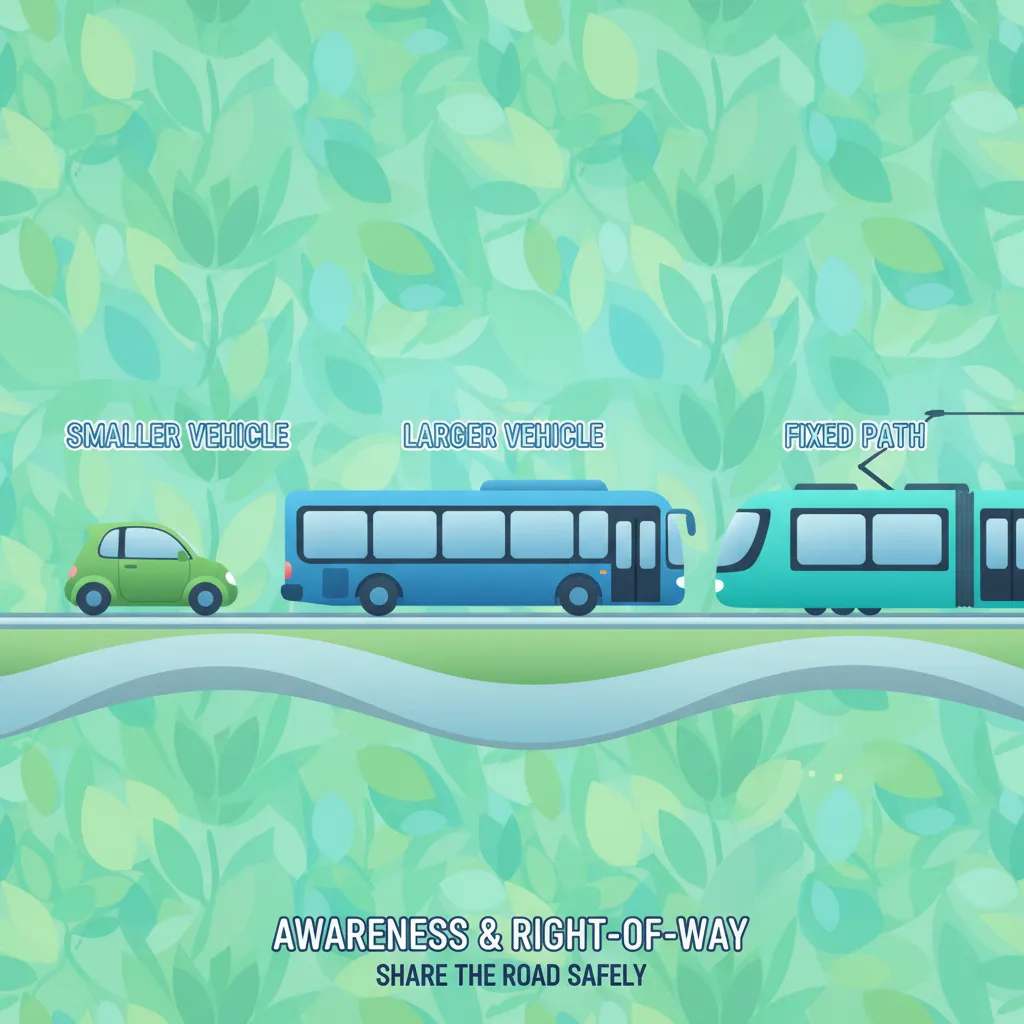
This lesson provides specific guidance for sharing the road with different types of vehicles in Austria. It covers the dangers of large vehicle blind spots, the rules for navigating near buses and dedicated tram tracks, and common conflict points at intersections. Understanding the behavior and limitations of other vehicles is key to safely navigating complex urban environments.

This lesson covers the interaction with various forms of urban traffic control. It includes anticipating traffic light cycles to avoid stopping in an intersection and following the directions given by police or road work personnel. Smooth cooperation with these systems ensures better traffic flow and safety for everyone.
Find clear answers to common questions learners have about Complex Manoeuvres: Merging, Lane Drops, and Yielding. Learn how the lesson is structured, which driving theory objectives it supports, and how it fits into the overall learning path of units and curriculum progression in Austria. These explanations help you understand key concepts, lesson flow, and exam focused study goals.
No, you do not have right-of-way simply because you are on the main road. However, merging drivers must adjust their speed and find a gap. If traffic is too dense, you must wait for a safe opportunity to merge safely without forcing others to brake aggressively.
The zipper system (Reißverschlusssystem) is mandatory in Austria when lanes end. It requires drivers in the ending lane to merge one-by-one into the continuous lane, similar to a zipper closing. It is intended to prevent traffic backups and ensure fairness.
Overtaking on the right is generally prohibited in Austria. Using the acceleration lane to pass slower vehicles on the main motorway lane is illegal and dangerous. The acceleration lane is strictly for matching speed to merge safely.
If you are in a lane that is ending, continue until the end of the lane and then merge using the zipper principle. Do not switch lanes too early, as this often causes more congestion behind you.
Refine your study plan by searching for specific Austrian driving theory practice sets. Pinpoint questions related to particular road rules, signs, or challenge levels, and begin practicing immediately to reinforce your knowledge and excel in your official exam with confidence. Get started with focused revision today.