
This lesson focuses on the critical safety techniques required for driving heavy goods vehicles near pedestrians and cyclists in busy Austrian city centers. You will learn to mitigate risks associated with the unique dimensions and blind spots of C, C1, and CE category vehicles, ensuring your compliance with traffic laws and road safety standards.

Lesson content overview
Driving a heavy goods vehicle (HGV) in dense urban environments, particularly Austrian city centers, demands exceptional awareness and adherence to specific safety protocols. Pedestrians and cyclists are highly vulnerable road users, and their protection is paramount to prevent serious accidents. This lesson outlines the critical principles, legal obligations, and practical techniques required for HGV drivers to navigate city centers safely, ensuring the well-being of all road participants.
Vulnerable Road Users (VRUs) are defined as individuals who lack the physical protection afforded by an enclosed vehicle and are therefore at a much greater risk of severe injury or fatality in a collision. This category primarily includes pedestrians, cyclists, and motorcyclists. For heavy goods vehicle drivers, understanding the unique challenges and behaviors of VRUs is crucial for proactive accident prevention, especially in bustling city centers.
Pedestrians include individuals walking on sidewalks, crossing roads at designated or undesignated points, or waiting at bus stops. Cyclists encompass those using bicycles on dedicated bike lanes, shared paths, or directly on the roadway. Both groups are characterized by their limited visibility to larger vehicles, susceptibility to severe injury, and often unpredictable movements.
Heavy goods vehicles pose a significant risk to VRUs due to several inherent characteristics:
Operating a heavy goods vehicle safely in urban areas hinges on adhering to several core principles designed to protect vulnerable road users. These principles enhance driver awareness, improve reaction times, and mitigate the inherent risks associated with large vehicles.
Speed adaptation means constantly adjusting your vehicle's speed to suit the prevailing environmental conditions, traffic density, and the presence of vulnerable road users. In city centers, where interactions with pedestrians and cyclists are frequent, a reduced speed is not merely a legal requirement but a fundamental safety measure. Lower speeds provide a significantly larger safety margin, allowing more time to perceive and react to hazards, and crucially, minimizing the stopping distance of your heavy vehicle. Always plan ahead, anticipate potential VRU entry points, and be prepared to stop quickly.
In Austria, the legal hierarchy of road users generally prioritizes those with less physical protection. This means HGV drivers must consistently give way to pedestrians at marked crossings (Zebrastreifen or Fußgängerüberweg) and to cyclists when they are proceeding on the roadway, entering intersections from bike lanes, or are already within an intersection. Understanding and respecting these yielding requirements is mandatory and critical for preventing conflicts and collisions.
Maintaining a minimum lateral distance when overtaking pedestrians or cyclists is a non-negotiable safety rule. This distance prevents side-swipe collisions, accounts for sudden movements by the VRU, and provides them with sufficient space to maneuver safely. For heavy goods vehicles, the turbulent air created by the vehicle can also destabilize cyclists, making an adequate buffer even more crucial.
When passing cyclists on the road, ensure a minimum lateral distance of 1.5 meters. When passing pedestrians on sidewalks (where permitted), maintain at least 0.5 meters.
Establishing visual confirmation with vulnerable road users, especially at intersections and crosswalks, significantly reduces uncertainty and miscommunication. By making eye contact, you can ensure that the pedestrian or cyclist has seen your heavy vehicle and understands your intention (or their intention). This simple act can prevent situations where a VRU might mistakenly assume you will stop or proceed, leading to a dangerous interaction. Briefly pause to confirm intentions before proceeding.
Anticipatory scanning involves continuously looking ahead and around your vehicle for potential entry points of vulnerable road users. This includes scanning sidewalks, parked cars (from behind which a pedestrian might emerge), crosswalks, and bike lanes. Early detection allows for timely speed adjustments, safe maneuvering, and reduces the likelihood of surprise encounters. For HGV drivers, integrating comprehensive scanning into routine driving habits is vital, especially when approaching intersections, bus stops, and school zones.
While the horn is primarily for warning of immediate danger, its judicious use, along with appropriate lighting, can alert vulnerable road users to your heavy vehicle's presence. In low visibility conditions or when approaching a blind corner, a brief, cautionary use of the horn can prevent an accident. Flashing lights (within legal limits) can also increase your visibility. However, excessive or aggressive horn usage is prohibited and can cause unnecessary startle responses or confusion, especially in residential areas.
Navigating an HGV through Austrian city centers requires meticulous attention to specific traffic regulations and best practices concerning pedestrians and cyclists. These rules are designed to manage the higher interaction density and mitigate the increased risks in urban settings.
Pedestrian crossings are designated areas where pedestrians have legal priority to cross the roadway.
A marked pedestrian crossing, typically identified by white stripes (zebra stripes) across the road. Pedestrians have priority here.
Cyclists are particularly vulnerable to heavy goods vehicles due to their speed and position relative to a truck's blind spots.
Intersections are high-risk areas due to converging traffic and the presence of multiple VRUs.
Heavy goods vehicles have large blind spots, especially on the right side. Cyclists can easily disappear from view. Always make extra checks, including mirrors and, if fitted, advanced driver assistance systems (ADAS) for blind spot monitoring.
Heavy goods vehicle drivers often perform deliveries in city centers, requiring them to stop and unload. These activities are subject to strict regulations to ensure VRU safety.
For heavy goods vehicle drivers, effective use of mirrors and proactive blind spot checks are life-saving skills in urban environments.
Beyond basic rules, experienced HGV drivers employ advanced strategies to enhance safety in busy urban areas, particularly concerning vulnerable road users. These involve a combination of defensive driving, clear communication, and understanding the psychology of other road users.
Defensive driving is the cornerstone of HGV safety in city centers. This means anticipating potential hazards, assuming other road users might make mistakes, and constantly preparing for unexpected events.
Effective communication is vital for an HGV driver to manage interactions with VRUs and other vehicles.
Recognizing typical pedestrian and cyclist behavior can help HGV drivers anticipate actions and prevent incidents.
Adherence to Austrian traffic laws is paramount for heavy goods vehicle drivers. Violations concerning vulnerable road users can result in significant fines, penalty points, and severe legal consequences, especially in the event of an accident.
Austrian law (StVO - Straßenverkehrsordnung) explicitly outlines the responsibilities of drivers towards vulnerable road users.
Begegnungszonen (shared zones), speeds are often limited to 20 km/h.Failure to Yield at Pedestrian Crossings: Proceeding while a pedestrian is on or about to enter a zebra crossing.
Consequence: Substantial fines, penalty points, and increased liability in case of an accident.
Overtaking Cyclists Too Closely: Not maintaining the required 1.5-meter distance.
Consequence: Fines, penalty points, and a significant risk of causing a collision.
Blocking Sidewalks or Bike Lanes: Parking or stopping a delivery vehicle in a way that obstructs the path of pedestrians or cyclists.
Consequence: Fines for obstruction and potentially for illegal parking/stopping.
Turning Without Yielding to Cyclists: Especially during right turns where cyclists may be proceeding straight in a bike lane.
Consequence: Fines, penalty points, and a high likelihood of collision.
Excessive Speed in Urban Areas: Driving at or near the 50 km/h limit in dense areas where a lower "reasonable speed" is required due to VRU presence.
Consequence: Fines for speeding, potentially deemed reckless driving depending on the situation.
The safety measures required for protecting pedestrians and cyclists become even more critical when external conditions are less than ideal. HGV drivers must proactively adapt their driving style for various environmental factors, vehicle states, and specific VRU interactions.
Adverse weather severely compromises visibility and vehicle handling, drastically increasing the risk to VRUs.
Reduced light levels make it harder to spot vulnerable road users, especially those not wearing reflective clothing.
Different urban road types present unique challenges for HGV drivers and VRUs.
The state of your heavy goods vehicle directly impacts its handling and safety concerning VRUs.
Tailor your approach based on the type of VRU you are interacting with.
This lesson teaches Austrian C-category HGV drivers how to protect pedestrians and cyclists in urban environments by understanding the unique risks heavy vehicles pose to vulnerable road users. Key legal requirements include mandatory 1.5m passing distance for cyclists and 0.5m for pedestrians, and absolute yielding obligations at pedestrian crossings. Critical practical skills covered are systematic blind spot checking (especially the right side during turns), anticipatory scanning, and speed adaptation for weather, load, and vehicle configuration. The lesson emphasizes defensive driving principles, understanding VRU behavior, and strict compliance with Austrian traffic law (StVO) to prevent accidents and pass the theory exam.
A short set of high-value points that capture the most important learning from this lesson.
Vulnerable road users face disproportionate risk from HGVs due to large blind spots, mass and momentum, and longer braking distances.
Austrian law mandates a minimum lateral passing distance of 1.5 meters for cyclists and 0.5 meters for pedestrians when overtaking.
At Austrian pedestrian crossings (Zebrastreifen/Fußgängerüberweg), HGV drivers must stop and yield to pedestrians on or approaching the crossing.
The right-side blind spot of an HGV is especially dangerous for cyclists during right turns; always perform mirror checks and head checks before turning.
Weather conditions and vehicle load state significantly increase stopping distance; always adjust speed accordingly for safety margins.
Explore all units and lessons included in this driving theory course.
The 1.5m minimum overtaking distance for cyclists is legally mandated under Austrian StVO; never squeeze past a cyclist in a narrow lane.
HGVs have extensive blind spots on all sides; continuous mirror scanning combined with direct vision is essential in urban environments.
Cyclists proceeding straight through an intersection from a bike lane have priority over HGVs making a right turn.
In Begegnungszonen (shared zones), the maximum speed is 20 km/h and pedestrians have priority.
Defensive driving means assuming VRUs may not see you or may act unpredictably, especially children, elderly, and distracted pedestrians.
Failing to reduce speed sufficiently when approaching pedestrian crossings, not accounting for the long stopping distance of a loaded HGV.
Forgetting to check the right-side blind spot before initiating a right turn, missing cyclists proceeding straight through a bike lane.
Assuming a cyclist will always move out of the way when they may instead move closer to avoid road hazards, trapping themselves beside the vehicle.
Using the horn inappropriately, which can startle pedestrians and cyclists instead of effectively communicating intentions.
Not yielding at uncontrolled pedestrian crossings, assuming pedestrians will wait indefinitely for a large vehicle to pass.
Lesson content overview
A short set of high-value points that capture the most important learning from this lesson.
Vulnerable road users face disproportionate risk from HGVs due to large blind spots, mass and momentum, and longer braking distances.
Austrian law mandates a minimum lateral passing distance of 1.5 meters for cyclists and 0.5 meters for pedestrians when overtaking.
At Austrian pedestrian crossings (Zebrastreifen/Fußgängerüberweg), HGV drivers must stop and yield to pedestrians on or approaching the crossing.
The right-side blind spot of an HGV is especially dangerous for cyclists during right turns; always perform mirror checks and head checks before turning.
Weather conditions and vehicle load state significantly increase stopping distance; always adjust speed accordingly for safety margins.
Explore all units and lessons included in this driving theory course.
The 1.5m minimum overtaking distance for cyclists is legally mandated under Austrian StVO; never squeeze past a cyclist in a narrow lane.
HGVs have extensive blind spots on all sides; continuous mirror scanning combined with direct vision is essential in urban environments.
Cyclists proceeding straight through an intersection from a bike lane have priority over HGVs making a right turn.
In Begegnungszonen (shared zones), the maximum speed is 20 km/h and pedestrians have priority.
Defensive driving means assuming VRUs may not see you or may act unpredictably, especially children, elderly, and distracted pedestrians.
Failing to reduce speed sufficiently when approaching pedestrian crossings, not accounting for the long stopping distance of a loaded HGV.
Forgetting to check the right-side blind spot before initiating a right turn, missing cyclists proceeding straight through a bike lane.
Assuming a cyclist will always move out of the way when they may instead move closer to avoid road hazards, trapping themselves beside the vehicle.
Using the horn inappropriately, which can startle pedestrians and cyclists instead of effectively communicating intentions.
Not yielding at uncontrolled pedestrian crossings, assuming pedestrians will wait indefinitely for a large vehicle to pass.
Explore search topics learners often look for when studying Protecting Pedestrians and Cyclists in City Centers. These topics reflect common questions about road rules, driving situations, safety guidance, and lesson level theory preparation for learners in Austria.
Browse additional driving theory lessons that cover connected traffic rules, road signs, and common driving situations related to this topic. Improve your understanding of how different rules interact across everyday traffic scenarios.
Explore advanced defensive driving strategies and deeper insights into anticipating the movements of pedestrians and cyclists in complex urban environments. Learn to mitigate risks associated with heavy vehicle blind spots and maneuverability in dense Austrian city traffic.
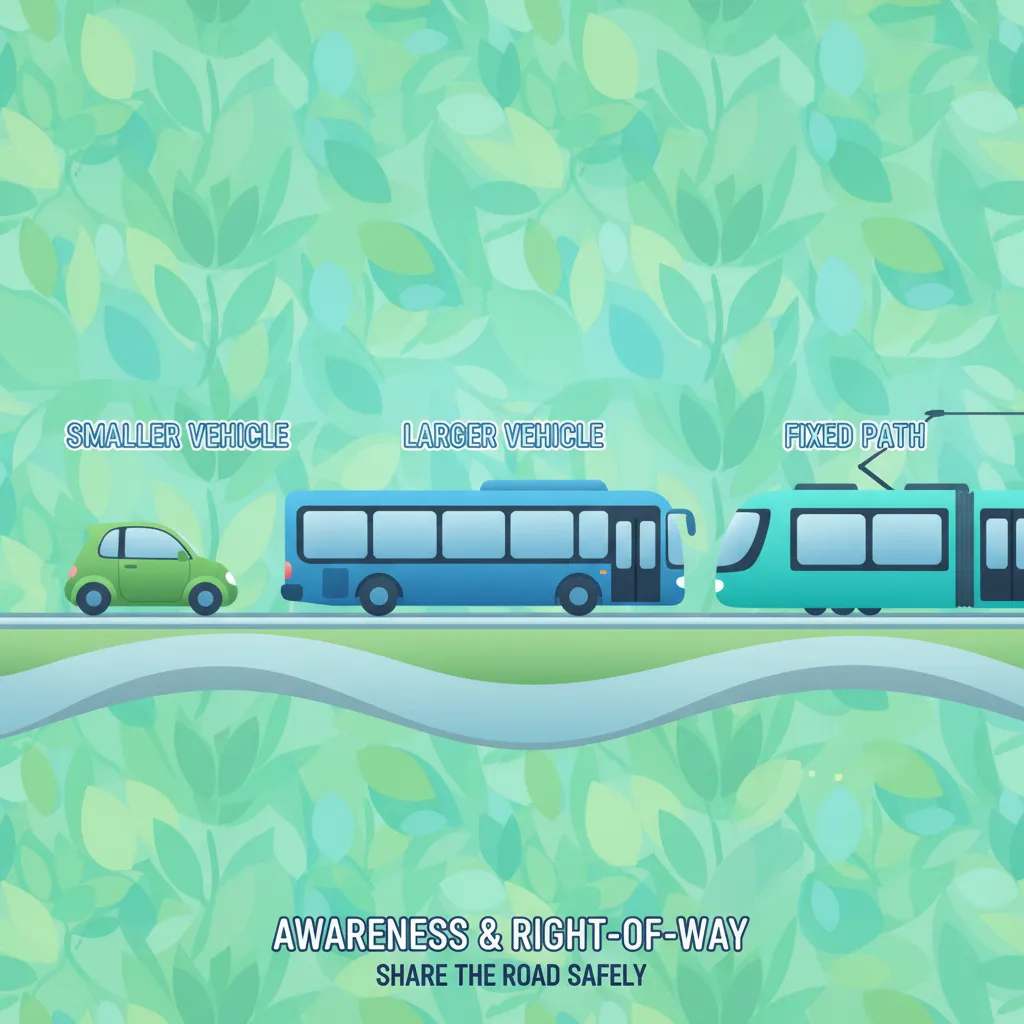
This lesson provides specific guidance for sharing the road with different types of vehicles in Austria. It covers the dangers of large vehicle blind spots, the rules for navigating near buses and dedicated tram tracks, and common conflict points at intersections. Understanding the behavior and limitations of other vehicles is key to safely navigating complex urban environments.
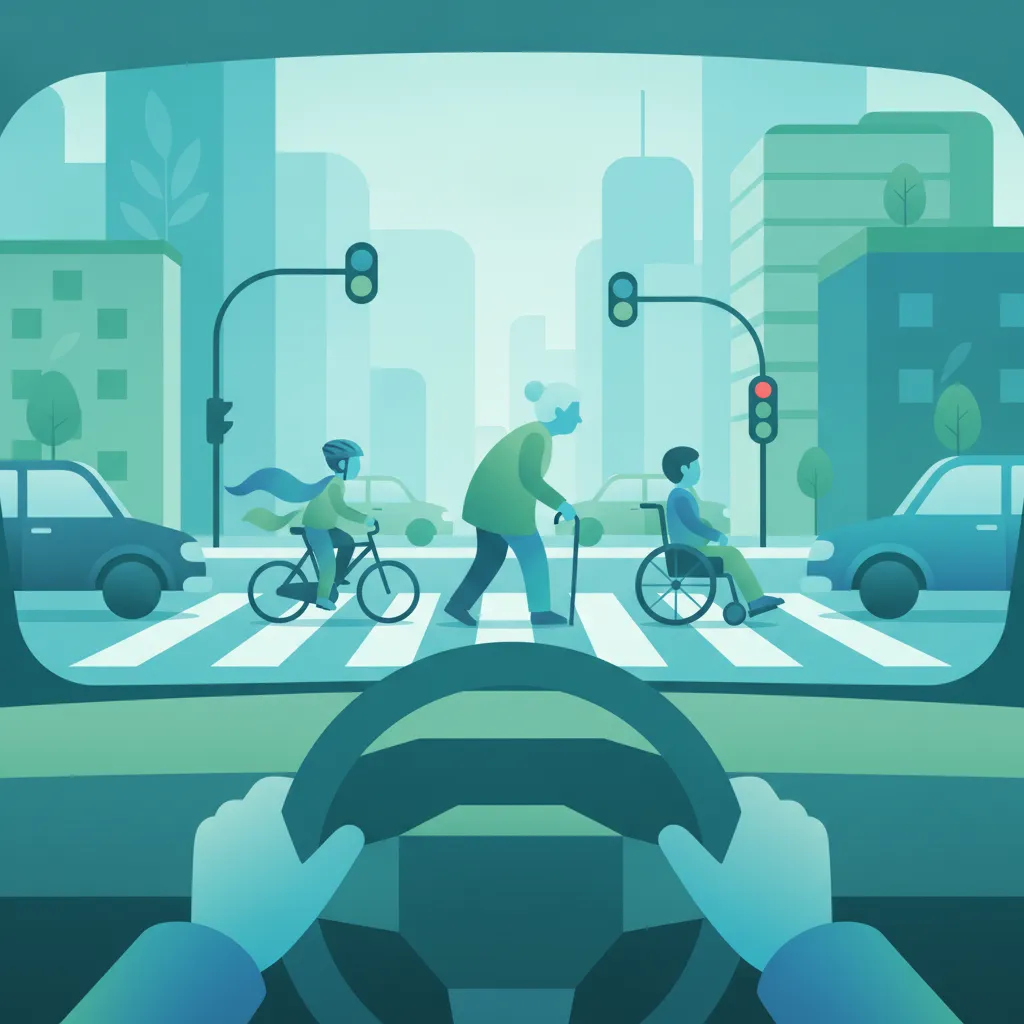
This lesson provides advanced strategies for proactively managing interactions with vulnerable road users to prevent conflicts before they arise. It teaches drivers to predict the likely behavior of pedestrians, cyclists, and e-scooter riders, especially at intersections and in congested areas. Key techniques include maintaining larger safety distances, covering the brake, and making eye contact to ensure mutual awareness and avoid accidents.
This lesson covers the interaction with various forms of urban traffic control. It includes anticipating traffic light cycles to avoid stopping in an intersection and following the directions given by police or road work personnel. Smooth cooperation with these systems ensures better traffic flow and safety for everyone.

This lesson addresses the challenge of manoeuvring a large vehicle through streets not designed for its size. It covers how to assess vertical and horizontal clearances, plan the vehicle's path through tight turns, and heed all restrictive signage. Careful planning and slow, precise control are essential for success.

This lesson explains the regulations governing the use of designated delivery and loading zones in urban areas. It covers topics such as time restrictions, the potential need for permits, and the correct way to position the vehicle to minimize traffic disruption. Adhering to these rules is essential for efficient and legal urban logistics.
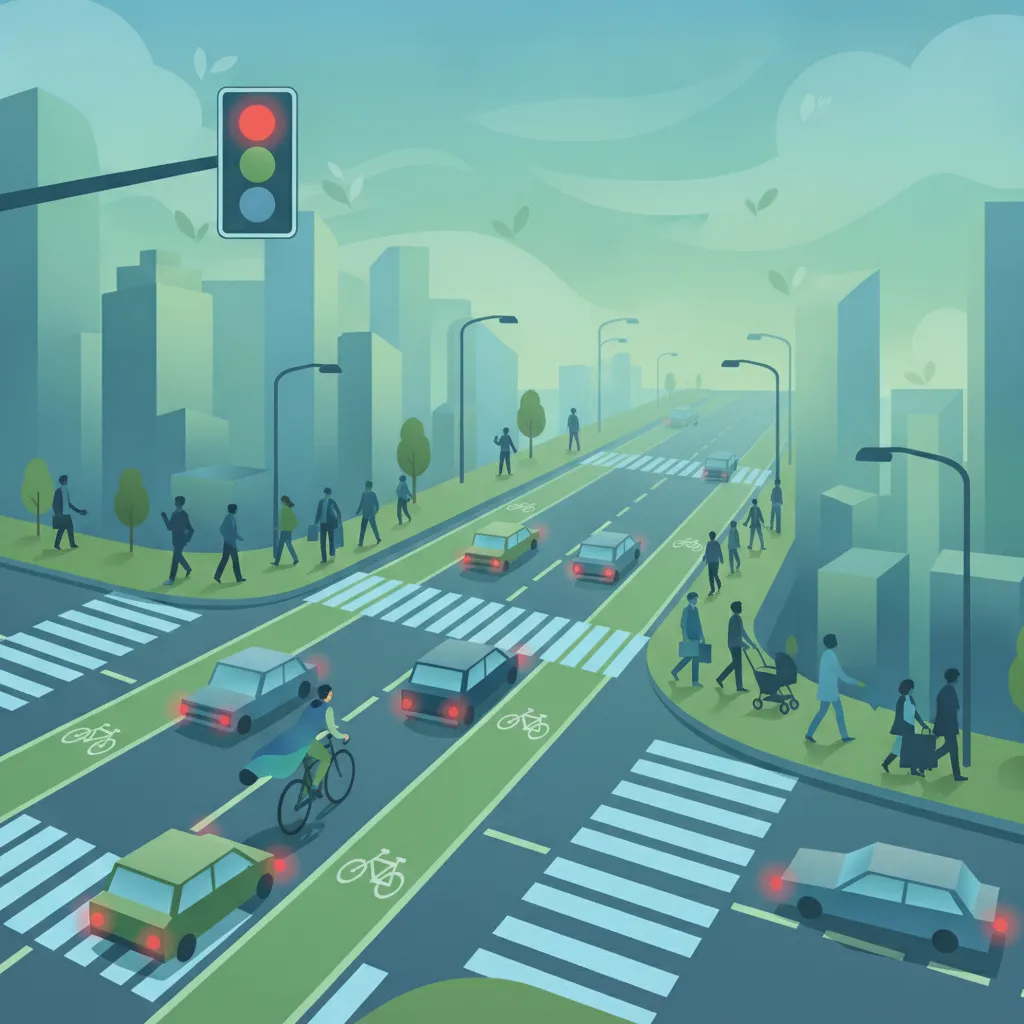
This lesson teaches drivers how to safely coexist with cyclists and pedestrians, who are prevalent in urban areas. It covers the rules for dedicated bike lanes (Radweg), the importance of yielding to pedestrians in designated zones, and the need for extra caution when turning or opening car doors. Maintaining safe overtaking distances and anticipating the movements of these vulnerable road users are key themes for preventing accidents.

This lesson details the general traffic rules applicable to heavy goods vehicles on Austrian roads, highlighting differences from passenger car regulations. It covers key topics such as right-of-way at intersections, specific rules for overtaking, maintaining proper lane discipline, and adhering to designated speed limits. Understanding these rules is critical for safe integration into mixed traffic.

This lesson focuses on the critical skill of sharing the road safely with vulnerable users, such as pedestrians, cyclists, and e-scooter riders. It details the legally required distance buffers for overtaking and emphasizes heightened awareness in sensitive areas like school zones and designated pedestrian crossings. The content provides guidelines for interacting with bicycle lanes and shared spaces to foster a protective and respectful driving attitude towards those most at risk.

Cities like Vienna and Graz have extensive tram networks that require special attention from bus drivers. This lesson covers the rules of priority concerning trams, the dangers of crossing tracks, and the specific hazards at shared stops where passengers cross traffic lanes. It emphasizes the need for extreme caution and clear communication with other road users in these complex environments.
This lesson addresses the specific challenges of interacting with larger vehicles like buses and trams in an urban environment. It explains how to signal intentions clearly and predictably to avoid conflicts in shared spaces. Key topics include safely crossing tram tracks and maintaining awareness around public transport stops.
Understand the precise Austrian traffic regulations and legal obligations for HGV drivers concerning pedestrians and cyclists. Focus on rules for crossings, bike lanes, intersections, and safe passing distances in busy urban settings.
This lesson details the general traffic rules applicable to heavy goods vehicles on Austrian roads, highlighting differences from passenger car regulations. It covers key topics such as right-of-way at intersections, specific rules for overtaking, maintaining proper lane discipline, and adhering to designated speed limits. Understanding these rules is critical for safe integration into mixed traffic.
This lesson explains the regulations governing the use of designated delivery and loading zones in urban areas. It covers topics such as time restrictions, the potential need for permits, and the correct way to position the vehicle to minimize traffic disruption. Adhering to these rules is essential for efficient and legal urban logistics.

This lesson details the regulations for heavy goods vehicles on Austria's high-speed road network. It covers the specific speed limits, rules on lane usage (e.g., when overtaking is permitted), and procedures for entering and exiting the motorway. Adherence to these rules is crucial for safety in a fast-paced environment.
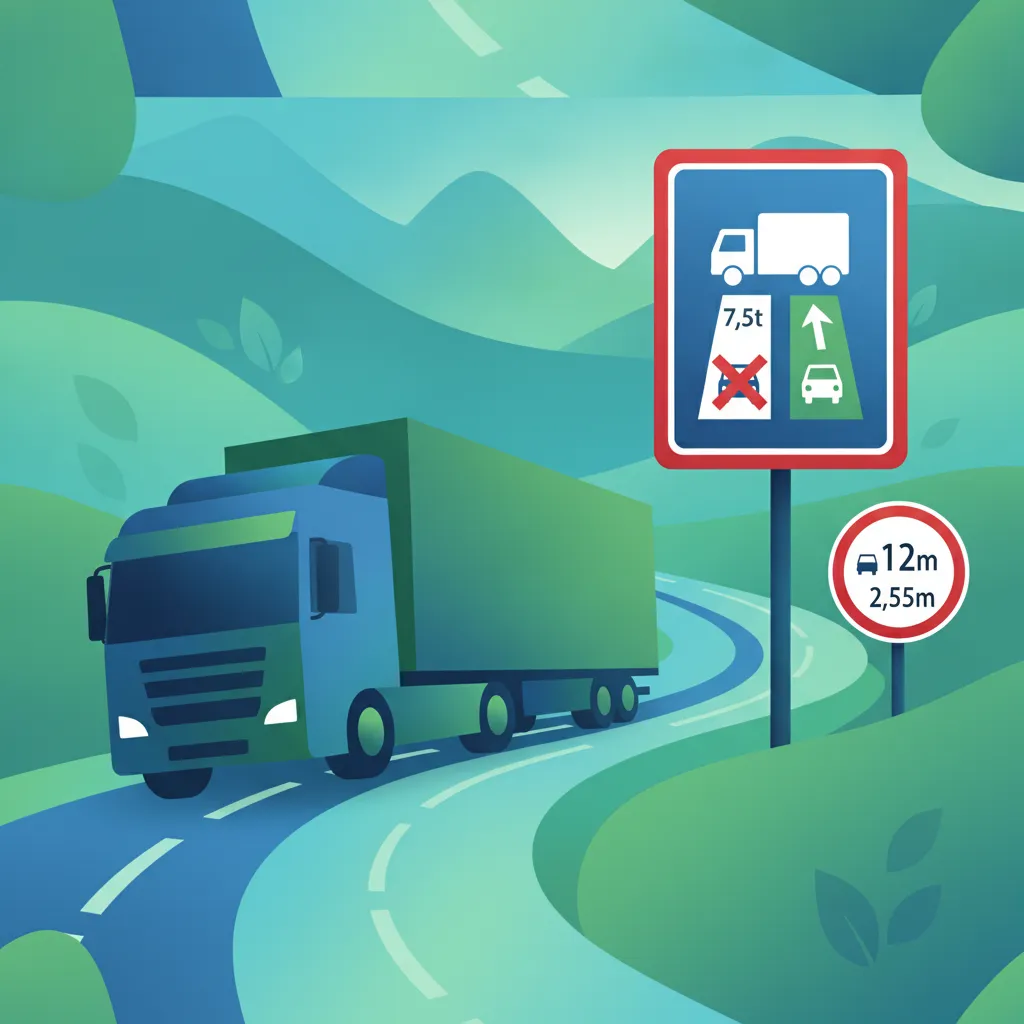
This lesson focuses on the specific Austrian road signs and supplemental plates that apply to heavy goods vehicles. It explains how to interpret signage indicating weight limits, height and width restrictions, lane usage rules, and other critical regulatory information. Correctly understanding these signs is essential for legal compliance and safe navigation on Austria's roads.
This lesson covers the interaction with various forms of urban traffic control. It includes anticipating traffic light cycles to avoid stopping in an intersection and following the directions given by police or road work personnel. Smooth cooperation with these systems ensures better traffic flow and safety for everyone.

This lesson addresses the unique challenges and priority rules that apply when interacting with public transport and cyclists at intersections. It clarifies the specific right-of-way regulations for trams, which often have priority over other traffic, and the procedures for navigating around bus stops. The content also covers how to safely manage crossings with dedicated bicycle lanes, ensuring the protection of all road users.
This lesson provides an overview of the legal framework governing heavy vehicle drivers in Austria. It details the potential penalties for violations, including fines, penalty points, and the risk of licence suspension. A clear understanding of these consequences reinforces the importance of compliant and responsible driving.
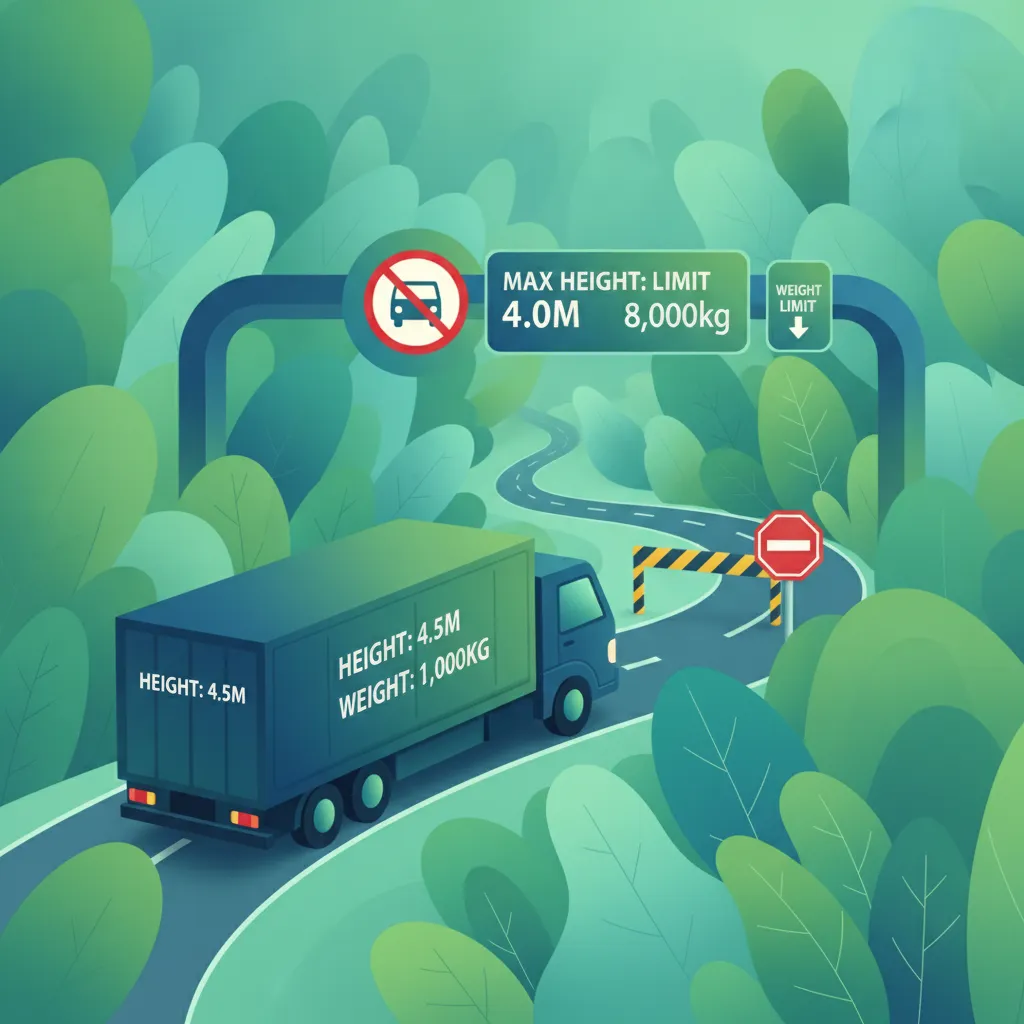
This lesson covers the practical aspects of planning a route for a heavy goods vehicle. It explains how to use maps and specialized GPS systems to identify and avoid roads with height, weight, or other restrictions. Proactive route planning is essential for ensuring an efficient, legal, and safe journey.

This lesson explores the strict regulations governing pedestrian crossings in Austria, particularly marked zebra crossings known as Schutzweg. It emphasizes the absolute priority of pedestrians on these crossings and the driver's legal obligation to stop and allow them to cross safely. The content covers how to approach these areas with caution, the importance of visibility, and the rules at crossings controlled by traffic lights.

This lesson focuses on the legal restrictions concerning a heavy vehicle's dimensions, including maximum height, width, and length. It teaches drivers how to interpret road signs and supplemental plates that indicate these limits. This knowledge is crucial for route planning, especially when navigating under bridges, through tunnels, and on restricted roads.
Find clear answers to common questions learners have about Protecting Pedestrians and Cyclists in City Centers. Learn how the lesson is structured, which driving theory objectives it supports, and how it fits into the overall learning path of units and curriculum progression in Austria. These explanations help you understand key concepts, lesson flow, and exam focused study goals.
Because of the large dimensions of C and CE vehicles, the right-side blind spot is significant. Cyclists riding alongside a turning truck are often invisible to the driver; this is a leading cause of fatal accidents at intersections in Austria.
You must check all mirrors and camera systems systematically before, during, and after initiating the turn. Never rely on a single glance, and always ensure no cyclists are positioned in your intended turning path.
You should maintain a safe lateral distance that accounts for the cyclist's potential swerving or road surface hazards. In narrow streets, if you cannot provide adequate room, you must wait behind the cyclist until it is safe to pass.
Yes, heavy vehicles are strictly restricted in most urban pedestrian zones unless specifically permitted for deliveries during designated hours. Always watch for traffic signs that define these special zones and speed limits.
Refine your study plan by searching for specific Austrian driving theory practice sets. Pinpoint questions related to particular road rules, signs, or challenge levels, and begin practicing immediately to reinforce your knowledge and excel in your official exam with confidence. Get started with focused revision today.