
This lesson provides a comprehensive overview of the heavy-goods vehicle licence categories C1, C1E, C, and CE within the Austrian transport system. By defining the specific vehicle configurations and permissible masses for each class, this lesson establishes the foundational legal knowledge required for your professional driving career and theory examination.

Lesson content overview
Navigating the regulations for heavy goods vehicles (HGVs) in Austria requires a thorough understanding of the various licence categories. This lesson provides a detailed explanation of the C1, C1E, C, and CE licence types, outlining the specific vehicle configurations, mass limits, and operational allowances for each. Understanding these distinctions is not merely a legal requirement; it is fundamental for safe vehicle operation, preventing accidents, and ensuring compliance with Austrian traffic laws. This knowledge forms the bedrock for all subsequent topics in your Austrian Driving License Theory Course for Heavy Goods Vehicles (C, C1, C1E, CE), including vehicle dimensions, load securing, and advanced braking systems.
The classification of heavy goods vehicle licences in Austria is designed to ensure that drivers possess the necessary skills and competence for the specific demands of increasingly heavy and complex vehicle combinations. Each category defines the maximum permissible mass (MAM) of the vehicle or combination, the number of axles, and the types of trailers that can be legally operated. This stratification directly addresses the heightened risks associated with heavier loads, longer vehicles, and more intricate manoeuvring requirements.
Several core principles underpin the Austrian HGV licensing system, ensuring road safety and legal compliance.
The total weight of a vehicle or combination when fully loaded, as specified by the manufacturer and certified for road use. This value is crucial for determining the required licence category.
The C1 licence category is designed for drivers operating rigid vehicles that are heavier than standard passenger cars but fall below the threshold for full heavy goods vehicles. It's often the first step into professional heavy vehicle operation for lighter commercial uses.
A C1 licence permits the holder to drive a rigid vehicle with a maximum authorised mass (MAM) between 3,000 kg (3 tonnes) and 7,500 kg (7.5 tonnes). Additionally, drivers with a C1 licence may tow a trailer where the trailer's MAM does not exceed 750 kg. This licence category applies to single vehicles only, with a small allowance for lightweight trailers.
Practical Examples of C1 Licence Usage:
The primary limitation of the C1 licence is the strict 750 kg limit for towed trailers. A common mistake is assuming that as long as the rigid vehicle's MAM is within the 7.5 tonne limit, any trailer can be towed. This is incorrect. If the trailer's MAM exceeds 750 kg, even if the total combination remains below 7.5 tonnes, a different licence category (C1E) is required. Another misunderstanding is believing that C1 allows for articulated vehicle operations; it strictly covers rigid vehicles with or without a small trailer.
For C1 licence holders who need to tow heavier trailers, the C1E category provides the necessary extension, acknowledging the increased skill and responsibility required for managing more substantial vehicle combinations.
The C1E licence extends the C1 entitlement, allowing the holder to tow a trailer where the trailer's MAM exceeds 750 kg. However, specific conditions apply:
Practical Examples of C1E Licence Usage:
Rule: Trailer MAM ≤ Tractor MAM: This is a fundamental safety rule for C1E combinations. Ignoring this significantly increases the risk of the trailer pushing the tractor unit, especially during braking or on descents, leading to a loss of control.
Rule: Combined MAM ≤ 12 tonnes: The absolute upper limit for the total combined mass of the rigid vehicle and its trailer. Exceeding this limit constitutes illegal overloading and can severely compromise vehicle performance and safety.
Axle Configuration for C1E Trailers: For C1E combinations, the trailer may typically have a maximum of three axles. This limits the overall length and complexity, aligning with the "light heavy goods" nature of the category.
The C licence category represents the main qualification for operating heavier rigid trucks, serving a wide range of industries from construction to general cargo transport.
A C licence permits the holder to drive rigid vehicles with a MAM exceeding 3,000 kg (3 tonnes), with no upper limit for the rigid vehicle's MAM. Similar to the C1 licence, C licence holders may tow a trailer where the trailer's MAM does not exceed 750 kg. This category is primarily for operating single, heavy rigid vehicles.
Practical Examples of C Licence Usage:
The most significant limitation of the C licence is the strict 750 kg trailer MAM limit. Many drivers mistakenly believe that having a full C licence automatically entitles them to tow any heavy trailer. This is incorrect. To tow trailers with a MAM exceeding 750 kg behind a C category rigid vehicle, the CE licence extension is mandatory. The C licence does not permit the operation of articulated (tractor-trailer) combinations where the semi-trailer's MAM exceeds 750 kg.
The CE licence is the highest category for heavy goods vehicles, enabling drivers to operate the largest and most complex vehicle combinations seen on roads, primarily articulated trucks (tractor units with semi-trailers) and drawbar combinations with multiple heavy trailers.
The CE licence extends the C licence, allowing the holder to tow a trailer or semi-trailer with a MAM exceeding 750 kg. This is the critical distinction that enables long-haul transport and the operation of large articulated vehicles.
Key conditions for CE Licence Holders:
Practical Examples of CE Licence Usage:
Combination Mass Limit of 44 tonnes: This limit is a non-negotiable ceiling for almost all heavy goods vehicle combinations on Austrian roads. Exceeding it results in severe penalties, including fines, licence points, and even prohibition from driving, due to the extreme safety risks of overloading.
Axle Count Restrictions for CE Combinations: For CE, the semi-trailer can typically have up to three axles, while the tractor unit might have up to five, depending on its configuration (e.g., 2-, 3-, or 4-axle tractors). These configurations are designed to distribute heavy loads efficiently and reduce specific road wear.
Trailer Coupling Types: The CE category frequently involves fifth-wheel couplings for semi-trailers, which provide a robust and flexible connection. Other systems, like kingpin couplings for drawbar semi-trailers, are also common for full trailer combinations. Using the correct coupling type for the intended vehicle combination is paramount for safety and legal compliance.
Beyond the specific category definitions, a deeper understanding of several core concepts is essential for all HGV drivers.
The maximum permissible weight of a vehicle or trailer when fully loaded, as specified by the manufacturer and listed on the vehicle's registration documents. This is the definitive figure used by authorities to determine compliance with licence categories and loading regulations. Exceeding the MAM is a serious offence, leading to legal penalties and significant safety risks.
The arrangement and number of axles on a vehicle or trailer are critical for proper weight distribution and adherence to road regulations. Single, tandem (two axles), and tridem (three axles) axle configurations each have specific maximum permissible loads. These limits are not only about total vehicle mass but also about how that mass is distributed to protect road infrastructure and ensure stability. Imbalances or exceeding individual axle load limits can damage roads and compromise vehicle handling.
Different trailer coupling types are designed for various vehicle combinations and load types:
The weight ratio between the tractor unit and the trailer is not arbitrary. For categories like C1E, the rule that the trailer's MAM must not exceed the tractor's MAM directly relates to braking capability. The tractor's braking system is designed to safely stop a certain total mass. If the trailer is disproportionately heavy, the tractor's brakes may become overwhelmed, leading to increased stopping distances and a higher risk of jack-knifing or loss of control. For CE combinations, while the trailer can be heavier, the overall combination mass of 44 tonnes still imposes a practical limit, and the entire combination must be equipped with advanced, synchronized braking systems (e.g., air brakes) to ensure adequate stopping power.
Operating heavy goods vehicles demands a high level of physical and mental fitness. All HGV licence categories (C1, C1E, C, CE) in Austria require drivers to undergo regular medical examinations to ensure they meet the necessary health standards. These assessments typically cover vision, hearing, cardiovascular health, neurological conditions, and musculoskeletal integrity. Maintaining an up-to-date medical fitness certificate is a mandatory condition for holding these licences.
Adherence to licence categories is strictly enforced in Austria. Violations carry significant penalties, including fines, penalty points, and potential licence suspension or revocation.
Key Rules Summarised:
These regulations are enshrined in Austrian law, primarily the Kraftfahrgesetz (KFG) and the Straßenverkehrsordnung (StVO). Regular checks by law enforcement ensure compliance.
Operating heavy goods vehicles comes with a high level of responsibility, and even minor misinterpretations of licence categories can lead to serious legal and safety issues.
Exceeding Trailer MAM with a C1 or C Licence:
Trailer Heavier than Tractor in a C1E Combination:
Exceeding the 44-tonne Combined MAM with a CE Licence:
Incorrect Coupling for CE Combinations:
Operating without a Valid Medical Fitness Certificate:
The practical application of HGV licence rules is deeply intertwined with prevailing conditions, requiring drivers to constantly adapt their operations.
Every decision made by an HGV driver has direct consequences, particularly when interacting with licence categories and vehicle limits.
The concepts introduced in this lesson are foundational for understanding numerous advanced topics within the Austrian Driving License Theory Course for Heavy Goods Vehicles.
Mass, Dimensions, Axle Loads, Payload and Operating Limits (Lesson 2): Building on MAM definitions, this lesson delves into calculating actual payload, understanding individual axle loads, and overall vehicle dimensions, which are all directly constrained by the licence categories.
Safety Checks, Roadworthiness, Tyres, Lights and Vehicle Systems (Lesson 3): Knowledge of licence categories informs the specific safety checks required for different vehicle types (e.g., tyre load index for heavy vehicles, lighting requirements for various trailer configurations).
Brakes, Retarders, Downhill Control and Stopping Distance (Lesson 4): Understanding the different braking system requirements (e.g., air brakes for CE, hydraulic for some C1) and how they relate to the total mass of the combination is critical for safe braking techniques and calculating stopping distances.
Load Distribution, Load Securing and Stability (Lesson 5): The stability of heavy combinations, particularly articulated vehicles (CE), is heavily influenced by proper load distribution and securing, which directly relates to the vehicle's MAM and axle configurations.
Trailers, Semitrailers, Coupling and Combination Behaviour (Lesson 6): This lesson directly expands on the different coupling types, their operational characteristics, and how they affect the handling and manoeuvring of vehicle combinations permitted by C1E and CE licences.
Without a firm grasp of these initial licence category distinctions, subsequent learning about vehicle capabilities, safety procedures, and legal responsibilities would lack essential context.
To solidify your understanding, consider these practical scenarios common in Austrian heavy goods transport.
Scenario 1: Urban Deliveries with a C1 Vehicle
Scenario 2: Regional Transport with a C1E Combination
Scenario 3: Long-Haul Freight with a CE Combination
Scenario 4: Rigid Heavy Goods with a C Licence
The Austrian HGV licensing structure is not arbitrary; it is meticulously designed around fundamental safety principles to protect drivers, other road users, and infrastructure.
Ultimately, understanding and adhering to these licence categories is a critical component of professional heavy vehicle driving. It ensures that drivers are matched with vehicles they are competent to operate safely and legally on Austria's roads.
This lesson establishes the foundational distinctions between Austrian HGV licence categories C1, C1E, C, and CE, each defining specific vehicle configurations, maximum authorised mass (MAM) limits, and trailer combination rules. C1 covers light rigid vehicles (3–7.5t) with trailers up to 750 kg, while C1E extends this to heavier trailers within a 12-tonne combined limit provided the trailer does not exceed the tractor's MAM. The C licence allows unlimited rigid vehicles but still restricts trailers to 750 kg, while CE enables full articulated operations with a 44-tonne combined limit where the trailer can be heavier than the tractor. These categorisations directly reflect safety principles around braking capacity, vehicle stability, and driver competence requirements.
A short set of high-value points that capture the most important learning from this lesson.
C1 licence covers rigid vehicles between 3 and 7.5 tonnes MAM with trailers up to 750 kg only.
C1E extends C1 by allowing trailers over 750 kg, but trailer MAM must not exceed tractor MAM and combined total must stay within 12 tonnes.
C licence permits rigid vehicles over 3 tonnes with no upper limit, but still restricts trailers to 750 kg MAM.
CE licence enables articulated combinations with a 44-tonne combined mass limit, and unlike C1E, the trailer can be heavier than the tractor.
The trailer MAM rule (≤750 kg) applies to both C1 and C licences; without the 'E' extension, heavier trailers are illegal.
Explore all units and lessons included in this driving theory course.
C1 and C licences: rigid vehicle MAM 3t to 7.5t (C1) or over 3t no upper limit (C), with trailer MAM strictly ≤750 kg.
C1E conditions: trailer MAM >750 kg, trailer MAM ≤ tractor MAM, combined MAM ≤12 tonnes.
CE condition: combined tractor and semi-trailer MAM ≤44 tonnes, with fifth-wheel coupling for semi-trailers.
C1E allows maximum three axles on the trailer; CE allows up to three axles on semi-trailer and up to five on the tractor.
Fifth-wheel couplings are for semi-trailers (CE), while drawbar couplings are for full trailers (C1E and C categories).
Assuming a C1 or C licence allows towing any trailer when the rigid vehicle is within its mass limit, ignoring the strict 750 kg trailer cap.
With C1E, pairing a trailer heavier than the tractor unit, which creates dangerous braking and control situations.
Believing CE licence removes all weight restrictions; the 44-tonne combined limit is absolute and non-negotiable.
Using the wrong coupling type for the vehicle combination, such as a ball hitch for a semi-trailer instead of a fifth-wheel.
Continuing to drive HGVs after the mandatory medical fitness certificate expires, which invalidates the licence.
Lesson content overview
A short set of high-value points that capture the most important learning from this lesson.
C1 licence covers rigid vehicles between 3 and 7.5 tonnes MAM with trailers up to 750 kg only.
C1E extends C1 by allowing trailers over 750 kg, but trailer MAM must not exceed tractor MAM and combined total must stay within 12 tonnes.
C licence permits rigid vehicles over 3 tonnes with no upper limit, but still restricts trailers to 750 kg MAM.
CE licence enables articulated combinations with a 44-tonne combined mass limit, and unlike C1E, the trailer can be heavier than the tractor.
The trailer MAM rule (≤750 kg) applies to both C1 and C licences; without the 'E' extension, heavier trailers are illegal.
Explore all units and lessons included in this driving theory course.
C1 and C licences: rigid vehicle MAM 3t to 7.5t (C1) or over 3t no upper limit (C), with trailer MAM strictly ≤750 kg.
C1E conditions: trailer MAM >750 kg, trailer MAM ≤ tractor MAM, combined MAM ≤12 tonnes.
CE condition: combined tractor and semi-trailer MAM ≤44 tonnes, with fifth-wheel coupling for semi-trailers.
C1E allows maximum three axles on the trailer; CE allows up to three axles on semi-trailer and up to five on the tractor.
Fifth-wheel couplings are for semi-trailers (CE), while drawbar couplings are for full trailers (C1E and C categories).
Assuming a C1 or C licence allows towing any trailer when the rigid vehicle is within its mass limit, ignoring the strict 750 kg trailer cap.
With C1E, pairing a trailer heavier than the tractor unit, which creates dangerous braking and control situations.
Believing CE licence removes all weight restrictions; the 44-tonne combined limit is absolute and non-negotiable.
Using the wrong coupling type for the vehicle combination, such as a ball hitch for a semi-trailer instead of a fifth-wheel.
Continuing to drive HGVs after the mandatory medical fitness certificate expires, which invalidates the licence.
Explore search topics learners often look for when studying Licence Categories C1, C1E, C, CE Overview. These topics reflect common questions about road rules, driving situations, safety guidance, and lesson level theory preparation for learners in Austria.
Browse additional driving theory lessons that cover connected traffic rules, road signs, and common driving situations related to this topic. Improve your understanding of how different rules interact across everyday traffic scenarios.
Clarify the specific requirements and limitations for Austrian C1, C1E, C, and CE heavy goods vehicle licences. Understand the distinctions in permissible vehicle mass, axle configurations, and trailer towing rules for each category.

This lesson details the general traffic rules applicable to heavy goods vehicles on Austrian roads, highlighting differences from passenger car regulations. It covers key topics such as right-of-way at intersections, specific rules for overtaking, maintaining proper lane discipline, and adhering to designated speed limits. Understanding these rules is critical for safe integration into mixed traffic.

This lesson introduces the different classifications of trailers used in Austria, including drawbar trailers (Anhänger) and semi-trailers (Sattelanhänger/Auflieger). It explains their key structural differences, typical uses, and the types of coupling systems they employ. Understanding these types is the first step in learning to operate combination vehicles.
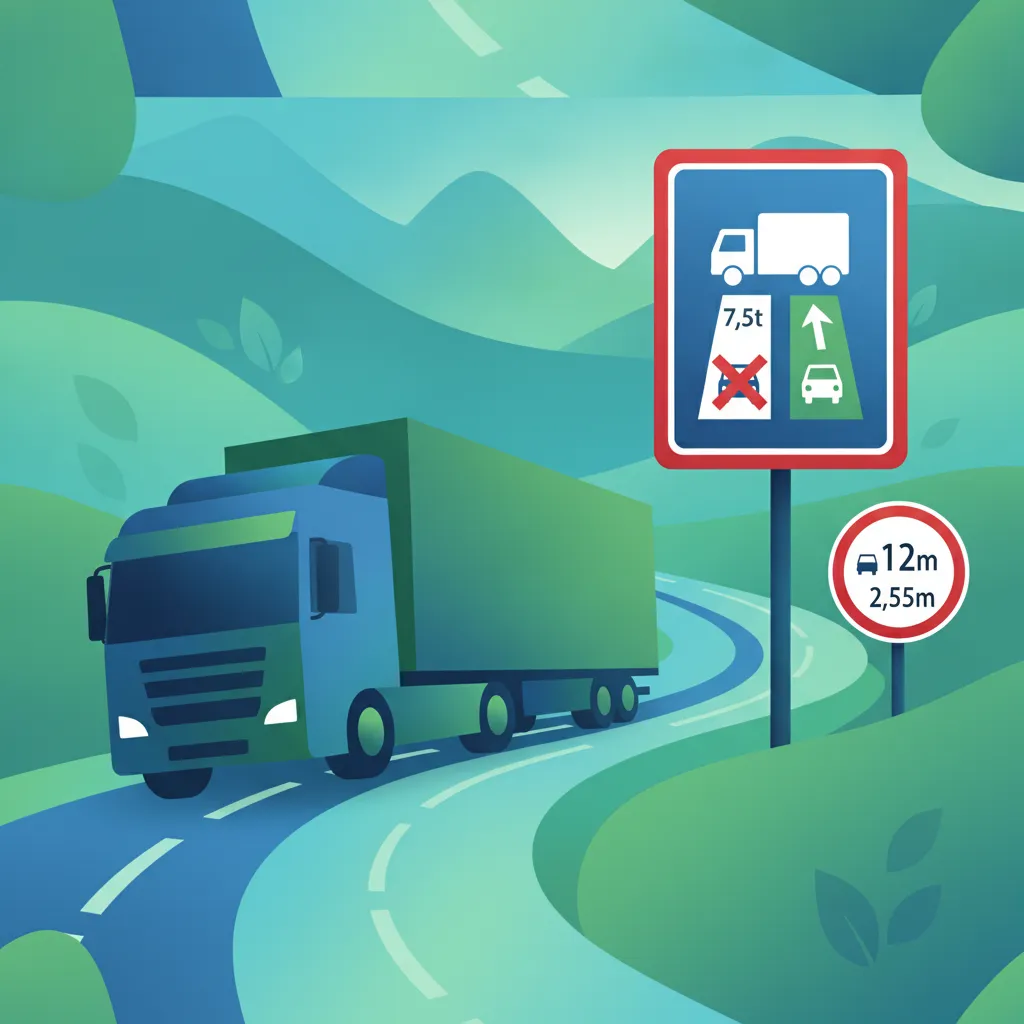
This lesson focuses on the specific Austrian road signs and supplemental plates that apply to heavy goods vehicles. It explains how to interpret signage indicating weight limits, height and width restrictions, lane usage rules, and other critical regulatory information. Correctly understanding these signs is essential for legal compliance and safe navigation on Austria's roads.

This lesson details the legal ramifications of operating an overloaded heavy vehicle in Austria, which include significant fines and penalty points. It also emphasizes the severe safety risks, such as compromised braking performance and increased mechanical stress on the vehicle. Understanding these consequences reinforces the importance of strict adherence to weight limits.

This lesson focuses on the legal restrictions concerning a heavy vehicle's dimensions, including maximum height, width, and length. It teaches drivers how to interpret road signs and supplemental plates that indicate these limits. This knowledge is crucial for route planning, especially when navigating under bridges, through tunnels, and on restricted roads.

This lesson consolidates the legal restrictions on the maximum dimensions and weight for different vehicle combinations in Austria. It covers how to read signs indicating these limits and the importance of compliance for route planning. Adhering to these regulations is essential for legal operation and avoiding fines.
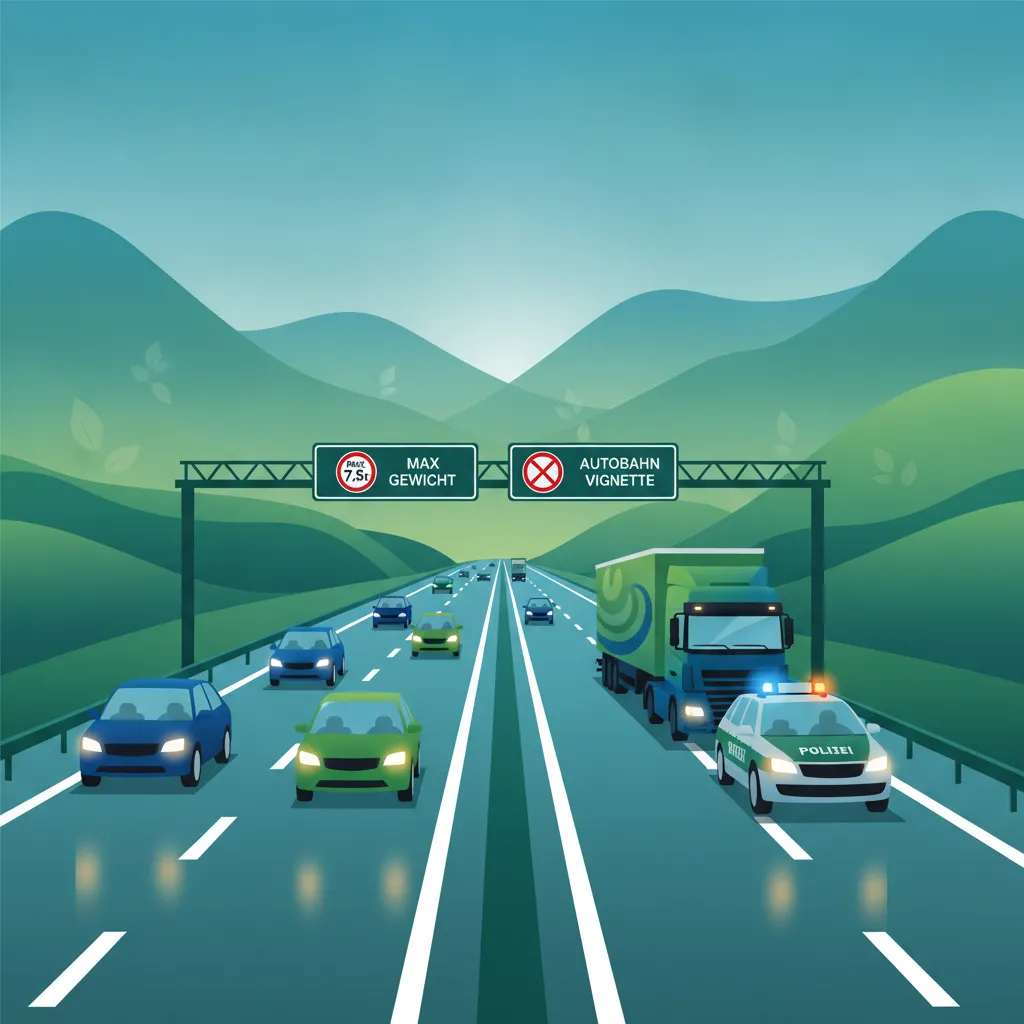
This lesson explains the system of penalties and enforcement for heavy vehicle operations in Austria. It covers the fines and penalty points associated with common traffic violations, such as overloading or insecure loads. Learners will understand the role of authorities in conducting roadside checks and inspections to ensure regulatory compliance.

This lesson provides an overview of the legal framework governing heavy vehicle drivers in Austria. It details the potential penalties for violations, including fines, penalty points, and the risk of licence suspension. A clear understanding of these consequences reinforces the importance of compliant and responsible driving.
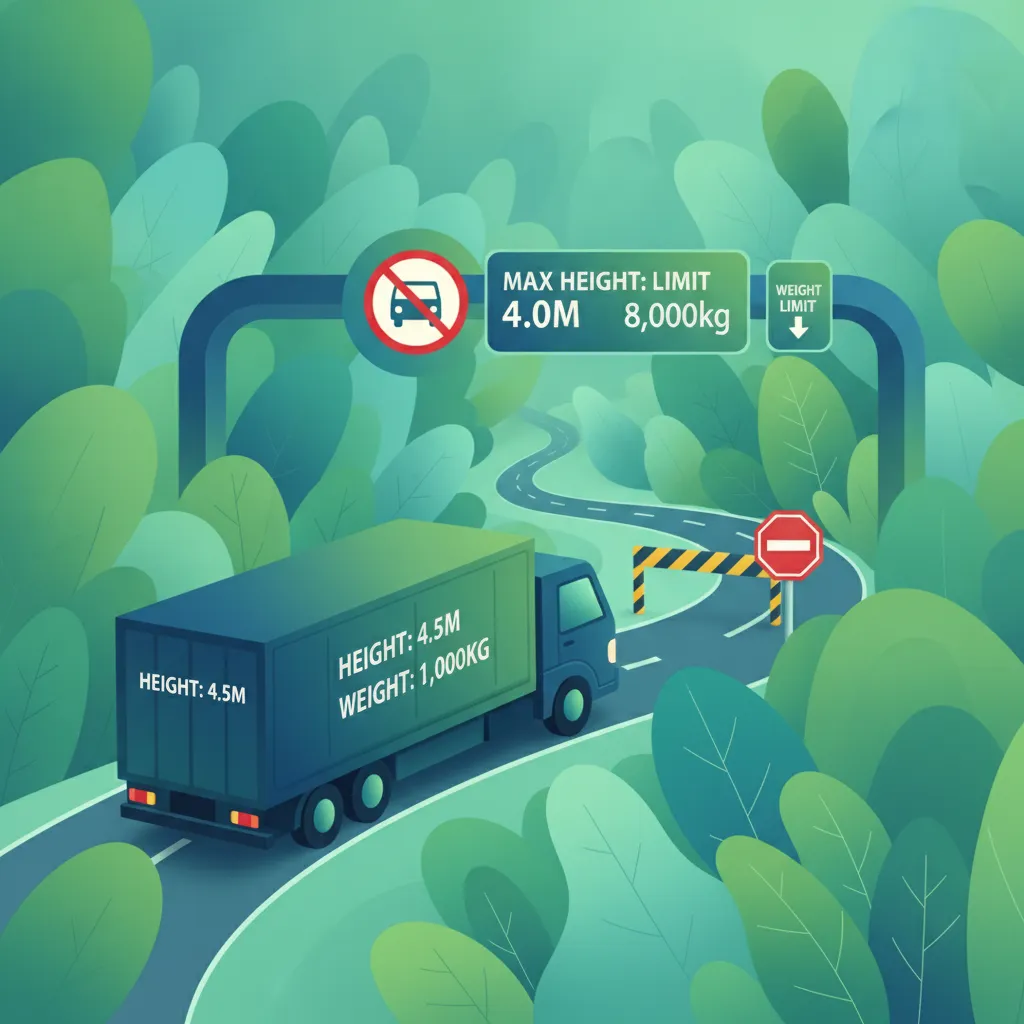
This lesson covers the practical aspects of planning a route for a heavy goods vehicle. It explains how to use maps and specialized GPS systems to identify and avoid roads with height, weight, or other restrictions. Proactive route planning is essential for ensuring an efficient, legal, and safe journey.

This lesson provides a detailed definition of the vehicle classes permitted under the Austrian Category B license. It specifies the regulations concerning maximum permissible mass, the number of passenger seats, and the different trailer combinations allowed. Learners will understand the crucial distinctions between a standard license, the B96 extension, and the full BE category, ensuring they operate vehicles within legal limits and meet all roadworthiness standards.
Learn about the critical mass, dimension, and axle load limits that define Austrian C1, C1E, C, and CE licence categories. Ensure legal compliance and safe operation of heavy goods vehicles based on traffic legislation.
This lesson explains the system of penalties and enforcement for heavy vehicle operations in Austria. It covers the fines and penalty points associated with common traffic violations, such as overloading or insecure loads. Learners will understand the role of authorities in conducting roadside checks and inspections to ensure regulatory compliance.
This lesson details the general traffic rules applicable to heavy goods vehicles on Austrian roads, highlighting differences from passenger car regulations. It covers key topics such as right-of-way at intersections, specific rules for overtaking, maintaining proper lane discipline, and adhering to designated speed limits. Understanding these rules is critical for safe integration into mixed traffic.
This lesson provides an overview of the legal framework governing heavy vehicle drivers in Austria. It details the potential penalties for violations, including fines, penalty points, and the risk of licence suspension. A clear understanding of these consequences reinforces the importance of compliant and responsible driving.
This lesson focuses on the legal restrictions concerning a heavy vehicle's dimensions, including maximum height, width, and length. It teaches drivers how to interpret road signs and supplemental plates that indicate these limits. This knowledge is crucial for route planning, especially when navigating under bridges, through tunnels, and on restricted roads.

This lesson outlines the significant legal responsibilities placed on heavy-vehicle drivers under Austrian law, emphasizing a strong duty of care and professional conduct. It covers the obligation to perform thorough pre-trip inspections, comply with all load and weight regulations, and uphold safety standards to protect all road users. Adherence to these principles is crucial for professional and safe operation.
This lesson consolidates the legal restrictions on the maximum dimensions and weight for different vehicle combinations in Austria. It covers how to read signs indicating these limits and the importance of compliance for route planning. Adhering to these regulations is essential for legal operation and avoiding fines.
This lesson focuses on the specific Austrian road signs and supplemental plates that apply to heavy goods vehicles. It explains how to interpret signage indicating weight limits, height and width restrictions, lane usage rules, and other critical regulatory information. Correctly understanding these signs is essential for legal compliance and safe navigation on Austria's roads.
This lesson details the legal ramifications of operating an overloaded heavy vehicle in Austria, which include significant fines and penalty points. It also emphasizes the severe safety risks, such as compromised braking performance and increased mechanical stress on the vehicle. Understanding these consequences reinforces the importance of strict adherence to weight limits.
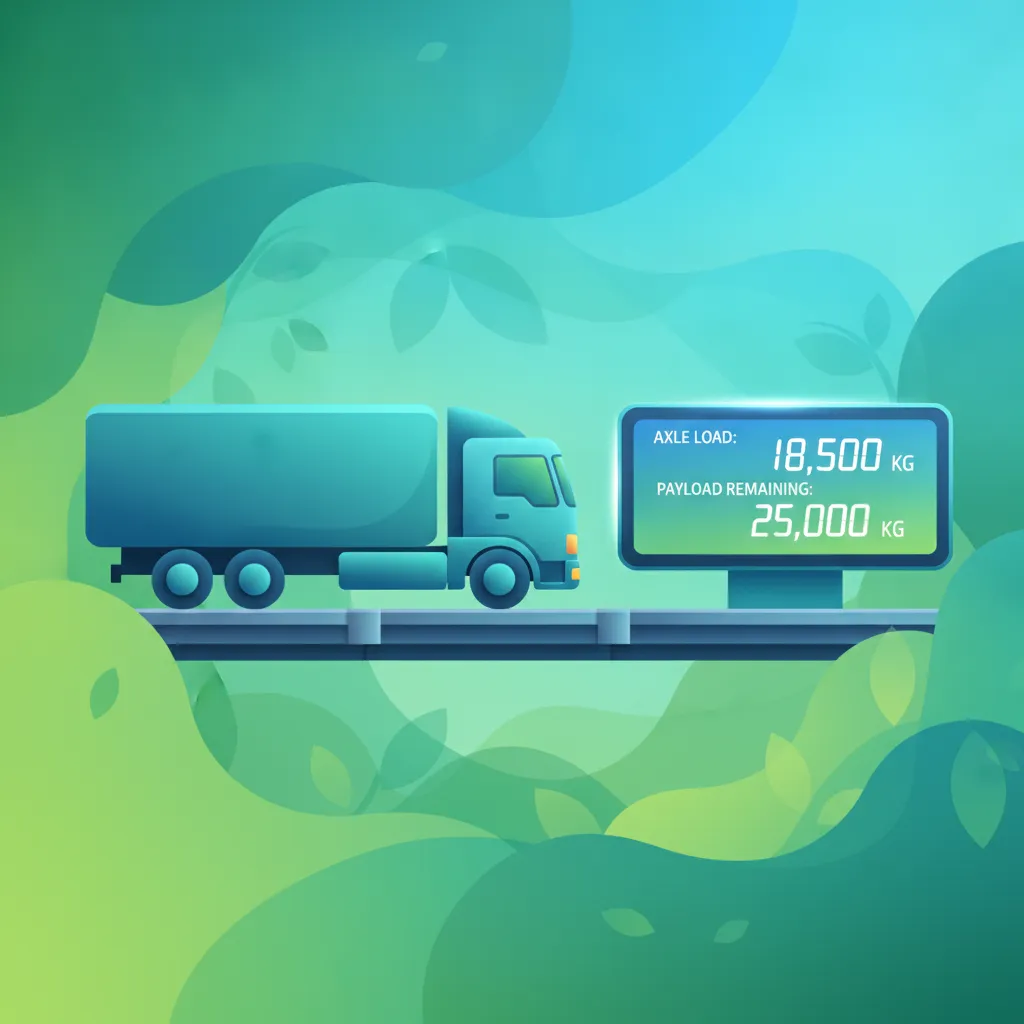
This lesson details the importance of managing axle load limits (Achslast) and their relationship to the vehicle's payload (Nutzlast). It explains how uneven load distribution can lead to exceeding individual axle limits, even if the total mass is legal. Proper management of axle loads is essential for vehicle stability, road preservation, and legal compliance.
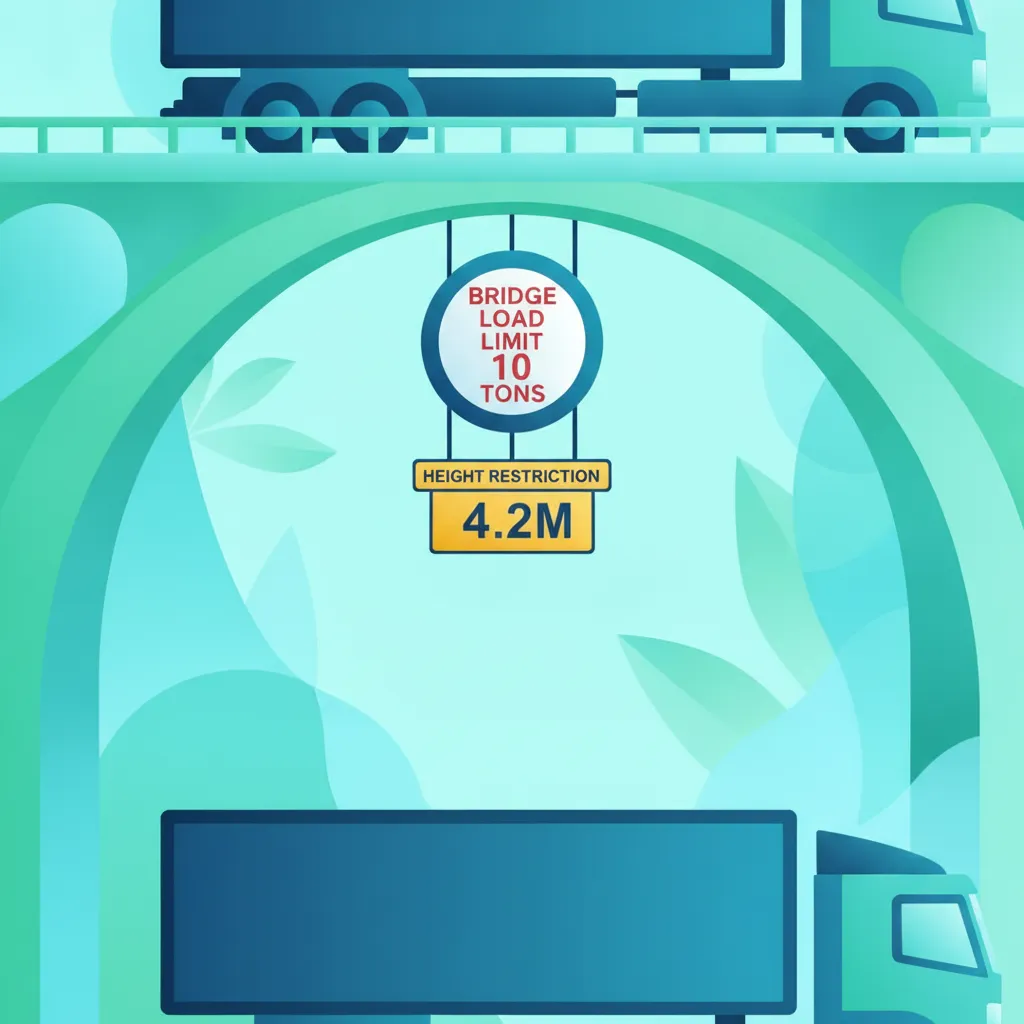
This lesson focuses on the critical importance of observing posted weight and height limits for bridges and other structures. It explains how to read the relevant signage and stresses the driver's responsibility to know their vehicle's exact height and weight. Ignoring these limits can lead to catastrophic structural failure and severe legal consequences.
Find clear answers to common questions learners have about Licence Categories C1, C1E, C, CE Overview. Learn how the lesson is structured, which driving theory objectives it supports, and how it fits into the overall learning path of units and curriculum progression in Austria. These explanations help you understand key concepts, lesson flow, and exam focused study goals.
The C1 category applies to vehicles with a maximum authorized mass between 3,500 kg and 7,500 kg. The C category applies to vehicles with a maximum authorized mass exceeding 3,500 kg, without the upper limit constraint of the C1 category.
Yes, if you wish to tow a trailer with a mass exceeding 750 kg, you need the 'E' extension (C1E or CE). The base C or C1 licence alone does not authorize the operation of heavy combinations.
Exam questions often present a specific vehicle configuration (mass and trailer type) and ask you to select the required licence category or identify if a driver is legally permitted to operate that specific combination.
Yes, C1E is specifically for combinations consisting of a C1 category motor vehicle and a trailer or semi-trailer where the combination mass reaches specific legal thresholds, typically used for lighter heavy-duty transport.
Refine your study plan by searching for specific Austrian driving theory practice sets. Pinpoint questions related to particular road rules, signs, or challenge levels, and begin practicing immediately to reinforce your knowledge and excel in your official exam with confidence. Get started with focused revision today.