
Navigating Denmark's busy urban roads requires special attention to vulnerable road users. This unit focuses on the unique risks presented by cyclists, e-bikes, buses, and pedestrians, equipping you with the knowledge to drive safely and confidently in city environments. Prepare for the challenges of urban traffic and the specific questions on this topic in your theory test.
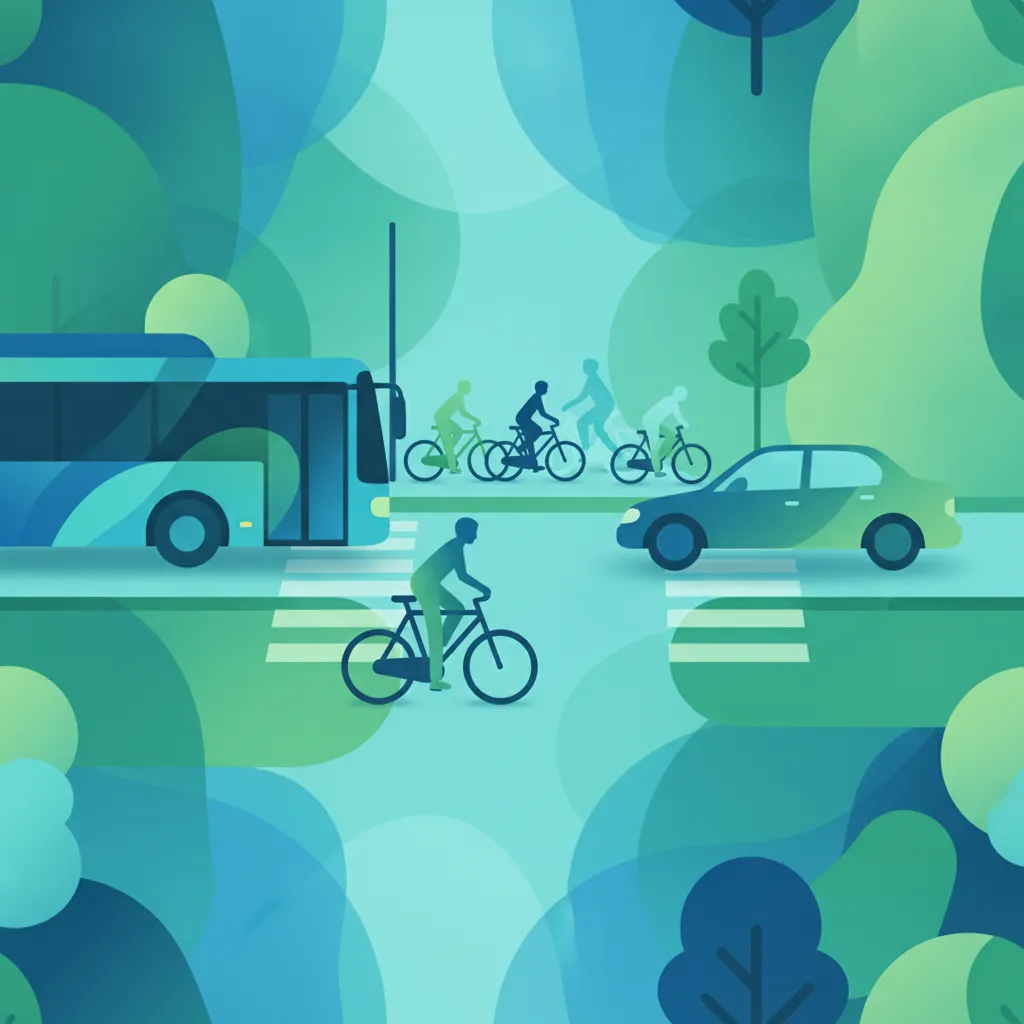
Browse all lessons that make up Urban Risk: Cyclists, E-bikes, Buses, and Pedestrians. Each lesson focuses on specific topics, learning objectives, and core concepts, helping you build essential knowledge and follow a clear, structured progression toward your study goals in Denmark.
This lesson provides in-depth guidance on safely interacting with cyclists and e-bike riders, a daily reality in Danish cities. It explains how to provide adequate space when overtaking, how to anticipate their movements at intersections, and how to respect their right-of-way in designated lanes. Understanding these dynamics is essential for preventing common accidents and ensuring a safe urban driving experience for everyone.
This lesson details the specific rules related to bus lanes and bus stops. It clarifies when other vehicles may use bus lanes, the legal requirement to yield to buses pulling away from a stop, and the importance of being cautious around embarking or disembarking passengers. Adherence to these rules is vital for the efficient and safe operation of public transportation.
This lesson reinforces the driver's responsibility to protect pedestrians, particularly in busy urban areas and near schools. It details the procedures for approaching pedestrian crossings, the legal requirement to reduce speed significantly in marked school zones, and how to anticipate the unpredictable actions of pedestrians. The content covers traffic calming measures and the legal rights of pedestrians in various settings.
Explore high-intent keywords and long-tail search topics learners use when researching Urban Risk: Cyclists, E-bikes, Buses, and Pedestrians. These terms reflect how people search for reliable study materials, structured explanations, and unit-level theory preparation support in Denmark.
Find clear answers to the most common questions learners ask about Urban Risk: Cyclists, E-bikes, Buses, and Pedestrians. Understand how the unit is organized, what learning goals it supports, and how it contributes to your study progression with structured explanations and practical guidance tailored for learners in Denmark.
The primary risks involve cyclists suddenly swerving, not signalling intentions, or being in a driver's blind spot. E-bikes can also accelerate quickly. Always maintain a safe distance, anticipate their movements, and be aware that they may need to manoeuvre around road hazards or parked cars. Remember that cyclists have rights and responsibilities on Danish roads.
Bus lanes are typically reserved for buses during specific hours. You must not drive in them unless signs permit it. At bus stops, be especially cautious as buses may stop abruptly to pick up or drop off passengers, and pedestrians might cross the road near the stop. Always be prepared to slow down or stop.
In urban areas and especially near schools, reduce your speed significantly and be highly observant for pedestrians, including children who may be unpredictable. Always be prepared to stop immediately if anyone, especially a child, enters the road. Obey all pedestrian crossing signs and signals, and never assume a pedestrian sees you.
Yes, intersections in Denmark often have specific lanes and signals for cyclists and pedestrians. Always check for these, understand which signals apply to you and which apply to vulnerable road users, and yield appropriately. Never enter an intersection unless you are sure you can clear it safely without impeding other traffic or vulnerable road users.
Urban driving involves significantly higher traffic density, including many more cyclists, e-bikes, buses, and pedestrians. Speeds are generally lower but the potential for conflict and hazardous situations is greater due to these interactions. You also need to navigate more complex junctions, bus lanes, and potentially varying road surfaces.
Focus on understanding the specific rules and safety considerations for cyclists, e-bikes, buses, and pedestrians in Denmark. Practice with example questions that present urban scenarios, paying attention to hazard perception and priority rules in these busy environments. Understanding the 'why' behind the rules will help you apply them correctly.
All included lessons
Lessons in Urban Risk: Cyclists, E-bikes, Buses, and Pedestrians
See who benefits most from studying Urban Risk: Cyclists, E-bikes, Buses, and Pedestrians. This overview explains how the unit supports different learning needs, what level of knowledge is helpful before starting, and how it fits into the overall study path in Denmark.
This unit is essential for all learner drivers preparing for the Danish Category B theory test, particularly those who anticipate driving frequently in urban or suburban areas. It is especially beneficial for drivers who may be less familiar with the density of cyclists and pedestrians common in Danish cities or who struggle with navigating complex urban intersections and bus lanes.

Begin your official Danish driving licence preparation today by exploring our comprehensive curriculum. Choose a structured course that suits your learning style and progress confidently through all traffic rules, road signs, and practical scenarios required for your exam.
Browse Driving Theory CoursesExplore all units and lessons included in this driving theory course.
Begin your official Danish driving licence preparation today by exploring our comprehensive curriculum. Choose a structured course that suits your learning style and progress confidently through all traffic rules, road signs, and practical scenarios required for your exam.
Browse Driving Theory Courses