
This lesson focuses on the critical responsibility of protecting vulnerable road users in urban environments and school zones. Building on your knowledge of traffic signs and priority rules, you will learn how to anticipate pedestrian movements and comply with Danish regulations. Mastering these skills is essential for both passing your theory test and driving safely in dense city traffic.
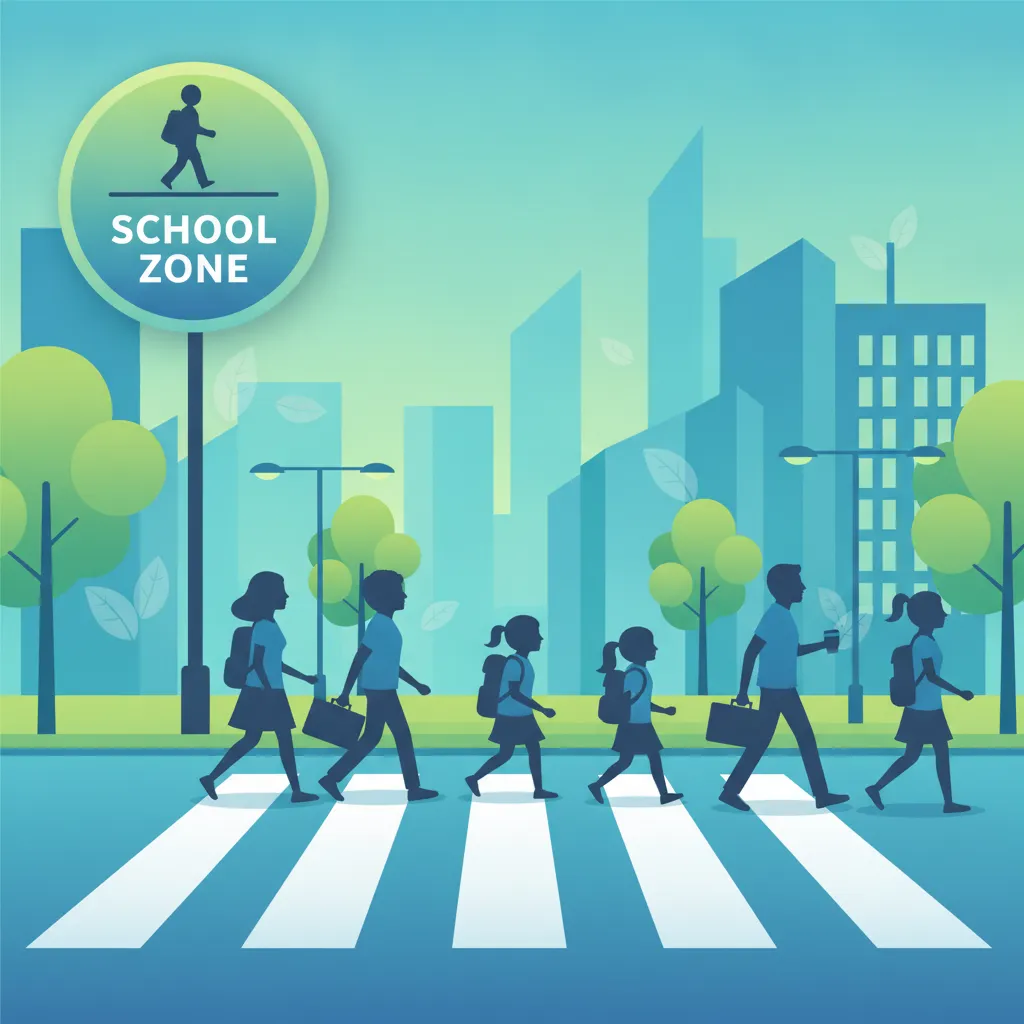
Lesson content overview
This lesson, part of your Danish Driving License Theory Course: Category B Preparation, is designed to equip you with the knowledge and skills necessary to navigate urban environments and school zones safely, with a particular focus on protecting pedestrians. Pedestrians are among the most vulnerable road users, especially in densely populated areas and near schools where children are present. Understanding the required behavior around pedestrian crossings, the legal obligations in school zones, and the influence of traffic calming measures is vital for reducing accidents and ensuring everyone's safety on Danish roads.
In the complex tapestry of urban traffic, some road users are inherently more susceptible to injury in the event of a collision. These are categorized as vulnerable road users, and their presence demands heightened awareness and a proactive approach from drivers. Recognising and prioritising the safety of these individuals is a cornerstone of responsible driving in Denmark.
Pedestrians, by their very nature, lack the protective shell that vehicles provide. They are exposed directly to the forces of a collision, making any impact potentially severe. This vulnerability is amplified when considering children, who are not only physically smaller and less visible but also possess developing cognitive abilities that affect their judgment and understanding of traffic hazards. Their actions can be unpredictable, making them particularly susceptible to accidents near schools and residential areas. Drivers must therefore operate with an increased sense of responsibility, anticipating potential movements and adjusting their speed and behavior to provide ample reaction time and space for these users.
Pedestrian crossings are critical points of interaction between vehicles and pedestrians. Designed to facilitate safe passage for those on foot, these areas come with specific rules and expectations for drivers. Adhering to these regulations is not just a legal requirement but a moral obligation to protect the most exposed individuals on our roads.
In Denmark, pedestrian crossings are designated points on the road where pedestrians can cross safely. The most common type is the zebra crossing, clearly marked by broad white stripes painted across the road. These often include associated signs indicating the presence of a crossing. Some crossings may also feature pedestrian islands in the middle, providing a temporary safe haven for pedestrians to wait before completing their journey across the road. Additionally, drivers may encounter unmarked crossings, particularly in residential areas or near schools, where specific road markings are absent but the presence of pedestrians is highly anticipated due to the environment.
At marked pedestrian crossings, specifically zebra crossings and those with pedestrian islands, pedestrians have an unconditional right-of-way. This means that if a pedestrian is on the crossing or is clearly about to enter it, drivers must stop completely and allow them to cross safely. Failing to stop for a pedestrian at a marked crossing is a serious traffic violation in Denmark and carries significant penalties. It is crucial to anticipate the possibility of pedestrians stepping onto the crossing, even if they appear hesitant. You must not proceed until the crossing is entirely clear and all pedestrians have reached the other side or a pedestrian island.
Always come to a complete stop before the white lines of a zebra crossing if a pedestrian is present or about to enter. Rolling through the crossing, even slowly, is a violation.
While pedestrians have unconditional right-of-way at marked crossings, the situation at unmarked crossings requires a different kind of vigilance. At these locations, often found where footpaths intersect with residential streets or small roads, drivers do not automatically have to stop for pedestrians unless it is unsafe to proceed. However, the driver's responsibility to exercise heightened caution remains paramount. You must significantly reduce your speed, actively scan for pedestrians, and be prepared to stop if a pedestrian steps into your path or if the situation dictates that yielding is the safest course of action. The principle of due care and consideration for vulnerable road users always applies, regardless of specific markings.
School zones, known in Denmark as Uddannelsesområder, are specially designated areas around schools where heightened safety measures are enforced to protect children. These zones require drivers to adjust their behavior significantly, primarily by reducing speed and increasing vigilance.
In designated Danish school zones, a mandatory reduced speed limit of 30 km/h typically applies. This limit is clearly indicated by specific traffic signs featuring a school symbol, often accompanied by the speed limit. The 30 km/h limit is not merely a suggestion; it is a legal requirement that drivers must adhere to throughout the entire zone, from the moment they pass the entry sign until they see the sign indicating the end of the school zone.
The rationale behind this strict speed reduction is rooted in the physics of collisions and human reaction times. Lower speeds provide drivers with significantly more time to react to unexpected situations, such as a child suddenly darting into the road. More importantly, if a collision does occur, a lower impact speed drastically reduces the severity of injuries to the pedestrian. For example, the chance of survival for a pedestrian struck by a vehicle traveling at 30 km/h is considerably higher than if the vehicle were traveling at 50 km/h. Therefore, maintaining 30 km/h in school zones is a direct measure to enhance child safety.
Children, especially younger ones, may not fully grasp the dangers of road traffic or consistently follow safety rules. They might be distracted by friends, excited, or simply less aware of their surroundings than adults. Their behavior can be unpredictable: they may run into the street without looking, change direction suddenly, or emerge from behind parked cars or buses without warning.
Drivers must actively anticipate such scenarios when in a school zone. This means continuously scanning the environment – not just the road ahead, but also pavements, parked cars, and potential blind spots. Be prepared to brake suddenly and gently, and avoid relying solely on the horn, as a sudden loud noise might startle a child and cause a more dangerous reaction. Your focus should be entirely on the road and its immediate surroundings.
Beyond speed limits, Danish urban planners employ various physical modifications to road infrastructure, known as traffic calming measures, to naturally encourage drivers to reduce their speed and improve safety for all road users, especially pedestrians.
Traffic calming measures are physical features designed to alter driver behavior. Common examples include:
The purpose of these measures is not to annoy drivers but to create an environment where high speeds are difficult and uncomfortable, thereby protecting pedestrians in residential and school areas. Drivers must adapt their speed well in advance of these features, passing over them at the appropriate reduced speed. Ignoring traffic calming measures by driving over them too quickly can lead to vehicle damage, discomfort for occupants, and, critically, a loss of control, increasing the risk of accidents with vulnerable road users. Always respect these design elements as they are a fundamental part of urban pedestrian safety infrastructure.
Danish traffic law, particularly the Færdselsloven (Road Traffic Act), establishes clear regulations governing how drivers must interact with pedestrians. These rules are designed to protect pedestrians and ensure a safe flow of traffic in shared urban spaces.
The fundamental principle governing pedestrian interaction is that pedestrians, as vulnerable road users, are often granted priority. As discussed, at marked pedestrian crossings (zebra crossings and those with islands), pedestrians have unconditional right-of-way. This means vehicles must yield to any pedestrian who is on the crossing or about to enter it. The responsibility lies entirely with the driver to ensure a safe passage for the pedestrian. At unmarked crossings or elsewhere on the road, while pedestrians may not have automatic right-of-way, drivers are always obliged to exercise due care and attention, and to avoid any situation that could endanger pedestrians. This legal priority ensures pedestrians can cross safely without having to compete with vehicle traffic.
Maintaining an adequate stopping distance is crucial in urban areas and school zones, where sudden stops for pedestrians are common. Stopping distance is the total distance your vehicle travels from the moment you perceive a hazard and decide to brake, until your vehicle comes to a complete halt. This distance is influenced by several factors:
In urban areas, especially near schools, always maintain a stopping distance that allows you to react safely to an unexpected event, even if it means driving slower than the posted speed limit.
The vehicle horn (hornet) in Denmark is intended as a warning signal to prevent danger, not as a tool for expressing frustration or impatience. In urban areas, and particularly near schools, its use is strictly regulated. You should only use the horn when it is absolutely necessary to avert an immediate danger. For instance, if a child suddenly steps into the road without seeing your vehicle, a short, sharp horn blast can alert them. However, aggressive or prolonged honking is inappropriate and counterproductive. It can startle pedestrians, especially children, potentially causing them to react unpredictably or dangerously. Whenever possible, slowing down and using visual cues (like flashing your headlights briefly if safe) are preferable alternatives to the horn.
Specific parking restrictions are in place near pedestrian crossings and school zones to ensure clear visibility for both drivers and pedestrians. Parking too close to these areas can create dangerous blind spots, making it difficult for drivers to see pedestrians and for pedestrians to see approaching vehicles.
Generally, parking is prohibited within a certain distance (e.g., 5-10 metres) of pedestrian crossings and intersections. These regulations are designed to provide an unobstructed view of the crossing and its approaches, allowing drivers ample time to react to pedestrians and ensuring pedestrians can safely assess traffic before crossing. Always be mindful of these restrictions and park your vehicle only in designated, legal spaces, well clear of areas where visibility for vulnerable road users is crucial.
Even experienced drivers can make mistakes, but some are particularly dangerous when it comes to pedestrian safety. Recognizing these common errors is the first step towards developing safer driving habits.
Two of the most frequent and dangerous violations in urban areas and school zones are exceeding the speed limit and failing to yield at pedestrian crossings. Driving at 50 km/h in a 30 km/h school zone dramatically reduces your reaction time and increases the potential severity of a collision. Similarly, failing to stop completely at a zebra crossing when pedestrians are present puts lives at risk and is a direct contravention of Danish traffic law. Always consciously adjust your speed to the legal limit in school zones and be prepared to stop for pedestrians at crossings.
Many pedestrian-related accidents occur because the driver's attention is not fully on the road and its surroundings. Inadequate scanning – not actively looking for pedestrians, especially children, emerging from between parked cars or from behind bushes – means you might not detect a hazard until it's too late. Driving distraction, whether from mobile phones, in-car entertainment, or even engaging conversations, diverts your crucial visual and cognitive attention from the road. In areas with high pedestrian activity, every second of distraction increases risk. Practice continuous, active scanning and eliminate all forms of distraction while driving, particularly near schools and residential areas.
Maintaining overall situational awareness is key. While focusing on pedestrians, also be aware of other vehicles, cyclists, and potential hazards to avoid secondary collisions.
Safe driving is not static; it requires constant adaptation to changing conditions. Environmental factors and the state of your vehicle can significantly impact pedestrian safety.
Adverse weather dramatically affects driving conditions. In rain, fog, or darkness, visibility is reduced, and stopping distances are extended due to wet or icy road surfaces. You must further reduce your speed in these conditions, even below the posted limit, to compensate. This provides you with more time to identify pedestrians and allows for longer braking distances. Be especially cautious of pedestrians who may be difficult to see due to dark clothing or lack of reflective gear. Similarly, wet or icy road surfaces demand significantly slower speeds, particularly when approaching pedestrian crossings or traffic calming measures, where sudden braking might be necessary.
The time of day directly influences pedestrian activity and visibility. Early mornings and evenings, especially during school drop-off and pick-up times, often see a surge in pedestrian and child activity. During these periods, and particularly in low light conditions, drivers must be extra vigilant. Ensure your vehicle's headlamps are on, even if it's just dusk, to improve your visibility to pedestrians and to illuminate the road ahead. Anticipate that pedestrians, especially children, may not be wearing reflective clothing, making them harder to spot.
The condition of your vehicle plays a vital role in its ability to stop safely. A vehicle with worn brakes or bald tyres will have a significantly longer stopping distance, making it much harder to react to sudden pedestrian movements. Similarly, an excessive load on your vehicle increases its mass and inertia, which extends braking distances and can affect handling. Before driving in urban areas or school zones, ensure your vehicle is in good working order, with properly maintained brakes and tyres. If you are carrying a heavy load, factor this into your driving by further reducing your speed and increasing your following distances.
Understanding the underlying principles of physics and human psychology can deepen your appreciation for pedestrian safety rules and reinforce the importance of safe driving practices.
The relationship between vehicle speed, a driver's reaction time, and the severity of a collision is critical. Physics dictates that the kinetic energy of a moving object increases exponentially with its speed. This means that a small increase in speed leads to a disproportionately larger increase in destructive energy during a collision.
Children's developmental stage influences their road behavior. Psychologically, children:
These psychological factors underscore why drivers must take full responsibility for anticipating unpredictable behavior and reducing speed drastically in areas where children are present.
Driving safely around pedestrians, particularly in bustling urban areas and school zones, is a crucial skill for every responsible driver. By adhering to these principles, you contribute significantly to a safer road environment for everyone.
Uddannelsesområder).This lesson covers the critical responsibility of protecting pedestrians, especially children, in Danish urban areas and school zones. Drivers must understand that pedestrians have unconditional right-of-way at marked crossings (zebra crossings and pedestrian islands) and come to a complete stop for them. Danish school zones called Uddannelsesområder legally mandate a 30 km/h speed limit to reduce collision severity and provide adequate reaction time. Traffic calming measures are intentional safety infrastructure, not obstacles, and must be respected. Drivers must anticipate unpredictable child behavior, maintain appropriate stopping distances, use horns sparingly, observe parking restrictions near crossings, and adjust their driving for adverse weather and low-light conditions.
A short set of high-value points that capture the most important learning from this lesson.
Pedestrians at marked zebra crossings and pedestrian islands have unconditional right-of-way that drivers must respect by stopping completely
Danish school zones (Uddannelsesområder) legally require drivers to reduce speed to 30 km/h when the zone signs are present
Children are unpredictable road users who may not judge vehicle speed, direction, or distance accurately, requiring extra driver anticipation
Traffic calming features such as speed bumps (fartbumpere) and chicanes are intentional safety infrastructure designed to naturally reduce vehicle speeds
Stopping distance increases exponentially with speed, meaning halving your speed more than doubles your available reaction margin
Explore all units and lessons included in this driving theory course.
At unmarked crossings, drivers must exercise heightened caution and be prepared to stop, even though pedestrians lack automatic right-of-way
The horn (hornet) should only be used to prevent immediate danger, never to express impatience, as sudden noise can startle children unpredictably
Parking is prohibited within a certain distance of pedestrian crossings to maintain visibility for both drivers and pedestrians
Adverse weather conditions extend stopping distances and reduce visibility, requiring further speed reduction below posted limits in school zones
The Danish Road Traffic Act (Færdselsloven) places the duty of care on drivers to protect vulnerable road users, particularly children in school zones
Rolling through a zebra crossing slowly instead of coming to a complete stop, which constitutes a traffic violation even if no pedestrians are struck
Driving at 50 km/h instead of the required 30 km/h in school zones, dramatically reducing reaction time and collision survivability
Failing to scan actively for children emerging from behind parked cars, bushes, or buses in school and residential areas
Using a mobile phone or becoming distracted in urban areas with high pedestrian activity, diverting crucial visual attention
Driving over traffic calming measures too quickly, which can cause vehicle damage and loss of control near vulnerable road users
Lesson content overview
A short set of high-value points that capture the most important learning from this lesson.
Pedestrians at marked zebra crossings and pedestrian islands have unconditional right-of-way that drivers must respect by stopping completely
Danish school zones (Uddannelsesområder) legally require drivers to reduce speed to 30 km/h when the zone signs are present
Children are unpredictable road users who may not judge vehicle speed, direction, or distance accurately, requiring extra driver anticipation
Traffic calming features such as speed bumps (fartbumpere) and chicanes are intentional safety infrastructure designed to naturally reduce vehicle speeds
Stopping distance increases exponentially with speed, meaning halving your speed more than doubles your available reaction margin
Explore all units and lessons included in this driving theory course.
At unmarked crossings, drivers must exercise heightened caution and be prepared to stop, even though pedestrians lack automatic right-of-way
The horn (hornet) should only be used to prevent immediate danger, never to express impatience, as sudden noise can startle children unpredictably
Parking is prohibited within a certain distance of pedestrian crossings to maintain visibility for both drivers and pedestrians
Adverse weather conditions extend stopping distances and reduce visibility, requiring further speed reduction below posted limits in school zones
The Danish Road Traffic Act (Færdselsloven) places the duty of care on drivers to protect vulnerable road users, particularly children in school zones
Rolling through a zebra crossing slowly instead of coming to a complete stop, which constitutes a traffic violation even if no pedestrians are struck
Driving at 50 km/h instead of the required 30 km/h in school zones, dramatically reducing reaction time and collision survivability
Failing to scan actively for children emerging from behind parked cars, bushes, or buses in school and residential areas
Using a mobile phone or becoming distracted in urban areas with high pedestrian activity, diverting crucial visual attention
Driving over traffic calming measures too quickly, which can cause vehicle damage and loss of control near vulnerable road users
Explore search topics learners often look for when studying Pedestrian Safety in Urban Areas and School Zones. These topics reflect common questions about road rules, driving situations, safety guidance, and lesson level theory preparation for learners in Denmark.
Browse additional driving theory lessons that cover connected traffic rules, road signs, and common driving situations related to this topic. Improve your understanding of how different rules interact across everyday traffic scenarios.
Understand the specific risks pedestrians face in Danish cities and school zones. Learn about their vulnerability, rights at crossings, and how to anticipate unpredictable behavior to ensure their safety.
This lesson provides detailed guidance on navigating pedestrian crossings (fodgængerfelter) and areas with high cyclist traffic. It clarifies your legal obligation to stop for pedestrians at zebra crossings and the proper speed to approach these zones. A central theme is understanding the rights of vulnerable road users and how to yield safely to them in accordance with Danish traffic law.
This lesson details the legal requirements and safety protocols for operating a bus near schools and pedestrian crossings. It covers mandatory speed reductions, the rules for yielding to pedestrians, and techniques for anticipating the sudden movements of children. The content emphasizes the importance of constant visual scanning and maintaining a high state of alert in these sensitive areas.
This lesson focuses on safe interactions with Denmark's large population of cyclists and other vulnerable road users. It covers the rules for passing cyclists, yielding at pedestrian crossings, and the specific hazard of turning across a bike lane. Developing heightened awareness for these interactions is critical for urban riding.
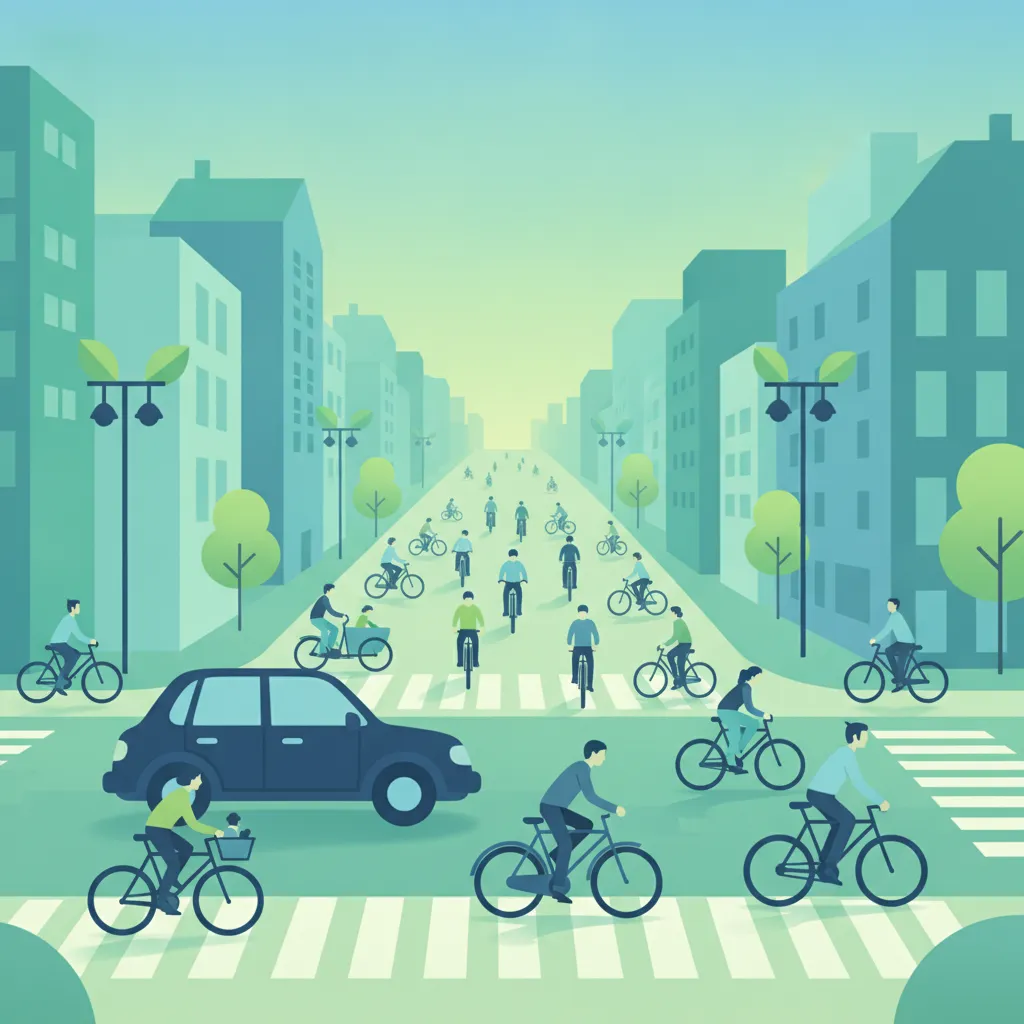
This lesson provides critical guidance for driving in environments with heavy cycle traffic, typical of Danish cities. It focuses on identifying and yielding to cyclists in dedicated bike lanes, especially when turning right across their path. The content emphasizes advanced observation skills to detect cyclists in blind spots and the importance of giving adequate space.
This lesson emphasizes the professional driver's heightened responsibility to protect vulnerable road users. It revisits Danish regulations concerning cyclist priority, particularly during right turns, and details the correct procedures for maintaining safe overtaking distances. The content focuses on developing advanced situational awareness, using mirrors and cameras effectively, and anticipating the behavior of pedestrians and cyclists in urban environments.
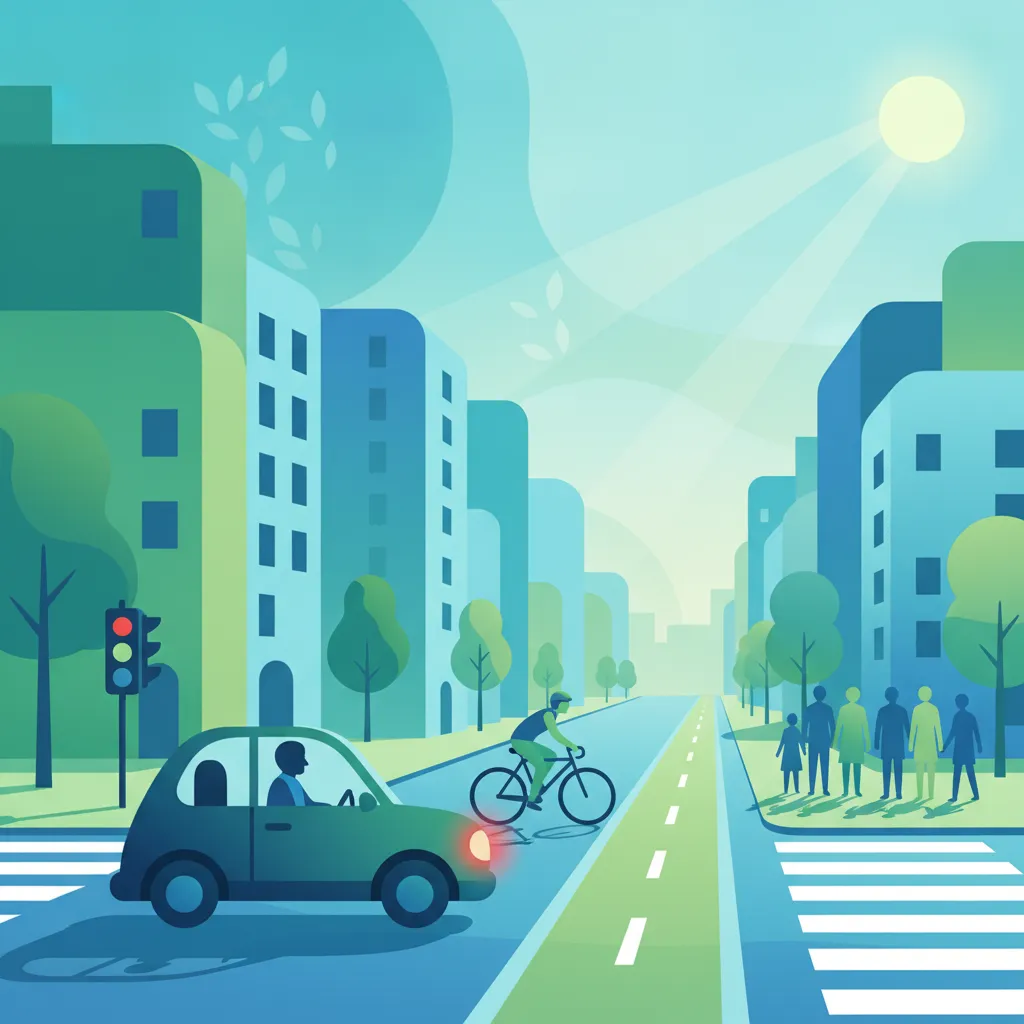
This lesson focuses on the safe integration of cyclists and pedestrians within the traffic system, a key feature of Danish roads. It covers the specific rights and common behaviors of cyclists, including those on e-bikes and cargo bikes, and explains procedures for yielding to pedestrians. The content emphasizes maintaining safe distances and heightened awareness to prevent accidents and promote harmonious road sharing.

This lesson covers the core principles of defensive driving in an urban context. It teaches drivers how to anticipate the actions of other road users, maintain safe following distances in dense traffic, and navigate complex intersections with multiple signals. The content emphasizes heightened awareness of pedestrians, cyclists, and unexpected events common in Danish city environments.
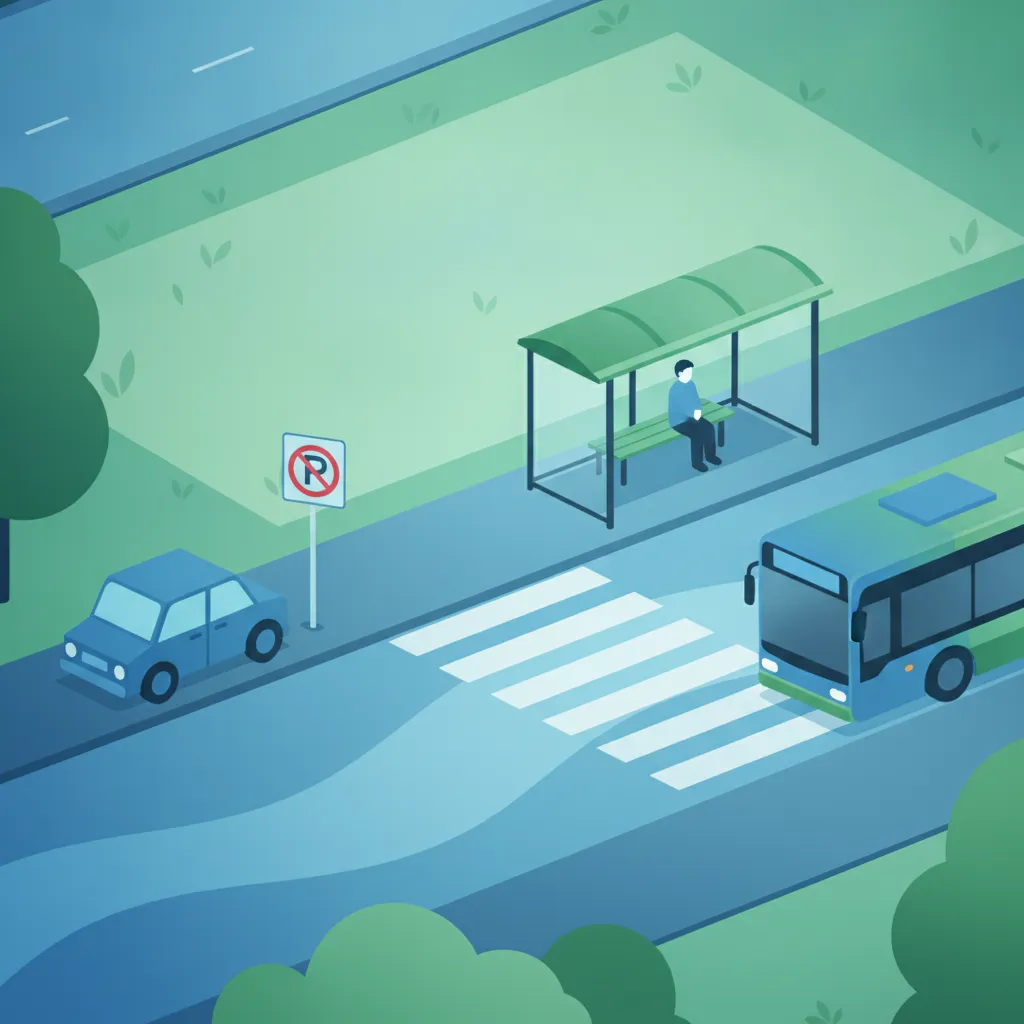
This lesson focuses on identifying and mitigating common hazards in built-up areas. It covers the risks associated with pedestrians emerging from behind buses or parked cars, and the danger of suddenly opening car doors. Learners will understand the importance of reducing speed and increasing observation in these high-risk environments.

This lesson addresses the unique challenges of driving in tourist-heavy urban centers alongside cyclists. It teaches drivers to anticipate the behavior of individuals who may be distracted or unfamiliar with local traffic rules. The content provides strategies for communicating intentions clearly and navigating safely around large groups, luggage, and cyclists.
This lesson introduces cooperative driving as a fundamental element of road safety in Denmark. It highlights the social responsibility of drivers to act predictably, anticipate the actions of others, and maintain courteous interactions with all road users. By fostering mutual respect and cooperation, you will learn how to reduce the potential for conflict and enhance overall traffic safety.
Explore Danish traffic calming measures like speed bumps and chicanes, alongside essential rules for navigating school zones and pedestrian crossings. Learn to adapt your speed and driving for maximum safety.
This lesson details the legal requirements and safety protocols for operating a bus near schools and pedestrian crossings. It covers mandatory speed reductions, the rules for yielding to pedestrians, and techniques for anticipating the sudden movements of children. The content emphasizes the importance of constant visual scanning and maintaining a high state of alert in these sensitive areas.
This lesson provides detailed guidance on navigating pedestrian crossings (fodgængerfelter) and areas with high cyclist traffic. It clarifies your legal obligation to stop for pedestrians at zebra crossings and the proper speed to approach these zones. A central theme is understanding the rights of vulnerable road users and how to yield safely to them in accordance with Danish traffic law.
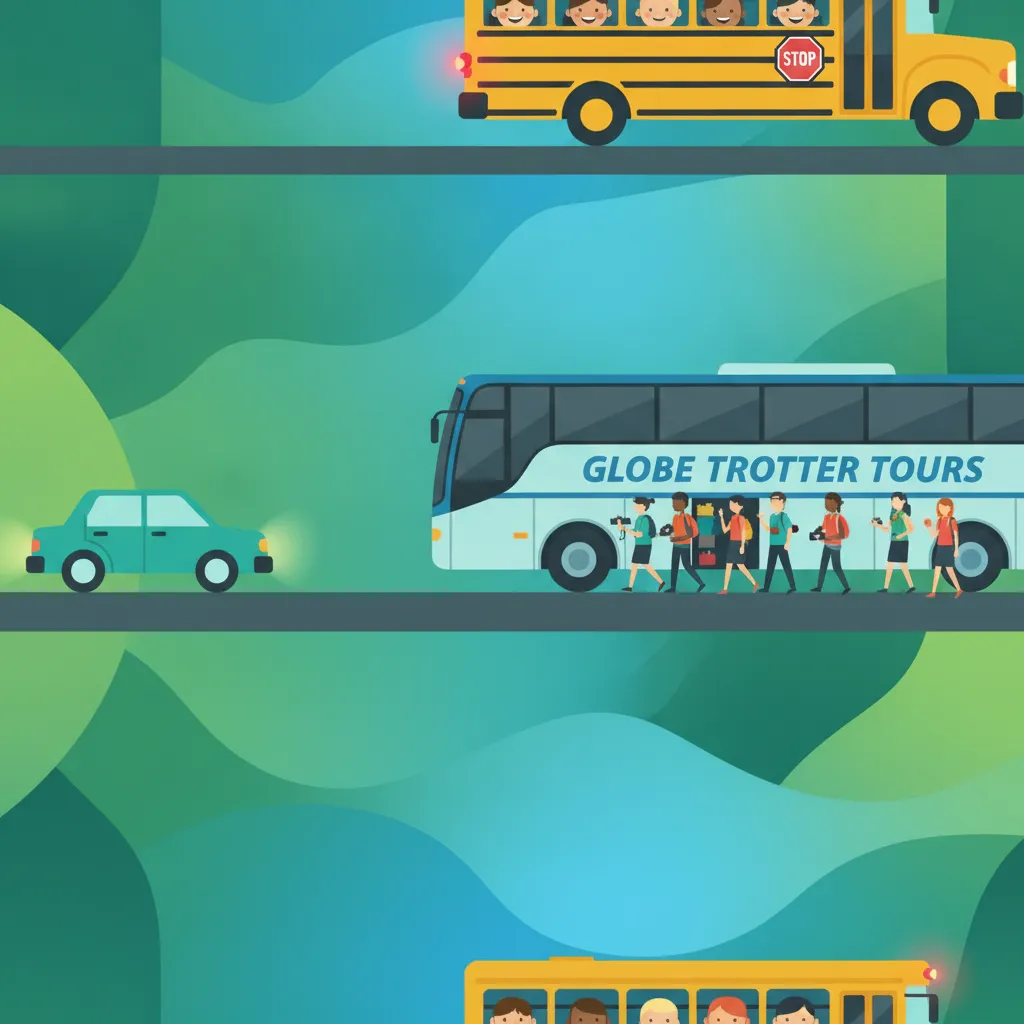
This lesson addresses the specific challenges of school and tourist transport. It outlines heightened safety protocols for stops near schools, including monitoring child behavior and working with school patrols. The content also covers techniques for managing large groups of tourists, dealing with luggage, and providing clear information at popular destinations.
This lesson provides critical guidance for driving in environments with heavy cycle traffic, typical of Danish cities. It focuses on identifying and yielding to cyclists in dedicated bike lanes, especially when turning right across their path. The content emphasizes advanced observation skills to detect cyclists in blind spots and the importance of giving adequate space.
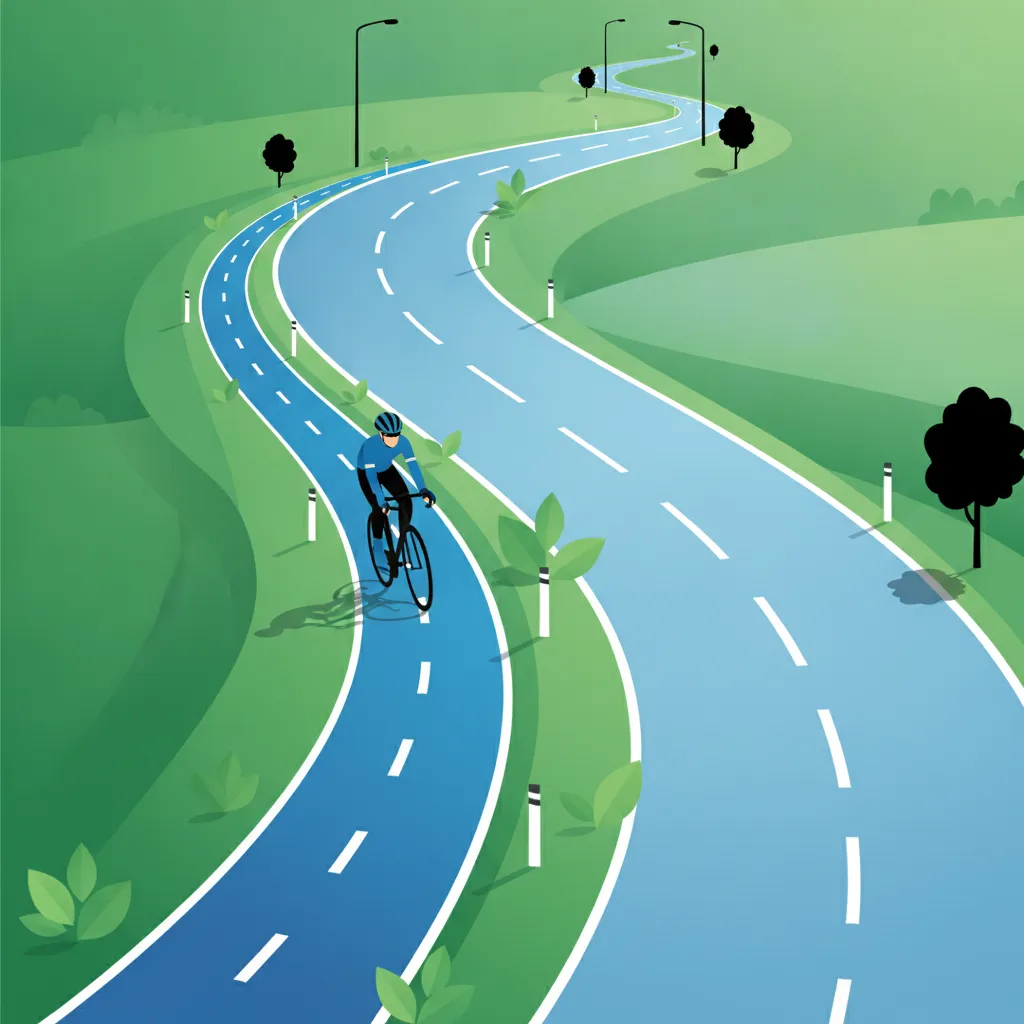
This lesson focuses on interpreting the various markings painted on Danish road surfaces. It explains the rules associated with solid and broken lane lines, directional arrows, and special-purpose lanes for buses and cyclists. Understanding these markings is crucial for maintaining correct lane discipline and safely navigating complex road layouts.

This lesson details the specific rules related to bus lanes and bus stops. It clarifies when other vehicles may use bus lanes, the legal requirement to yield to buses pulling away from a stop, and the importance of being cautious around embarking or disembarking passengers. Adherence to these rules is vital for the efficient and safe operation of public transportation.
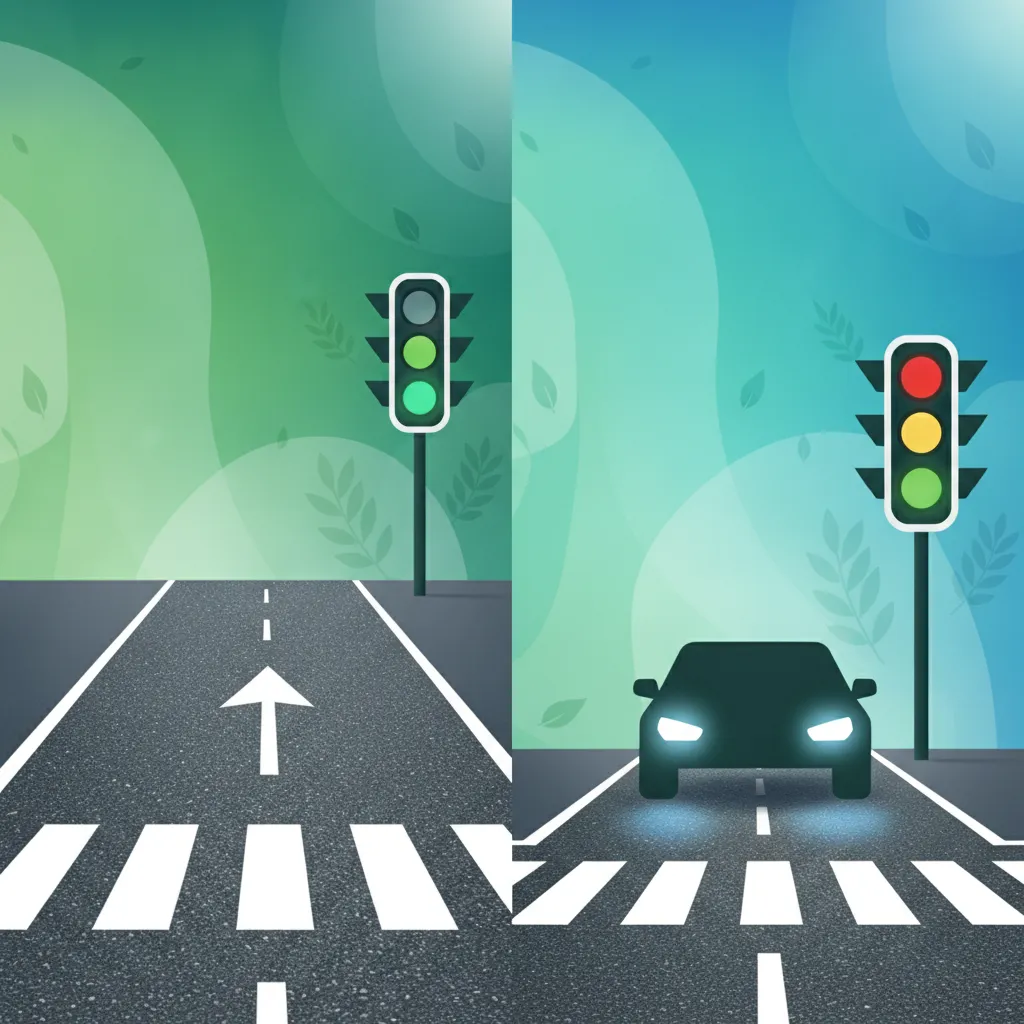
This lesson details the meaning and application of various road surface markings, including lane dividers, solid and broken lines, and directional arrows. You will also learn to interpret the full sequence of traffic light signals, including the specific rules for the amber (yellow) light phase. A proper understanding of these systems is vital for maintaining correct lane discipline and adhering to traffic controls.

This lesson teaches the importance of adapting your speed to prevailing conditions, rather than simply adhering to the posted limit. It explains how factors like traffic density, road surface quality, visibility, and adverse weather should influence your speed choice. Developing this risk-aware approach is crucial for maintaining vehicle control and ensuring safety in all driving environments.
This lesson addresses the unique challenges of driving in tourist-heavy urban centers alongside cyclists. It teaches drivers to anticipate the behavior of individuals who may be distracted or unfamiliar with local traffic rules. The content provides strategies for communicating intentions clearly and navigating safely around large groups, luggage, and cyclists.
This lesson explains the procedures for safely riding through construction zones. It covers how to respond to temporary signage, lane closures, and flaggers directing traffic. Riders will learn to reduce speed and be vigilant for uneven pavement, loose gravel, and the movement of workers and equipment.
Find clear answers to common questions learners have about Pedestrian Safety in Urban Areas and School Zones. Learn how the lesson is structured, which driving theory objectives it supports, and how it fits into the overall learning path of units and curriculum progression in Denmark. These explanations help you understand key concepts, lesson flow, and exam focused study goals.
Yes, if a pedestrian has stepped onto or is clearly about to step onto a pedestrian crossing, you must yield and allow them to cross safely. Failure to do so is a common cause of failure in the theory test and creates a major safety risk.
School zones often have specific, lower speed limits indicated by road signs. You must be prepared to stop immediately for children who may enter the road unpredictably, regardless of whether there is a marked crossing.
When a bus is stopped at a designated stop, you must be extremely cautious. Passengers may exit and step into the road from behind or in front of the bus, so you should reduce your speed and increase your observation.
Yes. While both are vulnerable, cyclists are faster and often occupy designated cycle paths. Pedestrians typically use sidewalks and crossings. Always check for both when turning right at an intersection to ensure you do not cross their path.
Use our powerful search tool to pinpoint specific Danish driving theory topics, road signs, or traffic situations you need to review. Start exploring relevant practice sets now to reinforce your knowledge and build confidence for your upcoming driving licence exam.