
This lesson explores the essential techniques for sharing the road with cyclists and e-bike users, a core component of Danish traffic culture. You will learn to anticipate their movements, follow priority rules correctly, and execute safe maneuvers in busy urban environments. This knowledge is vital for your Category B driving license and your success in the theory exam.

Lesson content overview
Navigating the vibrant streets of Denmark, particularly in its cities, means sharing the road with a significant number of cyclists and e-bike riders. For drivers preparing for their Danish Category B driving license, understanding how to safely interact with these vulnerable road users is not just a recommendation, but a fundamental skill. This lesson provides essential guidance, outlining the legal obligations, best practices, and crucial awareness needed to ensure a safe urban driving experience for everyone.
The dynamic between motorized vehicles and bicycles involves shared spaces, varying speeds, and different maneuvering capabilities. Mastering these interactions is key to preventing common accidents and fostering mutual respect on Danish roads.
Safe and harmonious coexistence on the road is built upon several foundational principles. These principles guide your behavior and decision-making when encountering cyclists and e-bike riders, minimizing risks and promoting a responsible driving culture.
Urban roads in Denmark are inherently shared spaces, legally accessible to various road users including pedestrians, cyclists, e-bike riders, and motor vehicles. Unlike motorways, which are exclusive to motorized traffic, city streets require a constant awareness of diverse modes of transport. Drivers must recognize that cyclists have the same legal right to use the roadway as motorists, albeit with adjustments for their speed and vulnerability.
This principle means anticipating that cyclists can appear at any point, whether riding close to the curb, in the middle of a shared lane, or within a designated bike lane. Assuming cyclists will always stay in a specific position or far from vehicles is a common mistake that can lead to dangerous situations. Recognizing and respecting this shared environment is the first step towards safe interaction.
When passing a cyclist or e-bike rider, maintaining a sufficient lateral clearance is paramount. This space, known as overtaking distance (Overhalingsafstand), is critical because cyclists may need to swerve suddenly to avoid road hazards such as potholes, drain covers, or debris, or due to wind gusts or loss of balance. An insufficient distance significantly increases the risk of a collision.
The standard requirement in Denmark is to maintain at least 1.5 metres of lateral distance under normal conditions. This distance should be increased under adverse conditions, such as poor weather, strong winds, or higher speeds, as these factors reduce reaction time and increase the potential for a cyclist to lose control. Drivers must reduce speed when overtaking and ensure ample space before merging back into the lane after passing.
In many situations, especially in urban environments with dedicated infrastructure, cyclists and e-bike riders are granted right-of-way (Fremkommelseret). This legal priority is particularly important in designated bike lanes and at intersections. Drivers must understand and yield to cyclists when necessary, avoiding abrupt maneuvers that could force them to swerve or brake sharply.
A key scenario is when a vehicle intends to turn or change lanes into a cyclist's path. For instance, drivers turning right at an intersection must yield to cyclists continuing straight through the intersection in a dedicated bike lane. Ignoring these priority rules is a common cause of accidents and can lead to legal liability.
Adjusting your vehicle's speed based on traffic conditions, visibility, and the presence of cyclists and e-bike riders, known as speed adaptation (Hastighedstilpasning), is a vital defensive driving technique. Higher speeds inherently reduce reaction time and significantly increase stopping distance, making it much harder to avoid a collision with a slower-moving or unexpectedly maneuvering cyclist.
Drivers must reduce speed when approaching cyclists, particularly in congested urban areas, on narrow roads, or during adverse weather conditions. Driving slower provides more time to observe, anticipate, and react, thereby mitigating risks and enhancing safety for all road users. Never assume you can accelerate quickly to pass a cyclist without careful consideration of the surroundings.
For safe interaction, a driver's intentions must be clear to other road users, especially cyclists, who are more vulnerable to sudden changes in traffic flow. This is achieved through predictability, meaning the consistent use of clear signals and smooth, unhurried maneuvers. Abrupt actions can startle cyclists, causing them to lose balance or swerve into danger.
Always use your turn signals (Blinklys) well in advance of a turn or lane change, allowing cyclists ample time to register your intentions and react accordingly. Avoid sudden braking or acceleration near cyclists. Smoothly navigating traffic, signaling your actions, and maintaining a consistent course helps cyclists anticipate your movements and respond safely.
Visibility (Synlighed) is crucial for preventing collisions; both drivers and cyclists need to see each other clearly to anticipate actions. Drivers have a primary responsibility to ensure they see cyclists, especially before making lane changes, turning, or opening a car door. Cyclists can be difficult to spot, particularly in complex urban environments or during poor lighting conditions.
Always check your mirrors and perform a blind spot (Blinde vinkel) check before changing lanes, turning, or merging. This is particularly important with larger vehicles where blind spots can be significant. Never assume a cyclist is not there just because they are momentarily out of sight. Be proactive in making eye contact with cyclists whenever possible to confirm mutual awareness.
Danish traffic laws are specific about how motorists must interact with cyclists and e-bike riders. Adhering to these regulations is not only a legal obligation but also the most effective way to ensure safety.
The Danish Road Traffic Act (Færdselsloven) mandates specific precautions when overtaking cyclists. As established, a minimum lateral clearance of 1.5 metres must be maintained under normal conditions. This distance is not arbitrary; it accounts for a cyclist's potential need to swerve and the inherent instability of a two-wheeled vehicle compared to a car.
This rule applies to all motor vehicles on any public road where overtaking cyclists or e-bike riders occurs. If maintaining this distance is impossible due to road width, you must wait for a safe opportunity to pass, even if it means slowing down significantly or stopping. Drivers must not accelerate excessively when passing, as this reduces the safety margin and increases wind turbulence for the cyclist.
Drivers must yield to cyclists traveling in a designated bike lane when merging into or crossing that lane. This rule is crucial at intersections, especially when turning right or left. When a vehicle intends to turn right, it must wait for any cyclists proceeding straight in the bike lane to pass safely before completing the turn.
Similarly, cyclists and e-bike riders generally have priority when proceeding straight through an intersection where a dedicated bike lane is marked with a bike symbol, provided no other traffic signals or signs indicate otherwise. This setup prioritizes the continuous flow and safety of cyclists, requiring drivers to be extra vigilant and prepared to yield.
Vigepligt - yield sign) or traffic lights that might alter priority rules at particular intersections. In the absence of such signs, the default rule often favors the cyclist in the dedicated lane.Even experienced drivers can make mistakes when interacting with cyclists. Awareness of these common pitfalls and understanding how to correct them is essential for developing safe driving habits.
Common Mistake: Attempting to squeeze past a cyclist in heavy traffic or on a narrow street, providing less than the required 1.5 metres of clearance. This often happens due to impatience or underestimating the cyclist's need for space. Correct Behavior: Always reduce speed, check mirrors thoroughly, and only overtake when there is ample space to maintain at least 1.5 metres clearance. If space is insufficient, wait behind the cyclist until a safer opportunity arises.
Common Mistake: Drivers turning right or merging into a lane occupied by cyclists fail to check their blind spots or mirrors, cutting off cyclists. Correct Behavior: Before turning or merging, stop and look for cyclists in the bike lane. Always yield if a cyclist is approaching or already in the lane you intend to enter or cross. Use your turn signal early to communicate your intentions.
Common Mistake: Sudden or unannounced lane changes can surprise cyclists, causing them to swerve abruptly or brake hard, potentially leading to a fall or collision. Correct Behavior: Signal well in advance, check all mirrors and blind spots carefully, and execute lane changes gradually and smoothly. This gives cyclists sufficient time to react safely to your maneuver.
Common Mistake: Some drivers accelerate quickly to "get past" a cyclist, which reduces safety margins and can intimidate the cyclist. Correct Behavior: Approach cyclists at a reduced speed. When overtaking, do so calmly from the left (in countries with right-hand traffic), maintaining adequate clearance, and only if safe and legal. Avoid aggressive acceleration.
Common Mistake: Cyclists, especially those on smaller bikes or riding in certain positions, can easily disappear into a vehicle's blind spots, particularly for larger cars, vans, or trucks. Correct Behavior: Perform frequent and thorough mirror checks, and always make a head check (looking over your shoulder) before initiating a lane change or turn. Be particularly vigilant when opening your car door after parking.
Common Mistake: Drivers sometimes assume that if a bike lane exists, all cyclists will use it. Cyclists may, however, ride on the main carriageway if the bike lane is obstructed, poorly maintained, or if they feel safer doing so (e.g., to avoid turning traffic). Correct Behavior: Remain vigilant for cyclists on the main road even when a dedicated bike lane is present. Always treat them as legitimate road users with rights.
Driving conditions are rarely static. Adapting your interaction with cyclists based on external factors is critical for advanced road safety.
Poor Visibility: Rain, fog, snow, or darkness significantly reduce both your visibility of cyclists and their visibility of you. In such conditions, increase your following distance, reduce speed, and be extra cautious when overtaking. Cyclists may also be more prone to swerving due to slippery surfaces or reduced grip. Sun Glare: Low sun can temporarily blind drivers and cyclists. Be aware of its impact on your ability to see cyclists and anticipate their potential for being unsighted.
Narrow Urban Streets: On narrow roads where maintaining the 1.5-metre overtaking distance is impossible, you must wait behind the cyclist until the road widens or a safe passing opportunity arises. Never force a pass. Dedicated Bike Lanes: Roads with well-marked and physically separated bike lanes often provide a clearer division of space, but drivers still need to be aware of merge points and intersections where priority rules apply. Shared Lanes (Cykelsti): Some areas might have shared lanes or paths. In these situations, extreme caution is needed, and drivers must treat cyclists as integral to the lane's traffic flow.
Heavy Loads or Trailers: Driving with a heavy load or towing a trailer significantly increases your vehicle's stopping distance and affects maneuverability. This demands greater caution and even larger safety margins when interacting with cyclists. Your acceleration might also be slower, requiring more planning for overtaking. Vehicle Lighting: Ensure your vehicle's lights are always clean and functioning correctly, especially during dawn, dusk, or adverse weather, to enhance your visibility to cyclists.
Peak Hours: During morning and evening rush hours, the number of cyclists on the road often peaks. Be prepared for frequent interactions, slower traffic flow, and increased vigilance. Night Driving: Cyclists may be less visible at night, even with lights and reflectors. Use dipped beam headlights to illuminate the road ahead without dazzling others. Where appropriate and safe, temporarily switch to high beams to scan for cyclists on unlit roads, but dim them well in advance when approaching a cyclist.
Every action you take (or fail to take) while driving has a direct impact, especially when vulnerable road users like cyclists are involved.
Understanding key terms helps in comprehending traffic laws and communicating effectively.
Safely interacting with cyclists and e-bike riders is a cornerstone of responsible driving in Denmark's urban environments. This lesson for the Danish Driving License Theory Course: Category B Preparation has highlighted key areas you must master:
By adhering to these principles and Danish traffic regulations, you contribute significantly to road safety, reduce the risk of accidents, and foster a respectful and efficient traffic environment for everyone.
This lesson covers the essential principles for safely sharing Danish urban roads with cyclists and e-bike riders, a critical skill for Category B drivers. The core concept is that cyclists have equal legal rights on shared urban roads and must be given at least 1.5 metres of lateral clearance when overtaken. Key rules include yielding to cyclists in designated bike lanes when turning, adapting speed to conditions, and performing thorough mirror and blind spot checks before any maneuver. The lesson also emphasizes that cyclists may ride outside bike lanes when obstructed, and that drivers must remain vigilant about blind spots particularly with larger vehicles. Understanding and applying these principles helps prevent common accidents and ensures safer interactions for all road users in Denmark.
A short set of high-value points that capture the most important learning from this lesson.
Danish urban roads are shared spaces where cyclists have equal legal rights to use the carriageway alongside motor vehicles
Maintain a minimum 1.5 metres lateral clearance when overtaking cyclists, increasing this distance under adverse weather or road conditions
Always yield to cyclists proceeding straight in designated bike lanes when turning or merging across their path
Adjust your speed to traffic conditions and cyclist presence to allow sufficient reaction time and stopping distance
Use turn signals well in advance and execute smooth, unhurried maneuvers so cyclists can anticipate your intentions
Explore all units and lessons included in this driving theory course.
The Danish Road Traffic Act (Færdselsloven) mandates at least 1.5 metres overtaking distance when passing cyclists under normal conditions
Cyclists generally have priority when proceeding straight through an intersection in a dedicated bike lane unless conflicting signals indicate otherwise
Cyclists may ride on the main carriageway even when a bike lane exists if the lane is obstructed or they feel safer doing so
Larger vehicles have significant blind spots; always perform a head check over your shoulder before turning or changing lanes
Drivers bear primary responsibility for ensuring visibility and must check mirrors and blind spots frequently when cyclists are present
Squeezing past cyclists with insufficient clearance due to impatience or underestimating their need for space to swerve
Failing to check blind spots and mirrors before turning or merging into a bike lane, cutting off approaching cyclists
Making sudden or unannounced lane changes that surprise cyclists and force them to brake or swerve abruptly
Accelerating aggressively when a cyclist is ahead to 'get past' them, reducing safety margins and intimidating the cyclist
Assuming cyclists will always stay in designated bike lanes and therefore neglecting to watch for them on the main carriageway
Lesson content overview
A short set of high-value points that capture the most important learning from this lesson.
Danish urban roads are shared spaces where cyclists have equal legal rights to use the carriageway alongside motor vehicles
Maintain a minimum 1.5 metres lateral clearance when overtaking cyclists, increasing this distance under adverse weather or road conditions
Always yield to cyclists proceeding straight in designated bike lanes when turning or merging across their path
Adjust your speed to traffic conditions and cyclist presence to allow sufficient reaction time and stopping distance
Use turn signals well in advance and execute smooth, unhurried maneuvers so cyclists can anticipate your intentions
Explore all units and lessons included in this driving theory course.
The Danish Road Traffic Act (Færdselsloven) mandates at least 1.5 metres overtaking distance when passing cyclists under normal conditions
Cyclists generally have priority when proceeding straight through an intersection in a dedicated bike lane unless conflicting signals indicate otherwise
Cyclists may ride on the main carriageway even when a bike lane exists if the lane is obstructed or they feel safer doing so
Larger vehicles have significant blind spots; always perform a head check over your shoulder before turning or changing lanes
Drivers bear primary responsibility for ensuring visibility and must check mirrors and blind spots frequently when cyclists are present
Squeezing past cyclists with insufficient clearance due to impatience or underestimating their need for space to swerve
Failing to check blind spots and mirrors before turning or merging into a bike lane, cutting off approaching cyclists
Making sudden or unannounced lane changes that surprise cyclists and force them to brake or swerve abruptly
Accelerating aggressively when a cyclist is ahead to 'get past' them, reducing safety margins and intimidating the cyclist
Assuming cyclists will always stay in designated bike lanes and therefore neglecting to watch for them on the main carriageway
Explore search topics learners often look for when studying Managing Interactions with Cyclists and E-Bikes. These topics reflect common questions about road rules, driving situations, safety guidance, and lesson level theory preparation for learners in Denmark.
Browse additional driving theory lessons that cover connected traffic rules, road signs, and common driving situations related to this topic. Improve your understanding of how different rules interact across everyday traffic scenarios.
Understand the specific Danish traffic laws and right-of-way rules that apply when interacting with cyclists and e-bikes in urban areas. Learn how to safely navigate intersections and bike lanes to prevent common accidents.
This lesson provides detailed guidance on navigating pedestrian crossings (fodgængerfelter) and areas with high cyclist traffic. It clarifies your legal obligation to stop for pedestrians at zebra crossings and the proper speed to approach these zones. A central theme is understanding the rights of vulnerable road users and how to yield safely to them in accordance with Danish traffic law.

This lesson provides an in-depth explanation of Denmark's priority rules, known as 'vigepligt.' It differentiates between unconditional priority ('ubetinget vigepligt'), often indicated by signs, and the default right-hand priority rule ('højre vigepligt'). Applying these rules correctly is essential for preventing collisions at junctions without traffic signals.

This lesson focuses on the safe integration of cyclists and pedestrians within the traffic system, a key feature of Danish roads. It covers the specific rights and common behaviors of cyclists, including those on e-bikes and cargo bikes, and explains procedures for yielding to pedestrians. The content emphasizes maintaining safe distances and heightened awareness to prevent accidents and promote harmonious road sharing.
This lesson provides a structured method for approaching and crossing intersections safely. It reinforces the application of priority rules, the interpretation of signs and signals, and the importance of thorough observation. Specific attention is given to looking for cyclists and pedestrians who may be crossing the rider's path.

This lesson addresses the critical skill of safely coexisting with cyclists and cargo bikes, which are prevalent in Denmark. It explains how to maintain a safe distance, overtake properly, and be vigilant for cyclists, especially when turning right. Understanding the infrastructure of cycle lanes and predicting cyclist behavior is a key focus.
This lesson provides critical guidance for driving in environments with heavy cycle traffic, typical of Danish cities. It focuses on identifying and yielding to cyclists in dedicated bike lanes, especially when turning right across their path. The content emphasizes advanced observation skills to detect cyclists in blind spots and the importance of giving adequate space.

This lesson emphasizes the professional driver's heightened responsibility to protect vulnerable road users. It revisits Danish regulations concerning cyclist priority, particularly during right turns, and details the correct procedures for maintaining safe overtaking distances. The content focuses on developing advanced situational awareness, using mirrors and cameras effectively, and anticipating the behavior of pedestrians and cyclists in urban environments.
This lesson focuses on interpreting the various markings painted on Danish road surfaces. It explains the rules associated with solid and broken lane lines, directional arrows, and special-purpose lanes for buses and cyclists. Understanding these markings is crucial for maintaining correct lane discipline and safely navigating complex road layouts.
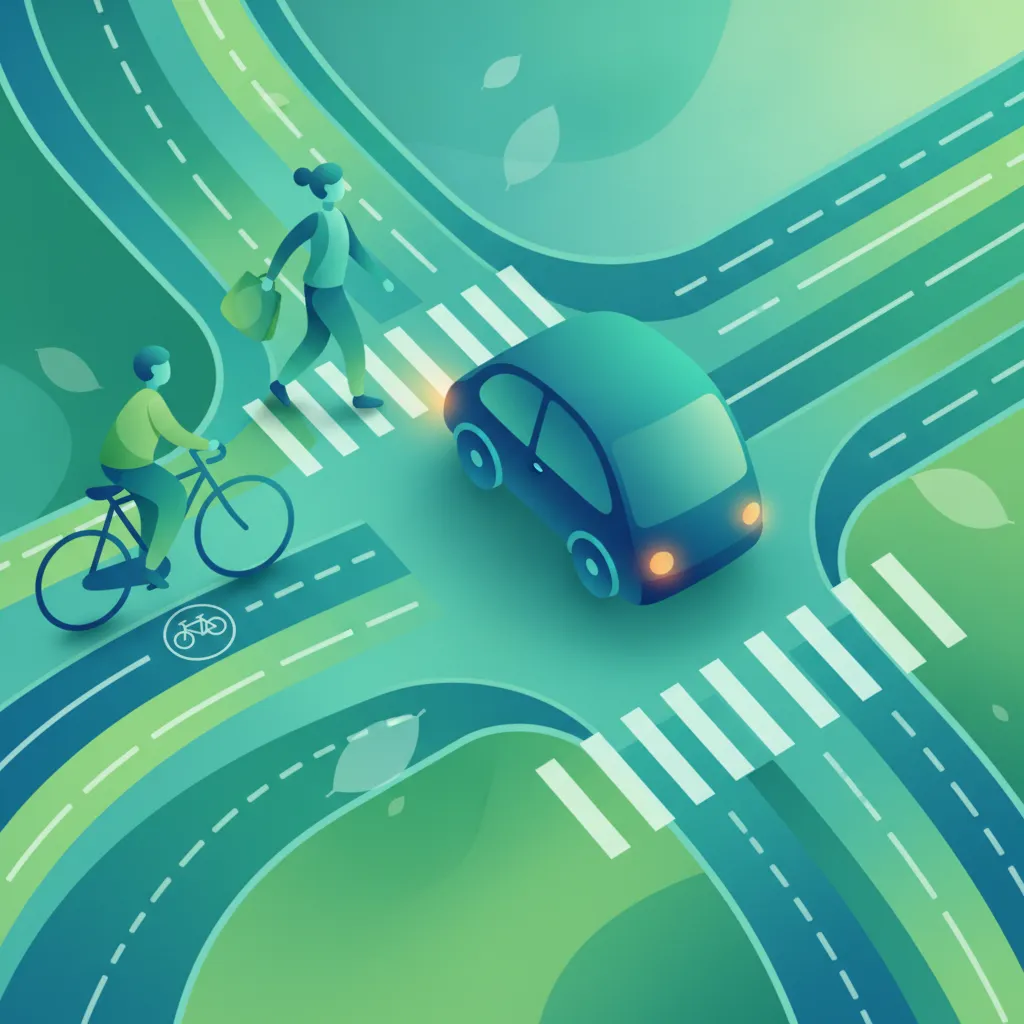
This lesson provides a systematic approach to safely navigating intersections. It covers how to interpret priority signs and traffic signals, establish right-of-way, and scan for potential conflicts from all directions. The importance of clear sightlines and anticipating the movements of other vehicles is a key focus.

This lesson focuses on safe interactions with Denmark's large population of cyclists and other vulnerable road users. It covers the rules for passing cyclists, yielding at pedestrian crossings, and the specific hazard of turning across a bike lane. Developing heightened awareness for these interactions is critical for urban riding.
Identify and learn to avoid frequent errors drivers make when sharing roads with cyclists and e-bikes in Denmark. This lesson focuses on safe overtaking, visibility, and anticipating cyclist movements to enhance urban driving safety.
This lesson focuses on safe interactions with Denmark's large population of cyclists and other vulnerable road users. It covers the rules for passing cyclists, yielding at pedestrian crossings, and the specific hazard of turning across a bike lane. Developing heightened awareness for these interactions is critical for urban riding.
This lesson provides critical guidance for driving in environments with heavy cycle traffic, typical of Danish cities. It focuses on identifying and yielding to cyclists in dedicated bike lanes, especially when turning right across their path. The content emphasizes advanced observation skills to detect cyclists in blind spots and the importance of giving adequate space.

This lesson addresses the unique challenges of driving in tourist-heavy urban centers alongside cyclists. It teaches drivers to anticipate the behavior of individuals who may be distracted or unfamiliar with local traffic rules. The content provides strategies for communicating intentions clearly and navigating safely around large groups, luggage, and cyclists.
This lesson addresses the critical skill of safely coexisting with cyclists and cargo bikes, which are prevalent in Denmark. It explains how to maintain a safe distance, overtake properly, and be vigilant for cyclists, especially when turning right. Understanding the infrastructure of cycle lanes and predicting cyclist behavior is a key focus.
This lesson focuses on the safe integration of cyclists and pedestrians within the traffic system, a key feature of Danish roads. It covers the specific rights and common behaviors of cyclists, including those on e-bikes and cargo bikes, and explains procedures for yielding to pedestrians. The content emphasizes maintaining safe distances and heightened awareness to prevent accidents and promote harmonious road sharing.
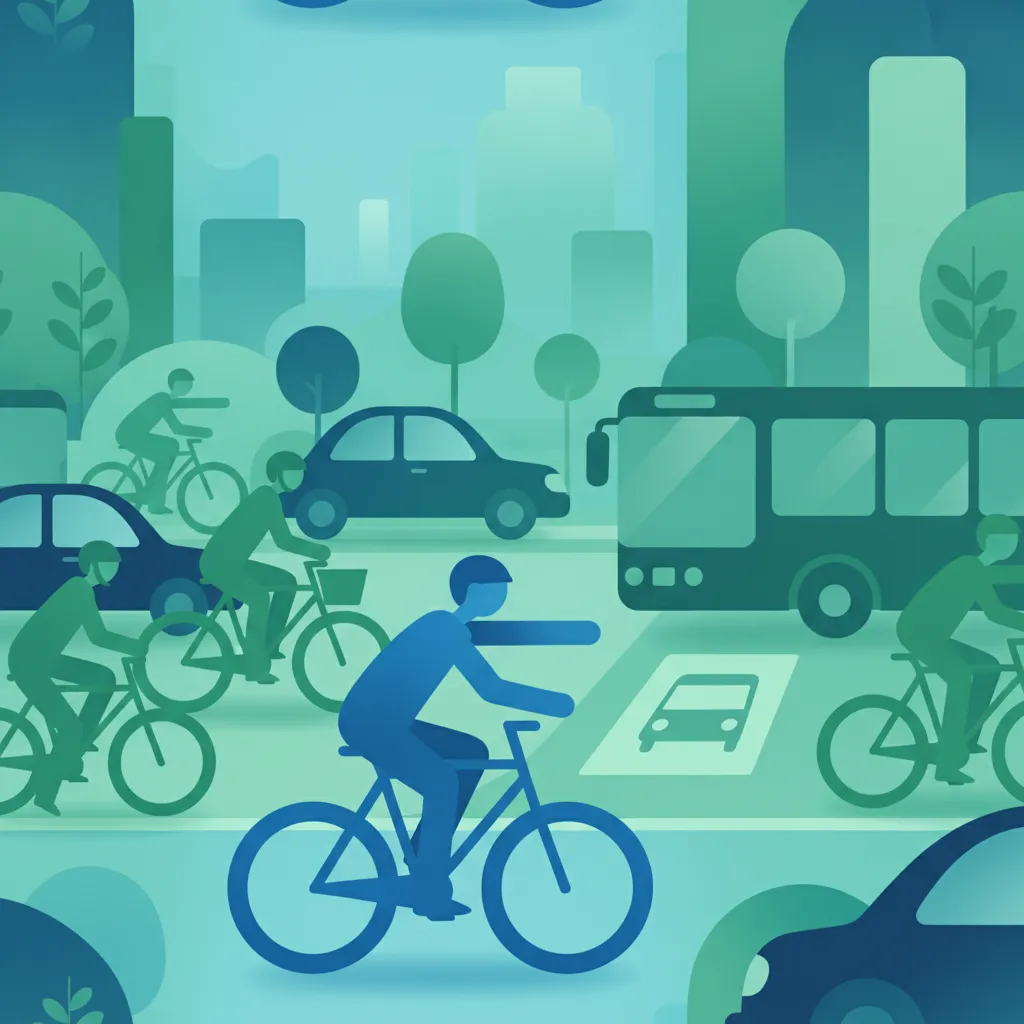
This lesson addresses the unique challenges of streets with dedicated cycle lanes and numerous bus stops. It teaches riders how to anticipate pedestrians moving to and from buses and how to position themselves to avoid conflict with cyclists. The goal is to navigate these complex environments smoothly and safely.
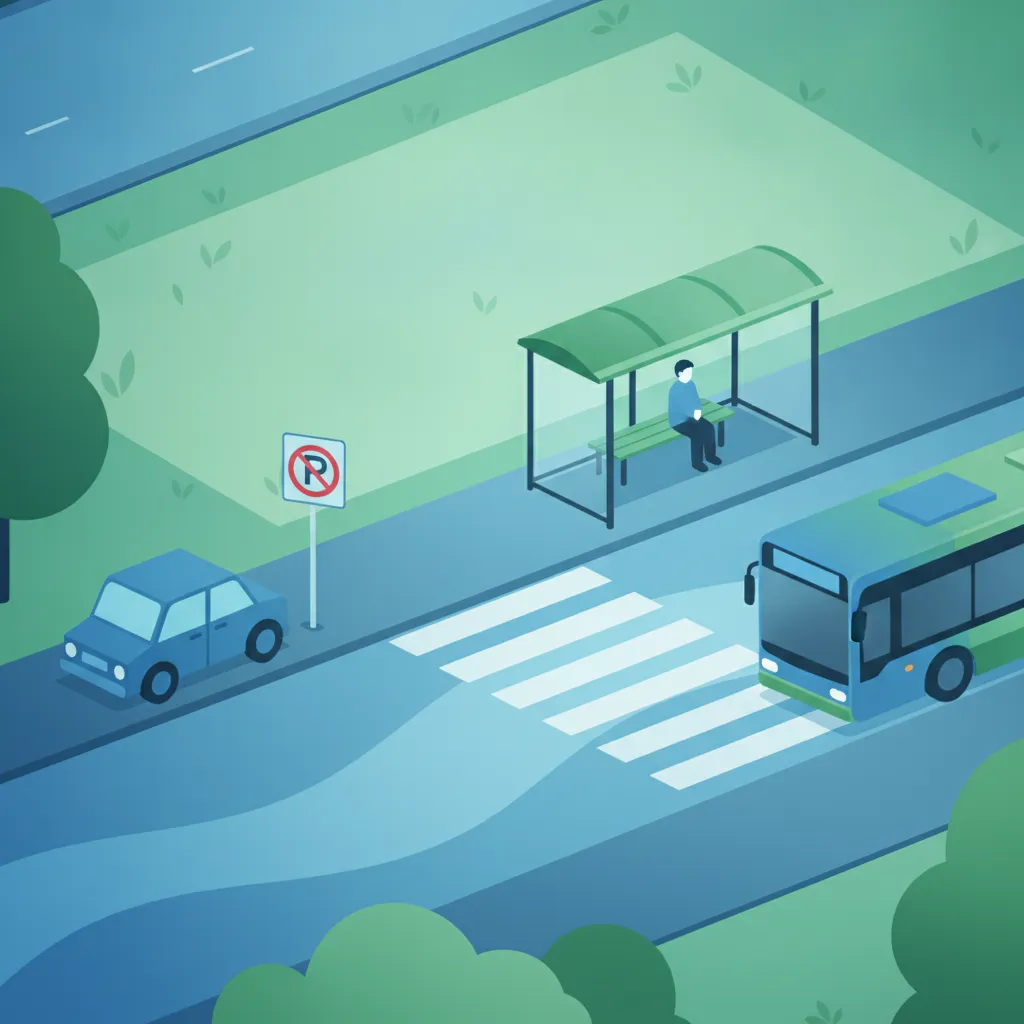
This lesson focuses on identifying and mitigating common hazards in built-up areas. It covers the risks associated with pedestrians emerging from behind buses or parked cars, and the danger of suddenly opening car doors. Learners will understand the importance of reducing speed and increasing observation in these high-risk environments.

This lesson explores non-verbal communication techniques for safer road sharing. It discusses the importance of making eye contact with other drivers and pedestrians to confirm they have seen you. The content also explains the appropriate and legal use of the horn to alert others of your presence.
Find clear answers to common questions learners have about Managing Interactions with Cyclists and E-Bikes. Learn how the lesson is structured, which driving theory objectives it supports, and how it fits into the overall learning path of units and curriculum progression in Denmark. These explanations help you understand key concepts, lesson flow, and exam focused study goals.
You must yield to cyclists who are riding straight through the intersection if you are turning across their path. Always check your mirrors and perform a shoulder check before turning to ensure your path is clear of any cyclists.
Generally, yes, e-bikes follow the same rules as bicycles, but they can approach intersections much faster. You must account for their higher speed when calculating the time and distance needed to turn safely.
You should maintain a safe side distance, at least 1.5 meters where possible, especially on higher-speed roads. In slow-moving urban traffic, the priority is to monitor them carefully and ensure you do not turn into their path.
Many learners fail to look over their shoulder (the 'blind spot' check) before turning right. In the theory test, failing to account for the cyclist's potential presence in your blind spot is a common error that leads to failing safety-related questions.
Use our powerful search tool to pinpoint specific Danish driving theory topics, road signs, or traffic situations you need to review. Start exploring relevant practice sets now to reinforce your knowledge and build confidence for your upcoming driving licence exam.