
This unit prepares you for the varied challenges of riding a motorcycle in Denmark, covering essential techniques for adverse weather, low light, windy conditions, and carrying passengers or luggage. You'll also learn the crucial protocols for safe and effective group riding, ensuring you're ready for any situation on the road and for your theory exam.
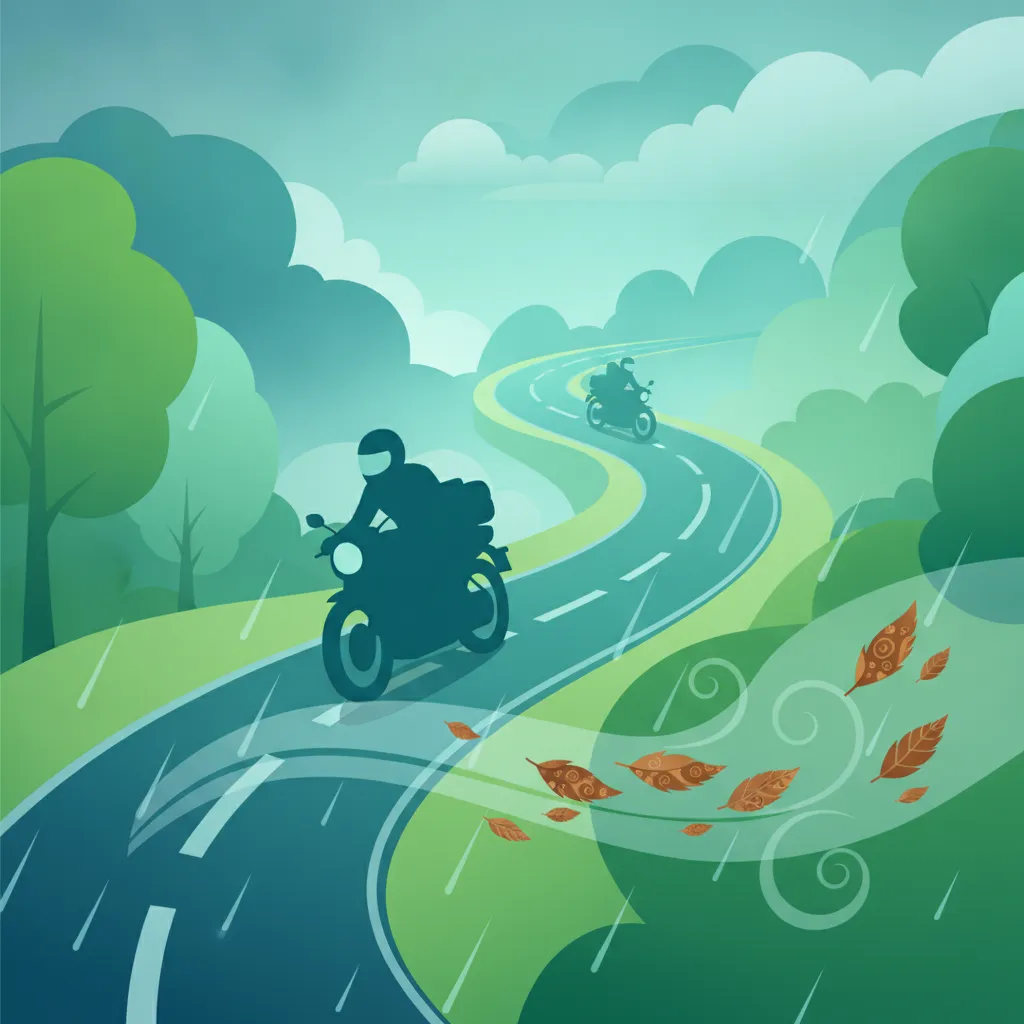
Browse all lessons that make up Weather, Darkness, Wind, Passengers, Luggage and Group Riding. Each lesson focuses on specific topics, learning objectives, and core concepts, helping you build essential knowledge and follow a clear, structured progression toward your study goals in Denmark.
This lesson focuses on techniques for riding when visibility and traction are compromised by weather. It explains how to adjust speed, increase following distance, and use lights to see and be seen in rain or fog. Understanding the risk of hydroplaning and making smooth control inputs are key takeaways.
This lesson teaches riders how to manage the destabilizing effects of wind. It covers how to anticipate gusts, adjust body position to counteract pressure, and choose a lane position that offers more stability. These skills are essential for safety on open highways, bridges, and coastal areas.
This lesson provides strategies for safe riding after dark, when visibility is significantly reduced. It explains how to use high and low beams effectively, avoid being dazzled by other vehicles' lights, and look for road markings to guide your path. The importance of wearing reflective clothing to be seen is strongly emphasized.
This lesson explains the physical effects of adding weight to a motorcycle. It covers how passengers or luggage change the center of gravity, affecting steering, stability, and increasing stopping distances. Learners will understand how to adjust suspension and tyre pressure, and adapt their riding inputs accordingly.
This lesson introduces the established protocols for riding safely in a group. It explains the benefits of a staggered formation, the use of hand signals for communication, and the roles of the lead and sweep riders. Adhering to these principles ensures the ride is organized, safe, and enjoyable for everyone.
Explore high-intent keywords and long-tail search topics learners use when researching Weather, Darkness, Wind, Passengers, Luggage and Group Riding. These terms reflect how people search for reliable study materials, structured explanations, and unit-level theory preparation support in Denmark.
Find clear answers to the most common questions learners ask about Weather, Darkness, Wind, Passengers, Luggage and Group Riding. Understand how the unit is organized, what learning goals it supports, and how it contributes to your study progression with structured explanations and practical guidance tailored for learners in Denmark.
In rainy conditions in Denmark, you must brake earlier and more gently to account for reduced tyre grip. Using both brakes smoothly, rather than relying heavily on just one, is crucial. Always maintain a more upright body position and anticipate stops well in advance, as stopping distances can significantly increase.
Carrying a passenger in Denmark significantly alters the motorcycle's centre of gravity and weight distribution. This can lead to slower steering response, increased braking distances, and changes in suspension behaviour. You must be aware of these changes and adjust your speed, braking, and cornering accordingly to maintain control.
Danish traffic law emphasizes safety and predictability in group riding. Riders should maintain staggered formation on wider roads where appropriate, ensure clear communication, and ride predictably. The lead rider is responsible for pace and route, while all riders must be aware of their surroundings and maintain safe distances.
At night in Denmark, ensure your headlights are on and clean. Avoid looking directly into oncoming headlights to prevent glare. Focus on the road edge and use reflective markings to guide your path. Be extra cautious of unseen hazards and reduce your speed to allow more time to react.
When encountering strong winds on Danish roads, especially on bridges or open stretches, maintain a firm but relaxed grip on the handlebars. Keep a steady speed and be prepared for sudden gusts that can push you sideways. Ride in a position that minimizes wind exposure if possible, and increase your following distance.
Yes, carrying luggage impacts your motorcycle's stability and handling. Ensure luggage is securely fastened and balanced, preferably low and central. Be aware that extra weight increases braking distances and affects acceleration. Adjust your riding style to compensate for these changes, especially during cornering and braking.
All included lessons
Lessons in Weather, Darkness, Wind, Passengers, Luggage and Group Riding
See who benefits most from studying Weather, Darkness, Wind, Passengers, Luggage and Group Riding. This overview explains how the unit supports different learning needs, what level of knowledge is helpful before starting, and how it fits into the overall study path in Denmark.
This unit is essential for all aspiring motorcycle riders in Denmark preparing for their A1, A2, or A license theory test. It's particularly beneficial for learners who want to build confidence in riding under challenging conditions, such as poor weather, darkness, or when carrying extra weight, and for those looking to join group rides safely.

Begin your official Danish driving licence preparation today by exploring our comprehensive curriculum. Choose a structured course that suits your learning style and progress confidently through all traffic rules, road signs, and practical scenarios required for your exam.
Browse Driving Theory CoursesExplore all units and lessons included in this driving theory course.
Begin your official Danish driving licence preparation today by exploring our comprehensive curriculum. Choose a structured course that suits your learning style and progress confidently through all traffic rules, road signs, and practical scenarios required for your exam.
Browse Driving Theory Courses