
This lesson guides you through the established protocols for riding safely in a group, covering essential techniques like staggered formation and clear communication. By mastering these principles, you will ensure every group journey is organized and safe, building the social awareness required for your Danish motorcycle theory exam.

Lesson content overview
Riding a motorcycle in a group offers a unique and rewarding experience, whether for touring, training, or leisure. However, it requires a structured approach to ensure the safety and enjoyment of all participants. This lesson delves into the established protocols and best practices for riding safely in a group, focusing on fundamental concepts such as staggered formations, effective communication through hand signals, and the distinct responsibilities of lead and sweep riders. Adhering to these principles is crucial for maintaining an organized, predictable, and safe ride for everyone on Danish roads.
Group motorcycle riding is more than just several individuals riding together; it's a coordinated effort where each rider contributes to the collective safety and flow. The core logic behind specific formations and communication strategies is to enhance visibility, predict movements, and minimize potential hazards for all members of the group and other road users. This approach builds upon your foundational knowledge of motorcycle controls, Danish traffic laws, lane positioning, and general communication skills in traffic.
By understanding how to effectively manage a group ride, you can significantly reduce the risk of collisions, promote smoother traffic flow, and ensure that every journey is both enjoyable and safe. This lesson will equip you with the essential knowledge to participate confidently and responsibly in group rides as part of your Danish Motorcycle Theory education.
The staggered formation is the cornerstone of safe group motorcycle riding. Instead of riding directly behind one another, riders position themselves offset, creating a more visible and flexible arrangement. This fundamental practice is designed to enhance safety and efficiency for the entire group.
A staggered formation provides several critical advantages. Firstly, it significantly increases the forward visibility for every rider within the group. Each motorcyclist can see further ahead, allowing for earlier detection of road hazards, traffic changes, or sudden braking by the lead rider. Secondly, this offset positioning creates a larger safety cushion between bikes, reducing the risk of a chain-reaction collision if one rider needs to brake suddenly. It also distributes wind resistance more evenly, which can be particularly beneficial on open roads or in windy conditions, improving overall stability for each rider.
In a staggered formation, riders position themselves within two imaginary lines in the lane. The lead rider typically takes the left-side wheel track, the second rider positions themselves in the right-side wheel track slightly behind the lead, and so on. This creates a zig-zag pattern. Each rider should maintain a minimum safe following distance from the rider directly in front of them in their own track, typically a two-second rule, and an even greater distance from the rider diagonally ahead. This ensures adequate reaction time and space for maneuvering.
A frequent error in group riding is for motorcyclists to align directly behind each other, forming an inline formation. This severely limits forward visibility for following riders, creating dangerous blind spots and significantly increasing the risk of rear-end collisions within the group. Another mistake is inconsistent spacing, where riders either follow too closely or leave excessively large gaps, leading to sudden braking or acceleration as the group tries to adjust. Both scenarios compromise safety and disrupt the smooth flow of the ride.
Riding directly inline with other motorcyclists in your group drastically reduces your forward visibility and reaction time, increasing the risk of collisions. Always maintain a staggered formation where practical.
Effective communication is paramount in group riding, where engine noise, distance, and helmets can make verbal exchanges impossible. Standardized hand signals provide a clear and universal method for riders to convey intentions, warnings, and instructions to other group members and surrounding traffic.
Motorcyclists use a recognized set of hand signals to communicate various actions. For example, extending your left arm horizontally outward signifies a left turn or lane change. To indicate a right turn, you would extend your left arm upward at a 90-degree angle, or your right arm horizontally if permissible. Slowing down is typically communicated by extending your left arm downward with your palm open facing rearward, moving it up and down. A closed fist extended downward often signals to stop. Other signals might include pointing to road hazards, indicating a fuel stop, or asking the group to speed up.
Signals must be clear, consistent, and initiated well in advance of the intended maneuver. This gives other riders, and any other road users, ample time to react and adjust their riding. It's crucial to perform the signal definitively, holding it long enough to be seen, then returning both hands to the controls before initiating the action. Ambiguous or late signaling can lead to confusion, unexpected maneuvers, and dangerous situations for the entire group.
A standardized physical gesture used by motorcyclists to clearly communicate riding intentions such as turning, stopping, or pointing out hazards, especially when verbal communication is impractical.
For a group ride to be successful and safe, clear roles and responsibilities are essential. The lead rider and sweep rider are two critical positions that ensure coordination, safety, and cohesion throughout the journey.
The lead rider is the de facto leader of the group, responsible for setting the pace, choosing the route, and making real-time decisions that affect the entire group. Their responsibilities include:
The lead rider's actions dictate the flow and safety of the entire ride, making their role pivotal in ensuring coordinated movement and a smooth journey.
The sweep rider, positioned at the very rear of the group, serves as its safety net and secondary monitor. This individual plays a vital role in maintaining group cohesion and protecting the group from behind. Key responsibilities include:
The rearmost rider in a motorcycle group, responsible for monitoring traffic behind the group, ensuring all riders maintain formation, and assisting with any issues at the rear.
While specific laws solely governing motorcycle group formations can vary, general Danish traffic legislation and best practices prioritize safety and predictable behavior for all road users. Adhering to these principles is not just recommended but often crucial for legal compliance and reducing liability.
In Denmark, like many other places, specific distance requirements for staggered formations are generally considered best practice rather than strict law. However, riders must always maintain a safe following distance that allows for safe braking and reaction time under prevailing conditions. A staggered formation, ensuring each rider has an unobstructed view of the road ahead, is highly recommended. Deviations from this practice, leading to reduced visibility or increased collision risk, could be considered negligent in the event of an accident.
All road users in Denmark, including motorcyclists, are legally required to give clear and timely signals before changing lanes, turning, or significantly reducing speed. When mechanical indicators are not visible or fail, hand signals become mandatory. In a group riding context, this requirement is amplified, as effective hand signaling prevents miscommunication within the group and alerts other drivers to your collective intentions.
While there isn't a specific "Lead Rider Law," the lead rider's actions fall under general principles of safe driving and due care. Failure to exercise reasonable care—such as leading at an unsafe speed for the group or failing to communicate changes—could be considered negligent. Similarly, a sweep rider's failure to monitor rear traffic and alert the group to hazards could also imply negligence. All riders share a collective responsibility to uphold safety standards, maintain formation, and communicate effectively to prevent accidents and ensure compliance with broader traffic regulations.
Successful group riding isn't static; it requires dynamic adjustments based on the prevailing conditions. Different environments and circumstances demand variations in formation, spacing, and communication.
Adverse weather conditions significantly impact motorcycle handling and visibility. In rain, fog, or icy conditions, braking distances increase, and traction is reduced. Therefore, it is critical to increase the spacing between riders within the staggered formation to allow for longer stopping distances. Reduce the overall speed of the group to a pace comfortable for the most cautious rider. Strong winds can cause instability, requiring riders to create even more lateral space between each other to mitigate wind turbulence and allow for minor course corrections without impacting other group members. The lead rider must communicate these changes clearly and early.
The type of road dictates how the group should position itself.
The vehicle state and interaction with other road users are crucial considerations.
Night riding introduces reduced visibility and increased challenges.
The structured approach to group riding is fundamentally rooted in established safety principles, aiming to counteract human limitations and environmental challenges.
Every action and inaction within a motorcycle group has a direct consequence. A correctly maintained staggered formation directly leads to improved forward visibility for all riders, which in turn enables earlier hazard detection and contributes to smoother, safer group riding. Conversely, failure to signal intentions creates confusion among group members, leading to unexpected maneuvers and a significantly increased collision risk. When the lead rider sets an appropriate speed for the entire group, it fosters consistent movement and reduces the need for sudden braking, thereby enhancing overall safety. Likewise, a diligent sweep rider monitoring rear traffic provides early warning of fast-approaching vehicles, allowing the group to adjust speed safely and prevent potential accidents. Neglecting to increase spacing in poor weather directly leads to higher risks of rear-end collisions due to increased stopping distances.
Most group riding accidents stem from a breakdown in communication, formation, or situational awareness. To prevent issues such as chain collisions, it's vital to avoid riding directly inline. For example, if a group of three motorcycles is navigating a rural road in light rain, the lead rider must proactively slow down, increase spacing significantly, and communicate the speed reduction with a clear left arm signal. This accounts for reduced traction and ensures everyone has ample stopping room. Conversely, if the group rides inline with minimal spacing, sudden braking by the lead could easily trigger a rear-end collision for the following riders. On a motorway, if the lead rider intends to change lanes, they must signal clearly with an extended arm, check mirrors, and move smoothly. The sweep rider simultaneously monitors fast-approaching vehicles from behind, signaling to the group to adjust speed if necessary. Failure to signal or monitor rear traffic in such a scenario could lead to confusion and necessitate emergency maneuvers, increasing the risk of an accident.
Before every group ride, conduct a brief pre-ride meeting to discuss the route, expected pace, communication protocols, and specific roles. This ensures everyone is on the same page.
Safe group motorcycle riding relies on structured protocols including staggered formation, clear hand signals, and defined rider roles. The staggered formation places riders offset within the lane, allowing each rider to see further ahead and maintain safer following distances. The lead rider manages pace, route, and hazard communication while the sweep rider monitors rear traffic and ensures group cohesion. Standardized hand signals replace verbal communication, with specific gestures for turning, slowing, and stopping. Riders must adapt spacing and speed based on conditions, increasing gaps in rain, wind, or fog due to longer braking distances. Adhering to these established principles keeps group rides organized, predictable, and compliant with Danish traffic safety standards.
A short set of high-value points that capture the most important learning from this lesson.
Staggered formation keeps each rider offset in the lane, significantly improving forward visibility and reducing chain-reaction collision risk
Lead rider sets the pace, route, and communicates hazards while considering the least experienced group member
Sweep rider monitors rear traffic and ensures no rider is left behind, serving as the group's safety net
Standardized hand signals are essential for group communication since verbal exchange is impractical on motorcycles
Formation spacing must increase in adverse weather conditions due to longer braking distances and reduced traction
Explore all units and lessons included in this driving theory course.
Staggered formation means alternating left and right wheel tracks within the lane, not riding directly behind each other
Minimum following distance is a two-second gap from the rider directly ahead in your track
Hand signals: horizontal left arm = turn left, left arm up at 90° = turn right, arm down with palm facing rear = slow down, fist down = stop
All riders share responsibility for maintaining formation, signaling intentions, and watching for hazards
Legal signaling requirements in Denmark apply to all road users, including mandatory hand signals when mechanical indicators are not visible
Riding directly inline behind other bikes severely limits forward visibility and increases rear-end collision risk
Inconsistent spacing within the formation creates sudden braking or acceleration as the group tries to adjust
Late or ambiguous hand signaling leads to confusion and unexpected maneuvers by other group members
Lead rider setting pace too fast for the least experienced member, forcing others beyond their comfort zone
Failing to adapt formation and spacing when weather or road conditions change
Lesson content overview
A short set of high-value points that capture the most important learning from this lesson.
Staggered formation keeps each rider offset in the lane, significantly improving forward visibility and reducing chain-reaction collision risk
Lead rider sets the pace, route, and communicates hazards while considering the least experienced group member
Sweep rider monitors rear traffic and ensures no rider is left behind, serving as the group's safety net
Standardized hand signals are essential for group communication since verbal exchange is impractical on motorcycles
Formation spacing must increase in adverse weather conditions due to longer braking distances and reduced traction
Explore all units and lessons included in this driving theory course.
Staggered formation means alternating left and right wheel tracks within the lane, not riding directly behind each other
Minimum following distance is a two-second gap from the rider directly ahead in your track
Hand signals: horizontal left arm = turn left, left arm up at 90° = turn right, arm down with palm facing rear = slow down, fist down = stop
All riders share responsibility for maintaining formation, signaling intentions, and watching for hazards
Legal signaling requirements in Denmark apply to all road users, including mandatory hand signals when mechanical indicators are not visible
Riding directly inline behind other bikes severely limits forward visibility and increases rear-end collision risk
Inconsistent spacing within the formation creates sudden braking or acceleration as the group tries to adjust
Late or ambiguous hand signaling leads to confusion and unexpected maneuvers by other group members
Lead rider setting pace too fast for the least experienced member, forcing others beyond their comfort zone
Failing to adapt formation and spacing when weather or road conditions change
Explore search topics learners often look for when studying Principles of Group Riding and Formation Management. These topics reflect common questions about road rules, driving situations, safety guidance, and lesson level theory preparation for learners in Denmark.
Browse additional driving theory lessons that cover connected traffic rules, road signs, and common driving situations related to this topic. Improve your understanding of how different rules interact across everyday traffic scenarios.
Learn the critical responsibilities of lead and sweep riders in motorcycle groups. Understand how effective communication, route management, and rearward monitoring contribute to safe group rides according to Danish theory standards.

This lesson defines the fundamental responsibilities of a motorcyclist, which extend beyond simple rule-following. It emphasizes the duty of care required to operate safely, including practicing defensive riding techniques and proactively identifying potential hazards. The content focuses on the importance of maintaining visibility and communicating intentions clearly to ensure safe interactions in traffic.

This lesson focuses on the core safety duties of a stor knallert rider. It explains the legal requirement for wearing a helmet and the benefits of other protective gear. The content also covers essential pre-ride checks, including brakes, tyres, and lights, to ensure the vehicle is in safe operating condition.

This lesson details the systematic pre-ride inspection process that all motorcyclists must perform. It covers critical safety checks, including verifying correct tyre pressure, assessing brake pad wear, and ensuring all lights are functional. Regular completion of these checks is essential for preventing mechanical failures and ensuring rider safety.

This lesson encourages riders to consider their impact on the community and environment. It covers the principles of ethical riding, such as respecting pedestrians and other drivers, minimizing noise, and contributing to a positive road safety culture. The goal is to develop a sense of social responsibility that complements technical riding skills.

This lesson explains the strategic importance of lane positioning for a motorcyclist. It teaches how to select a position within the lane that makes you most visible to other road users and provides an escape route from potential hazards. The content covers how to adjust your position based on traffic, road conditions, and to avoid being in another vehicle's blind spot.

This lesson highlights the rider's responsibility for ensuring their vehicle is in a safe, roadworthy condition. It provides a systematic guide to pre-ride checks, including inspecting tyres for correct pressure and wear, testing brakes, and verifying all lights work. Regular maintenance is presented as a critical component of overall rider safety.

This lesson breaks down the critical skill of overtaking into a safe, repeatable process. It covers how to judge the time and space needed, check for oncoming traffic, and execute the maneuver decisively. The importance of signaling and returning to the lane safely is also emphasized.

This lesson explains the physical effects of adding weight to a motorcycle. It covers how passengers or luggage change the center of gravity, affecting steering, stability, and increasing stopping distances. Learners will understand how to adjust suspension and tyre pressure, and adapt their riding inputs accordingly.

This lesson introduces the essential controls required to operate a motorcycle, such as the throttle, clutch lever, and brake controls. It explains the purpose and correct use of each function for smooth and safe maneuvering. Learners will also understand the importance of proper ergonomics and riding posture for effective control.

This lesson provides a guide to motorway riding, a high-speed and demanding environment. It details the process for using acceleration lanes to merge smoothly, maintaining proper lane discipline, and preparing for exits well in advance. Key safety principles like the two-second rule are reinforced for this context.
Explore advanced strategies for motorcycle group formations beyond basic staggered patterns. Understand nuanced lane positioning, communication in complex traffic, and risk mitigation specific to Danish group riding conditions.
This lesson breaks down the critical skill of overtaking into a safe, repeatable process. It covers how to judge the time and space needed, check for oncoming traffic, and execute the maneuver decisively. The importance of signaling and returning to the lane safely is also emphasized.

This lesson outlines a step-by-step procedure for managing a mechanical breakdown on the road. It covers moving the motorcycle to a safe location, using hazard lights, and wearing high-visibility clothing. The goal is to ensure personal safety while minimizing disruption and danger to other traffic.

This lesson examines the specific risks inherent to motorcycling, emphasizing a rider's vulnerability due to reduced physical protection compared to other vehicles. It covers the heightened severity of injuries in accidents and the critical role of protective gear in mitigating harm. Learners will understand how to adopt defensive strategies, such as proper road positioning, to counteract these risks.

This lesson prepares riders for the specific hazards of rural roads, which often have less visibility and more unpredictable surfaces. It covers strategies for approaching blind curves, safely passing agricultural machinery, and being vigilant for animals on the road. Adjusting speed to match visibility is a core principle.

This lesson prepares riders for the unfortunate event of a crash. It covers the crucial first steps to take, including ensuring personal safety, making the accident scene visible to prevent further collisions, and assessing for injuries. Understanding these immediate priorities can significantly impact the outcome of an emergency situation.
This lesson details the systematic pre-ride inspection process that all motorcyclists must perform. It covers critical safety checks, including verifying correct tyre pressure, assessing brake pad wear, and ensuring all lights are functional. Regular completion of these checks is essential for preventing mechanical failures and ensuring rider safety.
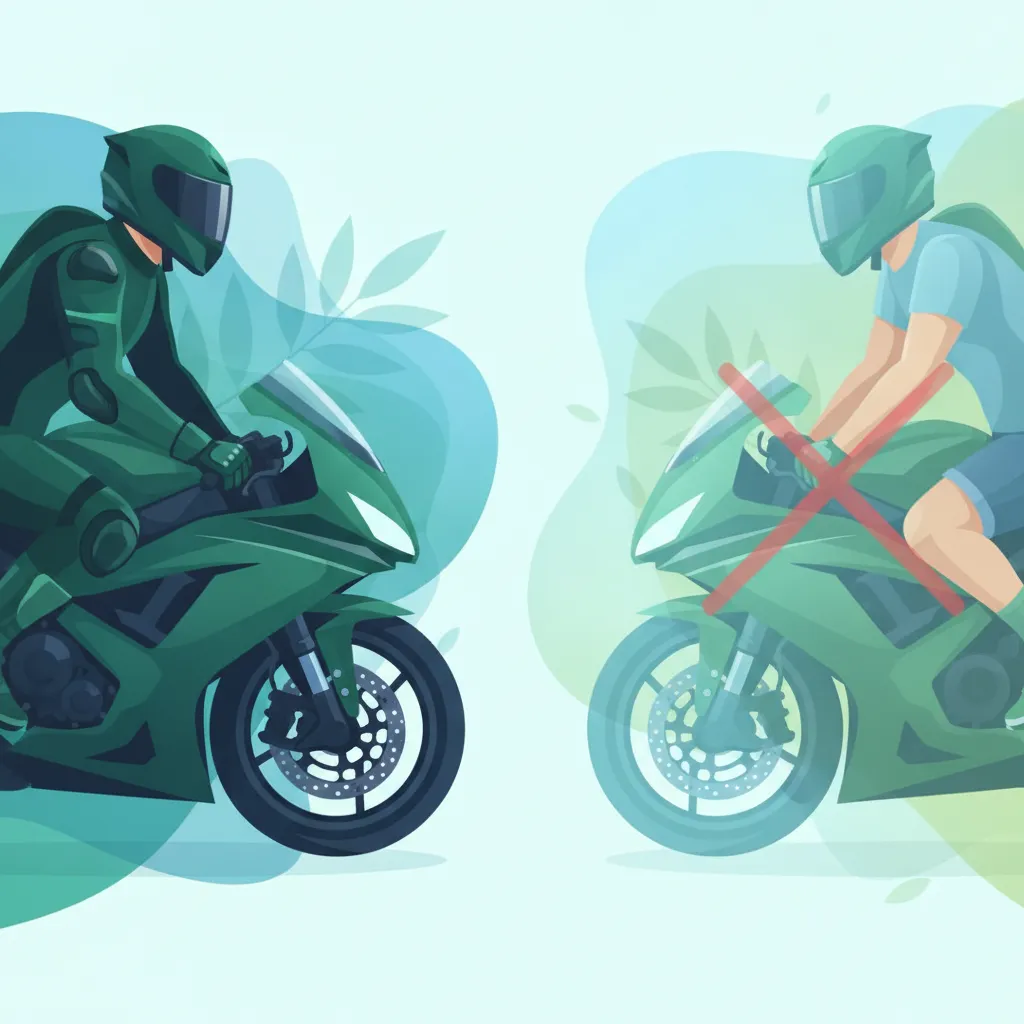
This lesson explains the critical role of specialized protective clothing in rider safety. It details the features of motorcycle jackets, pants, gloves, and boots, focusing on abrasion resistance and impact protection. Learners will understand how to identify gear that meets official CE certification standards for maximum safety.
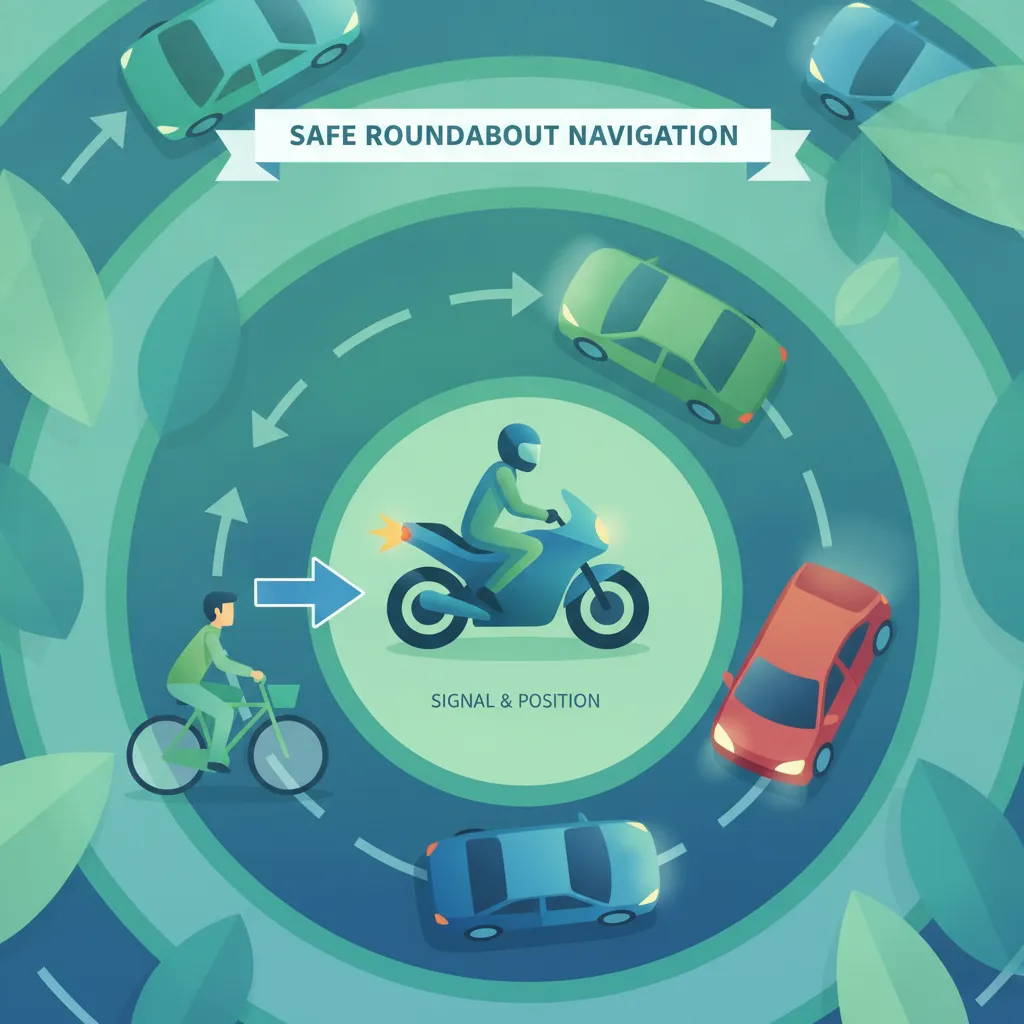
This lesson details the specific skills needed to navigate roundabouts on a motorcycle. It explains how to approach at a safe speed, select the correct lane based on your intended exit, and yield to circulating traffic. Proper use of signals to indicate intentions when entering and exiting is also covered.
This lesson defines the fundamental responsibilities of a motorcyclist, which extend beyond simple rule-following. It emphasizes the duty of care required to operate safely, including practicing defensive riding techniques and proactively identifying potential hazards. The content focuses on the importance of maintaining visibility and communicating intentions clearly to ensure safe interactions in traffic.
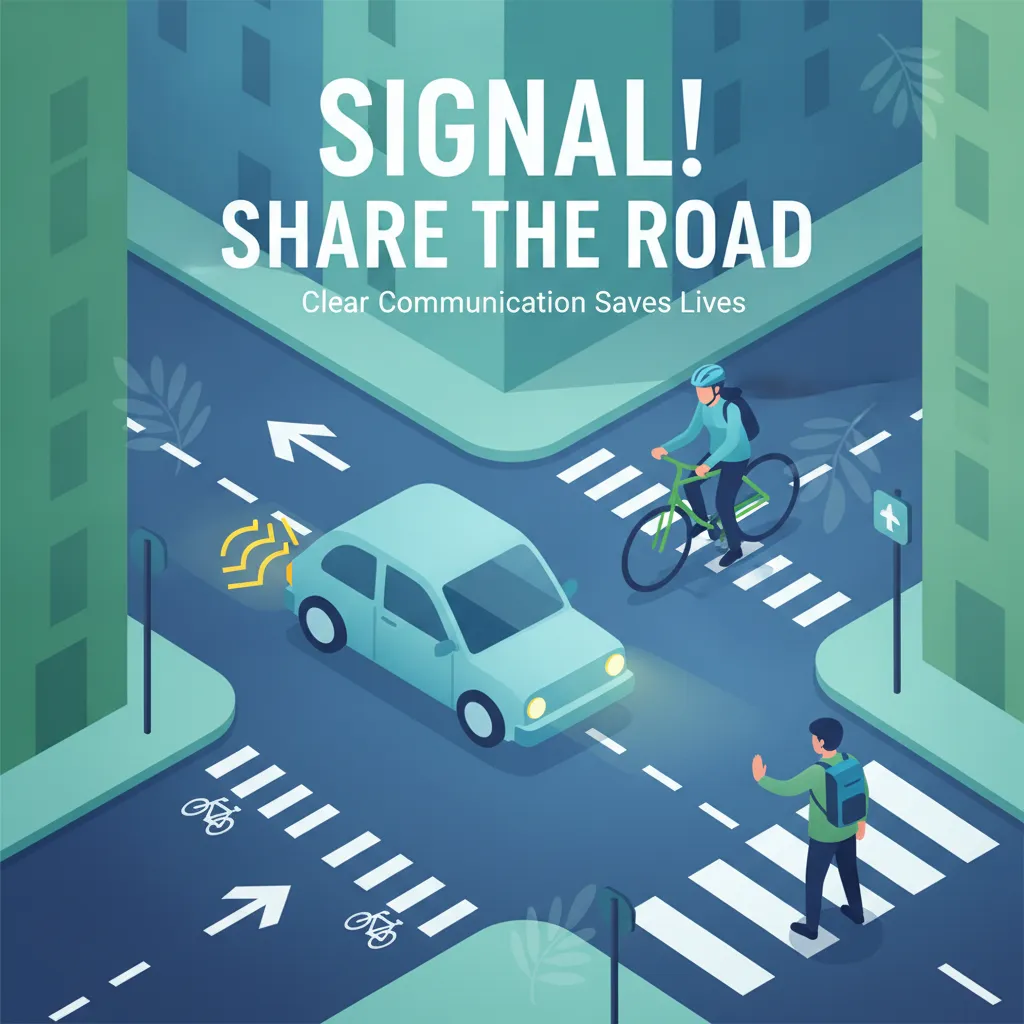
This lesson focuses on the different ways motorcyclists can communicate their intentions to others. It covers the correct use of electronic signals, standard hand signals, and the importance of making eye contact with drivers. Clear and early communication is essential for preventing conflicts and ensuring predictable interactions in traffic.
Find clear answers to common questions learners have about Principles of Group Riding and Formation Management. Learn how the lesson is structured, which driving theory objectives it supports, and how it fits into the overall learning path of units and curriculum progression in Denmark. These explanations help you understand key concepts, lesson flow, and exam focused study goals.
The staggered formation provides each rider with a clear view of the road ahead and allows extra space to avoid obstacles without hitting the rider in front. It effectively doubles the stopping distance within the group while keeping the total length of the formation compact.
The sweep rider is the last person in the group. They are responsible for ensuring no one is left behind, keeping an eye on the group's integrity, and communicating with the lead rider if there is a problem or if the group needs to pull over.
A group should revert to single-file when entering tight corners, narrow roads, or areas with poor visibility or heavy traffic. This allows each rider to choose their own optimal line and ensures they remain within their lane safely.
Yes, theory questions may test your knowledge of how to behave responsibly when riding with others and your understanding of how group size and communication influence traffic flow and safety.
Use our powerful search tool to pinpoint specific Danish driving theory topics, road signs, or traffic situations you need to review. Start exploring relevant practice sets now to reinforce your knowledge and build confidence for your upcoming driving licence exam.