
This unit focuses on the demanding environments of high-speed roads, complex motorways, and unpredictable rural routes. You'll learn crucial skills for safe overtaking, navigating motorways, and understanding the unique challenges presented by bridges, coastal roads, and rural traffic, ensuring you're prepared for Denmark's diverse road conditions and the theory exam.
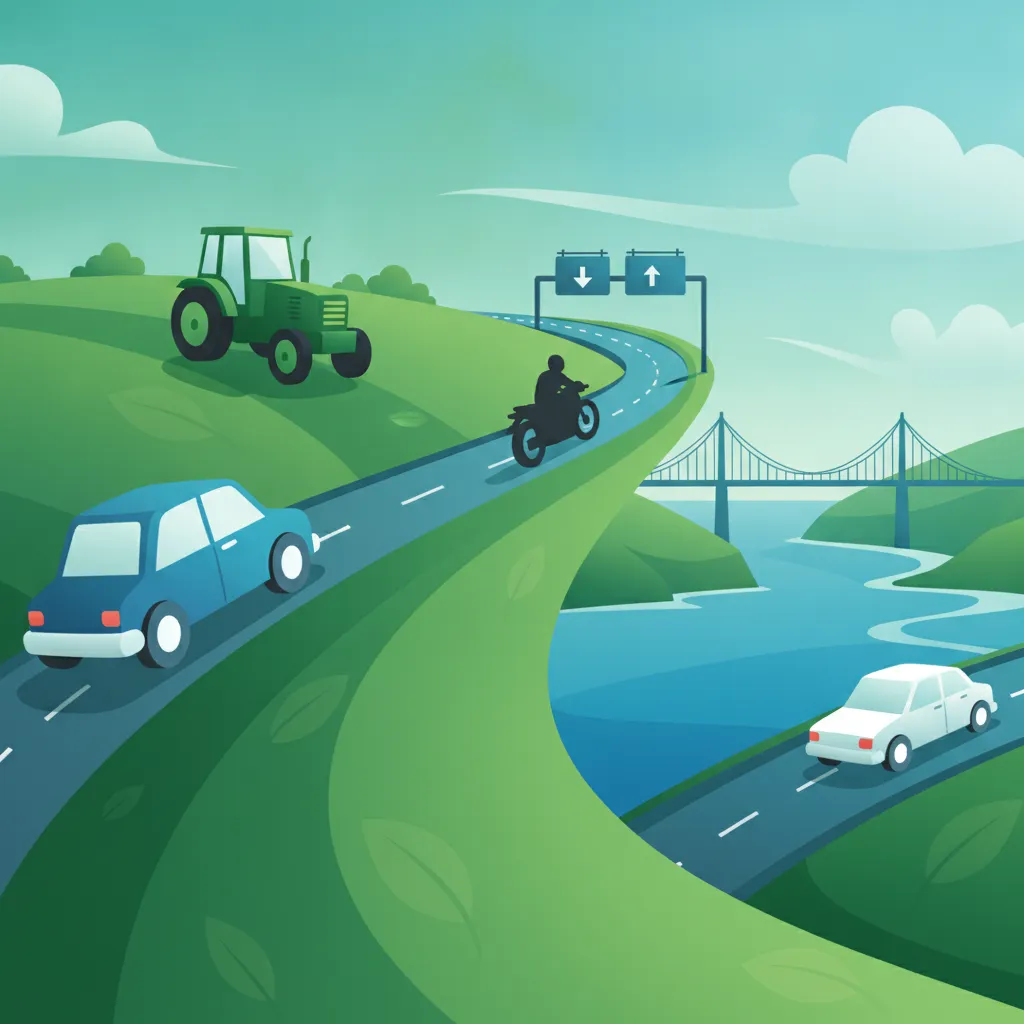
Browse all lessons that make up Overtaking, Motorways, Bridges, Coastal Roads and Rural Traffic. Each lesson focuses on specific topics, learning objectives, and core concepts, helping you build essential knowledge and follow a clear, structured progression toward your study goals in Denmark.
This lesson breaks down the critical skill of overtaking into a safe, repeatable process. It covers how to judge the time and space needed, check for oncoming traffic, and execute the maneuver decisively. The importance of signaling and returning to the lane safely is also emphasized.
This lesson provides a guide to motorway riding, a high-speed and demanding environment. It details the process for using acceleration lanes to merge smoothly, maintaining proper lane discipline, and preparing for exits well in advance. Key safety principles like the two-second rule are reinforced for this context.
This lesson focuses on the unique environmental factors affecting bridges and coastal routes. It teaches riders how to anticipate and counteract the effects of strong crosswinds on stability. The content also addresses how to manage lane position and speed when transitioning between different road surfaces and structures.
This lesson prepares riders for the specific hazards of rural roads, which often have less visibility and more unpredictable surfaces. It covers strategies for approaching blind curves, safely passing agricultural machinery, and being vigilant for animals on the road. Adjusting speed to match visibility is a core principle.
This lesson provides practical guidance for motorcyclists using ferries, a common mode of transport in Denmark. It covers the process of riding onto the ferry, securing the motorcycle with straps to prevent it from falling, and navigating potentially slippery decks. Safe procedures for disembarking into traffic are also explained.
Explore high-intent keywords and long-tail search topics learners use when researching Overtaking, Motorways, Bridges, Coastal Roads and Rural Traffic. These terms reflect how people search for reliable study materials, structured explanations, and unit-level theory preparation support in Denmark.
Find clear answers to the most common questions learners ask about Overtaking, Motorways, Bridges, Coastal Roads and Rural Traffic. Understand how the unit is organized, what learning goals it supports, and how it contributes to your study progression with structured explanations and practical guidance tailored for learners in Denmark.
For the Danish theory test, safe overtaking involves assessing the gap, checking for oncoming traffic, ensuring sufficient space to complete the manoeuvre, and signalling your intentions clearly. You must be aware of your speed, the speed of the vehicle you are overtaking, and any potential hazards, especially on rural roads.
When entering a Danish motorway, you must yield to traffic already on the motorway and use the acceleration lane to reach the speed of traffic. For exits, you should signal in advance, move to the correct lane, and reduce speed on the deceleration lane. Always be aware of other vehicles and maintain lane discipline.
Rural roads in Denmark present unique hazards like agricultural vehicles that may travel slowly or unexpectedly turn, wildlife crossing the road, loose surfaces (gravel, mud), and limited visibility due to bends or vegetation. It’s crucial to reduce speed, increase observation, and be prepared to react.
Bridges and coastal roads can be subject to strong winds, which can significantly affect motorcycle stability. Road surfaces might also be more exposed to weather elements like salt spray or wetness. Riders need to maintain a firm grip, anticipate wind gusts, and be vigilant about road conditions.
Yes, agricultural vehicles can be slow-moving and may have wider implements. When overtaking, ensure you have ample space and visibility, as they may make unexpected turns into fields. Always be cautious and confirm it's safe and legal before overtaking.
The most important factor on Danish motorways is maintaining consistent speed and lane discipline, and being highly aware of the faster traffic flow. Motorcyclists must integrate smoothly, use mirrors and blind-spot checks frequently, and anticipate the actions of other drivers.
All included lessons
Lessons in Overtaking, Motorways, Bridges, Coastal Roads and Rural Traffic
See who benefits most from studying Overtaking, Motorways, Bridges, Coastal Roads and Rural Traffic. This overview explains how the unit supports different learning needs, what level of knowledge is helpful before starting, and how it fits into the overall study path in Denmark.
This unit is essential for all Danish motorcycle learners preparing for their A1, A2, or A license theory test. It is particularly beneficial for those who may find high-speed situations, motorway rules, or rural riding scenarios challenging, providing targeted knowledge for these specific exam topics.

Begin your official Danish driving licence preparation today by exploring our comprehensive curriculum. Choose a structured course that suits your learning style and progress confidently through all traffic rules, road signs, and practical scenarios required for your exam.
Browse Driving Theory CoursesExplore all units and lessons included in this driving theory course.
Begin your official Danish driving licence preparation today by exploring our comprehensive curriculum. Choose a structured course that suits your learning style and progress confidently through all traffic rules, road signs, and practical scenarios required for your exam.
Browse Driving Theory Courses