
This lesson explores the essential physics of driving large passenger vehicles, focusing on how dimensions like length and height affect your control. You will learn to navigate tight urban spaces and junctions safely by understanding your bus's swept path and critical blind spots. This knowledge is vital for your Category D theory test and for maintaining high safety standards when driving on Danish roads.

Lesson content overview
Operating a large passenger vehicle, such as a bus, demands a profound understanding of its physical dimensions and how these characteristics influence its movement and handling. For drivers pursuing a Danish Category D Licence, mastering this knowledge is not merely academic; it is fundamental to safe, efficient, and professional operation, protecting both passengers and other road users. This lesson will explore the intricate relationship between a bus's size and its maneuverability, equipping you with the insights needed to navigate complex driving situations with confidence.
The sheer size of a bus means that every aspect of its dimensions – length, width, height, wheelbase, and rear overhang – directly impacts the space required for safe operation. Unlike smaller vehicles, buses demand meticulous planning and heightened awareness of their physical footprint in all driving scenarios. Ignoring these factors can lead to collisions, property damage, and serious safety incidents.
The vehicle length refers to the total distance from the front bumper to the rear bumper of the bus. This measurement is critical for determining the space needed in various traffic situations, including queuing at traffic lights, stopping at bus stops, and parking. The overall length dictates how much road space your vehicle occupies longitudinally.
A bus with a typical length of 12 meters, for instance, requires significantly more space than a standard car, often needing an additional 2 to 3 meters beyond where a car would stop at a white line or pedestrian crossing. Underestimating this can lead to blocking intersections, overshooting stop lines, or obstructing pedestrian crossings. The wheelbase, which is the distance between the front and rear axles, is a key component of the overall length and significantly influences the bus’s turning characteristics and stability.
Vehicle width is the measurement from the outermost points on either side of the bus. This includes the main body and any protruding parts like mirrors or side markers. For a professional driver, understanding the exact width of their vehicle is crucial for maintaining proper lane discipline and ensuring adequate clearance from other vehicles, road furniture, and obstacles.
Buses often exceed the width of standard car lanes, especially on older or narrower roads. This means drivers must constantly assess available space, particularly when passing parked cars, navigating through construction zones, or sharing the road with cyclists. Driving too close to the curb or an adjacent vehicle on a narrow road can easily result in side-swipes or minor collisions. A typical bus, around 2.5 meters wide, requires at least 0.5 meters of clearance on either side in a single lane to operate safely without risking contact.
The vehicle height is the vertical distance from the road surface to the highest point of the bus, which might include roof-mounted equipment like air conditioning units or luggage racks. This dimension is paramount for preventing collisions with overhead structures such as bridges, tunnels, car park entrances, and tree branches.
Always verify the posted height limits before attempting to pass under any overhead structure. Failing to do so can result in severe damage to the vehicle and infrastructure, and pose a significant safety risk.
During route planning, especially for unfamiliar routes, it is essential to check for any height restrictions. For example, a bus that is 3.8 meters high cannot safely pass under a bridge with a clearance of only 3.5 meters. Misjudging height is a common mistake that can have catastrophic consequences.
The wheelbase is the distance between the center of the front axle and the center of the rear axle. This dimension is a primary factor influencing a bus's turning radius and overall stability. Buses with a shorter wheelbase tend to have a tighter turning radius, making them more agile in tight urban environments. Conversely, a longer wheelbase generally provides greater directional stability at higher speeds but results in a significantly larger turning radius, requiring more space to complete turns.
For example, a bus with a 6-meter wheelbase will naturally require a wider turning path than a similar-length bus with a 5-meter wheelbase. Understanding the specific wheelbase of the vehicle you are operating is vital for anticipating its turning behavior and planning your approach to corners and intersections.
The rear overhang is the distance from the center of the rear axle to the very end of the bus's rear bumper. This often-underestimated dimension has a profound impact on how the rear of the bus moves during turns. As the front of the bus turns, the rear section, due to its overhang, swings outwards, creating a dynamic zone of movement outside the main turning path of the wheels.
A long rear overhang can easily cause the rear of the bus to strike curbs, street furniture, parked cars, or even pedestrians if the driver is not acutely aware and does not account for this outward swing. When pulling away from a curb, for instance, a driver must ensure sufficient rear clearance to avoid clipping the curb with the rear of the vehicle as the bus straightens. Ignoring this can lead to costly damage and dangerous situations.
Beyond static dimensions, understanding dynamic maneuverability concepts is crucial for safely operating a bus. These concepts describe how the vehicle behaves when in motion, particularly during turns and changes of direction.
The turning radius is the minimum radius the vehicle's outermost front wheel can describe when the steering wheel is turned to its full lock. It represents the tightest circle a bus can make while moving forward. Professional drivers must be intimately familiar with the turning radius of their specific vehicle, as it directly determines which intersections and routes can be safely navigated.
Every intersection, roundabout, or U-turn scenario requires the driver to mentally (or physically) calculate if the bus's turning radius is sufficient. Attempting to make a turn that is too tight for the bus's capabilities will force the driver to either cut the corner, potentially hitting the curb or crossing into oncoming traffic, or require reversing and re-attempting the maneuver, both of which are unsafe and unprofessional. A typical bus might require a minimum turning radius of 12 meters for a standard left turn.
When approaching a turn, aim to position your bus to maximize the effective turning space, often by starting slightly wider to allow the entire vehicle to follow a smooth, safe arc.
The swept path, also known as the turning envelope, is the total area occupied by a vehicle from its outermost front point to its outermost rear point during a turn. This concept takes into account the different paths followed by the front and rear wheels, as well as the effects of front and rear overhangs. It's a critical visual tool for drivers to understand the true space their vehicle will command during any turning maneuver.
The swept path helps drivers identify potential collision points with other vehicles, fixed obstacles, or road users. On a tight curve, the swept path of a bus can extend well beyond the width of a single lane, requiring the driver to anticipate this and adjust their lane positioning accordingly. Failure to visualize this envelope is a common cause of side-swipes and collisions in complex turns.
Off-tracking is the phenomenon where the rear wheels of a vehicle follow a path inside the path of the front wheels during a turn. This is a direct consequence of the wheelbase; the longer the wheelbase, the greater the off-tracking. When a bus turns, its front wheels initiate the curve, but the rear wheels, being farther back, "cut the corner" relative to the front wheels' path.
Understanding off-tracking is vital for preventing the rear wheels from hitting curbs, road signs, or objects on the inside of a turn. For example, if a driver turns too sharply without accounting for off-tracking, the rear wheels might mount the curb or hit a light pole. Drivers must consciously steer wider than they would in a car to ensure the rear of the bus clears the inside of the turn. This requires anticipating the rear wheels' trajectory, not just the front.
Due to their considerable size and design, buses have significant blind spots – areas around the vehicle that are not directly visible to the driver through the windows or standard mirrors. These blind spots pose a serious hazard, as they can conceal other road users, especially vulnerable ones like cyclists and pedestrians.
Blind spots are typically found in several key areas around a bus:
Managing blind spots is paramount for safe bus operation. Professional drivers must employ systematic observation techniques that go beyond simply checking mirrors:
Never rely solely on mirrors. A quick head check is an indispensable part of blind spot management, especially critical when cyclists or pedestrians are nearby.
Integrating an understanding of vehicle dimensions and maneuverability into your daily driving practice is essential for obtaining and maintaining a Danish Category D Licence. It ensures compliance with safety regulations and fosters a proactive approach to hazard prevention.
Danish traffic law requires drivers to always consider the dimensions of their vehicle when planning and executing maneuvers. While specific numeric limits might vary based on vehicle type and road design, the underlying principle is that drivers are responsible for operating their vehicle safely within its physical constraints and the surrounding environment.
Drivers must maintain minimum safe distances to other vehicles and roadside objects, consciously adapting these distances based on the bus's size. Furthermore, it is implicitly required that the swept path of the bus does not intersect with the path of other road users or obstacles, meaning careful planning for turns and lane changes is a legal obligation. The effective use of mirrors and other observation points to mitigate blind spots is also a key safety guideline.
Many driving incidents involving large vehicles stem from a failure to correctly account for dimensions:
The implications of vehicle dimensions are amplified by various environmental and operational factors:
Mastering the theory of vehicle dimensions and maneuverability is a cornerstone of professional bus driving for your Danish Category D Licence. By diligently understanding your bus's length, width, height, wheelbase, and rear overhang, you can predict its behavior in turns, account for its swept path and off-tracking, and effectively manage its inherent blind spots. This deep awareness enables you to plan safe maneuvers, comply with traffic regulations, and ultimately protect your passengers and fellow road users. Always remember that a larger vehicle demands a larger margin of safety and a higher degree of observational skill.
This lesson covers how a bus's physical dimensions—length, width, height, wheelbase, and rear overhang—directly affect its maneuverability and safety on Danish roads. Key concepts include turning radius (minimum circle the outermost front wheel can describe), swept path (total area occupied during turns), and off-tracking (rear wheels cutting inside front wheels' path). The content emphasizes that large buses require significantly more space than cars, creating substantial blind spots that demand systematic mirror checks and head observations. Understanding these relationships is essential for safe urban driving, junction navigation, and passing the Danish Category D theory exam.
A short set of high-value points that capture the most important learning from this lesson.
Bus length directly determines space needed at stops, junctions, and parking, with a typical 12-meter bus requiring 2-3 meters more than a car at stop lines.
Rear overhang causes the back of the bus to swing outward during turns, requiring drivers to anticipate clearance beyond the main turning path.
Off-tracking means rear wheels follow a tighter path than front wheels during turns, so drivers must steer wider than in smaller vehicles.
Buses have significant blind spots at the front, sides, and rear where cyclists, pedestrians, and vehicles can disappear from mirrors and direct view.
The swept path (turning envelope) encompasses the total area a bus occupies during a turn, often extending beyond a single lane width.
Explore all units and lessons included in this driving theory course.
Typical bus dimensions: approximately 12 meters long, 2.5 meters wide, 3.8 meters high, requiring 0.5 meters clearance on each side in a single lane.
Always perform head checks before maneuvers—mirrors alone are insufficient for detecting blind spot hazards, especially near cyclists and pedestrians.
When turning, position slightly wider to maximize effective turning space and allow the swept path to clear the inside of the turn safely.
Verify posted height limits before passing under any overhead structure to prevent catastrophic collisions with bridges or tunnels.
Environmental factors such as weather, road type, and vehicle load amplify dimension-related challenges and require wider safety margins.
Underestimating rear overhang when pulling away from a curb, causing the rear of the bus to strike obstacles.
Ignoring off-tracking and assuming rear wheels follow the same path as front wheels, leading to curb strikes on the inside of turns.
Relying solely on mirrors without head checks, resulting in collisions with vehicles or vulnerable road users in blind spots.
Entering intersections with turns that exceed the bus's turning radius, forcing unsafe corrections or reversals.
Stopping too close to vehicles ahead in traffic queues, reducing safety margins due to misjudging the bus's longer stopping requirements.
Lesson content overview
A short set of high-value points that capture the most important learning from this lesson.
Bus length directly determines space needed at stops, junctions, and parking, with a typical 12-meter bus requiring 2-3 meters more than a car at stop lines.
Rear overhang causes the back of the bus to swing outward during turns, requiring drivers to anticipate clearance beyond the main turning path.
Off-tracking means rear wheels follow a tighter path than front wheels during turns, so drivers must steer wider than in smaller vehicles.
Buses have significant blind spots at the front, sides, and rear where cyclists, pedestrians, and vehicles can disappear from mirrors and direct view.
The swept path (turning envelope) encompasses the total area a bus occupies during a turn, often extending beyond a single lane width.
Explore all units and lessons included in this driving theory course.
Typical bus dimensions: approximately 12 meters long, 2.5 meters wide, 3.8 meters high, requiring 0.5 meters clearance on each side in a single lane.
Always perform head checks before maneuvers—mirrors alone are insufficient for detecting blind spot hazards, especially near cyclists and pedestrians.
When turning, position slightly wider to maximize effective turning space and allow the swept path to clear the inside of the turn safely.
Verify posted height limits before passing under any overhead structure to prevent catastrophic collisions with bridges or tunnels.
Environmental factors such as weather, road type, and vehicle load amplify dimension-related challenges and require wider safety margins.
Underestimating rear overhang when pulling away from a curb, causing the rear of the bus to strike obstacles.
Ignoring off-tracking and assuming rear wheels follow the same path as front wheels, leading to curb strikes on the inside of turns.
Relying solely on mirrors without head checks, resulting in collisions with vehicles or vulnerable road users in blind spots.
Entering intersections with turns that exceed the bus's turning radius, forcing unsafe corrections or reversals.
Stopping too close to vehicles ahead in traffic queues, reducing safety margins due to misjudging the bus's longer stopping requirements.
Explore search topics learners often look for when studying Understanding Vehicle Dimensions and Maneuverability. These topics reflect common questions about road rules, driving situations, safety guidance, and lesson level theory preparation for learners in Denmark.
Browse additional driving theory lessons that cover connected traffic rules, road signs, and common driving situations related to this topic. Improve your understanding of how different rules interact across everyday traffic scenarios.
Understand how a bus's physical dimensions dictate its turning radius, swept path, and off-tracking. Essential Danish Category D theory for navigating turns and complex urban environments safely.

This lesson explains the concept of off-tracking, where the rear wheels follow a tighter path than the front wheels during a turn. It provides techniques for positioning the bus correctly before a turn to avoid striking curbs or obstacles. The content also outlines the systematic safety checks and procedures for reversing, including the proper use of mirrors, cameras, and a guide.
This lesson delves into the unique dynamics of articulated vehicles, focusing on the behavior of the combination around its articulation point. It explains the concept of off-tracking, where the trailer's wheels follow a tighter path than the tractor's, and its implications for negotiating turns and corners. Understanding these dynamics is crucial for safe maneuvering in confined spaces and preventing collisions with curbs or other obstacles.

This lesson addresses the unique environment of bus terminals, focusing on safe, low-speed maneuvering around other vehicles and pedestrians. It also introduces the theory for combination vehicles (Category DE), including the principles of coupling and uncoupling trailers. The content emphasizes the different handling characteristics and increased turning radius associated with articulated buses or buses with trailers.
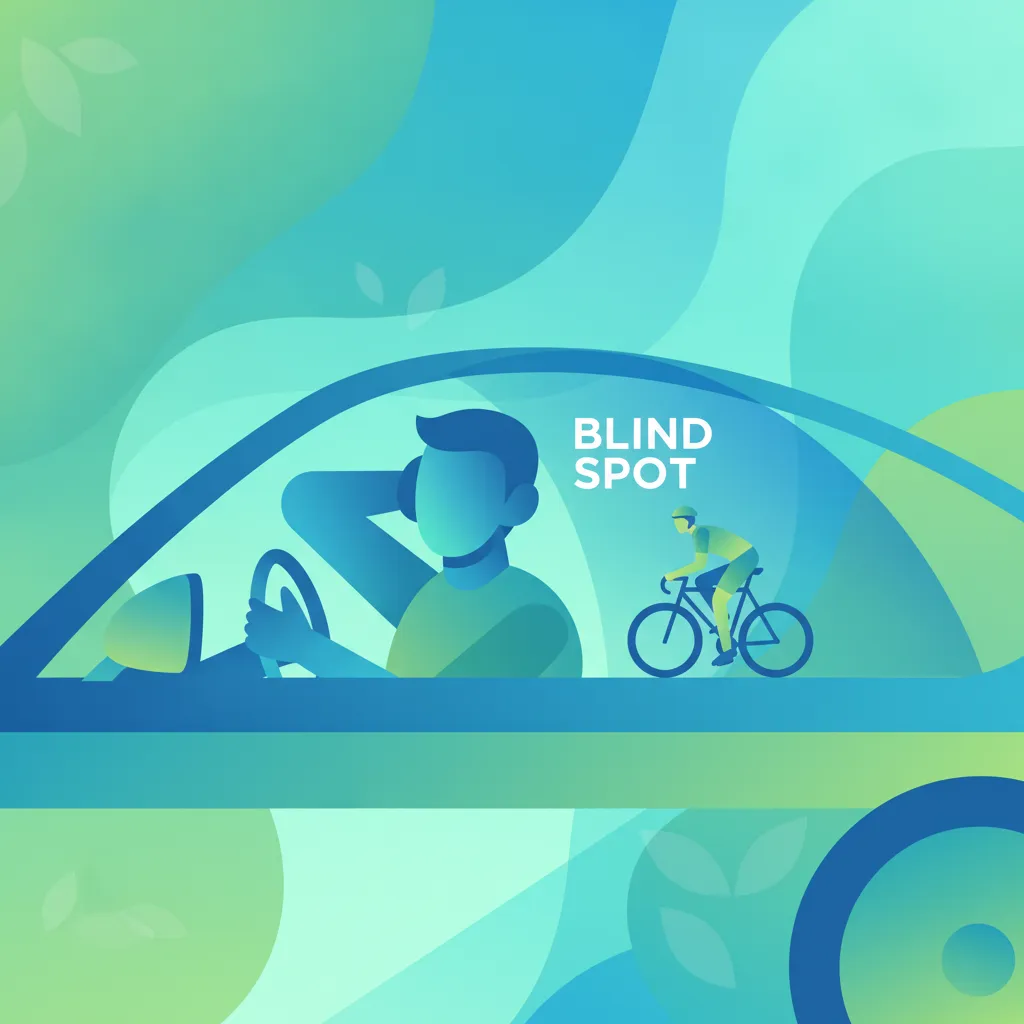
This lesson provides an in-depth analysis of the size and location of blind spots around a typical passenger bus. It teaches systematic scanning patterns that incorporate all mirrors, cameras, and direct head checks to maintain situational awareness. The content highlights high-risk areas where cyclists, pedestrians, or small vehicles can become hidden from view, especially during turns.

This lesson focuses on steering techniques designed to maintain vehicle stability and ensure passenger comfort. It explains how to execute turns smoothly and maintain a correct and consistent lane position to avoid sudden lateral movements. The content differentiates between steering inputs required for low-speed maneuvering in cities and those for maintaining stability at higher speeds on motorways.

This lesson details the principles of smooth acceleration and braking, which are essential for passenger safety and comfort. It explains how to apply gradual and consistent pressure to the accelerator and brake pedals to prevent jerking motions that could cause passengers to lose their balance. The content also covers anticipation skills needed to manage speed effectively in varying Danish traffic and road conditions.

This lesson contrasts the driving techniques required for rural roads and motorways. It covers managing speed on narrow, winding lanes with potential hazards like farm machinery or animals. The content also explains the principles of safe motorway driving, including maintaining lane discipline, managing high-speed stability, and executing safe overtaking maneuvers.
This lesson focuses on the precise maneuvers required for approaching and stopping at bus stops. It covers how to manage vehicle speed, align the bus parallel to the curb for safe access, and correctly position it relative to stop lines and shelters. The content also explains how to interpret Danish road signs and markings specific to public transport stops.

This lesson addresses the specific skills required to navigate around public transport and heavy goods vehicles safely. You will learn the rules for bus lanes, recognize when buses have priority at stops, and understand the unique challenges posed by large vehicles, such as wider turning circles and larger blind spots. The material also provides clear protocols for overtaking these vehicles while maintaining adequate safety margins.
This lesson covers the correct techniques for various turning manoeuvres, including how to signal, position your vehicle, and judge gaps in traffic. It also details the legal and safety protocols for overtaking, emphasizing the importance of assessing speed, distance, and oncoming traffic. A thorough understanding of these procedures is crucial for navigating intersections and two-lane roads safely.
Learn to identify and manage critical blind spots on passenger vehicles. Essential Danish Category D theory for recognizing and mitigating hazards related to vehicle dimensions and observation limitations.
This lesson provides an in-depth analysis of the size and location of blind spots around a typical passenger bus. It teaches systematic scanning patterns that incorporate all mirrors, cameras, and direct head checks to maintain situational awareness. The content highlights high-risk areas where cyclists, pedestrians, or small vehicles can become hidden from view, especially during turns.

This lesson covers the core principles of defensive driving in an urban context. It teaches drivers how to anticipate the actions of other road users, maintain safe following distances in dense traffic, and navigate complex intersections with multiple signals. The content emphasizes heightened awareness of pedestrians, cyclists, and unexpected events common in Danish city environments.
This lesson addresses the specific skills required to navigate around public transport and heavy goods vehicles safely. You will learn the rules for bus lanes, recognize when buses have priority at stops, and understand the unique challenges posed by large vehicles, such as wider turning circles and larger blind spots. The material also provides clear protocols for overtaking these vehicles while maintaining adequate safety margins.
This lesson teaches the effective use of mirrors and on-board camera systems for comprehensive spatial awareness. It explains how to correctly adjust all mirrors to minimize blind spots and how to integrate camera views into a regular scanning routine. The content emphasizes the importance of combining mirror checks with direct observation to detect vulnerable road users hidden in blind zones.
This lesson contrasts the driving techniques required for rural roads and motorways. It covers managing speed on narrow, winding lanes with potential hazards like farm machinery or animals. The content also explains the principles of safe motorway driving, including maintaining lane discipline, managing high-speed stability, and executing safe overtaking maneuvers.
This lesson explains how to adjust driving techniques for adverse conditions. It covers the effects of rain, snow, ice, and fog on tire grip and visibility, emphasizing the need to increase following distances and reduce speed. The content also details the correct use of lights for night driving and in poor weather to ensure the bus is visible to others.
This lesson trains drivers to perform a risk assessment of bus stops along their route. It explains how to identify hazards such as poor visibility, proximity to busy intersections, or obstructed pedestrian access. The content provides proactive strategies for positioning the bus and managing passenger boarding and alighting to mitigate the identified risks effectively.
This lesson details the legal requirements and safety protocols for operating a bus near schools and pedestrian crossings. It covers mandatory speed reductions, the rules for yielding to pedestrians, and techniques for anticipating the sudden movements of children. The content emphasizes the importance of constant visual scanning and maintaining a high state of alert in these sensitive areas.
This lesson provides critical guidance for driving in environments with heavy cycle traffic, typical of Danish cities. It focuses on identifying and yielding to cyclists in dedicated bike lanes, especially when turning right across their path. The content emphasizes advanced observation skills to detect cyclists in blind spots and the importance of giving adequate space.
This lesson addresses the unique environment of bus terminals, focusing on safe, low-speed maneuvering around other vehicles and pedestrians. It also introduces the theory for combination vehicles (Category DE), including the principles of coupling and uncoupling trailers. The content emphasizes the different handling characteristics and increased turning radius associated with articulated buses or buses with trailers.
Find clear answers to common questions learners have about Understanding Vehicle Dimensions and Maneuverability. Learn how the lesson is structured, which driving theory objectives it supports, and how it fits into the overall learning path of units and curriculum progression in Denmark. These explanations help you understand key concepts, lesson flow, and exam focused study goals.
A bus has a much longer wheelbase and often a significant rear overhang. This means the rear wheels follow a tighter path than the front wheels when turning, a phenomenon known as off-tracking, which requires the driver to position the vehicle further away from the inside curb to prevent the rear from mounting it.
In the Category D theory test, you must recognize that larger dimensions create larger and more complex blind spots. You are expected to know how to use your array of mirrors and camera systems to cover these expanded zones, especially when turning or reversing in confined spaces.
The rear overhang is the section of the bus behind the rear wheels. When you turn, this section swings outwards, which can lead to collisions with pedestrians, cyclists, or street furniture if you do not account for the swing arc while steering.
Yes, while the physical dimensions are dictated by the vehicle design, Danish traffic law mandates that you must always ensure your vehicle can navigate the intended route without blocking lanes or endangering others due to its size, making spatial awareness a legal duty for the driver.
Use our powerful search tool to pinpoint specific Danish driving theory topics, road signs, or traffic situations you need to review. Start exploring relevant practice sets now to reinforce your knowledge and build confidence for your upcoming driving licence exam.