
This lesson provides the critical skills required to maintain full spatial awareness in large passenger vehicles. By mastering the integration of mirror checks and camera systems, you will ensure you can detect vulnerable road users in challenging blind spots during your theory exam and daily driving.

Lesson content overview
Operating a bus for passenger transport under a Danish Category D Licence demands exceptional situational awareness. The sheer size of these vehicles, coupled with the responsibility for numerous passengers and other road users, makes a thorough understanding and application of visibility tools paramount. This lesson delves into the effective use of mirrors, the integration of modern camera systems, and strategies for blind spot management, all crucial for safe and comfortable journeys.
Comprehensive spatial awareness is the integrated understanding a bus driver has of their immediate surroundings, including the position and movement of other vehicles, pedestrians, and cyclists. For a professional driver holding a Danish Category D Licence, this awareness is not merely about seeing what's directly in front but encompasses a full 360-degree view, even if it requires combining multiple visual inputs.
This integrated approach enables proactive hazard identification and safe decision-making. Buses, by their nature, have significant blind spots, and operating them safely requires diligently combining direct observation, mirror checks, and camera system monitoring. Neglecting any of these elements can lead to dangerous situations, particularly in busy urban environments where vulnerable road users are abundant. Mastering spatial awareness is a core principle that underpins all safe driving maneuvers, from simple lane changes to complex turns and parking.
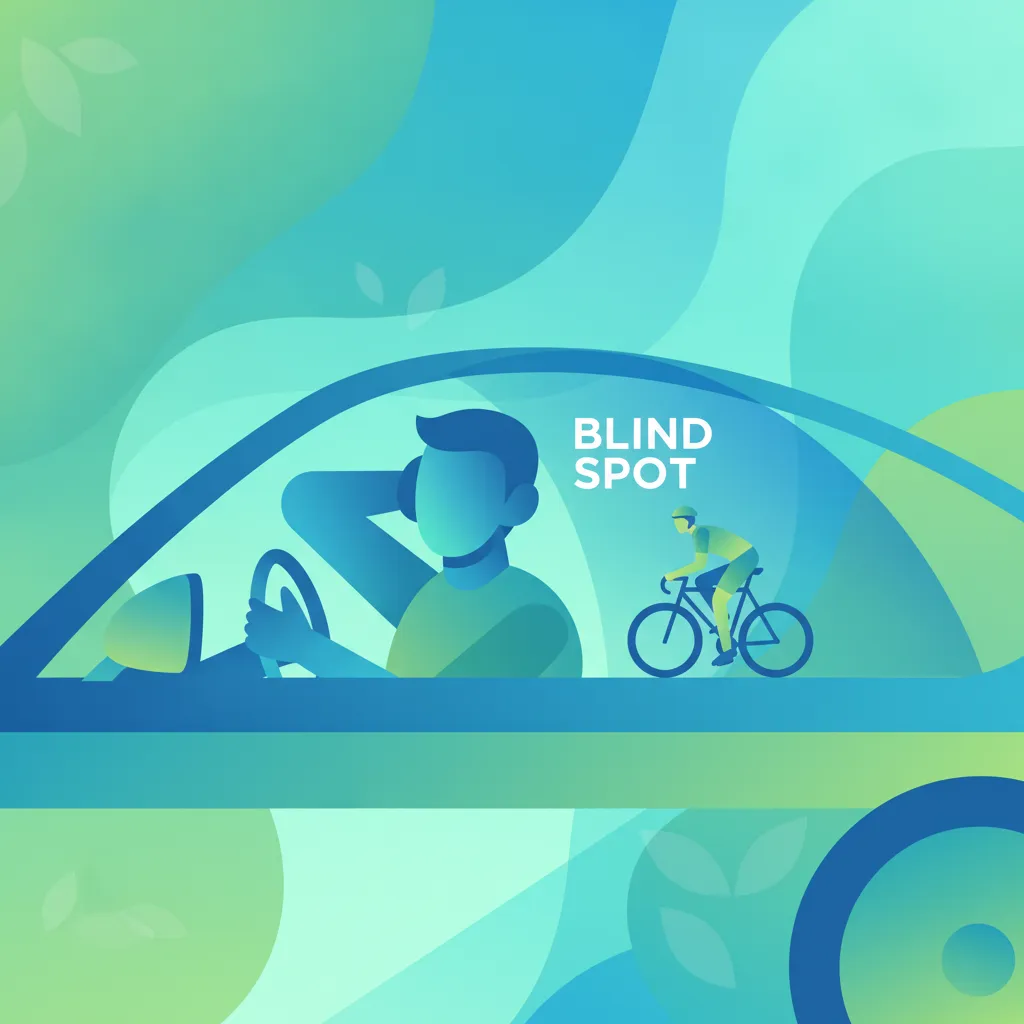
An area around a vehicle that cannot be seen by the driver through the vehicle's mirrors or by direct line-of-sight. For larger vehicles like buses, these areas are considerably larger than for passenger cars.
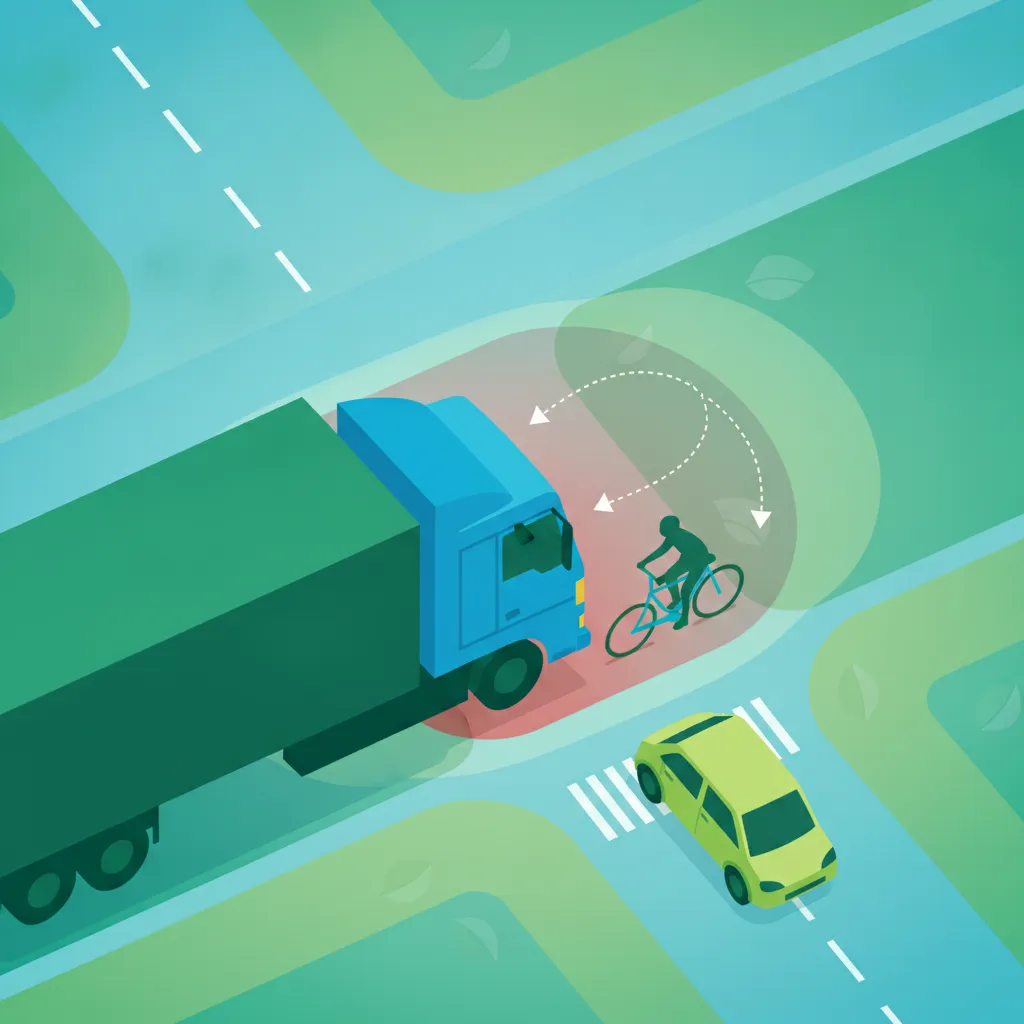
Blind spots are inherent to all vehicles, but their size and significance are dramatically increased in large passenger transport vehicles such as buses. These invisible zones pose a substantial risk of collisions, especially with vulnerable road users like cyclists and pedestrians who can easily disappear from view. Effective blind spot management is not just a recommendation; it is a critical safety measure for professional bus drivers.
There are various types of blind spots around a bus:
Minimizing these blind spots is achieved through a combination of proper mirror adjustment, the strategic use of camera systems, and crucial secondary observation techniques such as head checks. These actions are vital to prevent crashes during lane changes, turns, and when maneuvering in confined spaces or high-traffic areas.
Buses are equipped with several mirrors, each serving a specific function to provide a comprehensive view of the surroundings. Understanding their purpose and adjusting them correctly is fundamental for any professional driver.
Exterior mirrors are positioned on both sides of the bus and are indispensable for monitoring adjacent lanes, traffic approaching from the rear, and vehicles in the immediate side blind spots. They are crucial for safely executing lane changes, overtaking maneuvers, and merging with traffic.
Practical Use: Before any lateral movement, such as changing lanes, turning, or pulling away from a stop, the exterior mirrors must be checked. They provide the primary view for identifying other vehicles, motorcycles, and larger groups of cyclists that might be alongside or approaching the bus.
The interior mirror, typically positioned above the windshield, primarily allows the driver to monitor the bus's interior. This is essential for observing passenger behavior, identifying potential safety issues, and ensuring passenger comfort and compliance with safety regulations. Some interior mirrors might also offer a limited view of the road directly behind the bus, complementing the exterior mirrors, though this is less common in larger passenger vehicles that rely more on exterior and camera systems for external views.
Practical Use: Regularly glance at the interior mirror to check on passengers, especially during boarding, alighting, or when the bus is in motion. This helps maintain order and react quickly to any incidents.
Often referred to as blind spot mirrors, these are additional convex mirrors typically mounted below or beyond the main exterior side mirrors. Their specific design provides a wider, though somewhat distorted, view of the area immediately alongside the bus, particularly extending into the adjacent lane where a standard side mirror might not reach. These mirrors are specifically designed to cover the areas that are most difficult to see directly or via the main side mirrors, helping to detect vulnerable road users or smaller vehicles hidden in these critical zones.
Practical Use: These mirrors are invaluable for identifying objects or individuals positioned directly alongside the bus, especially when preparing for a turn or pulling into a bus stop. They are a primary tool for detecting cyclists and pedestrians who might be in the bus's immediate proximity.
Correct mirror adjustment is fundamental to minimizing blind spots. Before starting any journey, a bus driver must ensure all mirrors are correctly set for their seating position and the specific vehicle.
Exterior Side Mirrors: Sit comfortably in the driver's seat. Adjust each exterior mirror so that you can just barely see the side of your own bus in the innermost part of the mirror. The rest of the mirror should show the road and lanes beside and behind you. This adjustment maximizes your view of adjacent lanes.
Interior Mirror: Adjust the interior mirror to give you a clear, unobstructed view of the passenger compartment, allowing you to monitor passengers and their behavior without significantly moving your head.
Floor Nearly Horizontal Mirrors: These are typically fixed or require minimal adjustment. Ensure they provide the widest possible view into the blind spot immediately alongside the bus. You should be able to see the area where cyclists or pedestrians might be when you are close to the curb or preparing to turn.
Common Misunderstandings: A frequent mistake is adjusting mirrors to show too much of the bus's own side, which reduces the effective field of view of the road. Another is assuming that mirrors, once set, never need re-checking. Changes in seating posture, passenger load, or even minor vehicle movements can subtly alter effective visibility.
Modern buses are increasingly equipped with sophisticated camera systems that supplement traditional mirrors. These technologies provide views of areas that are difficult or impossible to see with mirrors alone, significantly enhancing overall spatial awareness.
Rear-view cameras provide a live video feed of the area directly behind the bus, displayed on an in-cab monitor. This system is invaluable when reversing, docking, or maneuvering in tight spaces, allowing the driver to spot obstacles, pedestrians, or vehicles that might be directly in the path of the bus.
Practical Use: Engage the rear-view camera whenever reversing or moving slowly backwards. Do not rely solely on the camera; always combine its feed with checks of exterior mirrors and, if possible, direct observation or guidance from a spotter.
Side-view cameras are positioned along the sides of the bus, often integrated into the mirror housing or beneath it. They provide additional video feeds of the side blind spots, areas where cyclists or pedestrians can be easily hidden. These feeds are typically displayed on dedicated monitors or integrated into a central dashboard display when indicators are activated or when maneuvering at low speeds.
Practical Use: Use side-view camera feeds to confirm clear blind spots before initiating lane changes or turns. They are particularly effective for checking alongside the bus for vulnerable road users in busy urban environments.
Some advanced bus models feature 360-degree camera systems, which combine feeds from multiple cameras positioned around the vehicle to create a bird's-eye view on the in-cab monitor. This composite view offers unparalleled situational awareness, making it easier to navigate complex situations and detect hazards from all angles.
Practical Use: Utilize the 360-degree view, if available, for low-speed maneuvers, parking, or when driving in extremely congested areas to gain a complete understanding of the bus's immediate perimeter.
Camera systems are powerful tools, but they are designed to augment mirror views and direct observation, not replace them. Drivers must be trained to seamlessly integrate camera checks into their regular scanning routine, ensuring they are not fixated on a screen but are using it as one component of a holistic safety check. Maintain cameras by ensuring lenses are clean and free from obstructions.
A systematic scanning routine is the consistent process a driver uses to observe their surroundings, incorporating direct sight, mirror checks, and camera views. This routine ensures that all critical areas around the bus are regularly monitored, preventing tunnel vision and allowing for timely hazard detection and response.
Without a structured scanning routine, drivers are prone to overlooking crucial information, especially in dynamic traffic environments. A systematic approach helps manage the vast amount of visual information a bus driver needs to process, ensuring no blind spot or critical area is left unchecked. This is particularly vital for avoiding incidents with vulnerable road users who might suddenly appear in the bus's path.
Consistency is key. Develop a personal, systematic routine and practice it until it becomes second nature.
General Scanning: Continuously scan the road ahead, checking exterior mirrors every 5-8 seconds to maintain awareness of traffic flow behind and beside you. Glance at the interior mirror periodically to monitor passengers.
Before a Lane Change (e.g., to the right):
Before a Right Turn:
Danish road traffic regulations, along with European directives, impose strict requirements on drivers of Category D vehicles regarding visibility. These are designed to ensure the highest safety standards for passenger transport.
Bus drivers are legally obligated to ensure that all mirrors are correctly adjusted before commencing a journey and to use them consistently throughout operation. Similarly, any mandatory camera systems (e.g., those for reversing or blind spot monitoring) must be functional and utilized as intended.
Legal requirements mandate heightened vigilance and the use of all available visibility aids in situations where the risk to other road users is highest:
Failure to comply with these obligations can lead to significant penalties, including fines, points on a licence, or even legal action in the event of a collision.
The effectiveness of mirrors and cameras can vary significantly based on environmental and operational factors. Professional drivers must adapt their scanning routine and utilize their visibility tools differently under varying conditions.
Cyclists and pedestrians are highly susceptible to severe injury in a collision with a bus. Drivers must maintain an exceptionally high level of vigilance when interacting with these users.
Always give vulnerable road users extra space and anticipate their movements. Even if you have right of way, preventing an accident is paramount.
Let's consider two common scenarios faced by Danish bus drivers and how effective mirror and camera use, combined with proper scanning, ensures safety.
The bus driver needs to change from the left lane to the right lane to prepare for an upcoming bus stop. Traffic is moderate, and a cyclist is riding alongside in the right-hand blind spot.
Correct Behavior:
Incorrect Behavior: The driver quickly checks only the right exterior mirror, sees no vehicle, and signals immediately. Without performing a head check or checking the floor nearly horizontal mirror/side-view camera, they begin to move into the right lane, dangerously encroaching on the cyclist's space, leading to a sudden brake or swerve.
The bus is approaching a T-intersection with a green light and intends to turn right. A pedestrian is waiting at the crosswalk on the street the bus is turning into, and a cyclist is approaching on the right side of the bus, also intending to proceed straight through the intersection.
Correct Behavior:
Incorrect Behavior: The driver signals right and focuses primarily on the traffic light and oncoming vehicles. They perform only a quick glance at the right exterior mirror and fail to use the side-view camera or perform a head check. As a result, they do not see the cyclist who intends to go straight or the pedestrian, creating a high-risk situation where the bus's front overhang might sweep into their path.
Mirrors and cameras are technological extensions of a driver's eyes, designed to overcome the inherent limitations of human vision and the physical structure of large vehicles. They are crucial for:
By diligently applying these principles and integrating mirror and camera usage into every aspect of driving, Danish Category D drivers ensure not only their own safety but also that of their passengers and all other road users.
This lesson covers the critical skill of managing a bus's extensive blind spots through proper mirror adjustment, camera integration, and systematic scanning routines essential for Danish Category D drivers. Key blind spots include the large side blind zones where cyclists and pedestrians commonly hide, rear areas during reversing, front blind spots from high cab positions, and pillar blind spots during turns. The systematic scanning procedure for lane changes and turns follows a consistent order: interior mirror, exterior mirrors, floor nearly horizontal mirrors or side cameras, head check, signal, then final confirmation before executing. Camera systems including rear-view, side-view, and 360-degree systems augment but never replace the requirement for mirrors and direct observation. These practices are legally mandated for professional passenger transport in Denmark and are vital for preventing collisions with vulnerable road users in busy urban environments.
A short set of high-value points that capture the most important learning from this lesson.
Buses have multiple distinct blind spots: rear, side (largest and most dangerous), front, and pillar zones that require different monitoring approaches
Floor nearly horizontal (blind spot) mirrors extend lateral view to detect cyclists and pedestrians alongside the bus where standard mirrors fail
Camera systems supplement but never replace mirrors and direct observation; all three must be integrated into a continuous scanning routine
Right turns are especially hazardous because cyclists and pedestrians can be hidden in the front overhang and side blind spots of the bus
Systematic scanning before any maneuver must include interior mirror, exterior mirrors, floor nearly horizontal mirrors/cameras, and a physical head check in that order
Explore all units and lessons included in this driving theory course.
Exterior mirrors should show the side of your own bus at the innermost edge; too much bus visibility wastes valuable road view
Check mirrors every 5-8 seconds during normal driving, not just before maneuvers
In urban environments, increase scanning frequency because vulnerable road users (cyclists, pedestrians) are constantly present
Adverse weather (rain, fog, darkness) reduces mirror effectiveness; rely more on head checks and cameras, and keep all lenses clean
Mirrors and cameras are legal obligations under Danish and European regulations for Category D vehicles; damaged or obstructed systems can result in fines
Relying on only one visibility tool (mirrors OR cameras) instead of combining all available information sources before a maneuver
Skipping the head check because mirrors appear clear; cyclists in the immediate side blind spot may be hidden from all mirrors
Adjusting mirrors once at the start and never re-checking them, ignoring that seating posture or vehicle load can change visibility
Performing a quick superficial glance instead of a thorough, deliberate observation of each mirror and camera
Tunnel vision focusing only on the road ahead or on traffic lights, neglecting peripheral and rearward views during complex maneuvers like turns
Lesson content overview
A short set of high-value points that capture the most important learning from this lesson.
Buses have multiple distinct blind spots: rear, side (largest and most dangerous), front, and pillar zones that require different monitoring approaches
Floor nearly horizontal (blind spot) mirrors extend lateral view to detect cyclists and pedestrians alongside the bus where standard mirrors fail
Camera systems supplement but never replace mirrors and direct observation; all three must be integrated into a continuous scanning routine
Right turns are especially hazardous because cyclists and pedestrians can be hidden in the front overhang and side blind spots of the bus
Systematic scanning before any maneuver must include interior mirror, exterior mirrors, floor nearly horizontal mirrors/cameras, and a physical head check in that order
Explore all units and lessons included in this driving theory course.
Exterior mirrors should show the side of your own bus at the innermost edge; too much bus visibility wastes valuable road view
Check mirrors every 5-8 seconds during normal driving, not just before maneuvers
In urban environments, increase scanning frequency because vulnerable road users (cyclists, pedestrians) are constantly present
Adverse weather (rain, fog, darkness) reduces mirror effectiveness; rely more on head checks and cameras, and keep all lenses clean
Mirrors and cameras are legal obligations under Danish and European regulations for Category D vehicles; damaged or obstructed systems can result in fines
Relying on only one visibility tool (mirrors OR cameras) instead of combining all available information sources before a maneuver
Skipping the head check because mirrors appear clear; cyclists in the immediate side blind spot may be hidden from all mirrors
Adjusting mirrors once at the start and never re-checking them, ignoring that seating posture or vehicle load can change visibility
Performing a quick superficial glance instead of a thorough, deliberate observation of each mirror and camera
Tunnel vision focusing only on the road ahead or on traffic lights, neglecting peripheral and rearward views during complex maneuvers like turns
Explore search topics learners often look for when studying Mirrors, Cameras, and Blind Spot Management. These topics reflect common questions about road rules, driving situations, safety guidance, and lesson level theory preparation for learners in Denmark.
Browse additional driving theory lessons that cover connected traffic rules, road signs, and common driving situations related to this topic. Improve your understanding of how different rules interact across everyday traffic scenarios.
Explore how weather, urban vs. rural environments, and vehicle load affect blind spot awareness and visibility. Learn adaptive strategies for safe operation using mirrors and cameras in Denmark.
This lesson maps out the extensive blind spots, or 'no-zones,' that exist around a tractor-trailer combination, particularly to the sides and rear. It teaches the proper techniques for adjusting all mirrors to minimize these areas and explains how modern camera systems provide critical visibility. Understanding and compensating for these blind spots is a fundamental skill for preventing collisions, especially during lane changes and turns.

This lesson provides an in-depth look at the blind spots of other vehicles and how to manage them. It teaches riders to recognize the large 'no-zones' around trucks and buses where they cannot be seen. Strategies include avoiding lingering in these areas and positioning the motorcycle for maximum visibility.
This lesson provides an in-depth analysis of the size and location of blind spots around a typical passenger bus. It teaches systematic scanning patterns that incorporate all mirrors, cameras, and direct head checks to maintain situational awareness. The content highlights high-risk areas where cyclists, pedestrians, or small vehicles can become hidden from view, especially during turns.

This lesson explains the relationship between a bus's dimensions—length, width, and height—and its maneuverability. It covers key concepts such as turning radius, rear overhang, and swept path, which are critical for navigating turns and tight spaces safely. Learners will also understand how these physical characteristics create significant blind spots that require specific observation techniques to manage.
Find clear answers to common questions learners have about Mirrors, Cameras, and Blind Spot Management. Learn how the lesson is structured, which driving theory objectives it supports, and how it fits into the overall learning path of units and curriculum progression in Denmark. These explanations help you understand key concepts, lesson flow, and exam focused study goals.
Because of the significant length and width of buses, traditional mirrors leave large blind spots, especially near the rear wheels and front corners. Danish theory exams emphasize that mirrors must always be supplemented by camera views and, where physically possible, direct observation.
You should maintain a continuous scanning routine, checking mirrors and cameras at regular, frequent intervals. This is critical for monitoring cyclists and pedestrians in urban traffic, where conditions change rapidly.
No. In the Danish theory framework, cameras are treated as a supplemental safety aid. They improve your spatial awareness but do not replace the legal requirement to physically check mirrors and scan the immediate area around your vehicle.
Many candidates fail to account for the 'off-tracking' effect when turning, where the blind spot area shifts significantly. Always use your camera systems to monitor the rear and side path before initiating any steering maneuver.
Use our powerful search tool to pinpoint specific Danish driving theory topics, road signs, or traffic situations you need to review. Start exploring relevant practice sets now to reinforce your knowledge and build confidence for your upcoming driving licence exam.