
This lesson explores the essential rules for managing your speed while operating a stor knallert in Denmark. You will learn the specific legal limits for urban and rural areas and how to adjust your speed according to weather, visibility, and traffic density.
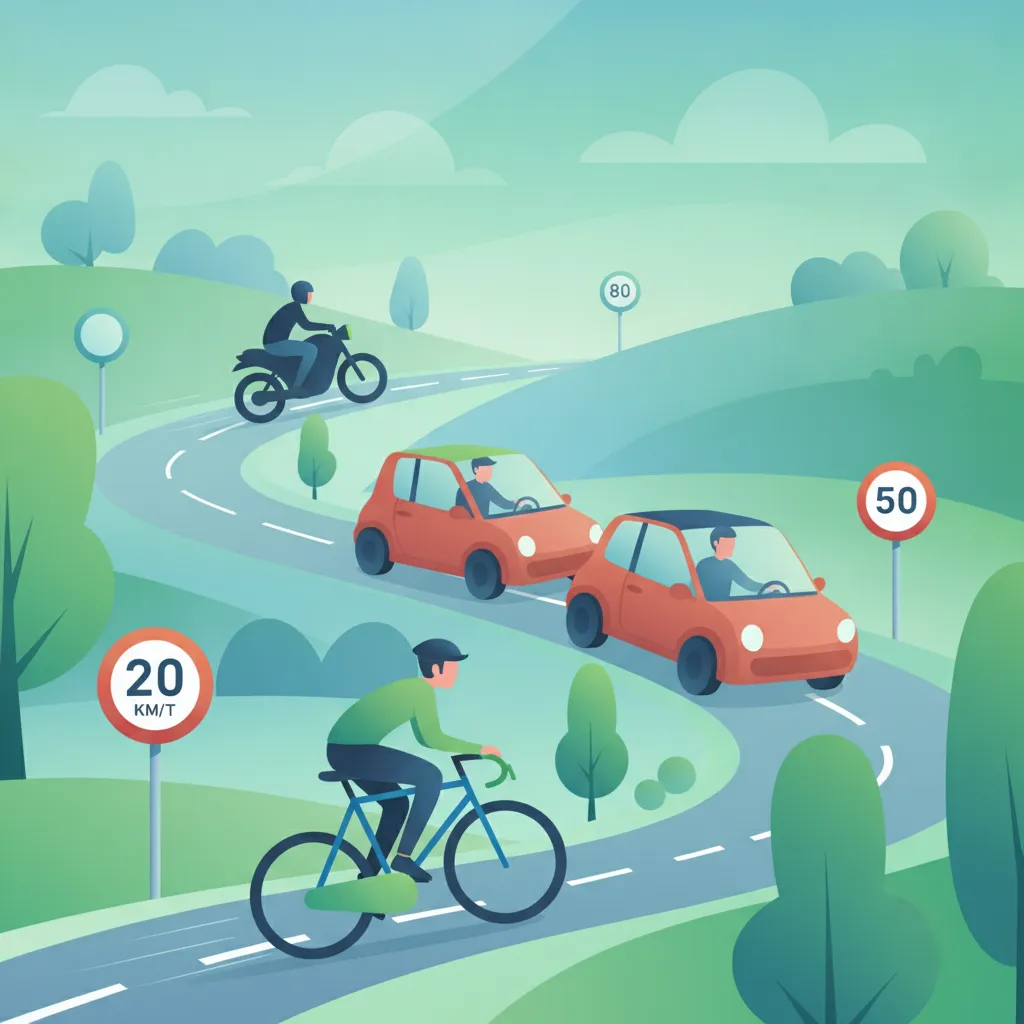
Lesson content overview
Welcome to this lesson on speed management and Danish speed limits, a crucial component of the Official Danish Driving Theory Course for Category AM (Stor Knallert). Understanding and applying correct speed is not just a legal obligation; it is fundamental to ensuring your safety and the safety of others on the road. This chapter will detail the specific speed limits for large mopeds (stor knallert) across various Danish environments, from bustling city streets to quiet rural roads.
We will explore the vital concept of 'appropriate speed,' which requires you to constantly adjust your riding speed based on dynamic factors such as weather, visibility, and traffic density. By the end of this lesson, you will possess a comprehensive understanding of how to manage your speed effectively, ensuring legal compliance and confident, safe riding under all conditions. This knowledge builds upon your understanding of Danish road signs and markings, and forms the foundation for advanced topics like braking techniques and managing grip.
Effective speed management involves a combination of legal adherence and practical judgment. As a stor knallert rider, you must always be aware of the maximum permissible speed for your vehicle and the specific road segment, while also assessing whether conditions necessitate a slower, 'appropriate' speed.
Statutory speed limits are the legally mandated maximum speeds that you, as a stor knallert rider, are permitted to travel. These limits are fixed by law and vary depending on the type of road and whether you are within a built-up area. Their primary purpose is to establish uniform safety standards, considering the typical risks associated with different road environments. Violating these limits not only carries legal penalties but significantly increases the risk of accidents due to reduced reaction time and increased stopping distances.
Beyond statutory limits, Danish traffic law mandates the concept of 'appropriate speed' (passende hastighed). This principle requires you to adjust your speed according to prevailing conditions, even if those conditions would allow you to travel below the posted limit. Appropriate speed is defined as the speed at which you can safely operate your stor knallert, maintaining full control and being able to react effectively to any hazards, given the current environmental and traffic situation. Failing to choose an appropriate speed can be as dangerous as exceeding a statutory limit and can lead to legal consequences in the event of an accident.
Understanding the inherent capabilities and limitations of your stor knallert is integral to safe speed management. This involves knowing its maximum achievable speed, its acceleration and braking performance, and how it handles under different loads or adverse conditions. A stor knallert is legally limited to a maximum speed of 45 km/h, which is a key factor in all speed calculations. Overestimating your moped's capabilities can lead to unsafe speed choices, particularly when attempting maneuvers or reacting to sudden changes in the road environment.
Specific speed limits apply to stor knallert riders across Denmark. These limits are non-negotiable legal maximums, but remember that the principle of appropriate speed always applies, meaning you may need to drive slower.
A fundamental rule for all stor knallert riders in Denmark is that your vehicle may never exceed 45 km/h on any road, regardless of higher posted speed limits for other vehicle types. Even if you are on an open rural road with a general limit of 80 km/h, you must still adhere to your vehicle's specific 45 km/h maximum. This limit is set to ensure safety, reflecting the design and performance characteristics of large mopeds.
Within built-up areas (byområder), defined by the presence of street lighting or municipal boundaries, the default speed limit for stor knallert is 30 km/h. This limit applies unless specific road signs indicate a different speed. Urban environments present higher risks due to greater pedestrian and cyclist activity, numerous intersections, and parked vehicles, all of which necessitate lower speeds to allow for sufficient reaction time.
Many residential streets also fall within built-up areas and are therefore subject to the 30 km/h default limit for stor knallert, unless explicitly posted otherwise. These zones are often characterized by houses, parked cars, and children playing, demanding an even higher degree of caution and often requiring speeds well below the maximum limit.
On rural roads, outside built-up areas, the general speed limit for stor knallert is 45 km/h. This is often the highest speed you can legally travel on a stor knallert. While these roads may seem less congested, they can present different hazards such as wildlife, sharp curves, and varying road surfaces. Always remember that the 45 km/h is a maximum, and appropriate speed may be considerably lower depending on conditions.
Be alert for special zones such as school zones, hospital areas, or temporary roadworks. These areas will almost always have specific, often lower, speed limits signposted, such as 20 km/h or 30 km/h. These temporary or special limits override the general limits and must be strictly observed to ensure the safety of vulnerable road users or workers.
Even if you are within the statutory speed limit, you are legally required to reduce your speed if conditions warrant it. This concept of appropriate speed is paramount for safety. Several factors influence what constitutes an appropriate speed.
Adverse weather conditions significantly impact your stor knallert's grip (adherence) on the road surface, directly affecting braking distances and stability.
Your ability to see and be seen directly impacts the speed at which you can safely travel.
The amount of traffic on the road directly affects the safe speed.
The weight and distribution of load on your stor knallert impact its handling and performance characteristics.
Understanding the physics behind speed is crucial for appreciating the importance of speed management.
Kinetic energy is the energy an object possesses due to its motion. It increases quadratically with speed (E = ½mv²). This means that if you double your speed, your kinetic energy quadruples. In an accident, this increased energy must be dissipated, leading to significantly more severe impacts and injuries at higher speeds. Even a small increase in speed can have a disproportionately large impact on crash severity.
Stopping distance is the total distance your stor knallert travels from the moment you perceive a hazard to the moment your vehicle comes to a complete stop. It comprises two main parts:
Both thinking distance and braking distance increase with speed, meaning your total stopping distance becomes significantly longer the faster you go. This fundamental principle dictates that slower speeds provide more time to react and a shorter distance to stop, thereby reducing the likelihood and severity of collisions.
Many accidents involving stor knallert riders stem from misjudging speed or violating limits. Be aware of these common pitfalls:
Let's look at practical scenarios to illustrate how speed management principles are applied:
You are riding your stor knallert on a city street in Copenhagen with a posted speed limit of 30 km/h. The weather is clear, and traffic is moderate.
You are on a rural road outside Roskilde with a posted limit of 45 km/h for stor knallert. It's lightly raining, making the road surface wet and slightly slippery.
You are navigating a residential street in Aarhus at night. The default speed limit is 30 km/h, but street lighting is sparse, reducing visibility.
You are carrying a passenger on your stor knallert in an urban area with a 30 km/h limit. The added weight affects your moped's handling and braking.
You encounter dense fog on a rural road with a 45 km/h limit, reducing visibility to approximately 20 meters.
Understanding speed management is foundational for safe riding. This lesson highlights how speed impacts your ability to control your vehicle and react to hazards. Your knowledge of road signs, covered in earlier lessons, is crucial for recognizing posted speed limits and area designations. This understanding will be further enriched in subsequent lessons that delve into braking techniques, stopping distances, and managing grip under various weather conditions. Always remember that safe riding is about continuous assessment and adaptation of your speed to the immediate environment.
This lesson covers the Danish legal speed limits for stor knallert riders—30 km/h in built-up areas and 45 km/h maximum everywhere—and explains the mandatory concept of 'appropriate speed' (passende hastighed), which requires adjusting your speed based on weather, visibility, traffic density, and vehicle load. It also teaches the physics of stopping distances, showing that both thinking distance and braking distance grow significantly with speed, making speed the primary controllable safety factor. Real-world scenarios demonstrate how to apply these principles correctly in urban, rural, and adverse weather conditions, while a detailed list of common violations highlights the most dangerous speed-related mistakes moped riders make.
A short set of high-value points that capture the most important learning from this lesson.
Stor knallert riders are legally limited to a maximum of 45 km/h on all roads, regardless of higher posted limits for other vehicles
In built-up areas (byområder), the default speed limit for stor knallert is 30 km/h, even if no sign is posted
Appropriate speed (passende hastighed) is a legal requirement in Danish traffic law, mandating you drive slower than the limit when conditions require it
Stopping distance increases with the square of your speed, meaning doubling speed quadruples your stopping distance
Speed is the single most important factor you can control to reduce both the likelihood and severity of a crash
Explore all units and lessons included in this driving theory course.
The absolute maximum speed for stor knallert in Denmark is 45 km/h—never exceed this under any circumstances
Built-up areas are defined by street lighting or municipal boundaries and carry a default 30 km/h limit for stor knallert
Weather, visibility, traffic density, vehicle load, and road surface all legally require you to reduce your speed below posted limits
Special zones such as school areas, hospital zones, and roadworks have their own posted limits that override general limits
Carrying a passenger or heavy cargo increases braking distance and reduces stability, requiring slower speeds
Riding at 45 km/h in urban built-up areas where the legal limit is 30 km/h, dangerously reducing reaction time near pedestrians and cyclists
Assuming the posted limit is always safe—conditions like wet leaves, gravel, fog, or ice may demand significantly lower speeds
Not reducing speed in adverse weather such as rain, snow, or fog where grip and visibility are significantly compromised
Underestimating stopping distance at higher speeds, forgetting that kinetic energy increases quadratically with velocity
Ignoring temporary speed limit signs for roadworks or special events, assuming general limits always apply
Lesson content overview
A short set of high-value points that capture the most important learning from this lesson.
Stor knallert riders are legally limited to a maximum of 45 km/h on all roads, regardless of higher posted limits for other vehicles
In built-up areas (byområder), the default speed limit for stor knallert is 30 km/h, even if no sign is posted
Appropriate speed (passende hastighed) is a legal requirement in Danish traffic law, mandating you drive slower than the limit when conditions require it
Stopping distance increases with the square of your speed, meaning doubling speed quadruples your stopping distance
Speed is the single most important factor you can control to reduce both the likelihood and severity of a crash
Explore all units and lessons included in this driving theory course.
The absolute maximum speed for stor knallert in Denmark is 45 km/h—never exceed this under any circumstances
Built-up areas are defined by street lighting or municipal boundaries and carry a default 30 km/h limit for stor knallert
Weather, visibility, traffic density, vehicle load, and road surface all legally require you to reduce your speed below posted limits
Special zones such as school areas, hospital zones, and roadworks have their own posted limits that override general limits
Carrying a passenger or heavy cargo increases braking distance and reduces stability, requiring slower speeds
Riding at 45 km/h in urban built-up areas where the legal limit is 30 km/h, dangerously reducing reaction time near pedestrians and cyclists
Assuming the posted limit is always safe—conditions like wet leaves, gravel, fog, or ice may demand significantly lower speeds
Not reducing speed in adverse weather such as rain, snow, or fog where grip and visibility are significantly compromised
Underestimating stopping distance at higher speeds, forgetting that kinetic energy increases quadratically with velocity
Ignoring temporary speed limit signs for roadworks or special events, assuming general limits always apply
Explore search topics learners often look for when studying Speed Management and Danish Speed Limits. These topics reflect common questions about road rules, driving situations, safety guidance, and lesson level theory preparation for learners in Denmark.
Browse additional driving theory lessons that cover connected traffic rules, road signs, and common driving situations related to this topic. Improve your understanding of how different rules interact across everyday traffic scenarios.
Explore how rain, fog, darkness, and traffic density dictate appropriate speed for Category AM riders in Denmark. Understand the critical link between road conditions and safe riding speed according to Danish traffic law.
This lesson details how to adapt riding techniques for rain and wind. It explains how wet surfaces reduce tyre grip and increase braking distances, requiring smoother control inputs and lower speeds. The content also provides strategies for managing the force of strong crosswinds on a small vehicle.
This lesson focuses on techniques for riding when visibility and traction are compromised by weather. It explains how to adjust speed, increase following distance, and use lights to see and be seen in rain or fog. Understanding the risk of hydroplaning and making smooth control inputs are key takeaways.
This lesson teaches the importance of adapting your speed to prevailing conditions, rather than simply adhering to the posted limit. It explains how factors like traffic density, road surface quality, visibility, and adverse weather should influence your speed choice. Developing this risk-aware approach is crucial for maintaining vehicle control and ensuring safety in all driving environments.
This lesson explores the critical relationship between tyres, road surface, and grip. It explains how rain, ice, gravel, and even painted road markings can reduce traction and increase risk. Learners will understand the importance of having correct tyre pressure and adequate tread depth to maintain control.

This lesson explains the critical importance of being visible to other road users. It details the proper use of headlights and daytime running lights as required by Danish law. The content also covers the effectiveness of wearing reflective clothing and ensuring the vehicle's reflectors are clean and functional.
This lesson equips you with the knowledge to drive safely in challenging weather conditions. It explains the risk of aquaplaning in heavy rain, how to counteract strong crosswinds, and the correct use of lights in darkness and fog. The core principle is adapting your speed and increasing your following distance to compensate for reduced visibility and traction.
This lesson addresses the significant risks of riding during winter. It explains how to identify potentially icy surfaces, such as black ice, and the extreme caution required when riding in snow. The content covers the need for gentle acceleration, braking, and steering to avoid loss of traction on slippery roads.
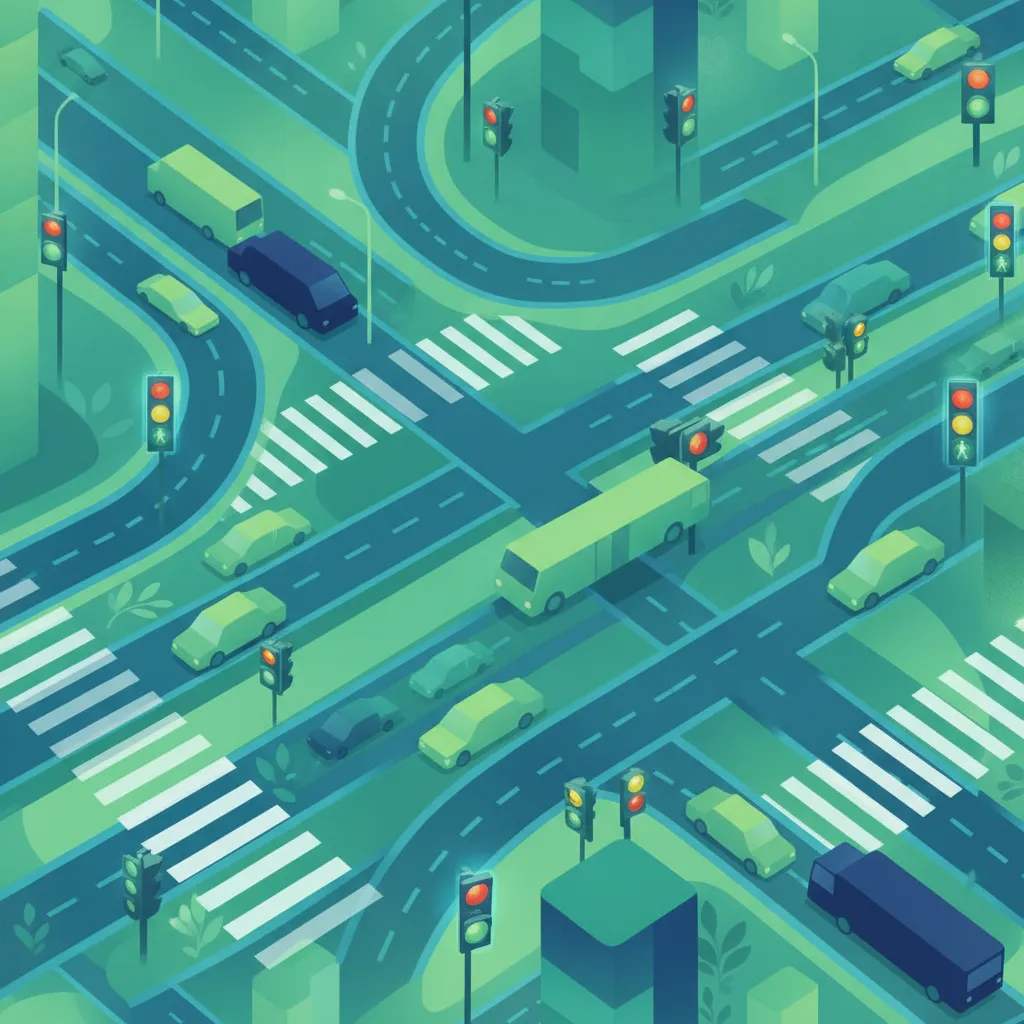
This lesson details the function and meaning of traffic light signals in Denmark. It covers the standard red, amber, and green sequences, as well as special signals like flashing amber lights and green arrows for turning. The content also explains signals specific to cyclists and pedestrians that moped riders must observe at intersections.

This lesson prepares riders for the specific hazards of rural roads, which often have less visibility and more unpredictable surfaces. It covers strategies for approaching blind curves, safely passing agricultural machinery, and being vigilant for animals on the road. Adjusting speed to match visibility is a core principle.
This lesson explains how to adjust driving techniques for adverse conditions. It covers the effects of rain, snow, ice, and fog on tire grip and visibility, emphasizing the need to increase following distances and reduce speed. The content also details the correct use of lights for night driving and in poor weather to ensure the bus is visible to others.
Understand the physics behind speed, kinetic energy, and stopping distances relevant to Danish Category AM riders. Learn how speed directly impacts accident severity and reaction time on Danish roads.
This lesson breaks down the concept of total stopping distance into its core components: perception, reaction, and braking distances. It explains how variables such as vehicle speed, tyre quality, and road friction significantly impact how quickly you can stop. By understanding these principles, you will be ableto maintain a safe following distance and avoid collisions.

This lesson explains the components of total stopping distance: reaction distance and braking distance. It provides instruction on how to use both front and rear brakes effectively for a controlled and efficient stop. The content also highlights how factors like speed, road condition, and tyre quality influence how quickly you can stop.
This lesson explores the critical relationship between tyres, road surface, and grip. It explains how rain, ice, gravel, and even painted road markings can reduce traction and increase risk. Learners will understand the importance of having correct tyre pressure and adequate tread depth to maintain control.
This lesson details the function and meaning of traffic light signals in Denmark. It covers the standard red, amber, and green sequences, as well as special signals like flashing amber lights and green arrows for turning. The content also explains signals specific to cyclists and pedestrians that moped riders must observe at intersections.
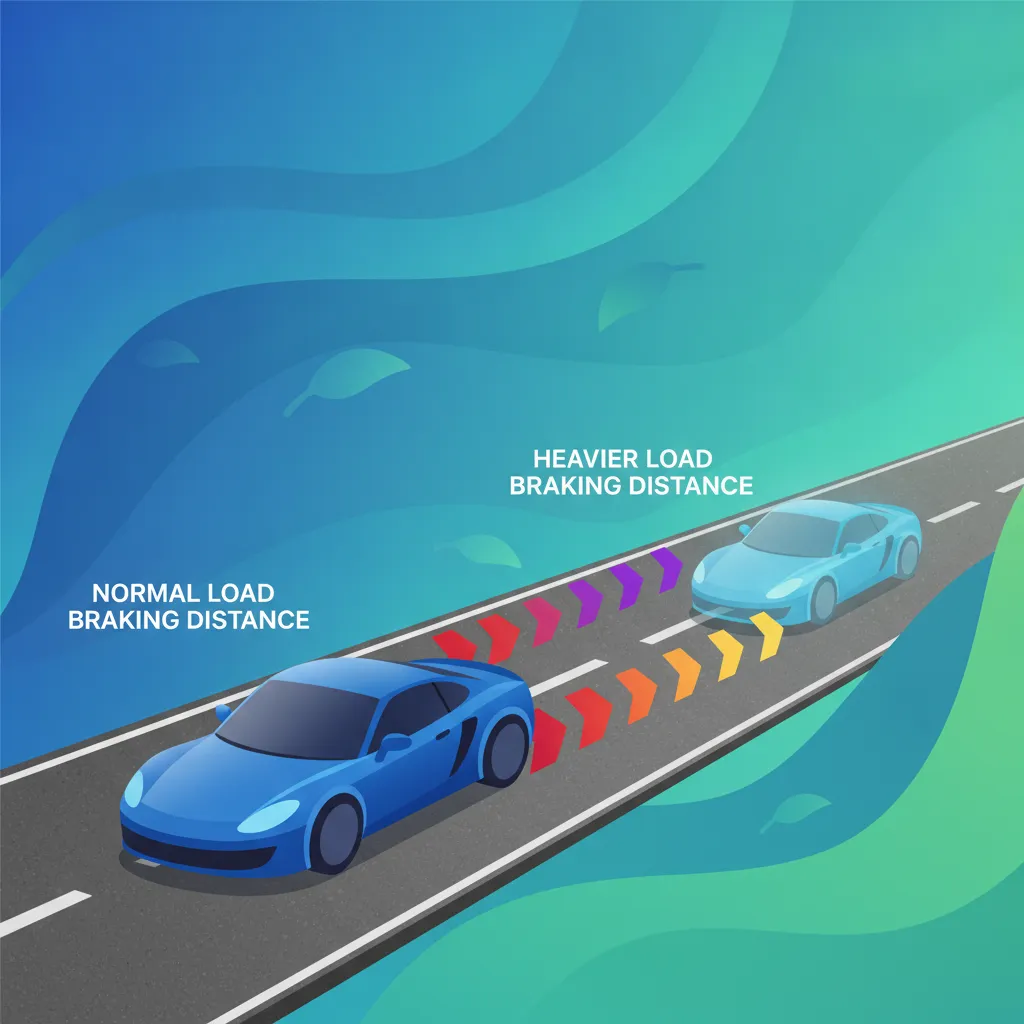
This lesson explores the direct relationship between a vehicle's mass, its speed, and the distance required to stop. It explains how increased load significantly lengthens the braking distance and details how road conditions like gradient and surface friction further affect this calculation. Learners will understand the importance of anticipating stops and maintaining a greater following distance to ensure safety.
This lesson addresses the significant risks of riding during winter. It explains how to identify potentially icy surfaces, such as black ice, and the extreme caution required when riding in snow. The content covers the need for gentle acceleration, braking, and steering to avoid loss of traction on slippery roads.
This lesson provides a comparative analysis between a stor knallert and other road users like bicycles, e-bikes, and cars. It examines the differences in speed, maneuverability, and visibility, which create unique challenges for moped riders. Understanding these distinctions is key to anticipating interactions and positioning oneself safely in mixed traffic.
This lesson details how to adapt riding techniques for rain and wind. It explains how wet surfaces reduce tyre grip and increase braking distances, requiring smoother control inputs and lower speeds. The content also provides strategies for managing the force of strong crosswinds on a small vehicle.
This lesson explains the physics of motorcycle braking, highlighting the primary role of the front brake in stopping power. It covers techniques for smooth, progressive brake application to avoid wheel lock-up. Learners will also understand how body position and weight transfer affect braking efficiency and stability.
This lesson focuses on the fundamental skills of balance and steering. It explains how body position affects the vehicle's center of gravity and stability. The concept of counter-steering is introduced as the primary method for initiating turns at moderate to high speeds, a key skill for effective control.
Find clear answers to common questions learners have about Speed Management and Danish Speed Limits. Learn how the lesson is structured, which driving theory objectives it supports, and how it fits into the overall learning path of units and curriculum progression in Denmark. These explanations help you understand key concepts, lesson flow, and exam focused study goals.
The general speed limit for a stor knallert in Denmark is 45 km/h. You must always ensure your vehicle does not exceed this mechanical limit, while also observing local speed limits if they are lower.
No, you must adjust your speed to be appropriate for the current conditions, including heavy rain, snow, or high traffic. Driving at the limit can be illegal if conditions make it unsafe.
Reduced visibility, such as in fog or darkness, requires you to lower your speed so you can stop within the distance you can see to be clear. This is a fundamental principle for safety in the Danish theory test.
While the maximum technical speed of the vehicle remains 45 km/h, you must adhere to local signposted limits. In urban zones, you must be particularly vigilant for pedestrians and cyclists, requiring constant speed adjustment.
Use our powerful search tool to pinpoint specific Danish driving theory topics, road signs, or traffic situations you need to review. Start exploring relevant practice sets now to reinforce your knowledge and build confidence for your upcoming driving licence exam.