
This lesson introduces the critical physics behind stopping your stor knallert safely and effectively. You will learn how to manage reaction time and braking distance, which are vital components for passing your Danish Category AM theory exam and riding safely in real-world traffic.
Lesson content overview
Understanding how to brake effectively and knowing your vehicle's total stopping distance are fundamental skills for safe operation of a stor knallert (large moped) in Denmark. This lesson will equip you with a comprehensive understanding of the factors that influence how quickly you can bring your moped to a complete stop, from your own reaction time to the condition of your tyres and the road surface. Mastering these concepts is crucial for preventing accidents and navigating Danish roads safely.
Every time you need to slow down or stop, your moped travels a certain distance before coming to a halt. This is known as the total stopping distance. It's not just the distance covered while the brakes are applied; it also includes the distance your vehicle travels before you even begin to brake. For safe riding, especially on a stor knallert, it is paramount to understand what contributes to this total distance. This knowledge directly informs your speed choice, your following distance, and your ability to react to unforeseen hazards.
Total stopping distance is comprised of two distinct phases:
Combined, these two distances determine the minimum space required to safely stop your moped. Always remember that you must be able to stop your vehicle within the distance you can clearly see ahead, a core principle of Danish traffic law.
The initial phase of any stop begins not with the moped, but with the rider. Your reaction distance is a direct consequence of your perception and response time. Even a momentary lapse in attention or a slow reaction can add significant metres to your total stopping distance, potentially making the difference between a safe stop and a collision.
Reaction distance is often further broken down into two sub-components:
The typical combined reaction time for an alert driver is around 1 to 2 seconds. While this might seem short, a stor knallert travelling at 70 km/h covers approximately 19.4 metres per second. Even a one-second delay means nearly 20 metres travelled before any braking even begins.
Several factors can significantly influence your reaction time, extending your reaction distance:
To minimise your reaction distance, always ride alert, focused, and free from distractions. Practice scanning the road ahead and anticipating potential hazards.
Once you initiate braking, your stor knallert begins to slow down, and the distance covered until it comes to a complete stop is called the braking distance. This part of the stopping equation is highly dependent on how effectively your brakes are used, the condition of your moped, and the environment.
Braking works by converting the moped's kinetic energy (the energy of motion) into heat through friction. When you apply the brakes, brake pads clamp down on brake discs or drums, creating friction that slows the rotation of the wheels. This friction, in turn, creates a braking force between the tyres and the road surface, causing the moped to decelerate. The more effective this friction, the shorter the braking distance.
Most stor knallerts are equipped with both a front brake and a rear brake, and using them correctly and in proper balance is crucial for safe and efficient stopping. During braking, weight transfer occurs, meaning the moped's weight shifts forward, placing significantly more load on the front wheel and less on the rear.
The front brake is generally the most powerful brake on a stor knallert and contributes the majority of the braking force, sometimes up to 70-80% of the total stopping power, especially during hard braking on dry surfaces. Because of weight transfer, the front tyre has more grip available.
The rear brake provides supplementary braking force and is particularly useful for stabilisation and subtle speed adjustments. However, due to the weight transfer away from the rear wheel during braking, the rear tyre has less grip available.
Practice combining both brakes. Start by applying both gently, then progressively increase pressure on the front brake while maintaining moderate pressure on the rear, always feeling for the limits of grip.
While your reaction time and braking technique are critical, many external and vehicle-specific factors also play a huge role in how quickly your stor knallert can stop. Being aware of these influences allows you to adjust your riding style and maintain a higher level of safety.
One of the most critical factors is speed. The relationship between speed and stopping distance is not linear; it is exponential. This means that a small increase in speed results in a disproportionately larger increase in stopping distance.
A moving vehicle possesses kinetic energy, which is directly proportional to its mass and the square of its speed. This means:
All this extra energy must be dissipated by the brakes. Therefore, doubling your speed roughly quadruples your braking distance. This is a crucial concept to grasp: even a slight reduction in speed can dramatically reduce your stopping distance and increase your safety margin.
Many riders underestimate how much stopping distance increases with speed. Always err on the side of caution and reduce your speed, especially when conditions are less than ideal.
The condition of the road surface directly affects the friction available for braking. Different surfaces provide varying levels of grip, impacting your braking distance significantly.
On a clean, dry asphalt surface, your tyres can achieve maximum grip, allowing for the shortest possible braking distances. This is the ideal condition, and most braking distance examples assume a dry, optimal surface.
Rain, snow, and ice drastically reduce the friction between your tyres and the road.
Loose materials like gravel or sand on the road, as well as uneven surfaces, also compromise grip and stability.
Your tyres are the only part of your stor knallert that actually touches the road, making their condition paramount for safe braking. Well-maintained tyres ensure optimal grip and shorter stopping distances.
The tyre tread depth refers to the depth of the grooves on the tyre surface. These grooves are designed to channel water away from the contact patch between the tyre and the road, especially on wet surfaces.
Proper tyre inflation is just as important as tread depth.
The Danish Road Traffic Act (Færdselsloven) places a clear responsibility on drivers to maintain a safe speed and be able to stop in time. Adhering to these principles is not just about avoiding fines; it's about ensuring your safety and the safety of others.
A driver must always maintain a speed that allows them to stop their vehicle safely within the distance they can clearly see ahead, taking into account current road and weather conditions.
This is a cornerstone of safe riding. It means that if you cannot see around a blind bend, over a hill, or through dense fog, you must slow down sufficiently to be able to stop if an obstacle appears immediately after that blind spot. This rule applies universally, regardless of the posted speed limit.
Effective braking begins long before you touch the levers. Anticipation involves actively scanning the road far ahead, identifying potential hazards, and predicting the actions of other road users.
Given the variable nature of stopping distances, you must constantly adjust your speed and following distance based on current conditions.
Even experienced riders can sometimes fall into poor braking habits. Being aware of these common errors can help you become a safer and more confident rider.
Beyond the basics, there are a few more nuanced aspects of braking that can further enhance your safety and control.
Emergency braking requires swift, decisive action while maintaining control. The goal is to stop as quickly and safely as possible.
React Quickly: As soon as you perceive the emergency, cover both brake levers/pedals.
Apply Both Brakes Progressively and Firmly: Use a strong, progressive squeeze on the front brake, combined with firm but careful pressure on the rear brake. Aim for maximum braking force without locking either wheel.
Maintain Control: Keep the moped upright and steer straight. Avoid sudden steering inputs that could compromise stability.
Look Where You Want to Go: If you need to steer around an obstacle while braking, look towards your escape path rather than at the hazard itself.
Some modern stor knallerts may be equipped with an Anti-lock Braking System (ABS).
An electronic safety system that prevents wheels from locking up during braking, thereby maintaining traction and allowing the rider to steer while braking.
If your moped has ABS:
Even with ABS, proper braking technique and awareness of road conditions remain essential. ABS is a safety net, not a substitute for skilled riding.
This lesson covers the physics and technique of safe stopping for stor knallert riders in Denmark. Total stopping distance consists of reaction distance (time before brakes are applied) and braking distance (distance while brakes are active). Speed has an exponential effect on stopping distance due to kinetic energy relationships. Effective braking uses progressive front brake pressure combined with gentler rear brake use, leveraging weight transfer to maximise grip. Road conditions, tyre condition, and rider alertness all significantly influence stopping performance, and Danish law requires riders to maintain speeds that allow stopping within visible distance.
A short set of high-value points that capture the most important learning from this lesson.
Total stopping distance equals reaction distance plus braking distance, and you must always be able to stop within what you can see ahead.
Speed affects stopping distance exponentially: doubling your speed roughly quadruples your braking distance due to kinetic energy increase.
The front brake provides 70-80% of total stopping power because weight transfer loads the front wheel during braking.
Road surface conditions dramatically change stopping distance: wet roads can double it, while ice and snow can increase it five to ten times.
Your tyres are your only connection to the road; proper tread depth and inflation are essential for effective braking.
Explore all units and lessons included in this driving theory course.
A typical reaction time of 1-2 seconds means a stor knallert at 70 km/h travels approximately 20 metres before brakes engage.
During braking, weight transfers forward, increasing front tyre grip while reducing rear tyre grip.
On wet roads, painted lines, manhole covers, and puddles become especially slippery hazards.
Worn tyres with insufficient tread cannot channel water away, increasing the risk of aquaplaning on wet surfaces.
Always apply the front brake progressively; sudden grabs can lock the wheel and cause loss of control.
Over-relying on the rear brake can cause wheel lock-up and skidding, especially on slippery surfaces.
Grabbing the front brake suddenly locks the wheel, eliminates steering ability, and often causes a fall.
Braking while leaning in a turn drastically reduces available tyre grip and risks a crash.
Failing to reduce speed or increase following distance in wet, icy, or low-visibility conditions.
Target fixation during emergencies causes riders to steer toward obstacles instead of toward escape routes.
Lesson content overview
A short set of high-value points that capture the most important learning from this lesson.
Total stopping distance equals reaction distance plus braking distance, and you must always be able to stop within what you can see ahead.
Speed affects stopping distance exponentially: doubling your speed roughly quadruples your braking distance due to kinetic energy increase.
The front brake provides 70-80% of total stopping power because weight transfer loads the front wheel during braking.
Road surface conditions dramatically change stopping distance: wet roads can double it, while ice and snow can increase it five to ten times.
Your tyres are your only connection to the road; proper tread depth and inflation are essential for effective braking.
Explore all units and lessons included in this driving theory course.
A typical reaction time of 1-2 seconds means a stor knallert at 70 km/h travels approximately 20 metres before brakes engage.
During braking, weight transfers forward, increasing front tyre grip while reducing rear tyre grip.
On wet roads, painted lines, manhole covers, and puddles become especially slippery hazards.
Worn tyres with insufficient tread cannot channel water away, increasing the risk of aquaplaning on wet surfaces.
Always apply the front brake progressively; sudden grabs can lock the wheel and cause loss of control.
Over-relying on the rear brake can cause wheel lock-up and skidding, especially on slippery surfaces.
Grabbing the front brake suddenly locks the wheel, eliminates steering ability, and often causes a fall.
Braking while leaning in a turn drastically reduces available tyre grip and risks a crash.
Failing to reduce speed or increase following distance in wet, icy, or low-visibility conditions.
Target fixation during emergencies causes riders to steer toward obstacles instead of toward escape routes.
Explore search topics learners often look for when studying Braking Techniques and Stopping Distances. These topics reflect common questions about road rules, driving situations, safety guidance, and lesson level theory preparation for learners in Denmark.
Browse additional driving theory lessons that cover connected traffic rules, road signs, and common driving situations related to this topic. Improve your understanding of how different rules interact across everyday traffic scenarios.
Explore how speed, road surface, tyre condition, and weather significantly impact your stor knallert's braking distance. Understand the physics of deceleration and how to adapt your riding for maximum safety in Denmark.
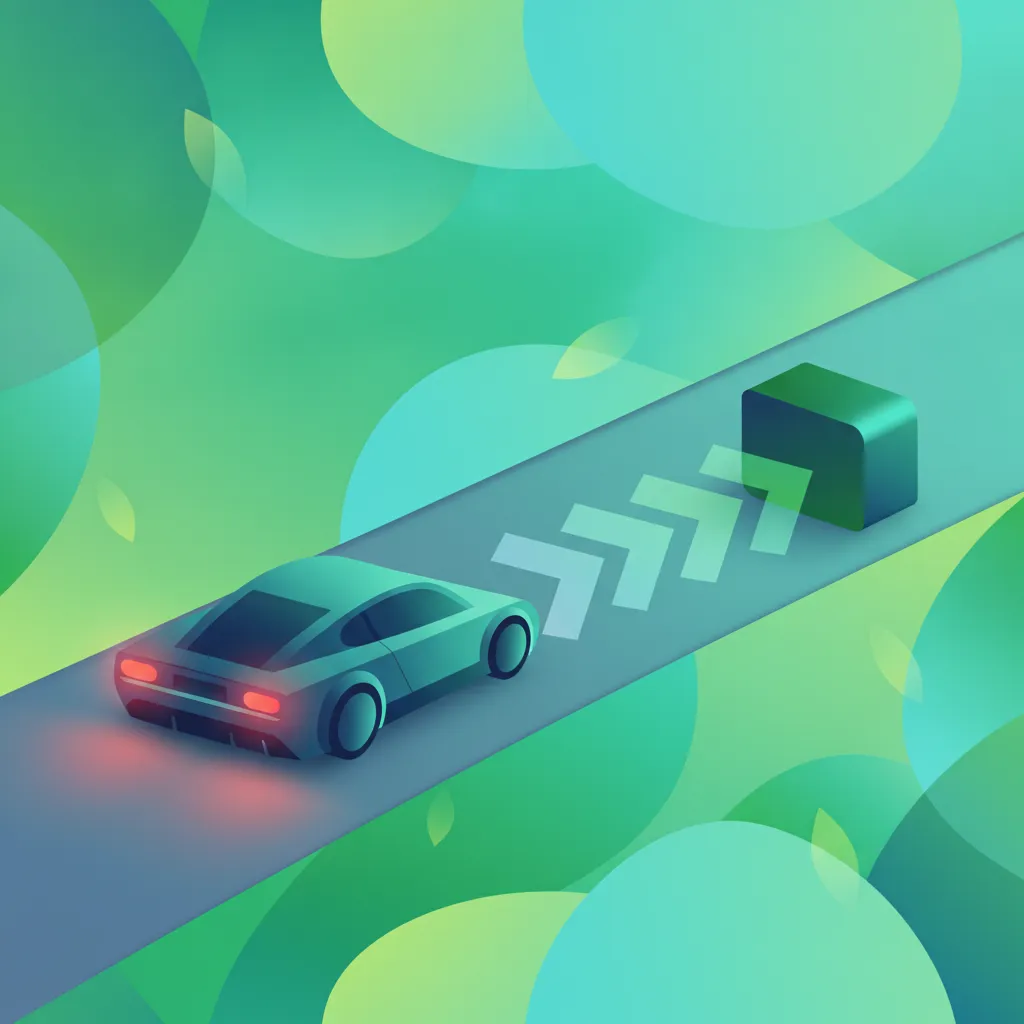
This lesson breaks down the concept of total stopping distance into its core components: perception, reaction, and braking distances. It explains how variables such as vehicle speed, tyre quality, and road friction significantly impact how quickly you can stop. By understanding these principles, you will be ableto maintain a safe following distance and avoid collisions.
This lesson explores the critical relationship between tyres, road surface, and grip. It explains how rain, ice, gravel, and even painted road markings can reduce traction and increase risk. Learners will understand the importance of having correct tyre pressure and adequate tread depth to maintain control.
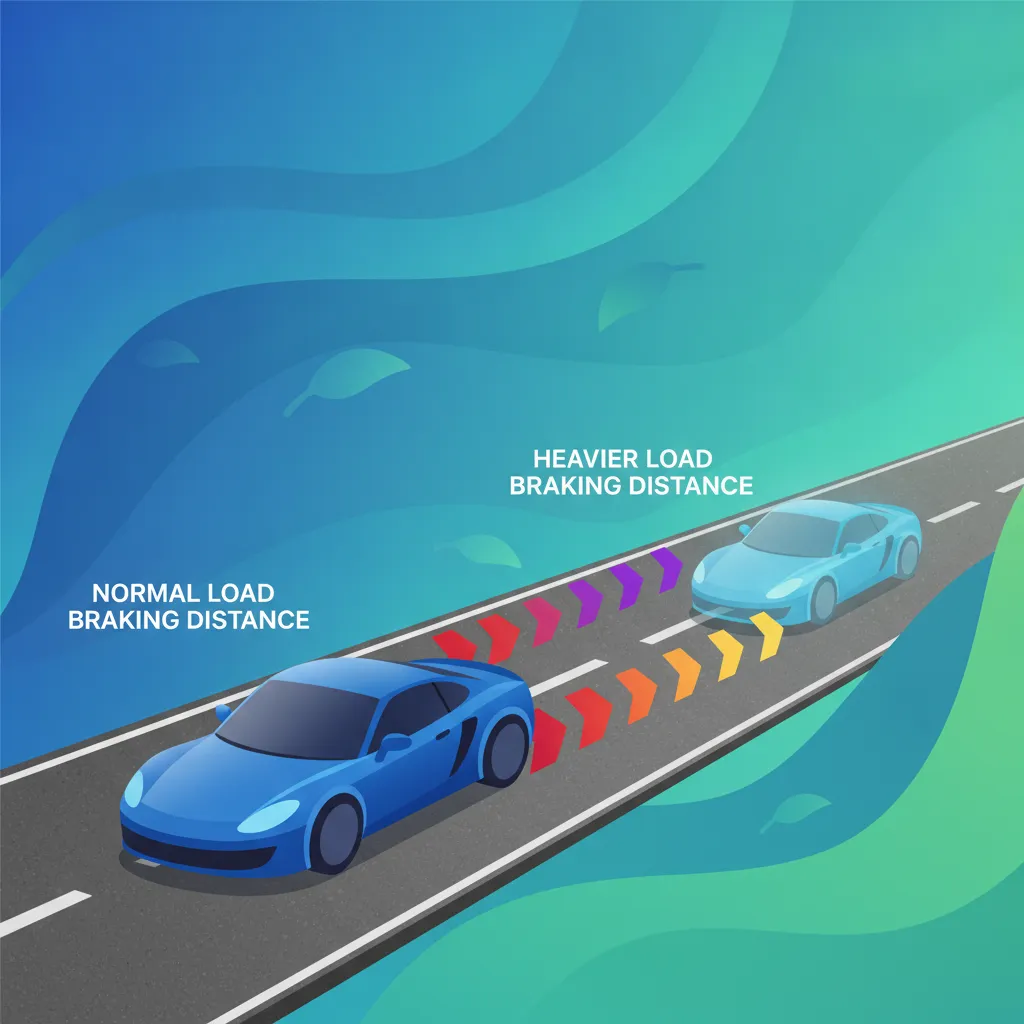
This lesson explores the direct relationship between a vehicle's mass, its speed, and the distance required to stop. It explains how increased load significantly lengthens the braking distance and details how road conditions like gradient and surface friction further affect this calculation. Learners will understand the importance of anticipating stops and maintaining a greater following distance to ensure safety.
This lesson focuses on the challenges of braking in adverse conditions like rain or on icy patches. It teaches riders to increase their following distance and apply brakes smoothly and gently to prevent traction loss. The role of ABS in these scenarios and strategies for maintaining control are also explained.
This lesson teaches the proper application of auxiliary speed control devices, such as retarders and engine brakes. It focuses on their use for maintaining a safe, controlled speed on long downhill gradients, which helps prevent service brake overheating and fade. The content also covers Danish regulations related to these systems and their benefits for reducing brake wear and improving overall safety.
This lesson highlights the rider's responsibility for ensuring their vehicle is in a safe, roadworthy condition. It provides a systematic guide to pre-ride checks, including inspecting tyres for correct pressure and wear, testing brakes, and verifying all lights work. Regular maintenance is presented as a critical component of overall rider safety.
This lesson delves into the science of traction, explaining the relationship between the tyre and the road surface. It covers how factors like water, oil, gravel, and painted lines can significantly reduce grip. Learners will develop the ability to 'read' the road surface and anticipate potential traction loss.
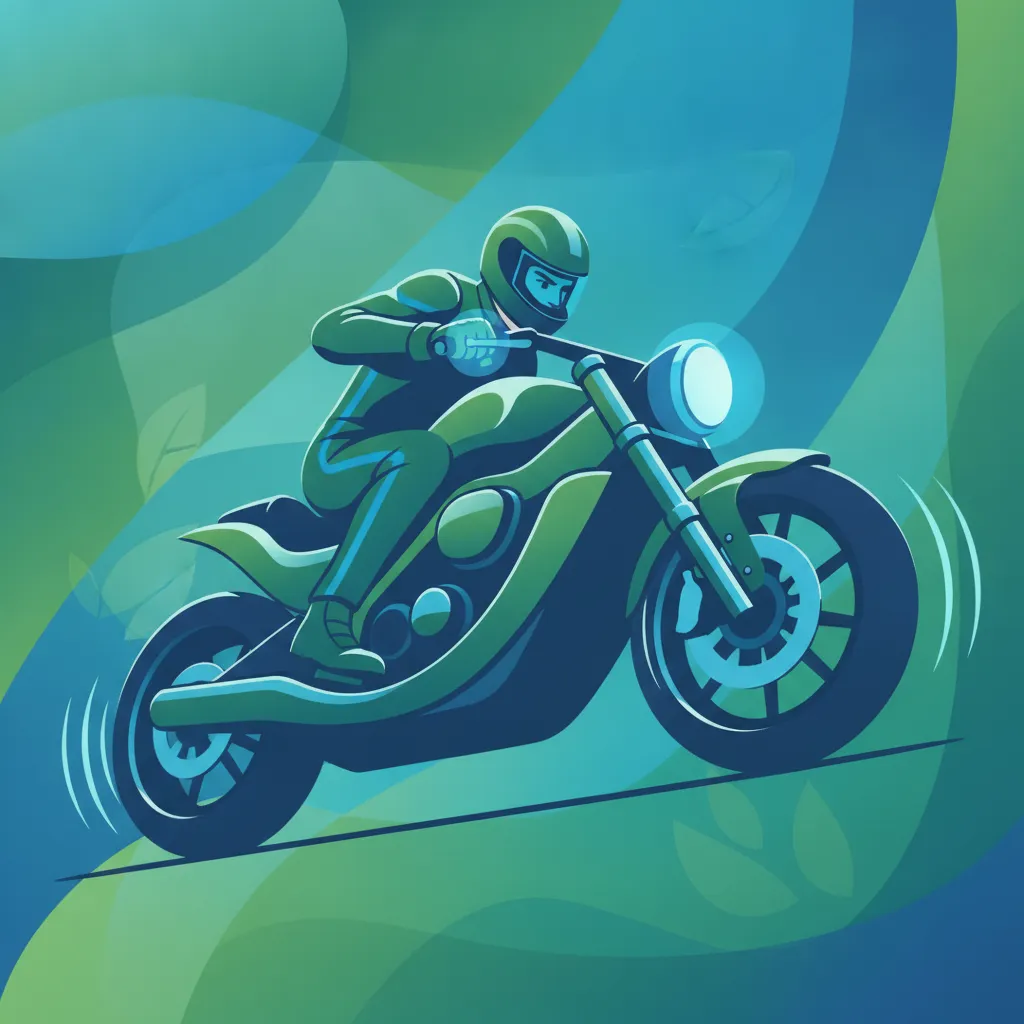
This lesson explains the physics of motorcycle braking, highlighting the primary role of the front brake in stopping power. It covers techniques for smooth, progressive brake application to avoid wheel lock-up. Learners will also understand how body position and weight transfer affect braking efficiency and stability.
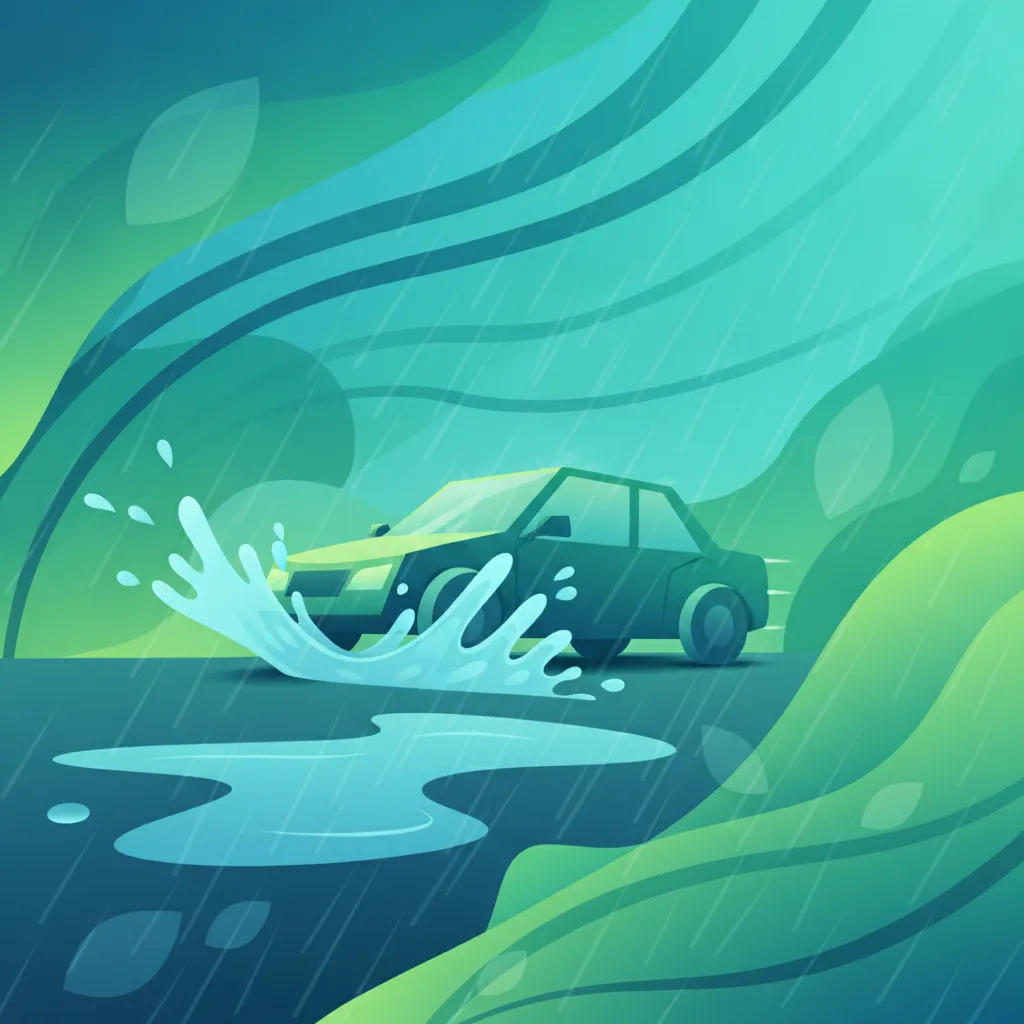
This lesson details how to adapt riding techniques for rain and wind. It explains how wet surfaces reduce tyre grip and increase braking distances, requiring smoother control inputs and lower speeds. The content also provides strategies for managing the force of strong crosswinds on a small vehicle.
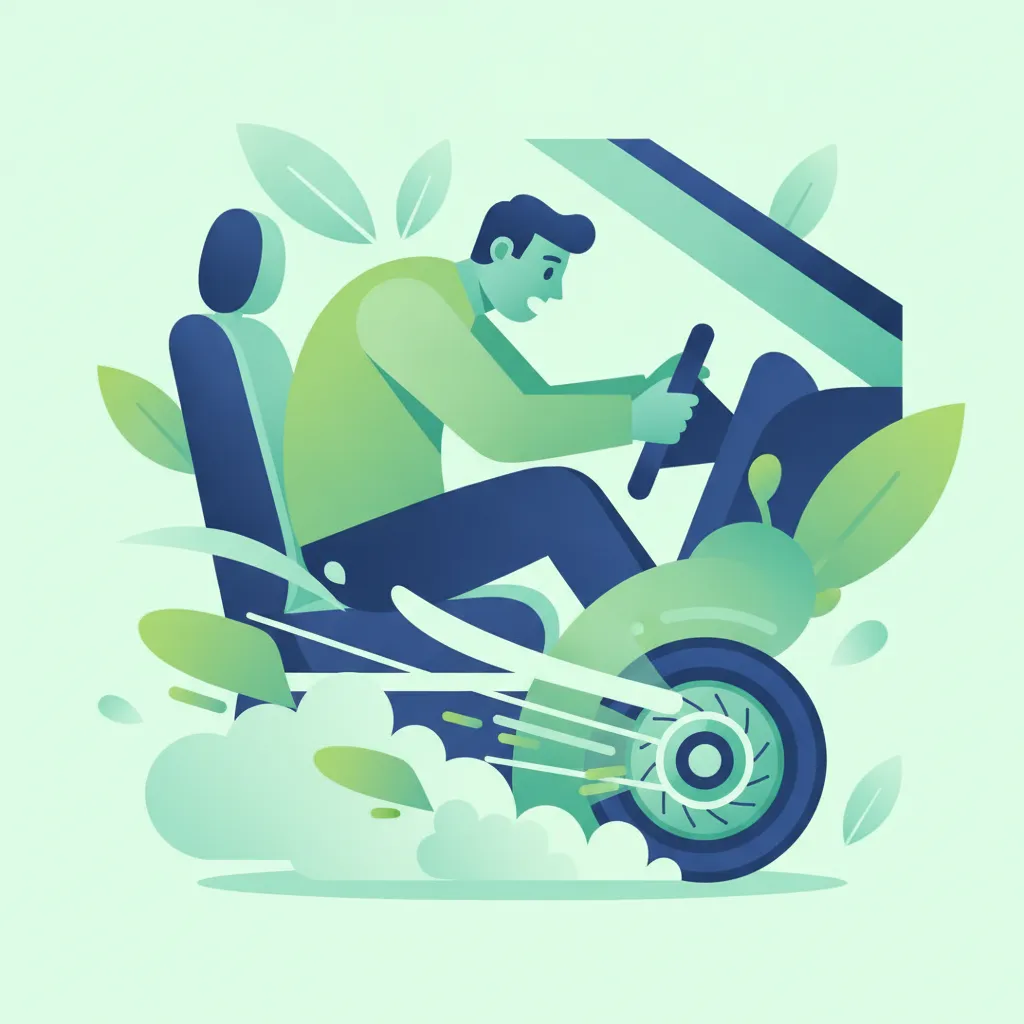
This lesson provides instruction on how to execute a quick and controlled emergency stop. It covers the correct body posture to maintain stability and how to apply maximum braking force without losing control. Understanding how to manage weight transfer and the function of an ABS system is crucial for these situations.
Master effective braking techniques using both front and rear brakes on your stor knallert. Learn about weight transfer, preventing skids, and emergency stopping procedures for safe Danish road navigation.
This lesson provides instruction on how to execute a quick and controlled emergency stop. It covers the correct body posture to maintain stability and how to apply maximum braking force without losing control. Understanding how to manage weight transfer and the function of an ABS system is crucial for these situations.
This lesson explains the physics of motorcycle braking, highlighting the primary role of the front brake in stopping power. It covers techniques for smooth, progressive brake application to avoid wheel lock-up. Learners will also understand how body position and weight transfer affect braking efficiency and stability.
This lesson focuses on the challenges of braking in adverse conditions like rain or on icy patches. It teaches riders to increase their following distance and apply brakes smoothly and gently to prevent traction loss. The role of ABS in these scenarios and strategies for maintaining control are also explained.
This lesson teaches the proper application of auxiliary speed control devices, such as retarders and engine brakes. It focuses on their use for maintaining a safe, controlled speed on long downhill gradients, which helps prevent service brake overheating and fade. The content also covers Danish regulations related to these systems and their benefits for reducing brake wear and improving overall safety.
This lesson breaks down the concept of total stopping distance into its core components: perception, reaction, and braking distances. It explains how variables such as vehicle speed, tyre quality, and road friction significantly impact how quickly you can stop. By understanding these principles, you will be ableto maintain a safe following distance and avoid collisions.
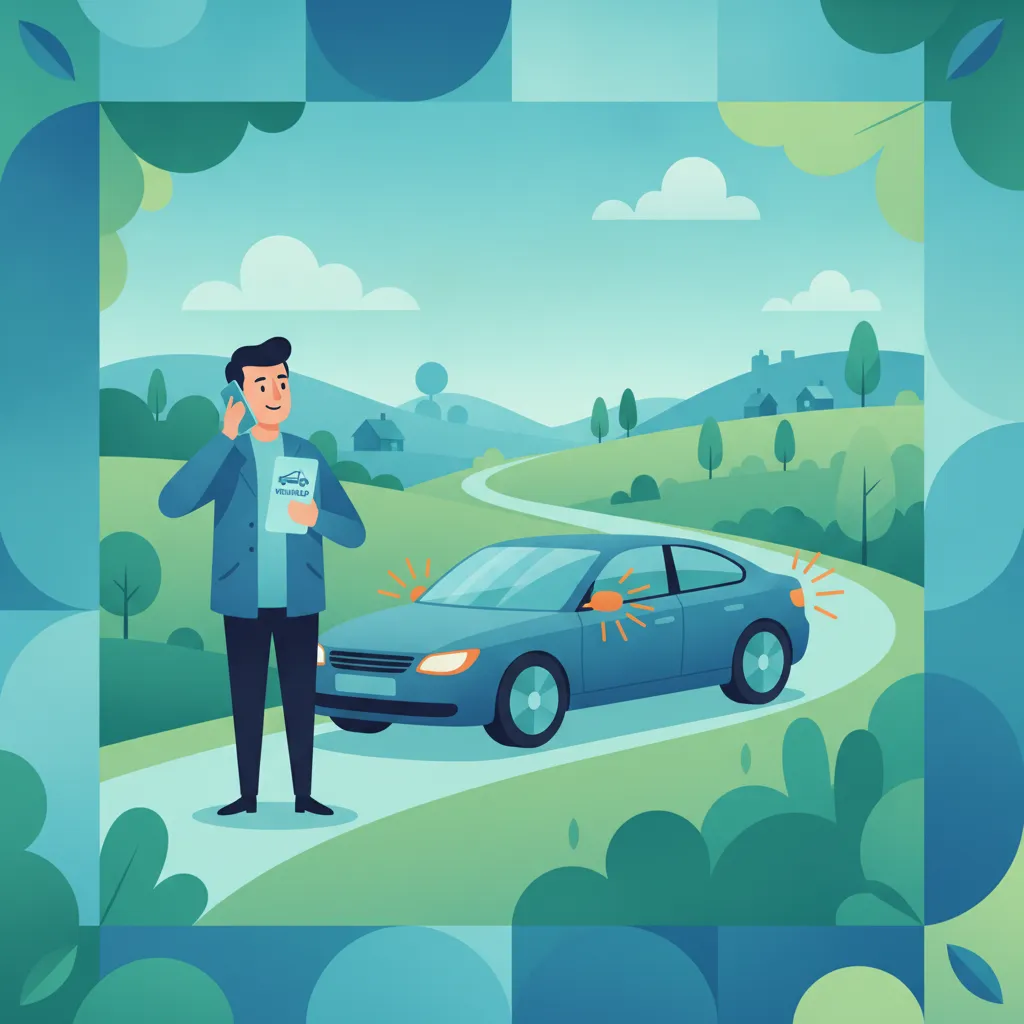
This lesson provides a step-by-step guide for managing a vehicle breakdown safely. It instructs the rider on moving the vehicle to a safe location, making it visible to other traffic using hazard lights, and personal safety while waiting for assistance. The importance of staying away from active traffic lanes is a key point.
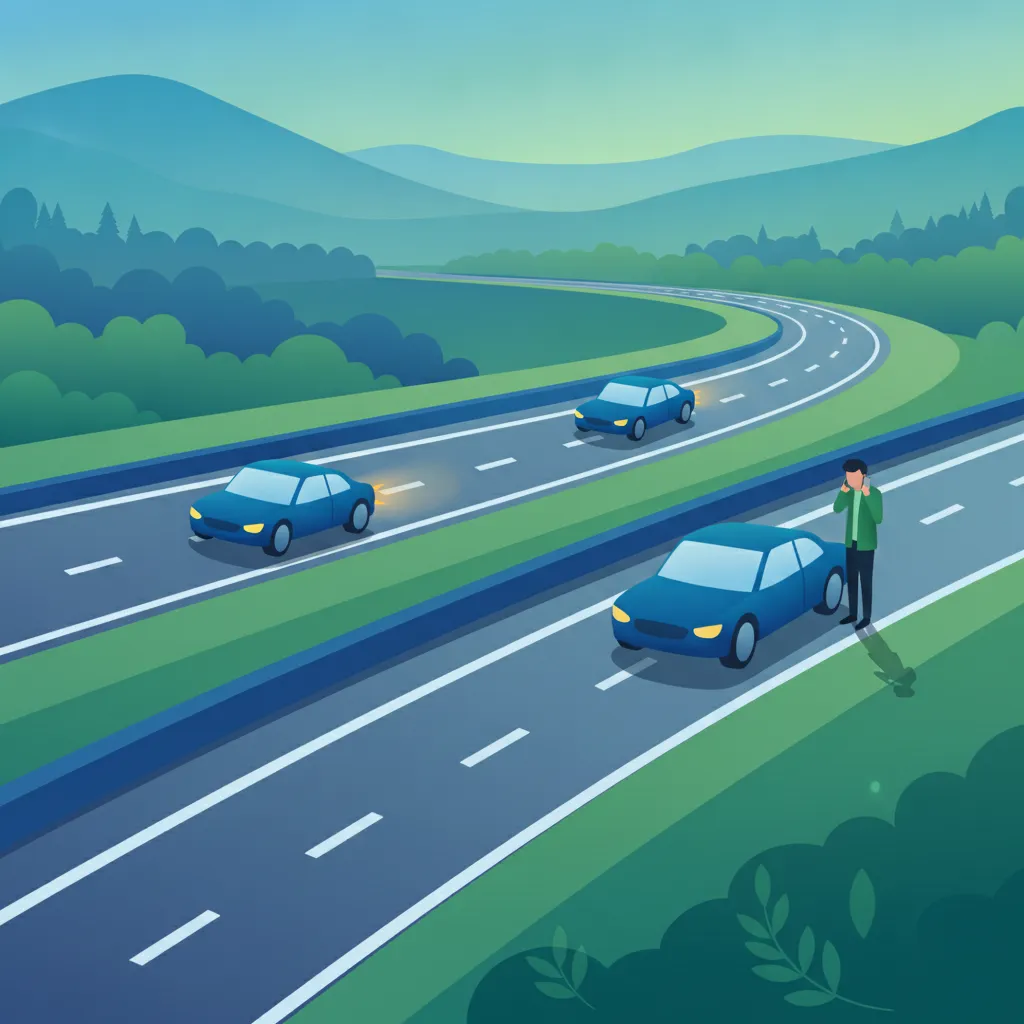
This lesson covers the immediate actions to take at the scene of an accident. It explains how and when to call the Danish emergency number 112, and what information to provide to the operator. The content also includes the principles of securing an accident scene to prevent further incidents and basic first aid concepts.
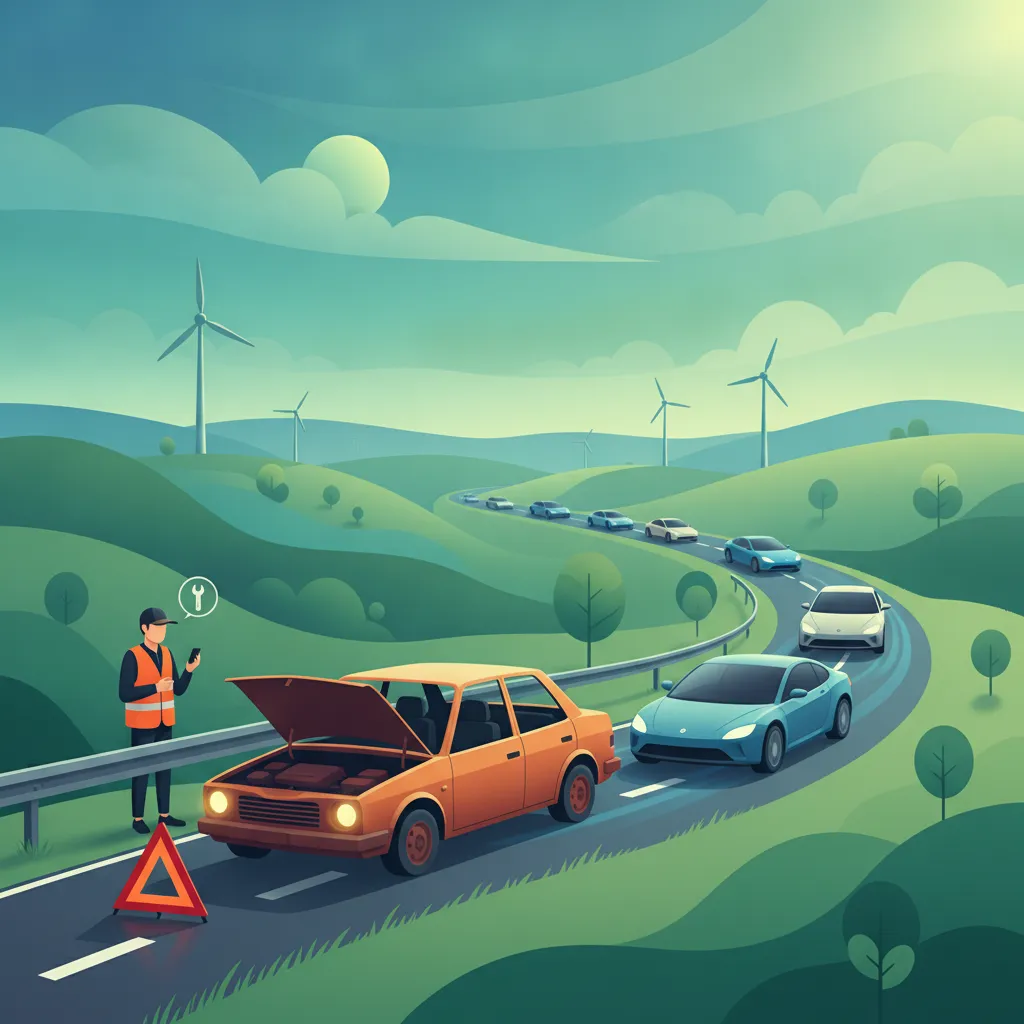
This lesson outlines a step-by-step procedure for managing a mechanical breakdown on the road. It covers moving the motorcycle to a safe location, using hazard lights, and wearing high-visibility clothing. The goal is to ensure personal safety while minimizing disruption and danger to other traffic.
This lesson explores the critical relationship between tyres, road surface, and grip. It explains how rain, ice, gravel, and even painted road markings can reduce traction and increase risk. Learners will understand the importance of having correct tyre pressure and adequate tread depth to maintain control.
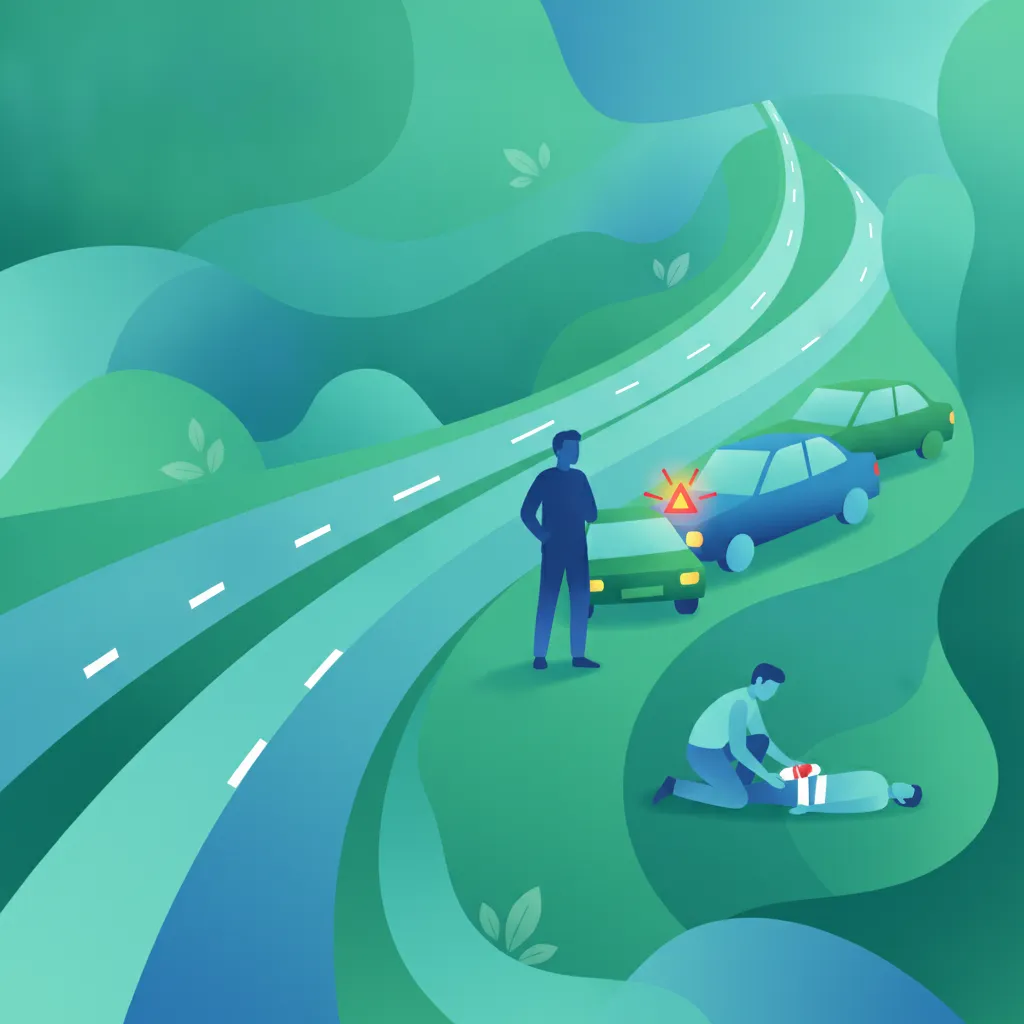
This lesson provides a clear action plan for handling emergencies on the road. It explains how to secure an accident scene using a warning triangle, when and how to call the emergency number 112, and the fundamentals of providing basic first aid. You will also learn the safe procedure for dealing with a vehicle breakdown to protect yourself and other road users.
Find clear answers to common questions learners have about Braking Techniques and Stopping Distances. Learn how the lesson is structured, which driving theory objectives it supports, and how it fits into the overall learning path of units and curriculum progression in Denmark. These explanations help you understand key concepts, lesson flow, and exam focused study goals.
Reaction distance is the space you cover from the moment you identify a hazard until you apply the brakes. Braking distance is the space covered from the moment the brakes are applied until the vehicle comes to a full stop. Combined, they form your total stopping distance.
Yes, you should effectively use both the front and rear brakes for optimal control and maximum stopping power. Understanding how to distribute pressure between them is crucial for maintaining balance during a stop.
Lower grip surfaces, such as wet roads, ice, or loose gravel, significantly increase your braking distance. You must adjust your speed and braking force accordingly to maintain safety.
Following distance provides the necessary buffer to react to the vehicle ahead. Because a stor knallert's braking performance is influenced by many factors, keeping a safe distance is your primary defense against rear-end collisions.
Use our powerful search tool to pinpoint specific Danish driving theory topics, road signs, or traffic situations you need to review. Start exploring relevant practice sets now to reinforce your knowledge and build confidence for your upcoming driving licence exam.