
This lesson explores the essential relationship between your stor knallert, its tyres, and the road surface. By understanding how environmental factors and surface materials influence grip, you will learn to adjust your riding style to maintain stability in diverse Danish weather conditions.
Lesson content overview
Understanding how your tyres interact with the road surface under various conditions is fundamental to safe riding, especially for those operating a stor knallert (large moped) as part of the Official Danish Driving Theory Course for Category AM. Grip, the essential force that allows your tyres to adhere to the road, dictates your ability to accelerate, steer, and brake effectively. This lesson delves into the complex relationship between your vehicle's tyres, the road's physical state, and external factors like weather, all of which critically influence your control and safety.
Grip, often interchangeably referred to as traction, is the frictional force generated between your tyres and the road surface. This friction is what enables every dynamic action of your stor knallert – from moving forward and turning corners to bringing the vehicle to a stop. Without sufficient grip, your tyres would simply slide across the surface, resulting in a complete loss of control. The amount of grip available at any given moment is a complex interplay of several factors, including the condition of your tyres, the type and state of the road surface, and prevailing weather conditions.
The internal air pressure within your tyres is a surprisingly significant factor affecting grip. Proper tyre pressure ensures that the tyre maintains its optimal shape and, consequently, its ideal contact patch – the specific area of the tyre's surface that is in contact with the road at any given moment.
When tyre pressure is correct, the contact patch is maximised, distributing the vehicle's weight evenly and allowing the tyre's tread to work as intended. This optimal contact provides the best possible grip for acceleration, braking, and steering.
Underinflated tyres lead to a larger but unevenly distributed contact patch. This causes the tyre to overheat, deform, and wear excessively on the shoulders, while also reducing stability and increasing fuel consumption. Conversely, overinflated tyres result in a smaller contact patch, reducing grip, particularly in the centre of the tread, and causing accelerated wear there.
Maintaining the manufacturer's recommended tyre pressure, which can typically be found in your stor knallert's owner's manual or on a sticker near the tyre valve or frame, is not just about extending tyre life; it's a fundamental aspect of road safety. Regular checks are essential, as tyres naturally lose a small amount of pressure over time.
The area of a tyre's surface that is in direct contact with the road at any given moment. Its size and shape are crucial for transmitting forces between the vehicle and the road.
Beyond pressure, the physical condition of your tyre's tread is vital for maintaining grip, especially in wet conditions. Tread depth refers to the vertical measurement of the grooves and patterns on the tyre's surface. These grooves are specifically designed to channel water away from beneath the tyre, allowing the rubber to maintain direct contact with the road.
When rain falls, a layer of water forms on the road. Adequate tread depth is crucial for piercing this water film and displacing the water outwards. This prevents hydroplaning (or aquaplaning), a hazardous condition where the tyre loses all contact with the road surface, essentially riding on a layer of water, rendering steering and braking ineffective.
New tyres typically have a tread depth exceeding 4 mm. However, tyres gradually wear down with use. In Denmark, the legal minimum tread depth for stor knallert tyres is 1.6 mm across the tyre's entire tread width. Tyres with tread depth below this minimum are significantly less effective at displacing water, dramatically increasing the risk of hydroplaning and reducing grip on wet surfaces.
Regularly inspect your tyres for wear indicators (small raised bars within the main grooves). If the tread is level with these indicators, your tyres are at or below the legal minimum and must be replaced immediately.
The vertical measurement of the grooves and patterns on a tyre's surface, crucial for displacing water and maintaining grip, especially on wet roads.
The surface you are riding on plays an equally important role in determining the available grip. Roads are not uniformly smooth or consistent; they are made of various materials and can be subject to different contaminants and textures, all of which affect how your tyres interact with them.
Different road surface materials offer varying levels of friction.
Understanding the type of surface you are on and adjusting your riding technique accordingly is a core skill for safe stor knallert operation.
Even on otherwise good surfaces, certain elements can drastically reduce grip:
Weather conditions are arguably the most significant external factor influencing grip. Rain, snow, and ice can transform a perfectly safe road into a hazardous one, demanding substantial adjustments to your riding style and speed.
Rain is a common weather condition that immediately impacts road grip. Even light rain can make roads slippery by mixing with oil and dust to create a greasy film. Heavy rain significantly reduces the coefficient of friction between your tyres and the road surface, drastically increasing stopping distances.
On a wet road, your braking distance can easily double compared to a dry surface. This means that if it takes 15 metres to stop on a dry road, it might take 30 metres or more on a wet one. For this reason, it is crucial to:
Snow and ice represent the most extreme challenges to grip. Both conditions can reduce friction to near-zero levels, making it incredibly difficult to maintain control.
In conditions involving snow or ice, it is often safest to avoid riding your stor knallert altogether. If you must ride, proceed with extreme caution, at very low speeds, and with the understanding that grip will be minimal. Braking should be done very gently and progressively, using both brakes simultaneously where possible, to maintain balance.
Hydroplaning, as mentioned earlier, is a critical phenomenon that occurs when a layer of water builds up between your tyres and the road surface, causing your tyres to lose contact with the ground. This typically happens at higher speeds on wet roads, especially if your tyres have insufficient tread depth or are underinflated.
When hydroplaning occurs, you will experience a sudden loss of steering and braking control. The stor knallert may feel light, and the engine speed might suddenly increase as the drive wheel loses traction.
If you feel your stor knallert hydroplaning, do NOT brake or steer sharply. Instead, ease off the accelerator gently, keep the handlebars straight, and allow your vehicle to slow down gradually until the tyres regain contact with the road.
Preventing hydroplaning is paramount:
Many modern stor knallerter are equipped with an Anti-lock Braking System (ABS). This safety feature is designed to prevent your wheels from locking up during hard braking, especially on slippery surfaces. When a wheel is about to lock, ABS rapidly modulates the brake pressure to that wheel, allowing it to continue rotating and thus maintain steering control.
While ABS is an invaluable safety aid, it does not magically create grip where none exists. On surfaces with extremely low friction, such as ice or thick loose gravel, even ABS may not be able to provide sufficient stopping power or control. Drivers must still adjust their speed and braking force according to the conditions. Over-reliance on ABS can lead to a false sense of security, which is a dangerous mistake. Always ride defensively and anticipate situations where grip might be compromised.
The Danish traffic laws (Færdselsloven) place clear responsibilities on stor knallert riders regarding vehicle maintenance and adapting to road conditions. Adhering to these regulations is crucial for both safety and legal compliance.
In Denmark, tyres on all vehicles, including stor knallerter, are subject to specific requirements:
Danish traffic law explicitly states that drivers must adapt their speed and driving style to the prevailing road, weather, and visibility conditions. This means:
Failure to adjust your riding behaviour to conditions, leading to an accident or dangerous situation, can result in fines and points on your licence.
Understanding the principles of grip is the first step; applying this knowledge to avoid common pitfalls is the next. Here are some frequent mistakes and how to prevent them:
Riding with Underinflated or Overinflated Tyres: Regularly check your tyre pressure with a reliable gauge. Do not rely solely on visual inspection.
Ignoring Worn Tread: Periodically check your tyre tread depth against the wear indicators or with a tread depth gauge. Replace tyres before they reach the legal minimum of 1.6 mm.
Maintaining Normal Speed in Heavy Rain: Always reduce your speed significantly in wet conditions. Remember that stopping distances can easily double.
Braking Hard on Wet Painted Surfaces or Manhole Covers: Anticipate these slippery areas and brake before reaching them, or gently roll over them without applying brakes or sharp steering.
Assuming ABS Makes You Invincible on Ice: While ABS helps, it cannot create grip on extremely slippery surfaces. Your speed must still be drastically reduced, and extreme caution is required.
Riding on Loose Gravel Without Reducing Speed: Loose gravel demands a substantial reduction in speed and very gentle steering and braking inputs to maintain stability and prevent skidding.
Failing to Adjust Speed on Snow or Ice: These conditions require the slowest possible speeds and the utmost caution. Consider if riding is even safe.
Mastering the art of maintaining grip is a continuous process of observation, anticipation, and adjustment. For safe operation of your stor knallert in Denmark:
By internalising these principles, you will significantly enhance your safety and control when riding your stor knallert, ensuring you are well-prepared for the diverse conditions you may encounter on Danish roads.
This lesson covers the fundamental physics of tyre grip and how it relates to safe stor knallert operation in Denmark, explaining how tyre condition, road surface type, and weather all interact to determine available traction. Key topics include the importance of maintaining correct tyre pressure for optimal contact patch size, ensuring adequate tread depth (minimum 1.6mm) to prevent hydroplaning, and recognizing how surfaces like wet painted markings, manhole covers, and loose gravel create unexpected slippery conditions. The lesson details how rain, snow, and ice progressively reduce friction, with wet roads potentially doubling stopping distances and ice reducing grip to near-zero levels. Danish traffic law explicitly requires riders to adapt their speed and technique to conditions, maintain proper tyre condition, and use headlights in reduced visibility, making this knowledge essential for both theory exam success and real-world safety.
A short set of high-value points that capture the most important learning from this lesson.
Grip is the frictional force between your tyres and road surface that enables acceleration, steering, and braking; without it, control is lost completely.
Tyre pressure directly affects the contact patch size and shape; both underinflation and overinflation reduce optimal grip and create uneven wear patterns.
Adequate tread depth is essential for displacing water on wet roads and preventing hydroplaning, where tyres lose all road contact.
Wet painted markings, manhole covers, and contaminants like oil or leaves can be as slippery as ice, requiring anticipatory riding adjustments.
Weather conditions can double or eliminate stopping ability; Danish law requires you to adapt speed and technique to prevailing conditions.
Explore all units and lessons included in this driving theory course.
Danish legal minimum tread depth for stor knallert tyres is 1.6mm across the full tread width; replace tyres before they reach this limit.
In heavy rain, stopping distances can easily double compared to dry conditions; increase following distance accordingly.
If hydroplaning occurs, ease off the accelerator gently, keep handlebars straight, and let the vehicle slow naturally without braking or steering sharply.
ABS prevents wheel lockup during braking but cannot create grip on ice or extremely low-friction surfaces; speed reduction is still essential.
Loose gravel, cobblestone, and wet painted surfaces demand significant speed reduction and gentle, gradual control inputs to maintain stability.
Relying solely on visual inspection for tyre pressure instead of using a reliable gauge, leading to undetected underinflation or overinflation.
Continuing at normal speeds in heavy rain or wet conditions, failing to account for dramatically increased stopping distances.
Assuming ABS makes the vehicle invincible on ice or snow, when in reality extreme speed reduction and caution are still required.
Braking hard while already on wet painted markings or manhole covers, rather than anticipating these hazards and braking before reaching them.
Riding on loose gravel or compacted snow at normal speeds without adjusting to the substantially reduced traction available.
Lesson content overview
A short set of high-value points that capture the most important learning from this lesson.
Grip is the frictional force between your tyres and road surface that enables acceleration, steering, and braking; without it, control is lost completely.
Tyre pressure directly affects the contact patch size and shape; both underinflation and overinflation reduce optimal grip and create uneven wear patterns.
Adequate tread depth is essential for displacing water on wet roads and preventing hydroplaning, where tyres lose all road contact.
Wet painted markings, manhole covers, and contaminants like oil or leaves can be as slippery as ice, requiring anticipatory riding adjustments.
Weather conditions can double or eliminate stopping ability; Danish law requires you to adapt speed and technique to prevailing conditions.
Explore all units and lessons included in this driving theory course.
Danish legal minimum tread depth for stor knallert tyres is 1.6mm across the full tread width; replace tyres before they reach this limit.
In heavy rain, stopping distances can easily double compared to dry conditions; increase following distance accordingly.
If hydroplaning occurs, ease off the accelerator gently, keep handlebars straight, and let the vehicle slow naturally without braking or steering sharply.
ABS prevents wheel lockup during braking but cannot create grip on ice or extremely low-friction surfaces; speed reduction is still essential.
Loose gravel, cobblestone, and wet painted surfaces demand significant speed reduction and gentle, gradual control inputs to maintain stability.
Relying solely on visual inspection for tyre pressure instead of using a reliable gauge, leading to undetected underinflation or overinflation.
Continuing at normal speeds in heavy rain or wet conditions, failing to account for dramatically increased stopping distances.
Assuming ABS makes the vehicle invincible on ice or snow, when in reality extreme speed reduction and caution are still required.
Braking hard while already on wet painted markings or manhole covers, rather than anticipating these hazards and braking before reaching them.
Riding on loose gravel or compacted snow at normal speeds without adjusting to the substantially reduced traction available.
Explore search topics learners often look for when studying Grip, Weather Conditions, and Surface Interaction. These topics reflect common questions about road rules, driving situations, safety guidance, and lesson level theory preparation for learners in Denmark.
Browse additional driving theory lessons that cover connected traffic rules, road signs, and common driving situations related to this topic. Improve your understanding of how different rules interact across everyday traffic scenarios.
Explore the complex physics of tyre grip, hydroplaning risks, and how diverse road surfaces like gravel and painted markings affect control for Category AM riders in Denmark. Understand advanced safety adaptations.
This lesson equips you with the knowledge to drive safely in challenging weather conditions. It explains the risk of aquaplaning in heavy rain, how to counteract strong crosswinds, and the correct use of lights in darkness and fog. The core principle is adapting your speed and increasing your following distance to compensate for reduced visibility and traction.
This lesson delves into the science of traction, explaining the relationship between the tyre and the road surface. It covers how factors like water, oil, gravel, and painted lines can significantly reduce grip. Learners will develop the ability to 'read' the road surface and anticipate potential traction loss.
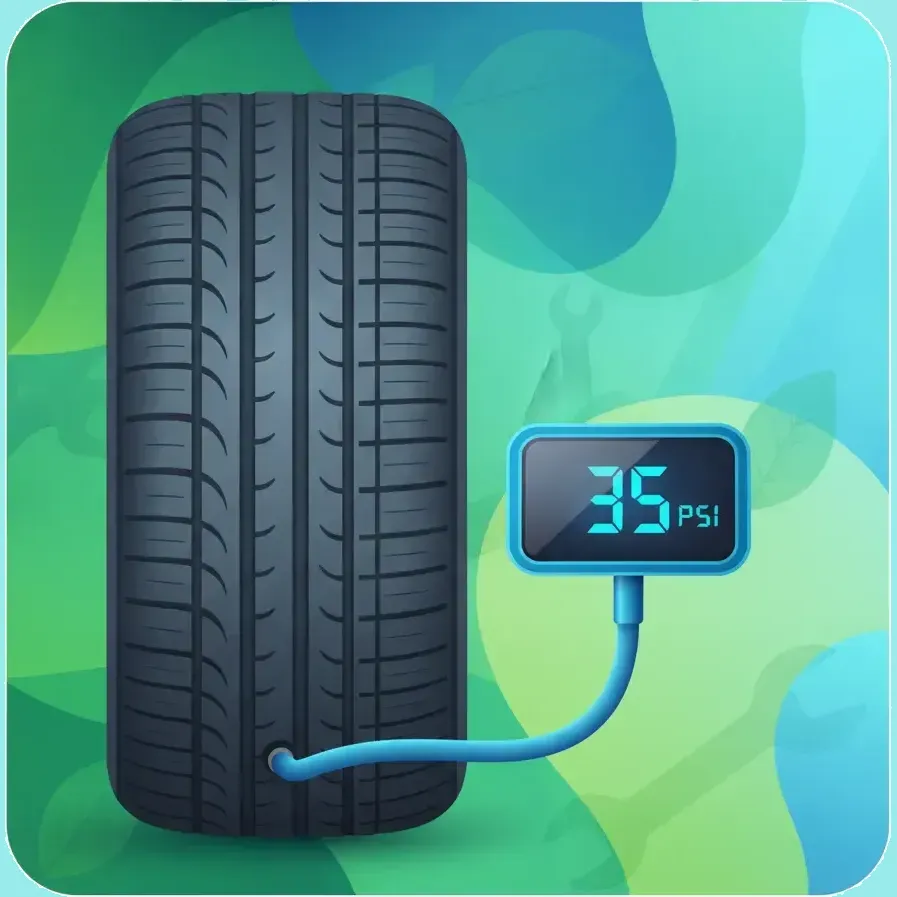
This lesson highlights the vital role tyres play in vehicle safety. It explains how to conduct regular checks on tyre pressure and tread depth, and how incorrect values can compromise grip, braking efficiency, and overall handling. You will also learn the legal minimum requirements for tyres in Denmark to ensure your vehicle is always compliant and safe.
This lesson focuses on the challenges of braking in adverse conditions like rain or on icy patches. It teaches riders to increase their following distance and apply brakes smoothly and gently to prevent traction loss. The role of ABS in these scenarios and strategies for maintaining control are also explained.
This lesson equips riders with the knowledge to handle imperfect road surfaces safely. It covers how to adjust speed, steering, and braking inputs when encountering loose gravel, slippery wet leaves, or other hazards. The focus is on smooth control inputs to avoid upsetting the motorcycle's stability.
This lesson addresses the significant risks of riding during winter. It explains how to identify potentially icy surfaces, such as black ice, and the extreme caution required when riding in snow. The content covers the need for gentle acceleration, braking, and steering to avoid loss of traction on slippery roads.
This lesson details how to adapt riding techniques for rain and wind. It explains how wet surfaces reduce tyre grip and increase braking distances, requiring smoother control inputs and lower speeds. The content also provides strategies for managing the force of strong crosswinds on a small vehicle.
This lesson focuses on recognizing and navigating high-risk road surfaces that severely compromise traction. It provides practical advice on how to maintain control when riding over coarse gravel, slippery wet leaves, or frosted patches. The emphasis is on early detection, reducing speed, and making minimal control inputs to avoid skids.
This lesson focuses on the critical connection between the motorcycle and the road: the tyres. It explains how to check for proper inflation, inspect tread depth, and recognize signs of wear. Understanding how different tyre compounds and patterns perform in various conditions is key to managing traction.
This lesson introduces the essential principles of defensive driving, shifting the focus from reacting to hazards to proactively anticipating them. You will learn techniques for systematic scanning of the driving environment, maintaining a safety cushion around your vehicle, and identifying potential risks before they develop. These proactive strategies are fundamental to becoming a safer, more confident driver.
Learn essential techniques for maintaining control on wet, icy, or uneven road surfaces. This lesson details how to adapt your riding speed and behaviour to various weather and ground conditions in Denmark.
This lesson details how to adapt riding techniques for rain and wind. It explains how wet surfaces reduce tyre grip and increase braking distances, requiring smoother control inputs and lower speeds. The content also provides strategies for managing the force of strong crosswinds on a small vehicle.
This lesson addresses the significant risks of riding during winter. It explains how to identify potentially icy surfaces, such as black ice, and the extreme caution required when riding in snow. The content covers the need for gentle acceleration, braking, and steering to avoid loss of traction on slippery roads.
This lesson highlights the rider's responsibility for ensuring their vehicle is in a safe, roadworthy condition. It provides a systematic guide to pre-ride checks, including inspecting tyres for correct pressure and wear, testing brakes, and verifying all lights work. Regular maintenance is presented as a critical component of overall rider safety.
This lesson equips riders with the knowledge to handle imperfect road surfaces safely. It covers how to adjust speed, steering, and braking inputs when encountering loose gravel, slippery wet leaves, or other hazards. The focus is on smooth control inputs to avoid upsetting the motorcycle's stability.
This lesson focuses on the challenges of braking in adverse conditions like rain or on icy patches. It teaches riders to increase their following distance and apply brakes smoothly and gently to prevent traction loss. The role of ABS in these scenarios and strategies for maintaining control are also explained.
This lesson provides a step-by-step guide for managing a vehicle breakdown safely. It instructs the rider on moving the vehicle to a safe location, making it visible to other traffic using hazard lights, and personal safety while waiting for assistance. The importance of staying away from active traffic lanes is a key point.
This lesson focuses on recognizing and navigating high-risk road surfaces that severely compromise traction. It provides practical advice on how to maintain control when riding over coarse gravel, slippery wet leaves, or frosted patches. The emphasis is on early detection, reducing speed, and making minimal control inputs to avoid skids.
This lesson focuses on the core safety duties of a stor knallert rider. It explains the legal requirement for wearing a helmet and the benefits of other protective gear. The content also covers essential pre-ride checks, including brakes, tyres, and lights, to ensure the vehicle is in safe operating condition.
This lesson focuses on techniques for riding when visibility and traction are compromised by weather. It explains how to adjust speed, increase following distance, and use lights to see and be seen in rain or fog. Understanding the risk of hydroplaning and making smooth control inputs are key takeaways.
This lesson focuses on the specific challenges of riding in darkness. It explains the legal requirements and proper use of high and low beam headlights to see and be seen. The importance of wearing reflective clothing and ensuring all vehicle lights and reflectors are functioning is strongly emphasized.
Find clear answers to common questions learners have about Grip, Weather Conditions, and Surface Interaction. Learn how the lesson is structured, which driving theory objectives it supports, and how it fits into the overall learning path of units and curriculum progression in Denmark. These explanations help you understand key concepts, lesson flow, and exam focused study goals.
Painted road markings often have a lower friction coefficient than asphalt, especially when wet. This can cause your tyres to lose grip suddenly, leading to skidding or loss of balance, so you should avoid heavy braking or sharp steering on them.
Adequate tread depth is crucial for clearing water from under the tyre to prevent hydroplaning. Worn tyres significantly reduce your ability to grip the road, especially in wet conditions, which increases your braking distance and risk of an accident.
Yes, gravel provides very little traction compared to asphalt. You must reduce your speed significantly, avoid sudden movements or hard braking, and maintain a stable, upright position to prevent the wheels from slipping sideways.
In cold Danish weather, rubber becomes harder and provides less grip even on dry roads. You should allow extra time for your tyres to warm up and be aware that stopping distances will be longer than in summer conditions.
Use our powerful search tool to pinpoint specific Danish driving theory topics, road signs, or traffic situations you need to review. Start exploring relevant practice sets now to reinforce your knowledge and build confidence for your upcoming driving licence exam.