
Reaction distance is a fundamental concept in Danish driving theory, describing the distance your vehicle covers while you perceive a danger, decide to act, and physically move to press the brake pedal. It's the 'unbraked' travel distance during your reaction time. Understanding this concept is vital for predicting stopping distances, maintaining safe following distances, and passing your Danish driving test.
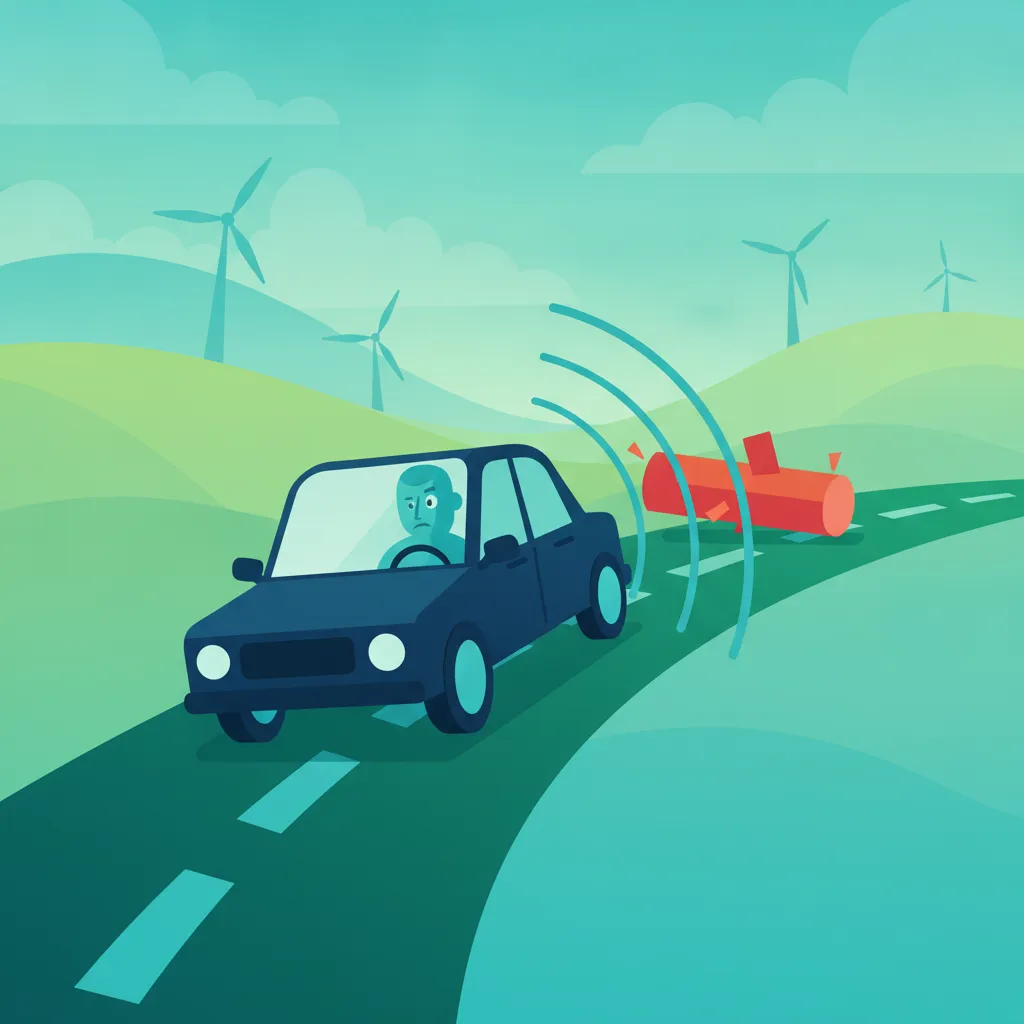
Theory topic content overview
Read the full theory topic guide for Reaction Distance with structured, easy-to-scan content built for learners in Denmark. This detailed section explains the exact rule, meaning, traffic context, comparison points, and exam logic behind this Danish driving theory topic so you can study faster, understand the concept more clearly, and avoid common interpretation mistakes on the theory test.
Reaction distance (reaktionstid in Danish theory) is a critical concept for every driver, representing the distance your vehicle travels from the moment you perceive a hazard until you physically begin to apply the brakes. It's the unbraked travel during your inherent human response time and is a fundamental component of your total stopping distance (stands længde).
Understanding reaction distance is not just for passing your Danish driving theory test (teoriprøve); it's essential for safe driving on Danish roads, helping you maintain adequate following distances and anticipate potential dangers, especially in varying traffic situations and conditions.
Reaction distance is the physical length your vehicle covers while you are:
During this entire process, your vehicle continues moving at its current speed. Only after these three stages are complete does the actual braking (bremsning) begin.
The Danish teaching plan for Category B drivers emphasizes that reaction time ("Reaktionstiden er den tid, der går, fra et faretegn eller lignende er muligt at opfatte, indtil føreren begynder at reagere på tegnet") is the period from perceiving a hazard until the driver starts reacting.
Reaction distance is not merely a theoretical concept; it has profound practical implications for road safety in Denmark:
sikker afstand): It directly informs how much space you need to leave between your vehicle and the one in front. On Danish motorways (motorveje) or landeveje (rural roads) where speeds are higher, even a slight delay in reaction can mean metres of extra travel.reaktionstid encourages proactive driving, such as scanning the road ahead for potential hazards rather than reacting to immediate threats.The typical reaction time for an attentive driver to an unexpected hazard is approximately one second. While this is a general guideline, it's not a constant. Many factors can lengthen this time, as highlighted in the Danish curriculum: "Reaktionstiden er ikke nogen konstant størrelse, men kan vare fra brøkdele af et sekund til mange sekunder, afhængigt af færdselssituationen og førerens opmærksomhed, forudseenhed, kørefærdighed mv." (Reaction time is not a constant size, but can last from fractions of a second to many seconds, depending on the traffic situation and the driver's attention, foresight, driving skill etc.).
The distance covered during this reaction time is directly proportional to your speed. This means:
Example:
This compounding effect of speed is crucial. Even a seemingly small one-second delay becomes a significant distance at higher speeds on Danish roads.
Several factors can significantly influence a driver's reaction time, thereby increasing their reaction distance:
distraktion): Using a mobile phone, adjusting the radio, talking to passengers, or even engaging in deep thought diverts attention from the road. The Danish curriculum explicitly states that "Der kan være forskellige faktorer under kørslen, der distraherer føreren, hvilket medfører en længere reaktionstid end normalt." (There can be various factors during driving that distract the driver, leading to a longer reaction time than normal.)træthed): Tiredness impairs concentration, slows down perception, and dulls decision-making. Driving while fatigued is as dangerous as driving under the influence of alcohol.alkohol og narkotika): These substances severely impair judgment, coordination, and reaction time, making it much longer for a driver to respond to a hazard.dårlig sigtbarhed): In conditions like heavy rain, fog (tåge), or darkness, it takes longer to perceive hazards, directly extending reaction time.kørefærdighed): Novice drivers might take longer to process complex traffic situations compared to experienced drivers, though experience can also lead to overconfidence.These terms are often confused, but it's vital for your Danish driving theory exam and safe driving to understand their precise definitions:
reaktionslængde): The distance covered from seeing a hazard to starting to brake. It depends mainly on speed and driver condition.bremselængde): The distance covered from starting to brake until the vehicle comes to a complete stop. It depends on speed, vehicle condition (brakes, tyres), road conditions (dry, wet, icy, vejgreb), and the intensity of braking.stands længde): The total distance required to bring a vehicle to a halt. It is the sum of Reaction Distance + Braking Distance.In essence, reaction distance is about the driver's mental and physical response, while braking distance is about the vehicle's physical capability to stop on the given road surface. Both are directly influenced by speed.
Consider these typical Danish driving situations:
fodgængerfelt) in Copenhagen: You are driving at 50 km/h in urban traffic. A pedestrian unexpectedly steps onto the crossing. Your reaction time of 1 second means you travel approximately 13.9 metres before even touching the brake. This highlights why maintaining vigilance and being prepared to stop is paramount in urban areas.Landevej at 80 km/h: A deer suddenly jumps out from the roadside bushes. At 80 km/h, your car travels over 22 metres in just one second of reaction time. This emphasizes the need to reduce speed and increase following distance when visibility is poor or in areas known for wildlife.Motorvej at 110 km/h: If the driver ahead performs an emergency stop, your 1-second reaction time means you cover more than 30 metres before your foot even reaches the brake. This is why the two-second rule for following distance (or more in poor conditions) is a crucial safety measure in Denmark, giving you a buffer for your reaction distance.Learners frequently misinterpret reaction distance, leading to potential dangers and errors on the theory test:
færdselssituationen) are likely to increase reaction time.TeoriprøveIn the Danish driving theory test, understanding reaction distance (reaktionstid) is fundamental. You will encounter questions that require you to:
stands længde).The official teaching plan for Category B drivers in Denmark clearly states that learners must gain experience regarding "stands længden for et køretøj er udover bremselængden afhængig af førerens reaktionstid" and recognize how "forskellige faktorer under kørslen, der distraherer føreren, hvilket medfører en længere reaktionstid end normalt." This means a deep understanding is expected.
Your reaction distance is the silent partner in every journey you make. It's the critical buffer that determines how much time and space you have to react to the unexpected. To ensure safety on Danish roads:
sikker afstand): Give yourself a minimum of 2 seconds to the vehicle in front, increasing this to 3-4 seconds or more in adverse weather or challenging road conditions, to accommodate your reaction distance before you even begin braking.Reaction distance represents the distance your vehicle travels during the time it takes to perceive a hazard, decide to act, and physically move your foot to the brake pedal, forming the initial unbraked portion of your total stopping distance. Because this distance grows directly with speed, understanding the relationship between speed and reaction distance is essential for maintaining safe following distances on Danish roads. The typical attentive driver has approximately one second of reaction time, but factors such as distraction, fatigue, alcohol, poor visibility, and stress can extend this significantly, increasing the risk of collision. The Danish theory curriculum requires learners to distinguish between reaction distance, braking distance, and stopping distance, and to understand how driver condition directly impacts reaction time. For the Danish teoriprøve, expect questions testing your ability to identify factors that increase reaction time and to understand how reaction distance combines with braking distance to determine total stopping distance.
A short set of high-value points that capture the most important ideas from this theory explanation.
Reaction distance is the unbraked distance traveled from perceiving a hazard to physically starting to brake, influenced by perception, decision-making, and physical reaction time.
Doubling your speed doubles your reaction distance; at 60 km/h you travel 16.7 metres in just one second of reaction time compared to 8.3 metres at 30 km/h.
Reaction distance is only one part of total stopping distance, which also includes braking distance once the brakes are applied.
Factors like distraction, fatigue, alcohol, stress, and poor visibility can significantly extend reaction time beyond the typical one second.
The Danish curriculum emphasizes that reaction time is not constant and can last from fractions of a second to many seconds depending on conditions and driver state.
Reaction distance + Braking distance = Stopping distance; reaction distance depends on driver condition and speed, while braking distance depends on vehicle and road surface.
At motorway speeds of 110 km/h, a one-second reaction time means over 30 metres of unbraked travel before your foot even reaches the brake.
The Danish teaching plan defines reaction time as the period from when a hazard becomes perceptible until the driver begins to react.
Maintain a minimum 2-second following distance on Danish roads, increasing to 3-4 seconds in adverse conditions to account for extended reaction time.
The correct and safe reaction is more important than a lightning-fast but potentially incorrect reaction.
Assuming braking begins immediately upon seeing a hazard, ignoring the mental processing and physical movement time that precedes brake application.
Underestimating how dramatically reaction distance increases with speed, treating the relationship as less significant than it actually is.
Believing reaction time is always approximately one second regardless of driver condition, overlooking how fatigue, distraction, or stress extend it.
Confusing reaction distance with braking distance or using the terms interchangeably when they measure fundamentally different phases of stopping.
Failing to adjust speed and following distance for conditions like poor visibility or complex traffic that increase reaction time.
Start with a short, direct summary of Reaction Distance before reading the full explanation below.
Reaction distance is the distance your vehicle travels from the moment you identify a hazard until you actually start to apply the brakes. It's influenced by your perception, mental processing, and physical reaction time. Because your vehicle is still moving at speed during this delay, reaction distance increases directly with speed, forming a significant part of your total stopping distance.
Review the most important terms, rule signals, and traffic concepts linked to Reaction Distance.
Explore related theory topic pages connected to Reaction Distance and continue with the next useful rule explanation.
See the common search queries learners use when trying to understand Reaction Distance in Denmark.

Dive into detailed explanations of Danish traffic legislation, road signs, and driving conventions. Solidify your understanding of key theory topics and prepare confidently for all sections of your official Danish driving license theory exam.
Explore Driving Theory TopicsTheory topic content overview
A short set of high-value points that capture the most important ideas from this theory explanation.
Reaction distance is the unbraked distance traveled from perceiving a hazard to physically starting to brake, influenced by perception, decision-making, and physical reaction time.
Doubling your speed doubles your reaction distance; at 60 km/h you travel 16.7 metres in just one second of reaction time compared to 8.3 metres at 30 km/h.
Reaction distance is only one part of total stopping distance, which also includes braking distance once the brakes are applied.
Factors like distraction, fatigue, alcohol, stress, and poor visibility can significantly extend reaction time beyond the typical one second.
The Danish curriculum emphasizes that reaction time is not constant and can last from fractions of a second to many seconds depending on conditions and driver state.
Reaction distance + Braking distance = Stopping distance; reaction distance depends on driver condition and speed, while braking distance depends on vehicle and road surface.
At motorway speeds of 110 km/h, a one-second reaction time means over 30 metres of unbraked travel before your foot even reaches the brake.
The Danish teaching plan defines reaction time as the period from when a hazard becomes perceptible until the driver begins to react.
Maintain a minimum 2-second following distance on Danish roads, increasing to 3-4 seconds in adverse conditions to account for extended reaction time.
The correct and safe reaction is more important than a lightning-fast but potentially incorrect reaction.
Assuming braking begins immediately upon seeing a hazard, ignoring the mental processing and physical movement time that precedes brake application.
Underestimating how dramatically reaction distance increases with speed, treating the relationship as less significant than it actually is.
Believing reaction time is always approximately one second regardless of driver condition, overlooking how fatigue, distraction, or stress extend it.
Confusing reaction distance with braking distance or using the terms interchangeably when they measure fundamentally different phases of stopping.
Failing to adjust speed and following distance for conditions like poor visibility or complex traffic that increase reaction time.
Start with a short, direct summary of Reaction Distance before reading the full explanation below.
Reaction distance is the distance your vehicle travels from the moment you identify a hazard until you actually start to apply the brakes. It's influenced by your perception, mental processing, and physical reaction time. Because your vehicle is still moving at speed during this delay, reaction distance increases directly with speed, forming a significant part of your total stopping distance.
Review the most important terms, rule signals, and traffic concepts linked to Reaction Distance.
Explore related theory topic pages connected to Reaction Distance and continue with the next useful rule explanation.
See the common search queries learners use when trying to understand Reaction Distance in Denmark.
Dive into detailed explanations of Danish traffic legislation, road signs, and driving conventions. Solidify your understanding of key theory topics and prepare confidently for all sections of your official Danish driving license theory exam.
Explore Driving Theory TopicsUse this exam-focused revision tip to understand how Reaction Distance is likely to appear in theory questions for learners in Denmark. This section helps you identify the most testable part of the rule, avoid common traps, and remember the concept more effectively during Danish driving theory exam preparation.
Remember that your car doesn't stop instantly. Reaction distance accounts for the initial, unbraked travel. In Danish theory questions, always factor in the 'thinking and moving' time before the brakes engage, especially when comparing stopping distances at different speeds or under varying driver conditions. Distractions are a common exam trap for increasing reaction time.
Read direct answers to the most common learner questions about Reaction Distance in Denmark. This FAQ focuses on rule confusion, practical meaning, comparison with similar concepts, and the exact uncertainties that appear most often in Danish driving theory revision and exam preparation.
Reaction distance (reaktionstid) is the distance a vehicle travels from the moment a driver perceives a hazard or signal until they physically begin to react, such as by pressing the brake pedal. This period is called reaction time.
Reaction distance is directly proportional to speed. If you double your speed, your reaction distance also doubles, because the vehicle covers more ground in the same amount of reaction time before braking starts.
While reaction time is not constant and varies by driver and situation, a standard reaction time of approximately one second is often used as a baseline for calculations and understanding in Danish driving theory exercises, assuming an attentive driver.
Reaction distance is the distance covered *before* you apply the brakes, during your reaction time. Braking distance is the distance covered *after* you apply the brakes until the vehicle comes to a complete stop. Both combine to form the total stopping distance.
Factors that increase reaction time and thus reaction distance include fatigue, distraction (e.g., phone use), alcohol or drug impairment, stress, poor visibility (fog, rain), and even complex traffic situations that require more processing time.
The Danish driving test often includes questions that require you to apply your knowledge of reaction distance to safety scenarios, compare distances at different speeds, or identify situations that increase reaction time, emphasizing hazard perception and safe driving behavior.
Use our powerful search tool to pinpoint specific Danish driving theory topics, road signs, or traffic situations you need to review. Start exploring relevant practice sets now to reinforce your knowledge and build confidence for your upcoming driving licence exam.