
Navigating narrow departmental roads requires extra vigilance when you encounter slow-moving agricultural vehicles. This guide explains how to properly assess speed, maintain safe distances, and recognize when it is legally and physically safe to overtake, helping you avoid common hazards in your French theory exam.
Article content overview
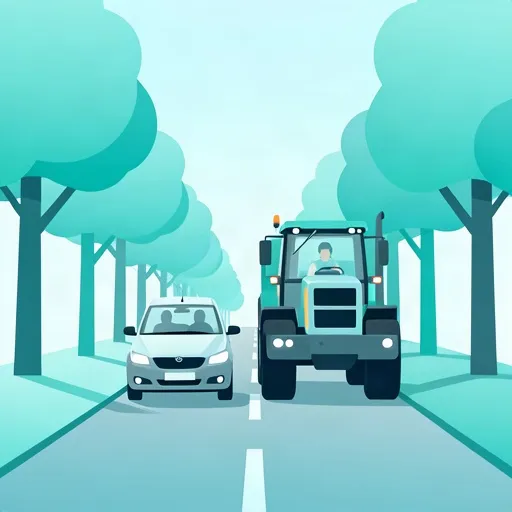
Driving on French departmental roads (routes départementales) offers a unique experience, but it also brings specific challenges that are frequently tested in the Code de la route theory exam. Encountering agricultural machinery—such as tractors, harvesters, or trailers—is a common scenario in rural areas. Because these vehicles are often slow-moving, wide, and sometimes poorly illuminated, you must adjust your driving behavior to ensure both your safety and that of the vehicle operator.
Agricultural vehicles present unique hazards that differ significantly from standard passenger cars. Their lower speed, often significantly below the maximum authorized speed limit for the road, can catch drivers off guard, particularly on winding rural roads with restricted visibility. Furthermore, these machines are frequently wider than the marked traffic lane, sometimes extending toward the center line or beyond.
When you approach a tractor, you must anticipate its potential movements. Agricultural machinery often needs to make wide turns to enter fields or farm tracks, which means a tractor operator might pull toward the left side of the lane before turning right, or vice versa. Always maintain a safe following distance and remain patient; never assume the driver is aware of your position, especially if their view is obstructed by heavy loads or machinery attachments.
Overtaking an agricultural vehicle is only permitted when you have clear visibility and sufficient space to complete the maneuver without endangering oncoming traffic or the vehicle being passed. On narrow departmental roads, this is rarely the case. You must verify that there are no "No Overtaking" signs and that the road markings allow for crossing the center line.
Before you even consider overtaking, you must assess several factors:
If overtaking is not safe, you must remain behind the vehicle and adapt your speed. Being stuck behind a slow-moving tractor can be frustrating, but aggressive driving or honking serves no purpose and can lead to dangerous situations. Remember that the operator of the agricultural vehicle has the same right to use the road as you do.
Maintain a constant, calm pace and wait for a straight section of the road where visibility is clear in both directions. If the tractor driver pulls over to the right to allow traffic to pass, do so with caution, checking your mirrors and blind spots carefully before pulling out.
| Condition | Recommended Action |
|---|---|
| Blind turn or hill crest | Do not overtake; reduce speed and wait. |
| Wide, straight road with broken line | Overtake only after ensuring no oncoming traffic. |
| Tractor signaling for a turn | Remain behind; do not attempt to pass on the side they are turning toward. |
| Heavy dust or mud on road | Increase safety distance; reduce speed to maintain control. |
Driving around agricultural vehicles on French rural roads requires heightened vigilance and patience due to their lower speeds, wider profiles, and limited visibility. Before overtaking, you must confirm clear visibility in both directions, absence of solid white lines, and enough space to complete the maneuver safely while maintaining a lateral distance of at least 1.5 meters. Never overtake at blind bends or hill crests, as this is a serious exam error. When overtaking is not possible, adapt your speed, maintain safe following distance, and wait for appropriate conditions - remember that agricultural operators have the same right to use departmental roads as other vehicles.
A short set of high-value points that capture the most important ideas from this article.
Agricultural vehicles are slow-moving, wide, and frequently poorly illuminated, requiring you to lower your speed and increase following distance
Tractors make wide turns that may swing into your lane before turning - never assume the driver's intended path
Legal overtaking requires clear visibility, no solid white line, and sufficient space to return to your lane safely
Maintain at least 1.5 meters lateral distance when overtaking any slow-moving vehicle or cyclist
Never attempt to overtake at blind bends or hill crests - this is treated as a critical error in the French theory exam
Agricultural machinery can extend beyond lane markings and may obstruct your path unexpectedly
Always verify no 'No Overtaking' signs (B3) and that road markings permit crossing the center line
If a tractor signals a turn, remain behind it and do not attempt to pass on the turning side
If overtaking is not possible, adapt your speed calmly - the tractor operator has equal right to use the road
When a tractor pulls over to let you pass, check mirrors and blind spots before rejoining traffic
Assuming it is safe to overtake simply because the vehicle ahead is moving slowly, without checking visibility or road markings
Underestimating the width of agricultural vehicles and failing to maintain proper lateral clearance
Attempting to overtake when approaching a blind curve or hill crest where oncoming traffic cannot be seen
Misinterpreting a tractor's lateral movement as a lane change when it is actually preparing to turn into a field
Forgetting to check if the tractor driver has indicated a turn before deciding to pass
Article content overview
A short set of high-value points that capture the most important ideas from this article.
Agricultural vehicles are slow-moving, wide, and frequently poorly illuminated, requiring you to lower your speed and increase following distance
Tractors make wide turns that may swing into your lane before turning - never assume the driver's intended path
Legal overtaking requires clear visibility, no solid white line, and sufficient space to return to your lane safely
Maintain at least 1.5 meters lateral distance when overtaking any slow-moving vehicle or cyclist
Never attempt to overtake at blind bends or hill crests - this is treated as a critical error in the French theory exam
Agricultural machinery can extend beyond lane markings and may obstruct your path unexpectedly
Always verify no 'No Overtaking' signs (B3) and that road markings permit crossing the center line
If a tractor signals a turn, remain behind it and do not attempt to pass on the turning side
If overtaking is not possible, adapt your speed calmly - the tractor operator has equal right to use the road
When a tractor pulls over to let you pass, check mirrors and blind spots before rejoining traffic
Assuming it is safe to overtake simply because the vehicle ahead is moving slowly, without checking visibility or road markings
Underestimating the width of agricultural vehicles and failing to maintain proper lateral clearance
Attempting to overtake when approaching a blind curve or hill crest where oncoming traffic cannot be seen
Misinterpreting a tractor's lateral movement as a lane change when it is actually preparing to turn into a field
Forgetting to check if the tractor driver has indicated a turn before deciding to pass
Explore related topics, search based questions, and concepts that learners often look up when studying Driving Around Agricultural Vehicles. These themes reflect real search intent and help you understand how this topic connects to wider driving theory knowledge in France.
Find clear and practical answers to common questions learners often have about Driving Around Agricultural Vehicles. This section helps explain difficult points, remove confusion, and reinforce the key driving theory concepts that matter for learners in France.
No. You must only overtake when visibility is sufficient, the road is wide enough, and no solid white line or prohibitive sign prevents the maneuver.
The primary risks are the excessive width of the machinery which may exceed lane markings, limited visibility due to the vehicle's height, and unexpected maneuvers such as turning into a field entrance.
Maintain a safe following distance so the driver can see your vehicle in their mirrors. Use signals clearly before attempting to overtake, and ensure the tractor driver is not indicating a turn.
Continue your preparation for the French permis de conduire exam. Dive deeper into specific Code de la route sections, practice scenarios, or review official procedures. Use our comprehensive article collection to master every aspect of driving theory.