
Driving under the influence of narcotics or medications that impair driving ability is severely punished in France. This article clarifies your legal obligations to verify product warnings and explains how drug-related offenses are treated as aggravating circumstances in the Code de la route, ensuring you are fully prepared for the ETG theory exam.
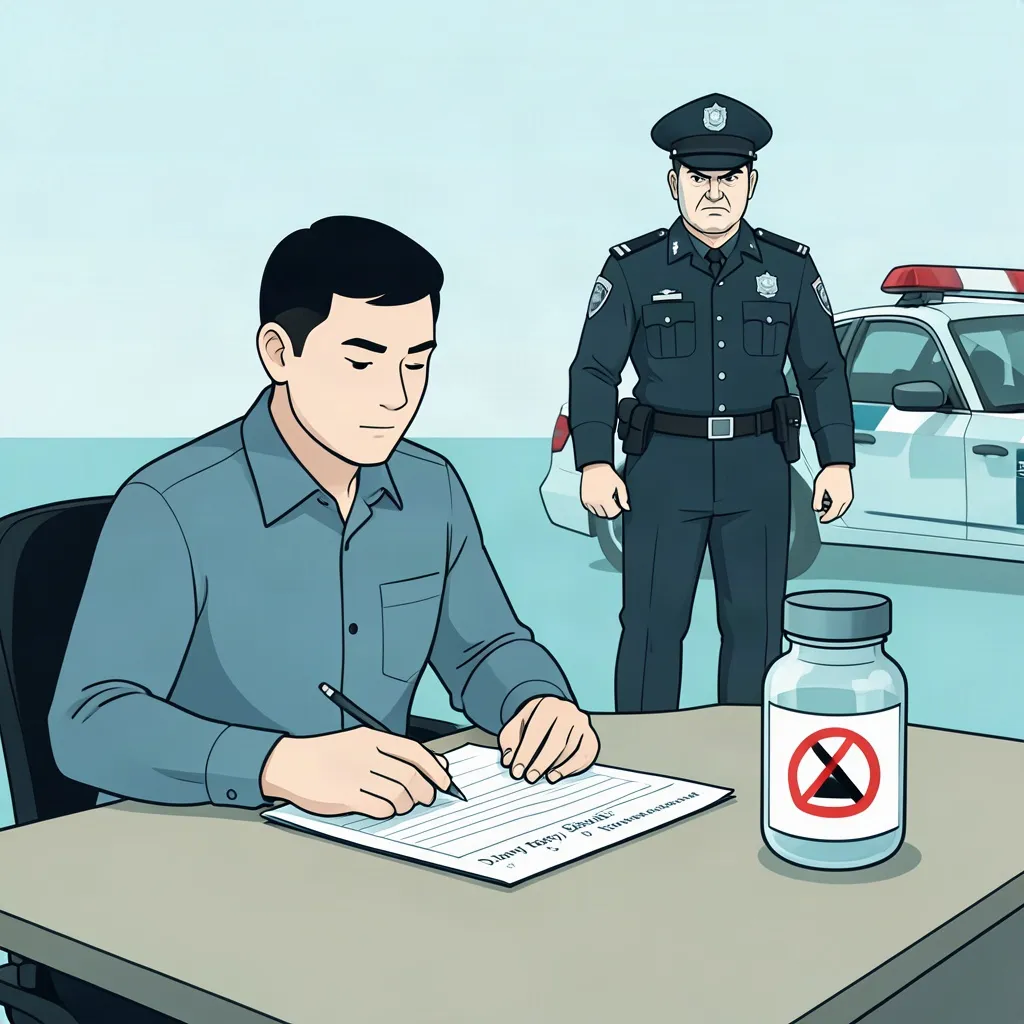
Article content overview
In France, the Code de la route maintains a zero-tolerance policy regarding the consumption of narcotics and driving. Whether you are a learner driver preparing for the Épreuve Théorique Générale (ETG) or an experienced driver, understanding the legal and safety implications of substance use is a critical pillar of road safety education. The French legal system treats drug driving not just as a traffic violation, but as a severe criminal offense that can lead to life-altering administrative and penal consequences.
The consumption of narcotics before or during driving is strictly prohibited in France. When you are behind the wheel, your cognitive functions, reaction times, and decision-making abilities must remain unimpaired. The law does not set a "safe" threshold for drugs; rather, the presence of any prohibited substance in your system detected by law enforcement can lead to immediate sanctions.
For the ETG exam, it is vital to remember that a positive test for narcotics results in the automatic loss of 6 points from your driving license. Furthermore, if you are also found to be under the influence of alcohol, the penalties escalate significantly, resulting in a 9-point deduction. These point losses can be catastrophic for new drivers, as the probationary license (permis probatoire) has a limited point total.
Driving under the influence of narcotics is punishable by up to 3 years of imprisonment and a fine of up to 9,000 €. If combined with alcohol, these penalties increase to 5 years of imprisonment and 15,000 € in fines.
Not all substances that impair driving ability are illegal. Many prescription and over-the-counter medications can cause drowsiness, dizziness, or slowed reaction times. In France, the health authorities utilize a color-coded labeling system on medication packaging to inform patients about the potential risks associated with driving.
It is your responsibility as a driver to check these labels. These pictograms range from yellow to red, indicating the level of vigilance required. While a yellow label suggests caution, a red label indicates that you should strictly avoid driving until you have consulted with your doctor or pharmacist about the potential for impairment. Ignoring these warnings can be considered a contributing factor in the event of an accident, leading to severe legal repercussions.
The Code de la route classifies driving under the influence as an aggravating circumstance. If you are involved in a road accident while impaired by drugs or alcohol, the judiciary system views your actions as a deliberate choice to ignore safety protocols.
In French law, an aggravating circumstance increases the severity of the penalty for an offense. If an accident causes bodily harm or death while the driver is impaired, the legal consequences are significantly harsher than those for an unintentional traffic accident.
In the unfortunate event that a driver causes fatal injuries or severe permanent disability while intoxicated or under the influence of drugs, they may face charges for "homicide routier" or severe "blessures routières." The penalties for such incidents involve heavy prison sentences and substantial financial fines, reflecting the state's commitment to reducing preventable road deaths.
Beyond criminal fines and prison, the French authorities have the power to take immediate administrative action against the vehicle used by an impaired driver. The police, with authorization from the préfet, can order the immobilization of the vehicle or even its placement in a fourrière (impound lot). This prevents the driver from continuing their journey and serves as an immediate deterrent against repeat offenses.
Detection: Law enforcement performs a saliva test or medical examination.
Immobilization: If positive, the vehicle is immediately immobilized on the spot.
Administrative Action: The prefectural authorities are notified to determine further penalties.
Judicial Sanctions: Prosecution for the offense, potentially leading to court appearances and criminal sentencing.
France enforces a strict zero-tolerance policy on narcotics while driving, meaning any detectable prohibited substance triggers immediate sanctions. The ETG exam expects you to know the specific consequences: 6 points lost (9 if alcohol is combined), up to 3 years imprisonment and €9,000 in fines, and vehicle immobilization. Equally important is the color-coded medication labeling system—yellow signals caution while red requires you to avoid driving until consulting a medical professional. Perhaps most critically for exam scenarios, driving under the influence is treated as an aggravating circumstance in the Code de la route, meaning any accident while impaired results in dramatically harsher legal consequences than the same accident without impairment.
A short set of high-value points that capture the most important ideas from this article.
France applies zero-tolerance for narcotics while driving: any detectable prohibited substance triggers sanctions, with no safe threshold.
Drug driving results in automatic 6-point deduction from your license; penalties rise to 9 points if combined with alcohol.
Criminal penalties include up to 3 years imprisonment and €9,000 fine, increasing to 5 years and €15,000 when alcohol is involved.
Medication packaging uses a color-coded warning system (yellow to red) indicating driving risk levels you must check before driving.
Driving under the influence of drugs is classified as an aggravating circumstance, making penalties far harsher if an accident occurs.
Always check medication packaging for color-coded warnings before driving; red labels mean avoid driving entirely until you consult a doctor or pharmacist.
The permis probatoire has a limited point total, making drug-related 6-point deductions potentially devastating for new drivers.
Police can immobilize your vehicle on the spot following a positive saliva test, before any court appearance.
Narcotics include both illegal substances and any substance listed on France's prohibited list, regardless of prescription status.
If an accident causes serious injury or death while impaired, you face charges for homicide routier or blessures routières with substantially increased penalties.
Believing there is a minimum safe amount of drugs that won't trigger prosecution; France has zero tolerance with no threshold.
Assuming only illegal narcotics matter; certain prescription medications can also result in positive tests and penalties.
Overlooking medication warning labels and driving anyway because the medication was legally prescribed.
Underestimating the severity of aggravating circumstances—many learners focus on fines without realizing how much harsher penalties become after an accident.
Not distinguishing between administrative penalties (point deduction, vehicle immobilization) and criminal penalties (imprisonment, fines); both apply simultaneously.
Article content overview
A short set of high-value points that capture the most important ideas from this article.
France applies zero-tolerance for narcotics while driving: any detectable prohibited substance triggers sanctions, with no safe threshold.
Drug driving results in automatic 6-point deduction from your license; penalties rise to 9 points if combined with alcohol.
Criminal penalties include up to 3 years imprisonment and €9,000 fine, increasing to 5 years and €15,000 when alcohol is involved.
Medication packaging uses a color-coded warning system (yellow to red) indicating driving risk levels you must check before driving.
Driving under the influence of drugs is classified as an aggravating circumstance, making penalties far harsher if an accident occurs.
Always check medication packaging for color-coded warnings before driving; red labels mean avoid driving entirely until you consult a doctor or pharmacist.
The permis probatoire has a limited point total, making drug-related 6-point deductions potentially devastating for new drivers.
Police can immobilize your vehicle on the spot following a positive saliva test, before any court appearance.
Narcotics include both illegal substances and any substance listed on France's prohibited list, regardless of prescription status.
If an accident causes serious injury or death while impaired, you face charges for homicide routier or blessures routières with substantially increased penalties.
Believing there is a minimum safe amount of drugs that won't trigger prosecution; France has zero tolerance with no threshold.
Assuming only illegal narcotics matter; certain prescription medications can also result in positive tests and penalties.
Overlooking medication warning labels and driving anyway because the medication was legally prescribed.
Underestimating the severity of aggravating circumstances—many learners focus on fines without realizing how much harsher penalties become after an accident.
Not distinguishing between administrative penalties (point deduction, vehicle immobilization) and criminal penalties (imprisonment, fines); both apply simultaneously.
Explore related topics, search based questions, and concepts that learners often look up when studying Drug Driving and Medication Rules. These themes reflect real search intent and help you understand how this topic connects to wider driving theory knowledge in France.
Find clear and practical answers to common questions learners often have about Drug Driving and Medication Rules. This section helps explain difficult points, remove confusion, and reinforce the key driving theory concepts that matter for learners in France.
Driving under the influence of drugs is a serious offense punishable by up to 3 years of imprisonment and a fine of up to 9,000 €. It also results in the automatic deduction of 6 points from your driving license.
While medications are not universally banned, you have a legal obligation to check if a treatment impairs your driving ability. Look for warning pictograms on medicine packaging that indicate whether it is safe to drive.
Combining drugs and alcohol is an aggravating circumstance. The penalties are more severe, reaching up to 5 years of imprisonment, 15,000 € in fines, and the loss of 9 points on your driving license.
Yes, law enforcement has the authority to immobilize or impound a vehicle if the driver is found to be driving under the influence of drugs or alcohol, especially in cases of repeated offenses or manifest intoxication.
Continue your preparation for the French permis de conduire exam. Dive deeper into specific Code de la route sections, practice scenarios, or review official procedures. Use our comprehensive article collection to master every aspect of driving theory.