
Ensuring your vehicle is in good working order is a core responsibility for every driver under French law. This guide covers the essential technical checks you must master for your theory exam, including monitoring fluid levels, tire health, and lighting functionality. Learn how these routine inspections satisfy both legal requirements and safety standards on French roads.
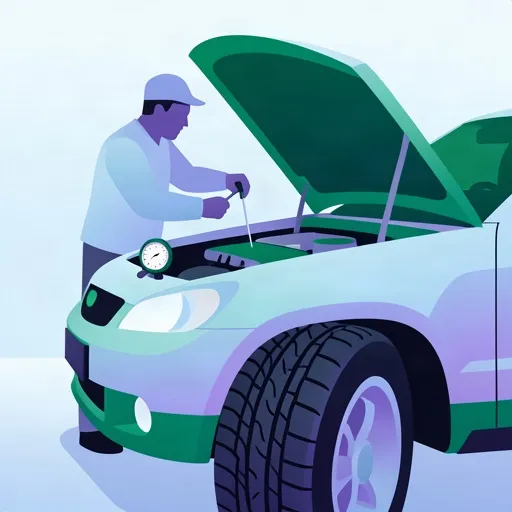
Article content overview
Ensuring your vehicle is in optimal working condition is a fundamental responsibility for every driver in France. Under the Code de la route, the driver is legally accountable for the roadworthiness of their vehicle at all times, not just during the mandatory Contrôle technique. Mastery of these pre-drive checks is not only essential for your personal safety but is a high-frequency topic in the Épreuve Théorique Générale (ETG). Examiners frequently test your knowledge on how to identify mechanical deficiencies before they become hazards, and knowing exactly what to check can make the difference between passing and failing your theory exam.
In France, road safety is built upon the principle of driver vigilance. The law mandates that a vehicle must be maintained in such a state that all safety-critical components—including tires, braking systems, and lighting—function correctly. If a law enforcement officer stops your vehicle and finds it in a state of poor repair, you may face significant fines and, in serious cases, the immobilization of the vehicle.
Remember that "maintenance" is not just about the car passing the biannual Contrôle technique. As a driver, you are expected to perform regular, proactive inspections to ensure the vehicle remains fit for the road between official inspections.
For the ETG exam, you must distinguish between routine checks that you perform yourself and the periodic Contrôle technique which must be conducted by an authorized professional center. Failing to understand that your daily responsibility includes checking fluid levels and tire pressure is a common pitfall for candidates.
One of the most frequent areas of questioning in the ETG involves your ability to verify fluid levels. Modern vehicles rely on a precise balance of fluids to manage temperature, lubrication, and hydraulic pressure.
Your tires are the only point of contact between your car and the road surface. The Code de la route is strict regarding tire health. You must regularly monitor tire pressure—including the spare—and check for signs of wear, such as damaged sidewalls or treads below the legal minimum depth of 1.6 millimeters.
Lighting is equally vital for visibility, both for you to see the road and for others to see you. You are required to ensure that all indicators, stop lights, and headlights are functional. If a bulb blows during a journey, you must replace it promptly; driving with a single headlight or no brake lights is a major safety violation and a common reason for failing roadside inspections.
In the ETG, you will often face questions that pair a road situation with a vehicle condition question. For instance, you might see a photo of a dashboard warning light. You are expected to know if the light represents an urgent mechanical failure (like the brake system) or a reminder (like the oil change interval).
The mandatory roadworthiness test for vehicles in France, performed at authorized centers. For a new private car, the first test is due four years after its initial registration, followed by a check every two years.
This article covers the mandatory pre-drive vehicle checks required by the Code de la route for French drivers, focusing on fluid inspections (engine oil, brake fluid, coolant, windscreen washer), tire health including the 1.6mm tread minimum, and lighting functionality. It emphasizes the driver's continuous legal responsibility for vehicle roadworthiness beyond the periodic Contrôle technique and provides step-by-step procedures for safe fluid checking. The content directly supports ETG exam preparation by explaining common exam question formats, distinguishing between routine maintenance and professional inspections, and clarifying dashboard warning light meanings. Understanding these requirements is essential for both passing the theory exam and maintaining legal, safe driving practices on French roads.
A short set of high-value points that capture the most important ideas from this article.
Under French law, drivers are legally accountable for their vehicle's roadworthiness at all times, not just during the Contrôle technique.
Engine oil must be checked cold on level ground using the dipstick, while brake fluid level requires immediate professional attention if low.
Coolant should never be checked or refilled when the engine is hot due to pressurized system burn risks.
All vehicle lighting—indicators, stop lights, and headlights—must be fully functional; a single failed bulb is a safety violation.
The ETG frequently pairs road situations with vehicle condition questions, including dashboard warning light interpretation.
Minimum legal tire tread depth is 1.6mm; check pressure including the spare tire regularly.
The first Contrôle technique is due four years after initial registration, then every two years thereafter.
Fluid level checks (oil, brake, coolant, washer) use Min/Max markers on reservoirs identified by icons.
Low brake fluid can indicate a leak or severely worn brake pads requiring immediate professional attention.
Dashboard warning lights distinguish urgent mechanical failures (brake system) from reminders (oil change interval).
Confusing routine self-performed checks with the periodic Contrôle technique conducted by authorized centers.
Assuming the Contrôle technique alone satisfies maintenance obligations between inspections.
Ignoring dashboard warning lights or misinterpreting urgent warnings as minor reminders.
Failing to replace blown bulbs promptly, especially brake lights or headlights.
Checking fluid levels on uneven ground or with the engine hot, leading to inaccurate readings or burn injuries.
Article content overview
A short set of high-value points that capture the most important ideas from this article.
Under French law, drivers are legally accountable for their vehicle's roadworthiness at all times, not just during the Contrôle technique.
Engine oil must be checked cold on level ground using the dipstick, while brake fluid level requires immediate professional attention if low.
Coolant should never be checked or refilled when the engine is hot due to pressurized system burn risks.
All vehicle lighting—indicators, stop lights, and headlights—must be fully functional; a single failed bulb is a safety violation.
The ETG frequently pairs road situations with vehicle condition questions, including dashboard warning light interpretation.
Minimum legal tire tread depth is 1.6mm; check pressure including the spare tire regularly.
The first Contrôle technique is due four years after initial registration, then every two years thereafter.
Fluid level checks (oil, brake, coolant, washer) use Min/Max markers on reservoirs identified by icons.
Low brake fluid can indicate a leak or severely worn brake pads requiring immediate professional attention.
Dashboard warning lights distinguish urgent mechanical failures (brake system) from reminders (oil change interval).
Confusing routine self-performed checks with the periodic Contrôle technique conducted by authorized centers.
Assuming the Contrôle technique alone satisfies maintenance obligations between inspections.
Ignoring dashboard warning lights or misinterpreting urgent warnings as minor reminders.
Failing to replace blown bulbs promptly, especially brake lights or headlights.
Checking fluid levels on uneven ground or with the engine hot, leading to inaccurate readings or burn injuries.
Explore related topics, search based questions, and concepts that learners often look up when studying Essential Pre-Drive Vehicle Checks. These themes reflect real search intent and help you understand how this topic connects to wider driving theory knowledge in France.
Find clear and practical answers to common questions learners often have about Essential Pre-Drive Vehicle Checks. This section helps explain difficult points, remove confusion, and reinforce the key driving theory concepts that matter for learners in France.
Yes, the driver is legally responsible for ensuring the vehicle is in a safe condition before using it on public roads, as outlined in the Code de la route.
You should regularly monitor engine oil, brake fluid, and coolant levels to ensure the vehicle remains safe and roadworthy.
Routine pre-drive checks are the driver's daily responsibility for safety, whereas the Contrôle Technique is a mandatory periodic professional inspection for vehicle roadworthiness.
The ETG exam often tests your knowledge of lighting, tire pressure, tread depth, braking systems, and visibility aids like wipers and fluid levels.
Yes, failing to maintain safety-critical equipment like lighting or tires can lead to on-the-spot fines and may cause your vehicle to fail mandatory inspections.
Continue your preparation for the French permis de conduire exam. Dive deeper into specific Code de la route sections, practice scenarios, or review official procedures. Use our comprehensive article collection to master every aspect of driving theory.