
After passing the practical exam and receiving your CEPC, the reality of driving solo on French roads can lead to a sense of false security. This guide explores the psychological pitfalls that many new drivers face, helping you recognize the dangers of social influence and overestimation of your current driving skills. By focusing on defensive driving and the reality of your probationary status, you will learn to prioritize safety over peer expectations.
Article content overview
Transitioning from a learner driver under the guidance of an instructor to an independent motorist is one of the most significant psychological milestones for any jeune conducteur. After passing your practical examination and receiving your Certificat d'examen du permis de conduire (CEPC), it is natural to feel a sense of liberation. However, the period immediately following your success is statistically one of the most high-risk phases for new license holders in France. This article explores how to navigate the complex social and psychological pressures of solo driving while maintaining the defensive habits taught by the Sécurité Routière.
Once you have secured your permit, you may feel an immediate urge to test the limits of your vehicle or your own capabilities. This phenomenon, often referred to as "false confidence," occurs when a new driver mistakenly believes that because they passed the exam, they have mastered every aspect of road safety. In reality, the exam only confirms that you have met the minimum requirements to operate a vehicle safely. Real-world driving in France involves dynamic variables, such as varying road conditions, aggressive maneuvers by other motorists, and the complexities of high-speed autoroute travel, all of which require ongoing vigilance.
Remember that your status as a "jeune conducteur" means you are subject to specific speed limits and a lower blood-alcohol tolerance. Overestimating your skills can lead to dangerous habits that contradict the defensive driving principles you learned during your training.
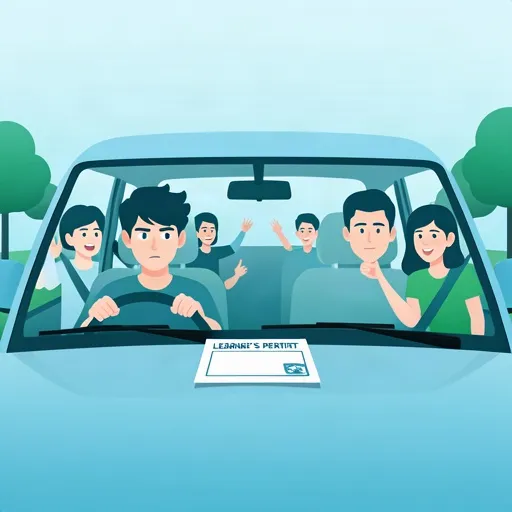
Social influence is a powerful force, especially for young drivers. Whether you are driving friends to an event or feeling pressured to keep up with the flow of traffic that is exceeding the speed limit, the presence of passengers can significantly alter your decision-making process. Peer pressure often manifests as subtle encouragement to drive faster, take risks, or ignore road signs. It is crucial to recognize that as the driver, you hold full legal and moral responsibility for everyone inside the vehicle and other road users.
To remain a safe driver, you must consciously shift your focus from "performance driving" to "defensive driving." In France, the Code de la route emphasizes anticipation and the ability to adapt to changing environments. Defensive driving means assuming that others may make mistakes and always maintaining a sufficient safety buffer. This includes respecting the distances de sécurité (safety distances) on motorways, which are vital when driving at high speeds where a moment of inattention can lead to a collision.
When you are behind the wheel, your primary goal is to arrive safely at your destination, not to impress your passengers. If your passengers are pressuring you to engage in risky behaviors, such as tailgating or late braking, you must be prepared to assert your role as the captain of the vehicle. Remind yourself that your license is probationary, and any infraction can have severe consequences, including the loss of precious points on your permit.
A status assigned to drivers during their initial probationary period (usually 3 years), during which they are subject to specific speed limits, alcohol limits, and must display the 'A' sticker on the rear of their vehicle.
Periodical self-assessment is a powerful tool for any new driver. After every journey, take a moment to reflect on your performance. Did you feel comfortable in the traffic? Did you find yourself distracted by your passengers? Identifying these moments of weakness is the first step toward correcting them. By staying humble and acknowledging that learning to drive is a lifelong process, you ensure that you remain a safe and responsible participant in the French traffic system.
This article addresses the psychological transition from supervised learner to independent driver in France, highlighting how false confidence and peer pressure can undermine the defensive driving habits taught during training. It emphasizes that the jeune conducteur status brings specific legal restrictions including lower speed limits and alcohol tolerance, enforced through the probationary license system. The content reinforces Sécurité Routière principles of anticipation and risk awareness while providing practical strategies for new drivers to maintain safety when under social pressure. Key French terminology including CEPC, Code de la route, and distances de sécurité are defined in context, supporting learners in understanding official French road safety concepts.
A short set of high-value points that capture the most important ideas from this article.
Passing your exam confirms minimum competence, not mastery; real-world French roads present variables that require ongoing vigilance.
Your status as a jeune conducteur subjects you to lower speed limits and reduced alcohol tolerance for three years.
Defensive driving means assuming other road users may make mistakes and maintaining safety buffers accordingly.
As driver, you hold full legal responsibility for passengers and other road users regardless of peer pressure.
Self-assessment after each journey helps identify weak habits before they become dangerous patterns.
Jeune conducteur status lasts approximately 3 years and requires displaying the 'A' sticker on your vehicle.
Distances de sécurité on autoroutes are mandatory and critical at high speeds where stopping distances increase significantly.
Your CEPC is a temporary driving permit; any infraction can result in point loss on your probationary license.
Peer pressure to speed or take risks is a documented cause of accidents among new drivers in France.
Anticipation and scanning the road ahead for hazards at intersections and roundabouts are core defensive driving skills.
Believing that passing the practical exam means all driving skills are fully developed.
Maintaining current speed through bends when passengers suggest it, ignoring recommended limits.
Failing to adjust safety distances when weather conditions reduce braking effectiveness.
Accepting passenger requests to exceed speed limits rather than asserting control as the driver.
Assuming other drivers will always follow the Code de la route correctly.
Article content overview
A short set of high-value points that capture the most important ideas from this article.
Passing your exam confirms minimum competence, not mastery; real-world French roads present variables that require ongoing vigilance.
Your status as a jeune conducteur subjects you to lower speed limits and reduced alcohol tolerance for three years.
Defensive driving means assuming other road users may make mistakes and maintaining safety buffers accordingly.
As driver, you hold full legal responsibility for passengers and other road users regardless of peer pressure.
Self-assessment after each journey helps identify weak habits before they become dangerous patterns.
Jeune conducteur status lasts approximately 3 years and requires displaying the 'A' sticker on your vehicle.
Distances de sécurité on autoroutes are mandatory and critical at high speeds where stopping distances increase significantly.
Your CEPC is a temporary driving permit; any infraction can result in point loss on your probationary license.
Peer pressure to speed or take risks is a documented cause of accidents among new drivers in France.
Anticipation and scanning the road ahead for hazards at intersections and roundabouts are core defensive driving skills.
Believing that passing the practical exam means all driving skills are fully developed.
Maintaining current speed through bends when passengers suggest it, ignoring recommended limits.
Failing to adjust safety distances when weather conditions reduce braking effectiveness.
Accepting passenger requests to exceed speed limits rather than asserting control as the driver.
Assuming other drivers will always follow the Code de la route correctly.
Explore related topics, search based questions, and concepts that learners often look up when studying New Driver Safety and Peer Pressure. These themes reflect real search intent and help you understand how this topic connects to wider driving theory knowledge in France.
Find clear and practical answers to common questions learners often have about New Driver Safety and Peer Pressure. This section helps explain difficult points, remove confusion, and reinforce the key driving theory concepts that matter for learners in France.
A jeune conducteur is a probationary driver who has held their license for less than three years, during which time they must follow specific restrictions such as lower speed limits and the display of the 'A' sticker.
After passing the practical test, new drivers often overestimate their abilities, leading to increased speed or risky maneuvers. Maintaining a defensive mindset is crucial for long-term safety.
Always remember that you are the person responsible for the vehicle and the safety of everyone inside. Firmly decline requests that compromise safety, keeping the focus on official defensive driving principles.
Continue your preparation for the French permis de conduire exam. Dive deeper into specific Code de la route sections, practice scenarios, or review official procedures. Use our comprehensive article collection to master every aspect of driving theory.