Driving in France requires strict adherence to vehicle safety standards established by the Code de la route. In this guide, you will learn which safety accessories are legally mandatory, the consequences of failing to carry them, and how proper vehicle maintenance impacts your roadworthiness. Mastering these requirements is a fundamental step in your journey toward obtaining your French driving license.
Article content overview
Understanding the mandatory safety equipment required for your vehicle is a cornerstone of the Code de la route and a frequent topic in the French driving license theory exam (ETG). Whether you are preparing to drive as a candidat libre or through a driving school, you must be fully aware of the items that must be present in your car at all times. Failure to carry these items is not only a safety risk but also exposes you to significant fines during roadside checks.
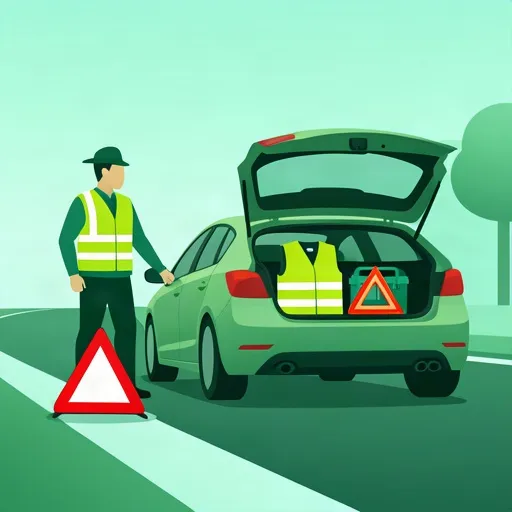
Under French law, every passenger vehicle must be equipped with specific items to handle roadside emergencies. The most critical pieces of equipment are the high-visibility reflective vest (gilet de sécurité) and the hazard warning triangle (triangle de présignalisation). These items are designed to alert other road users if you are forced to stop in a dangerous location, such as on the shoulder of an autoroute or in a poorly lit area.
The high-visibility vest must be stored in the passenger compartment, not the trunk, so you can put it on before exiting the vehicle in an emergency. Failure to comply with these requirements can result in a fine of up to 750 €.
Beyond these accessories, the physical condition of your vehicle is strictly regulated. Tires must be in good condition, with sufficient tread depth and proper pressure, as they are your only contact with the road. Driving with tires that are damaged or excessively worn is a serious infraction that can lead to fines and, in some cases, the immobilization of your vehicle.
Safety in the Code de la route extends to the technical state of your car. Regular maintenance is not just for the health of your vehicle; it is a legal requirement. Your front windows, including the windshield and side windows, must maintain high transparency. Applying unauthorized tints that reduce visibility is strictly prohibited and carries a penalty of three license points deduction in addition to a fine.
Furthermore, your lighting and signaling systems must be fully functional at all times. This includes headlights, indicators, brake lights, and reflectors. During your theory exam, you may encounter questions regarding the maintenance of these systems and the necessity of passing the contrôle technique (technical inspection) to ensure your vehicle meets the national safety standards.
To help you categorize these requirements for your studies, the table below highlights the key areas of vehicle compliance.
| Equipment / Area | Legal Status | Potential Consequence |
|---|---|---|
| Reflective Vest | Mandatory | Fine up to 750 € |
| Warning Triangle | Mandatory | Fine up to 750 € |
| Front Window Transparency | Mandatory | 3 Points + Fine |
| Tire Condition | Mandatory | Fine up to 750 € |
| Lighting Systems | Mandatory | Fine + Repair Notice |
In the Épreuve Théorique Générale (ETG), examiners often present scenarios where you must identify if a vehicle is ready for the road. You might be shown a situation involving a vehicle stopped on the side of a road and asked to identify the driver's next necessary actions. The correct reasoning always prioritizes your safety—ensuring the vest is worn before exiting the car—and the safety of others by correctly placing the warning triangle at a sufficient distance.
Always remember that these rules are not merely abstract concepts; they are practical measures derived from the Code de la route to minimize accidents. When answering exam questions, focus on the immediate actions required to prevent further hazards, such as turning on hazard lights (feux de détresse) before moving to attend to the vehicle.
This article covers the mandatory safety equipment required by the French Code de la route for all vehicles, including the reflective vest (gilet de sécurité) and warning triangle (triangle de présignalisation). The vest must be kept in the passenger compartment for immediate access, while the triangle is stored in the trunk. Non-compliance carries fines up to €750, and specific violations like unauthorized window tints result in 3 license points deduction. Vehicle roadworthiness also extends to tire condition, functional lighting systems, and passing the contrôle technique inspection. For the ETG exam, focus on the correct sequence of safety actions during a breakdown: activate hazard lights, put on the vest before exiting, then place the warning triangle at an appropriate distance.
A short set of high-value points that capture the most important ideas from this article.
The reflective vest must be stored in the passenger compartment, not the trunk, so it can be worn before exiting the vehicle during an emergency
Both the reflective vest and warning triangle are mandatory equipment and can result in fines up to €750 if not carried
Unauthorized window tints that reduce visibility result in a 3-point deduction from your license in addition to a fine
Lighting systems including headlights, indicators, brake lights, and reflectors must be fully functional at all times
In an ETG exam scenario, the correct priority is wearing the vest before exiting, then placing the triangle at a sufficient distance
Vest goes in passenger compartment, triangle goes in trunk
Tire condition: sufficient tread depth and proper pressure are legal requirements
Window transparency is mandatory; tints that reduce visibility are prohibited
The contrôle technique is the mandatory periodic technical inspection for vehicles
Feux de détresse (hazard lights) should be activated first before attending to a breakdown
Storing the reflective vest in the trunk instead of the passenger compartment where it is inaccessible in an emergency
Assuming window tints are acceptable if they seem light; any unauthorized tint is prohibited and penalized
Forgetting that tire condition is a legal requirement, not just a mechanical concern
Overlooking the order of actions in a breakdown scenario: hazard lights first, then vest, then triangle
Confusing which equipment is mandatory versus recommended optional safety gear
Article content overview
A short set of high-value points that capture the most important ideas from this article.
The reflective vest must be stored in the passenger compartment, not the trunk, so it can be worn before exiting the vehicle during an emergency
Both the reflective vest and warning triangle are mandatory equipment and can result in fines up to €750 if not carried
Unauthorized window tints that reduce visibility result in a 3-point deduction from your license in addition to a fine
Lighting systems including headlights, indicators, brake lights, and reflectors must be fully functional at all times
In an ETG exam scenario, the correct priority is wearing the vest before exiting, then placing the triangle at a sufficient distance
Vest goes in passenger compartment, triangle goes in trunk
Tire condition: sufficient tread depth and proper pressure are legal requirements
Window transparency is mandatory; tints that reduce visibility are prohibited
The contrôle technique is the mandatory periodic technical inspection for vehicles
Feux de détresse (hazard lights) should be activated first before attending to a breakdown
Storing the reflective vest in the trunk instead of the passenger compartment where it is inaccessible in an emergency
Assuming window tints are acceptable if they seem light; any unauthorized tint is prohibited and penalized
Forgetting that tire condition is a legal requirement, not just a mechanical concern
Overlooking the order of actions in a breakdown scenario: hazard lights first, then vest, then triangle
Confusing which equipment is mandatory versus recommended optional safety gear
Explore related topics, search based questions, and concepts that learners often look up when studying Mandatory French Vehicle Equipment. These themes reflect real search intent and help you understand how this topic connects to wider driving theory knowledge in France.
Find clear and practical answers to common questions learners often have about Mandatory French Vehicle Equipment. This section helps explain difficult points, remove confusion, and reinforce the key driving theory concepts that matter for learners in France.
Every vehicle must carry a high-visibility reflective safety vest and a red warning triangle to be used in the event of an immobilization that poses a danger to traffic.
Failure to possess or use the required safety equipment when necessary can result in significant fines, potentially reaching up to 750 euros.
Yes, driving with tires in poor condition is illegal and considered a safety risk, leading to potential fines of up to 750 euros if checked by authorities.
The windshield and front side windows must maintain sufficient transparency from both inside and outside the vehicle. Non-compliance can lead to a fine and a deduction of 3 points from your license.
Continue your preparation for the French permis de conduire exam. Dive deeper into specific Code de la route sections, practice scenarios, or review official procedures. Use our comprehensive article collection to master every aspect of driving theory.