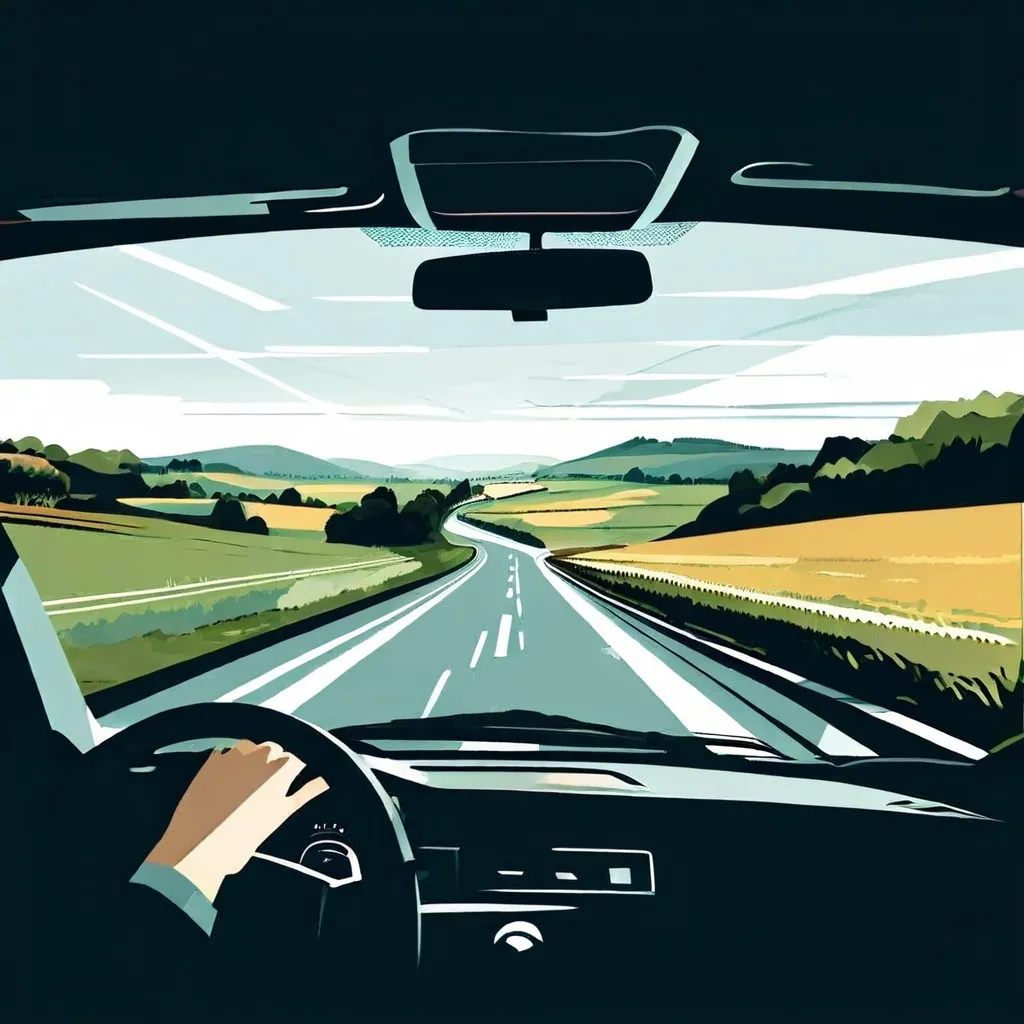
Navigating rural intersections requires a sharp understanding of the French Code de la route, especially when signs are absent. This guide breaks down the priority rules for unmarked junctions and identifies the common mistakes candidates make during the ETG theory exam. You will learn how to recognize these high-risk areas and apply the correct priority principles to ensure safe driving and exam success.
Article content overview
Navigating the diverse road network in France requires a solid grasp of the Code de la route. While urban areas are typically dense with traffic lights and signage, rural roads often feature uncontrolled intersections that rely on fundamental priority principles. Mastering these rules is essential not only for your safety in real-world driving but also for securing a passing grade on the Examen Théorique Général (ETG).
In the French traffic system, the default rule at any intersection without specific signage is priorité à droite (priority to the right). This means that if you approach a crossroads and there is no stop sign, yield sign, or traffic light indicating otherwise, you must yield to any vehicle approaching from your right. This rule applies regardless of the size of the road, meaning a smaller rural path can have priority over a wider road if the intersection is unmarked.
One of the most common pitfalls for candidates during the ETG exam is failing to identify the absence of signage. In rural settings, many intersections lack clear markers, and the environment might distract you from the junction itself. You must develop a proactive scanning habit: look for intersections, watch for vehicles in your peripheral vision, and always check the road surface for faded markings.
If you fail to spot that an intersection is "uncontrolled," you may accidentally fail to yield, which is considered a critical error in both the theory exam and practical driving evaluations. Always assume an intersection is subject to priorité à droite until you see a sign that explicitly tells you otherwise.
While the default rule is priority to the right, many rural roads are managed with specific signs to streamline traffic flow and prevent accidents at high-risk junctions. Knowing how to interpret these is vital.
To succeed in your exam and maintain safety, you should follow a consistent mental checklist when approaching any junction.
A frequent error in the ETG exam involves assuming that the "main road" (the wider road) always has priority. This is a dangerous misconception; in the absence of signs, a smaller road intersecting yours from the right holds priority over you. Furthermore, be wary of scenarios involving cyclists or farm machinery in rural areas, as they are subject to the same priority rules as cars.
This article explains the foundational priorité à droite rule in French road law, which requires drivers to yield to vehicles approaching from the right at any uncontrolled intersection. The content clarifies that road size does not determine priority and provides a practical five-step procedure for safely approaching unknown junctions. Key road signs AB1, AB2, and AB4 are explained as overrides to the default rule. The article also highlights common ETG exam traps, such as assuming wider roads have priority and failing to spot unmarked intersections in rural environments.
A short set of high-value points that capture the most important ideas from this article.
At any unmarked intersection in France, priorité à droite applies by default—yield to vehicles approaching from your right regardless of road size
Road width does not determine priority; a narrower rural path has equal standing if approaching from the right
Always scan for traffic signs, road markings, and approaching vehicles before entering any junction
Specific signs like AB1 (priority road), AB2 (yield), and AB4 (stop) override the default priorité à droite rule
The ETG exam treats failing to yield at uncontrolled intersections as a critical error
Priorité à droite = yield to traffic coming from your right at any intersection without signs
AB1 means you have priority until the next sign; AB2 means slow down and yield; AB4 means stop completely
Assume priorité à droite applies at every intersection until you see a sign explicitly stating otherwise
Cyclists and farm machinery on the right have the same priority rights as cars
Reduce speed before reaching an intersection to give yourself time to assess and react
Assuming the wider or main-looking road always has priority, which is false under priorité à droite
Failing to notice that an intersection is uncontrolled because rural junctions often lack signs
Forgetting to check the right side for approaching vehicles when no signs are visible
Overlooking cyclists or pedestrians on the right who hold priority under the same rules as vehicles
Confusing when to apply priorité à droite versus when to follow a priority road sign (AB1)
Article content overview
A short set of high-value points that capture the most important ideas from this article.
At any unmarked intersection in France, priorité à droite applies by default—yield to vehicles approaching from your right regardless of road size
Road width does not determine priority; a narrower rural path has equal standing if approaching from the right
Always scan for traffic signs, road markings, and approaching vehicles before entering any junction
Specific signs like AB1 (priority road), AB2 (yield), and AB4 (stop) override the default priorité à droite rule
The ETG exam treats failing to yield at uncontrolled intersections as a critical error
Priorité à droite = yield to traffic coming from your right at any intersection without signs
AB1 means you have priority until the next sign; AB2 means slow down and yield; AB4 means stop completely
Assume priorité à droite applies at every intersection until you see a sign explicitly stating otherwise
Cyclists and farm machinery on the right have the same priority rights as cars
Reduce speed before reaching an intersection to give yourself time to assess and react
Assuming the wider or main-looking road always has priority, which is false under priorité à droite
Failing to notice that an intersection is uncontrolled because rural junctions often lack signs
Forgetting to check the right side for approaching vehicles when no signs are visible
Overlooking cyclists or pedestrians on the right who hold priority under the same rules as vehicles
Confusing when to apply priorité à droite versus when to follow a priority road sign (AB1)
Explore related topics, search based questions, and concepts that learners often look up when studying Rural Priority Rules in France. These themes reflect real search intent and help you understand how this topic connects to wider driving theory knowledge in France.
Find clear and practical answers to common questions learners often have about Rural Priority Rules in France. This section helps explain difficult points, remove confusion, and reinforce the key driving theory concepts that matter for learners in France.
It is the fundamental rule in France stating that at an intersection without specific road signs or markings, drivers must yield to vehicles approaching from the right.
No, many rural intersections in France lack signage, meaning the default 'priorité à droite' rule applies. You must always be prepared to stop for traffic coming from your right.
Look for the absence of Stop signs, Yield signs, or road markings like 'cédez-le-passage'. If there are no signs regulating priority, assume you must yield to the right.
The rule generally applies unless specific signs indicate otherwise, but you should always exercise extreme caution in rural areas where visibility might be limited.
Continue your preparation for the French permis de conduire exam. Dive deeper into specific Code de la route sections, practice scenarios, or review official procedures. Use our comprehensive article collection to master every aspect of driving theory.